Key Takeaways
Why Your Trade-In Offer Comes In Lower Than Expected
Most drivers walk into a dealership expecting mileage and condition to be the two big levers on trade-in value. And they're not wrong — those factors matter. But experienced appraisers work from a much longer checklist, and several of the items on it are ones sellers never think to prepare for.
The result: you leave $500, $1,500, or even $3,000 on the table not because your car is in bad shape, but because you didn't know what the appraiser was quietly penalizing. Understanding these hidden factors is the first step toward getting a fair number. For a broader view of how dealers construct that offer, see how the math behind a trade-in offer actually works.
Below are the factors that consistently surprise sellers — and concrete steps you can take to minimize their impact.

Unpopular exterior color
Color is one of the most underappreciated trade-in variables. Appraisers and auction buyers know exactly which colors move fast and which ones sit on the lot for 60 days. Neutral colors — white, silver, gray, black — consistently outperform unusual ones at auction and on dealer lots. That speed advantage gets priced into the offer you receive.
Colors like yellow, bright orange, bright green, and two-tone finishes can trigger discounts ranging from $500 to $2,000 depending on the vehicle segment. A yellow sports car might hold value reasonably well in its niche, but a yellow family sedan is a problem for any dealer trying to move inventory quickly. The same principle applies to rare factory colors that had low original production numbers — limited demand means limited resale liquidity.
For a detailed breakdown of how color interacts with other valuation variables, see how mileage, trim level, and color shift your valuation estimate.
What you can do: You can't repaint your car for a trade-in — the cost would never be recovered. But you can research your specific color's market performance before walking in. If your color is genuinely unpopular, be prepared to negotiate on other terms rather than expecting full book value on the paint question.
Yellow, bright orange, and two-tone finishes can reduce dealer offers by up to $2,000 versus neutral colors.
Rental or fleet history
When a vehicle history report shows previous rental or fleet use, most appraisers apply an immediate discount — typically $1,000 to $2,500 depending on make, model, and mileage. The logic isn't unfair: rental cars are driven hard by multiple drivers with no personal ownership investment, and fleet vehicles are often serviced on bare-minimum schedules.
The problem is that this discount is applied algorithmically. Even if your specific car has a spotless maintenance record, the rental flag overrides that nuance in most appraisal workflows. Dealers know retail buyers will see the same flag and price accordingly, so they adjust their offer to match the expected retail resistance.
[in_content_images:1]What you can do: If you bought a former rental car and have maintained it meticulously, document everything — oil change receipts, inspection records, any reconditioning you've done. It won't eliminate the discount entirely, but showing a thick service folder can soften it. Consider selling privately in this situation, where you can tell the car's story directly to a buyer rather than to an algorithm.
A rental-history flag on a vehicle report can trigger an automatic $1,000–$2,500 discount before any negotiation begins.
Base or entry-level trim
Sellers often assume their car's trade-in value scales directly with the new-car sticker price. It doesn't work that way at the trade level. Base trims — especially on trucks and SUVs — are frequently the hardest for dealers to retail because used-car buyers expect more features at that price point. A base-trim F-150 or RAV4 competes against better-equipped examples at similar prices on the used-car lot, and it usually loses.
The result: dealers discount base trims at appraisal to build in margin for the inevitable price reduction they'll need to move the unit. Conversely, well-equipped mid-level and performance trims often hold value better because there's genuine demand at auction and on retail lots.
This dynamic is worth understanding before you buy your next car too. See which trim levels and factory packages actually slow depreciation for data on how this plays out long-term.
What you can do: If you're trading in a base-trim vehicle, lean heavily on condition and service history to differentiate it. Also look at what comparable trims are selling for in your area using Autotrader or Cars.com — if your base trim is actually scarce locally, you may have more leverage than you think.
Base trims are often harder for dealers to retail, so appraisers discount them to build in room for the price cut they'll need.
Aftermarket modifications
This one surprises people the most because it feels backwards. You spent $3,000 on a lift kit and aftermarket wheels. Why is the dealer offering you less than book value for a stock example? Because they're thinking about their retail buyer, not you.
Most used-car buyers — especially in mainstream segments — want factory-stock vehicles. Aftermarket parts raise questions about installation quality, warranty implications, and insurance complications. Dealers also factor in reconditioning costs: returning a modified vehicle to stock condition can cost more than the parts are worth, and selling it modified limits the buyer pool.
Performance modifications are particularly problematic. Aftermarket intakes, exhausts, suspension components, and engine tunes all raise flags about how hard the car was driven. Even tasteful, quality modifications by reputable shops can trigger a discount because the appraiser has no easy way to verify quality without a full inspection.
What you can do: If you still have original parts — stock wheels, factory exhaust, original suspension components — reinstall them before the appraisal. Sell the aftermarket parts separately on forums or eBay. You'll typically recover more money this way than trying to get credit for modifications at the trade-in desk. Trade-in strategy guides consistently reinforce this approach.
Reinstalling factory parts before appraisal — and selling aftermarket components separately — usually nets more money than trading modified.
Deferred maintenance and missing service records
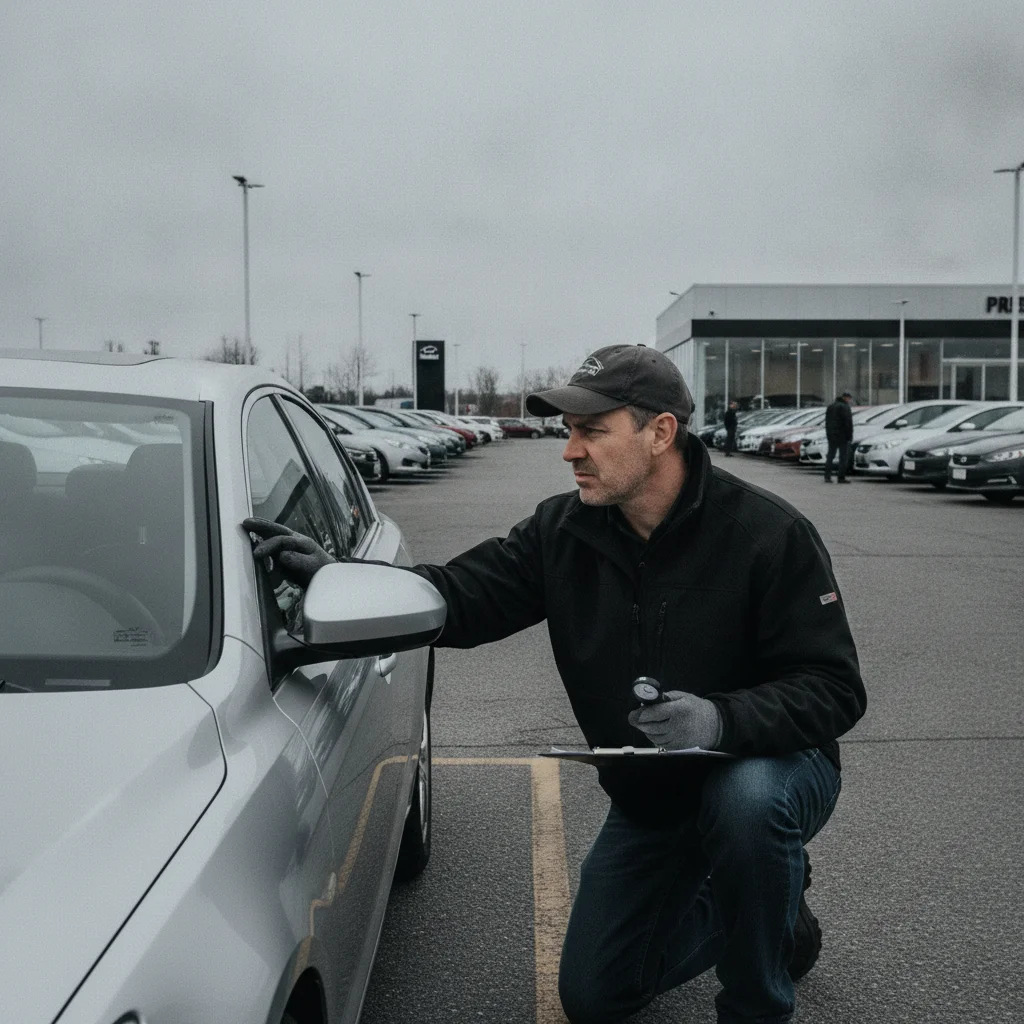
A car with worn tires, a check-engine light, brake pads at 2mm, or a cabin that smells like something was spilled and never cleaned tells the appraiser one thing immediately: this car needs money before it can be retailed. Every dollar of likely reconditioning work gets subtracted from your offer — often at dealer retail labor rates, not actual cost.
Missing service records are a separate but related problem. Appraisers assign risk when they can't verify maintenance history. They'll assume the worst-case scenario for any major service item — timing belt, transmission fluid, differential service — and price that assumed risk into the offer. A car with a full dealer-stamped service booklet or a documented history in a service app will consistently appraise better than an identical car with no records.
[in_content_images:2]What you can do: Fix the obvious issues. New tires before a trade-in rarely pay back dollar-for-dollar, but a cleared check-engine light and fresh wiper blades cost almost nothing and remove objections. Gather every oil change receipt, inspection sticker, and service record you have and present them organized. If your car has genuinely been well-maintained but your records are scattered, pull your service history from the dealer's own system — they can usually access it if work was done at a franchise location.
Every visible maintenance issue gets subtracted at retail labor rates — fix cheap problems before the appraiser sees them.
High local market supply of your model
Trade-in value isn't static — it's driven by local supply and demand at any given moment. If a dealer's lot already has four examples of your car or the auction lanes are flooded with them, your offer will reflect that oversupply even if your specific car is in excellent shape.
This is the factor sellers have the least direct control over, but being aware of it changes your timing strategy. Seasonal patterns are real: convertibles appraise better in spring, four-wheel-drive trucks appraise better heading into winter, minivans move in late summer when families are preparing for school year. Trading a car during its seasonal demand peak consistently yields better offers than trading during a glut.
For more on how mileage interacts with market timing — particularly the threshold points where value drops sharply — see where mileage cliffs in resale value actually occur. And if your car does have high mileage, strategies for positioning a high-mileage trade-in gives you a concrete playbook.
What you can do: Check dealer inventory on Autotrader and Cars.com before you go in. Search your specific year, model, and trim within 50 miles. If you see heavy local supply, consider waiting 30–60 days or approaching dealers in adjacent markets where supply is thinner. You can also use this data as negotiation leverage — if you know supply is low, you have a reason to push back on a low offer.
Trading your car during its seasonal demand peak — not whenever you're ready — can meaningfully improve the number you receive.
Structural or accident history, even minor
Dealers pull a vehicle history report on every trade-in. Any reported accident — even a minor rear-end bumper repair — appears in the report and flags the car for a reconditioning review. Appraisers will visually inspect for panel gaps, mismatched paint, and signs of non-factory repair work. If they find evidence of prior structural repair, the discount can be significant: 10–25% below comparable clean-title examples is a typical range.
Even accidents that were properly repaired at a reputable body shop create a disclosure obligation for dealers when they retail the car, and that disclosure requirement gets priced into your offer. Branded titles — salvage, rebuilt, flood — are in a separate category and often result in offers at or near auction floor prices only.
What you can do: Pull your own Carfax or AutoCheck before the appraisal so you know what the dealer will see. If there's an accident record, gather the original repair estimate, insurance documentation, and any OEM parts receipts that show quality repair work. You won't eliminate the discount, but documented high-quality repairs reduce it. If the damage is minor and unrecorded, disclose it yourself — appraisers respect transparency, and it's better than having them discover it during the inspection and question what else you haven't mentioned.
Even a properly repaired accident on the history report can reduce your offer by 10–25% compared to a clean-history equivalent.
Negotiating the trade-in bundled with the new-car deal
This one isn't a vehicle characteristic — it's a negotiation mistake that quietly costs sellers money. When you discuss the trade-in and the purchase price of the new car simultaneously, dealers have the ability to shift value between the two numbers without changing the total. They can appear to give you a great trade-in offer while quietly padding the purchase price, or vice versa.
The result is that sellers feel like they're getting a strong trade-in number — sometimes even above book value — without realizing the new-car price has absorbed that apparent generosity. Common myths about trade-in value include the belief that dealers can't or won't negotiate trade-ins, when in reality the bundling dynamic is where most sellers lose ground.
And if a dealer drops your appraisal number partway through the deal — after you've mentally committed — that's a specific tactic worth understanding. See why trade-in offers sometimes drop after the test drive for what's happening and how to respond.
What you can do: Separate the transactions. Get a firm trade-in offer — ideally in writing from CarMax or another source — before you start negotiating on the new car. Tell the salesperson you have an outside offer and you want to negotiate the purchase price first, then revisit the trade-in. This removes the bundling mechanism and forces each number to stand on its own.
Separating the trade-in negotiation from the purchase price forces each number to stand alone — and prevents quiet value shifting between the two.
How to Use This Information Before You Walk In
Knowing these factors exist is only useful if you act on them before you show up at the dealership. Start by pulling a vehicle history report on your own car — the same one the appraiser will see. Check for rental flags, accident entries, and title status. Then use valuation tools like KBB and Edmunds to generate a realistic baseline, and be honest when entering condition details.
How valuation tools fit into this process
KBB, Edmunds, and NADA all provide trade-in estimates, but they're starting points — not guarantees. These tools can't account for local market oversupply, rental-history flags, or regional color preferences. Use them to establish a realistic range, then validate that range with actual competing offers before you negotiate. The <a href="/selling-your-car/pricing-your-car/valuation-tools">valuation tools hub</a> explains how each platform weights its estimates differently.
With that number in hand, get at least two competing offers — one from CarMax or Carvana, one from a dealer who doesn't carry your car's brand. Those offers become your floor. If the selling dealer comes in below your lowest competing offer, you have a documented reason to push back or walk.
Dealers use specific language to justify low appraisals that can be hard to argue against in the moment. Knowing what to watch for matters. See the signs a dealer is undervaluing your trade-in so you can recognize those tactics before you accept a number you shouldn't. And if you're curious which of these surprises drivers most regret after the fact, trade-in regrets drivers report most often is worth reading before you commit.
Get three offers before accepting any
Before accepting any dealer trade-in offer, collect at least three independent appraisals: one from CarMax, one from Carvana or a similar online buyer, and one from a dealer who doesn't sell your car's brand. These offers don't expire immediately and give you a documented floor to negotiate from. If the selling dealer comes in below your lowest offer, show them the paper — that conversation changes quickly.
Time your trade-in to seasonal demand
Convertibles, sports cars, and off-road trucks all have predictable demand cycles. Trading a convertible in October versus April can mean a $1,000+ difference in appraised value. Check what comparable vehicles are retailing for in your market right now — if supply is thin, your leverage is higher. If the market is saturated, waiting 30–60 days costs you very little and may recover several hundred dollars.

All claims are backed by peer-reviewed research. Sources on request.