| Most impactful single mileage threshold | 100,000 miles (Consistent across major valuation platforms and dealer pricing surveys) |
| Typical price drop at 100K crossing | 10–20% beyond linear depreciation (iSeeCars used-car analysis, 2023) |
| Average annual miles driven (U.S.) | ~13,500 miles/year (Federal Highway Administration, 2022) |
| Common powertrain warranty cutoff | 5 years / 60,000 miles (Most mainstream manufacturers as of 2024) |
| Lender financing cutoff (typical) | 100,000–150,000 miles (Varies by lender; many restrict above 100K) |
| Modern engine life expectancy (maintained) | 150,000–200,000+ miles (Consumer Reports reliability data) |
| Bumper-to-bumper warranty standard | 3 years / 36,000 miles (Industry standard for most U.S. market vehicles) |
| Cash buyers as share of 150K+ market | Majority (Financing constraints eliminate most loan-dependent buyers above 150K) |
Why Certain Numbers Hit Differently
Used-car pricing isn't perfectly linear. You might expect that every additional thousand miles shaves off roughly the same dollar amount — but that's not how buyers think, and it's not how the market prices vehicles. Instead, there are specific odometer readings where buyer psychology shifts, hesitation increases, and sellers often need to drop their asking price more sharply than raw depreciation math would suggest.
Think of these as mileage cliffs — not gradual slopes, but sudden drops in perceived value tied to round numbers and common service-life assumptions. If your car is sitting just above one of these thresholds, understanding what's happening in the buyer's mind can help you set a realistic asking price, time a sale strategically, or at minimum, avoid being blindsided when offers come in lower than you expected.
This reference guide maps each major threshold, explains the buyer logic behind it, and gives you the data context you need to respond — whether you're pricing a private sale, negotiating a trade-in, or just planning ahead.
| Most impactful single mileage threshold | 100,000 miles (Consistent across major valuation platforms and dealer pricing surveys) |
| Typical price drop at 100K crossing | 10–20% beyond linear depreciation (iSeeCars used-car analysis, 2023) |
| Average annual miles driven (U.S.) | ~13,500 miles/year (Federal Highway Administration, 2022) |
| Common powertrain warranty cutoff | 5 years / 60,000 miles (Most mainstream manufacturers as of 2024) |
| Lender financing cutoff (typical) | 100,000–150,000 miles (Varies by lender; many restrict above 100K) |
| Modern engine life expectancy (maintained) | 150,000–200,000+ miles (Consumer Reports reliability data) |
| Bumper-to-bumper warranty standard | 3 years / 36,000 miles (Industry standard for most U.S. market vehicles) |
| Cash buyers as share of 150K+ market | Majority (Financing constraints eliminate most loan-dependent buyers above 150K) |
The Four Major Mileage Thresholds — Mapped
Each threshold below represents a documented inflection point in used-car buyer behavior and pricing data. The price impact varies by vehicle make, model, and condition — but the psychological triggers are consistent across the market.

30,000 Miles — The Warranty Expiration Zone
Most new vehicles include a 3-year/36,000-mile bumper-to-bumper warranty. When a car approaches or passes 30,000 miles, buyers begin calculating how close it is to that coverage cliff. This is especially true for vehicles from brands with shorter powertrain warranties.
The hesitation here is mild — most buyers shopping in the 25,000–35,000-mile range still expect a reasonably young car. But the closer you get to 36,000, the more buyers start asking about extended warranties and factoring that cost into their offers. Sellers who can show the factory warranty is still active — and transferable — have a meaningful edge.
60,000–75,000 Miles — The First Major Drop
This range triggers the first significant buyer hesitation for most vehicles. Several converging factors drive it:
- Powertrain warranty expiration: Many manufacturers offer a 5-year/60,000-mile powertrain warranty. Once a car crosses this line, buyers bear all repair risk.
- Major service intervals: Transmission fluid, spark plugs, timing belt or chain inspection, and coolant flushes often fall in this window. Buyers know this and wonder whether the work has been done.
- Financing constraints: Some lenders impose higher interest rates or shorter loan terms on vehicles over 75,000 miles, which limits buyer purchasing power and can compress the price they're able to offer.
In practice, a car at 74,000 miles typically prices noticeably better than one at 76,000 — even when condition is identical. If you're approaching this zone, completing documented major service before listing can partially offset the hesitation.
100,000 Miles — The Psychological Wall
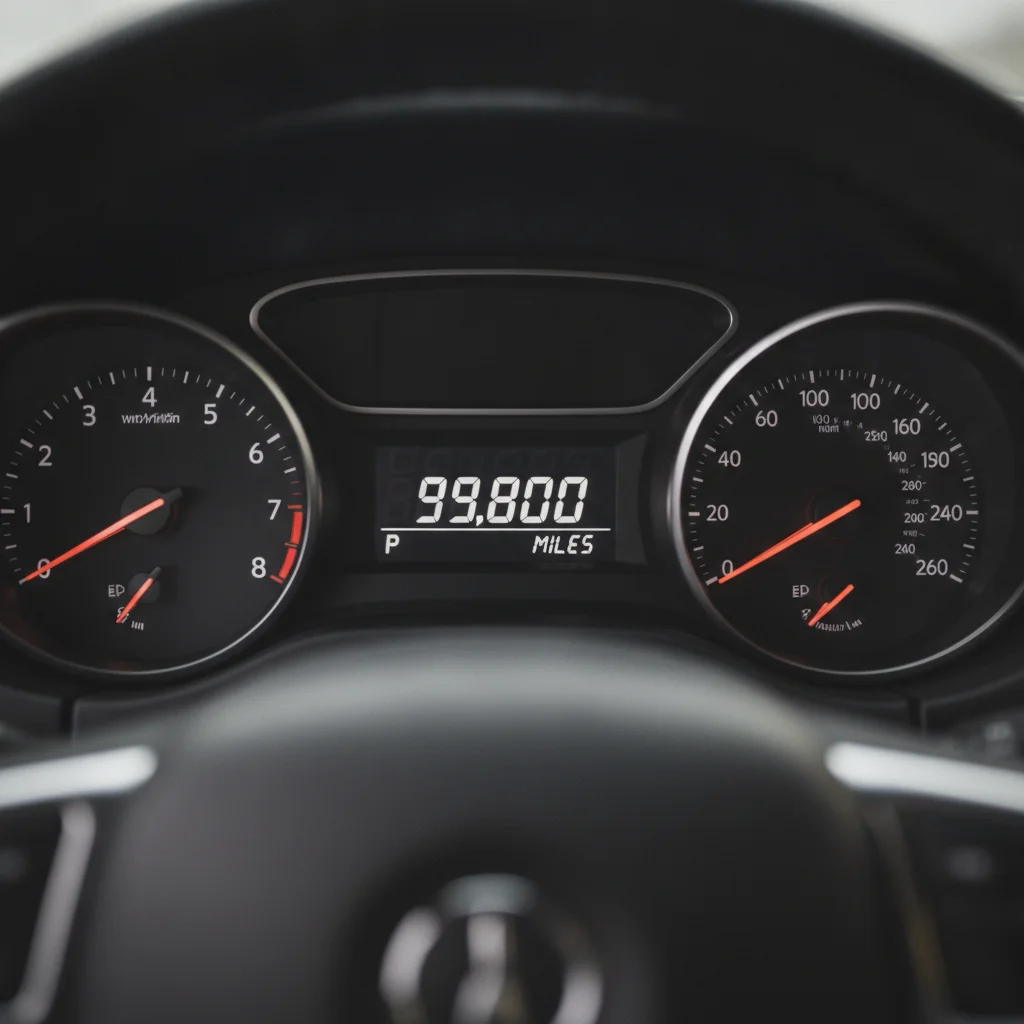
This is the most powerful threshold in the used-car market. Six figures on the odometer carries a symbolic weight that far exceeds what the mechanical reality often justifies — particularly for modern vehicles, which routinely last 150,000 to 200,000 miles with basic maintenance.
Despite this, crossing 100,000 miles typically triggers a price drop of 10–20% beyond what linear depreciation would predict, depending on make and market conditions. Buyers at this stage often assume:
- Major repairs are imminent (timing chain, water pump, transmission)
- The car has been driven hard
- Resale value will be poor when they go to sell
Standard valuation tools like KBB and Edmunds often underestimate this drop because their algorithms smooth depreciation curves. For a more accurate picture of what six-figure-mileage vehicles are actually trading for, pricing a high-mileage car requires supplementing tool data with local market research.
Sellers approaching 100,000 miles face a clear decision: sell before you cross it, or price aggressively after. Cars listed at 98,500 miles will typically attract meaningfully more interest than the same car at 101,000.
10–20%
Extra depreciation hit crossing 100,000 miles
iSeeCars analysis of used-car listings shows vehicles crossing six figures lose 10–20% more than comparable mileage depreciation would predict.
13,500
Average miles driven per year in the U.S.
According to the Federal Highway Administration (2022), U.S. drivers average roughly 13,500 miles annually — meaning 100K arrives in about 7.4 years.
~40%
Share of used-car buyers who cite mileage as top concern
Consumer surveys consistently rank mileage among the top two or three factors buyers consider when evaluating a used vehicle.
60,000 mi
Where powertrain warranty typically ends
Most mainstream manufacturers cap powertrain coverage at 5 years or 60,000 miles, making this the first major financing and buyer-psychology inflection point.
150,000 Miles — The Financing Cliff
Above 150,000 miles, you're largely in cash-buyer territory. Many mainstream lenders — banks, credit unions, and especially captive auto finance arms — will not issue loans for vehicles above this threshold, or they'll impose terms that make financing unattractive (high rates, short repayment windows, large required down payments).
This financing gap dramatically shrinks your buyer pool. The people who can purchase a 150,000-mile vehicle are those who can pay cash outright or those with strong enough credit and relationships with community banks or credit unions willing to take the risk. Both groups tend to be experienced, value-oriented buyers who will negotiate hard.
The upside: buyers in this segment typically know what they're looking for. A 150,000-mile car with a documented maintenance history, recent timing belt replacement, and new tires will appeal to them — because they know how to evaluate it. Preparation matters more than ever at this mileage level, but it needs to target the right concerns.
What's Actually Driving Buyer Hesitation
Understanding the mechanics behind buyer hesitation helps you respond to it more effectively — whether by pricing, preparation, or documentation strategy.
Mileage cliff
An odometer reading at which buyer demand and market pricing drop more sharply than gradual depreciation math would predict. These cliffs are driven by psychological thresholds, warranty expirations, and lender restrictions.
Linear depreciation
The assumption that a vehicle loses value at a constant rate per mile or per year. In practice, depreciation is non-linear — it accelerates at key mileage and age thresholds.
Powertrain warranty
Manufacturer coverage for the engine, transmission, and drivetrain. Usually more generous than bumper-to-bumper coverage — commonly 5 years/60,000 miles — but its expiration is a key buyer risk trigger.
Cash buyer
A buyer who purchases a vehicle without financing. Above 150,000 miles, most lenders won't issue loans, so sellers are largely limited to this pool — typically smaller and more negotiation-savvy.
Pre-sale inspection
An independent mechanical inspection commissioned by the seller before listing a car. The resulting report can be shared with buyers to reduce perceived risk and support the asking price.
Depreciation curve
The plotted relationship between a vehicle's age or mileage and its market value over time. The curve is steepest early in a vehicle's life and at major mileage thresholds.
Risk Pricing
At every threshold, buyers are implicitly pricing in unknown repair risk. A car at 99,000 miles represents a larger uncertainty discount than one at 45,000 miles — not necessarily because it will fail, but because the buyer can't know whether it will. The ask is: will you absorb that uncertainty discount in your price, or give the buyer a reason to reduce it?
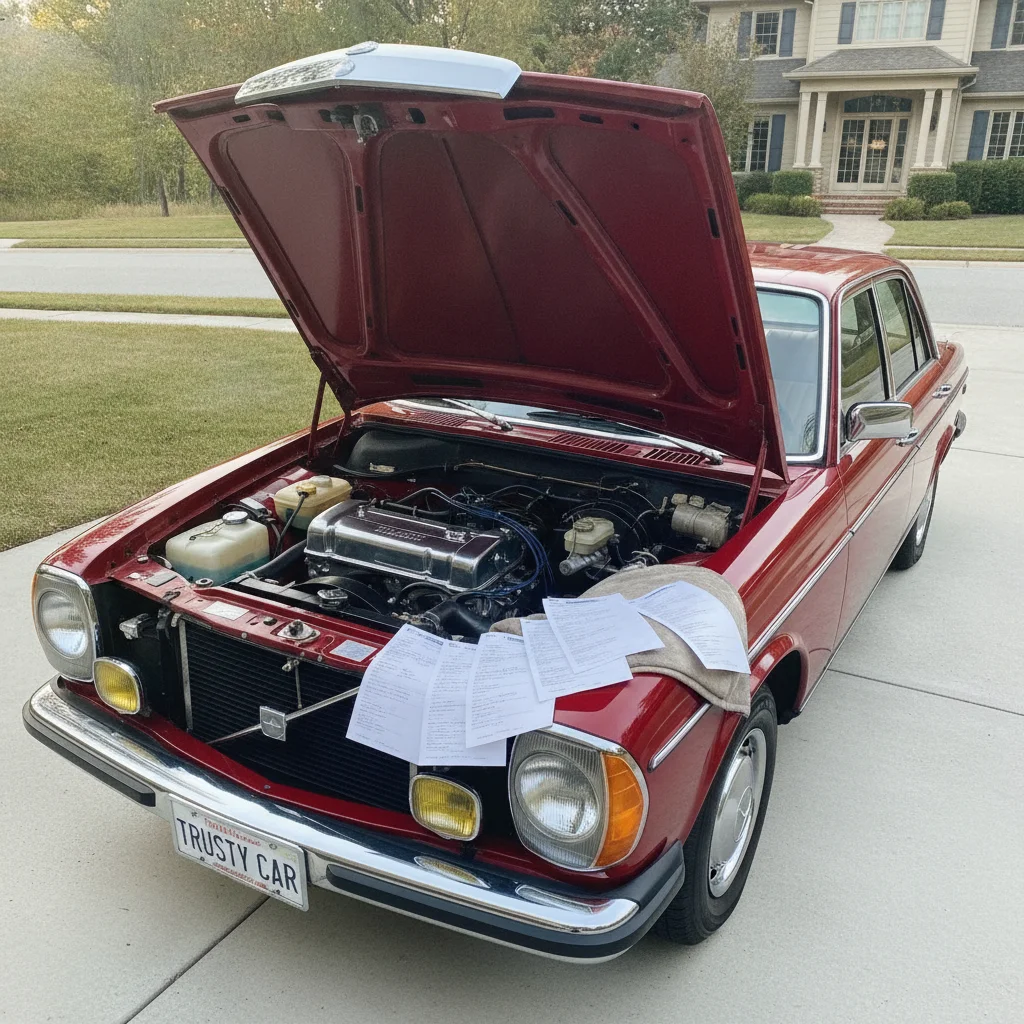
Documented maintenance records are the most powerful tool for reducing that discount. A seller who can show consistent oil changes, on-schedule major services, and a recent pre-sale inspection is asking the buyer to price a known commodity, not an unknown risk.
Resale Horizon Math
Buyers of used cars are often already thinking about their own eventual exit. A car at 75,000 miles might offer 3–4 more years of ownership before it hits the next threshold; a car at 110,000 miles might be a shorter hold. That projected ownership window affects how much a buyer is willing to pay today.
This is especially acute with vehicles known to have finite expensive repairs — cars with timing belts (not chains), models with known transmission vulnerabilities, or brands with expensive parts. For vehicles with those profiles, buyers at threshold mileage will negotiate more aggressively because their resale math pencils out worse.
Lender Behavior
The financing restrictions that kick in at various mileage bands have a compounding effect on demand. Fewer eligible buyers = more leverage for those who remain = lower prices. This is structural, not emotional, and it's worth understanding before you set your asking price.
If you're also considering trading in rather than selling privately, high-mileage trade-in strategies can help you reframe the conversation with dealers who face those same lender constraints on the used-car side.
Reliability Reputation Changes the Math
These thresholds are market-wide averages, but buyer hesitation varies significantly by brand. A Toyota Camry or Honda Accord at 120,000 miles faces far less resistance than a luxury European sedan at the same reading. Brands with strong long-term reliability reputations command a premium that partially offsets the psychological mileage penalty. When pricing your specific vehicle, research recent sold listings for your exact make and model — not just the segment average.
CPO Programs Cut Off at Mileage Limits Too
Certified Pre-Owned programs — which add warranty coverage, inspection, and financing benefits — typically require vehicles to be under 80,000 miles (sometimes lower). If your vehicle is approaching that window and you plan to sell to a dealer, you may have a narrow opportunity for a CPO-eligible trade-in offer that commands a premium over standard used pricing. Ask dealers explicitly whether your car still qualifies.
How to Work With These Thresholds as a Seller
Knowing where the cliffs are doesn't automatically tell you what to do. Here's how to apply this information depending on where your car sits.
If You're Approaching a Threshold
Timing matters. If your car is at 58,000 miles, selling now versus waiting until you hit 62,000 or 65,000 could meaningfully affect your proceeds — both because of the psychological barrier and because of financing eligibility. Run the math: how much will you drive in the next 3–6 months, and does it push you over 60,000 or 75,000? If so, selling sooner may be worth it.
The same logic applies near 100,000. A car at 97,000 miles that you plan to sell in a year will likely be listed at 109,000–112,000 — firmly on the wrong side of the biggest psychological wall in the used-car market. Selling now, even at a slight inconvenience, may preserve more value than the year of utility is worth.
If You're Already Past a Threshold
Price honestly and upfront. Buyers who encounter a vehicle listed above a major threshold at above-market prices will either skip it or open with an aggressive lowball. Pricing near or at market from the start signals that you understand the landscape — which itself builds trust.
Focus your preparation on documentation and mechanical confidence, not cosmetics. A buyer of a 105,000-mile car cares more about seeing 12 oil change records and a recent timing belt service than about new floor mats or a fresh detail. Understanding how mileage affects resale value will help you set realistic expectations before you list.
If Mileage and Condition Don't Match
High mileage on a well-maintained vehicle can actually be a selling point if you frame it correctly. A 95,000-mile car with consistent dealer service records, recent major services completed, and no accidents will outperform a 70,000-mile car with three accidents and no maintenance history — in condition, in reliability, and potentially in price.
The challenge is that buyers can't see what the odometer doesn't show them. Savvy buyers know that the numbers don't always match the condition — but they need evidence to believe it in your favor. Documentation and a pre-sale inspection report do that work.
Mileage Thresholds by Vehicle Segment
| Threshold | Primary Trigger | Most Affected Segments | Typical Price Impact |
|---|---|---|---|
| 30,000–36,000 mi | Warranty expiration approaching | Luxury, European brands | Mild (3–7%) |
| 60,000–75,000 mi | Powertrain warranty end; major service due | Most mainstream vehicles | Moderate (8–15%) |
| 100,000 mi | Psychological barrier; lender cutoffs begin | All segments | Significant (10–20%+) |
| 150,000 mi | Financing near-impossible; cash buyers only | All segments | Severe (market-specific) |
Kelley Blue Book (KBB)
Enter your vehicle's mileage, condition, and ZIP code to get a baseline market value estimate. Most useful for vehicles under 100,000 miles where algorithmic data is dense.
iSeeCars Used Car Price Analysis
Aggregates millions of actual sale listings to show real-market price distributions by mileage range — more granular than standard valuation tools for high-mileage vehicles.
High-Mileage Trade-In Strategies Guide
Covers how to position a high-mileage vehicle with dealers and private buyers to minimize the impact of odometer-driven price discounts.
CARFAX Vehicle History Report
Provides accident history, ownership count, and service records. Sharing a clean CARFAX with your listing directly addresses the uncertainty buyers price into high-mileage vehicles.
Edmunds True Market Value (TMV)
Offers condition-adjusted pricing with regional market data. Cross-reference with KBB and actual sold listings for the most accurate picture of what your car is worth at its current mileage.

All claims are backed by peer-reviewed research. Sources on request.