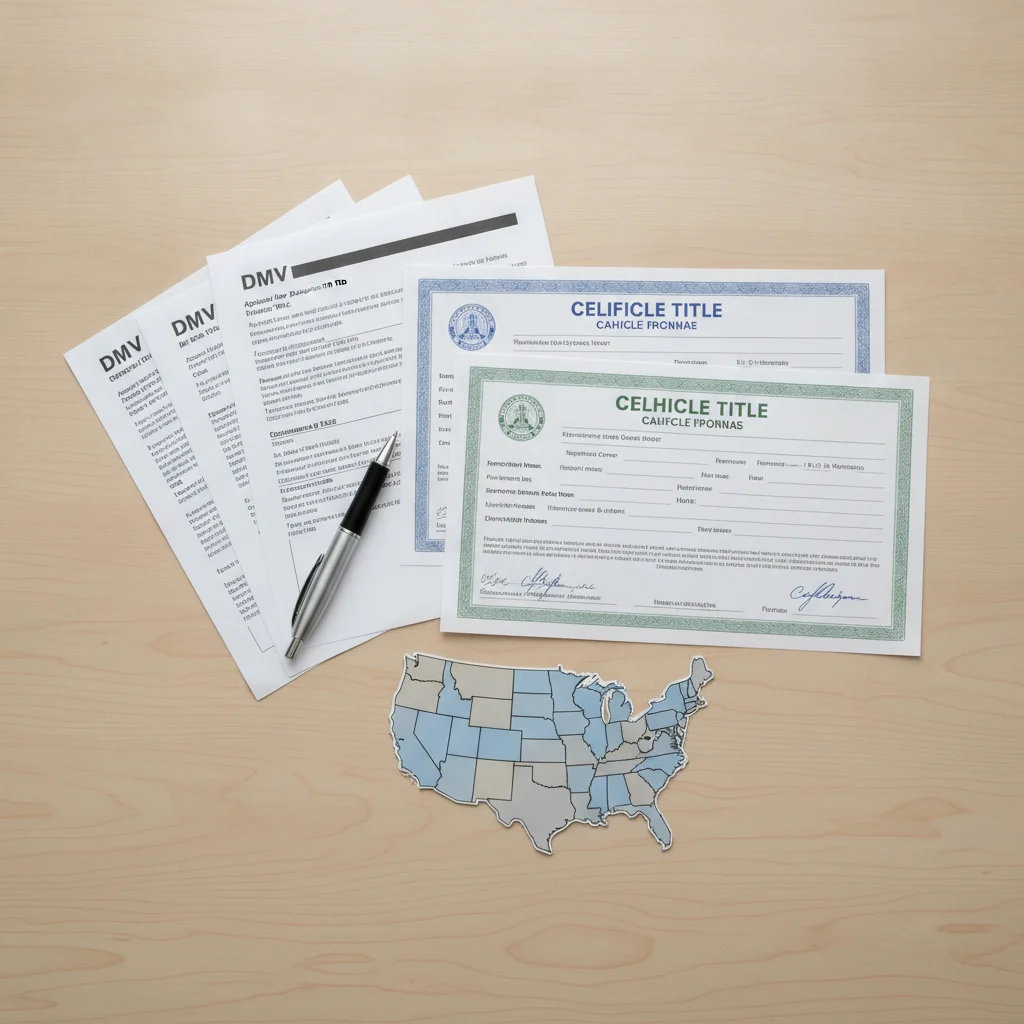
| Typical title transfer fee range | $4 – $200+ (Varies by state; AAMVA state data, 2024) |
| Who pays in most states | Buyer (Standard DMV convention across majority of U.S. states) |
| States requiring notarization | Approximately 20 (American Association of Motor Vehicle Administrators, 2024) |
| Odometer disclosure requirement | Required for vehicles under 10 years old (Federal Truth in Mileage Act (TIMA)) |
| Deadline to transfer title (typical) | 10–30 days after sale (State-specific; varies widely) |
| Penalty for late transfer | $10 – $100+ late fee (Common DMV penalty structure; state-dependent) |
| Duplicate title fee (if original lost) | $5 – $50 (State DMV fee schedules, 2024) |
| States where seller pays transfer fee | A minority — varies by statute (Negotiable in states without statutory assignment of liability) |
The Basic Rule: Who Pays Title Transfer Fees?
In most U.S. states, the buyer pays the title transfer fee. This is the fee the DMV charges to process a new certificate of title in the buyer's name. The logic is straightforward: the buyer is the one receiving the benefit of the new title, so the buyer bears the administrative cost.
That said, "most states" is not "all states," and the picture gets more complicated once you account for all the fees that surround a title transfer — not just the transfer fee itself. The seller often owes costs too, just for different reasons.
| Typical title transfer fee range | $4 – $200+ (Varies by state; AAMVA state data, 2024) |
| Who pays in most states | Buyer (Standard DMV convention across majority of U.S. states) |
| States requiring notarization | Approximately 20 (American Association of Motor Vehicle Administrators, 2024) |
| Odometer disclosure requirement | Required for vehicles under 10 years old (Federal Truth in Mileage Act (TIMA)) |
| Deadline to transfer title (typical) | 10–30 days after sale (State-specific; varies widely) |
| Penalty for late transfer | $10 – $100+ late fee (Common DMV penalty structure; state-dependent) |
| Duplicate title fee (if original lost) | $5 – $50 (State DMV fee schedules, 2024) |
| States where seller pays transfer fee | A minority — varies by statute (Negotiable in states without statutory assignment of liability) |
Here's a useful mental framework:
- Buyer typically pays: title transfer fee, title application fee, registration fees, and sales/use tax
- Seller typically pays: any costs required to clear the title before sale — including lien releases, duplicate title applications, and corrections to errors on the existing title
- Either party may pay: notarization fees, bill of sale preparation, and certain documentation fees, depending on state rules and what you negotiate
This breakdown is a starting point, not a rule carved in stone. Private party transactions are contracts — meaning the parties can agree to split or reassign costs in almost any way they want. The only thing they cannot override is who the DMV actually charges when the paperwork is submitted. For a deeper look at every fee that appears in a transfer, see our full fee breakdown.
What Sellers Are Responsible For
A seller's primary title obligation is to deliver a clean, transferable title. Any cost associated with getting the title into that condition belongs to the seller. These aren't fees you pay at the same counter as the buyer — they're prerequisites.
Lien Releases
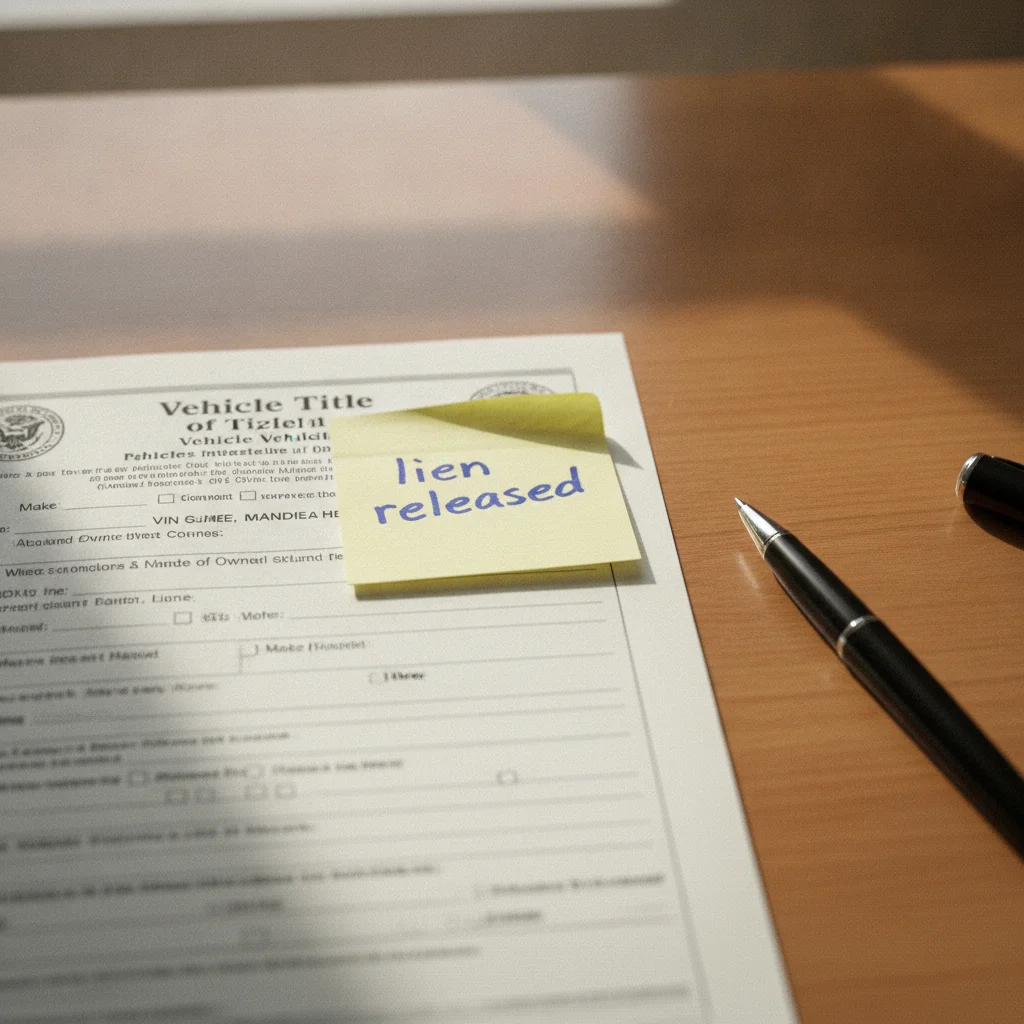
If you financed your vehicle and still carry a loan, your lender holds the title or appears as a lienholder on it. You cannot legally transfer ownership until that lien is released. Lenders typically provide a lien release letter or sign off on the physical title once the loan is paid in full. Some lenders charge an administrative fee (usually $10–$30) for processing this. That cost is the seller's responsibility.
Duplicate Title Applications
Lost your original title? You'll need a duplicate before you can sell. The seller applies for and pays for this — typically $5 to $50 depending on the state. Don't expect the buyer to wait on this step or share the cost. It's your paperwork problem to solve before the deal moves forward.
Title Corrections
If your name is misspelled on the title, your address has changed in ways the state requires updated, or there's any administrative discrepancy, the seller needs to resolve it. Title correction fees vary, but they're never the buyer's burden.
Odometer Disclosure
Under the federal Truth in Mileage Act, sellers of most vehicles under ten years old must provide a signed odometer disclosure at the point of transfer. This is typically printed on the back of the title itself. There's no fee for completing it, but failing to do so — or providing a false reading — is a federal violation. For step-by-step guidance on completing the title paperwork correctly, see our private sale title walkthrough.
Report of Sale (Where Required)
Some states — California being the most notable example — require the seller to file a Notice of Release of Liability or Report of Sale with the DMV after the vehicle is sold. This formally notifies the state that the vehicle is no longer in your name, protecting you from liability if the buyer doesn't re-register it promptly. Filing fees for this are minimal (often free or under $10), but the responsibility sits firmly with the seller.
What Buyers Are Responsible For
Once the seller delivers a clean title, the cost baton passes to the buyer. Buyers carry the bulk of the administrative fees associated with title transfers — the fees tied to the state actually processing and issuing the new title in their name.
$4–$200+
State title transfer fee range nationwide
Fees vary dramatically by state — Arizona charges around $4, while states like Oregon can exceed $100 for standard passenger vehicles.
~20 states
States requiring notarized title signatures
According to AAMVA data, roughly 20 states require a notary's signature on the title or bill of sale to complete a valid transfer.
10–30 days
Typical window to complete title transfer after sale
Most states impose a legal deadline within which the buyer must apply for a new title, with late fees applied for non-compliance.
Up to $1,000
Potential penalty for selling with a defective title
Selling a vehicle with title defects — such as an undisclosed lien — can expose sellers to civil liability and fines in many states.
6–10%
Average state sales tax rate on vehicle purchases
Vehicle sales tax, almost always the buyer's responsibility, typically runs 6–10% of the purchase price and is collected at title transfer.
Title Transfer Fee
This is the DMV's core charge for the transfer transaction itself. It can range from under $10 in some states to well over $100 in others. The fee is set by state statute and is non-negotiable with the DMV — though it's fair game to factor into a price negotiation with the seller.
Title Application Fee
Some states separate the transfer fee from a title application or issuance fee. You may encounter both on your receipt. Together they cover the processing and physical issuance of the new title document.
Sales Tax / Use Tax
This is almost always the buyer's responsibility and is typically the largest single cost in a title transfer transaction. The tax is calculated as a percentage of the vehicle's purchase price (or sometimes its assessed value, whichever is higher). Rates vary from 0% in states with no sales tax (like Oregon and Montana) to over 10% in some municipalities. The buyer pays this directly to the DMV at the time of title application.
Registration Fees
When the buyer applies for a new title, they're usually also required to register the vehicle in their name at the same time. Registration fees are the buyer's responsibility and vary based on vehicle weight, age, and state fee schedules.
Notarization (Where Required)
In states that require notarized signatures on the title or supporting documents, the buyer and seller typically split or share the notarization cost — or whoever initiates the appointment pays. It's a small fee ($5–$25) but worth confirming in advance who is expected to cover it.
Negotiation Doesn't Override State Law
Buyer and seller can agree privately on who reimburses whom for transfer-related costs, but the DMV doesn't care about private deals — it charges whoever submits the paperwork. If state law says the buyer owes the title fee, that fee is collected from whoever appears at the counter. Make sure any cost-sharing agreement is reflected in the final sale price or documented in writing.
Out-of-State Sales Add Complexity
When the buyer and seller live in different states, two DMVs may be involved: the seller's state may require a release or report of sale, while the buyer's state processes the new title. Fee responsibility can split across both jurisdictions. See our guide on <a href="/selling-your-car/preparing-to-sell/paperwork-and-title/selling-across-state-lines-when-title-and-registration-rules-get-complicated">selling across state lines</a> for a full breakdown.
Dealers Handle It Differently Than Private Sellers
When you buy from a dealership, the dealer typically processes the title transfer on your behalf and rolls the associated fees into your closing paperwork. In a private party sale, both parties must take a more active role. The responsibility for filing — and the associated fees — falls directly on the individuals involved.
For the full universe of charges that can appear during a title transaction, including smog certification fees, VIN verification, and dealer document fees, see every title transfer fee explained.
State-by-State Variation: How Much Does It Actually Change?
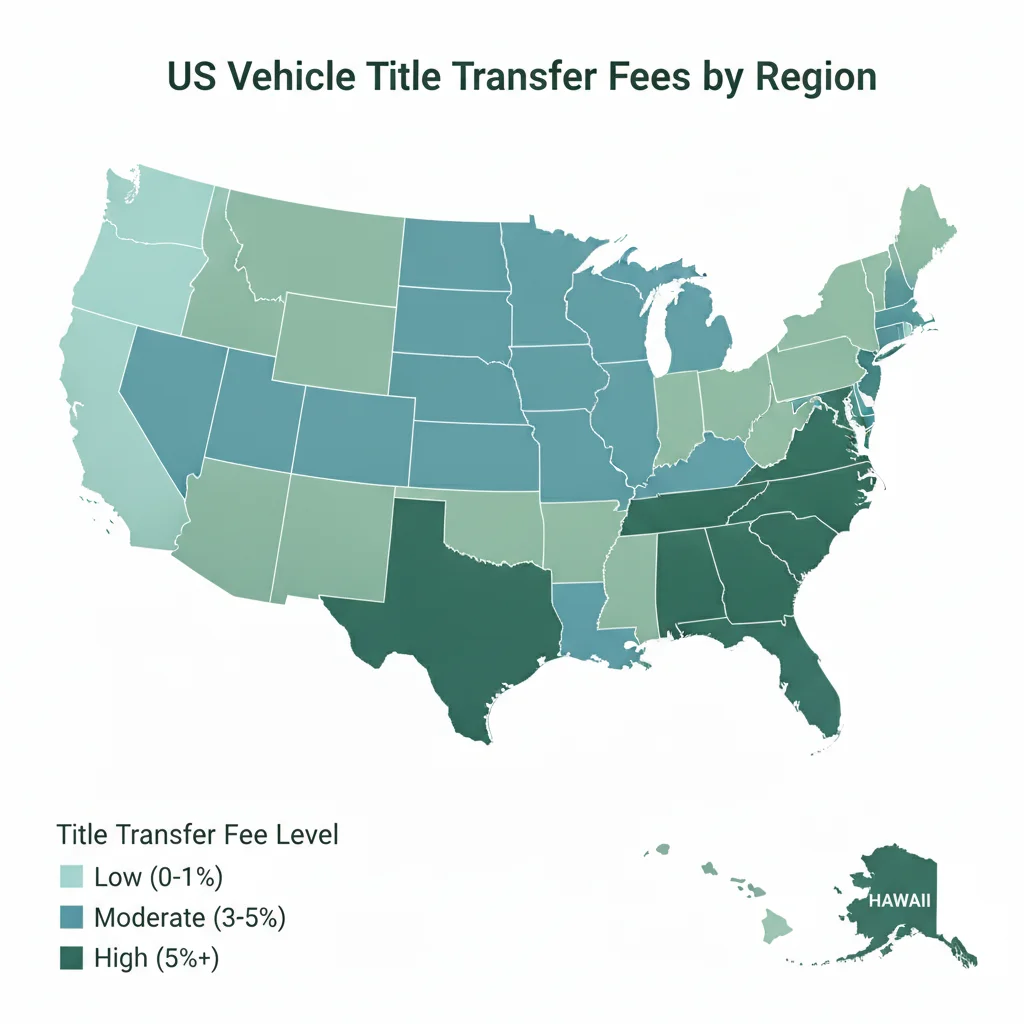
A lot. State DMV fee schedules for title transfers range from nominal (a few dollars) to genuinely significant (over $200 in some scenarios). Beyond the dollar amounts, the rules themselves differ in ways that catch people off guard.
States With Notarization Requirements
Approximately 20 states require notarized signatures on the title or bill of sale. If you're selling in Louisiana, Montana, or Nebraska, for example, plan for an extra step that takes time and costs a small fee. In other states — California, Texas, Florida — no notarization is needed for most standard transfers.
States With Shorter Transfer Deadlines
Most states give buyers 10 to 30 days to complete the title transfer after the sale date. A few states are stricter — Pennsylvania and Maryland, for instance, have deadlines that can result in penalties as quickly as 10 days. Missing the deadline means late fees, and in some cases, the buyer could face registration complications. Sellers benefit from knowing this too: if the buyer delays, the vehicle may still appear in your name for longer than expected.
States With No Sales Tax
Oregon, Montana, New Hampshire, Delaware, and Alaska have no state sales tax, which significantly reduces the buyer's total cost at title transfer. This can actually affect negotiation — buyers in these states have more flexibility in their total budget.
States That Split Fee Responsibility Differently
A small number of states have statutory language that places the title transfer fee on the seller, or creates a shared responsibility model. This is unusual, but it underscores the importance of looking up your specific state's rules before assuming the standard model applies. See our state-by-state title transfer requirements guide for a detailed reference.
Title Transfer Fee
A government-assessed charge paid to the state DMV to officially change the name on a vehicle's certificate of title from seller to buyer. This fee is separate from registration fees and sales tax.
Lien Release
A document from a lender confirming that a car loan has been paid off and the lender no longer has a legal claim on the vehicle. Sellers with an outstanding loan must obtain this before transferring title.
Odometer Disclosure
A federally mandated statement, typically signed on the back of the title, in which the seller certifies the vehicle's current mileage at the time of sale. Required for most vehicles under ten years old.
Bill of Sale
A written agreement documenting the terms of a vehicle sale, including price, date, and the identities of buyer and seller. Some states require it; others treat it as optional but strongly recommended.
Title Application Fee
A fee paid by the buyer to the DMV to process and issue a new certificate of title in their name. This is distinct from the transfer fee itself and may be charged separately.
Notarization Fee
A charge paid to a notary public to witness and authenticate signatures on title documents. Some states require notarized signatures for title transfers; fees typically range from $5 to $25.
Use Tax / Sales Tax
A state tax levied on the purchase price of a vehicle, collected at the time of title transfer. It is almost universally the buyer's responsibility, though some negotiated deals fold it into the final price.
Duplicate Title
A replacement certificate of title issued when the original is lost, damaged, or not available. Sellers must apply for a duplicate before they can legally transfer ownership.
Negotiating Who Pays: What's Actually on the Table
In a private party transaction, the sale price and the fee allocations are negotiable. But most buyers and sellers don't think to negotiate fees at all — they focus on the car price and treat everything else as fixed. That's a mistake, particularly in higher-cost states where title transfer and registration fees can add several hundred dollars.
What Sellers Can Offer
A seller wanting to close a deal quickly might offer to cover the buyer's title transfer fee, fold it into a price reduction, or cover notarization costs. This is more common in soft markets where the car has been listed for a while and the seller needs to add value without dropping the price further.
What Buyers Can Ask For
Buyers can legitimately ask sellers to cover costs that are really the seller's obligation in the first place — such as the lien release processing fee or a duplicate title fee. Beyond that, buyers can ask for a price reduction that factors in the known transfer and registration costs they'll face.
The One Thing You Cannot Negotiate Away
You cannot negotiate with the DMV. Whatever fees are set by statute are collected from whoever walks in the door. Private agreements between buyer and seller about "who pays" refer to reimbursements or adjustments to the sale price — not to any exemption from DMV fees. Make sure any fee-sharing agreement is reflected clearly in the bill of sale or a separate written acknowledgment.
Many sellers assume the handshake is enough, or that the buyer handles all the paperwork after keys are exchanged. See our article on common misconceptions about title transfers to understand where those assumptions go wrong — and the liability they can create.
Negotiation Doesn't Override State Law
Buyer and seller can agree privately on who reimburses whom for transfer-related costs, but the DMV doesn't care about private deals — it charges whoever submits the paperwork. If state law says the buyer owes the title fee, that fee is collected from whoever appears at the counter. Make sure any cost-sharing agreement is reflected in the final sale price or documented in writing.
Out-of-State Sales Add Complexity
When the buyer and seller live in different states, two DMVs may be involved: the seller's state may require a release or report of sale, while the buyer's state processes the new title. Fee responsibility can split across both jurisdictions. See our guide on <a href="/selling-your-car/preparing-to-sell/paperwork-and-title/selling-across-state-lines-when-title-and-registration-rules-get-complicated">selling across state lines</a> for a full breakdown.
Dealers Handle It Differently Than Private Sellers
When you buy from a dealership, the dealer typically processes the title transfer on your behalf and rolls the associated fees into your closing paperwork. In a private party sale, both parties must take a more active role. The responsibility for filing — and the associated fees — falls directly on the individuals involved.
State-by-State Title Transfer Requirements
A comprehensive reference covering title transfer fees, deadlines, and required forms for all 50 states — essential for sellers navigating unfamiliar rules.
Transferring a Title: Every Fee You'll Encounter
A detailed breakdown of every charge that appears during a title transfer — from state fees and tax to lien release costs — so nothing surprises you at the DMV.
AAMVA State DMV Finder
The American Association of Motor Vehicle Administrators maintains direct links to each state's DMV, where you can find the current official title transfer fee schedule.
Transferring a Title in a Private Party Sale
A step-by-step walkthrough of the full private-sale title transfer process — from signing the back of the title to DMV filing and notarization requirements.
Bill of Sale Template
A standard bill of sale template that captures all the details states commonly require: sale price, VIN, odometer reading, and both parties' signatures.
A Quick Reference: Fee Responsibility at a Glance
Use this table as a starting reference. Confirm the details for your specific state before finalizing any sale.
| Fee Type | Typical Payer | Negotiable? | Varies by State? |
|---|---|---|---|
| Title transfer fee | Buyer | Between parties (not DMV) | Yes — significantly |
| Title application/issuance fee | Buyer | Between parties | Yes |
| Sales / use tax | Buyer | No (state-set) | Yes — 0% to 10%+ |
| Registration fee | Buyer | No (state-set) | Yes |
| Lien release fee | Seller | Rarely | Lender-dependent |
| Duplicate title fee | Seller | Rarely | Yes ($5–$50) |
| Notarization fee | Either / split | Yes | Yes (only required in ~20 states) |
| Report of sale / liability release | Seller | No | Yes (required in some states) |
| Title correction fee | Seller | No | Yes |
For a complete, state-specific lookup, the state-by-state title transfer requirements reference covers deadlines, required forms, and fee amounts across all 50 states. And if you're buying or selling across state lines, out-of-state title transfers require their own checklist — one state's rules won't cover the full picture.
Negotiation Doesn't Override State Law
Buyer and seller can agree privately on who reimburses whom for transfer-related costs, but the DMV doesn't care about private deals — it charges whoever submits the paperwork. If state law says the buyer owes the title fee, that fee is collected from whoever appears at the counter. Make sure any cost-sharing agreement is reflected in the final sale price or documented in writing.
Out-of-State Sales Add Complexity
When the buyer and seller live in different states, two DMVs may be involved: the seller's state may require a release or report of sale, while the buyer's state processes the new title. Fee responsibility can split across both jurisdictions. See our guide on <a href="/selling-your-car/preparing-to-sell/paperwork-and-title/selling-across-state-lines-when-title-and-registration-rules-get-complicated">selling across state lines</a> for a full breakdown.
Dealers Handle It Differently Than Private Sellers
When you buy from a dealership, the dealer typically processes the title transfer on your behalf and rolls the associated fees into your closing paperwork. In a private party sale, both parties must take a more active role. The responsibility for filing — and the associated fees — falls directly on the individuals involved.

All claims are backed by peer-reviewed research. Sources on request.