
| States Requiring Notarization | ~12 states (including LA, MD, NY, OH, PA) (State DMV regulations, 2024) |
| Shortest Transfer Deadline | 7 days (Mississippi, Wisconsin) (State MVD statutes) |
| Longest Transfer Deadline | 60 days (Colorado, Maryland, Utah) (State DMV regulations, 2024) |
| Federal Odometer Disclosure Requirement | Mandatory for vehicles under 10 model years old (Truth in Mileage Act, 49 U.S.C. § 32705) |
| States With eTitle Systems | 30+ states (AAMVA eTitle Working Group, 2023) |
| Typical Title Transfer Fee Range | $4 (Arizona) to $187 (Oregon) (State DMV fee schedules, 2024) |
| States Where Plates Transfer With Vehicle | Georgia, South Carolina (State DMV regulations) |
Why Title Transfer Rules Vary So Much
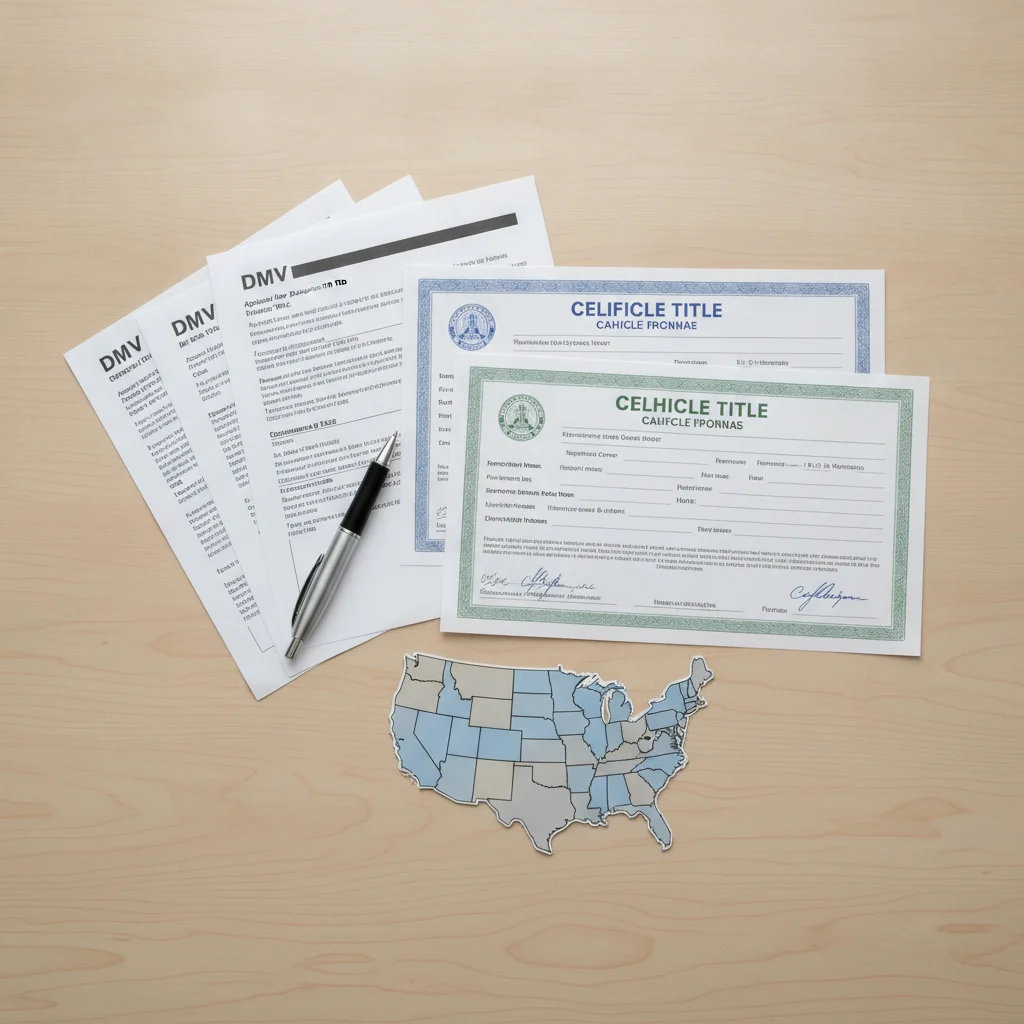
The car title is the legal document that proves vehicle ownership. When a vehicle is sold, the title must be transferred from the seller to the buyer — but how that transfer happens, what forms are required, how much it costs, and how quickly it must be completed are all set by individual state law. There is no federal standard.
This patchwork of rules means a process that takes 10 days and costs $15 in one state may take 30 days and cost $85 in another — with an added notarization requirement thrown in. If you're buying or selling across state lines, the complexity multiplies further. Our guide on selling across state lines covers the specific challenges that arise when the buyer and seller are registered in different states.
The key variables that change state by state include:
- Transfer deadlines — how many days a buyer has to complete the transfer after the sale
- Fees — the flat or percentage-based cost to record the new title
- Required documents — what forms accompany the title itself
- Notarization — whether signatures must be notarized
- Odometer disclosure — whether a separate form is required, or if the title itself carries this
- Lien release documentation — how paid-off loans are evidenced
This reference article is organized to help sellers and buyers quickly identify what their specific state requires. Use it alongside the Paperwork & Contracts hub for a broader view of all transaction documents.
| States Requiring Notarization | ~12 states (including LA, MD, NY, OH, PA) (State DMV regulations, 2024) |
| Shortest Transfer Deadline | 7 days (Mississippi, Wisconsin) (State MVD statutes) |
| Longest Transfer Deadline | 60 days (Colorado, Maryland, Utah) (State DMV regulations, 2024) |
| Federal Odometer Disclosure Requirement | Mandatory for vehicles under 10 model years old (Truth in Mileage Act, 49 U.S.C. § 32705) |
| States With eTitle Systems | 30+ states (AAMVA eTitle Working Group, 2023) |
| Typical Title Transfer Fee Range | $4 (Arizona) to $187 (Oregon) (State DMV fee schedules, 2024) |
| States Where Plates Transfer With Vehicle | Georgia, South Carolina (State DMV regulations) |
Key Terms You Need to Know
Before diving into state-specific rules, make sure you understand the core concepts that appear in title transfer paperwork across all 50 states. Misreading even one of these terms can delay your registration or expose you to legal liability.
Certificate of Title
The official state-issued document that legally establishes who owns a vehicle. The title must be signed over by the seller and submitted to the DMV to complete a transfer of ownership.
Lien
A legal claim on a vehicle held by a lender when the owner has an outstanding auto loan. The lien must be satisfied (the loan paid off) and released before a clean title can be transferred to a new owner.
Odometer Disclosure
A required statement — on the title or a separate form — in which the seller certifies the vehicle's actual mileage at the time of sale. Federal law mandates this disclosure for vehicles under 10 model years old.
Bonded Title
A type of vehicle title issued when the original title is missing or has ownership gaps. The owner purchases a surety bond as collateral, and the DMV issues a title with a bonded notation that typically expires after three years.
Release of Liability
A form filed by a seller with the state DMV after a sale, notifying the state that they no longer own the vehicle. This protects sellers from responsibility for tickets, accidents, or fees incurred after the sale date.
VIN Inspection
A physical inspection performed by a DMV official, law enforcement officer, or licensed dealer to verify that a vehicle's identification number matches its title paperwork. Often required when processing out-of-state titles.
Electronic Title (eTitle)
A vehicle title stored electronically in a state's DMV database rather than printed on paper. Owners who want to sell privately must request a printed copy, which can take one to three weeks.
Bill of Sale
A written document recording the terms of a vehicle sale — including the sale price, date, and buyer/seller information. Required alongside the title in many states for private-party transactions.
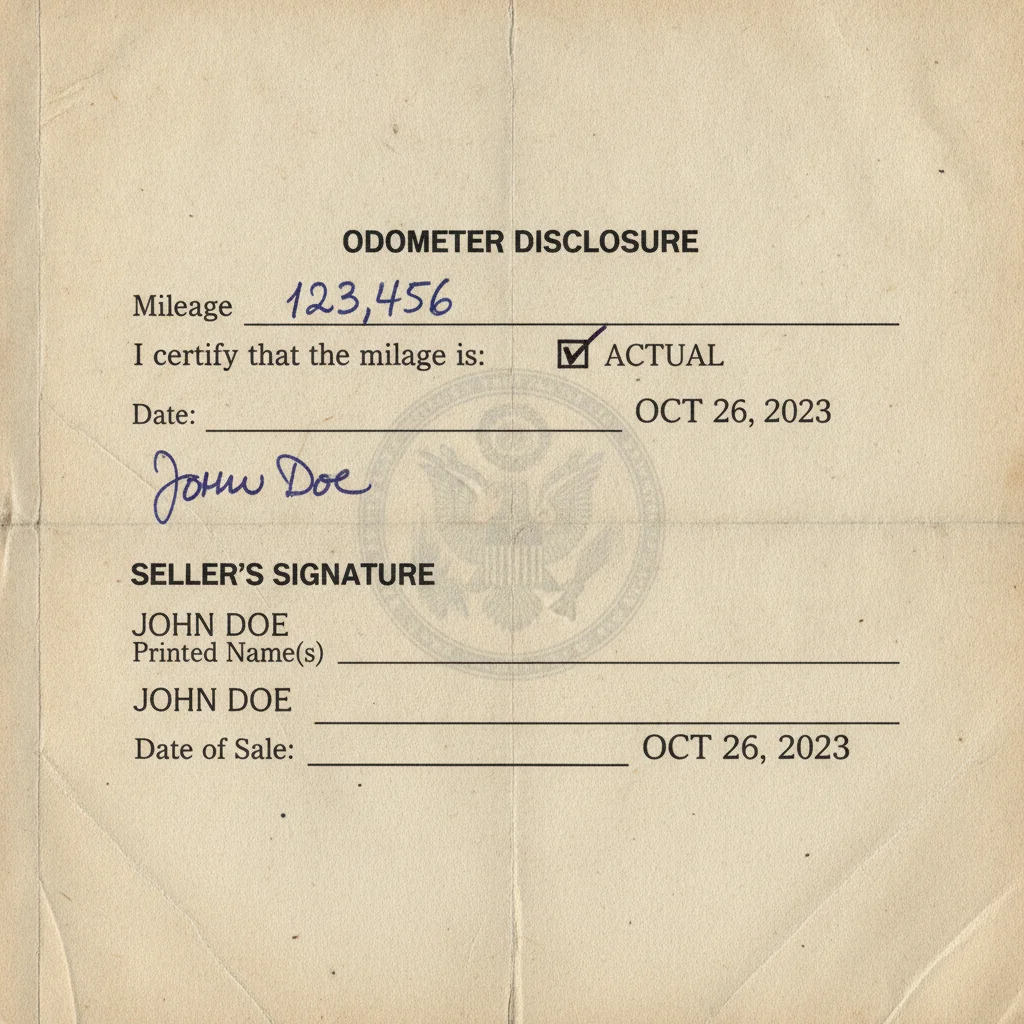
Beyond these definitions, keep in mind that some states use a two-step process: the seller transfers the title, and the buyer separately registers the vehicle. The fees and deadlines for each step may differ. For a detailed breakdown of every charge you might encounter, see every fee in a title transfer explained.
Regional Patterns: How States Cluster on Key Requirements
While every state has its own rules, several regional patterns make it easier to understand the landscape at a glance. Knowing which cluster your state falls into gives you a strong starting framework before you look up the exact details.
~12
States Requiring Notarized Title Signatures
Based on current state DMV regulations; requirements can apply universally or only under specific conditions such as vehicle age or lienholder involvement.
7 days
Fastest Title Transfer Deadline in the US
Both Mississippi and Wisconsin require buyers to complete the title transfer within just 7 days of purchase, the shortest window in the country.
30+
States With Electronic Title (eTitle) Systems
According to the American Association of Motor Vehicle Administrators (AAMVA), over 30 states now operate electronic title programs as of 2023.
$15–$100
Typical Title Transfer Fee Range for Most States
The majority of states charge between $15 and $100 for a standard passenger vehicle title transfer; outliers include Arizona at $4 and Oregon at up to $187.
60 days
Longest Transfer Deadlines in the US
Colorado, Maryland, Kansas, and Utah give buyers up to 60 days to complete a title transfer — the most generous windows in the country.
States That Require Notarization on the Title
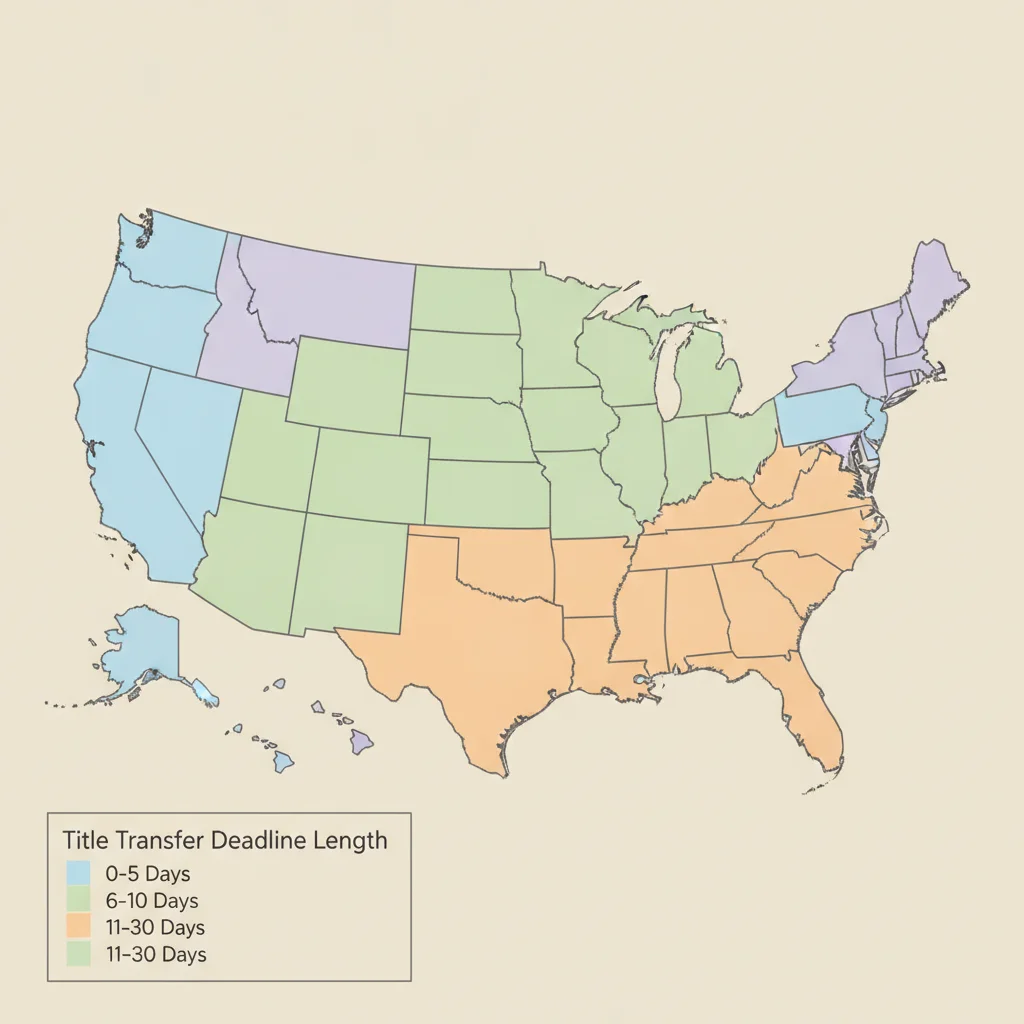
Roughly a dozen states require that the seller's signature on the certificate of title be notarized. This is different from simply signing the back of the title — a notary must witness the signature and stamp the document. States with this requirement include Louisiana, Maryland, Montana, Nebraska, New Hampshire, New York, Ohio, Oklahoma, Pennsylvania, and West Virginia. A few others require notarization only under specific conditions (e.g., when the vehicle is older than a certain year or when a lienholder is involved).
For the complete picture of which states require a notary and under what circumstances, see our state-by-state notarization requirements guide.
States With the Shortest Transfer Windows
Several states give buyers as few as 10 to 15 days to complete the title transfer after purchase. These include Arizona (15 days), California (10 days for private sales), and Florida (30 days). Missing these windows typically triggers a late transfer penalty — a flat fee added on top of the standard transfer cost.
States Where Odometer Disclosure Is Separate
Federal law (the Truth in Mileage Act) requires odometer disclosure on all vehicles under 10 years old. Most states incorporate this directly on the title certificate's back panel. However, states including Idaho, Michigan, and Wyoming use or accept a separate odometer disclosure statement form. If you're selling in one of these states, confirm whether your title has a built-in disclosure section or whether you need a standalone form.
States With Dealer-Only Title Processing
A handful of states, most notably Michigan and Minnesota, funnel certain title transactions through the dealer or a title service agent rather than allowing buyers to walk directly into a DMV branch. In practice, this means private sellers may need to use a third-party title service company for processing, which adds a service fee.
State-by-State Snapshot: Fees, Deadlines, and Notable Requirements
The table below summarizes the most critical data points for each state. Because fee schedules are updated by state legislatures, always confirm the current amount directly with your state DMV before completing a transaction. Fee ranges shown reflect standard passenger vehicle title transfer fees as of the most recent publicly available schedules.
Always Verify Fees Directly With Your State DMV
Fee amounts in this table are approximate and sourced from publicly available state DMV schedules. Individual states update their fee structures through the legislative process, and some counties or municipalities add local fees on top of the state amount. Before completing any transaction, confirm the exact current fee with your state's DMV website or office. A fee that was $15 last year may now be $28.
File Your Release of Liability Immediately
Many sellers overlook the release of liability form, assuming the buyer's responsibility begins the moment the title is signed. In reality, until the state DMV is notified of the sale, you may remain associated with the vehicle in state records. File this form online or by mail as soon as the transaction is complete — don't wait to see if the buyer handles their registration promptly.
Vermont's No-Title Rule for Older Vehicles
Vermont does not require a title for vehicles that are more than 15 model years old. Instead, a bill of sale and a Vermont registration application are used to establish ownership. This rule makes Vermont a common destination for people trying to establish a title for an older vehicle that lacks paperwork — though other states are not always required to honor the resulting Vermont registration as proof of ownership.
| State | Transfer Deadline (Days) | Title Fee (Approx.) | Notarization Required? | Key Requirement |
|---|---|---|---|---|
| Alabama | 20 | $18–$33 | No | Bill of sale required for private sales |
| Alaska | 30 | $15 | No | Odometer disclosure on title back panel |
| Arizona | 15 | $4 + $4 registration | No | AZ title must be applied for at MVD |
| Arkansas | 30 | $10 | No | Sales tax collected at time of title transfer |
| California | 10 (private) / 30 (dealer) | $21 | No | REG 262 form required for private sales |
| Colorado | 60 | $7.20 | No | Emission test may be required pre-transfer |
| Connecticut | 60 | $25 | No | H-13B form required |
| Delaware | 30 | $35 | No | VIN inspection required for out-of-state titles |
| Florida | 30 | $75–$85 | No | HSMV 82040 application required |
| Georgia | 30 | $18 | No | Title Ad Valorem Tax paid at transfer |
| Hawaii | 30 | $5 | No | County fees vary on top of state fee |
| Idaho | 30 | $14 | No | Separate odometer disclosure form required |
| Illinois | 20 | $95 + $15 transfer fee | No | Private party tax based on purchase price |
| Indiana | 45 | $15 | No | BMV Form 1014 required |
| Iowa | 30 | $25 | No | Damage disclosure required by seller |
| Kansas | 60 | $10 | No | TR-12 form for assignment of title |
| Kentucky | 15 | $9 | No | TC 96-182 application required |
| Louisiana | 40 | $68.50+ | Yes | Act of sale must be notarized |
| Maine | 30 | $33 | No | Lien release letter required if applicable |
| Maryland | 60 | $100 | Yes | MVA Form VR-005 required |
| Massachusetts | 10 | $25 | No | RMV-1 application required |
| Michigan | 15 | $15 | No | Title application through SOS office or authorized dealer |
| Minnesota | 10 | $8.25 | No | PS2000 form required; processed via deputy registrar |
| Mississippi | 7 | $9 | No | Shortest transfer deadline in the US |
| Missouri | 30 | $8.50 | No | Form 108 title application required |
| Montana | 20 | $12–$15 | Yes | Notarized signature on title required |
| Nebraska | 30 | $10 | Yes | Title must be notarized at DMV |
| Nevada | 30 | $29.25 | No | Smog check required before transfer |
| New Hampshire | 20 | $25 | Yes | Notarized title required |
| New Jersey | 10 | $60 | No | MVC Form OS/SS-7 required |
| New Mexico | 30 | $5 | No | MVD Form 10005 required |
| New York | 30 | $50 | Yes | Notarized MV-912 form required |
| North Carolina | 28 | $56 | No | Title application Form MVR-1 required |
| North Dakota | 30 | $5 | No | SFN 2872 form for title application |
| Ohio | 30 | $15 | Yes | Signature must be notarized on title |
| Oklahoma | 30 | $11 | Yes | Form 701-7 must be notarized |
| Oregon | 30 | $98–$187 (initial title) | No | TRIP program required for out-of-state titles |
| Pennsylvania | 20 | $53 | Yes | Form MV-4ST must be notarized |
| Rhode Island | 10 | $52.50 | No | Title application through DMV in person |
| South Carolina | 45 | $15 | No | Form 400 required; sales tax at time of transfer |
| South Dakota | 45 | $10 | No | Title application submitted to county treasurer |
| Tennessee | 20 | $13 | No | County clerk handles all title transfers |
| Texas | 30 | $28–$33 | No | Form 130-U required; sales tax collected at transfer |
| Utah | 60 | $6 | No | TC-656 form required |
| Vermont | 15 | $35 | No | Bill of sale required; no title for vehicles over 15 years old |
| Virginia | 30 | $15 | No | VSA 17A application required |
| Washington | 15 | $12–$15 | No | Use tax collected at time of transfer |
| West Virginia | 30 | $15 | Yes | Notarized title required by DMV |
| Wisconsin | 7 | $69.50 | No | MV1 application; one of two states with 7-day window |
| Wyoming | 30 | $15 | No | Separate odometer statement form required |
For a broader view of what you'll owe in registration fees and property taxes beyond the title transfer itself, see our state-by-state car ownership taxes and fees reference.
What Sellers Must Do Before Signing the Title
Regardless of which state you're in, sellers carry specific obligations before they hand over a signed title. Skipping any of these steps can create legal problems — or leave you responsible for parking tickets and accidents that happen after the sale.
1. Satisfy Any Outstanding Liens
If you still owe money on the vehicle, your lender holds a lien on the title. You cannot legally transfer a clean title to a buyer until that lien is released. In most states, this means paying off the loan balance and obtaining a lien release letter from your lender. Some states — like California and Texas — allow the lender to issue an electronic lien release directly to the DMV, which speeds up the process considerably. Others require you to mail the physical title to the lender, have them endorse it, and return it to you — a process that can take 2–6 weeks.
2. Complete the Odometer Disclosure
Federal law requires sellers to disclose the actual mileage on vehicles under 10 model years old. On most modern titles, there is a dedicated section on the back of the title for this. Fill it in accurately and legibly. Using correction fluid (white-out) on any part of the title — including the odometer section — is a red flag that can void the transfer in many states.
3. Disclose Known Damage or Salvage History
Many states legally require sellers to disclose if a vehicle has a salvage or rebuilt title, or has sustained significant flood or structural damage. States like Iowa, Minnesota, and Oregon have explicit statutory disclosure requirements for private sellers. Failing to disclose can expose you to civil liability even after the sale is complete. Our companion article on private sale paperwork requirements by state covers these disclosure rules in more depth.
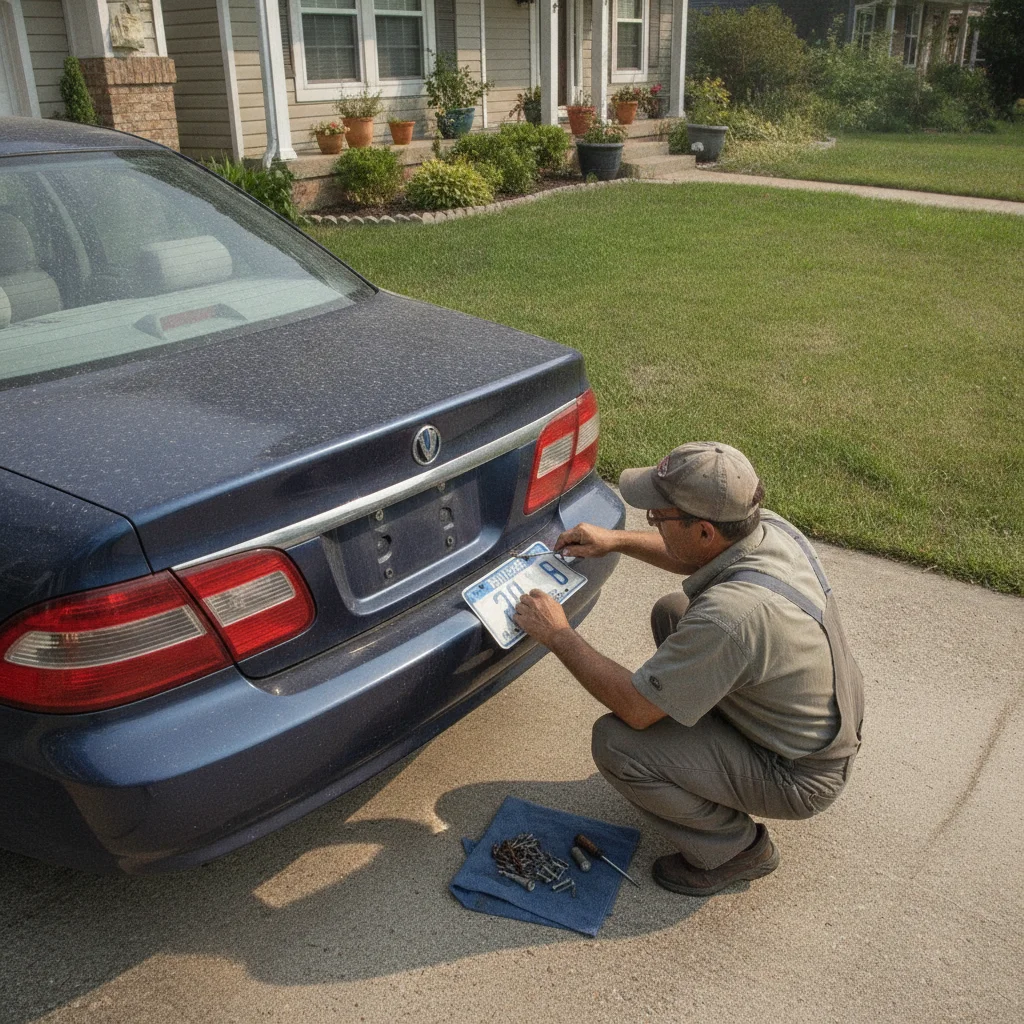
4. Remove Your License Plates
In most states, license plates belong to the seller, not the vehicle. Remove your plates before or at the time of sale. This matters because if the buyer drives away with your plates, any toll violations or traffic infractions will be tied to your registration until you notify the DMV. In a few states — like Georgia and South Carolina — plates do transfer with the vehicle, so check your state's rule before the handoff.
5. Notify Your State DMV of the Sale
Many states allow — and some require — sellers to file a Notice of Transfer or Release of Liability form with the DMV after a sale is completed. This document protects you if the buyer doesn't immediately re-register the vehicle. States with a formal release of liability process include California (REG 138), Florida (HSMV 82050), and Texas (Form VTR-346). Filing this form is one of the most overlooked steps in private-party sales, and it is the single best way to protect yourself from liability after handing over the keys.
Always Verify Fees Directly With Your State DMV
Fee amounts in this table are approximate and sourced from publicly available state DMV schedules. Individual states update their fee structures through the legislative process, and some counties or municipalities add local fees on top of the state amount. Before completing any transaction, confirm the exact current fee with your state's DMV website or office. A fee that was $15 last year may now be $28.
File Your Release of Liability Immediately
Many sellers overlook the release of liability form, assuming the buyer's responsibility begins the moment the title is signed. In reality, until the state DMV is notified of the sale, you may remain associated with the vehicle in state records. File this form online or by mail as soon as the transaction is complete — don't wait to see if the buyer handles their registration promptly.
Vermont's No-Title Rule for Older Vehicles
Vermont does not require a title for vehicles that are more than 15 model years old. Instead, a bill of sale and a Vermont registration application are used to establish ownership. This rule makes Vermont a common destination for people trying to establish a title for an older vehicle that lacks paperwork — though other states are not always required to honor the resulting Vermont registration as proof of ownership.
For a step-by-step walkthrough of the actual transfer process — including what to bring to the DMV and common reasons transfers get rejected — see our guide on transferring a used car title from the buyer's perspective.
How to Handle Special Situations
Standard title transfers cover most sales, but several common scenarios introduce complications that standard state rules don't fully address on their face.
Out-of-State Titles
When a buyer purchases a vehicle titled in another state, their home state's DMV will require a VIN inspection before issuing a new in-state title. This is a physical check to confirm the vehicle's identification number matches the paperwork. Some states perform this inspection at the DMV; others require it be done by a licensed dealer or law enforcement officer. Oregon's TRIP (Title Recovery Incentive Program) and states like Delaware and Nevada have specific out-of-state title processes worth researching in advance. See our article on selling across state lines for a detailed breakdown.
Electronic Titles (eTitle)
Over 30 states now issue electronic titles, meaning the physical paper title is held electronically by the DMV rather than mailed to the owner. If your state has an eTitle system and the vehicle is paid off, you may need to request a printed title before you can sell privately. This request can take 7–21 days depending on the state, so plan ahead. States that have fully implemented eTitle systems include California, Florida, Ohio, and Texas.
Vehicles Without a Title (Bonded Titles)
If the original title is lost, destroyed, or was never properly transferred in a prior sale, some states allow a bonded title process. The owner purchases a surety bond equal to 1.5× to 2× the vehicle's value, which acts as insurance against future ownership disputes. The DMV then issues a bonded title that carries a notation for a defined period — typically 3 years — after which the notation is removed. States including Texas, California, Georgia, and Washington offer formal bonded title programs. This is often the only viable path when buying a vehicle with a title gap in its history.

Inherited Vehicles
Transferring a title after the owner's death involves a different set of documents entirely. Most states require a certified copy of the death certificate and either a court order (for estates in probate) or a simplified affidavit process for small estates. States with a low estate threshold — like California ($166,250) — allow heirs to use an affidavit to transfer vehicle titles without probate court involvement. The specific form and threshold vary widely.
Who Pays What
Title transfer fees are typically the buyer's responsibility, but that's not universal. Dealerships sometimes absorb certain fees as part of negotiations, and private sellers occasionally cover transfer costs to close a deal. Understanding who is legally responsible versus who negotiates to pay is a useful distinction. Our article on title transfer fees and who pays them lays out the standard breakdown by state and transaction type.
Your State DMV Website
Every state's Department of Motor Vehicles maintains an official website with current fee schedules, required forms, and transfer deadlines. Always start here to confirm the exact requirements for your specific state before completing any title transaction.
AAMVA Title and Registration Resources
The American Association of Motor Vehicle Administrators (AAMVA) publishes resources on title standards, eTitle programs, and interstate title issues. Useful for understanding how states coordinate on cross-border transactions.
CARFAX Vehicle History Report
A vehicle history report can reveal prior salvage or rebuilt title designations, lien history, and odometer readings — all of which affect what title documents will be required and what disclosures the seller must make.
Notarization Requirements by State Guide
Our companion article covers exactly which states require notarized title signatures, under what conditions, and how to find a notary quickly — essential reading if your state is on the notarization list.
NHTSA VIN Decoder
The National Highway Traffic Safety Administration's free VIN decoder confirms a vehicle's make, model, year, and recall history. Useful for verifying that the VIN on the title matches the vehicle before signing anything.
Title Transfer Fee Calculator (by State)
Several state DMV websites offer online fee calculators that estimate the total cost of a title transfer based on vehicle type, sale price, and county. Check your state's DMV portal for availability.
For state-specific online purchases — where the vehicle may be in a different state than the buyer — rules around taxes and title transfer can diverge further. Our guide on state-specific rules for online car purchases addresses those edge cases directly.

All claims are backed by peer-reviewed research. Sources on request.