Key Takeaways
Title Transfer Fee
A title transfer fee is a government charge collected by your state's motor vehicle agency when legal ownership of a vehicle changes hands. It covers the administrative cost of retiring the old title and issuing a new certificate of title in the buyer's name. This fee is separate from sales tax, registration, and any dealer documentation charges — each of which is its own distinct line item.
In most states the title transfer fee is a flat statutory amount set by the legislature, but some states tie it to the vehicle's weight class or assessed value. It is distinct from the lien recording fee, which is charged additionally when a lender's interest must be noted on the new title.
Why a Simple Ownership Change Generates So Many Charges
When you hand over a check and take a set of keys, you might assume the car is legally yours. It isn't — not fully — until the state issues a new certificate of title with your name on it. That paperwork process touches multiple government systems, and each one carries its own price tag. Think of it like recording a deed on real estate: every layer of official recognition costs something.
The confusion most buyers experience comes from conflating these charges. Sales tax, the title fee, the registration fee, a lien recording fee, and a county clerk's processing fee are all separate instruments that happen to show up at roughly the same moment — usually at the DMV counter or at a dealer's finance office. Understanding what each one is for makes the total easier to stomach and much easier to budget.
The paperwork and contracts involved in buying a car can look overwhelming, but every fee on that stack has a defined purpose. This article breaks each one down so you know exactly where your money is going.
The Core Title Transfer Fee: What It Funds
The base title transfer fee is a statutory charge that pays for the state's cost of processing the ownership change in its motor vehicle database, printing a new paper title certificate, and mailing or issuing it to the registered owner or lienholder. This is typically a flat fee, though some states adjust it by vehicle weight or type.
$10–$95
Typical state title transfer fee range
Based on published DMV fee schedules across all 50 states as of 2024; most states fall between $15 and $50.
4%–10%
State sales/use tax rate on vehicle purchases
Rates vary widely; combined state and local rates can exceed 10% in some jurisdictions, per state revenue department schedules.
10–30 days
Typical title transfer filing deadline after purchase
Most states impose this window; missing it triggers late penalties and can complicate insurance and resale paperwork.
$100–$800+
Dealer documentation fee range
This is a dealership administrative charge — not a government fee — and varies significantly by state regulation and dealership policy.
2x
Title fees paid over life of a financed vehicle
Buyers who finance typically pay the title fee at purchase (with lien notation) and again at payoff when requesting a clean title.
In practical terms, this fee covers a data-entry clerk, a printing system, postage, and a share of the DMV's overhead. It sounds simple because it is. Depending on your state, you'll pay anywhere from about $10 in low-cost states like Arizona to around $95 in higher-cost states like California. The fee rarely changes year to year unless the legislature amends the motor vehicle code.
When buying from a dealer, you'll see this fee itemized on your purchase agreement. In a private-party transaction, you pay it directly to the DMV. Either way, it's the same government charge — dealers simply pass it through on your behalf. For a detailed look at what your specific state charges, the state-by-state vehicle ownership fee reference is a useful starting point.
Title Fee vs. Registration Fee: Not the Same Thing
First-time buyers often confuse the title transfer fee with the registration fee. The title fee is a one-time charge each time ownership changes. The registration fee is an annual charge that authorizes the vehicle to be driven on public roads. Both are typically collected at the same transaction, but they fund different government functions and appear as separate line items.
Inherited and Gifted Vehicles Have Different Tax Rules
If you receive a vehicle as a gift or through an estate, many states waive or significantly reduce the sales or use tax, since no money changed hands in a traditional sale. You'll still pay the title transfer fee and registration fees. Rules vary considerably by state, so verify with your local DMV before assuming you'll get a full tax exemption.
Always Get Your Fee Total in Writing Before Signing
When buying through a dealer, ask for an itemized out-the-door price breakdown before you sign anything. This lists every government fee, the dealer doc fee, and any add-ons separately. If a line item is vague or unlabeled, ask for clarification. Dealers are required to disclose all fees, and any legitimate charge should have a clear explanation.
Sales Tax and Use Tax: Almost Always the Biggest Number
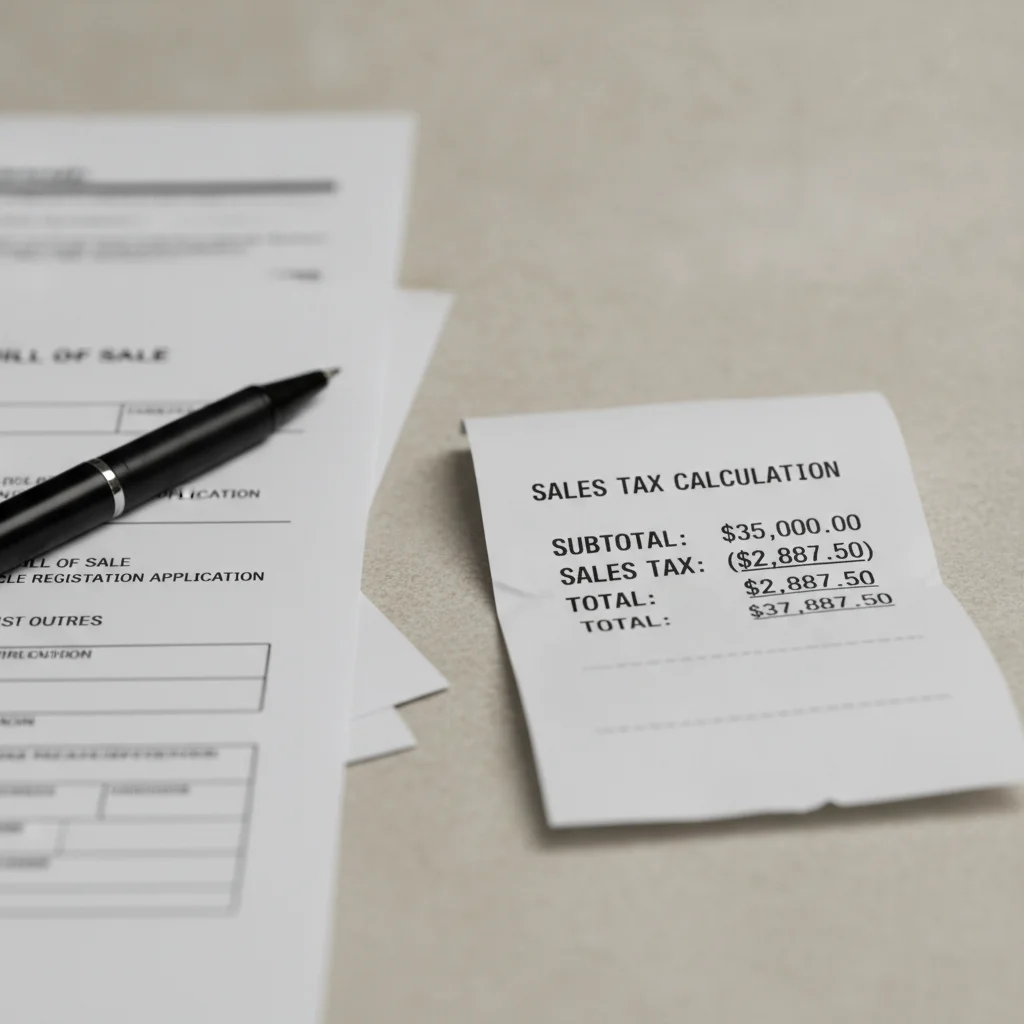
If the title transfer fee is the administrative charge, sales tax is the revenue charge — and it dwarfs everything else in most transactions. When you buy a vehicle, the state (and sometimes the county or city) taxes the transaction just like a retail purchase. On a $30,000 car in a state with a 6% rate, that's $1,800 in tax alone.
In private-party sales, states usually collect a use tax instead of a traditional sales tax, but the rate is generally the same. Use tax is designed to capture revenue the state would have collected had the transaction gone through a licensed dealer. Critically, most states calculate it on whichever is higher — the stated sale price or the vehicle's book value. If you buy a truck for $8,000 from a friend but the state's database shows book value at $12,000, expect to pay tax on $12,000.
“The purchase price is just the opening bid. By the time you account for taxes, title, and registration, the true cost of buying a car is typically 8 to 12 percent higher than the negotiated price — and most buyers don't find that out until they're sitting at the DMV.”
— Ronald Montoya, Senior Consumer Advice Editor, Edmunds
One common misconception is that a low sale price between private parties automatically means a lower tax bill. Some states accept a bill of sale at face value; others do not. Check your state's DMV website or consult the state-by-state title transfer requirements before assuming you'll pay less than book value taxes.
Lien Recording Fee: What Lenders Require on the Title
When you finance a vehicle purchase, the lender doesn't just trust you to repay the loan — they record their interest directly on the title document. That notation, called a lien, legally prevents you from selling the vehicle or transferring the title again without first satisfying the debt. The state charges a separate fee to add that lien notation to the title record.
Lien recording fees are typically modest — often between $10 and $30 — but they're non-negotiable when financing is involved. If you later pay off the loan and want a clean title issued in your name alone, you'll pay another small fee for the lien release and a new title issuance. Over the life of a financed vehicle, you may pay the title fee twice: once to add the lien and once to remove it.
Use Your State DMV's Fee Estimator First
Most state DMV websites offer a free fee estimator tool where you enter the vehicle's purchase price, model year, and county to get a ballpark total. Run this calculation before you agree to a final price with any seller. It takes under five minutes and prevents the unpleasant surprise of needing $1,000 more than you budgeted on the day of transfer.
Pay Off Your Loan? Request the Clean Title Promptly
When you make your final loan payment, contact your lender to obtain the lien release and request a clean title — one with your name only and no lender notation. Some lenders send it automatically; others require a written request. Acting promptly keeps your records clean and makes future resale straightforward. You'll pay a small state fee for the new title, but it's worth doing immediately.
File the Transfer Within the Deadline, Every Time
Set a calendar reminder for your state's title transfer deadline the day you complete a vehicle purchase. Filing even one day late triggers a penalty fee in most states, and the longer you wait the more complex the situation becomes — especially if the seller has since moved or become unreachable. The deadline is always measured from the date of sale, not the date you decided to go to the DMV.
It's worth noting that some states combine the lien recording fee into the general title fee for simplicity, so you may not see it as a distinct line item. If you're financing and your fee total looks lower than expected, check whether your state bundles these charges.
Registration Fees: Separate From the Title but Paid at the Same Time
The title and the registration are two different documents that accomplish two different things. The title proves ownership. The registration proves the vehicle is authorized to be operated on public roads in your state for a given year. When you transfer a title, you almost always have to register the vehicle simultaneously — which means paying registration fees at the same window.
Registration fees vary widely by state and are often structured by vehicle weight, age, or assessed value. In some states like California, the registration fee is tied to the vehicle's purchase price and can be several hundred dollars annually. In flat-fee states, every passenger car might cost $40 to register regardless of value.
Because registration is paid annually while the title fee is a one-time charge per ownership change, registration costs typically represent a far larger lifetime expense than the title transfer itself. For a full breakdown of how registration costs stack up across states, the car ownership taxes and fees state-by-state reference provides a comprehensive lookup.
Late Fees, Penalties, and Other Avoidable Charges
Every state sets a deadline for filing a title transfer after a sale — commonly 10, 15, or 30 days. Miss that window and you'll pay a penalty on top of the standard fees. These late charges aren't steep individually, but they signal a bigger problem: a title not properly transferred means you're operating a vehicle you don't fully own on paper, which creates complications with insurance claims, registration renewals, and resale down the road.
Beyond late fees, watch for these additional charges that catch buyers off guard:
- County clerk filing fee: Some states route title paperwork through county offices, which add their own processing charge of $5 to $20.
- Notarization fee: A handful of states require notarized signatures on the title or bill of sale. Notary fees run $5 to $15 per signature.
- Duplicate title fee: If the seller has lost the original title and must apply for a duplicate before the sale can proceed, that typically costs $15 to $25 and adds several days to the process.
- Emission or safety inspection fee: Some states require a passed inspection before a title transfer is complete, adding another $20 to $75 depending on the test required.
- Dealer documentation fee: This is not a government fee — it's a dealership charge for processing the paperwork. It can range from under $100 to over $800. It's worth knowing this fee is often negotiable or can be offset elsewhere in the deal.
For a closer look at how these costs are split between buyers and sellers in various scenarios, see title transfer fees: what sellers pay and what buyers pay.
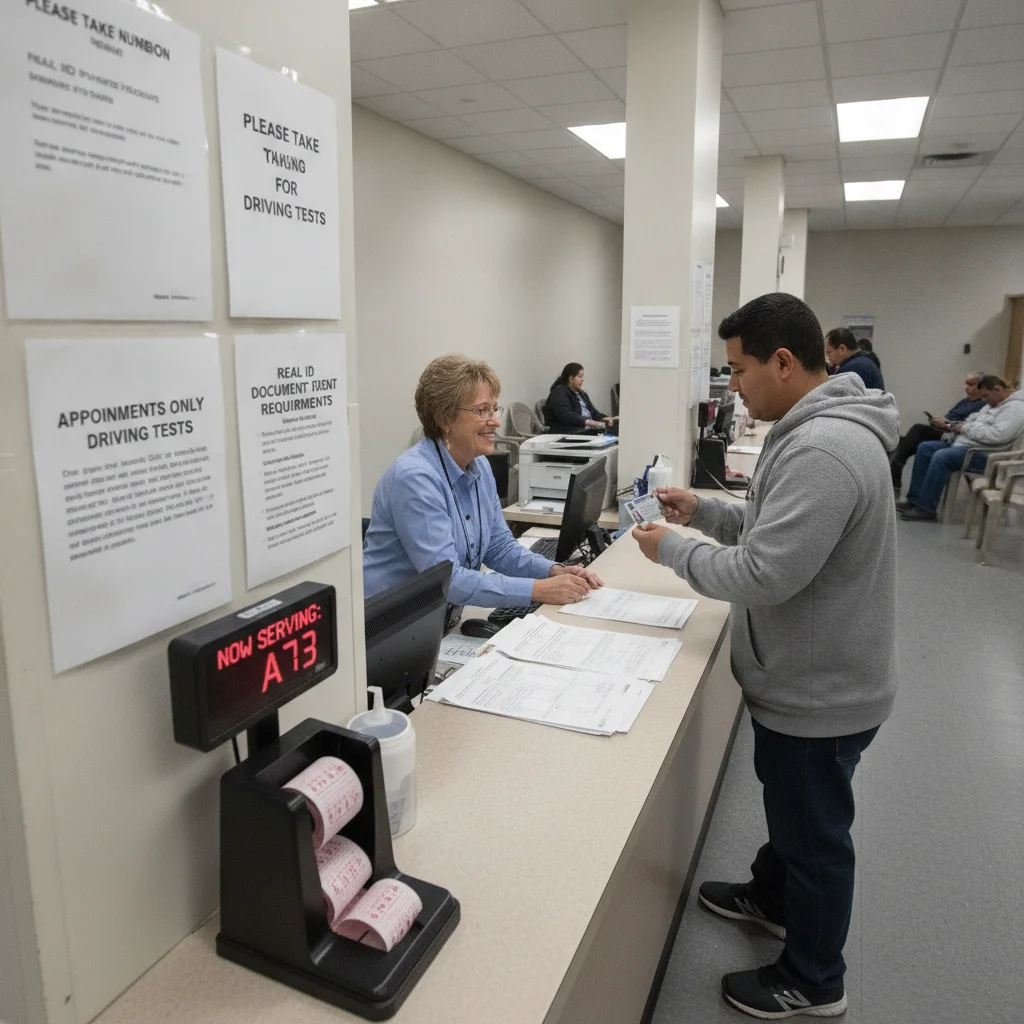
How to Prepare Financially Before You Go to the DMV
The most practical thing you can do before finalizing any vehicle purchase is to calculate your total out-of-pocket cost before you agree to a price. That means looking up your state's title transfer fee, sales or use tax rate, registration fee schedule, and any county surcharges. Most state DMV websites have fee estimators — use them.
Use Your State DMV's Fee Estimator First
Most state DMV websites offer a free fee estimator tool where you enter the vehicle's purchase price, model year, and county to get a ballpark total. Run this calculation before you agree to a final price with any seller. It takes under five minutes and prevents the unpleasant surprise of needing $1,000 more than you budgeted on the day of transfer.
Pay Off Your Loan? Request the Clean Title Promptly
When you make your final loan payment, contact your lender to obtain the lien release and request a clean title — one with your name only and no lender notation. Some lenders send it automatically; others require a written request. Acting promptly keeps your records clean and makes future resale straightforward. You'll pay a small state fee for the new title, but it's worth doing immediately.
File the Transfer Within the Deadline, Every Time
Set a calendar reminder for your state's title transfer deadline the day you complete a vehicle purchase. Filing even one day late triggers a penalty fee in most states, and the longer you wait the more complex the situation becomes — especially if the seller has since moved or become unreachable. The deadline is always measured from the date of sale, not the date you decided to go to the DMV.
Here's a simple checklist of the amounts to research before your purchase:
- State title transfer fee (flat or weight-based)
- Sales or use tax rate (state + county + city if applicable)
- First-year registration fee (often based on vehicle value or weight)
- Lien recording fee (if financing)
- County or clerk filing fee (if applicable)
- Inspection fee (if your state requires one for transfer)
- Late fee schedule (so you know your deadline)
If you're buying through a private party, the step-by-step private party title transfer walkthrough covers the exact sequence so you don't miss a form or a deadline. And if you want to understand which documents actually change hands in the process, title and registration documents: what transfers when you buy a car is the clearest breakdown available.
One final point worth repeating: none of these fees are optional, and most can't be negotiated with the government. What you can negotiate is the vehicle price itself — and any dealer documentation fee. Going in with a clear picture of the fee stack puts you in a much stronger position to evaluate whether a deal actually pencils out at a price you can afford.
Title Fee vs. Registration Fee: Not the Same Thing
First-time buyers often confuse the title transfer fee with the registration fee. The title fee is a one-time charge each time ownership changes. The registration fee is an annual charge that authorizes the vehicle to be driven on public roads. Both are typically collected at the same transaction, but they fund different government functions and appear as separate line items.
Inherited and Gifted Vehicles Have Different Tax Rules
If you receive a vehicle as a gift or through an estate, many states waive or significantly reduce the sales or use tax, since no money changed hands in a traditional sale. You'll still pay the title transfer fee and registration fees. Rules vary considerably by state, so verify with your local DMV before assuming you'll get a full tax exemption.
Always Get Your Fee Total in Writing Before Signing
When buying through a dealer, ask for an itemized out-the-door price breakdown before you sign anything. This lists every government fee, the dealer doc fee, and any add-ons separately. If a line item is vague or unlabeled, ask for clarification. Dealers are required to disclose all fees, and any legitimate charge should have a clear explanation.

All claims are backed by peer-reviewed research. Sources on request.