Key Takeaways
Why a Replacement Title Isn't Optional
When it comes time to sell your vehicle privately, a car title isn't a formality — it's the legal instrument that transfers ownership. Without it, a buyer has no way to register the car in their name, and no reputable buyer will hand over money for a vehicle they can't legally own. In most states, attempting to sell without producing a valid title is also a legal violation that can expose you to civil liability long after the car leaves your driveway.
The good news: a lost title is one of the most common and most solvable problems sellers face. Every U.S. state has a duplicate title process, and in many cases you can resolve the issue within a single DMV visit. The key is acting before you list the car, not after you've found a buyer who's ready to hand over cash.
This guide walks you through the complete replacement process — from confirming your title status, to filling out the right form, to what to watch for if a lender or co-owner is involved. Once you have the duplicate in hand, you'll be ready to complete a clean transfer. See our step-by-step walkthrough of the private party title transfer process for what comes next.
Before You Apply: Check These Three Things First
Rushing to the DMV without a clear picture of your title's status is a common mistake. Take 10 minutes to answer these three questions before you do anything else.
1. Is there an active lien on the vehicle?
If you financed the car and still owe money — or if you recently paid it off — check whether the lender has released the lien. In many states, the lender physically holds the title until the loan is satisfied. In others (called "electronic lien states"), the title is held digitally and the DMV records the lien. Either way, a lienholder on record means you cannot get a duplicate title until the lien is released.
Call your lender or check your loan payoff documents. If the loan is paid, request a lien release letter. The lender is legally required to provide one, typically within 30 days of final payment. Bring that letter to the DMV when you apply for the duplicate.
2. Are there any co-owners on the title?
Check your registration or any copy of the title you have. If another person's name appears — especially connected by "AND" rather than "OR" — both parties typically need to sign the duplicate title application. If the co-owner is unavailable or uncooperative, you may need legal assistance before proceeding.
3. Does the vehicle have a branded title?
Salvage, rebuilt, flood, or other branded titles follow their own replacement rules in most states and require additional disclosures when sold. If your car has any of these designations, note it now — attempting to sell without disclosing a brand is fraud in every U.S. state.
What you will need
Gather Your Materials Before Visiting the DMV
Every state's duplicate title application is slightly different, but the underlying documentation requirements are consistent. Arriving prepared saves you a second trip.
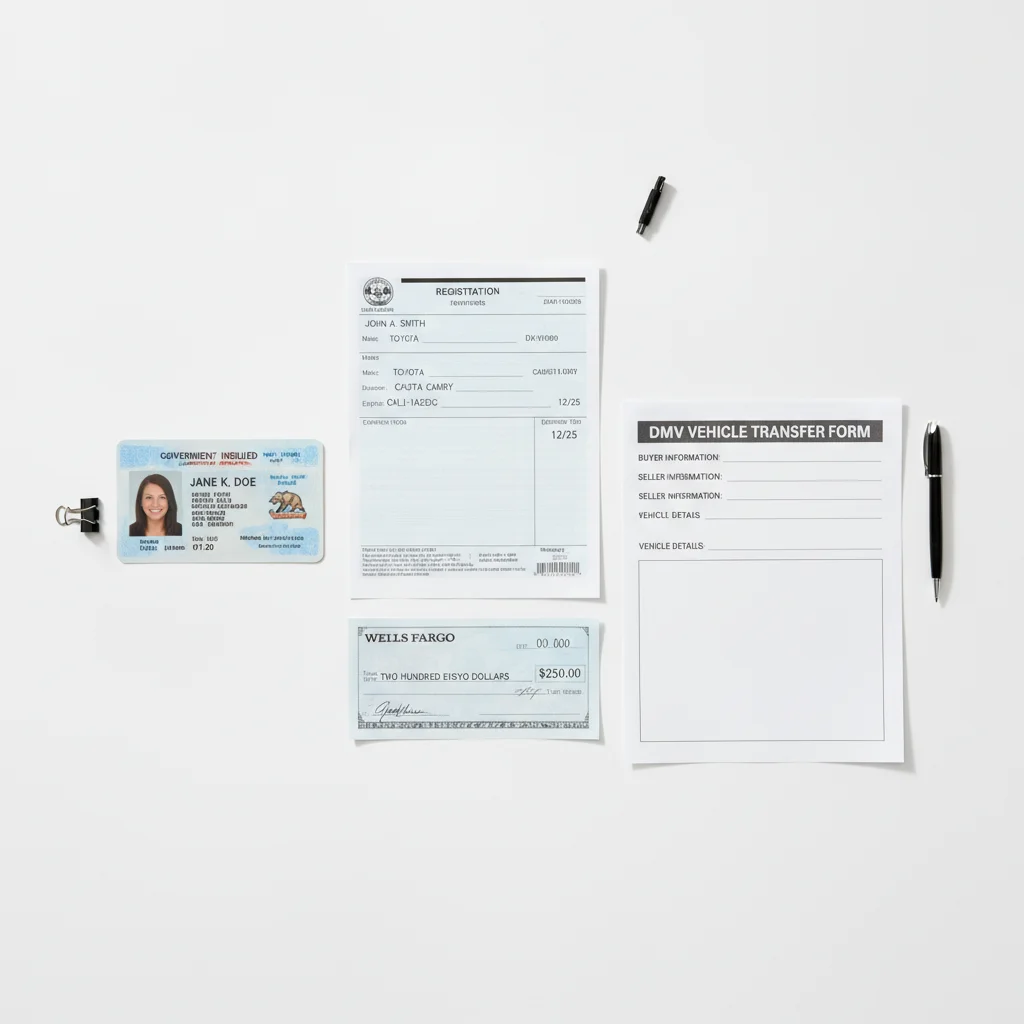
State DMV duplicate title application form
The official form required to request a replacement title from your state's motor vehicle authority.
Government-issued photo ID
Verifies your identity as the registered owner when submitting the application.
Vehicle registration or prior title copy
Confirms the VIN, year, make, model, and ownership information needed to complete the application accurately.
Lien release letter
Documents that the lender has no further financial claim on the vehicle, required before a duplicate can be issued if a lien was previously recorded.
Notary public services
Required by some states to authenticate your signature on the duplicate title application.
Check or money order for the state fee
Pays the duplicate title issuance fee, which ranges from approximately $5 to $25 depending on the state.
If your name or address has changed since the title was issued, bring proof of the change as well — a marriage certificate, court order, or utility bill — because the duplicate must reflect your current legal identity and address. Mismatches can cause the title to be rejected when the buyer tries to register the car.
Step-by-Step: How to Apply for a Duplicate Title
Follow these steps in order. Skipping ahead — especially when a lien or co-owner is involved — is the single biggest source of delays sellers face.
Resolve any outstanding lien before applying
If your loan is paid off but the lender's name still appears in your records, contact the lender and request a lien release. Provide your account number and vehicle identification number (VIN). The lender will send a release letter or submit an electronic release directly to the DMV, depending on your state. Keep a copy of the release for your records.
If you still owe money on the vehicle, you have two options: pay off the loan before selling (simplest) or arrange a simultaneous payoff at the point of sale, which requires careful coordination with the buyer and lender. A duplicate title cannot be issued with an active lien in most states.
Download or pick up the correct duplicate title form
Visit your state DMV's official website and search for "duplicate title" or "replacement title." Download the correct form — it's usually labeled something like "Application for Duplicate Title" or "Vehicle Title Replacement." Common form names by state include:
- California: REG 227 (Application for Duplicate or Paperless Title)
- Texas: Form VTR-34 (Application for Certified Copy of Title)
- Florida: HSMV 82101 (Application for Duplicate/Lost Title)
- New York: MV-902 (Application for Duplicate Title)
If your state is not listed here, search "[your state] duplicate title application" on your state DMV's official .gov website.
Complete the application accurately
Fill out every required field on the form. Typical fields include:
- Your full legal name (exactly as it appears on your current government-issued ID)
- Current mailing address
- Vehicle Identification Number (VIN) — found on your dashboard, driver's side door jamb, or registration
- Year, make, and model of the vehicle
- Reason for request (check "lost" or "stolen" as applicable)
- Your signature (and co-owner's signature if applicable)
If your state requires notarization, do not sign the form yet. Sign it in front of the notary only.
Submit the application and pay the fee
You have three submission options in most states:
- In person at the DMV: Fastest option, often same-day or next-day. Bring your completed form, government-issued ID, lien release (if applicable), and payment for the fee. Some offices also accept walk-ins; others require an appointment.
- By mail: Send the completed, signed (and notarized if required) form along with a check or money order for the fee. Expect 2–4 weeks for processing and delivery.
- Online: A growing number of states allow you to initiate the duplicate title request through the DMV's online portal. Check your state's site to see if this option is available for your situation.
Track the status and confirm delivery
Many state DMVs now offer online status tracking for title requests. Use the reference or confirmation number from your submission to check whether the duplicate has been printed and mailed. If you do not receive the title within the stated processing window, call the DMV's title division directly — not the general customer service line — with your VIN and confirmation number ready.
When the title arrives, verify the following before putting it away:
- Your name is spelled correctly and matches your ID
- The VIN printed on the title matches the VIN on your vehicle
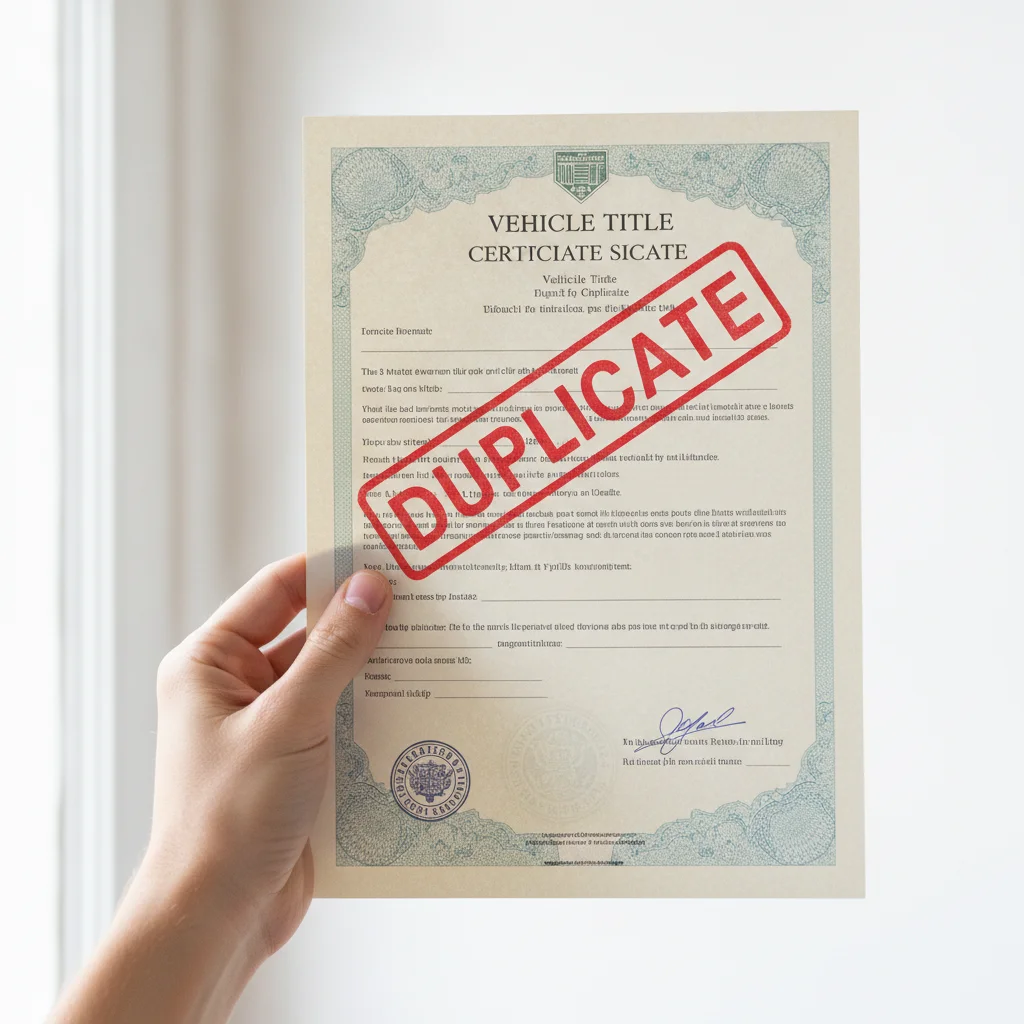
- The "duplicate" or "certified copy" designation is clearly marked
- No lien holder is listed (or the lien release is reflected)
Beware of Third-Party Title Services
A quick online search for 'duplicate title' will surface many paid third-party services promising to handle the replacement for you. Most of these simply fill out the same DMV form you can download for free and charge $50–$150 for the convenience. In some cases they are outright scams. Always go directly to your state DMV's official website to initiate the process yourself.
A Duplicate Title Voids the Original
The moment your state issues a duplicate, the previously issued title becomes legally invalid — even if you later find it in a drawer. Using the original after a duplicate has been issued can raise fraud flags during a future title transfer. Surrender any recovered originals to the DMV and rely solely on the duplicate for the sale.
Once your duplicate title arrives, store it in a secure location separate from the vehicle. Do not keep it in the glove box. When you're ready to complete the sale, our field-by-field guide to filling out a title at the point of sale will walk you through every line to avoid costly errors.
State-by-State Considerations: What Changes and Why
The core process is universal, but several variables shift depending on where you're registered.
Electronic vs. Paper Title States
About a dozen states — including Michigan, California, and Texas — maintain electronic title records (e-titles). In these states, you may have never received a paper title at all. Replacing a lost title in an e-title state is often faster because the DMV already holds the authoritative record. You're simply requesting a printed copy. In paper title states, the DMV must cancel the old record and issue a new one, which can take longer.
Notarization Requirements
Some states require the duplicate title application to be notarized — meaning you'll sign the form in front of a notary public, not just at a DMV counter. States like New York, New Jersey, and Pennsylvania have this requirement. Check your state DMV's instructions before you fill anything out. Many banks, UPS stores, and credit unions offer notary services for free or a small fee.
Mail-In vs. In-Person Processing
Some states process duplicate title requests only by mail (Nevada is one example), which can add 10–15 business days. If you're on a tight selling timeline, check whether your state offers expedited processing for an additional fee. California, for instance, offers same-day service at select DMV offices for a higher fee. In Florida, you can often get a same-day duplicate at a tax collector's office.
Fees
Duplicate title fees range from about $5 (Missouri) to $25 or more (California). Some states also charge an additional fee for expedited or same-day service. These are modest costs relative to a stalled sale, so factor them in but don't let them slow you down.
Check Your State DMV Website First
Most state DMV websites have improved significantly and now list exact processing times, fees, required forms, and online submission options for duplicate titles. Spending five minutes on the official site before your visit can save you an unnecessary trip. Always verify you are on the official state .gov site to avoid third-party services that charge inflated fees for the same forms.
Consider Timing If You're Listing Soon
If you plan to list your car within the next two weeks, apply for the duplicate title today — even before you set a price or take photos. Title processing times in some states run 15–20 business days by mail. Starting the replacement process early prevents a ready buyer from walking away because the paperwork isn't ready.
Keep a Digital Record of All Title Documents
Photograph or scan your duplicate title, lien release letter, and any notarized application forms as soon as you receive them. Store copies in a password-protected cloud folder. If a dispute arises after the sale — for instance, if the buyer claims they never received a clean title — you'll have documentation to support your position.
If you're selling across state lines — for instance, you live in one state but the car is titled in another — contact the titling state's DMV directly. You will generally need to apply in the state where the title was issued, not the state where you currently live.
For a broader view of what can go wrong when title paperwork isn't handled correctly, read our guide on what happens if you sell a car without transferring the title. Understanding the downstream consequences reinforces why getting the replacement title right before the sale matters so much.

After You Receive the Duplicate: Common Pitfalls to Avoid
Getting the duplicate title in hand is the milestone, but a few missteps at the finish line can still derail your sale.
Don't sign it until the buyer is in front of you
A pre-signed title creates serious problems. If the sale falls through, you now hold a signed title with a buyer's name on it — which is difficult to void and can expose you to fraud claims. Sign the seller's section of the title only at the moment of sale, with the buyer present.
Make sure the odometer disclosure is correct
Federal law (the Truth in Mileage Act) requires accurate odometer disclosure on the title for most vehicles under 10 years old. Filling in the wrong mileage — even accidentally — is a federal violation. Check the odometer reading on the day of sale and enter it precisely. Our field-by-field title completion guide covers this in detail.
Don't alter or white-out anything on the title
Any correction fluid, cross-out, or written-over entry on a title typically voids it. If you make an error while completing the title at the point of sale, you may need to apply for yet another duplicate. Take your time filling it out. See common paperwork errors that void a title for a full breakdown of what to avoid.
Confirm the buyer's plan for registration
Once you've handed over a properly completed title, your legal obligation is largely fulfilled — but it's worth confirming that the buyer intends to register the vehicle promptly. In many states, if the buyer fails to transfer the title within a set window (often 10–30 days), parking tickets, red light violations, and even accident liability can continue to arrive in your name. For guidance on protecting yourself through the full transfer process, see our article on how to transfer a car title correctly in a private sale.
Never Sign a Blank or Pre-Signed Title
Handing a buyer a title you've already signed — without a buyer name, sale price, and odometer reading filled in — is legally equivalent to signing a blank check. It gives the recipient the ability to fill in any information they choose, including a fraudulent sale price or fictitious buyer name. Always complete and sign the title in the presence of the buyer, at the moment of the transaction, with both parties present.
Notify the DMV If You Find the Original Later
Once a duplicate title has been issued, the original title is legally void. If you find the original after receiving the duplicate, do not use it and do not give it to a buyer. Most states require you to surrender the original to the DMV. Allowing two titles to circulate for the same vehicle — even unintentionally — can result in title fraud complications that follow the car through future ownership changes.

All claims are backed by peer-reviewed research. Sources on request.