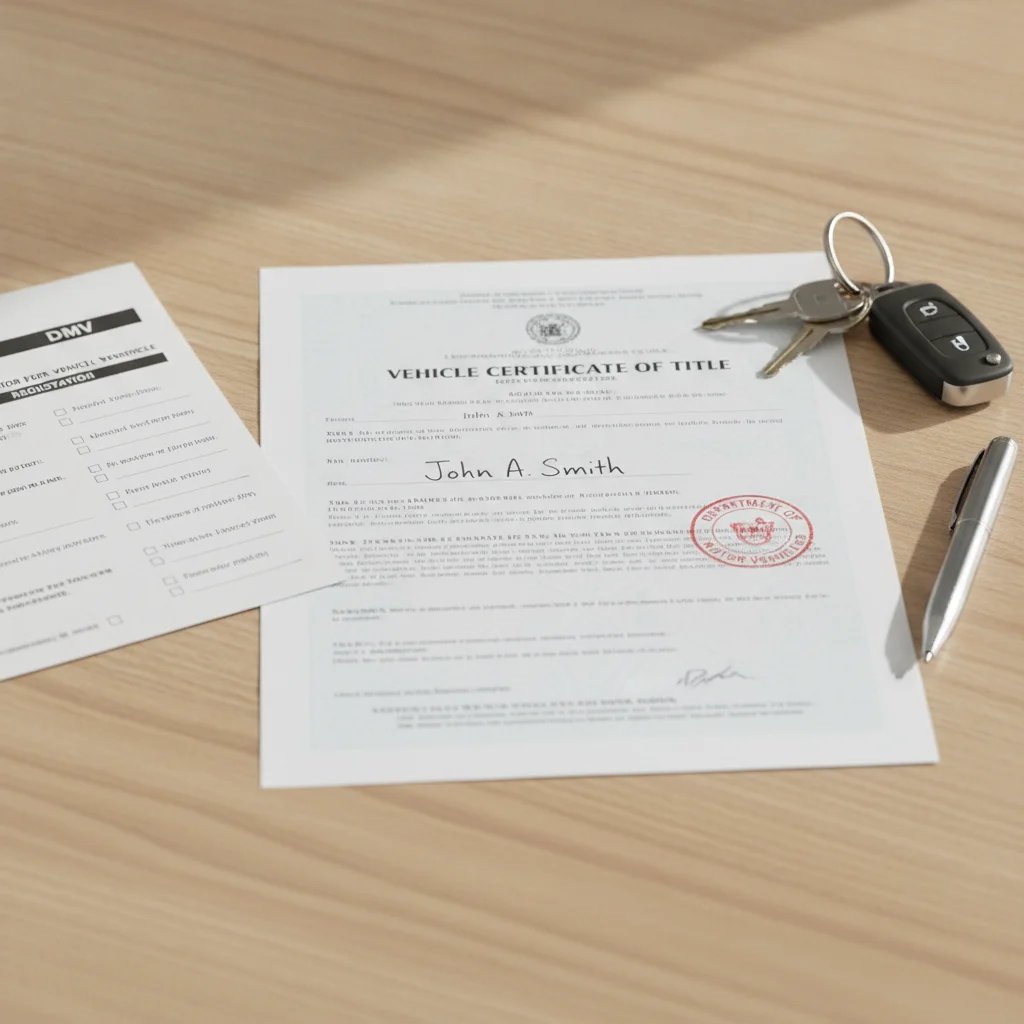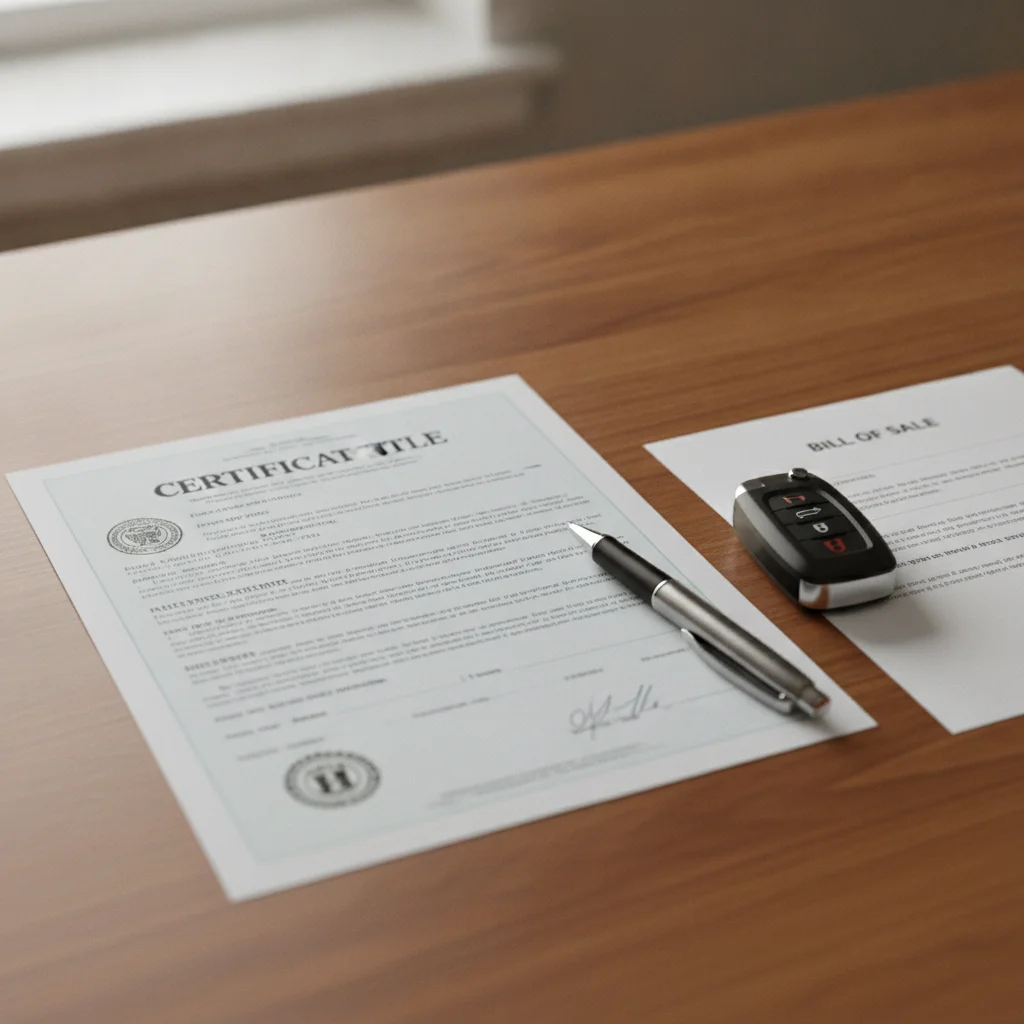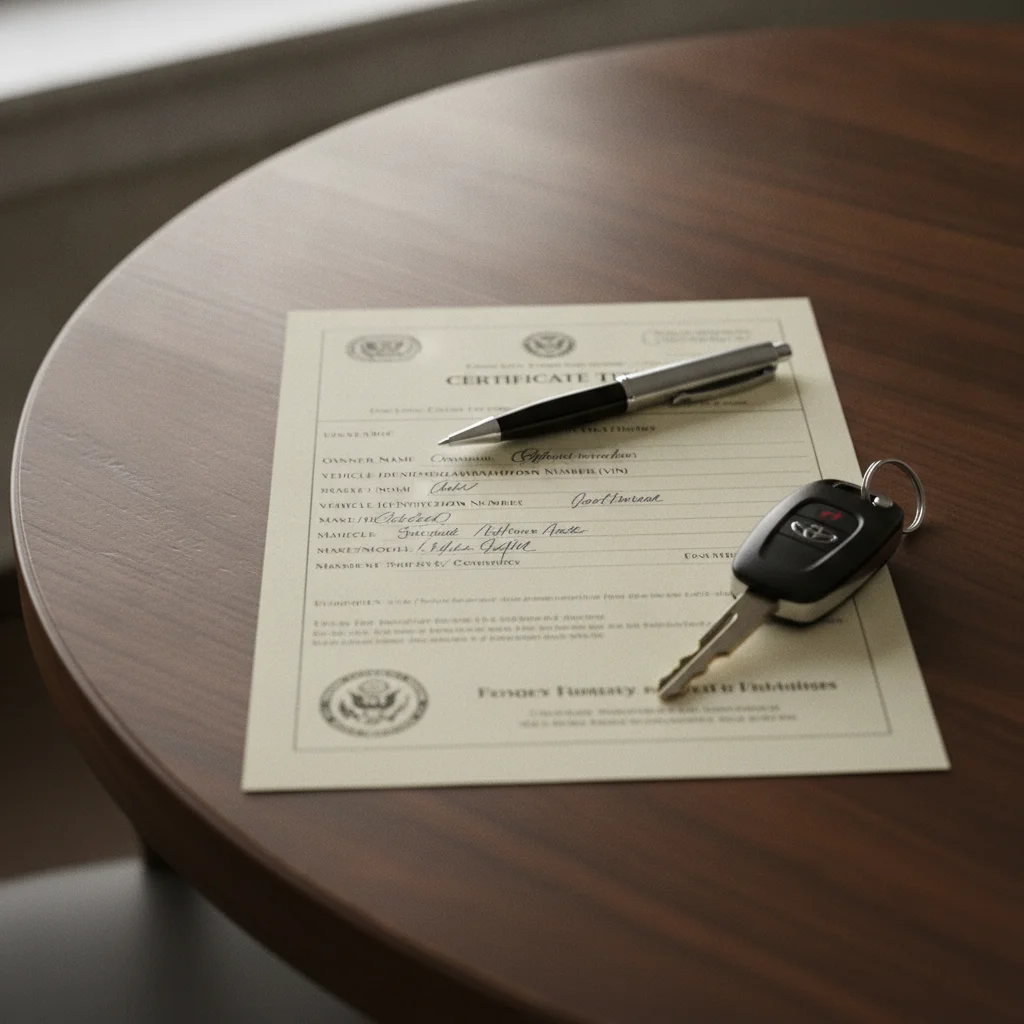
Key Takeaways
Why a Botched Title Transfer Is a Bigger Problem Than You Think
Most private sellers assume the hard part of selling a car is finding a buyer and negotiating a price. The paperwork feels like an afterthought. That's a costly mistake. A title transfer done wrong can leave a seller legally on the hook for parking tickets, accidents, or emissions violations committed by the new owner — sometimes for months. Buyers end up stuck with a car they can't register, or worse, one that surfaces a hidden lien they weren't expecting.
The good news: a clean title transfer is genuinely straightforward if you follow a defined process. The bad news is that the process varies by state, and even small errors — a middle initial left off a signature, a stray correction mark — can render the document legally unusable.
For a broader look at every document involved in a private sale, the Paperwork & Title hub covers the full picture. This guide focuses specifically on the title transfer itself: what to prepare, what to sign, how to hand it off correctly, and how to protect yourself after the car leaves your driveway.
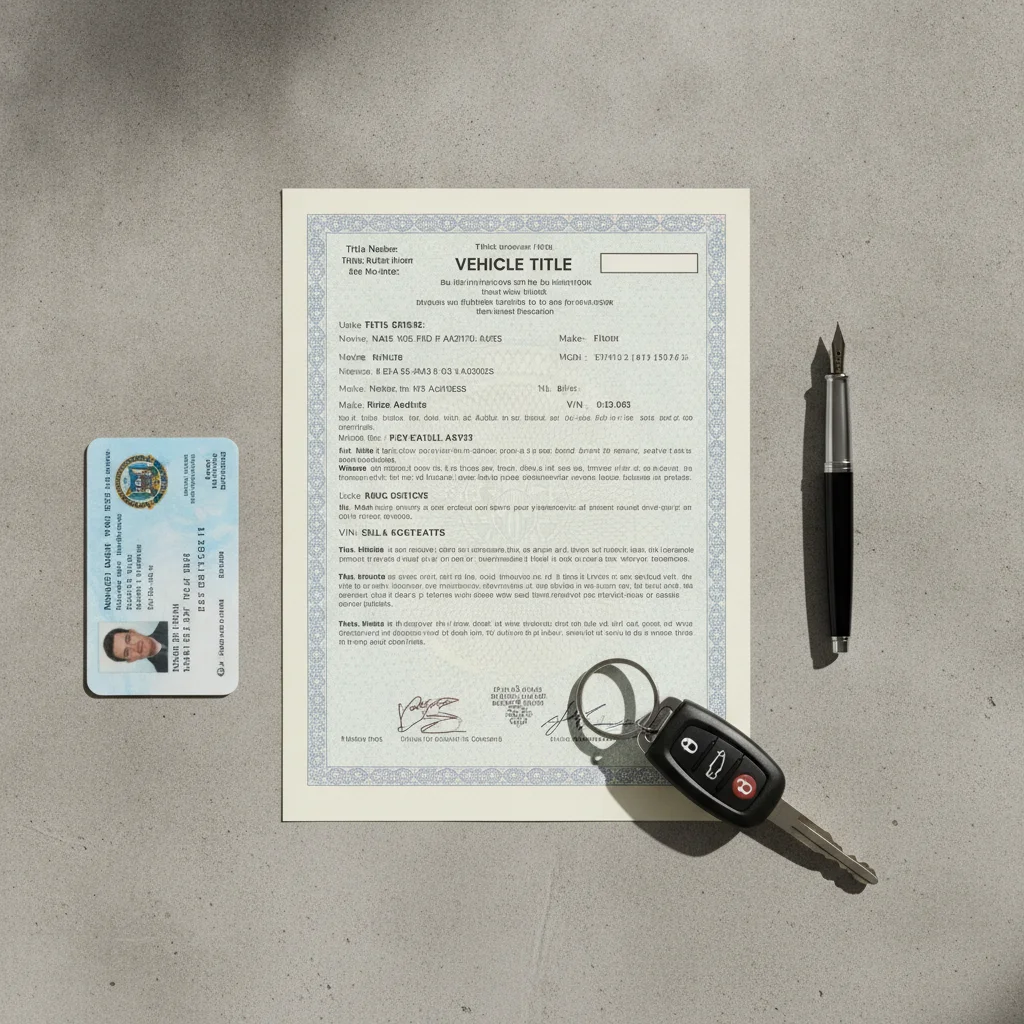
Before jumping into the steps, understand one foundational rule: the title must match reality. The name on the front of the title must match the seller's government-issued ID. The VIN on the title must match the VIN stamped on the vehicle. Any mismatch creates problems you'll need to resolve before a buyer can register the car.
What You Need Before You Can Transfer the Title
Showing up to a title signing without the right documents wastes everyone's time and can kill a deal. Gather everything listed below before you schedule the handoff.
What you will need
Original Vehicle Title
The legal document that proves ownership and must be transferred to the buyer to complete the sale.
Bill of Sale
Documents the agreed sale price, vehicle details, and as-is condition — protects both parties in a dispute.
Odometer Disclosure Statement
Federally required for vehicles under ten years old; records the verified mileage at the time of sale.
Lien Release Letter
Proves the vehicle's loan has been paid off and no lender has a claim on the title.
Notary Services
Required in select states to authenticate signatures on the title or bill of sale.
Cashier's Check or Cash
Secure payment method that eliminates the risk of bounced personal checks on a high-value transaction.
If your loan isn't fully paid off and your lender still holds the title, you have extra steps to complete before you can transfer anything. The process for selling a car with a lien is manageable, but it requires coordinating with your lender and possibly using an escrow service to pay off the balance at closing.
Never Sign a Title With a Lien Still Attached
If your lender is still listed on the title as lienholder, you do not legally own the car free and clear — and you cannot transfer clean ownership to a buyer. Signing the title over while a lien exists exposes you to fraud claims. Pay off the loan, obtain the lien release letter, and wait for the updated title before listing the vehicle for sale.
Verbal Agreements Won't Protect You
A handshake deal or a text message chain is not a substitute for a signed bill of sale. If a buyer claims they paid more than they did, or disputes the condition of the vehicle at the time of sale, you need a signed document with a date and price to defend yourself. Always use a written bill of sale, signed by both parties.
State-specific requirements can also add to this list. Some states — including Texas, Louisiana, Ohio, and Montana — require notarization on the title itself. Others require a separate bill of sale to accompany the transfer. Check your state DMV's website before you meet the buyer. The state-by-state title transfer rules guide is a useful reference for tracking down your specific requirements.
Step-by-Step: Completing the Title Transfer
Work through each step in order. Skipping or reversing steps is the single biggest source of transfer errors.
Confirm the Title Is Clean and In Your Name
Pull out the physical title and verify three things before you do anything else:
- Your name matches your ID exactly. If there's a discrepancy — a middle name missing, a maiden name — you'll need to resolve it with the DMV before selling.
- The VIN matches the vehicle. Compare the title VIN to the VIN on the dashboard (visible through the windshield) and the door jamb sticker.
- There are no outstanding liens. If a lender is listed as lienholder on the title, you cannot legally transfer it until that lien is released. Contact your lender for a payoff amount and lien release procedure.
If your title shows a lienholder, stop here and resolve that first. The guide to selling a car with an outstanding loan explains your options in detail.
Gather All Required Documents
Before meeting the buyer, assemble every document you'll need in one folder:
- Original title (or duplicate if original was lost)
- Signed bill of sale with agreed price, VIN, date, and both parties' names and addresses
- Odometer disclosure statement (separate form or field on title — confirm with your DMV)
- Lien release letter from your lender, if applicable
- Any state-specific transfer forms your DMV requires
Print a bill of sale in duplicate so both you and the buyer keep a signed copy. Many state DMV websites offer a free bill of sale template — use the official version when available.
Record the Odometer Reading
On the day of the sale — not the day before — record the exact odometer reading. Write it on the odometer disclosure section of the title or on a separate odometer statement if your state requires one. Both buyer and seller typically sign this section.
The reading must be the actual mileage. If the odometer is known to be broken or rolled over (exceeded 100,000 miles on a 5-digit odometer), there are specific disclosure codes you must use. Check with your DMV if this applies to your vehicle.
Complete the Seller's Section on the Back of the Title
Flip the title over. The back contains the assignment of title — this is where the transfer actually happens. Fill in:
- Buyer's full legal name and address — exactly as it appears on their ID
- Sale date
- Sale price — use the actual agreed price, not a lower figure to help the buyer pay less sales tax (this is fraud and exposes both parties to liability)
- Odometer reading — if this field is on the back rather than a separate form
- Your signature — sign in the designated seller field, not elsewhere on the document
Do not sign anywhere other than the designated seller signature line. Extra marks or signatures in the wrong locations can invalidate the title.
Get Notarization If Your State Requires It
States including Texas, Ohio, Louisiana, Montana, Nebraska, New York, and a handful of others require one or both parties to sign the title in front of a notary public. If your state is on the notarization list, plan your meeting location accordingly.
Options for notarization include:
- Your bank or credit union (often free for account holders)
- UPS Store or FedEx Office locations
- Your local AAA office
- Mobile notary services that come to your location
Both buyer and seller may need to be present simultaneously for the notary — confirm this with your DMV before scheduling.
Accept Payment and Hand Over the Title and Keys
Collect payment before you hand over the signed title and keys. Acceptable payment methods in order of security:
- Cash — ideal for transactions under $5,000; count it before signing anything
- Cashier's check — for larger transactions, verify the check at the issuing bank before or during the meeting
- Wire transfer — confirmed in your account before key handover; this may require scheduling a meeting for the following business day
Do not accept personal checks. Do not accept payment apps like Venmo or Zelle for large transactions — payments can be disputed and reversed.
Once payment is confirmed, hand over the signed title, all keys and key fobs, and any additional documents (owner's manual, service records). Remove your license plates from the vehicle at this time.
File a Notice of Transfer With Your State DMV
Immediately after the sale — same day if possible — file a Notice of Transfer (also called a Release of Liability) with your state DMV. This step officially notifies the state that you are no longer the vehicle's owner.
Most states offer online filing. You'll typically need:
- The VIN
- The buyer's name and address
- The sale date
- Your name and driver's license number
Keep the confirmation or reference number you receive. This is your proof that you completed the filing. Without this step, any infractions, accidents, or unpaid tolls incurred by the new owner can potentially be traced back to you until the buyer registers the car in their name.
Meet at a Bank for Large Transactions
For any private sale over $5,000, consider scheduling the title signing at the buyer's bank. The buyer can obtain a cashier's check on the spot and you can have the bank teller verify it before you sign a single document. This eliminates payment fraud risk entirely and gives both parties a neutral, documented location for the transaction.
Photograph the Odometer Before You Sign
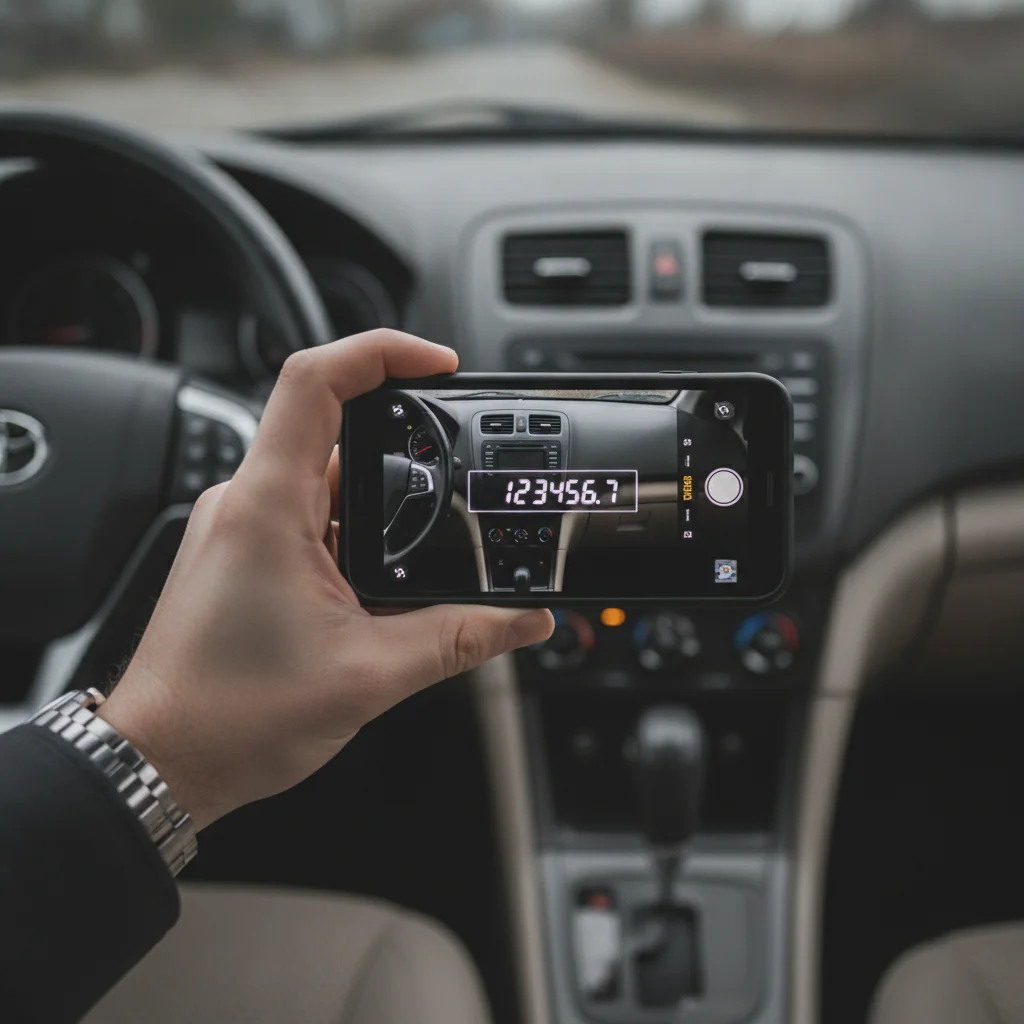
Take a timestamped photo of the odometer display on your phone before you fill in the disclosure field. If a dispute arises later about the stated mileage, that photo is hard evidence. It takes ten seconds and has saved sellers from fraud claims.
Keep Plates Until You Cancel Insurance
Return your license plates to the DMV or transfer them to your next vehicle — but don't cancel your insurance policy until after the car has left your possession. If an accident occurs during a test drive or on the buyer's drive home, active insurance is the difference between a covered claim and a personal liability nightmare.

Once the signing is complete, avoid handing over the keys until payment is fully in hand. If the buyer is financing the purchase through a bank or credit union, their lender will typically require the title be sent directly to them — confirm this in advance so you don't sign the title over to the wrong party.
For a more granular walkthrough of exactly how the back of the title should be completed — including where each party signs, what the odometer field looks like, and how to handle co-owners — see the private party title transfer walkthrough.
No Corrections Allowed on a Vehicle Title
Any mark that appears to correct, alter, or obscure a field on a vehicle title — including cross-outs, white-out, or overwritten characters — will likely cause the DMV to reject the transfer. If you make an error while filling out the title, you must apply for a duplicate title and start over. Write slowly, double-check every field before you commit ink to the document, and consider completing a practice run on a photocopy first.
Filing the Notice of Transfer Is Non-Negotiable
Sellers who skip the Notice of Transfer step remain legally associated with a vehicle they no longer own. Real cases exist where sellers received collections notices, photo radar tickets, and even had their registration renewal denied — all for a car they sold years earlier. File the notice the same day you hand over the title. This step costs nothing and takes minutes.
After the Handoff: Protecting Yourself as the Seller
Handing over the keys and collecting payment doesn't end your obligations. The moment the car drives away, you have two things left to do — and both matter.
File a Notice of Transfer Immediately
Most states allow — and many require — sellers to file a Notice of Transfer (sometimes called a Release of Liability) with the DMV as soon as the sale is complete. This formally notifies the state that you are no longer the owner. Without it, any tickets, tolls, or violations the new owner racks up may come back to you.
Many states now let you file this notice online in under five minutes. Do it the same day you hand over the title. Don't wait to see if the buyer registers the car — that's their responsibility, not yours.
Cancel Your Insurance at the Right Time
Don't cancel your insurance policy until after the sale is finalized and the car is out of your possession. If something goes wrong during a test drive or during the buyer's drive home, you want coverage in place. Once you've filed the Notice of Transfer, call your insurer and cancel or remove that vehicle from your policy.
Keep a Copy of Everything
Photograph or scan the completed title (front and back), the bill of sale, and the odometer disclosure statement before you hand anything over. Store those copies somewhere accessible. If a dispute arises later — a buyer claiming the odometer was tampered with, a lien that surfaces unexpectedly — your documentation is your defense.
Common paperwork errors are more frequent than most sellers expect. A misplaced signature, an incorrect odometer reading, or using a corrective mark on the title can all create legal complications. For a detailed breakdown of what goes wrong and how to prevent it, review the paperwork errors that can void a title before you put pen to paper.
Common Mistakes That Derail Private Sale Title Transfers
Even experienced private sellers make avoidable errors. Here are the ones that show up most often and how to sidestep them.
Signing Before Payment Is Confirmed
Never hand over a signed title before you have cleared, verified funds in hand. A personal check can bounce. A money order can be forged. Once the title is signed and in the buyer's possession, your leverage to recover payment is nearly zero. Insist on cash or a cashier's check from a recognizable bank, and if the amount is large, consider meeting at the bank so you can verify the check is real before signing.
Leaving the Odometer Field Blank
Federal law (the Truth in Mileage Act) requires sellers to disclose the odometer reading on vehicles less than ten years old. Leaving this field blank or writing an approximate number is not acceptable. Use the exact reading from the moment of sale. Odometer fraud carries serious federal penalties — even accidental discrepancies can trigger disputes.
Using White-Out or Making Corrections on the Title
This one surprises people. A title with any visible correction — even a single crossed-out letter — may be rejected by the DMV. If you make a mistake while filling out the title, you'll typically need to apply for a duplicate title through your state DMV before you can complete the transfer. That process can take days to weeks, so write slowly and deliberately.
Forgetting a Co-Owner's Signature
If the title lists two owners connected by "and," both parties must sign. If connected by "or," either party can sign alone. Check the exact wording on your title before the meeting. A missing co-owner signature will stop the transfer cold.
Not Removing the License Plates
In most states, license plates stay with the seller, not the car. When the buyer drives away, they should not have your plates on the vehicle. Remove them before or during the handoff. Some states require a temporary operating permit for the buyer to drive legally until they register the car — check local rules and let the buyer know in advance.
Meet at a Bank for Large Transactions
For any private sale over $5,000, consider scheduling the title signing at the buyer's bank. The buyer can obtain a cashier's check on the spot and you can have the bank teller verify it before you sign a single document. This eliminates payment fraud risk entirely and gives both parties a neutral, documented location for the transaction.
Photograph the Odometer Before You Sign
Take a timestamped photo of the odometer display on your phone before you fill in the disclosure field. If a dispute arises later about the stated mileage, that photo is hard evidence. It takes ten seconds and has saved sellers from fraud claims.
Keep Plates Until You Cancel Insurance
Return your license plates to the DMV or transfer them to your next vehicle — but don't cancel your insurance policy until after the car has left your possession. If an accident occurs during a test drive or on the buyer's drive home, active insurance is the difference between a covered claim and a personal liability nightmare.
Frequently Asked Questions About Private Sale Title Transfers
What if I can't find my title?
You'll need to apply for a duplicate title through your state DMV before you can sell. Most states process duplicate title requests within 5–15 business days, though expedited options often exist. Some states offer same-day service in person. Don't try to sell without the actual title document — a vehicle without a title is extremely difficult for a buyer to register legally.
Do I need a bill of sale if the title covers everything?
A bill of sale isn't always legally required, but it's always smart. It documents the sale price (relevant for sales tax the buyer pays at registration), the "as-is" nature of the sale, and serves as a backup if the title is lost in transit. Keep a signed copy for yourself.
Can I transfer a title by mail?
In some cases, yes — particularly if the buyer is out of state. You'd mail the signed title via a trackable, insured service (USPS Certified Mail or a courier service with tracking). However, this approach carries risk; if the title is lost, you'll need to start over with a duplicate application. For high-value transactions, in-person transfer is strongly preferred.
What if the buyer wants to title the car in a different state?
Your obligation as the seller is to sign the title over correctly per your state's requirements. The buyer is then responsible for registering the vehicle in their own state. Make sure you've completed the odometer disclosure and provided any forms your state specifically requires for out-of-state transfers. The state rules and common delays guide has a useful breakdown of what different states require from the buyer's side.
How long does the buyer have to register the car?
This varies by state — typically between 10 and 30 days. It's the buyer's responsibility, not yours. Once you've filed your Notice of Transfer, your legal exposure ends regardless of whether the buyer actually follows through on registration.

All claims are backed by peer-reviewed research. Sources on request.