Key Takeaways
Why Title Transfers Trip Up Buyers
A title transfer sounds straightforward: the seller signs, the buyer registers, done. In practice, it's one of the most commonly mishandled parts of a used car transaction. Every year, thousands of buyers end up driving on expired temporary tags — or worse, a vehicle they technically don't own yet — because a signature was missing, the odometer reading was blank, or the DMV rejected the paperwork for a crossed-out correction.
The stakes are real. Until the title is in your name, you can't fully insure the vehicle (some insurers won't issue a policy without a title), you can't sell it, and in many states you can't get permanent plates. If the seller still has an outstanding loan, the lender technically has a claim on the car you're now driving.
Title rules also vary more than most buyers expect. State-by-state title transfer requirements include different deadlines, different fee structures, different forms, and different notarization rules. What worked seamlessly when your cousin bought a car in Texas may not apply to your transaction in Ohio or California.
This guide walks you through the universal steps every buyer must complete, calls out the most common failure points, and tells you exactly what to bring so you don't waste a trip to the DMV.

What You Need Before You Go to the DMV
Showing up at the DMV without the right documents is the single biggest cause of delayed registrations. The checklist below covers what's required in most states. Confirm your specific state's requirements on its DMV website before you go — some states have additional forms.
What you will need
Original Signed Title
The primary legal document proving ownership transfer — required without exception in every state.
Bill of Sale
Documents the transaction terms and establishes the sale price used to calculate sales tax at the DMV.
Lien Release Letter
Confirms the seller's loan has been paid off and the lienholder has relinquished their claim on the title.
Vehicle History Report
Reveals past title brands, accident history, odometer rollbacks, and outstanding liens before you commit to buying.
State DMV Title Application Form
Some states require a separate application form in addition to the signed title; download it from your state DMV's website.
Proof of Insurance
Required by most states before the DMV will issue registration and plates in the buyer's name.
Notary Services
Required in roughly a dozen states to witness and authenticate the seller's signature on the title.
A few items on this list deserve extra attention:
The Title Itself
The physical title must be in the seller's name (or properly assigned if it's a dealer reassignment chain). Check that the VIN on the title matches the VIN plate on the dashboard and the door jamb sticker. Any mismatch is a red flag — don't sign anything until it's resolved. For a deeper dive on filling out the document correctly, see the step-by-step title transfer walkthrough.
Odometer Disclosure
Federal law (the Truth in Mileage Act) requires a written odometer disclosure for most vehicles under 10 years old. In many states this is printed directly on the title; in others it's a separate form. The mileage written must match the odometer at the time of sale — not an approximation.
Bill of Sale
Not every state requires a bill of sale for DMV purposes, but it's smart to have one regardless. It documents the sale price (which determines the sales tax you pay), the date of sale, and the names of both parties. Some counties use the sale price to calculate ad valorem taxes, so an accurate figure matters.
Lien Release
If the seller had a loan on the vehicle, the lienholder's name appears on the title. The seller must provide a lien release letter from the bank or credit union before you can get a clean title. If the payoff isn't complete yet, the lender may need to mail the title directly to your DMV. Don't accept a vehicle with an active lien without a concrete plan for how that lien gets discharged.
Step-by-Step: Completing the Title Transfer
Follow these steps in order. Skipping or reordering them is how people end up with rejected paperwork or unsigned titles that require tracking down a seller weeks later.
Verify the title before money changes hands
Before you hand over a check or cash, physically inspect the title. Confirm:
- The seller's name on the title matches their government-issued ID
- The VIN on the title matches the VIN on the dashboard (visible through the windshield) and the door jamb sticker
- There are no lienholders listed, or if there are, the seller has a lien release letter ready
- There are no visible corrections, white-out, or crossed-out entries on any line
- The title is not expired or branded with a status you weren't told about (Salvage, Rebuilt, Flood)
If anything doesn't line up, stop. Ask questions before signing. Walk away if the seller can't resolve the discrepancy on the spot.
Have the seller complete their section of the title
The seller must fill in and sign their section on the back of the title in front of you — or in front of a notary if your state requires it. This typically includes:
- Buyer's full legal name (exactly as it appears on your ID)
- Buyer's address
- Sale price
- Date of sale
- Odometer reading (in miles, not kilometers)
- Seller's signature (and co-owner's signature if applicable)
Watch the seller complete this section. If they pre-fill it before you meet, verify every field against your ID and the actual odometer reading before you accept it.
Get a bill of sale signed by both parties
A bill of sale documents the key transaction facts. It should include:
- Date of sale
- Vehicle description: year, make, model, VIN, color
- Agreed sale price
- Full legal names and addresses of buyer and seller
- Odometer reading at time of sale
- Signatures from both parties
Handwritten bills of sale are valid in most states. Print two copies — one for each party. The sale price on the bill of sale should match what you report to the DMV, since that's the figure used to calculate sales tax.
Gather your supporting documents
In addition to the signed title and bill of sale, you'll need to bring the following to the DMV:
- Your government-issued photo ID (driver's license)
- Proof of insurance that meets your state's minimum coverage requirements
- Payment for title transfer fees, registration fees, and sales tax (check your state DMV's site for accepted payment methods)
- Lien release documentation (if applicable)
- Any state-required inspection certificates (emissions, safety)
Some states — like Texas — also require a completed Application for Texas Title (Form 130-U) or equivalent. Check your DMV's required forms list before you go.
Submit the paperwork at the DMV and pay fees
At the DMV window, you'll submit all documents together. The clerk will review the title for completeness — signatures, odometer disclosure, no corrections — and verify the VIN if required. Fees vary significantly by state but typically include:
- Title transfer fee: $10–$100 depending on state
- Registration fee: varies by vehicle weight, age, and state
- Sales tax: calculated as a percentage of the sale price
- Any local county or city fees
Budget $200–$600 for the total cost of fees and taxes in most states, though this can run higher in states with higher tax rates or registration fees.
Receive your registration and wait for your title
The DMV will typically issue your registration and license plates (or a registration sticker) on the spot. Your new title will be mailed to your address in 2–6 weeks. Keep the following in your vehicle until the permanent registration arrives:
- DMV receipt from your visit
- Any temporary registration or operating permit
When your title arrives, verify the name, address, VIN, and any lien information are correct. If there's an error, contact your DMV immediately — correcting a title is easier right after issuance than months later.
Common Delays and How to Avoid Them
Even buyers who do most things right run into preventable problems. Here are the most frequent causes of title transfer delays and how to head them off.
White-Out or Cross-Outs on the Title
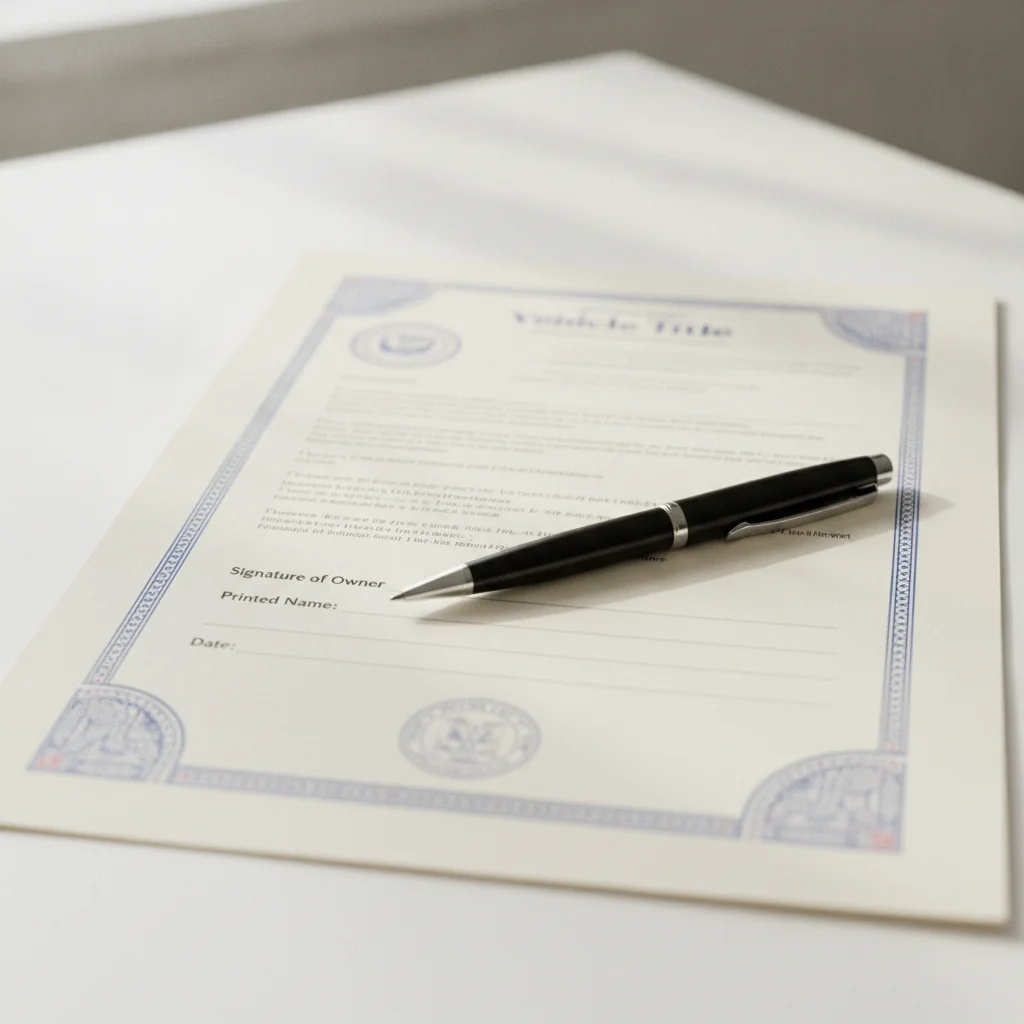
This is the single most common rejection reason at the DMV. If the seller makes an error and uses correction fluid or crosses it out, the title is legally compromised in most states. The only fix is a replacement title from the seller's state DMV — which can take 2–6 weeks and requires the seller's cooperation. Paperwork errors that void a title are more common than you'd think; review that guide before the seller puts pen to paper.
Missing or Incomplete Signatures
Most titles require the seller's signature in at least two places — once to release ownership and once on the odometer disclosure. If there are multiple sellers (both spouses on the title, for instance), both must sign. A single missing signature sends you back to square one.
Notarization Gaps
States like Maryland, Louisiana, Montana, Nebraska, New Hampshire, West Virginia, and Wyoming require a notarized title signature. If you're buying from one of these states or buying in one, the seller's signature must be witnessed and stamped by a licensed notary. Check notarization requirements by state before you meet the seller — arranging a notary after the fact is difficult if the seller is out of your area.
Out-of-State Purchases
If you buy a car from a seller in another state, you'll register it in your home state using your home state's rules. But the title you receive will be from the seller's state — and your DMV may require additional steps like a VIN inspection or a new title application. Selling across state lines covers the specific complications that arise in these transactions.
Expired Temporary Tags
Most states give you a temporary operating permit for 15–30 days after purchase. If the title transfer drags on past that window — usually because of paperwork issues — you're technically driving unregistered. Don't let the situation drift; call your DMV to understand your options if you're approaching the deadline.
Curbstoning: The Unlicensed Dealer Risk
If a private seller is listing multiple vehicles in a short period, they may be an unlicensed dealer — a practice called curbstoning. These sellers frequently use titles that aren't in their name (sometimes called "jumping" a title), which creates a broken ownership chain that's extremely difficult to resolve at the DMV. If the title isn't in the seller's name, walk away.
Don't Let the Deadline Slip
Most states give you 10–30 days after purchase to complete the title transfer. Missing this window costs you late fees and can complicate your registration. Set a calendar reminder the day you buy the vehicle. If DMV processing times in your area are long, submit your paperwork within the first week.
Schedule a Notary Before You Meet the Seller
If your state or the seller's state requires a notarized title, arrange the notary appointment before the transaction date. Many UPS stores, banks, and credit unions offer notary services — often for free if you're a member. Trying to find a notary after the fact adds unnecessary friction and delay.
Check Your DMV's Online Portal First
Many state DMVs now let you initiate or complete title transfers online or by mail. Before making a trip, check your state's DMV website. You may be able to skip the in-person visit entirely — especially if no VIN inspection is required and your documents are complete.
Match Names Exactly on Every Document
Your name must appear identically on the title, the bill of sale, and your ID. If your driver's license says "Robert J. Smith," every document should say "Robert J. Smith" — not "Bob Smith" or "Robert Smith." Even minor variations can trigger a rejection at the DMV window.
State-Specific Rules You Need to Know
No guide can cover all 50 states exhaustively, but a few rules come up often enough that every buyer should be aware of them.
Transfer Deadlines
States impose different windows for completing the title transfer after purchase:
- 10 days: California, Hawaii
- 15 days: Arizona, Colorado, Idaho
- 30 days: Texas, Florida, Illinois, New York, Ohio
- 45 days: Oregon
Miss the deadline and you'll pay a late transfer penalty — typically $15–$50, though California's can exceed $100 for significant delays. Some states also require smog or emissions testing before they'll process a transfer, which can add days or weeks to the timeline.
Sales Tax Collection
Most states collect sales tax at the DMV when you register the vehicle, calculated on the sale price listed in the bill of sale. A handful of states — including Montana, New Hampshire, Oregon, and Delaware — have no general sales tax on vehicle purchases. In states where you pay tax, underreporting the sale price is tax fraud, not a negotiating tactic.
Title Brands
If the vehicle has been declared a total loss, flooded, or rebuilt, the title should carry a brand ("Salvage," "Flood," "Rebuilt"). Buying a branded-title car isn't automatically a mistake, but you need to know about it upfront — it affects insurability, resale value, and financing options. Some states also have "lemon law buyback" brands for vehicles returned under warranty. Check the title brand before you sign anything.
For a complete state-by-state breakdown of fees, deadlines, and required forms, the state-by-state title transfer requirements reference is the most thorough resource available.
Never Buy a Car With an Active Lien
If a lender's name appears on the title and the seller cannot provide a lien release letter, you do not have a clean path to ownership. The lender has a legal claim to that vehicle regardless of what you paid the seller. Before closing any transaction, confirm the lien is fully discharged — get the release letter in hand, not a promise that it's coming.
Title Errors Cannot Be Fixed With Correction Fluid
Any use of white-out, correction tape, or cross-outs on a title document will result in a DMV rejection in most states. The only fix is a replacement title issued by the state where the seller originally titled the vehicle. This process takes 2–6 weeks and requires the seller's full cooperation — which becomes much harder after the money has already changed hands.
After the DMV: What to Expect and What to Keep
Once you've submitted everything and paid your fees, here's what happens next and what you should hold onto.
Processing Time
Same-day title issuance is available at some DMV offices. More commonly, your new title arrives by mail in 2–6 weeks. In the meantime, keep the DMV receipt and any interim registration documents in the vehicle — they prove you've initiated the transfer if you're pulled over.
Documents to Keep Permanently
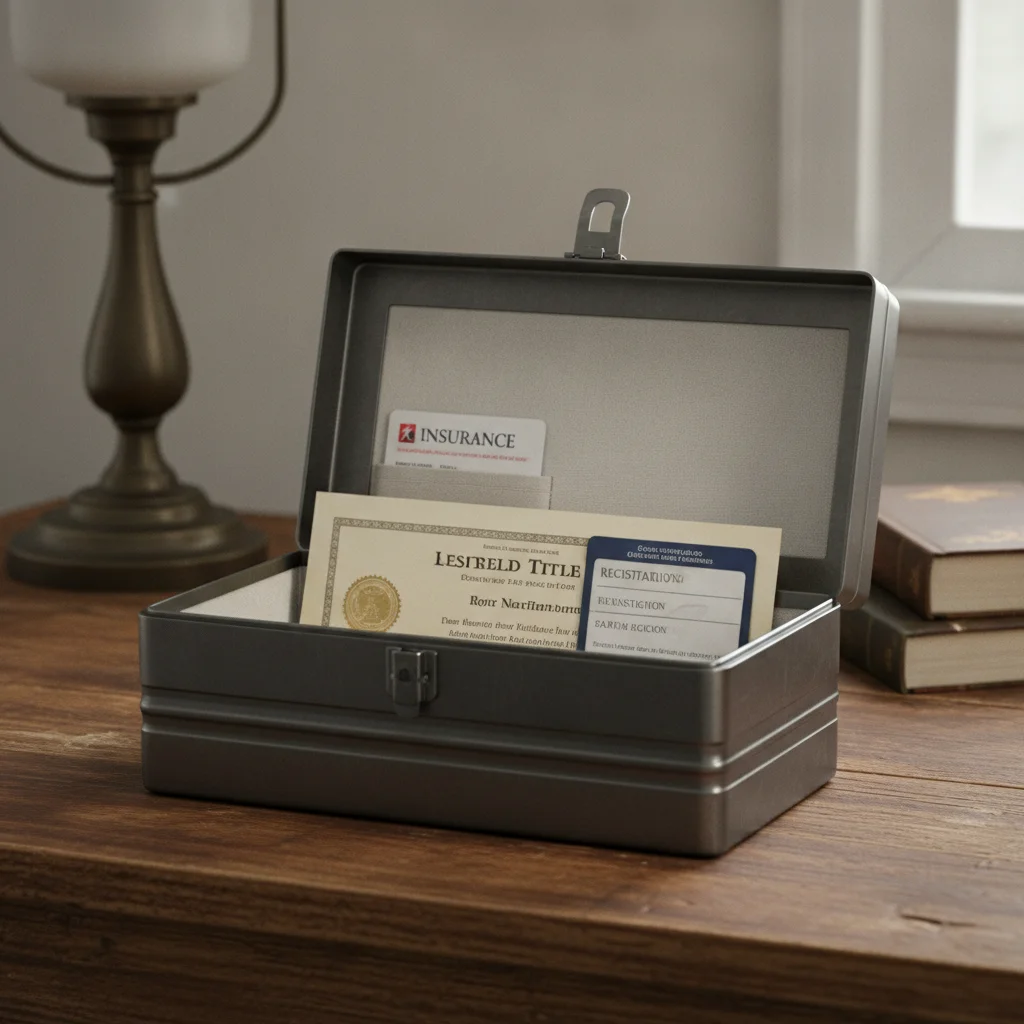
- The new title (once it arrives) — store it somewhere fireproof, not in the glove box
- Your bill of sale — useful if a tax dispute or ownership question ever arises
- Any lien release documentation
- The odometer disclosure if it was a separate form
Confirming the Seller's Side Is Done
In most states, sellers are required to submit a Notice of Transfer or Release of Liability to the DMV. This protects them from tickets, tolls, or liability for accidents that happen after the sale. If the seller hasn't done this, they could be held responsible for something that happens in your vehicle. It's worth confirming they've submitted it — for their sake and yours. The risks of skipping this step are detailed in what happens if you sell a car without transferring the title.
If you want a comprehensive look at how the seller's side of a private party title transfer should be handled, how to transfer a car title correctly in a private sale covers every obligation the seller carries.
Title transfer is unglamorous paperwork, but getting it right is what separates a legitimate transaction from a legal headache. Bring the right documents, verify the title before you sign, and file within your state's deadline. That's the whole job.

All claims are backed by peer-reviewed research. Sources on request.