| States with no vehicle sales tax | Montana, New Hampshire, Oregon, Delaware, Alaska |
| Typical title transfer deadline | 30 days (varies: 10–45 days by state) |
| States with annual vehicle property tax | Virginia, Missouri, Rhode Island, North Carolina, and others |
| States restricting direct-to-consumer new car sales | Texas, Michigan, and several others (verify current law) (State franchise law — confirm current status before purchase) |
| EV supplemental registration fee range | $50–$250+ per year depending on state (Varies by state; intended to offset lost gas tax revenue) |
| California base state sales tax on vehicles | 7.25% + local district taxes (California DMV) |
| Temp tag validity (typical platform purchase) | 30–45 days (Varies by platform and state) |
| E-title states (electronic title held at DMV) | Includes FL, GA, TX, VA, and 20+ others |
Why State Rules Matter More When You Buy Online
Buying a car online feels frictionless — browse inventory, click reserve, arrange delivery. But the moment that vehicle crosses into your driveway, your state's rules take over. And unlike walking into a local dealership where the F&I office handles most of the compliance paperwork, an online purchase often puts more of that burden directly on you.
The variables that change by state aren't minor footnotes. They determine how much you pay in taxes, how long you have to register the car, whether the platform can legally deliver to you at all, and who holds the title while a lien is being sorted out. Miss one of these and you can end up paying a penalty, driving on an expired temp tag, or fighting a DMV backlog that holds your registration for months.
This reference guide breaks down the specific categories of rules that vary by state and flags the states where buyers tend to run into the most friction. Use it as a pre-purchase checklist before you finalize any remote vehicle transaction.
| States with no vehicle sales tax | Montana, New Hampshire, Oregon, Delaware, Alaska |
| Typical title transfer deadline | 30 days (varies: 10–45 days by state) |
| States with annual vehicle property tax | Virginia, Missouri, Rhode Island, North Carolina, and others |
| States restricting direct-to-consumer new car sales | Texas, Michigan, and several others (verify current law) (State franchise law — confirm current status before purchase) |
| EV supplemental registration fee range | $50–$250+ per year depending on state (Varies by state; intended to offset lost gas tax revenue) |
| California base state sales tax on vehicles | 7.25% + local district taxes (California DMV) |
| Temp tag validity (typical platform purchase) | 30–45 days (Varies by platform and state) |
| E-title states (electronic title held at DMV) | Includes FL, GA, TX, VA, and 20+ others |
Sales Tax and Use Tax: Who Collects, Who You Owe
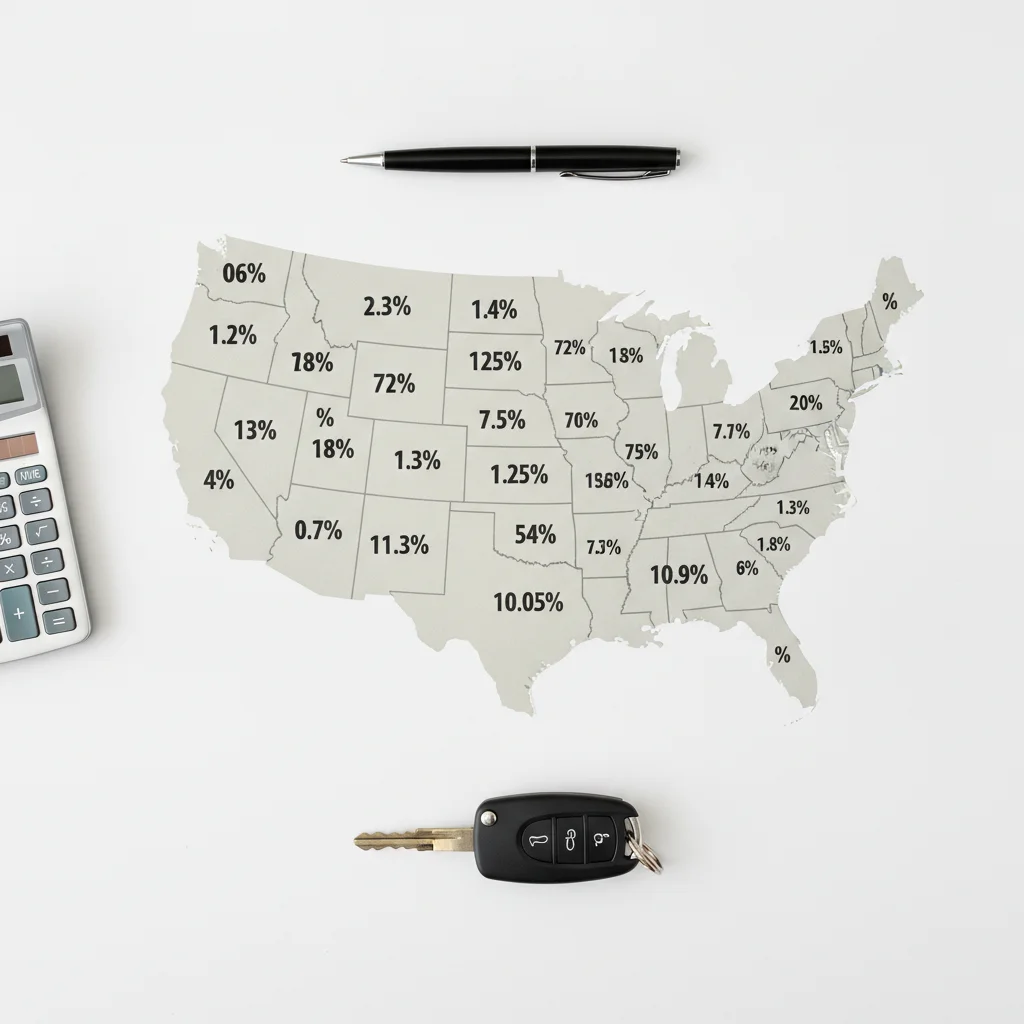
The first major variable is taxation. When you buy from a dealer in your home state, they collect sales tax at point of sale. When you buy from an out-of-state platform or a dealer in a different state, the transaction often triggers a use tax instead — and it's on you to pay it to your home state DMV at registration. The rates aren't always the same, and neither are the exemptions.
A few things to know upfront:
- No-sales-tax states (Montana, New Hampshire, Oregon, Delaware, Alaska) don't collect sales tax on vehicles. But if you live in a tax state and buy from one of these, you still owe your home state's use tax when you register.
- Reciprocity agreements between some states allow credit for taxes paid to the selling state, reducing what you owe at home. Not all states have these agreements — check before you assume a credit applies.
- Local tax add-ons mean the rate you calculate from a state average can be wrong. California, for example, has county and district taxes that push the effective rate well above the base 7.25%.
- Delivery location can determine the tax nexus. Some platforms calculate tax based on where the car is registered, others based on where the transaction is initiated. Confirm with the seller before signing.
For a deeper breakdown of how these two tax types interact and what triggers each one, see our guide on sales tax vs. use tax. And if you want to compare full ownership cost differences across all 50 states, this state-by-state tax and fee reference is worth bookmarking.
10 days
California dealer title transfer deadline
California requires dealers to submit title transfer paperwork within 10 days of sale — one of the shortest windows in the country.
$1,200+
Estimated year-one vehicle property tax in Virginia
A $40,000 vehicle registered in Virginia can generate over $1,200 in personal property tax in the first year, billed separately from registration.
7.25%
California base vehicle sales tax rate
California's base state rate of 7.25% is one of the highest in the nation, and local district taxes can push the effective rate above 10% in some areas.
5
States with zero vehicle sales tax
Montana, New Hampshire, Oregon, Delaware, and Alaska collect no general sales tax on vehicles — but residents buying from these states still owe use tax at home.
$250+
Annual EV surcharge in some states
Several states including Illinois and Georgia charge annual supplemental registration fees for electric vehicles exceeding $200 to offset lost gas tax revenue.
Title Transfer Timelines and Electronic Title States
Title handling is where online car purchases get complicated fast. A physical title has to move from seller to buyer, often through a lienholder, and each state sets its own rules about how that happens and how long it takes.
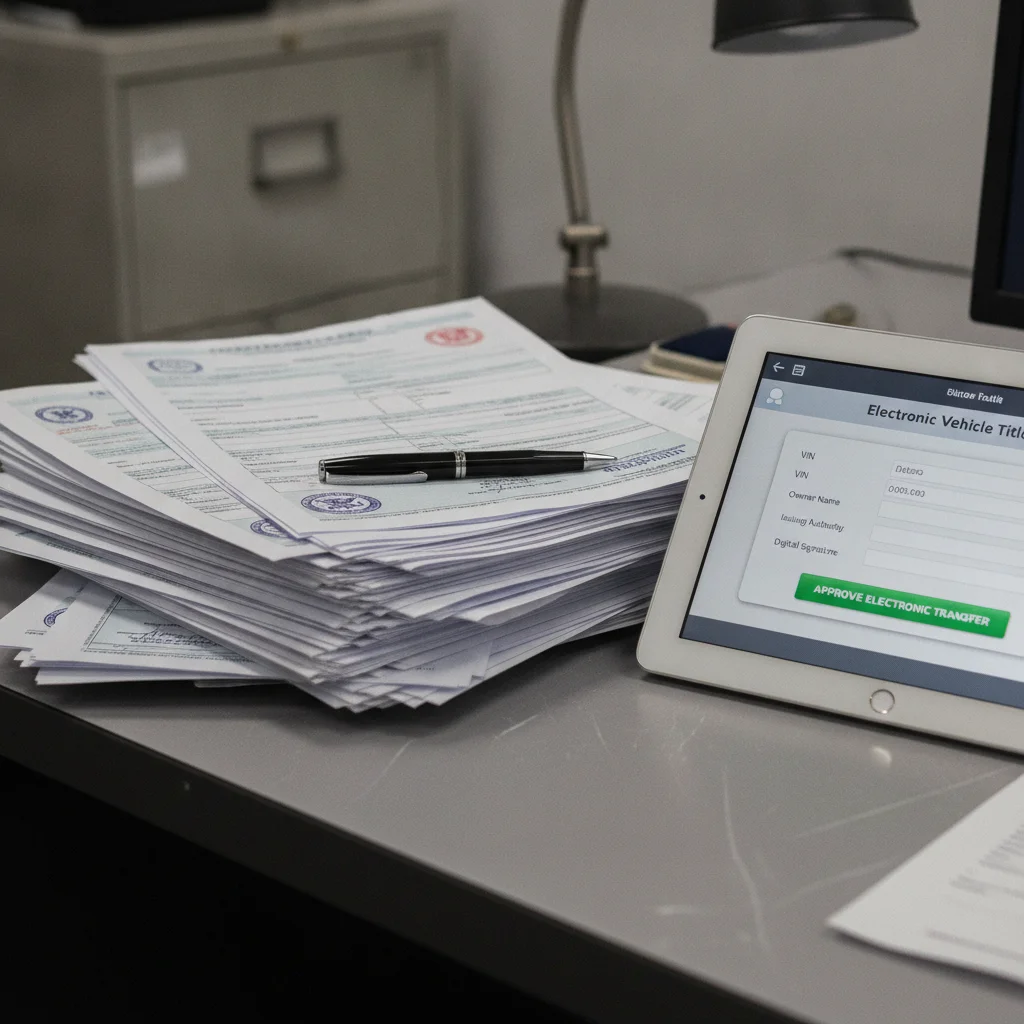
Electronic title (e-title) states — including Florida, Georgia, Texas, and Virginia among others — hold title records digitally at the DMV rather than issuing paper titles. If you're buying from a state that issues paper titles into one that uses e-titles, the conversion process adds time and steps. The reverse is also true.
Key variables that differ by state:
- Title transfer deadline: Most states require title transfer within 30 days of purchase. California allows 10 days for dealers. A few states, like Arizona, give buyers 15 days. Missing these windows typically results in a penalty fee that accrues daily.
- Notarization requirements: Some states require a notarized signature on the title assignment. Louisiana and Montana are notable examples. Remote purchases make notarization harder — plan for it.
- Lienholder release process: If the seller had a loan on the car, the lienholder must release the title before you can take clean ownership. In e-title states this is electronic and can happen in days. In paper title states it may take weeks, especially if the lender is slow.
- Temporary operating permits: Most platforms provide a 30- or 45-day temp tag. But some states — New Mexico and Hawaii among them — have specific rules about what constitutes a valid temporary permit from an out-of-state seller.
The state-by-state title transfer requirements guide covers deadlines, fees, and required forms in detail. If the seller is in a different state than you, also review the cross-state title and registration complications guide before you sign anything.
Use tax
A tax imposed by your home state on purchases made out of state when sales tax was not collected at point of sale. For vehicle purchases, use tax is typically paid at registration and equals the rate your state would have charged in sales tax.
E-title (electronic title)
A vehicle title record held digitally at a state DMV rather than issued as a physical paper document. E-title states process transfers electronically, which can speed up or complicate cross-state transactions depending on the other state's system.
Franchise law
State laws requiring that new vehicles be sold only through licensed franchised dealers, prohibiting manufacturers from selling directly to consumers. These laws vary significantly in scope and enforcement across states.
Reciprocity agreement
A mutual agreement between two states allowing a tax credit for vehicle taxes paid to the other state, preventing double taxation. Not all state pairs have these agreements, so buyers should verify before assuming a credit applies.
Personal property tax (vehicle)
An annual tax assessed on the value of a vehicle you own, separate from registration fees. States like Virginia and Missouri charge this tax yearly, and the amount decreases as the vehicle depreciates.
Temp tag (temporary operating permit)
A short-term registration document issued by a dealer or platform allowing a newly purchased vehicle to be legally driven before permanent registration is processed. Validity periods and requirements differ by state.
Title assignment
The section of a vehicle title document that a seller signs to transfer ownership to a buyer. Some states require this signature to be notarized; others do not.
Lienholder release
A document or electronic record from a lender confirming that a vehicle loan has been paid off and the lender relinquishes its claim on the title. Required before a clean title can be transferred to a new owner.
Platform Delivery Restrictions and Direct-to-Consumer Laws
This is the rule category most buyers don't discover until they're already deep in the purchase funnel: not every online platform can legally deliver a car to every state. The reason comes down to dealer franchise laws — one of the most aggressively enforced areas of automotive commerce.
Franchise laws in most states require that new cars be sold through a licensed franchised dealer. Manufacturers cannot sell directly to consumers. This is why Tesla spent years fighting state-by-state battles to open company-owned stores, and why it still cannot sell directly in some states including Texas and Michigan (though recent legislation has shifted some of these rules — always verify current status).
For used car platforms like Carvana, Vroom, and CarMax Online, the restrictions differ but still exist. They must hold dealer licenses in each state they operate in, and some states have more restrictive licensing requirements that slow or limit their service areas. Vroom, for instance, has at times restricted delivery to certain states due to title processing backlogs — a problem that generated class-action complaints.
What to check before you start shopping on any platform:
- Does the platform explicitly list your state as a delivery market?
- Will they register the vehicle for you, or do you handle DMV paperwork yourself?
- What is their title delivery guarantee — how many days until you receive a clean title?
- If a title is delayed, what is their policy on temp tag extensions?
States with historically tighter online sales environments include Texas, Michigan, Louisiana, and Wisconsin. If you're in one of these states, verify platform eligibility before investing time in a transaction that may not be completable.
For the broader paperwork landscape around these purchases, the Paperwork & Contracts hub is a solid starting point for understanding what documents you'll actually need to complete the deal.
Montana LLC Registration: Know the Risks
Montana has no sales tax and is sometimes used by out-of-state buyers who form an LLC there to register expensive vehicles and avoid their home state's taxes. This practice is technically legal in Montana but is actively pursued as tax evasion by states including California. If you're caught, you may owe back taxes, penalties, and interest. Consult a tax attorney before pursuing this route.
Always Confirm Platform Eligibility Before You Configure
Several major online platforms have had to pause or limit operations in specific states due to licensing issues, title processing backlogs, or regulatory disputes. Don't assume a platform that was operational last year still delivers to your state today. Check the platform's delivery coverage page directly and confirm your state is listed before you put down a deposit or spend hours building a configuration.
Registration Fees, Personal Property Taxes, and Ongoing Costs
Beyond the purchase transaction itself, state-specific rules affect what you'll pay every year to keep the car on the road. These ongoing costs are frequently overlooked during the excitement of a purchase and can represent a significant budget difference depending on where you live.
Annual registration fees vary enormously. In some states they're a flat low fee — Maine charges around $35. In others they're calculated based on vehicle weight, value, age, or some combination. Virginia's registration fee is relatively modest, but the state charges a separate vehicle property tax that can run into the hundreds annually on a newer vehicle.
Personal property taxes on vehicles are a separate category that many buyers from non-property-tax states don't realize exist. States including Virginia, Missouri, Rhode Island, and North Carolina levy an annual personal property tax based on assessed vehicle value. A $40,000 vehicle in Virginia can easily generate $1,200+ in property taxes in year one. This is not the same as registration — it's billed separately and is ongoing.
EV-specific fees are worth flagging for electric vehicle buyers shopping online. Because EVs don't pay gas taxes, many states have added supplemental registration fees for EVs that in some cases exceed $200/year. Illinois, Georgia, and Washington are among the states with higher EV surcharges.
The differences in total ownership cost between states can be dramatic. This breakdown of why identical cars cost more to own in some states illustrates exactly how those gaps add up over a typical ownership period. If you're relocating or buying in a different state, the out-of-state purchase traps guide is essential reading before you finalize.
State-by-State Title Transfer Requirements Guide
A comprehensive reference covering title transfer deadlines, fees, notarization requirements, and required forms across all 50 states. Essential reading before completing any remote purchase.
Car Ownership Taxes and Fees: State-by-State Reference
Quick-lookup tables for vehicle property taxes, registration fees, and title costs in every state — helps you budget the full ongoing cost of ownership before you buy.
Out-of-State Purchase Tax & Registration Traps
Covers double-taxation risks, use tax obligations, and DMV documentation traps that catch buyers off guard when they purchase from across state lines.
Your State DMV Website
Your home state's DMV or motor vehicle agency is the definitive source for current registration deadlines, title transfer rules, and fee schedules. Laws change — always verify directly.
Sales Tax vs. Use Tax Explainer
Clarifies exactly which tax applies in which scenario, what triggers use tax liability, and how reciprocity agreements between states reduce double-payment risk.
Quick State-Specific Red Flags for Online Buyers
Rather than cataloging all 50 states, the most practical move is to flag the states where online car buyers consistently hit friction — either from complex tax rules, restrictive franchise laws, title processing delays, or all three.
| State | Primary Friction Point | What to Watch For |
|---|---|---|
| Texas | Franchise law restrictions | Limited direct-sale options; verify platform operates there |
| California | High tax rates + strict emissions | Out-of-state vehicles may need smog certification before registration |
| Louisiana | Notarization + title rules | Title assignments often require notarized signatures |
| Michigan | Direct-sale restrictions | Some manufacturer direct-sale models face legal limits |
| Virginia | Property tax | Annual vehicle property tax billed separately from registration |
| New Hampshire | No sales tax — but unique title rules | No sales tax benefit applies only to NH residents; title process is paper-based |
| Montana | Notarization + no sales tax | Popular for LLC registration schemes — be aware of legal implications in your home state |
| Hawaii | Delivery logistics | Shipping adds cost and time; limited platform delivery options |
This table isn't exhaustive, but it covers the states where buyers are most likely to encounter unexpected friction or cost when completing an online purchase remotely. Always call your home state DMV before finalizing any out-of-state or platform purchase to confirm the exact documents required and the timeline you're working with.
For context on how title and registration challenges play out when buyer and seller are in different states, the private sale paperwork state-by-state guide is a useful cross-reference even for dealership or platform transactions.
Montana LLC Registration: Know the Risks
Montana has no sales tax and is sometimes used by out-of-state buyers who form an LLC there to register expensive vehicles and avoid their home state's taxes. This practice is technically legal in Montana but is actively pursued as tax evasion by states including California. If you're caught, you may owe back taxes, penalties, and interest. Consult a tax attorney before pursuing this route.
Always Confirm Platform Eligibility Before You Configure
Several major online platforms have had to pause or limit operations in specific states due to licensing issues, title processing backlogs, or regulatory disputes. Don't assume a platform that was operational last year still delivers to your state today. Check the platform's delivery coverage page directly and confirm your state is listed before you put down a deposit or spend hours building a configuration.

All claims are backed by peer-reviewed research. Sources on request.