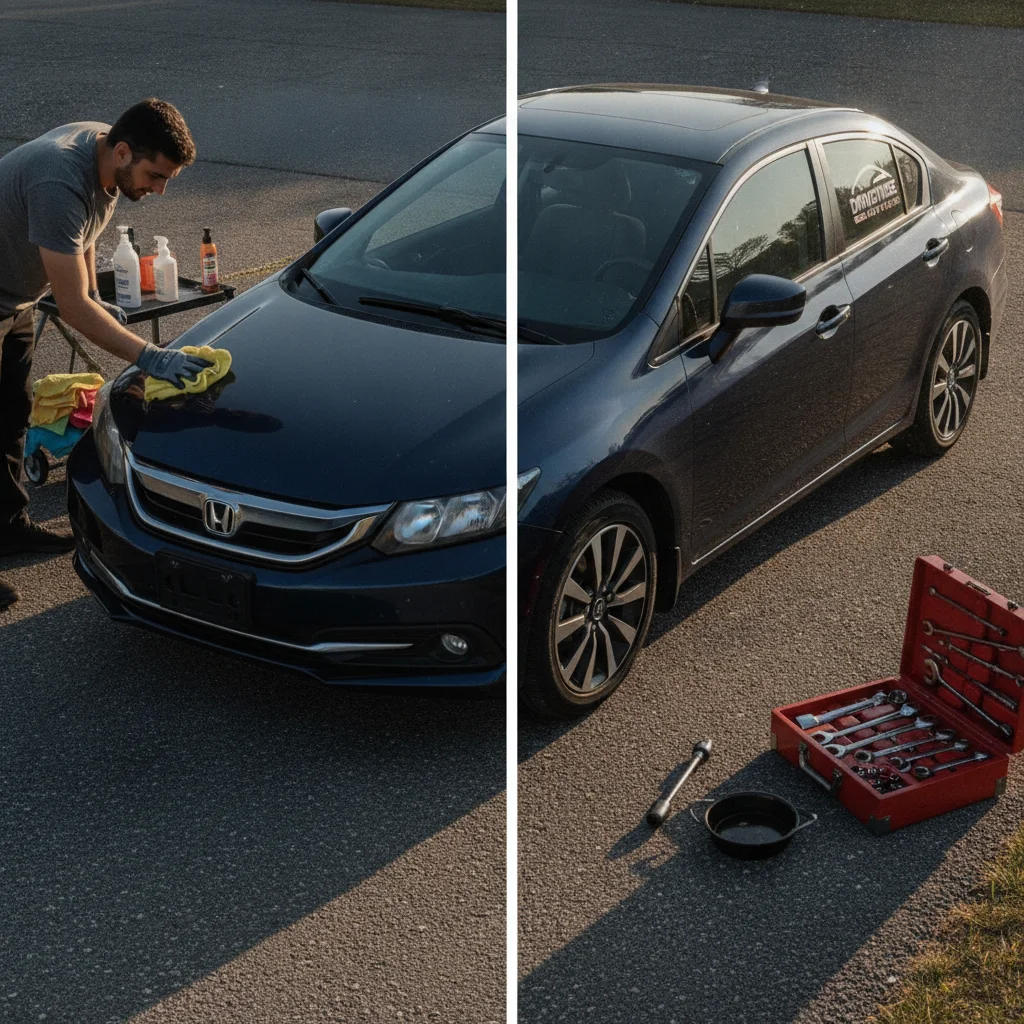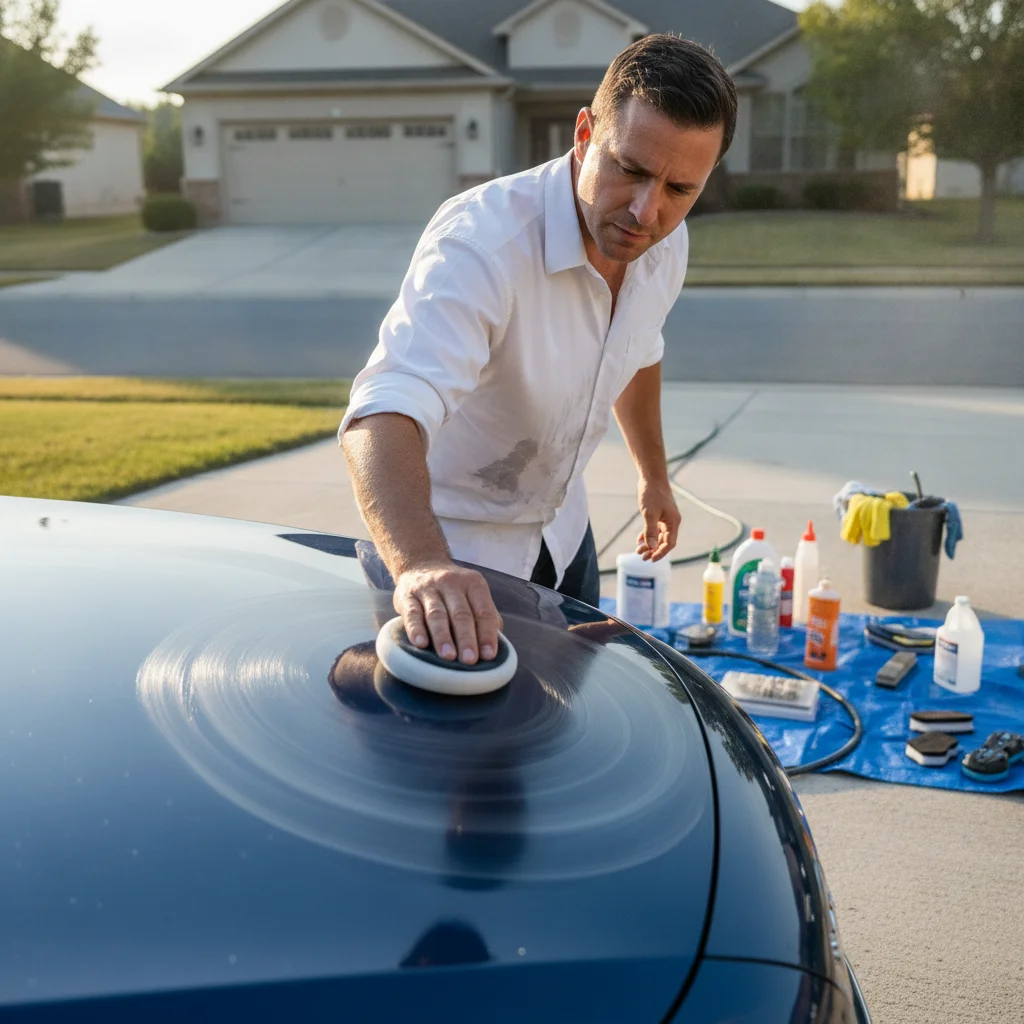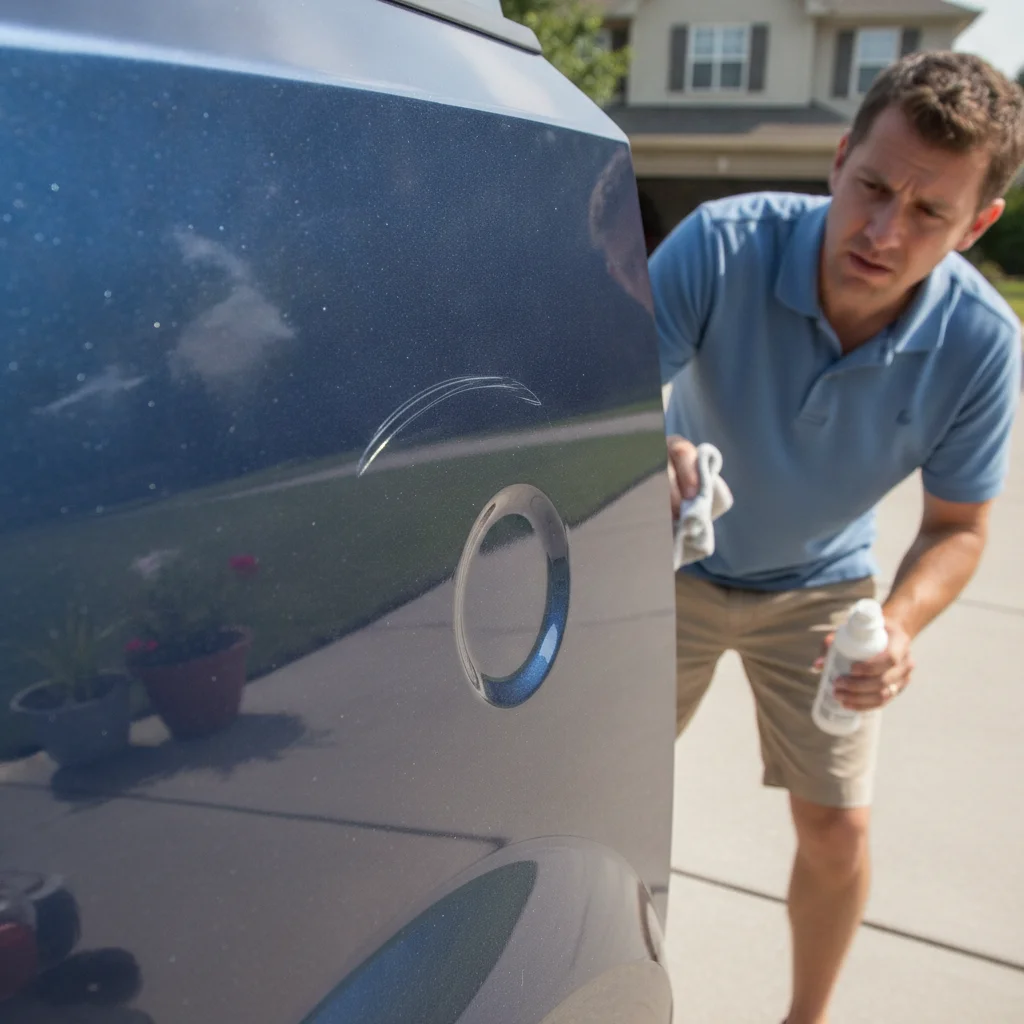
Key Takeaways
Condition-Based Price Negotiation
Condition-based price negotiation is when a buyer uses visible or discovered flaws — scratches, stains, worn trim, or mechanical issues — to justify asking for a lower price than the seller listed. It's one of the most common and effective buyer tactics in private car sales. The key word is 'visible': buyers negotiate hardest on problems they can point to with their finger.
In valuation models like those used by Kelley Blue Book and Edmunds, condition ratings (Excellent, Good, Fair, Poor) can shift a vehicle's estimated value by hundreds or even thousands of dollars. Cosmetic flaws typically push a car from 'Good' to 'Fair' condition in a buyer's eyes, even when mechanical integrity is sound.
The Psychology Behind Cosmetic Negotiation
When a buyer walks up to your car and runs a finger along a scratch, they're not just assessing damage. They're doing something much more strategic: building a case. Every visible flaw they find becomes a line item in a mental invoice — one they plan to present to you in the form of a lower offer.
This is condition-based price negotiation, and it's almost universal in private car sales. Understanding why buyers do it — and how powerfully it works — is the first step toward neutralizing it.
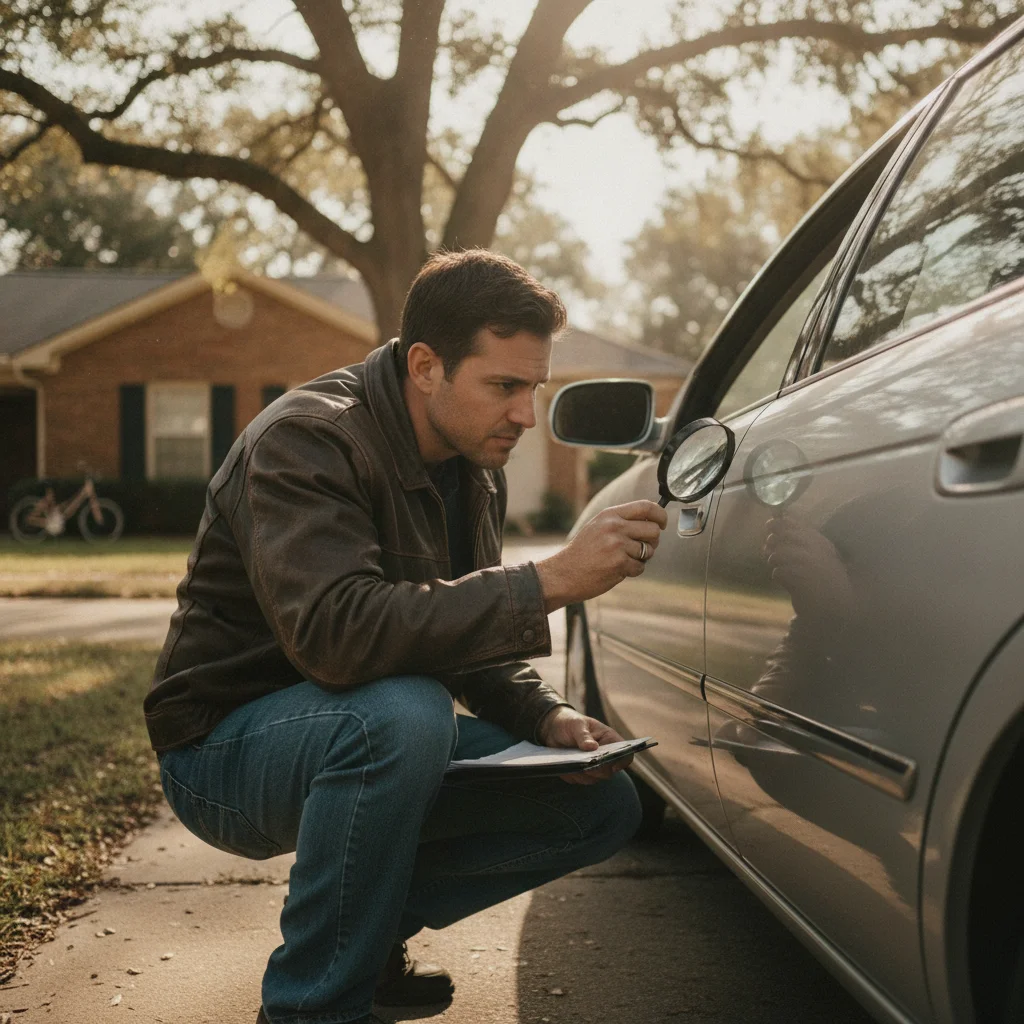
Here's the psychology at play: when buyers encounter visible flaws, they don't just calculate repair costs. They experience what behavioral economists call anchoring. The flaw becomes the anchor that pulls their entire valuation of the car downward. A $150 paint chip doesn't just cost $150 in their mind — it signals that the car may have been neglected, that there might be more problems hidden underneath, and that the seller's asking price is therefore optimistic.
That mental chain of reasoning is often worth $500 to $1,000 off your price, not $150. And the buyer isn't necessarily being dishonest — this is a genuinely human response to visible uncertainty.
Anchoring Works Both Ways
Just as a buyer can use a flaw to anchor your price down, a seller can use documented prep to anchor it up. When you open a conversation by mentioning the professional detail, the new floor mats, and the windshield repair you had done, you're setting an expectation of care before the buyer has a chance to start cataloguing problems. This is a legitimate and effective counter-anchoring strategy.
Disclosure Protects You Legally, Too
In many states, private car sellers have legal obligations to disclose known material defects. Attempting to conceal a known problem — even a cosmetic one that becomes evidence of deeper neglect — can expose you to claims of misrepresentation after the sale. Transparency isn't just good strategy; in many cases it's a legal requirement. When in doubt, disclose.
Condition Affects More Than Sale Price
The condition your car is in doesn't just affect what buyers offer — it affects how quickly the car sells, the quality of buyers it attracts, and how smoothly the transaction closes. A clean car at a fair price tends to attract buyers who are ready to commit, while a rough car at a low price often attracts bargain hunters who negotiate even harder. The relationship between condition and buyer quality is worth factoring into your prep decisions.
This is why cosmetic condition is so closely tied to how buyers assess overall value. It's documented in how major valuation tools like Kelley Blue Book structure their condition grades: cosmetic flaws alone are enough to drop a vehicle from 'Good' to 'Fair,' with a corresponding drop in estimated private party value.
Why Every Flaw Is a Negotiating Chip
Buyers in private sales know they're expected to negotiate. What they're looking for isn't just a fair price — they're looking for justification to ask for a lower one. Cosmetic flaws hand them that justification on a silver platter.
Think of it from the buyer's perspective. They've driven to see your car, they want to buy it, and they want to feel like they got a good deal. Pointing to a cracked side mirror or a cigarette burn in the seat gives them a reason — one they can say out loud — to offer less than your asking price. It's socially comfortable, it's logical-sounding, and it works.
$500–$2,000
Value gap between 'Good' and 'Fair' condition
Kelley Blue Book's condition-based valuation model shows cosmetic flaws alone can shift private party value by this range depending on vehicle age and segment.
10x
Negotiation leverage vs. actual repair cost
Industry detailers and used car professionals commonly observe buyers negotiating $500+ discounts for defects that cost $50 or less to repair, particularly for paint chips and odors.
$50–$150
Typical cost of professional odor treatment
Enzyme-based or ozone odor treatments typically cost between $50 and $150 at detailing shops, yet smoke odor alone can reduce a car's perceived value by $500 or more.
60 seconds
Time for buyer's first impression to form
Consumer psychology research consistently shows that initial product impressions — including automotive — form within the first minute of physical contact, anchoring all subsequent evaluation.
The flaws buyers reach for most often fall into a few predictable categories:
- Paint and body: Scratches, chips, dents, faded clear coat, and rust are the most cited issues. They're visible from a distance and easy to photograph for leverage.
- Wheels and tires: Curb rash on alloy wheels and low or uneven tire tread are immediately apparent and commonly used to negotiate.
- Interior wear: Stains, tears, worn leather, cracked dashboard trim, and broken trim pieces all signal that a car has been used hard.
- Odor: Smoke, pet, or mildew smells often trigger the largest emotional discount of any cosmetic flaw — and they're invisible, which makes them feel sinister to buyers.
- Glass: Windshield chips or cracks are both safety concerns and aesthetic flaws, making them doubly effective as negotiating tools.
What's important to recognize is that none of these flaws need to be expensive to fix. But in the buyer's hands, each one is worth real money off your price — often far more than the actual cost to remedy it.
Price Your Prep Into Your Asking Price
If you've invested in detailing, odor treatment, or touch-up work, don't absorb that cost silently. Price your car at the cleaner end of comparable listings and be ready to mention the prep investments when asked. 'I had it professionally detailed and the chips touched up' is a legitimate and credible answer to a buyer's price challenge.
Document Prep Work Before and After
Take photos of any flaws you address — before you fix them and after. These photos, along with any receipts, serve as trust-building evidence during a sale. A buyer who sees documentation of care has far less psychological reason to assume neglect — which is the core belief that drives aggressive negotiating.
Check Your Insurance Before Paying for Windshield Repair
Many comprehensive auto insurance policies cover windshield chip repair at no cost and with no deductible impact. Before paying $75–$100 out of pocket for a chip repair, call your insurer. This is one of the easiest wins in car prep — a visible flaw eliminated for free.
How Prep Reframes the Entire Negotiation
Here's what changes when a seller invests in smart prep before listing: the buyer arrives with nothing to point at. No scratches to photograph, no odors to recoil from, no worn trim to catalogue. Their negotiating script — which depends on visible problems — simply doesn't have much material to work with.
This isn't just cosmetic. It's strategic. A clean, well-presented car forces buyers to compete on price rather than condition. They can't easily justify a low-ball offer when there's nothing obviously wrong. And if they try anyway, you can respond from a position of genuine confidence: the car has been professionally detailed, the chips have been touched up, and it's priced to reflect its actual condition.
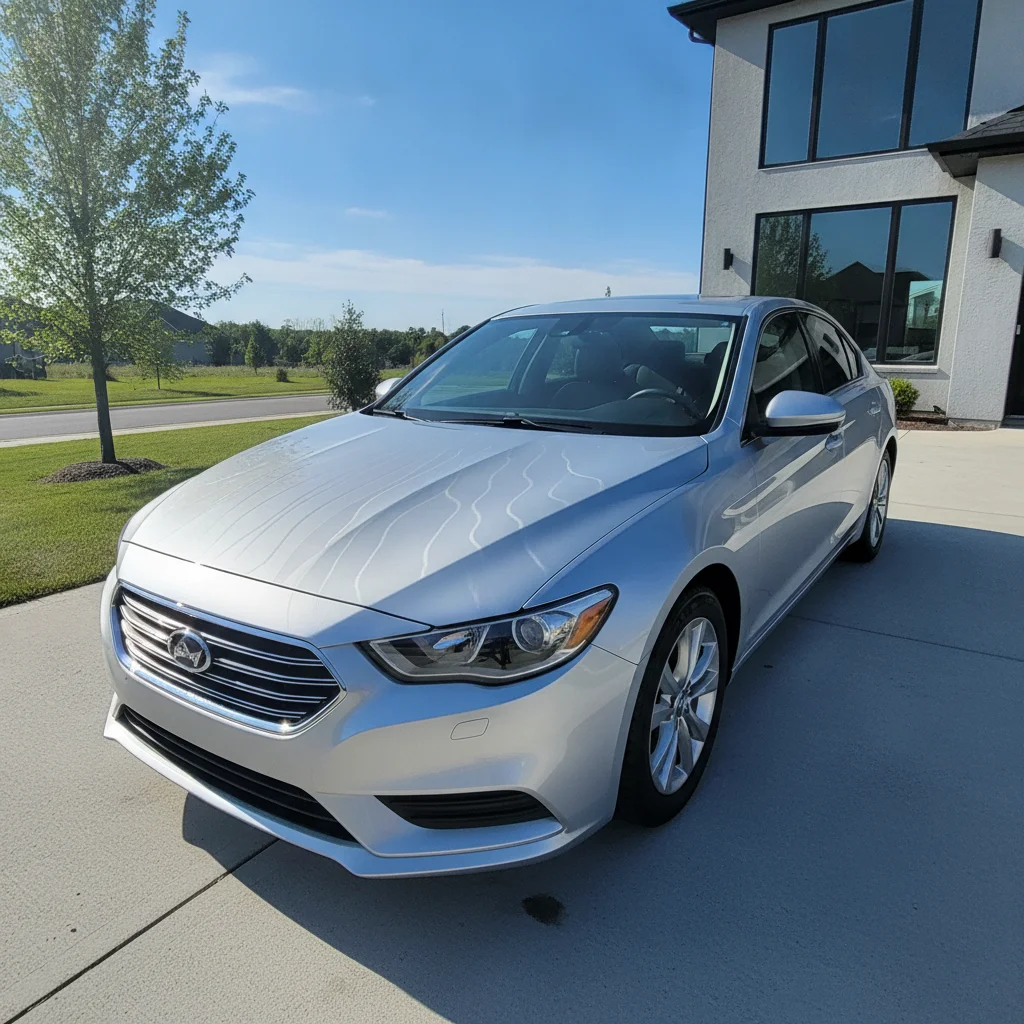
The prep investments that matter most are the ones that address first-impression flaws — the things a buyer notices in the first 60 seconds. Research on buyer behavior consistently shows that initial impressions drive the overall framing of a negotiation. A car that looks cared-for triggers a halo effect: buyers assume the mechanical maintenance has been similarly attentive, even if they can't verify it immediately.
Practically, this means prioritizing:
- A thorough professional detail — inside and out. This single investment typically has the highest return of any prep activity.
- Odor elimination — not masking with air freshener, but genuine treatment. Buyers recognize the difference instantly.
- Paint chip and scratch touch-up — factory-matched touch-up paint is inexpensive and addresses the most common negotiating trigger.
- Wheel cleaning or refinishing — shiny wheels signal care disproportionate to their actual cost.
- Windshield chip repair — often covered by insurance, this is frequently overlooked but noticed immediately.
For a deeper look at where prep dollars genuinely pay off versus where they're wasted, detailing vs. minor repairs before a private sale walks through the math in detail.
“The single most consistent predictor of how hard someone negotiates on a used car is how much they can visually find wrong with it in the first few minutes. Clean the car, and you're changing the entire dynamic of that conversation.”
— Tom McParland, Automotive consumer advocate and used car buying columnist, Jalopnik
The Flaws That Cost Sellers the Most (and the Least to Fix)
Not all cosmetic flaws carry equal negotiating weight, and not all of them are equally expensive to address. The most dangerous flaws from a seller's perspective are the ones that are cheap to fix but expensive to leave unfixed — because buyers will use them as disproportionate leverage.
High-impact, low-cost fixes
- Interior odors: A professional ozone treatment or enzyme-based odor eliminator costs $50–$150. But a car that smells like smoke can lose $500–$1,500 in perceived value. This is one of the clearest ROI opportunities in all of car prep.
- Paint chips and light scratches: Touch-up paint for factory-matched colors costs $15–$40. Buyers routinely cite paint chips as justification for $300–$600 price reductions.
- Dirty engine bay: A $30–$50 detailing add-on. An oily, dirty engine bay makes buyers wonder what else hasn't been maintained.
- Worn floor mats: Replacement mats cost $30–$80 and eliminate one of the most visible interior wear signals.
Moderate-cost fixes worth evaluating
- Alloy wheel curb rash: Refinishing typically costs $75–$150 per wheel. On a car where wheels are visually prominent, this can prevent $300–$500 in negotiated discounts.
- Windshield chip repair: Usually $50–$100, and sometimes covered by comprehensive auto insurance with no deductible impact. Check your policy before paying out of pocket.
High-cost fixes that rarely pay off
- Full paint respray or panel replacement: Costs $500–$3,000 or more. In most cases, this investment is not recoverable in a private sale price increase.
- Upholstery replacement: Usually $200–$600 per seat. Cleaning and conditioning is almost always the smarter move.
Be cautious about falling for popular but ineffective prep myths — things like household products claimed to remove scratches or restore trim. Detailing myths that cost sellers time and money separates the evidence-based prep from the wishful thinking.
Transparency as a Seller's Advantage
There's a version of this conversation that makes some sellers uncomfortable: what about flaws you can't afford to fix, or damage that's simply part of the car's history? The answer isn't to hide them — it's to control how they're framed.
Sellers who attempt to conceal problems — parking a car to hide a dent, using touch-up paint to mask rust, or masking odors temporarily — almost always create a worse outcome than honest disclosure. Buyers who feel deceived at a viewing don't just walk away. They often become hostile negotiators, feel justified in very aggressive low-ball offers, or back out entirely after an inspection reveals what was hidden.
The smarter approach: disclose known unfixed issues in your listing, price them into your asking price, and be ready to explain them calmly. 'The rear quarter has a small dent — it's reflected in the price' is a much stronger position than having a buyer discover it themselves and use it as a weapon. Mistakes sellers make when trying to hide a car's flaws covers the legal and practical risks of concealment in detail.
Anchoring Works Both Ways
Just as a buyer can use a flaw to anchor your price down, a seller can use documented prep to anchor it up. When you open a conversation by mentioning the professional detail, the new floor mats, and the windshield repair you had done, you're setting an expectation of care before the buyer has a chance to start cataloguing problems. This is a legitimate and effective counter-anchoring strategy.
Disclosure Protects You Legally, Too
In many states, private car sellers have legal obligations to disclose known material defects. Attempting to conceal a known problem — even a cosmetic one that becomes evidence of deeper neglect — can expose you to claims of misrepresentation after the sale. Transparency isn't just good strategy; in many cases it's a legal requirement. When in doubt, disclose.
Condition Affects More Than Sale Price
The condition your car is in doesn't just affect what buyers offer — it affects how quickly the car sells, the quality of buyers it attracts, and how smoothly the transaction closes. A clean car at a fair price tends to attract buyers who are ready to commit, while a rough car at a low price often attracts bargain hunters who negotiate even harder. The relationship between condition and buyer quality is worth factoring into your prep decisions.
When you've completed prep work, document it. A receipt from a detailing shop, a bottle of touch-up paint you used, a windshield repair invoice — these become trust signals during the sale. A buyer who can see evidence of care has less psychological reason to distrust the car, and less ammunition for the 'it's probably been neglected' narrative that fuels aggressive negotiating.
This connects directly to how condition affects long-term value — not just in the sale price but in how your car is positioned against comparable listings. Understanding depreciation basics explains how condition grades interact with market value over time.
Pricing Your Car to Reflect Prep — Not Just Comparables
Most sellers make one critical mistake when pricing: they look at comparable listings and assume the market will set their price. But comparable listings include cars in varying condition — some clean, some rough. If you've done meaningful prep work, pricing yourself at the same level as an unprepped comparable leaves money on the table.
A car that has been professionally detailed, had paint chips addressed, and presents cleanly should be priced at or near the top of its condition range — and defended confidently if challenged. Your prep isn't just cosmetic; it's evidence of care that justifies the premium.

When buyers try to negotiate down anyway — and some will, because negotiating is simply what private buyers do — you're in a much stronger position. You can point to the work you've done, the receipts you have, and the asking price you've set to reflect actual condition. That's a fundamentally different negotiation than one where a buyer is working through a list of visible problems.
If you're preparing for the negotiation itself, negotiating with private buyers without leaving money on the table gives you a practical framework for holding your position, countering effectively, and closing at a fair price rather than a discounted one.
Price Your Prep Into Your Asking Price
If you've invested in detailing, odor treatment, or touch-up work, don't absorb that cost silently. Price your car at the cleaner end of comparable listings and be ready to mention the prep investments when asked. 'I had it professionally detailed and the chips touched up' is a legitimate and credible answer to a buyer's price challenge.
Document Prep Work Before and After
Take photos of any flaws you address — before you fix them and after. These photos, along with any receipts, serve as trust-building evidence during a sale. A buyer who sees documentation of care has far less psychological reason to assume neglect — which is the core belief that drives aggressive negotiating.
Check Your Insurance Before Paying for Windshield Repair
Many comprehensive auto insurance policies cover windshield chip repair at no cost and with no deductible impact. Before paying $75–$100 out of pocket for a chip repair, call your insurer. This is one of the easiest wins in car prep — a visible flaw eliminated for free.
A Simple Prep Priority Framework for Sellers
If you're not sure where to start, use this framework. It prioritizes the flaws buyers notice first and the investments that return more than they cost.
Step 1: Walk the car like a buyer
Approach your car from 20 feet away, in natural light. Note what catches your eye. Then open every door, check the trunk, and sit in the driver's seat. What's the first thing you smell? These are the impressions your buyer will have — and the starting point for your prep list.
Step 2: Divide flaws into three buckets
- Fix it — high ROI
- Odors, paint chips, dirty interior, dull wheels, dirty engine bay, worn floor mats, cracked trim pieces that cost under $50 to replace.
- Price it in — disclose and discount
- Dents requiring panel work, cracked bumpers, significant interior damage. Fix costs exceed realistic return; disclose and price accordingly.
- Don't bother
- Full resprays, upholstery replacement, major bodywork. Rarely recoverable in a private sale price.
Step 3: Document everything you fix
Keep receipts, photos before and after, and any product documentation. This becomes part of your sales presentation and reduces the buyer's psychological need to find problems.
Step 4: Price at the top of your condition range
A clean, prepped car isn't average — price it that way, and be ready to explain your prep investments calmly and factually during negotiation.
Anchoring Works Both Ways
Just as a buyer can use a flaw to anchor your price down, a seller can use documented prep to anchor it up. When you open a conversation by mentioning the professional detail, the new floor mats, and the windshield repair you had done, you're setting an expectation of care before the buyer has a chance to start cataloguing problems. This is a legitimate and effective counter-anchoring strategy.
Disclosure Protects You Legally, Too
In many states, private car sellers have legal obligations to disclose known material defects. Attempting to conceal a known problem — even a cosmetic one that becomes evidence of deeper neglect — can expose you to claims of misrepresentation after the sale. Transparency isn't just good strategy; in many cases it's a legal requirement. When in doubt, disclose.
Condition Affects More Than Sale Price
The condition your car is in doesn't just affect what buyers offer — it affects how quickly the car sells, the quality of buyers it attracts, and how smoothly the transaction closes. A clean car at a fair price tends to attract buyers who are ready to commit, while a rough car at a low price often attracts bargain hunters who negotiate even harder. The relationship between condition and buyer quality is worth factoring into your prep decisions.
The goal throughout this process is simple: reduce the number of things a buyer can point to. Every flaw you fix is one fewer negotiating chip in their hand. And a buyer who runs out of chips either pays your price or walks away — and in a well-prepped car fairly priced, most don't walk away.

All claims are backed by peer-reviewed research. Sources on request.