Key Takeaways
Our Verdict
Detailing almost always pencils out on cars worth $8,000 or more — the ROI is real, and the psychological impact on buyers is significant. Minor repairs are a trickier call: only tackle them when the fix costs less than 50% of the likely price concession a buyer would demand. For anything structurally significant or mechanically complex, disclosure beats repair every time.
| Best for | Recommended |
|---|---|
| Sellers with a clean, well-maintained car worth $10,000+ | Professional full detail |
| Sellers on a tight prep budget with a car under $7,000 | DIY detail plus targeted low-cost cosmetic fixes |
| Sellers dealing with mechanical issues that affect drivability | Mechanical repair first, then assess detailing budget |
| Sellers with expensive body or paint damage on a lower-value car | Disclose and price accordingly instead of repairing |
The Core Question: Are You Spending to Sell or Spending to Feel Better?
Most sellers prep their cars based on pride of ownership, not economics. They spend $600 on a paint correction because the swirl marks bother them personally — not because the math justifies it. That's a costly mistake.
The right frame for every pre-sale dollar is this: will this expenditure return more than it costs, in the form of either a higher sale price or a faster sale? Sometimes the answer is clearly yes. Sometimes it's clearly no. The hard part is the middle ground, and that's where most sellers overspend.
There are really two categories of pre-sale prep to think about:
- Detailing — cleaning, polishing, and presenting the car at its best cosmetic condition
- Minor repairs — fixing specific mechanical or cosmetic defects before listing
These aren't mutually exclusive, but they have very different economics. Detailing is almost always worth doing to some degree. Repairs depend entirely on the specific issue, your car's market value, and what buyers in your price segment actually care about.
The real ROI of detailing before you sell breaks down the numbers in detail, but the short version is this: a $200 detail on a $5,000 car is a very different proposition than a $200 detail on a $20,000 car — and both are different from a $900 paint correction on either one.
Detailing: What You're Actually Buying
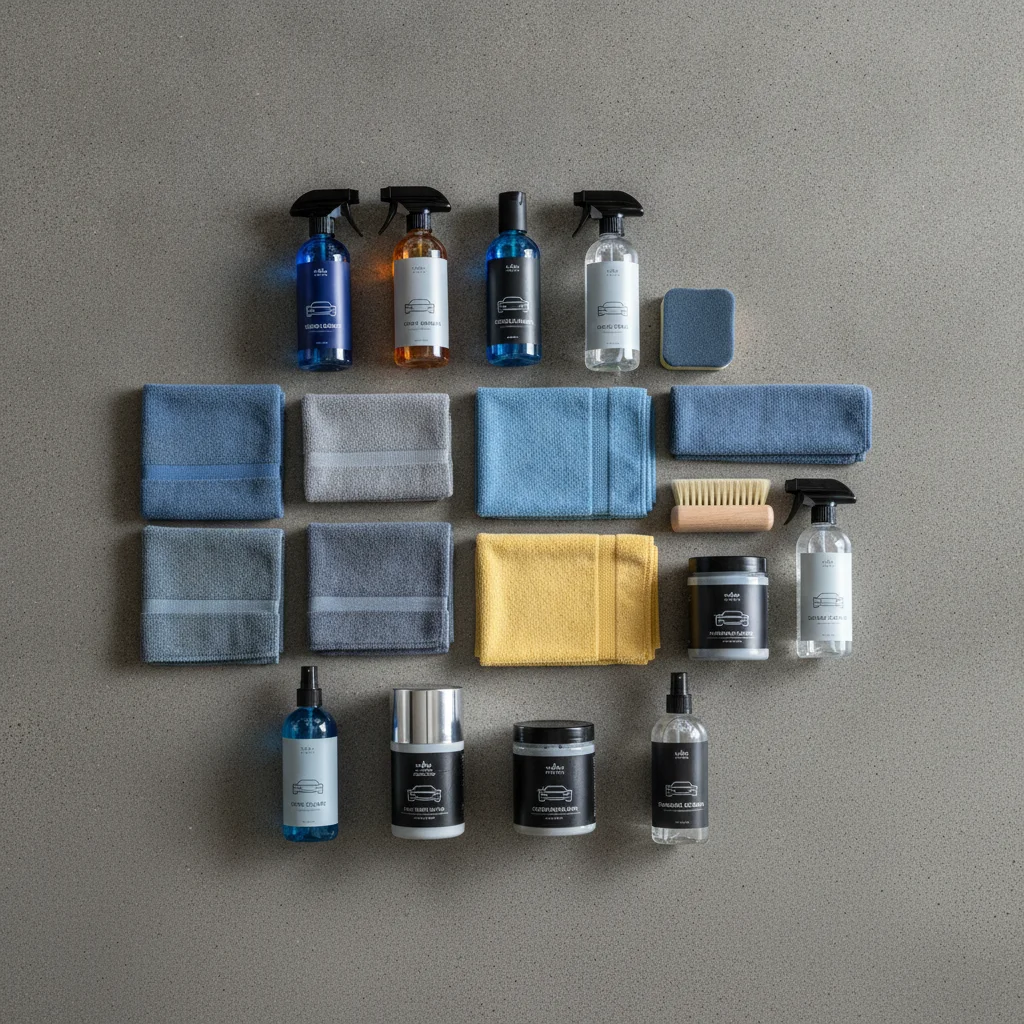
Detailing isn't just cleaning. Done right, it changes how buyers feel when they sit in the car and how they perceive the seller's level of care. Buyers can't see your maintenance records, but they can see whether your cup holders are clean. That sensory impression drives their willingness to pay full price — or their instinct to negotiate hard.
What a professional detail typically includes
- Full exterior hand wash, clay bar decontamination, and machine polish
- Tire and wheel cleaning, trim dressing
- Interior vacuum, surface wipe-down, glass cleaning
- Odor neutralization (basic, not deep odor removal)
- Engine bay wipe-down (optional, adds $50–$75 at most shops)
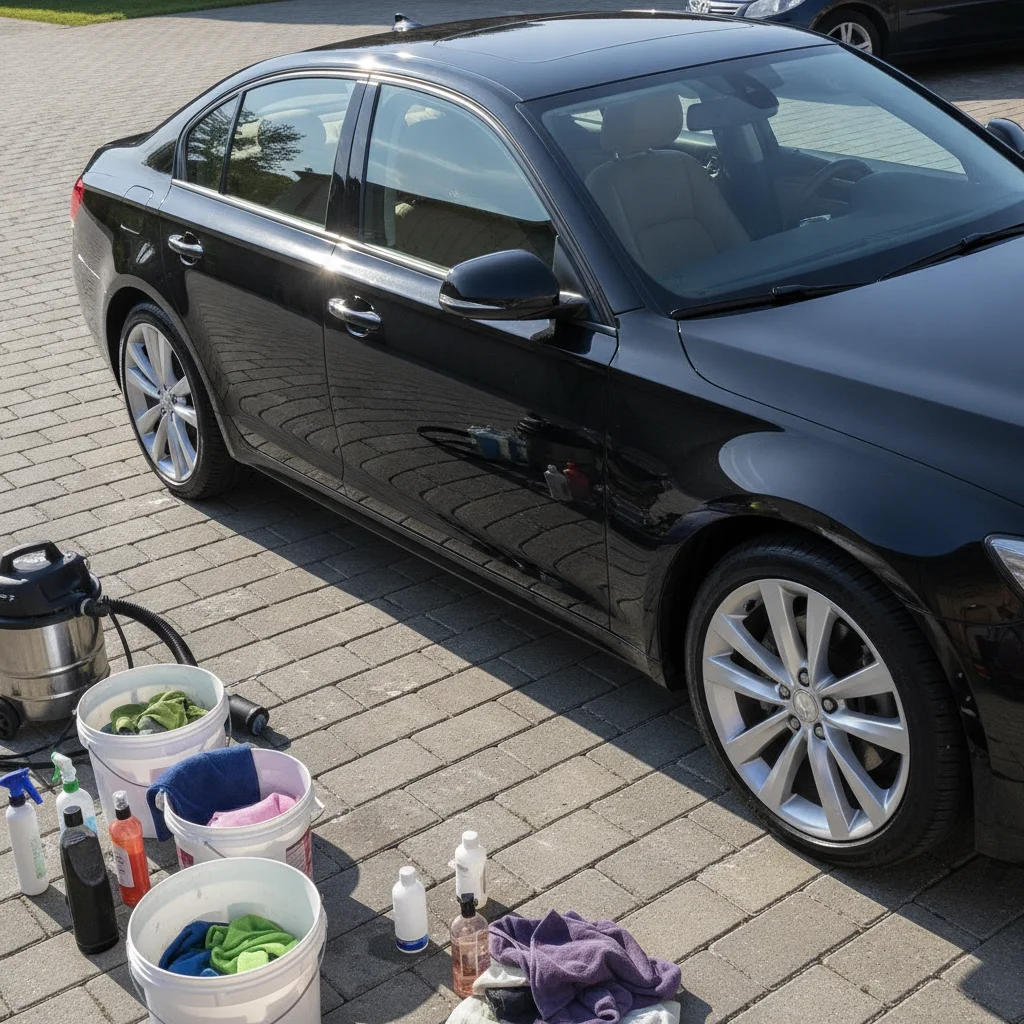
A solid professional detail runs $150–$400 for most vehicles. Large SUVs and trucks tend to land at the top of that range. The question isn't whether it makes the car look better — it will. The question is whether you could achieve 80% of that result yourself for $30 in supplies.
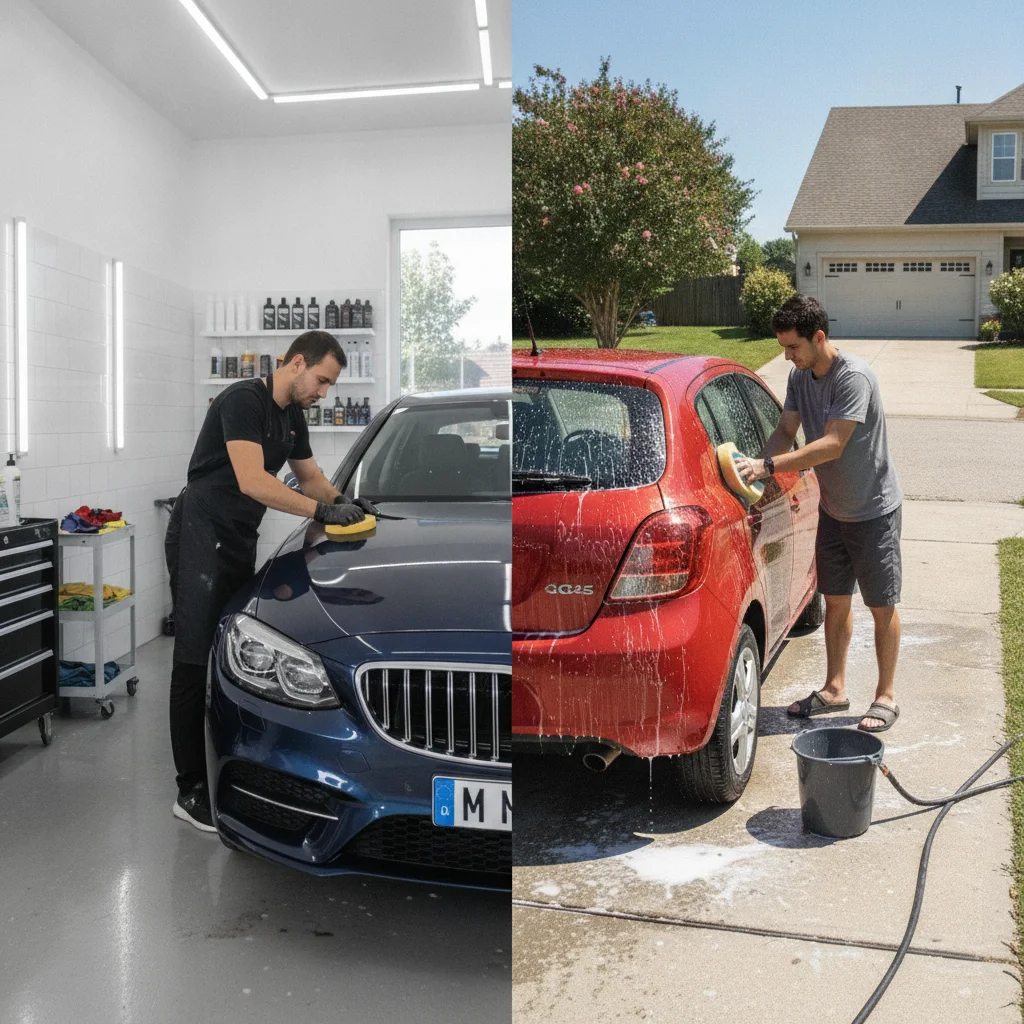
Professional detailing vs. DIY walks through that decision in depth. The short answer: if your car is dark-colored, has significant swirl marks or water spots, or is selling for over $15,000, professional work is usually worth it. For lighter-colored daily drivers under $10,000, a thorough DIY job often gets you most of the way there.
$500–$1,500
Perceived value added by professional detailing
Industry estimates from detailing professionals and automotive market analysts suggest a full detail on a mid-range vehicle increases buyer willingness-to-pay by this range.
63%
Buyers who negotiate based on interior condition
According to Cox Automotive consumer research, interior cleanliness is among the top factors buyers cite when justifying price reductions in private party transactions.
1.5x–2x
Buyer price deductions vs. actual repair cost for safety items
Sellers who leave known safety issues unfixed typically face negotiated deductions that exceed the actual repair cost by 50–100%, based on common private-sale negotiation patterns.
One thing most sellers underestimate: buyers negotiate hard on cosmetic flaws. Every visible blemish is a negotiating chip. A dirty, dusty interior isn't just unappealing — it's an invitation for a buyer to assume the whole car has been neglected, which justifies a lower offer in their mind. Detailing removes those chips before the buyer even gets there.
Minor Repairs: Running the Math Before You Pick Up a Wrench
Repairs are where sellers get burned most often. The impulse is to "fix everything" so the car presents well. But repair costs don't automatically translate into sale price gains — and sometimes they actively hurt your return.
The 50% rule
Here's a simple benchmark: don't spend more than 50 cents on a repair for every dollar of price concession you'd otherwise face. If a buyer would knock $400 off for a cracked tail light, spending $150 to replace it makes sense. Spending $350 does not.
The challenge is estimating what buyers will actually demand. A reasonable framework:
- Safety-critical issues (brakes, tires, lights) — buyers almost always negotiate aggressively on these, often 1.5x–2x the actual repair cost. Fix them.
- Visible cosmetic issues (dents, scratches, faded trim) — buyers negotiate at roughly 1x–1.5x actual repair cost. Fix the cheap ones; disclose the expensive ones.
- Non-obvious mechanical issues (oil leaks, transmission wear) — buyers who find these via inspection negotiate hard. Disclose proactively rather than fixing and hoping nobody notices.
| Prep Type | Typical Cost | Typical ROI | Best For | Skip When | |
|---|---|---|---|---|---|
| DIY Detail | $25–$60 | High (3x–8x on mid-range cars) | Cars under $10K or clean condition | Car already looks good | |
| Professional Full Detail | $150–$400 | High on $8K+ vehicles | Cars with moderate wear or dark paint | Car value under $5K | |
| Paint Correction | $300–$800 | Moderate (car-dependent) | High-value cars with heavy swirls | Car worth under $10K | |
| Cheap Cosmetic Fixes | $15–$150 | Very high (often 5x+) | All vehicles at all price points | Almost never skip these | |
| PDR (Paintless Dent Repair) | $75–$200 per dent | Good if paint is intact | Dents with no paint damage | Paint cracked at dent site | |
| Body Shop Panel Repair | $400–$1,200+ | Poor on cars under $15K | High-value cars with visible damage | Most private sale scenarios | |
| Mechanical Safety Repairs | Varies widely | Very high (prevents price collapse) | All vehicles — prioritize first | Never skip safety items | |
| Odor Treatment | $100–$250 professional | High if odor is present | Smoke, pet, or mildew odors | Car has no odor issues |
When to walk away from a pre-sale repair covers the financial logic in more detail. But the core principle is: some repairs cost more than they'll ever recover, and disclosing honestly is often the smarter and more defensible position.
Repairs that typically pay off
- Replacing a broken interior trim piece ($20–$80 in used parts)
- Fixing a cracked or oxidized headlight lens ($30–$120 DIY)
- Replacing burned-out bulbs (under $30)
- Touching up small stone chips with matched touch-up paint ($15–$40)
- Replacing a worn wiper blade set ($25–$50)
Repairs that rarely pay off
- Full panel repaint or respray ($400–$1,200+)
- Major dent repair via body shop ($300–$800 per panel)
- Transmission service or rebuild (often $1,500–$4,000)
- Engine work beyond basic tune-up items
- Sunroof or convertible top mechanical repairs
Repairs that almost always pay off — and ones that rarely do goes deeper on this, with specific repair types benchmarked against typical private-sale price recovery rates.
How Your Car's Value Changes the Equation
The math on both detailing and repairs changes significantly based on what your car is worth. Here's how to think about it by price tier:
Under $5,000
At this price point, buyers expect some wear. They're not looking for perfection — they're looking for a car that runs reliably and hasn't been abused. Spend $30–$60 on a thorough DIY detail and address only the cheapest cosmetic items. Don't spend $300 on paint correction on a $3,500 car. You won't recover it.
The prep work that costs almost nothing but lifts buyer perception is essential reading for this segment — there are genuinely high-ROI steps that cost under $20.
$5,000–$15,000
This is the sweet spot where detailing ROI is clearest. A $200 professional detail on a $10,000 car is easy to justify. Buyers in this range are often shopping carefully, comparing multiple listings, and making value judgments based on presentation. A clean, detailed car commands full asking price more often than a mediocre-condition equivalent listed $300 cheaper.
For repairs, the 50% rule applies cleanly here. Fix the cheap stuff. Disclose the expensive stuff honestly and price accordingly.
$15,000+
At this price point, buyers often request a pre-sale inspection regardless of prep quality. That changes the equation significantly. Getting a pre-sale inspection before listing can actually work in your favor here — you find issues first and can decide to fix or disclose on your own terms rather than having a buyer's mechanic dictate the negotiation.
Professional detailing is essentially mandatory at this price point. Buyers paying $18,000 for a used car privately expect it to look like it was cared for. A half-clean interior at that price level signals neglect across the board.
Specific Scenarios: The Prep Decision Tree
Here are the most common prep decisions sellers face, and the most economically sound way to handle each:
Scenario 1: Minor scratches and swirl marks
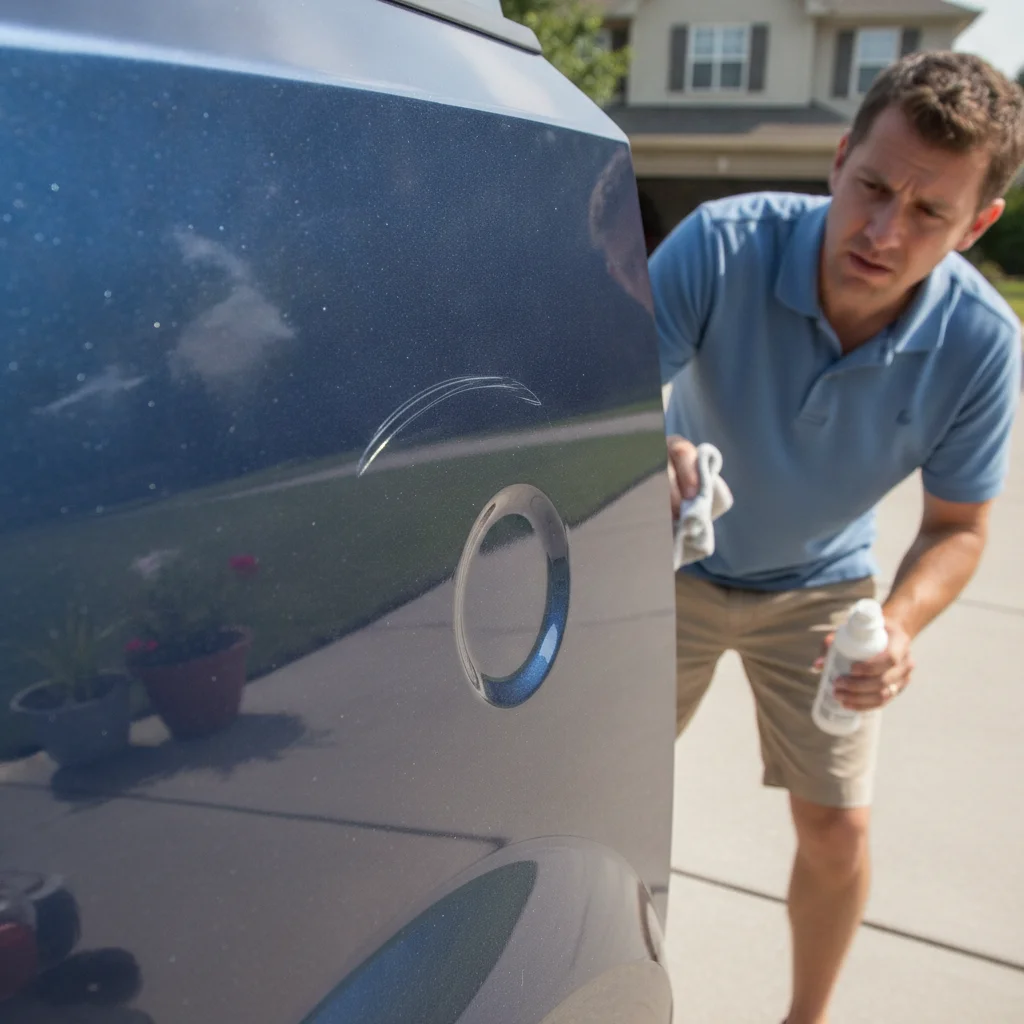
If they're surface-level (you can't feel them with a fingernail), a machine polish during detailing will address them without additional cost. If they're deeper scratches down to primer, paint correction before selling walks through when it makes sense to go further. Rule of thumb: surface swirls are a detailing item; deep scratches are a repair decision.
Scenario 2: A dent with paint damage
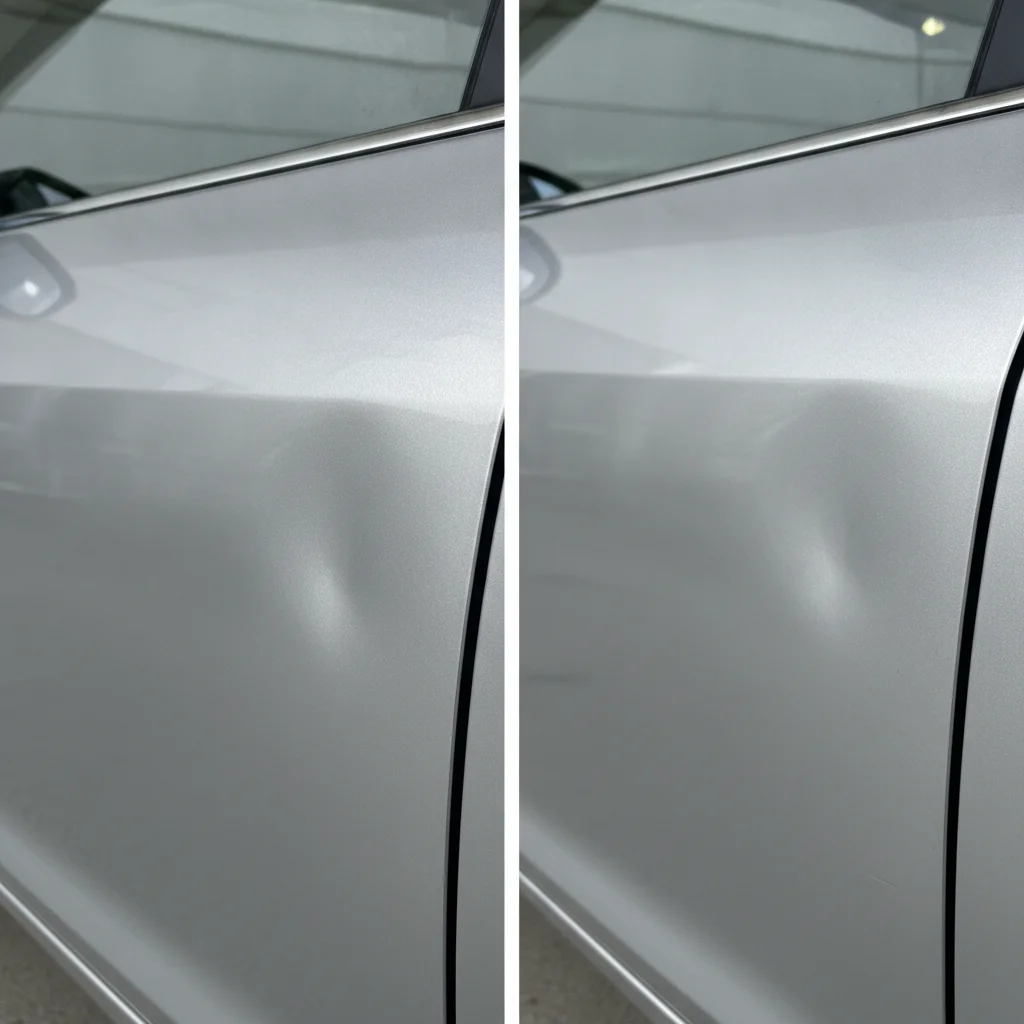
Paintless dent repair (PDR) works on dents where the paint is intact — typically $75–$200 per dent, and it often recovers its cost. Once paint is cracked or chipped at the dent site, you're looking at body shop work, which rarely pencils out on cars under $12,000.
Scenario 3: Odor (smoke, pet, mildew)
This is one of the highest-stakes prep items and one of the most commonly botched. Basic detailing deodorization won't eliminate heavy smoke smell — it masks it temporarily. Buyers notice this immediately, and they react strongly. If your car has significant odor, either invest in proper ozone treatment ($100–$250) or disclose it and drop your price by more than that. Trying to mask it with air fresheners is the fastest way to lose buyer trust on a test drive.
Scenario 4: Worn or stained interior
A professional interior detail ($100–$150 standalone) can do remarkable things with fabric seats and plastic trim. Leather is trickier — cracked leather seats on a $20,000 car are worth addressing with a leather conditioning treatment ($40–$80 DIY). Cracked leather on a $6,000 car is a disclose-and-price-accordingly situation.
Scenario 5: Faded exterior trim or plastic
Black plastic trim fading to gray is cheap to address with plastic restorer products ($15–$25). This is one of the best ROI cosmetic fixes available — it noticeably improves appearance for minimal cost. Avoid the temptation to use WD-40 or other improvised solutions that look good for 48 hours then make the trim look worse.
Black Plastic Trim: Easy Win, High Impact
Faded gray plastic trim is one of the most common reasons a car looks older than it is in person and in photos. A $15–$25 plastic restorer product applied 24 hours before viewing can take years off the car's appearance. Apply it the day before — not right before the buyer arrives — so it has time to absorb and won't look oily.
Sequence Your Prep to Protect Your Work
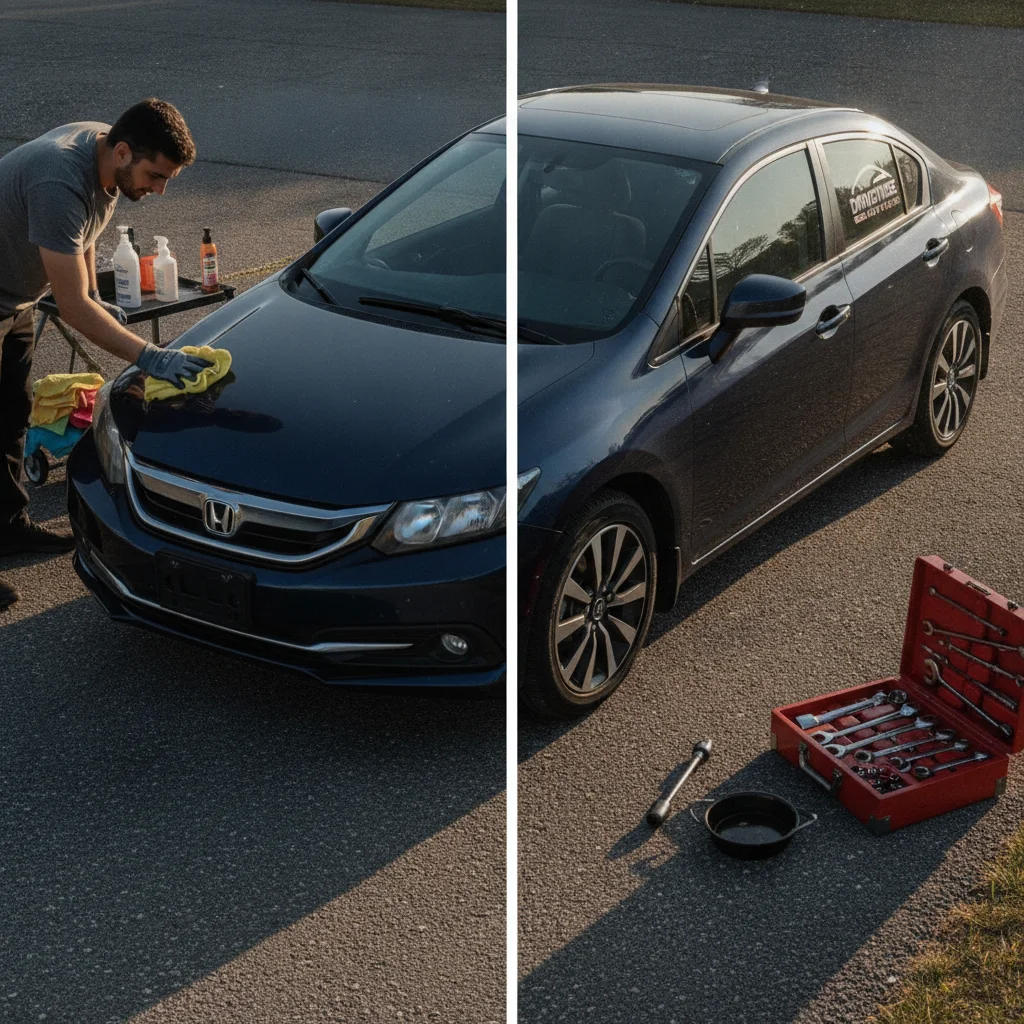
Always do mechanical items first, then exterior detailing, then interior. Doing it in the wrong order means your freshly waxed hood gets oil drips on it when you're changing a filter, or your vacuumed mats get dirty again during a fluid check. Plan the sequence once and save yourself from doing any step twice.
Photography, Viewings, and Why Prep Has Two Phases
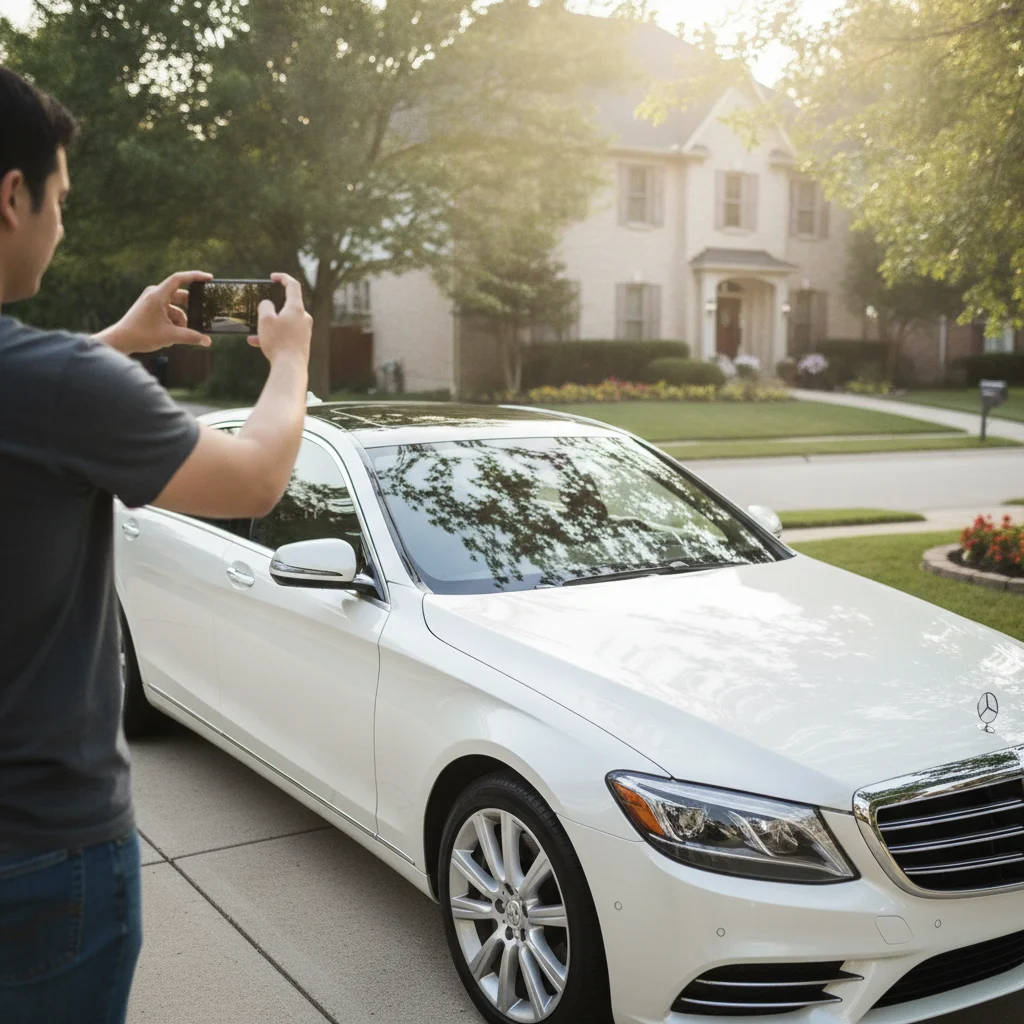
Here's something most sellers miss: detailing for listing photos and detailing for in-person viewings are not the same thing. A glossy exterior looks great in a photo but reveals every surface scratch under direct sunlight. Your car needs to hold up in both contexts.
Detailing for photos vs. detailing for viewings covers this in detail. The key principle: don't use heavy gloss products on paint that has uncorrected surface scratches — it amplifies them under direct light. And don't photograph a car with tire shine still dripping — it looks greasy rather than clean in photos.
Plan your prep timeline with both phases in mind:
- One week before listing: address any mechanical items, touch-up paint chips, replace bulbs
- Two to three days before photos: full professional or DIY detail, clay bar, polish, interior deep clean
- Day of photos: light wipe-down, tire dressing, remove personal items from interior
- Day before each viewing: quick exterior wipe, vacuum interior, check that odor treatment is holding
Also consider the color of your car. Dark and light-colored cars show completely different flaws — dark paint shows water spots and swirl marks far more aggressively, which means dark-colored vehicles usually need more prep work to look equivalent to a light-colored car in the same condition.
Don't Mask Odors — Eliminate Them
Air fresheners and fabric sprays temporarily cover odors but don't neutralize them. Buyers notice the combination of strong air freshener smell and underlying odor immediately — it's a red flag that signals the seller is hiding something. If your car has a persistent odor, invest in proper ozone treatment or enzymatic fabric cleaning, or disclose it and price accordingly.
Over-Prepping Can Signal Problems Too
A car with a freshly repainted panel, brand-new tires on an otherwise worn vehicle, or a sparkling engine bay on a car with a rough interior raises red flags for experienced buyers. Inconsistent prep suggests you may be covering something up. Prep should be thorough and even — not targeted at specific problem areas in a way that stands out.
The Bottom Line on Budget Allocation
If you're working with a fixed prep budget, here's how to allocate it by priority:
- Safety items first — tires, brakes, lights. Non-negotiable. Buyers find these in test drives and negotiate aggressively on them.
- Odor treatment — if needed, this has an outsized impact on buyer perception and can make or break a sale.
- Interior deep clean — buyers spend more time inside the car than outside it during a viewing. Interior condition drives perceived value strongly.
- Exterior detail — gets your listing photos working for you and signals care at first glance.
- Cheap cosmetic fixes — trim restorer, touch-up paint, replacement bulbs. High ROI per dollar.
- Professional paint correction — only if your car's value justifies it. See the benchmarks above.
- Body shop repairs — almost never worth it unless the damage is truly severe and the car is high-value.
If you're selling a high-mileage vehicle, the prep hierarchy shifts somewhat. Selling a high-mileage car explains why buyers of older, higher-mileage vehicles prioritize mechanical confidence over cosmetics — and how to direct your prep budget accordingly.
The overarching principle: spend on what buyers can see and experience in the first five minutes. First impressions are made at the curb before they even open the door, reinforced in the first breath they take inside the car, and confirmed when they turn the key. Prep for those three moments first.
Finally, remember that your prep decisions don't happen in a vacuum. If you know a buyer is likely to bring the car to a mechanic, getting your own pre-sale inspection lets you control the narrative around any findings. That's almost always better than being surprised at the negotiating table when a buyer's mechanic delivers bad news.

All claims are backed by peer-reviewed research. Sources on request.