Key Takeaways
Engine Bay Cleanliness Signal
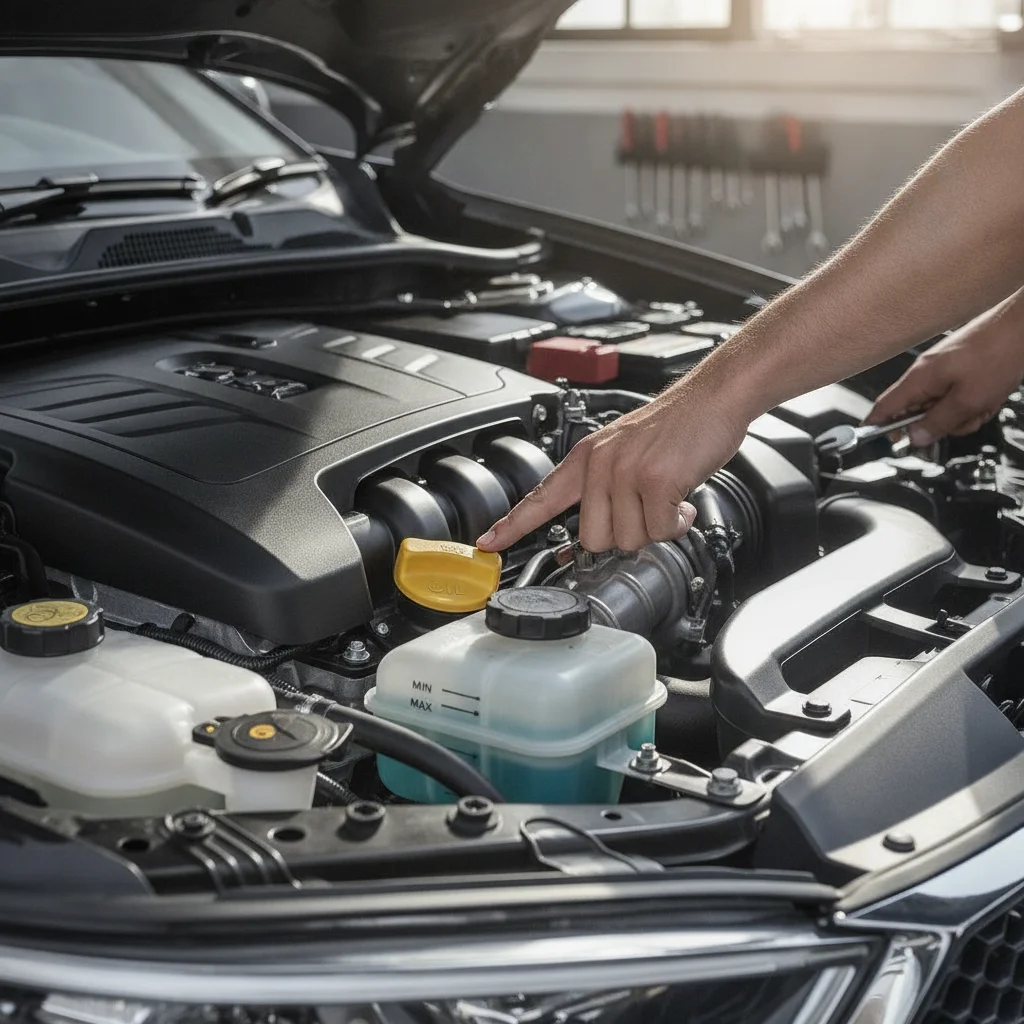
When buyers open a car's hood, the state of the engine bay communicates far more than whether the engine is clean. Grease, oil film, accumulated dirt, and corroded terminals act as a proxy for how conscientiously the car was maintained over its lifetime. Most buyers — even those who know little about engines — instinctively read a dirty bay as evidence of broader neglect. It's a visual shorthand that shapes their entire perception of the car's value and reliability.
In pre-purchase inspections, mechanics use engine bay condition alongside service records to cross-check a vehicle's maintenance history. Unexplained oil accumulation, coolant residue, or mismatched hardware can flag prior repairs that weren't disclosed.
The Silent Judgment Buyers Make at the Hood
Here's something most sellers don't realize: the moment a buyer pops the hood, they've already started making up their mind. It happens fast — faster than they can articulate a reason. The engine bay either confirms that someone took care of this car, or it raises a quiet alarm that spreads to everything else they see that day.
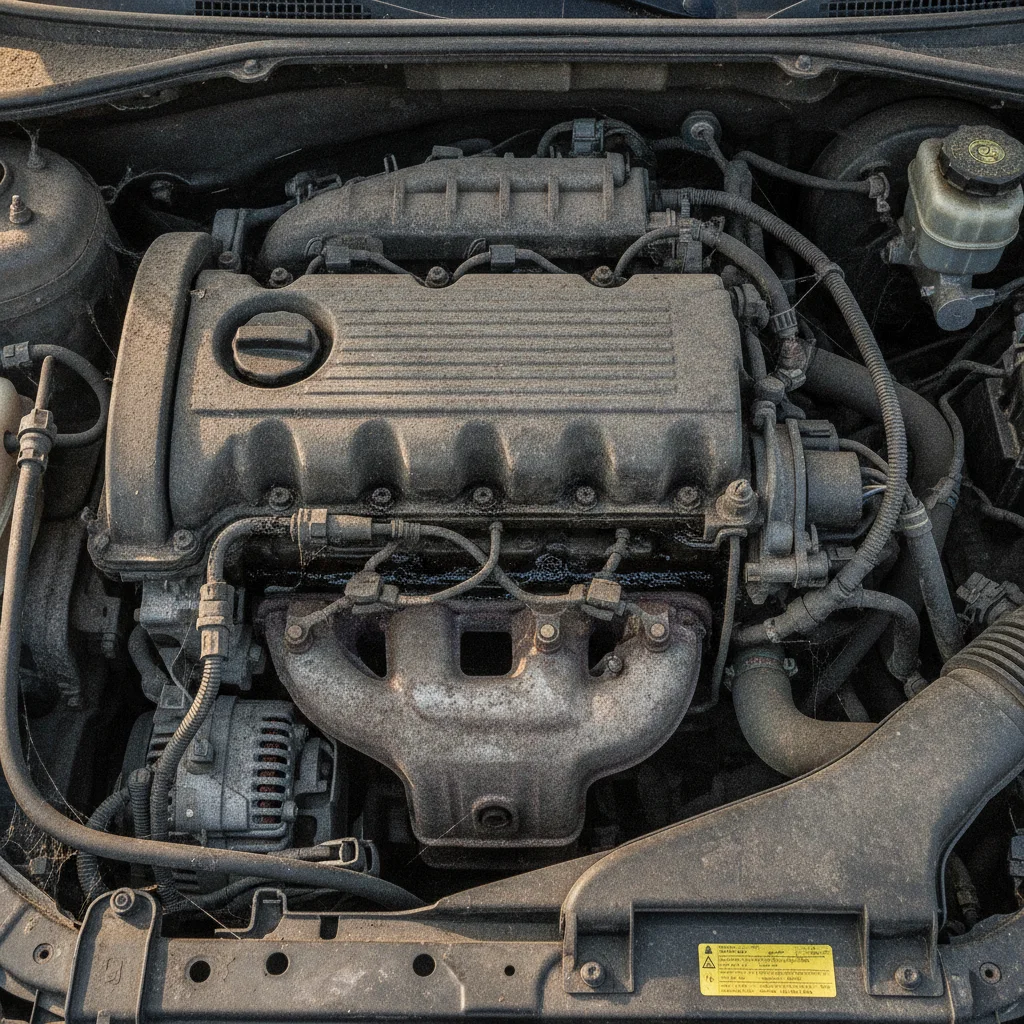
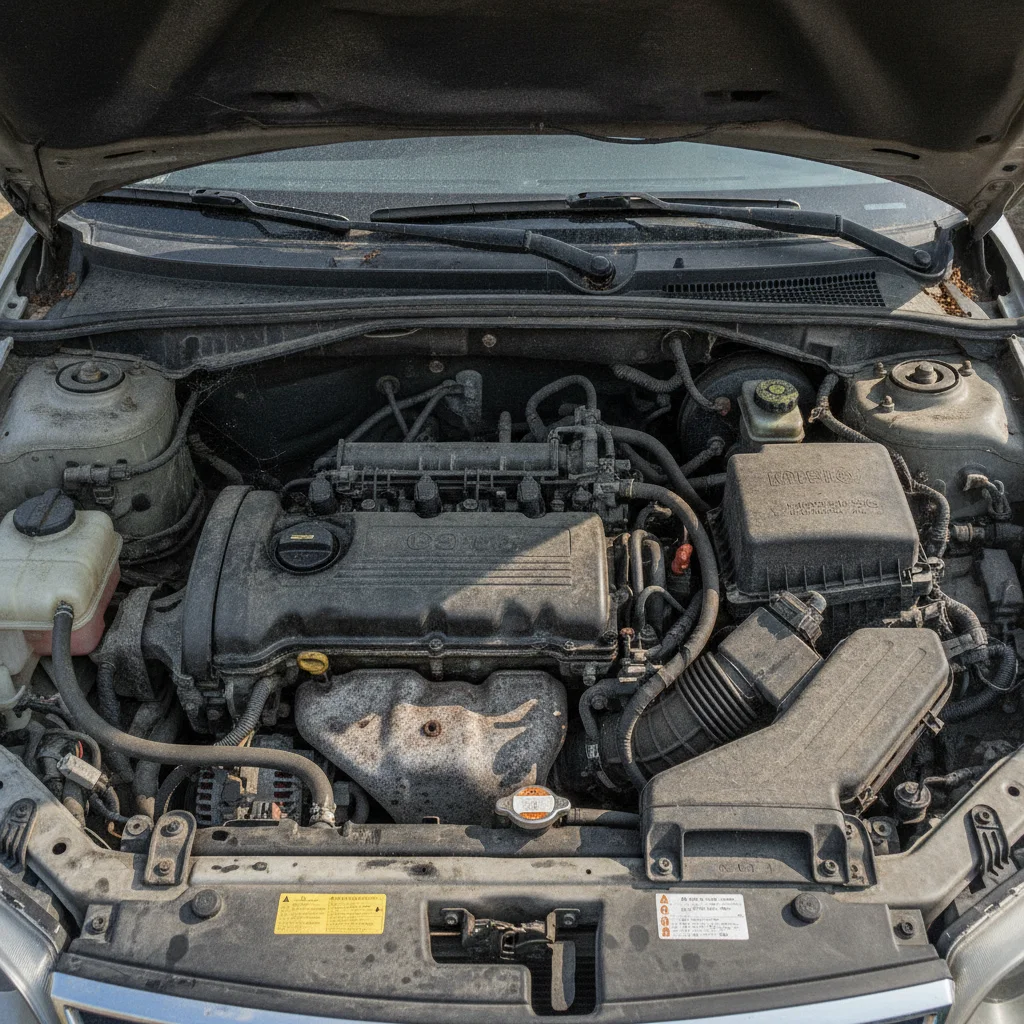
You might think that's unfair. The engine could run flawlessly despite years of accumulated road grime and dust. The fluids might be perfectly topped up. The timing belt might have been replaced right on schedule. None of that is visible. What is visible is a grimy, oil-filmed engine bay — and that's what sticks.
This isn't really about cleanliness for its own sake. It's about what cleanliness represents to a buyer who can't read a service history at a glance. Most private-party buyers and even many dealer lot visitors don't know how to evaluate an engine mechanically. What they can do is look at it and ask themselves: does this look like something someone cared about? If the answer is no, every subsequent negotiation, every question, every test drive is colored by that doubt.
Understanding this psychology is the first step toward addressing it effectively — and affordably. You don't need to obsess over perfection. You need to clear the signal that currently says neglected and replace it with one that says maintained.
Why Grime Reads as Neglect — Even to Non-Mechanics
Buyers process engine bay condition as a proxy for maintenance habits. This is rational behavior, even if it's imprecise. A car owner who changes their oil on schedule, checks fluid levels routinely, and addresses small leaks early will naturally accumulate less grime than one who ignores the engine bay entirely. So while a dirty bay doesn't prove neglect, it is correlated with it — and buyers' instincts are picking up on that correlation.
“Used car buyers are essentially reading risk signals with incomplete information. A dirty engine bay doesn't tell you the engine is bad, but it tells you something about how the owner prioritized the car. That inference, accurate or not, is very hard to overcome once it's formed.”
— Lauren Haas, Automotive consumer behavior researcher and used car market analyst
There's also a cognitive shortcut at work here. Buyers are trying to quickly assess risk with limited information. When they can't evaluate the internals, they rely on what they can see. A clean, organized engine bay lowers perceived risk. A grimy one raises it. The buyer's brain fills in the blanks pessimistically — which is exactly what you don't want when you're asking someone to spend $8,000 or $18,000 on your car.
Specific visual cues that trigger the most concern:
- Oil film or sludge on the valve cover, dipstick tube, or around the oil cap — buyers imagine a dripping leak, even if it's just old residue
- Discolored or crusty coolant residue around the reservoir cap or hose fittings
- Corroded battery terminals — one of the most visible and avoidable red flags
- Cracked or brittle-looking hoses caked in grime
- Mismatched or zip-tied components that suggest improvised repairs
For a buyer's-eye view of what's actually being evaluated under the hood, see our guide on what to check under the hood, even without mechanical expertise. Understanding what buyers are trained to look for helps you address those specific concerns first.
A Clean Bay Doesn't Replace Disclosure
Cleaning the engine bay before a sale is standard prep — concealing known mechanical problems is not. If your car has an active oil leak, coolant seep, or other mechanical issue, disclose it clearly in your listing. In many U.S. states, failure to disclose known defects creates legal liability after the sale. Buyers who discover hidden problems after purchase have legal recourse, and the reputational and financial cost to sellers is far higher than honest disclosure upfront.
When an Inspector Sees a Freshly Cleaned Bay
Pre-purchase inspectors are specifically trained to scrutinize recently detailed engine bays. They'll run a clean cloth along hose fittings, check for fresh wet spots that indicate active seeping, and smell for burning oil or coolant. An honest clean should welcome that scrutiny. If you're worried an inspection will reveal something the cleaning was meant to hide, fix the underlying issue first.
The Real Cost of Skipping Engine Bay Prep
Let's put this in concrete terms. A professional engine bay detail typically runs $75–$150 at a mobile detailer or specialty auto shop. That's a single expense, done once before you list the car. The return on that investment isn't speculative — it shows up directly in two ways: fewer lowball offers and fewer buyers who walk away after lifting the hood.
$75–$150
Typical cost of a professional engine bay detail
Mobile detailers and auto detail shops commonly charge in this range for a thorough engine bay clean, making it one of the most affordable high-impact prep steps for sellers.
5 seconds
Time buyers spend forming an engine bay impression
Consumer behavior studies on used car evaluations consistently show that under-hood impressions form almost instantly — before a buyer can articulate specific concerns.
63%
Of used car buyers who check under the hood
According to automotive consumer research, nearly two-thirds of private used car buyers open the hood during their inspection, making it a near-universal evaluation touchpoint.
3–5x
Return on engine bay detailing investment
Sellers and automotive advisors frequently report that a $100–$150 engine bay detail correlates with $400–$700 in avoided price negotiations or buyer drop-off — though outcomes vary by vehicle and market.
The flip side is worth naming clearly. Buyers who feel uncertain after seeing the engine bay don't usually say so directly. They don't announce, "This engine bay looks dirty, so I'm offering less." Instead, they suddenly become more focused on the 80,000 miles on the odometer, or they remember that their cousin had transmission trouble with this model, or they ask if you'd take $1,500 less because of the "overall condition." The engine bay creates the doubt; that doubt attaches to everything else.
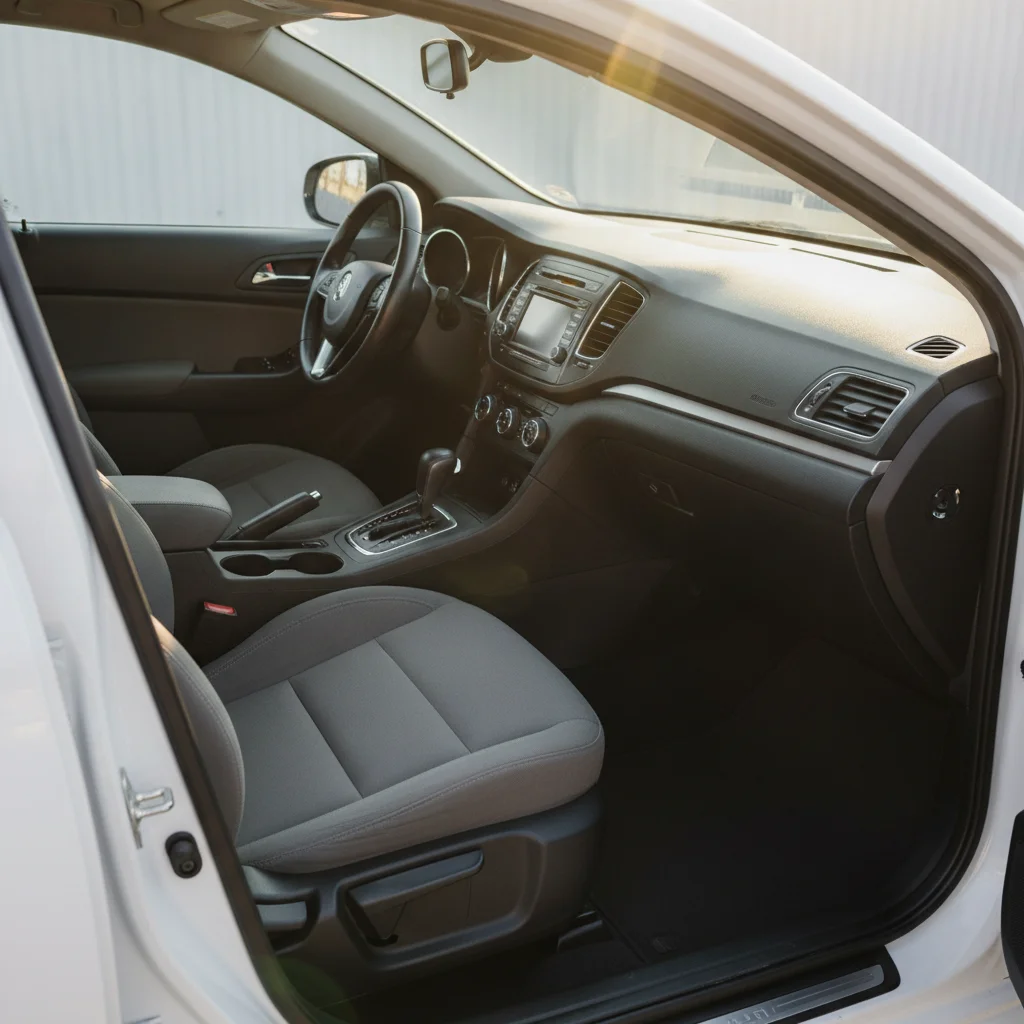
Compare this to interior prep. A deep cabin clean matters — and our guide on interior cleaning for sellers on a budget walks through exactly how to do it affordably. But buyers spend five seconds looking under the hood versus five minutes inside the car. The engine bay impression forms instantly and sets the tone for everything that follows. That makes it disproportionately high leverage for the dollars spent.
Start With Battery Terminals — Always
Corroded battery terminals are one of the most visible and fastest-to-fix red flags in any engine bay. A $5 battery terminal cleaning brush and some baking soda solution removes corrosion in under 10 minutes. Clean terminals signal attentive ownership and eliminate one of the first things a buyer's eye will land on when the hood opens.
Tell Your Detailer the Goal Up Front
When booking an engine bay detail before a sale, tell the detailer you're preparing for a private sale and want the result to look "cared for" rather than brand new. A good detailer will calibrate their approach accordingly — avoiding over-dressing that raises buyer suspicion and focusing on genuine grime removal rather than cosmetic camouflage.
How to Address It: What's Actually Worth Doing
The goal isn't a showroom-perfect engine bay. In fact, an engine bay that looks too clean can create its own skepticism — experienced buyers and inspectors know that aggressive pressure washing and fresh rubber dressing can temporarily conceal oil leaks. The goal is an engine bay that reads as regularly tended, not as one that was hastily scrubbed for sale.
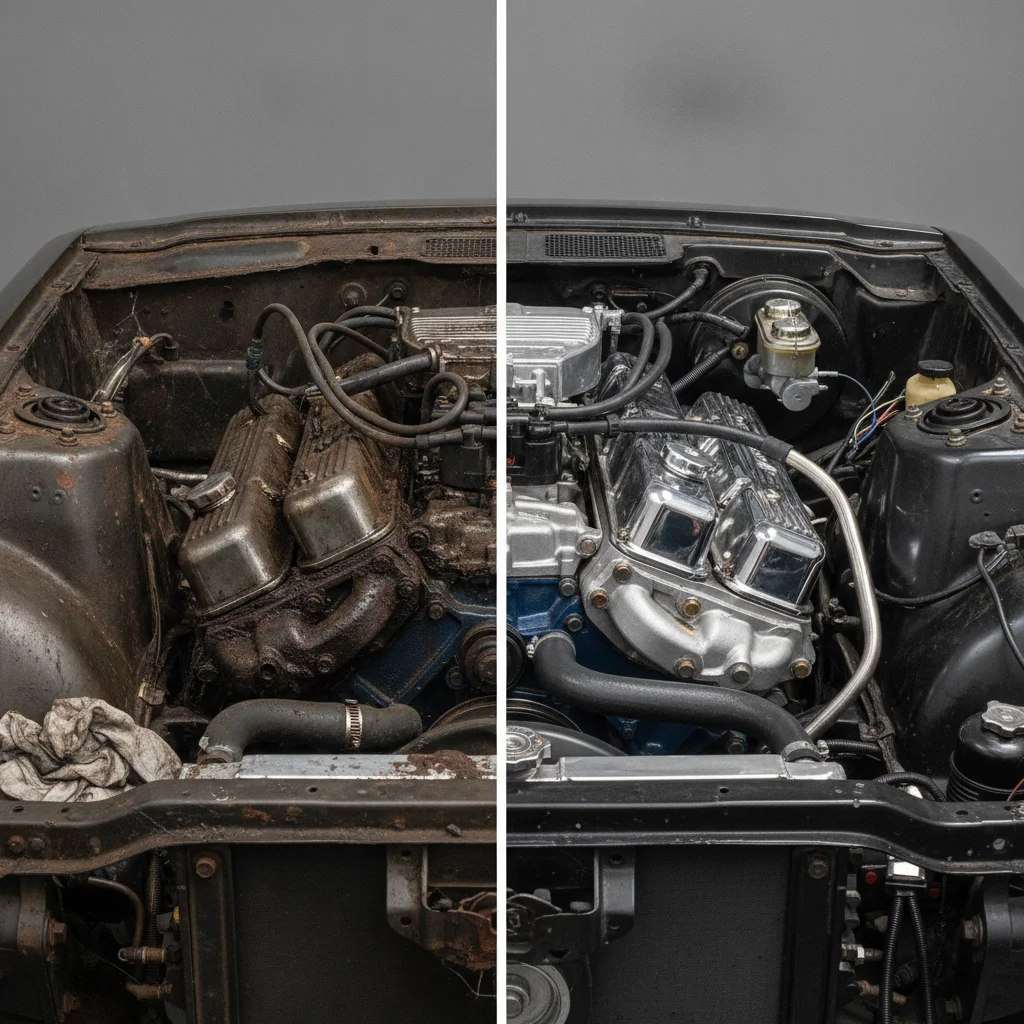
Here's a practical priority order for sellers:
- Fix visible leaks first. An oil leak or coolant seep that's actively running will reappear within days of cleaning. Addressing the source matters more than any cleaning you do over it. A mechanic can often diagnose and fix a minor valve cover gasket leak for $100–$300 — money well spent before listing.
- Clean the battery terminals. Corrosion on battery terminals is one of the most visible and easiest-to-fix red flags. A $5 battery terminal cleaner and 10 minutes of your time removes one of the top buyer concerns. Clean terminals suggest attentive ownership.
- Use a degreaser on the worst buildup. Engine-safe degreasers (like Simple Green Engine Degreaser or Purple Power) are inexpensive and effective on oil film, gunk around the oil cap, and grime on the engine block. Apply, let dwell, rinse carefully — keep water away from electrical connectors and the alternator.
- Dress plastic covers and hoses. A light application of rubber and plastic dressing gives engine covers and hoses a clean, maintained appearance. This isn't deceptive — it's the same thing detailers do for every car on a dealer lot.
- Leave honest wear markers in place. Minor surface oxidation on aluminum, small scuffs on plastic covers, or factory-normal grime on the underside of brackets don't need to disappear. Buyers and inspectors expect to see some evidence of age. A car that looks like it just rolled off the assembly line after 90,000 miles raises more questions than it answers.
If you'd rather hand it off entirely, a mobile detailer with engine bay experience is the most efficient path. Describe what you're preparing for and ask them to aim for "cared for" rather than "brand new."
It's also worth being aware of what professional preparation at the dealer level looks like — and where it differs from your goals as a private seller. Our article on how dealers prepare cars for test drives covers the tactics used there, and understanding them helps you see where transparency actually serves you better than polish.
Start With Battery Terminals — Always
Corroded battery terminals are one of the most visible and fastest-to-fix red flags in any engine bay. A $5 battery terminal cleaning brush and some baking soda solution removes corrosion in under 10 minutes. Clean terminals signal attentive ownership and eliminate one of the first things a buyer's eye will land on when the hood opens.
Tell Your Detailer the Goal Up Front
When booking an engine bay detail before a sale, tell the detailer you're preparing for a private sale and want the result to look "cared for" rather than brand new. A good detailer will calibrate their approach accordingly — avoiding over-dressing that raises buyer suspicion and focusing on genuine grime removal rather than cosmetic camouflage.
Where Sellers Go Wrong: Overcorrecting and Concealing
There's a version of engine bay prep that backfires, and it's worth naming clearly so you can avoid it. Some sellers, anxious to present the best possible picture, go further than they should — pressure washing the entire bay, applying heavy amounts of dressing everywhere, or in the worst cases, using absorber products to temporarily soak up active leaks.
These approaches tend to raise more suspicion than they resolve. An experienced buyer or mechanic who sees a sparkling-clean engine bay on a 10-year-old vehicle with 110,000 miles will immediately slow down and look more carefully, not less. They'll check for wet spots that indicate fresh seeping. They'll smell for burning oil or coolant. They'll look at whether the cleaning is consistent or suspiciously focused on one area.
Deliberate concealment carries real risk beyond just buyer skepticism. In many states, failing to disclose known mechanical defects — including active leaks — creates legal exposure for the seller after the sale. The common mistakes sellers make when trying to hide flaws go beyond aesthetics; they can turn a private sale into a legal dispute. Transparency, paired with honest preparation, is both the ethical and the strategically smarter path.
A Clean Bay Doesn't Replace Disclosure
Cleaning the engine bay before a sale is standard prep — concealing known mechanical problems is not. If your car has an active oil leak, coolant seep, or other mechanical issue, disclose it clearly in your listing. In many U.S. states, failure to disclose known defects creates legal liability after the sale. Buyers who discover hidden problems after purchase have legal recourse, and the reputational and financial cost to sellers is far higher than honest disclosure upfront.
When an Inspector Sees a Freshly Cleaned Bay
Pre-purchase inspectors are specifically trained to scrutinize recently detailed engine bays. They'll run a clean cloth along hose fittings, check for fresh wet spots that indicate active seeping, and smell for burning oil or coolant. An honest clean should welcome that scrutiny. If you're worried an inspection will reveal something the cleaning was meant to hide, fix the underlying issue first.
The practical takeaway: clean what's genuinely just grime, fix what you can legitimately fix, and disclose what remains. That combination builds more buyer trust than a suspiciously pristine bay ever will.
Putting It in Context: Engine Bay Among All Prep Steps
Engine bay condition is one signal in a larger system of signals buyers read during a used car inspection. It fits within a broader pattern of visual and tactile cues that collectively shape how much a buyer trusts a car — and how much they're willing to pay for it. Understanding where it ranks helps you spend your prep budget where it matters most.
Our overview of what buyers actually notice first when looking at a used car maps out the full sequence of impressions — from the parking lot walk-up to the test drive — and shows which prep steps address the highest-leverage moments. Engine bay condition typically comes third or fourth in that sequence, but it's unusual in one important way: it has an outsized effect on buyer confidence relative to how quickly it's evaluated.
In other words, you can do a thorough interior clean, fix every paint chip, and replace worn floor mats — all worth doing — and still lose a buyer in five seconds at the hood. That asymmetry is why engine bay prep deserves its own dedicated attention, even for sellers who are watching their prep budget carefully.
If you're also thinking about whether to address any mechanical warning signs before listing — not just aesthetics — the vehicle warning signs hub is a useful reference for understanding which symptoms are worth resolving before a buyer's inspection uncovers them.

All claims are backed by peer-reviewed research. Sources on request.