| Normal cold-start vapor | Thin white water vapor; disappears within 2–3 minutes |
| Head gasket replacement cost | $1,500–$2,500 average (RepairPal industry estimates, 2024) |
| Piston ring replacement cost | $1,500–$3,500 depending on engine (RepairPal industry estimates, 2024) |
| Air filter replacement cost | $15–$40 (DIY) | $50–$80 (shop) |
| Catalytic converter replacement cost | $800–$2,500 (Varies by vehicle make and model, 2024) |
| Fuel economy loss from bad MAF sensor | Up to 10–25% reduction in mpg |
| EGR valve replacement cost | $150–$450 including labor |
| Blue smoke timing clue | At startup = valve seals; under acceleration = piston rings |
Why Exhaust Smoke Color Matters
Most drivers glance in the rearview mirror and think nothing of a wisp of vapor trailing behind their car. But that exhaust stream is one of the most honest diagnostic tools you have — and it costs nothing to read. Each color your tailpipe produces corresponds to a specific internal condition, and catching those signals early is the difference between a $200 fix and a $3,000 engine repair.
Think of exhaust color the way a doctor thinks about symptoms. A runny nose could mean allergies or the flu — context matters. The same applies here: a small puff of white smoke on a cold morning is completely normal, but thick, sweet-smelling white smoke at operating temperature is a serious red flag. This guide will walk you through every significant exhaust color, what it means mechanically, and what you should do next.
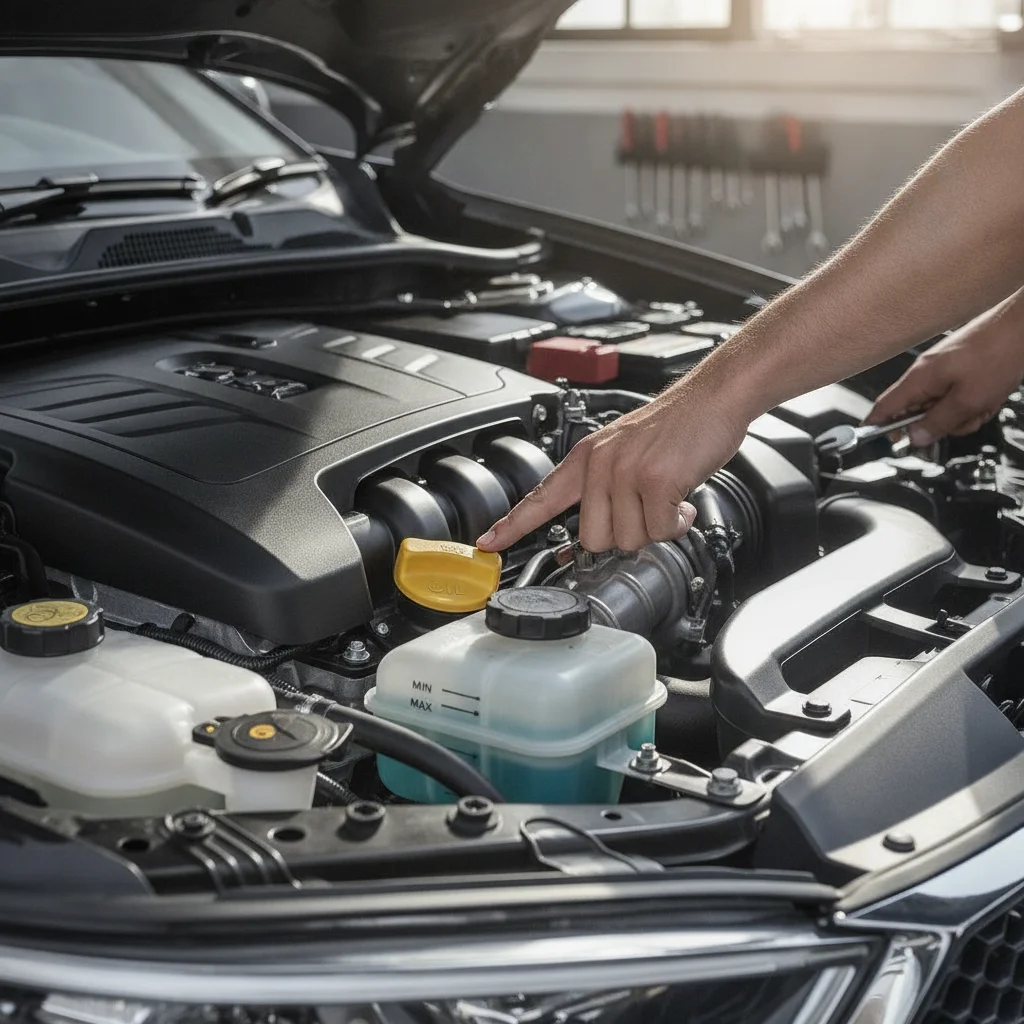
If you want to pair visual exhaust checks with a broader under-hood inspection, see our guide to under-hood inspection — you don't need to be a mechanic to catch early warning signs.
| Normal cold-start vapor | Thin white water vapor; disappears within 2–3 minutes |
| Head gasket replacement cost | $1,500–$2,500 average (RepairPal industry estimates, 2024) |
| Piston ring replacement cost | $1,500–$3,500 depending on engine (RepairPal industry estimates, 2024) |
| Air filter replacement cost | $15–$40 (DIY) | $50–$80 (shop) |
| Catalytic converter replacement cost | $800–$2,500 (Varies by vehicle make and model, 2024) |
| Fuel economy loss from bad MAF sensor | Up to 10–25% reduction in mpg |
| EGR valve replacement cost | $150–$450 including labor |
| Blue smoke timing clue | At startup = valve seals; under acceleration = piston rings |
White Smoke: Coolant in the Combustion Chamber
White smoke is the most alarming color you can see from a tailpipe, but context is critical before you panic.
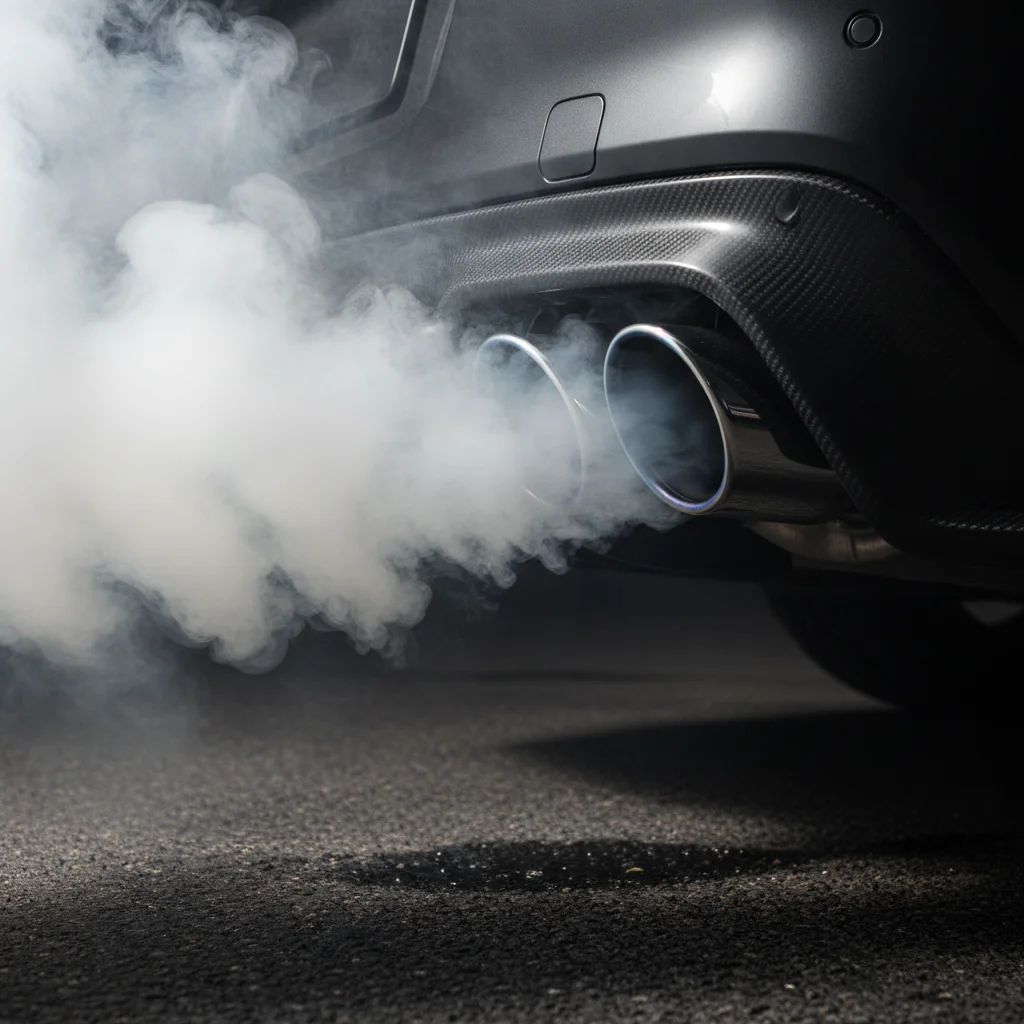
Normal White Vapor on Cold Starts
On a cold morning, a thin, wispy white plume from the exhaust is simply water vapor condensing as it exits. This is especially common in colder climates and disappears within the first few minutes of driving as the engine reaches operating temperature. There is nothing wrong here.
Thick, Persistent White Smoke
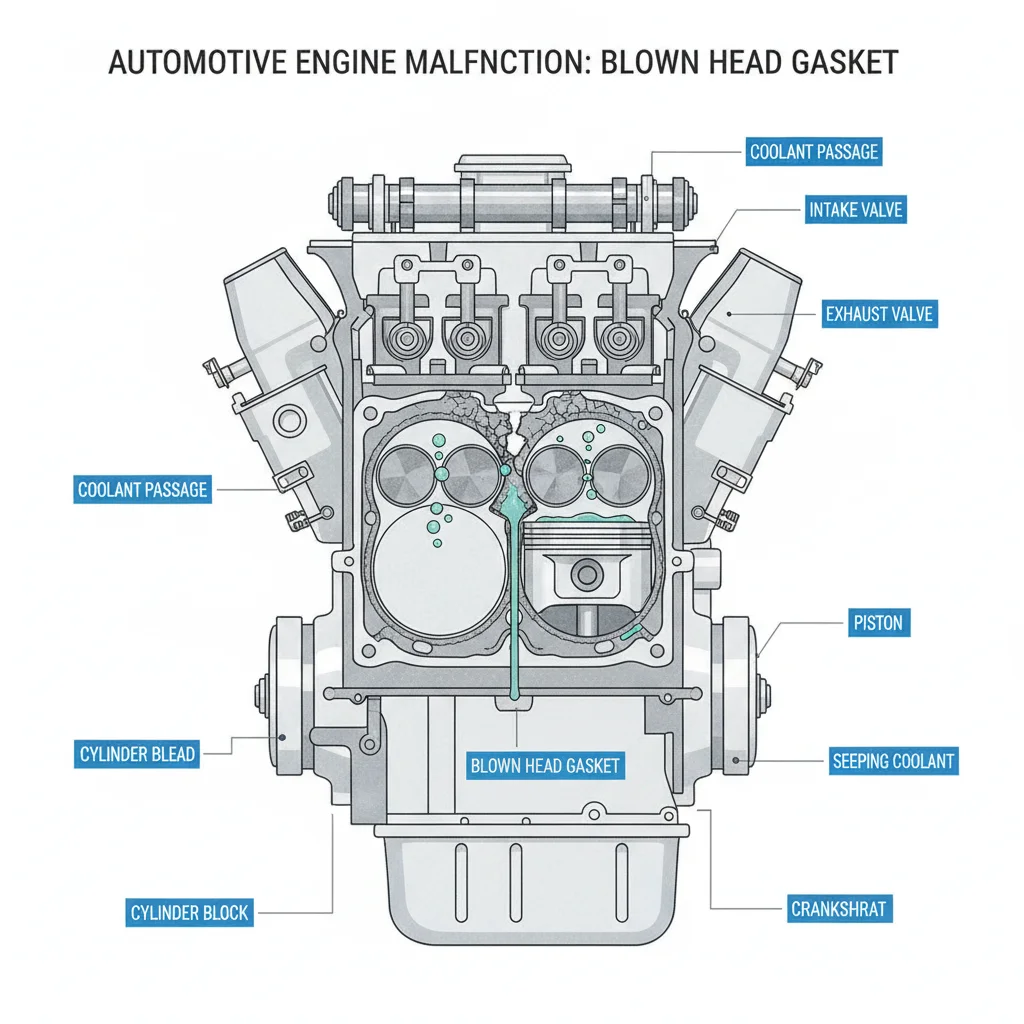
If the white smoke is thick, billowing, and has a sweet or slightly chemical smell, your engine is burning coolant. This happens when coolant — also called antifreeze — finds a path into the combustion chamber, usually through one of these failure points:
- Blown head gasket: The most common cause. The head gasket seals the cylinder head to the engine block. When it fails, coolant can seep into the cylinders and be burned with the fuel-air mixture.
- Cracked cylinder head: A more severe structural failure, often caused by overheating. Coolant leaks directly into the cylinder.
- Cracked engine block: The most serious scenario. Requires major engine surgery or replacement.
A head gasket replacement ranges from $1,500 to $2,500 depending on labor rates and vehicle make. A cracked head pushes that closer to $3,000–$4,500. If you delay, the real damage begins: running low on coolant leads to overheating, which can warp the cylinder head, turning a $1,500 job into a $6,000 engine rebuild.
Other Clues That Confirm Coolant Burning
- Coolant reservoir level drops without any visible external leak
- White residue or milky film inside the oil cap (oil and coolant mixing)
- Sweet smell near the exhaust or under the hood
- Engine overheating on the temperature gauge
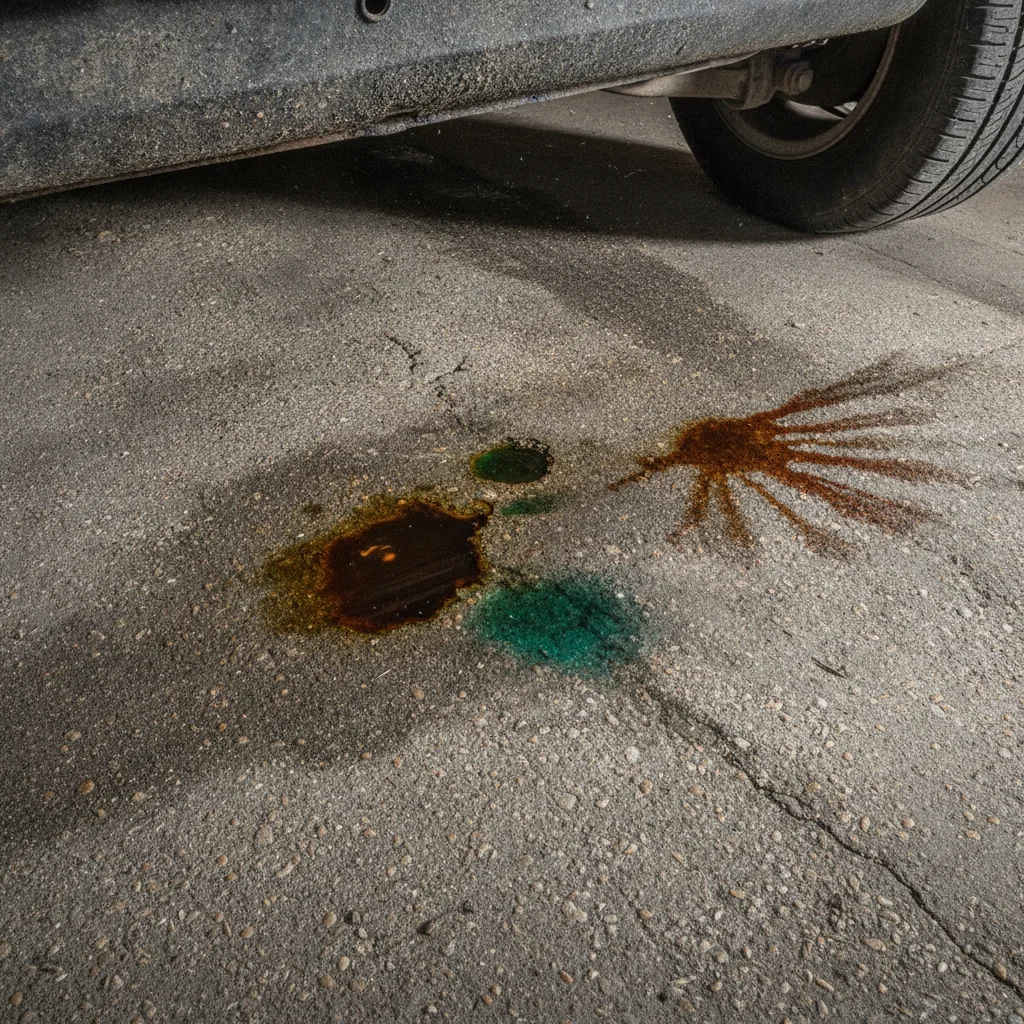
For a parallel look at coolant leaks that show up under your vehicle rather than from the tailpipe, see our color-coded fluid leak guide.
Blue Smoke: Oil Burning in the Engine
Blue smoke — sometimes appearing as a blue-gray haze — means engine oil is being burned inside the combustion chamber. Unlike coolant, oil is not supposed to be anywhere near the combustion process. When it gets there, it burns with that characteristic bluish tint and often leaves a faint acrid or burning oil smell.
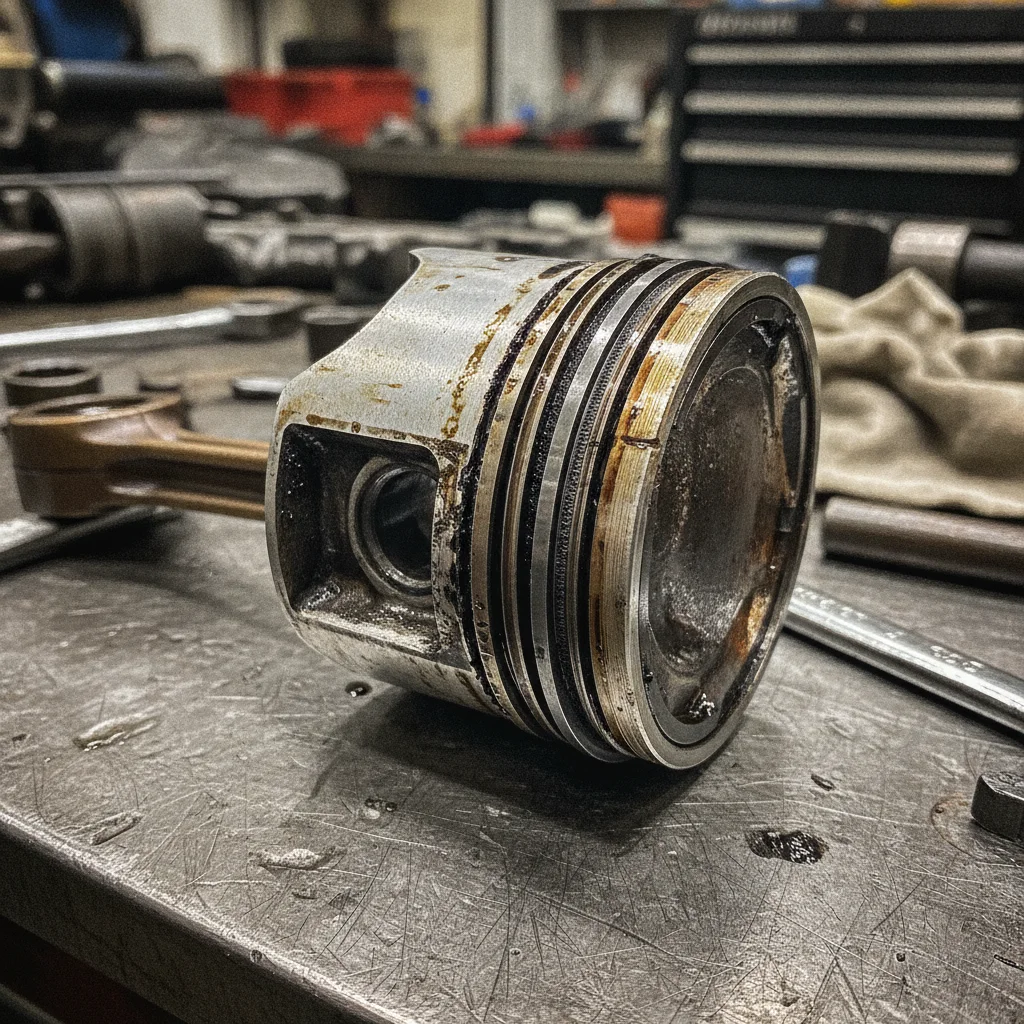
Common Causes of Blue Smoke
- Worn piston rings: Piston rings seal the combustion chamber from the crankcase below. When they wear thin, oil from the crankcase is pulled up past the rings and burned. You'll often see blue smoke on acceleration when combustion pressure is highest.
- Worn or leaking valve seals: Valve stem seals keep oil from being drawn down the valve stems into the intake ports. When these seals harden or crack (common in higher-mileage engines), oil enters the combustion chamber. Blue smoke on startup — before it clears — is a classic valve seal symptom.
- Turbocharger oil seal failure: On turbocharged engines, a leaking turbo seal can push oil directly into the intake or exhaust. Blue smoke under boost is a key indicator.
- PCV valve failure: The Positive Crankcase Ventilation valve routes crankcase gases back to be burned. A stuck-open PCV valve can pull excess oil mist into the intake manifold.
Financial Impact of Ignoring Blue Smoke
Oil consumption from worn rings or seals isn't just a smoke problem — it's a slow, compounding failure. Running an engine low on oil accelerates wear on every moving part. Valve seal replacement typically costs $300–$900. Piston ring replacement, which requires engine disassembly, runs $1,500–$3,500. An engine that seizes from oil starvation can cost $5,000–$8,000 or more to replace. The math strongly favors acting at the first sign of blue smoke.
10–25%
Fuel economy lost from a faulty MAF sensor
A defective mass airflow sensor causes chronic over-fueling, measurably cutting miles per gallon on every drive.
$6,000+
Potential engine rebuild cost from ignoring coolant burning
A delayed head gasket repair can escalate to a full engine rebuild if overheating warps the cylinder head or cracks the block.
3 min
Time overheating can cause irreversible engine damage
Industry technicians report that sustained overheating — even for a few minutes — can warp aluminum cylinder heads beyond resurfacing.
$2,500
Average catalytic converter replacement cost
Running rich from bad injectors or O2 sensors is a leading cause of catalytic converter failure, per independent repair shop data.
1 qt / 1,000 mi
Oil consumption threshold that warrants investigation
Most manufacturers consider anything above one quart of oil consumption per 1,000 miles to be excessive and worth diagnosing.
Black Smoke: Running Too Rich
Black smoke is the most visually dramatic exhaust color and typically means your engine is burning too much fuel relative to the amount of air in the combustion mixture — a condition mechanics call running rich. Unlike white and blue smoke, black smoke is more common on older vehicles and diesel engines, but it can affect any gasoline-powered car with certain failures.
What Causes a Rich Mixture?
- Faulty fuel injectors: Injectors that are stuck open or leaking allow excess fuel to flood the cylinder.
- Defective mass airflow (MAF) sensor: The MAF sensor tells the engine control unit (ECU) how much air is entering. A faulty reading can cause the ECU to over-inject fuel.
- Clogged air filter: Restricts airflow into the engine. The ratio of air-to-fuel tips toward fuel. This is one of the cheapest and most overlooked causes — an air filter replacement costs $15–$40.
- Failing oxygen sensor: The O2 sensor monitors exhaust gases and helps the ECU correct the fuel mixture in real time. A failed sensor loses that feedback loop.
- Stuck-open fuel pressure regulator: Allows excess fuel pressure and flow into the injector rail.
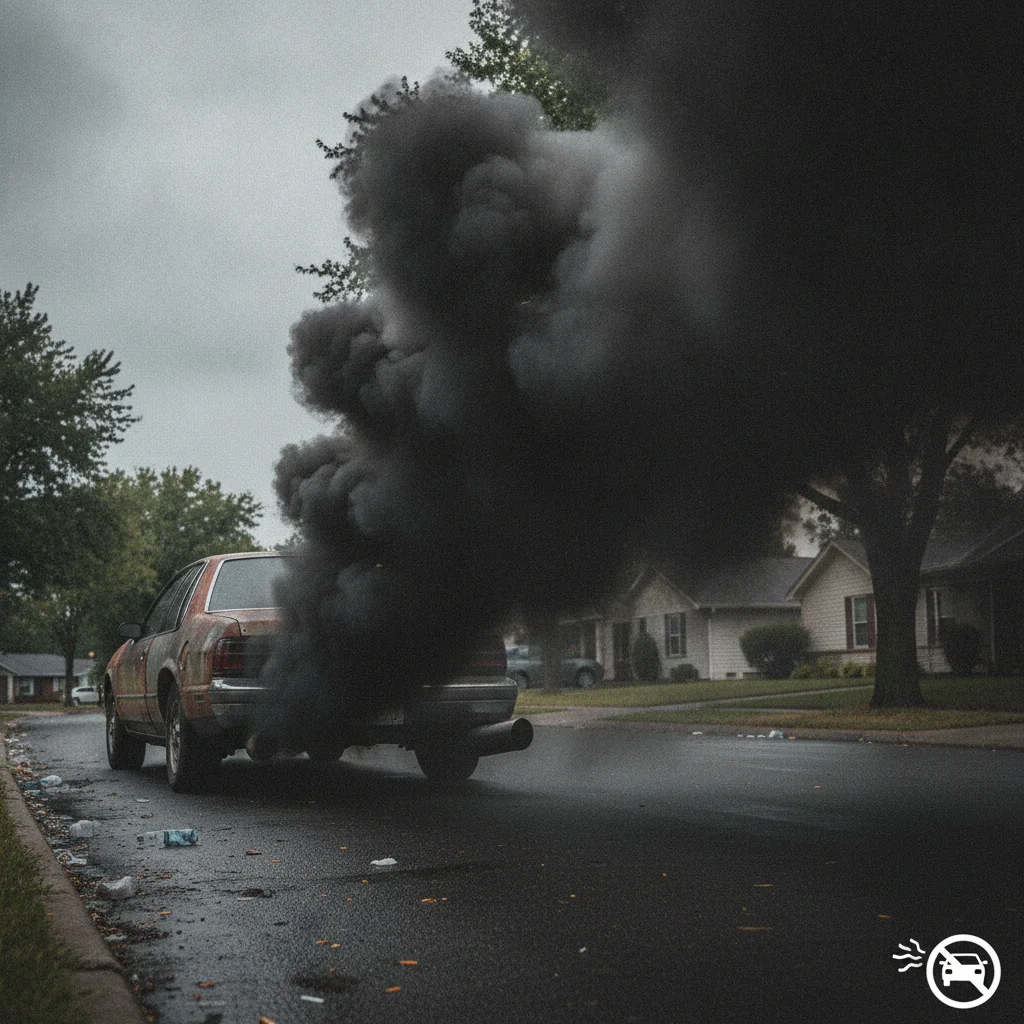
Diesel-Specific Black Smoke
In diesel engines, black smoke is almost always a sign of incomplete combustion. Common causes include a clogged diesel particulate filter (DPF), worn injector nozzles, or a failing turbocharger. Modern diesel engines are heavily monitored by the ECU, so a check engine light often accompanies diesel black smoke issues.
The Knock-On Costs
Running rich wastes fuel — sometimes dramatically. A bad MAF sensor alone can reduce fuel economy by 10–25%. Excess fuel can also foul spark plugs and damage the catalytic converter, a part that costs $800–$2,500 to replace on many vehicles. Check engine light codes P0172 (System Too Rich, Bank 1) and P0175 (Bank 2) are directly associated with these conditions.
Black smoke is one of several warning signs that often travel with dashboard alerts. Our article on warning signs beyond the check engine light explains how these signals connect.
Gray Smoke: The Diagnostic Wild Card
Gray smoke is often the trickiest to diagnose because it sits at the visual boundary between blue and black, and its causes span both the oil-burning and rich-fuel spectrums. Context — including the smell, driving conditions when it appears, and whether it's constant or intermittent — is critical here.
Common Causes of Gray Exhaust
- Transmission fluid being burned: On vehicles with a vacuum-modulated automatic transmission, a failing modulator valve can pull transmission fluid into the intake manifold. The burned fluid produces grayish smoke with a distinctly different, burnt plastic smell.
- Oil burning (lighter cases): Early-stage oil consumption from valve seals or mild ring wear may present as gray smoke rather than the more obvious blue, especially in warmer temperatures or bright light.
- Stuck EGR valve: The Exhaust Gas Recirculation valve re-routes a portion of exhaust gases back into the intake to reduce combustion temperatures and emissions. A stuck-open EGR valve dumps too many exhaust gases back into the engine, causing incomplete combustion and gray smoke.
- Turbo issues: A partially failing turbo bearing can introduce small amounts of oil into the intake intermittently, producing inconsistent gray smoke under boost.
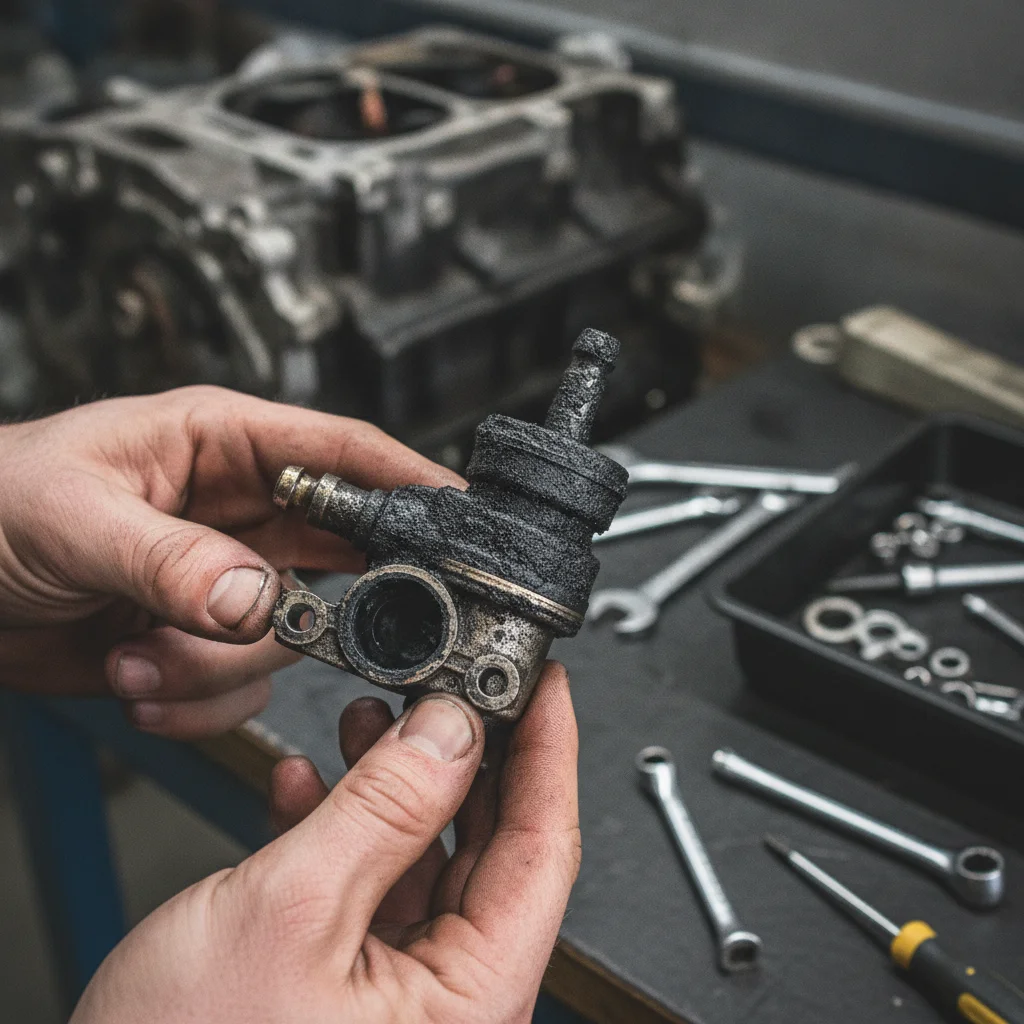
How to Narrow It Down
Check your transmission fluid level and condition on the dipstick — if it's low or smells burned, you have a strong clue pointing toward the modulator or another transmission leak path. If transmission fluid is fine, treat gray smoke with the same diagnostic path as blue smoke and work through the oil-burning checklist. An EGR valve replacement typically costs $150–$450 including labor — much cheaper than the engine damage a stuck valve causes over time.
If you detect a burning smell alongside the gray smoke, pair this check with our guide to diagnosing burning smells — the odor profile often confirms or narrows the source.
Head Gasket
A critical engine seal that sits between the cylinder head and engine block, keeping coolant and oil passages separate from the combustion chamber. When it fails, fluids can mix or enter the cylinders, causing white exhaust smoke and potential engine damage.
Running Rich
A condition where the engine's air-to-fuel mixture contains too much fuel relative to air. Incomplete combustion results, often producing black exhaust smoke, reduced fuel economy, and potential damage to the catalytic converter.
PCV Valve
The Positive Crankcase Ventilation valve redirects blow-by gases from the engine crankcase back into the intake manifold to be burned. A stuck or failing PCV valve can allow excess oil vapor into the combustion chamber, contributing to blue smoke.
MAF Sensor
The Mass Airflow sensor measures the volume and density of air entering the engine. It feeds this data to the engine control unit, which uses it to calculate correct fuel injection quantities. A faulty MAF can cause rich running and black smoke.
EGR Valve
The Exhaust Gas Recirculation valve diverts a metered portion of exhaust gas back into the intake manifold to reduce peak combustion temperatures and lower NOx emissions. A stuck-open EGR valve can cause rough running and gray smoke.
Piston Rings
Expandable metal rings seated in grooves around each piston that create a gas-tight seal against the cylinder wall. Worn rings allow combustion pressure to escape downward (blow-by) and oil to be pulled up into the combustion chamber, producing blue smoke.
Catalytic Converter
An emissions control device in the exhaust system that converts harmful combustion byproducts into less harmful gases through chemical reactions. Running rich or burning oil can foul and destroy the catalytic converter, resulting in costly replacement.
OBD-II
On-Board Diagnostics, second generation — a standardized system built into all vehicles sold in the U.S. after 1996 that monitors engine and emissions systems, stores fault codes, and can be read with an inexpensive scan tool or at most auto parts stores.
Quick Action Plan: What to Do When You See Abnormal Smoke
Knowing what the smoke color means is half the battle. The other half is taking the right next steps without overreacting — or worse, ignoring it.
Immediate Steps for Any Unusual Smoke
- Note the color and smell precisely. Use the descriptions in this guide. Take a short video on your phone if possible — it helps when describing the issue to a mechanic.
- Check your fluid levels immediately. Pull over safely, wait for the engine to cool if necessary, and check the oil dipstick and coolant reservoir. Low fluids require immediate attention before continued driving.
- Look for associated warning lights. Temperature gauge spikes, oil pressure warning, or a check engine light alongside smoke narrows the diagnosis significantly.
- Do not continue driving if you suspect coolant burning (white smoke) or the temperature gauge is rising. Overheating compounds damage at an exponential rate — what takes three minutes to destroy can take months and thousands of dollars to repair.
- Schedule a diagnostic scan. Most auto parts stores offer free OBD-II code reads. These codes often point directly at the faulty sensor or system contributing to the symptom.
When to Drive vs. When to Stop
| Smoke Color | Immediate Risk Level | Drive to Shop? |
|---|---|---|
| Thin white (cold start only) | None | Yes, normal |
| Thick white, sweet smell | High | No — risk of overheating |
| Blue (startup or acceleration) | Moderate | With caution; monitor oil level |
| Black | Low to moderate | Yes, but address promptly |
| Gray | Moderate | Yes, but diagnose soon |
Exhaust smoke is one piece of a larger warning-sign picture. For a complete reference on fluid identification, check our quick-reference guide to car fluid colors and smells — it pairs directly with what you see from the tailpipe.
OBD-II Code Lookup Tool
Enter any check engine fault code to get a plain-English explanation of what triggered it and which systems are involved. Invaluable when smoke comes paired with a dashboard warning light.
RepairPal Cost Estimator
Get repair cost estimates by vehicle make, model, and ZIP code. Use it to benchmark quotes from local shops before agreeing to any work related to smoke diagnosis.
Fluid Leaks Color-Coded Guide
Pairs directly with exhaust smoke diagnosis. If your car is also leaving spots on the driveway, this guide helps you identify what fluid is leaking and where it is coming from.
Under-Hood Inspection Checklist
A non-mechanic-friendly walkthrough of what to look for under the hood — oil sludge, coolant leaks, corrosion — that complements your exhaust smoke reading.

All claims are backed by peer-reviewed research. Sources on request.