| Most common leak fluid | Engine oil (ASE technician surveys, general shop data) |
| Immediately dangerous leaks | Brake fluid, gasoline |
| Completely normal fluid under car | Clear water (AC condensate) |
| Coolant colors in use today | Green, orange, pink, blue-green (varies by brand) (OEM coolant specifications) |
| Fastest leak identifier | Color + smell + location |
| Transmission fluid indicator | Red or pink (new), dark red-brown (old) |
| Gear oil distinguishing trait | Strong sulfur / rotten egg odor |
| Paper towel trick | Blot sample to compare color on white background |
How to Use This Guide
You walked out to your car and noticed a wet spot on the driveway. Maybe it's fresh, maybe it's been there a few days. Either way, that puddle is telling you something — and knowing what it's saying is the difference between a $12 fix and a $1,200 repair you ignored too long.
This reference guide is organized so you can look up any fluid by its color, smell, or location under the vehicle. Each entry explains what system the fluid comes from, how urgent the situation is, and what your next move should be. You don't need to be a mechanic to use it. You just need to trust your eyes and nose.
Before you start, a few ground rules:
- Never touch fluid near a hot exhaust or catalytic converter. Some fluids are flammable.
- Use a white paper towel or cardboard to collect a sample — it makes color identification much easier.
- Note the location of the puddle under the car (front center, rear, under the driver's door, etc.). Location narrows down which system is leaking significantly.
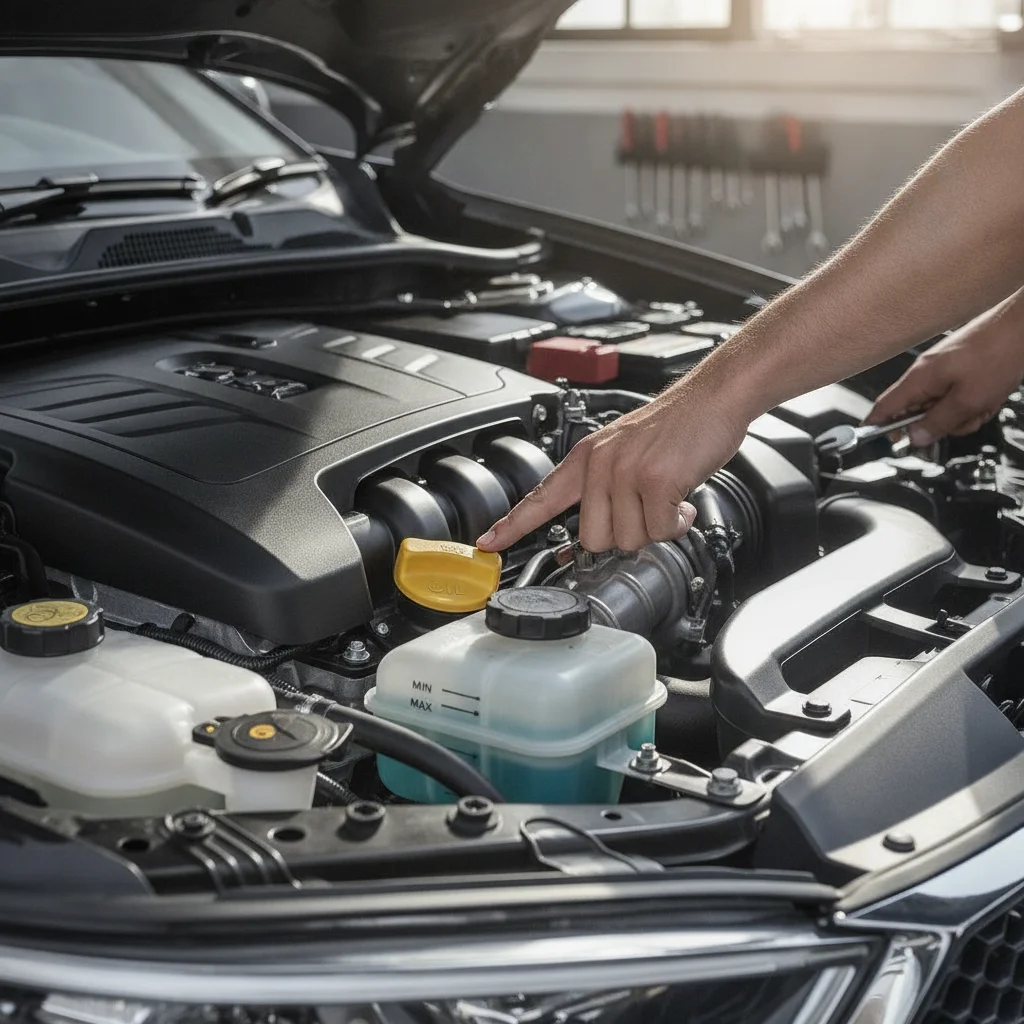
For a broader look at what else to check under the hood, see Under the Hood: What to Look at Even If You're Not a Mechanic. And if you want to know how to check fluid levels proactively before a leak becomes a crisis, Fluid Checks Every Driver Should Be Doing Between Service Visits is a solid companion read.
| Most common leak fluid | Engine oil (ASE technician surveys, general shop data) |
| Immediately dangerous leaks | Brake fluid, gasoline |
| Completely normal fluid under car | Clear water (AC condensate) |
| Coolant colors in use today | Green, orange, pink, blue-green (varies by brand) (OEM coolant specifications) |
| Fastest leak identifier | Color + smell + location |
| Transmission fluid indicator | Red or pink (new), dark red-brown (old) |
| Gear oil distinguishing trait | Strong sulfur / rotten egg odor |
| Paper towel trick | Blot sample to compare color on white background |
Fluid Identification by Color and Smell
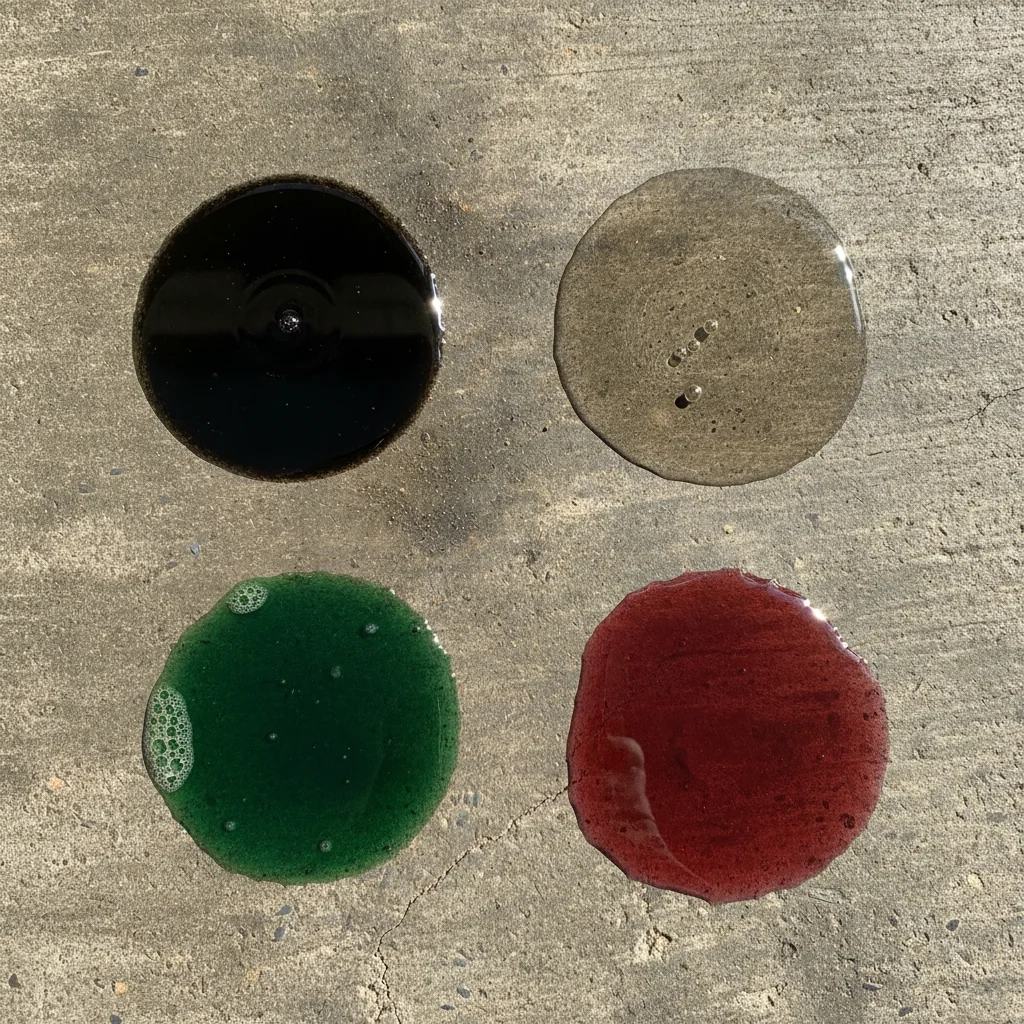
The fastest way to identify a leak is color — followed closely by smell. The table below covers every common automotive fluid. Use it as your primary lookup tool.
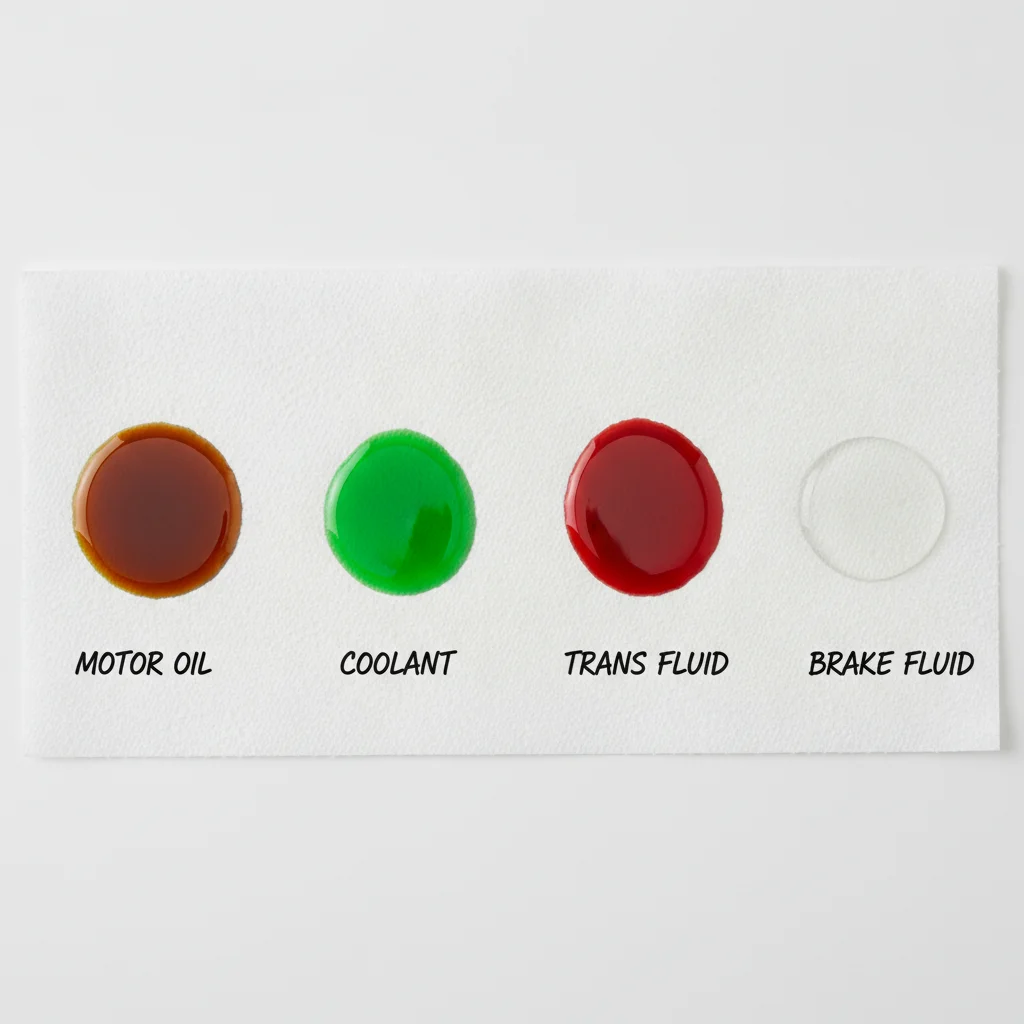
| Fluid | Color(s) | Smell | Texture | Urgency |
|---|---|---|---|---|
| Engine Oil | Amber (new) to dark brown or black (old) | Slightly burnt, petroleum-like | Slick, oily | High — low oil destroys engines |
| Coolant / Antifreeze | Bright green, orange, pink, or blue-green | Sweet, almost syrupy | Slightly slippery, watery | Very high — overheating risk |
| Transmission Fluid (ATF) | Red or pink (new), dark red-brown (old) | Slightly sweet, petroleum-based | Thin and slick | High — transmission damage is expensive |
| Brake Fluid | Clear to pale yellow (new), dark amber (old) | Faintly chemical, like fish oil | Slippery, thin | Immediate — brake failure risk |
| Power Steering Fluid | Clear, light amber, or reddish (varies by car) | Slightly burnt petroleum | Thin, oily | Moderate — stiff steering, pump damage |
| Differential / Gear Oil | Light brown to dark brown | Strong sulfur, rotten egg-like | Thick, viscous | Moderate-high — drivetrain damage |
| Transfer Case Fluid | Light amber to dark brown | Similar to gear oil, sulfurous | Thick | Moderate-high (4WD/AWD vehicles) |
| Windshield Washer Fluid | Blue, green, orange, or clear | Ammonia or mild solvent | Watery, thin | Low — cosmetic/convenience issue |
| Water / AC Condensate | Clear, colorless | None | Water-thin | None — completely normal |
| Gasoline | Clear to pale yellow | Unmistakable fuel smell | Very thin, evaporates fast | Immediate — fire hazard |
A few of these are easy to confuse. Brake fluid and power steering fluid can look almost identical when new — both are clear to light amber. Smell and location are the tiebreakers: brake fluid pools near the wheels or under the master cylinder (firewall, driver's side), while power steering fluid tends to leak around the pump or steering rack, usually toward the front center of the vehicle.
For more on what smells specifically indicate — including odors inside the cabin — check out That Burning Smell Isn't Normal: What Different Odors Reveal.
ATF (Automatic Transmission Fluid)
A hydraulic fluid that lubricates, cools, and provides pressure for automatic transmission operation. Typically red or pink when new, darkening to brownish red with age and heat.
Coolant / Antifreeze
A water-based fluid mixed with glycol that regulates engine temperature and prevents freezing or boiling. It circulates through the engine, radiator, and heater core.
Brake Fluid
A hydraulic fluid that transmits force from the brake pedal to the calipers and wheel cylinders. It absorbs moisture over time, which lowers its boiling point and effectiveness.
Differential Fluid (Gear Oil)
A thick, sulfur-containing lubricant protecting the ring and pinion gears in rear axles, front axles, and transfer cases on 4WD and AWD vehicles.
Valve Cover Gasket
A rubber or cork seal sitting between the valve cover and cylinder head. When it fails, engine oil weeps down the sides of the engine — a common and often DIY-fixable leak.
Master Cylinder
The component at the firewall that generates hydraulic pressure when you press the brake pedal. Brake fluid leaking here is a serious safety concern requiring immediate repair.
AC Condensate
Water that collects on the evaporator core as a byproduct of air conditioning operation. It drains harmlessly under the vehicle and is completely normal — not a leak.
Heater Core
A small radiator inside the dashboard that uses engine coolant to heat cabin air. A leaking heater core produces a sweet smell inside the cabin and may cause fogging on the windshield.
What Leak Location Tells You
Color gets you most of the way there. Location closes the case. Here's how to map the puddle under your car to a specific system.
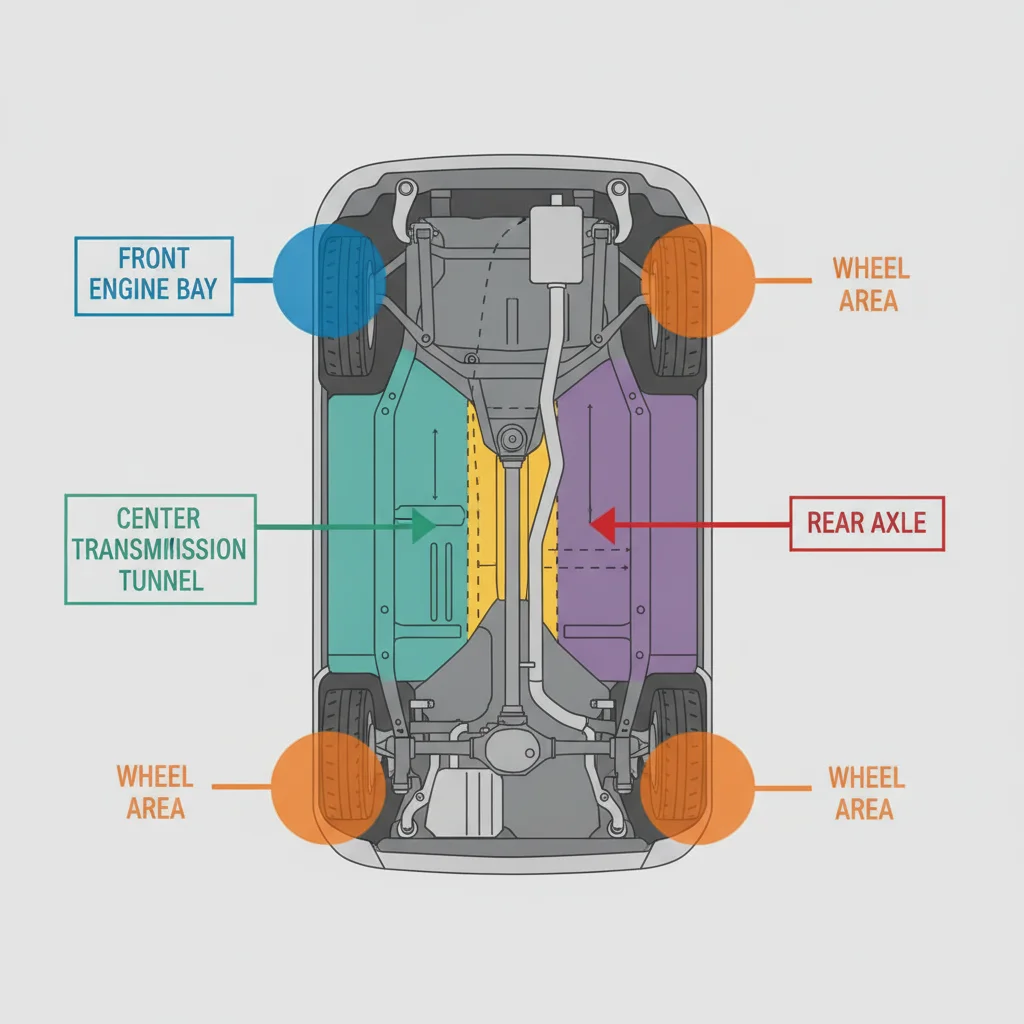
Front of the Vehicle (Under the Engine)
- Center-front, dark and oily: Engine oil — could be the oil pan gasket, valve cover gasket, or front main seal.
- Center-front, sweet-smelling and colorful: Coolant — likely the radiator, a hose, or the water pump.
- Far front, near the bumper: Coolant from the radiator itself, or AC condensate (which is normal and clear).
Middle of the Vehicle
- Under the center tunnel area: Transmission fluid or, in rear-wheel-drive vehicles, driveshaft seal leaks from the transmission tail housing.
- Under the driver's door: AC condensate is the most common culprit here — totally normal on warm days. If it smells sweet, that's coolant from a heater core — a bigger problem.
Rear of the Vehicle
- Under the rear axle (RWD or AWD): Differential or gear oil — that sulfur smell gives it away immediately.
- Near the rear wheels: Brake fluid leaking from a wheel cylinder or brake caliper — check immediately.
Near Any Wheel
Fluid near any wheel should be treated as a brake fluid leak until proven otherwise. Brake failure can happen without warning when fluid is lost. Don't drive the vehicle — have it inspected before moving it if you're not sure.
When You Can't Tell What the Fluid Is
If color, smell, and location still leave you uncertain, take a photo of the puddle and a paper towel sample to an auto parts store or independent shop. Most will identify it at no charge. Resist the urge to just top off fluids and hope for the best — that only delays finding the source of the leak.
Brake Fluid Near a Wheel: Assume the Worst First
Any clear to amber fluid found pooling near a wheel should be treated as a brake fluid leak until you can confirm otherwise. Brake failure can be sudden and complete. Err on the side of caution: don't move the vehicle until you've verified where the fluid is coming from.
Coolant Colors Vary — Don't Rely on Color Alone
Modern vehicles use coolant in green, orange, pink, red, and blue-green formulations depending on the manufacturer. If a sweet smell accompanies any colored fluid under your car, treat it as coolant regardless of the exact shade. Mixing coolant types can also cause the fluid to turn a murky brownish color, making identification harder.
If you're shopping for a used car, a quick look under the vehicle before a test drive can reveal a lot. We cover exactly what to inspect in Test Drives & Inspections.
Fluid-by-Fluid Breakdown: What the Leak Means and What to Do
Engine Oil
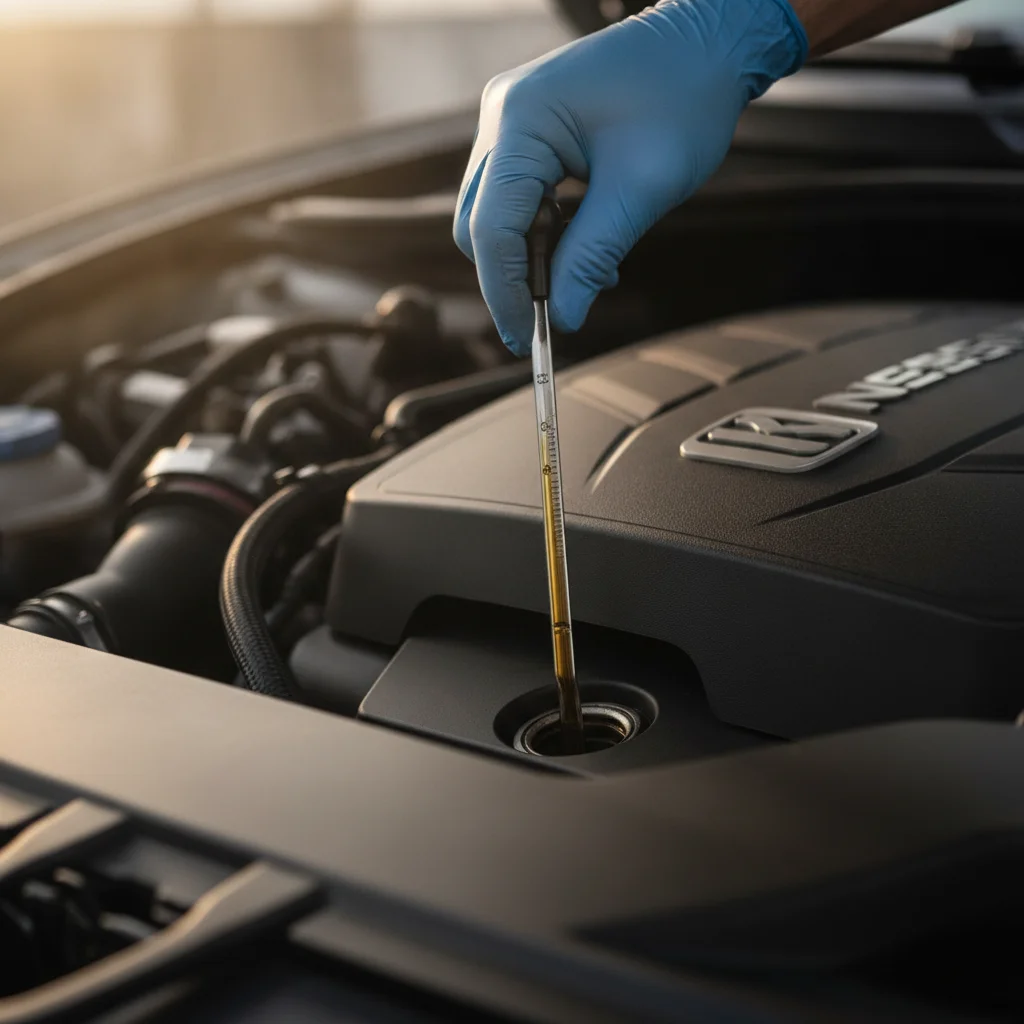
The most common leak on older vehicles. Small seeps from the valve cover gasket or oil pan are annoying but not immediately dangerous — as long as you're checking the dipstick regularly. A drip that turns into a puddle is a different story. Running an engine low on oil causes accelerated wear that you won't feel until serious damage is already done. If you're losing more than a quart between oil changes, get the source of the leak found and fixed.
DIY potential: Valve cover gaskets are beginner-level repairs on most engines. Oil pan gaskets are more involved but still DIY-able. Front and rear main seals usually require more disassembly — shop work for most people.
Coolant / Antifreeze
A sweet smell combined with a colored puddle under the front of the car should get your attention immediately. Coolant leaks can cause overheating within minutes of driving, and overheating can warp a cylinder head — a $1,500–$3,000 repair. Don't drive the vehicle until the leak source is identified. Check the reservoir level cold, look for cracks in hoses, and inspect the radiator for damage or corrosion.
DIY potential: Hose replacements and radiator cap replacements are easy DIY. Radiator replacement is moderate. Water pump and head gasket leaks are shop jobs for most drivers.
See Coolant Flushes: What They Do and When Your Car Needs One to understand how degraded coolant can accelerate this kind of damage.
Transmission Fluid
ATF leaks are often slow and go unnoticed until a transmission starts slipping or overheating. Red fluid under the center of the car is the telltale sign. Common sources: pan gasket, cooler lines, or the front pump seal. Transmission fluid doesn't just lubricate — it also cools and provides hydraulic pressure. Low fluid causes all three of those functions to fail at once.
DIY potential: Transmission pan gasket and drain plug are DIY. Cooler line fittings can be DIY on accessible lines. Internal seal replacement requires dropping the transmission — leave that to a shop.
Brake Fluid
Clear to light amber fluid near a wheel or at the firewall (master cylinder) is a brake emergency. Brake systems are hydraulic — they need fluid pressure to function. A leak means that pressure is dropping. You may still have braking ability today and none tomorrow. Do not drive the vehicle until the leak is repaired. Common causes include corroded brake lines, a failing wheel cylinder (drum brakes), or a leaking caliper (disc brakes).
DIY potential: Caliper replacement is DIY-able with brake bleeding experience. Brake line repair requires proper flaring tools and is best left to experienced DIYers or shops. Never compromise on brake work if you're unsure.
Power Steering Fluid
A whining noise when turning combined with a small oily puddle under the front of the car often points to a power steering leak. Not immediately dangerous, but a failed power steering pump makes the car very hard to steer — especially at low speeds. Many newer vehicles use electric power steering and have no fluid at all, so check your owner's manual first before hunting for a reservoir.
DIY potential: Hose replacement is DIY. Rack and pinion replacement is a significant job — doable for experienced home mechanics, but labor-intensive.
Gear Oil / Differential Fluid
That sharp, sulfurous smell coming from under the rear of the car (or center on AWD vehicles) is differential gear oil. It protects the ring and pinion gears in your axle or transfer case. A leak here usually means a worn axle seal or differential cover gasket. It won't fail immediately, but it's not something to put off indefinitely — running a differential low on oil causes the gears to score and eventually seize.
DIY potential: Differential cover gasket and fluid change are beginner-to-intermediate DIY. Axle seal replacement requires pulling the axle shaft — moderate DIY.
Gasoline
If you smell raw gasoline and see a clear, fast-evaporating puddle, this is your only immediate fire-hazard situation. Don't start the engine. Don't run electrical accessories. Get away from the vehicle and call for assistance. Common sources include a cracked fuel line, a leaking injector, or a damaged fuel tank. This one is always a shop job.
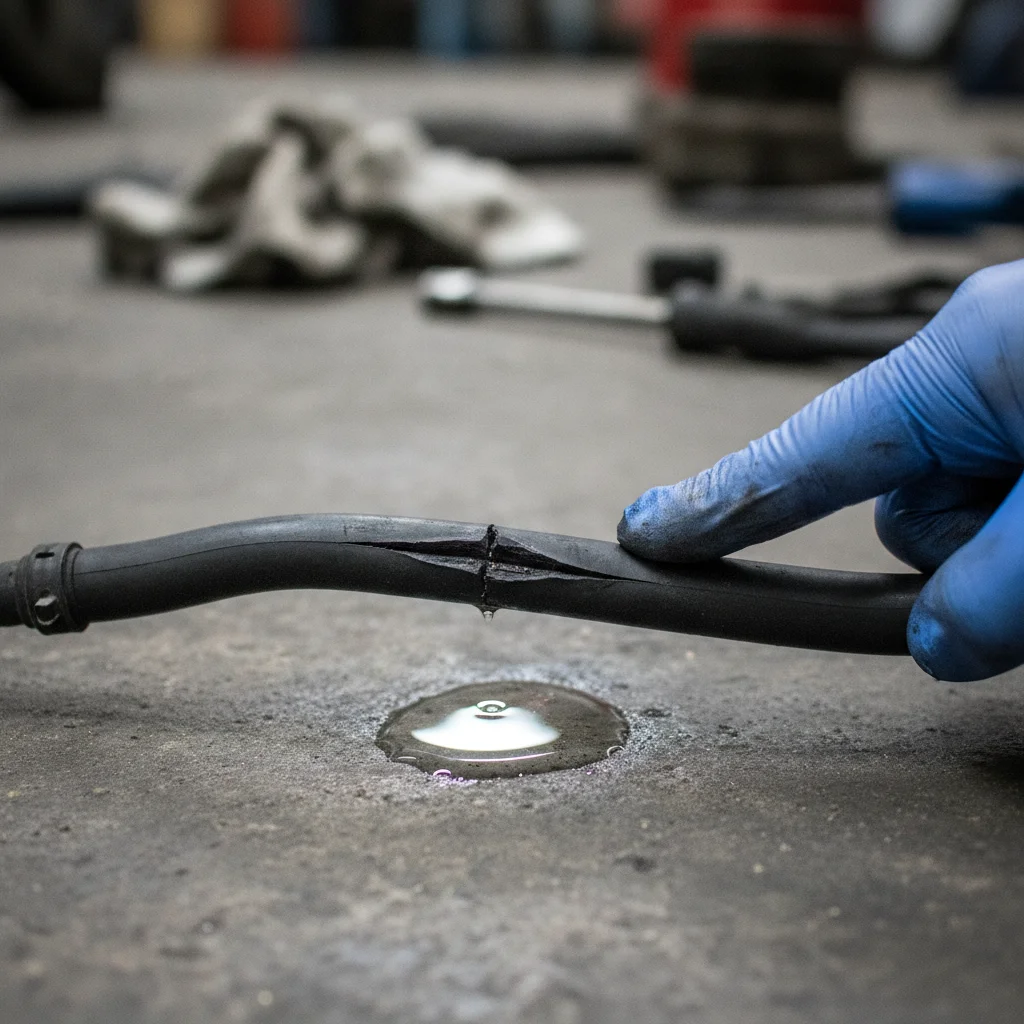
Fluid Leaks Under Your Car: Color-Coded Guide to What's Dripping goes deeper on distinguishing leaks that look similar — worth bookmarking alongside this reference.
75%
Vehicles on US roads with at least one fluid leak
According to a Car Care Council vehicle inspection study, approximately 75% of cars inspected had at least one maintenance deficiency, including fluid leaks.
$1,500–$3,000
Average cost of a warped cylinder head repair
A coolant leak that causes overheating can result in a warped cylinder head — one of the most avoidable expensive repairs when caught early.
#1
Engine oil: most common fluid leak type
Engine oil leaks — often from valve cover or oil pan gaskets — are the most frequently reported fluid leak across all vehicle ages and makes.
0 miles
Safe driving distance with a confirmed brake fluid leak
Hydraulic brake systems require fluid pressure to function; any confirmed brake fluid leak means the vehicle should not be driven until repaired.
Normal vs. Abnormal: Not Every Drip Is a Problem
Before you panic, there are two completely normal sources of fluid under a car that alarm a lot of people.
AC Condensate (Clear Water, Under Driver's Side)
On a hot or humid day, your air conditioning system pulls moisture out of the cabin air and drains it — usually just behind the firewall on the passenger or driver's side. A puddle of clear, odorless water after running the AC is completely normal. This is not a leak. No action needed.
Normal Exhaust Condensation (Clear Water, Tailpipe)
Water dripping from the tailpipe on a cold start is also normal — it's condensation burning off from inside the exhaust system. It usually stops within a few minutes of driving. If white smoke continues after the engine warms up, that's a different story — it can indicate coolant entering the combustion chamber. See Exhaust Smoke Color and What Each Shade Reveals About Engine Health for more on reading your exhaust.
When to Act Immediately
Here's the short list of leaks that require you to stop driving the vehicle right now:
- Any brake fluid leak
- Any gasoline leak
- Coolant leak with the temperature gauge rising
- Oil leak that has dropped oil pressure (check your gauge or warning light)
Everything else gives you some time — but not unlimited time. A slow drip that goes unaddressed for months can quietly escalate. Make it a habit to glance under the car after it's been parked a few hours. It's the easiest early-warning system you have.
For a broader framework on reading warning signs before they become failures, Reading Your Car Before It Breaks Down walks through smells, sounds, and handling changes alongside visual checks like these.
When You Can't Tell What the Fluid Is
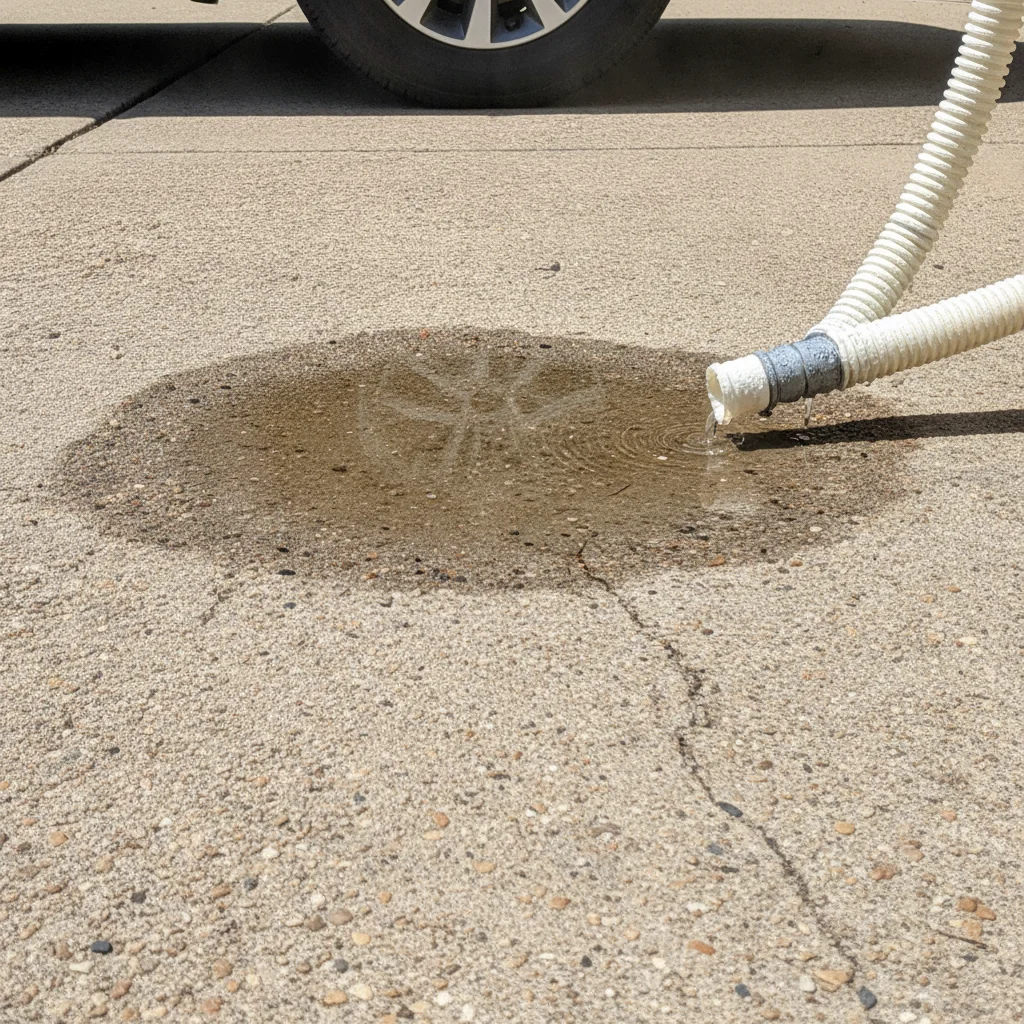
If color, smell, and location still leave you uncertain, take a photo of the puddle and a paper towel sample to an auto parts store or independent shop. Most will identify it at no charge. Resist the urge to just top off fluids and hope for the best — that only delays finding the source of the leak.
Brake Fluid Near a Wheel: Assume the Worst First
Any clear to amber fluid found pooling near a wheel should be treated as a brake fluid leak until you can confirm otherwise. Brake failure can be sudden and complete. Err on the side of caution: don't move the vehicle until you've verified where the fluid is coming from.
Coolant Colors Vary — Don't Rely on Color Alone
Modern vehicles use coolant in green, orange, pink, red, and blue-green formulations depending on the manufacturer. If a sweet smell accompanies any colored fluid under your car, treat it as coolant regardless of the exact shade. Mixing coolant types can also cause the fluid to turn a murky brownish color, making identification harder.
Fluid Checks Every Driver Should Be Doing Between Service Visits
A practical walkthrough of how to check and top off every major fluid in your car — useful before a problem turns into a leak. Pairs directly with this reference guide.
Topping Off Your Own Fluids: Coolant, Brake Fluid, Power Steering, and More
Step-by-step instructions for safely refilling each fluid type once you've identified what's low. A direct next step after using this leak identification guide.
Reading Your Car Before It Breaks Down
Covers smells, sounds, and handling changes that signal impending failures — a good companion to visual checks like fluid leak identification.
That Burning Smell Isn't Normal: What Different Odors Reveal
Decodes specific car smells — including burning rubber, electrical odors, and sweet antifreeze — to help you identify which system is giving you trouble.
Under the Hood: What to Look at Even If You're Not a Mechanic
A non-technical visual guide to what healthy and unhealthy engine bays look like — useful for pre-purchase inspections and routine self-checks.
Exhaust Smoke Color and What Each Shade Reveals About Engine Health
White, blue, and black smoke each indicate a different internal problem. Read this alongside fluid leak ID when you're diagnosing an engine issue.

All claims are backed by peer-reviewed research. Sources on request.