| Number of major car fluids | 6–8 (varies by vehicle) |
| Most critical leak type | Brake fluid — safety-critical, do not drive |
| Coolant color (new) | Bright green, orange, or pink |
| Engine oil color (new vs. old) | Amber (new) to near-black (degraded) |
| Transmission fluid color | Bright red (new) to dark brown-red (old) |
| Gear oil smell | Strong sulfur / rotten egg odor |
| Normal 'leak' that isn't a leak | Clear water from AC evaporator drain |
| Coolant engine damage threshold | Overheating within minutes of total loss |
| Avg. cost of ignored oil leak (engine failure) | $3,000–$8,000+ (Industry repair cost estimates) |
| Avg. cost of valve cover gasket (caught early) | $100–$300 (Independent shop average) |
Why Color and Location Are Your First Clues
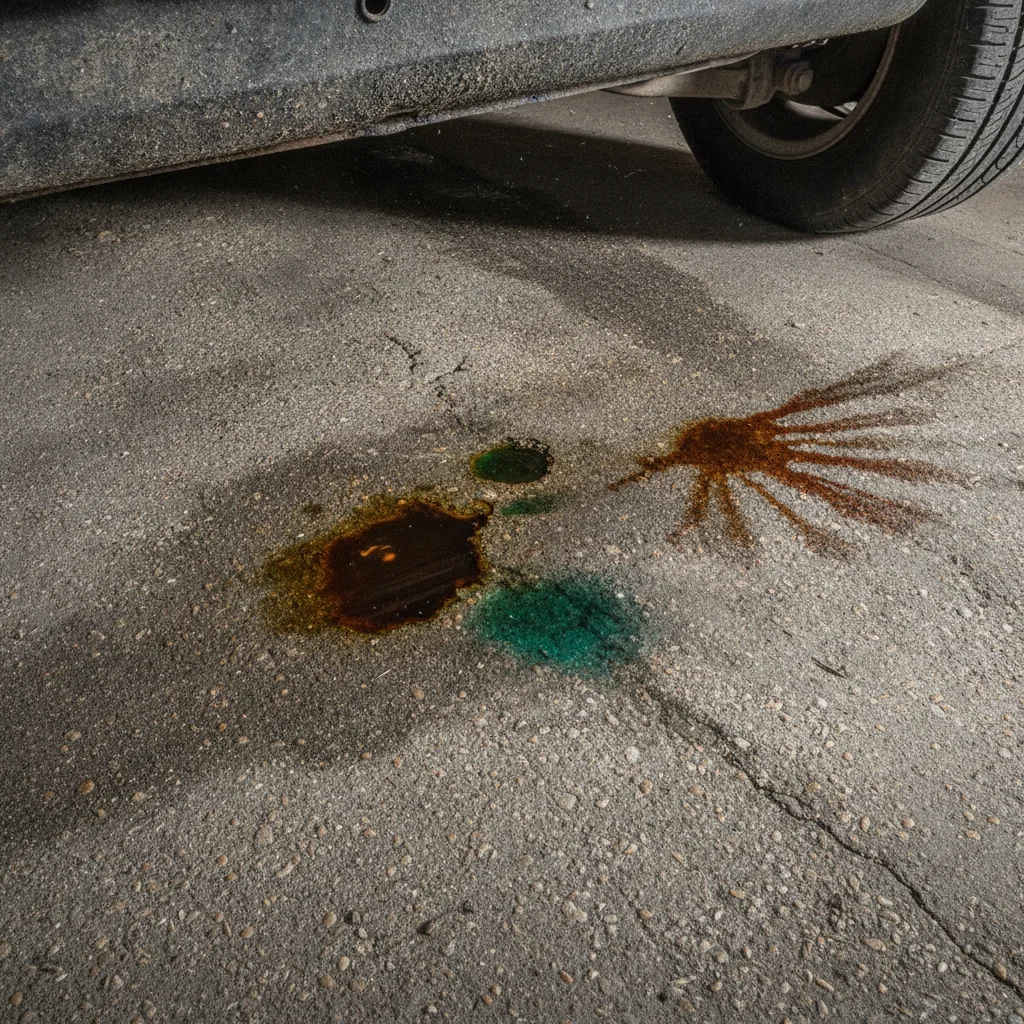
Finding a wet spot under your car is unsettling, but it doesn't have to be a mystery. Your car circulates six to eight different fluids, and each one has a fairly distinct color, consistency, and tendency to drip in a predictable location. When you learn to read those clues together — color plus position under the car — you can often narrow the problem down before you ever open the hood.
Think of it the way a doctor triages symptoms. A headache is different from a fever. Similarly, a slick, dark-brown puddle near the center of the car tells a different story than a bright-green puddle near the front. The goal isn't to make you a mechanic; it's to arm you with enough information to describe the problem accurately, respond at the right level of urgency, and avoid being overcharged because you walked into a shop without a clue.
Before you crouch down and investigate, here's the simplest framework to apply:
- Note the color. Look at the stain on the pavement and, if possible, catch some on a white paper towel.
- Note the location. Is it under the front, middle, or rear of the vehicle?
- Note the volume and frequency. A single drop after parking is very different from a spreading puddle that grows while you watch.
With those three observations, the color-coded guide below will do most of the diagnostic work for you. For a broader look at what's happening under the hood before any symptoms appear, see our under-the-hood inspection guide.
| Number of major car fluids | 6–8 (varies by vehicle) |
| Most critical leak type | Brake fluid — safety-critical, do not drive |
| Coolant color (new) | Bright green, orange, or pink |
| Engine oil color (new vs. old) | Amber (new) to near-black (degraded) |
| Transmission fluid color | Bright red (new) to dark brown-red (old) |
| Gear oil smell | Strong sulfur / rotten egg odor |
| Normal 'leak' that isn't a leak | Clear water from AC evaporator drain |
| Coolant engine damage threshold | Overheating within minutes of total loss |
| Avg. cost of ignored oil leak (engine failure) | $3,000–$8,000+ (Industry repair cost estimates) |
| Avg. cost of valve cover gasket (caught early) | $100–$300 (Independent shop average) |
The Color-Coded Fluid Guide
Below is a fluid-by-fluid breakdown organized by the color you're most likely to see on the ground. Keep in mind that some fluids change color as they age or become contaminated, so cross-reference with the location and smell details in each entry.
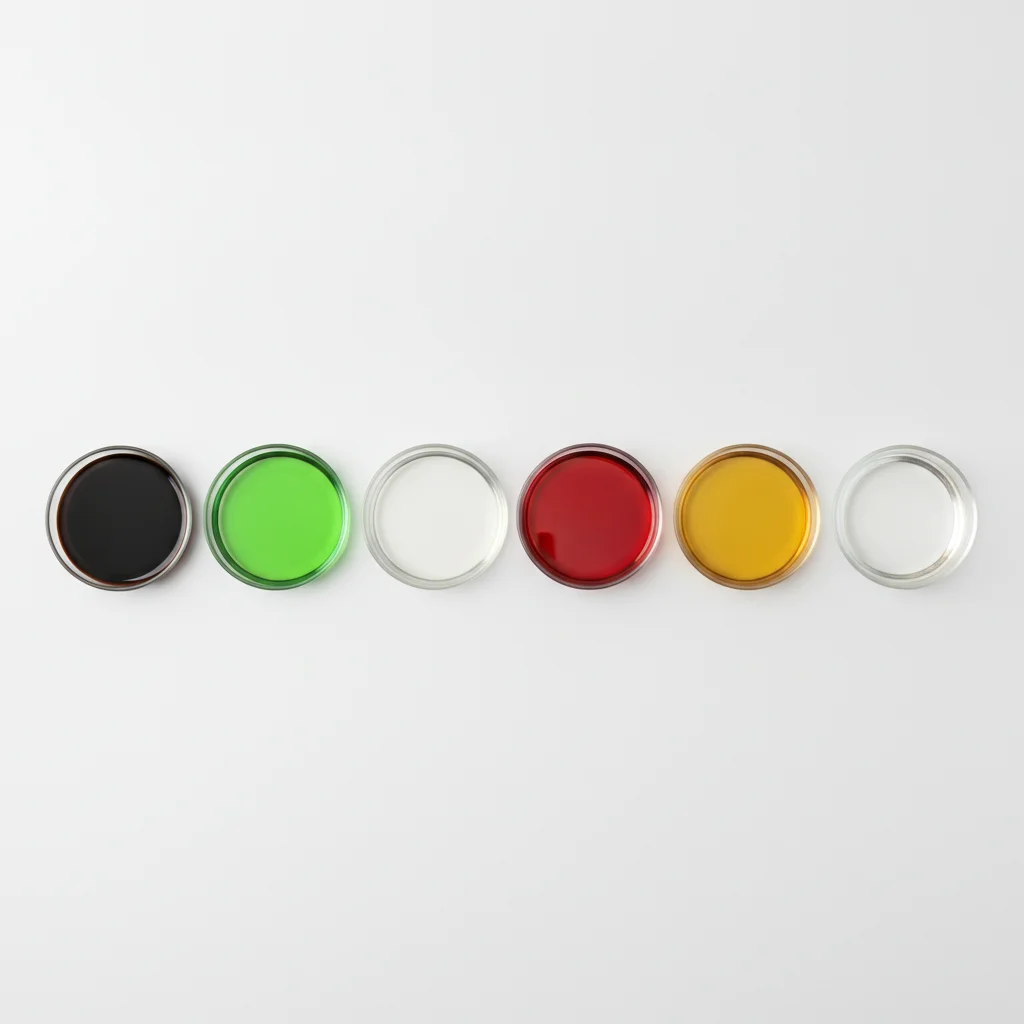
Dark Brown to Black — Engine Oil
Where you'll see it: Anywhere under the engine, typically front to center of the vehicle. Oil can also drip down the back of the engine near the firewall if the rear main seal is failing.
Consistency and smell: Slick and slightly viscous; smells like burned petroleum. Fresh oil is amber to light brown; old, degraded oil looks nearly black.
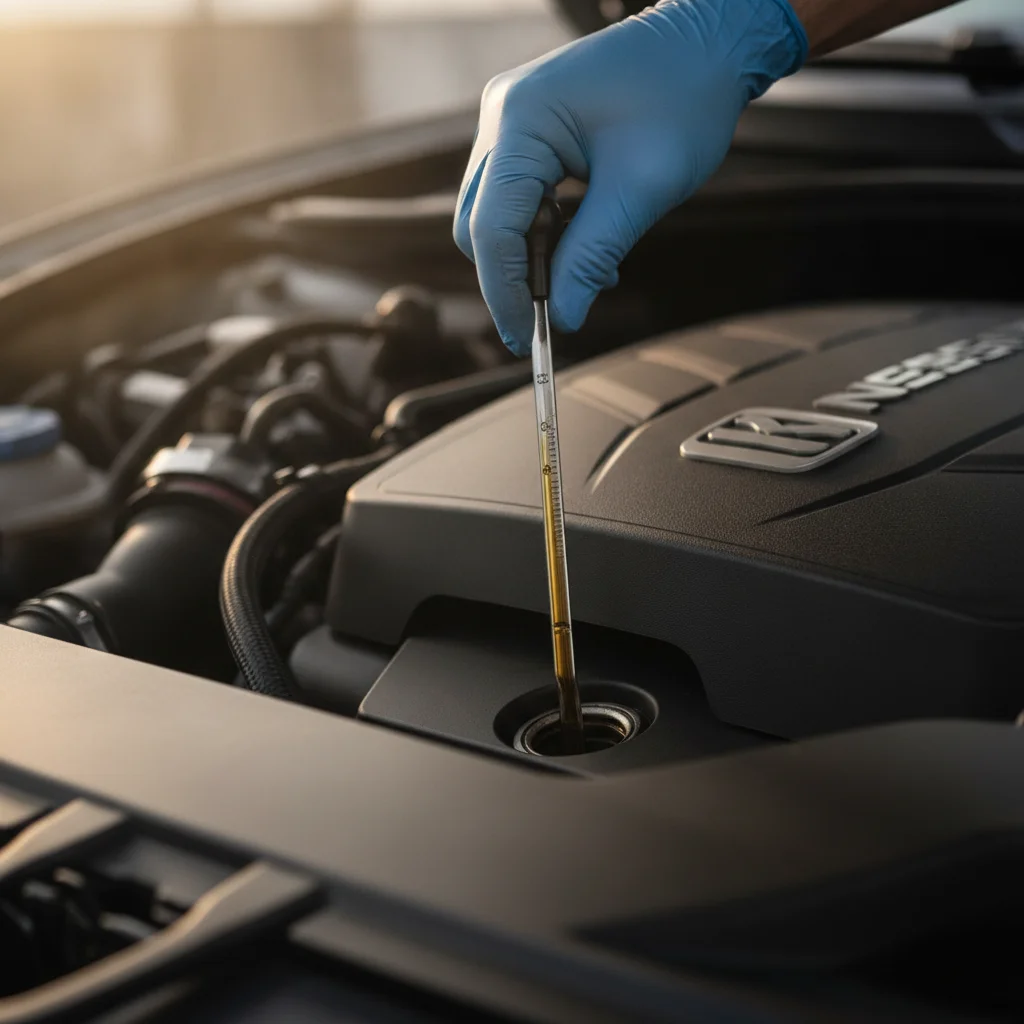
What it means: Oil leaks range from a weeping valve cover gasket — a $100–$300 repair — to a cracked oil pan or failed rear main seal that can climb past $800. Even a slow leak becomes critical if you ignore it. Running an engine two to three quarts low causes metal-on-metal contact that leads to thousands of dollars in bearing and crankshaft damage. Check your dipstick weekly if you notice any dripping.
Urgency level: Moderate to high. A small seep can wait a week for a shop appointment; an active drip warrants same-day attention.
Bright Green, Orange, or Pink — Engine Coolant (Antifreeze)
Where you'll see it: Front of the vehicle, usually near the radiator or below the engine. It can also appear under the passenger dashboard if the heater core is leaking.
Consistency and smell: Watery but slightly slippery; has a distinctly sweet, almost syrupy smell that's easy to recognize. Older coolant may turn rusty brown.
What it means: A leaking radiator, cracked coolant hose, or failing water pump. Left unchecked, coolant loss leads to engine overheating — one of the fastest ways to destroy an engine. A warped or cracked cylinder head can cost $1,500–$4,000 to repair. Coolant also poses a serious poisoning risk to pets, who are attracted to its sweet taste.
Urgency level: High. Do not drive if you see active coolant dripping. Monitor the temperature gauge closely, and pull over immediately if it climbs toward the red zone.
If you drive an electric vehicle, note that EVs also use coolant for battery thermal management — see our guide to EV fluids for more detail.
Clear to Light Yellow — Brake Fluid
Where you'll see it: Near any wheel (look for wetness on the inside of the wheel or just behind the tire), or near the firewall on the driver's side where the master cylinder sits.
Consistency and smell: Thin and oily with a faintly sharp, almost paint-thinner-like chemical smell. Fresh brake fluid is nearly water-clear; older fluid turns yellowish to light brown.
What it means: A leaking brake caliper, wheel cylinder, brake line, or master cylinder. Your brake system is hydraulic — it requires full fluid pressure to stop the car. Even a small leak will eventually lead to a soft or spongy pedal, and a catastrophic failure means the brakes stop working entirely.
Urgency level: Critical. A brake fluid leak is a safety emergency. Do not drive the car until the system is inspected and repaired.
Red or Pink — Transmission Fluid or Power Steering Fluid
Where you'll see it: Transmission fluid drips under the center of the vehicle (near the transmission tunnel); power steering fluid tends to appear at the front, near the steering rack or pump.
Consistency and smell: Both are thin and slick. Transmission fluid has a slightly sweet petroleum odor; power steering fluid smells more like regular hydraulic oil. Both start bright red and darken to brown-red with age.
What it means: Transmission fluid loss can cause slipping gears, harsh shifts, and — if left long enough — complete transmission failure. Rebuilding or replacing an automatic transmission typically costs $2,500–$5,000. Power steering leaks cause increased steering effort and can damage the pump. Note that many modern vehicles use electric power steering and have no power steering fluid at all.
Urgency level: Moderate to high. Monitor fluid levels and get to a shop within a few days. Don't top off and forget — the source needs to be found and sealed.
Light Brown or Amber — Gear Oil (Differential or Manual Transmission)
Where you'll see it: Rear of the vehicle under the differential housing, or center-rear on rear-wheel-drive trucks. Four-wheel-drive vehicles may also drip from the transfer case, which sits mid-vehicle.
Consistency and smell: Thick and viscous, almost like honey. Has a very strong sulfur or rotten-egg odor — unmistakable once you've smelled it.
What it means: A leaking differential pinion seal or axle seal. Differentials run at high loads; losing lubrication leads to scored gears and bearings, with replacement costs ranging from $500 to over $3,000 depending on the vehicle.
Urgency level: Moderate. Schedule service promptly — within a week or two — and check the differential fluid level if you're comfortable doing so.
Clear and Watery — Water (Usually Normal)
Where you'll see it: Directly under the center of the vehicle, often behind the front passenger wheel, or at the very rear near the exhaust tip.
What it means: This is almost always condensation draining from the air conditioning evaporator or water vapor from the exhaust. On a hot day after running the AC, a small puddle of water is completely normal. Similarly, water dripping from the exhaust on a cold start is normal condensation burning off.
Urgency level: None, unless the water has a sweet smell (pointing back to coolant) or the volume is extreme. When in doubt, do the paper towel test — water leaves no stain and no residue.
Rear Main Seal
A rubber seal at the back of the engine crankshaft that prevents engine oil from leaking out of the engine block. When it fails, oil typically appears at the junction of the engine and transmission. Replacement often requires separating the transmission from the engine, making it one of the more labor-intensive oil leak repairs.
Heater Core
A small radiator-like component inside the dashboard that uses hot engine coolant to warm cabin air. A leaking heater core often produces a sweet smell inside the car, foggy windows, and wet carpet on the passenger side floor.
Differential
A gearbox in the drivetrain that allows wheels on the same axle to rotate at different speeds, especially during turns. Differentials are filled with thick gear oil; a leaking differential seal allows that lubricant to escape, leading to gear wear and eventual failure.
Brake Caliper
A hydraulic clamp that squeezes brake pads against the rotor when you press the brake pedal. Calipers contain rubber seals that can crack with age; a leaking caliper seal allows brake fluid to escape and reduces hydraulic pressure in the brake system.
Coolant / Antifreeze
A liquid mixture of water and glycol that circulates through the engine and radiator to regulate operating temperature. It also contains corrosion inhibitors that degrade over time, which is why coolant requires periodic flushing and replacement.
Transfer Case
A gearbox found on four-wheel-drive and all-wheel-drive vehicles that distributes power between the front and rear axles. It uses its own supply of gear oil or ATF, and leaking transfer case seals are a common source of red or brown fluid under the mid-section of a truck or SUV.
Evaporator Drain
A small tube or port that allows condensation from the air conditioning system to drain out of the car's cabin. This produces a harmless puddle of clear water under the passenger side of the vehicle when the AC is running — one of the most commonly misidentified 'leaks.'
Valve Cover Gasket
A rubber gasket that seals the valve cover to the top of the engine head, preventing oil from leaking out. It is one of the most common sources of oil leaks in higher-mileage vehicles and is generally one of the less expensive leaks to repair.
How to Confirm What You're Seeing
Colors on pavement can be misleading — oil on wet concrete looks different from oil on dry concrete, and garage lighting distorts hues. Use these steps to sharpen your diagnosis before calling a shop.
The White Paper Towel Test
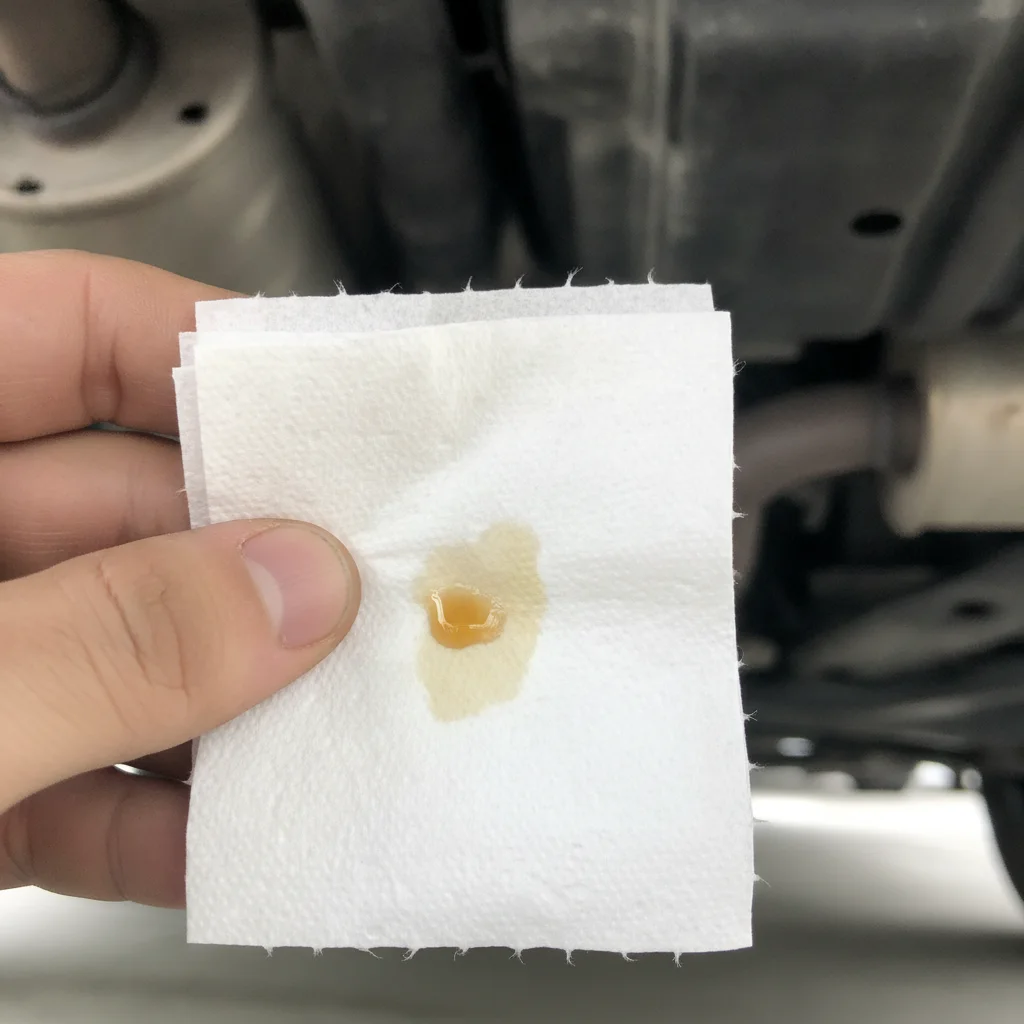
Place a white paper towel under the area where you see the drip and let it collect a small amount of fluid. Pull it out and examine it in natural daylight. The true color and consistency of the fluid will be clearer on white paper than on a dark or discolored driveway. You can also rub the fluid between your fingers — brake fluid feels very slick and thin, while gear oil feels thick and sticky.
Trace It Upward
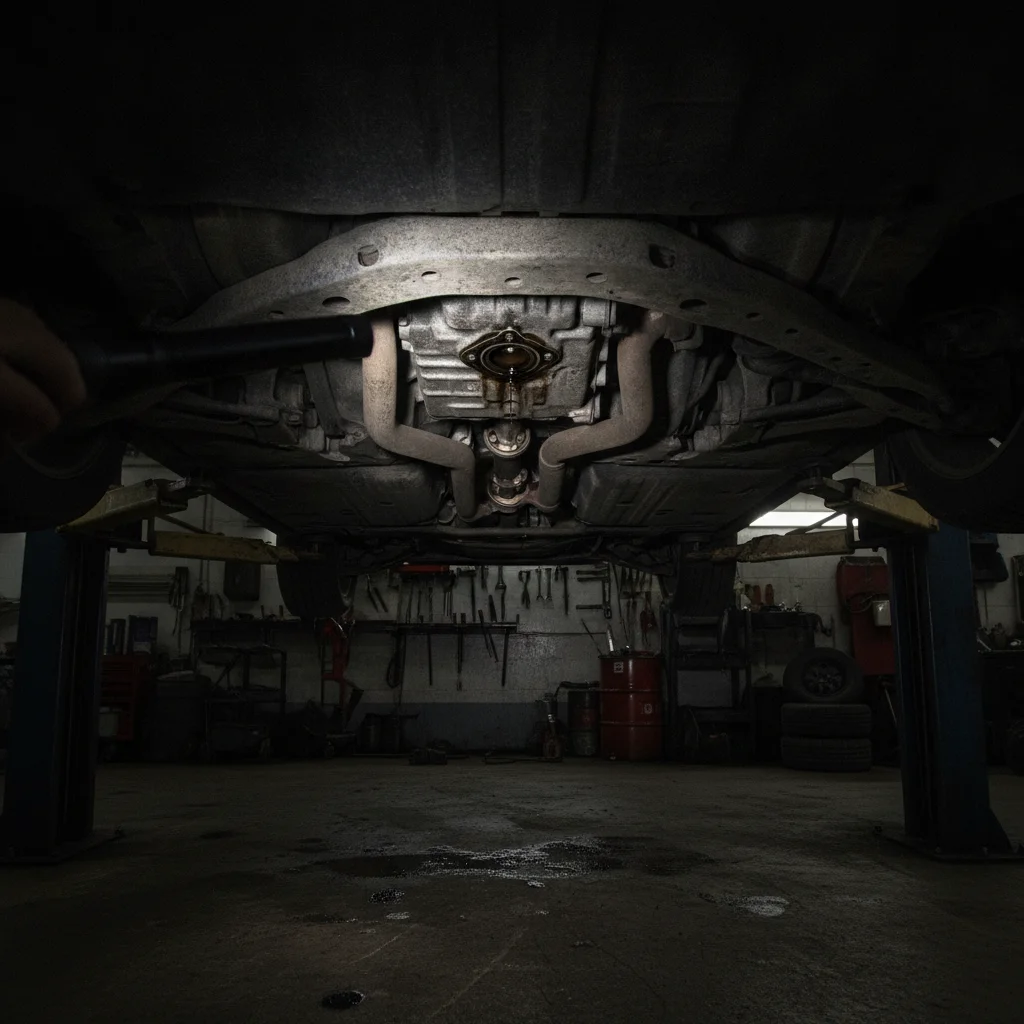
Fluid follows gravity. The drip on the ground may land several inches away from the actual leak source. Lean in and follow the wet trail upward along hoses, gasket edges, and seams. A mechanic's creeper and a flashlight help enormously here. Look for a dried crust or residue above the wettest point — that's usually where the leak originates.
Clean the Area First
If you're unsure where a leak is coming from, have the engine degreased (many shops do this cheaply), or clean the area yourself with engine degreaser spray and a rag. Then place cardboard under the car overnight. The next morning, you'll see exactly where fresh fluid is dropping and in what quantity.
Check Your Fluid Levels
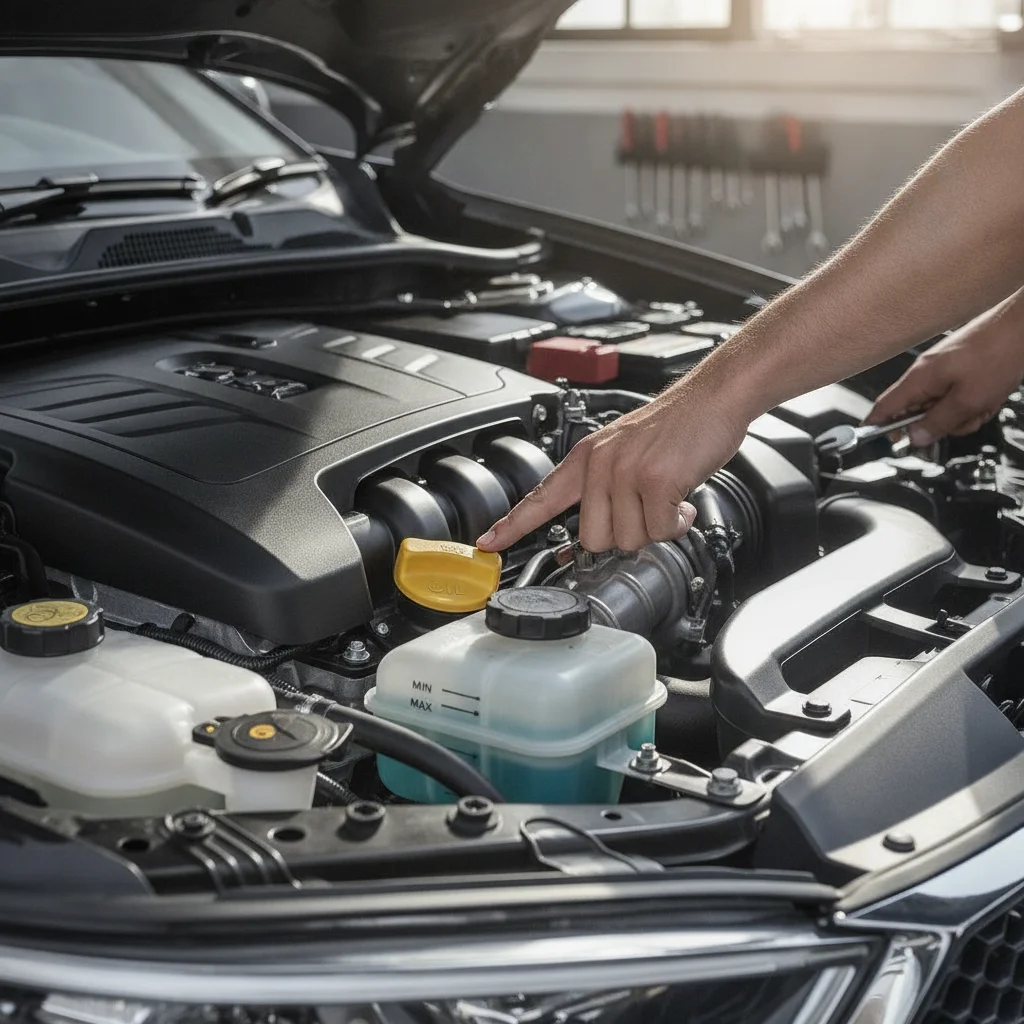
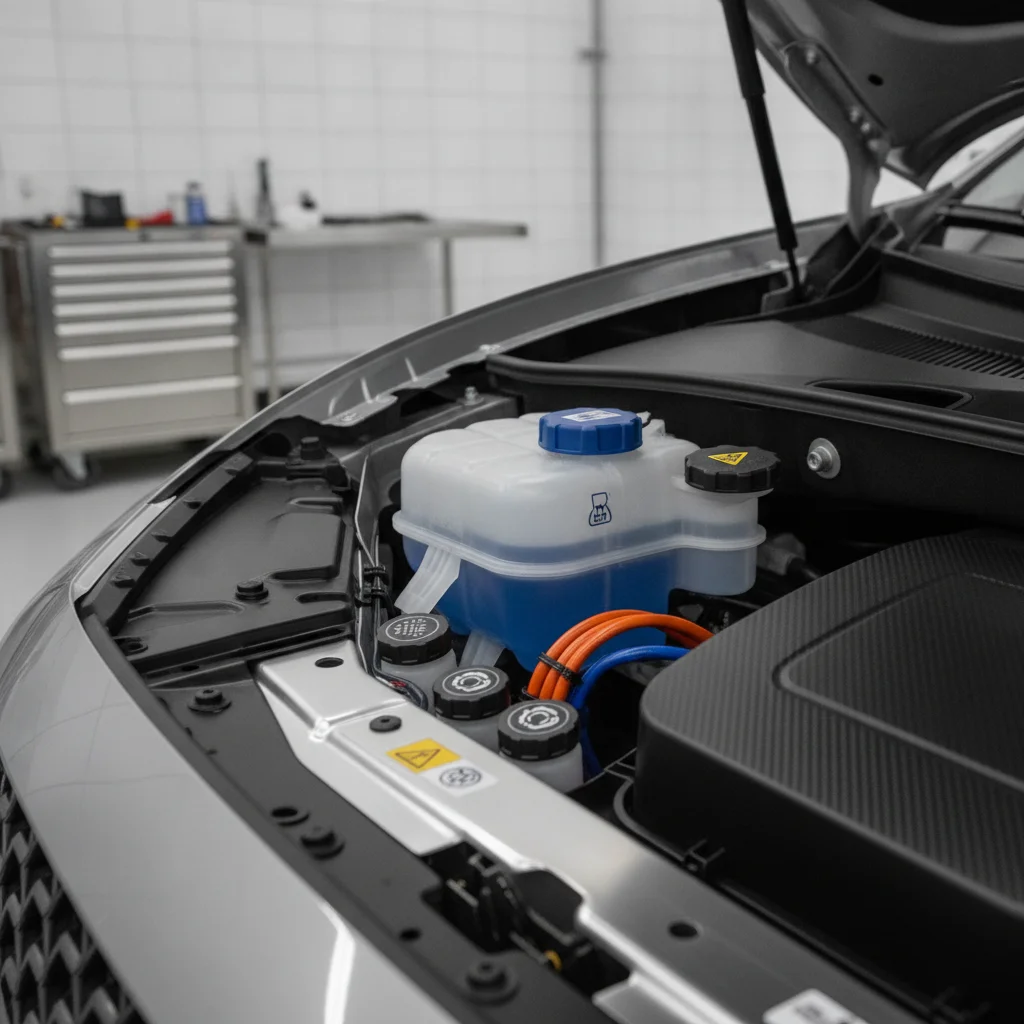
Confirming which fluid is low tells you which system is losing it. The routine fluid check guide walks you through every reservoir under the hood, including how to read each dipstick correctly. If you need to top something off while you wait for a shop appointment, see our guide to topping off fluids yourself.
When Multiple Fluids Look Similar
Engine oil, gear oil, and old transmission fluid can all appear dark brown at a glance, making visual diagnosis harder on high-mileage vehicles. In these cases, location is more reliable than color alone: engine oil drips under the engine block, gear oil appears near axles and differentials with a sulfur odor, and transmission fluid pools beneath the transmission tunnel. If you're still uncertain, a shop can pressure-test the system or use dye kits to trace the exact source.
Don't Confuse New-Car Off-Gassing With Leaks
Brand-new vehicles sometimes produce small drips of manufacturing oils, protective coatings, or assembly lubricants during the first few hundred miles. These are usually oily residues that burn off or drip harmlessly and do not recur. If you notice spots only during the first week of ownership and they don't return, it's likely not a leak. That said, any repeat dripping warrants investigation regardless of a vehicle's age.
$4,000+
Average cost of a warped cylinder head from coolant loss
Cylinder head repair or replacement is one of the most common consequences of driving with an active coolant leak; estimates from ASE-certified shops nationwide.
2–3 qts
Oil loss level at which engine bearing damage begins
Most engines hold 4–6 quarts; running at half capacity accelerates metal wear exponentially according to SAE lubrication research.
$2,500–$5,000
Typical automatic transmission rebuild or replacement cost
Industry average repair costs when low transmission fluid causes internal clutch pack and bearing failure.
70%
Of roadside breakdowns involve a fluid-related failure
According to AAA roadside assistance data, the majority of non-tire breakdowns trace back to cooling system, oil, or fuel system failures — most of which have early warning signs.
5–10x
Cost multiplier of ignoring an early leak vs. fixing it promptly
Across all major fluid systems, a minor seal or gasket repair caught early typically costs one-fifth to one-tenth of the downstream component damage it prevents.
Urgency Tiers and What Each Means for Your Wallet
Not every leak demands an immediate tow, but every leak demands a response. Here's how to think about urgency in practical terms, along with the realistic cost consequences of waiting too long.
| Fluid | Urgency | Cost if Caught Early | Cost if Ignored |
|---|---|---|---|
| Brake Fluid | Critical — do not drive | $100–$400 (seal/caliper) | Brake failure; accident liability |
| Coolant | High — same day | $150–$600 (hose/radiator) | $1,500–$4,000 (head gasket/engine) |
| Engine Oil | Moderate to high | $100–$400 (gasket/seal) | $3,000–$8,000+ (engine rebuild) |
| Transmission Fluid | Moderate — within days | $150–$500 (seal/gasket) | $2,500–$5,000 (transmission rebuild) |
| Power Steering Fluid | Moderate | $100–$350 (hose/rack seal) | $500–$1,500 (pump/rack failure) |
| Gear Oil | Moderate — within a week | $80–$300 (axle/pinion seal) | $500–$3,000+ (differential) |
| Water (AC condensate) | None — normal | No repair needed | No consequence |
The pattern here is consistent: early intervention costs hundreds; delayed intervention costs thousands. A leaking valve cover gasket that costs $200 to fix becomes a $6,000 engine replacement if ignored for a year. The math is never in favor of waiting.
It's also worth knowing that exhaust appearance can tell you a parallel story. Just as fluids color-code problems on the ground, smoke color codes problems coming out of the tailpipe. Our exhaust smoke color guide covers what white, blue, and black smoke each signal about engine health.
Fluid Checks Every Driver Should Be Doing Between Service Visits
A practical walkthrough of every underhood fluid reservoir — how to check levels, read dipsticks correctly, and spot early warning signs before they become expensive repairs.
Quick-Reference Guide to Car Fluid Colors, Smells, and What Leaks Mean
A concise lookup reference to identify any fluid by color and smell, with clear explanations of what each leak tells you about your vehicle's condition.
Topping Off Your Own Fluids: Coolant, Brake Fluid, Power Steering, and More
Step-by-step instructions for safely checking and topping off every major fluid in your car — a useful stopgap while you arrange a shop visit.
Exhaust Smoke Color and What Each Shade Reveals About Engine Health
White, blue, black, and gray exhaust each signal a different internal issue. Use this color-coded guide to read your tailpipe the same way you read your driveway.
AutoMD Repair Estimator
Enter your vehicle details and suspected problem to get a ballpark repair cost estimate — useful for budgeting before you take a leak diagnosis to a shop.
Under the Hood: What to Look at Even If You're Not a Mechanic
A beginner-friendly guide to spotting oil sludge, coolant stains, corroded terminals, and signs of DIY patch jobs during a used car inspection or routine check.

All claims are backed by peer-reviewed research. Sources on request.