Key Takeaways
Passing on the Right
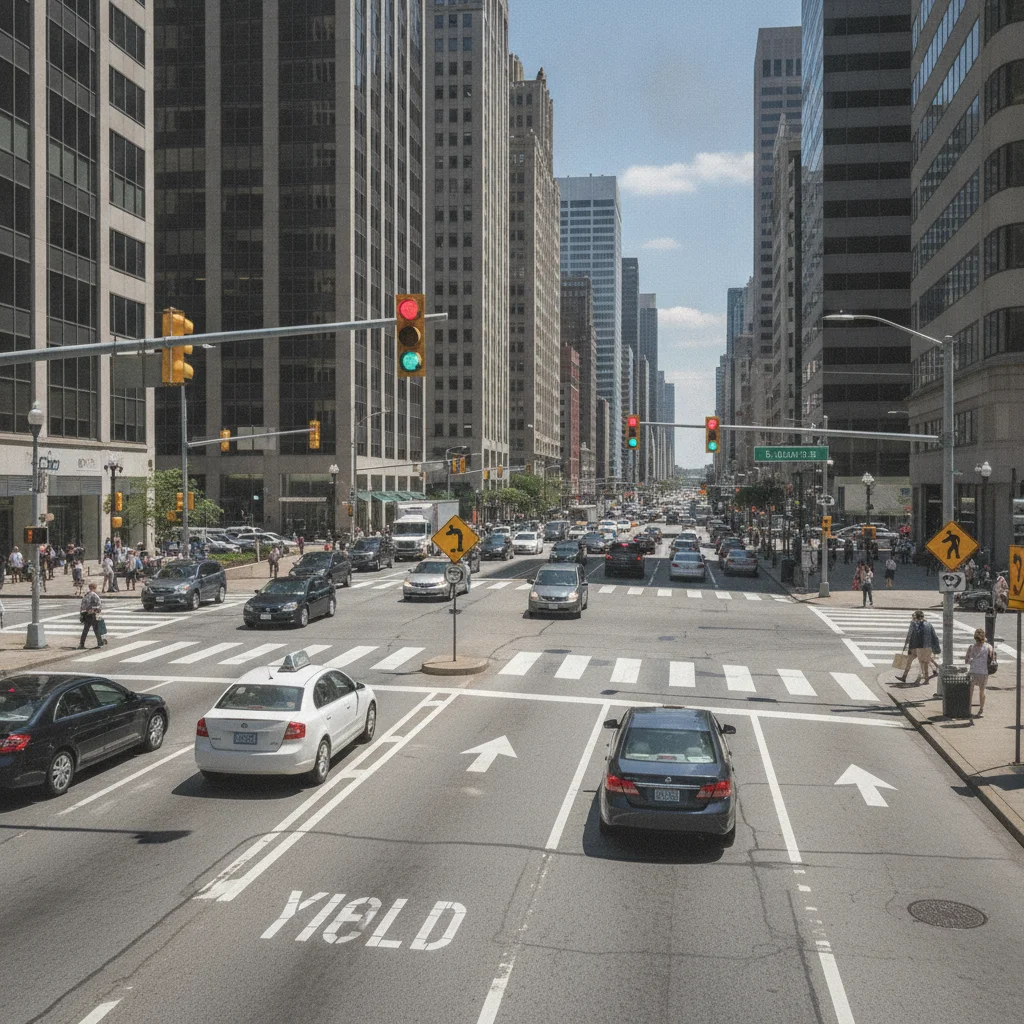
Passing on the right means overtaking another vehicle by moving into a lane to its right side, rather than the left. In the U.S., passing on the left is the default expectation on most roads — so passing on the right is a special maneuver governed by specific legal conditions. It is permitted in some circumstances, such as on multi-lane roads or when the vehicle ahead is turning left, but prohibited in others.
Most state vehicle codes mirror the Uniform Vehicle Code, which permits right-side passing only when it can be done safely on a roadway with unobstructed pavement wide enough for two or more lanes of traffic, or when the overtaken vehicle is making or about to make a left turn.
Why This Law Confuses So Many Drivers
Most drivers learn early on that you pass on the left. It's one of those traffic rules that gets drilled into new drivers and then largely forgotten — until someone cuts right and you wonder whether that was actually legal. The honest answer is: sometimes yes, sometimes no, and the line between them is blurrier than most people think.
The confusion stems from a few sources. Multi-lane highways have changed how traffic flows, creating everyday situations where passing on the right seems completely normal. Meanwhile, state laws haven't been uniformly updated, and the specific language varies enough that what's legal in Ohio may be ticketable behavior in New Jersey. Add in the fact that police discretion plays a role, and you've got a rule that's frequently misunderstood and selectively enforced.
This matters beyond just avoiding a ticket. As part of the broader landscape of U.S. traffic laws every driver should know, passing rules intersect with lane discipline, right-of-way, and — when things go wrong — liability and insurance. Getting it right protects your record, your rates, and your safety.
When Passing on the Right Is Legally Permitted
The core rule across most states: passing on the right is allowed when it can be done safely and in specific road conditions. Here are the two most common legal scenarios.
1. Multi-Lane Roads With Two or More Through Lanes in the Same Direction
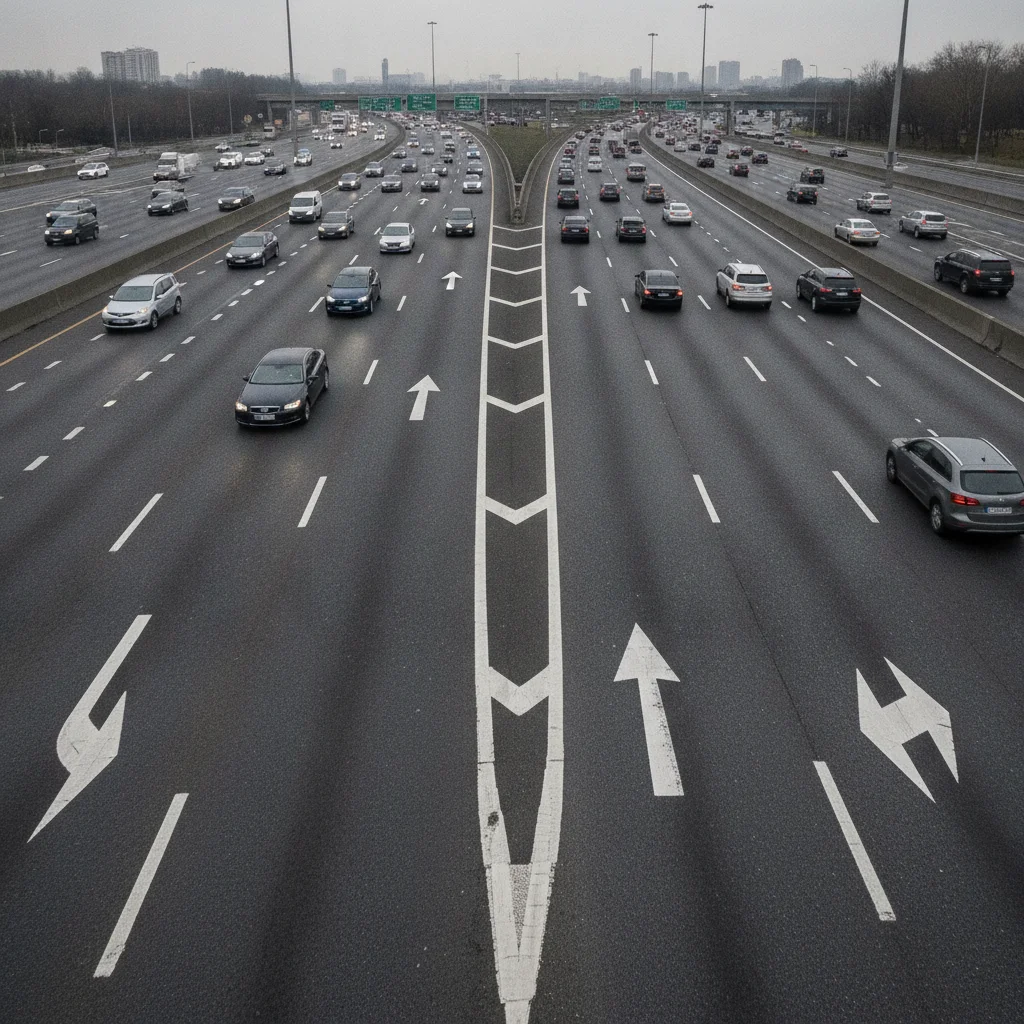
On a highway or divided road with multiple lanes running the same direction, any lane is technically a travel lane. If the driver ahead of you is moving slowly in the center or left lane, you're generally permitted to overtake them by moving right — provided you do so safely and without leaving the paved roadway. This is the most common legal instance of right-side passing, and it's the reason millions of highway commutes include it every day without incident or citation.
2. When the Vehicle Ahead Is Making or About to Make a Left Turn
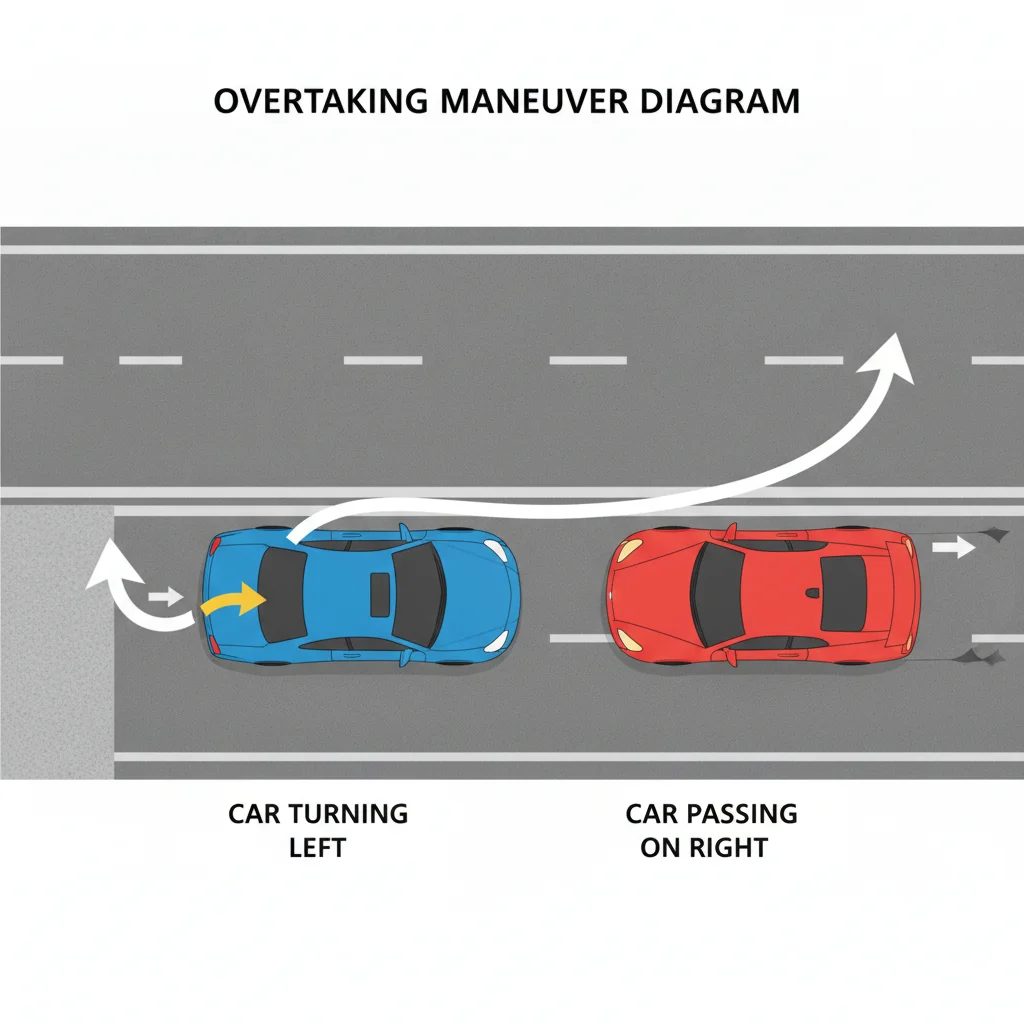
On a two-lane or undivided road, if the car in front of you has signaled a left turn and slowed to wait for a gap in oncoming traffic, most state laws permit you to pass them on the right — again, provided sufficient paved surface exists to do so without going off the road. This keeps traffic moving and prevents unnecessary backups at intersections and driveways.
One-Way Streets Are a Special Case
On designated one-way streets, passing on the right is generally permitted where road width allows — because there's no opposing traffic, the safety rationale for left-only passing doesn't apply in the same way. Many states explicitly carve out one-way streets in their passing statutes. If you're in a city environment with one-way traffic, the rules are more permissive than on a standard two-lane road.
"Sufficient Width" Is Legally Vague
Many state statutes permit right-side passing on roads with "sufficient width" for two lanes of traffic — but don't define that term precisely. Courts and officers have discretion here. If the paved area to your right is narrow, unmarked, or shared with cyclists, a "sufficient width" defense is unlikely to hold up. When in doubt, wait for a clear lane.
Outside of these two situations, passing on the right is almost always prohibited on standard two-lane roads. If there's no left-turn signal ahead and only one lane runs in your direction, you should not pass on the right under any circumstance unless emergency conditions require it.
When It's Clearly Illegal — and Why Officers Write Tickets
The prohibited scenarios are more straightforward, and they're where most right-side passing violations actually happen.
~30%
Drivers unaware right-side passing has legal limits
A survey by the AAA Foundation for Traffic Safety found that roughly one-third of drivers could not correctly identify legal passing rules in their state.
Top 5
Ranking of improper passing among moving violations issued
Improper passing consistently ranks among the top five moving violations cited by state highway patrols, with shoulder passes making up a significant share of those stops.
10–40%
Typical auto insurance premium increase after a moving violation
According to Insurance.com rate analysis, a single moving violation conviction can raise a driver's annual premium by 10% to 40% depending on the carrier and state.
43 states
States with formal keep-right or slower-traffic-keep-right laws
The Governors Highway Safety Association tracks lane discipline laws; as of recent counts, 43 states have some form of law requiring slower vehicles to keep right.
Driving Off the Paved Surface to Pass
The single most common illegal right-pass situation is pulling onto the shoulder or unpaved area to get around a slower vehicle. No state vehicle code permits this. The shoulder is not a travel lane — it exists for breakdowns, emergencies, and cycling routes in some jurisdictions, not for overtaking. Even if the shoulder is paved, using it to pass another vehicle is a violation in most states.
Passing on the Right on a Two-Lane Road Without a Left-Turn Situation
If the car ahead of you is simply traveling slowly on a two-lane road with no intention of turning, you cannot legally pass them on the right. The law requires you to pass on the left when a passing opportunity arises, or to wait. It's frustrating, but the restriction exists because right-side passes on two-lane roads dramatically increase head-on collision risk with vehicles pulling out of driveways and side streets.
Unsafe Passes Even Where Technically Permitted
Here's the legal nuance that catches drivers off guard: even in situations where right-side passing is technically allowed, it must be executed safely. A pass that cuts off another driver, forces them to brake, or is completed at excessive speed can still result in a citation for unsafe lane change or reckless driving — irrespective of which side you passed on. Officers don't need the specific passing statute; they have other tools at their disposal.
This connects directly to how commonly misunderstood traffic laws get enforced — the technical legality of the pass matters less when the execution was unsafe.

How State Laws Differ: A Practical Snapshot
Most state vehicle codes follow the framework of the Uniform Vehicle Code, but the exact language — and how courts interpret it — varies. A few examples worth knowing:
| State | Right-Pass Permitted On Multi-Lane? | Shoulder Pass Prohibited? | Left-Turn Exception Included? |
|---|---|---|---|
| California | Yes | Yes | Yes |
| Texas | Yes | Yes | Yes |
| New York | Yes | Yes | Yes |
| Florida | Yes | Yes | Yes |
| Pennsylvania | Yes, with safety conditions | Yes | Yes |
| Montana | Yes | Yes | Yes |
What differs more meaningfully is how states handle the keep right except to pass rule on highways. In states with strict keep-right laws — like New Jersey, which can fine left-lane campers — the expectation is that the left lane is a passing lane, not a travel lane. This creates an environment where right-side passes are more routine but also more expected, and where a driver blocking the left lane can itself be the infraction rather than the person passing right.
Before a long road trip, it's worth checking the specific rules for states you'll be crossing through. Our guide to traffic law differences across state lines covers these regional variations in more detail.
“The left-pass rule was designed for two-lane roads where passing on the right is genuinely dangerous. On a modern multi-lane highway, the rule has evolved — but drivers still need to understand the boundary between permitted passing and simply weaving through traffic unsafely.”
— James C. Fell, Senior Research Scientist, NORC at the University of Chicago, traffic safety researcher
The Insurance and Liability Angle
A traffic ticket for an illegal right-side pass is annoying and costly on its own. But the downstream insurance consequences are where drivers really feel the impact.
Points and Premium Increases
A moving violation for an improper pass typically adds one to three points to your license, depending on the state. Insurers review your record at renewal — usually every six to twelve months — and points for moving violations can trigger surcharges ranging from 10% to 40% on your premium, depending on the carrier and your prior record. A single pass ticket might cost you far more over three years of surcharges than the fine itself.
Fault Determination After a Crash
This is where the legal stakes escalate sharply. If you execute a right-side pass — even in a technically permitted situation — and a collision results, the investigation will examine whether your pass was the proximate cause of the crash. If it was illegal, you're almost certainly bearing primary fault. If it was legal but unsafe, you can still be found negligent.
Negligence matters because in most states, comparative fault rules determine how damages are split. If you're found 60% at fault, you collect only 40% of damages from the other party — and your own insurer may subrogate against you for what they paid out. In states with contributory negligence rules, being even partially at fault can bar you from collecting anything.
Understanding how right-of-way works in crash liability is closely related — passing laws and right-of-way rules often interact when determining who had the legal obligation to yield.
Check Your State's Exact Statute Before Disputing a Ticket
If you receive a citation for an improper right-side pass and believe the pass was legal, look up your state's specific vehicle code section on passing — not a general summary. The exact wording matters in court, and state DMV websites typically link to current statutes. Minor wording differences between states can make the difference between a valid defense and a wasted trip to traffic court.
Signal Every Lane Change — Even Legal Ones
A driver who signals before a right-side pass creates a factual record that supports safe and intentional maneuvering, which matters both for officer perception and insurance fault analysis if something goes wrong. Failing to signal during an otherwise legal pass gives an officer an easy secondary violation to add to the stop.
Practical Rules for Staying Legal and Safe
The legal landscape here is actually manageable once you understand the framework. Here's how to apply it in real driving situations:
- On a multi-lane highway: Right-side passing is generally fine, but execute it cleanly. Check mirrors, signal, allow adequate space, and don't linger alongside the other vehicle. Get past and move on.
- On a two-lane road: Only pass right if the vehicle ahead is clearly signaling and positioned for a left turn, and there's sufficient paved road to your right. If there's any ambiguity, wait for a legal left-side pass opportunity.
- Never use the shoulder to pass: Not for a few car lengths, not at slow speed, not when traffic is stopped. This is a bright-line rule in every state, and officers write this ticket regularly.
- Don't camp in the left lane: If you're on a multi-lane road and not actively passing, moving right reduces pressure from drivers behind you and removes the incentive for them to pass you on the right. It also keeps you legally compliant in keep-right states.
- Treat legal ≠ automatically safe: A maneuver being technically permitted doesn't mean conditions are right for it. Wet roads, reduced visibility, heavy traffic, or an inattentive driver ahead can all make a legal pass a dangerous one.
Passing behavior can also edge into aggressive driving territory when it's repeated, forced, or retaliatory — a pattern that carries its own separate legal exposure beyond a simple moving violation.
The Bottom Line on Right-Side Passing
Passing on the right occupies an odd legal space: common enough that most drivers have done it, regulated enough that doing it wrong carries real consequences, and varied enough by state that you can't assume the rules you learned apply everywhere you drive.
The short version: on multi-lane roads and when a car ahead is turning left, you're generally in the clear — provided the pass is safe and stays on paved roadway. On a two-lane road in any other situation, wait for a legal left-side pass. Never use the shoulder. And remember that legal permission to make a maneuver doesn't protect you from fault if the execution is reckless.
For a broader look at the traffic rules that consistently trip drivers up — and get enforced — see our overview of right-of-way rules most drivers misread at intersections. The more accurately you understand these rules, the better positioned you are to drive safely, avoid violations, and keep your insurance costs where they belong.
Check Your State's Exact Statute Before Disputing a Ticket
If you receive a citation for an improper right-side pass and believe the pass was legal, look up your state's specific vehicle code section on passing — not a general summary. The exact wording matters in court, and state DMV websites typically link to current statutes. Minor wording differences between states can make the difference between a valid defense and a wasted trip to traffic court.
Signal Every Lane Change — Even Legal Ones
A driver who signals before a right-side pass creates a factual record that supports safe and intentional maneuvering, which matters both for officer perception and insurance fault analysis if something goes wrong. Failing to signal during an otherwise legal pass gives an officer an easy secondary violation to add to the stop.

All claims are backed by peer-reviewed research. Sources on request.