Key Takeaways
Why State-to-State Differences Actually Matter
Most drivers assume traffic law is essentially uniform across the U.S. — a red light means stop, a speed limit sign means what it says, and the rules you learned for your license apply everywhere you drive. That assumption is wrong, and it costs drivers money every year.
The federal government sets broad transportation policy, but traffic law is almost entirely a state matter. Each state writes its own vehicle code, sets its own penalties, and decides what behavior is legal or criminal on its roads. The result is a patchwork of rules that can shift the moment you cross a state line — sometimes dramatically.
This isn't just a theoretical inconvenience. Out-of-state violations are real, enforceable, and reportable. Under the Driver License Compact and the Non-Resident Violator Compact, most states share traffic conviction data with each other. If you get a ticket in Georgia while driving from New York, there's a solid chance your home state DMV hears about it and adds points to your record. Your insurer may hear about it too.

The traffic law differences below are the ones that most consistently trip up road-trippers, long-haul drivers, and anyone relocating across state lines. For a broader look at rules that catch drivers off guard even within their home state, see commonly misunderstood traffic laws.
Speed Limits: Posted Isn't Always the Whole Story
Every state posts statutory maximum speed limits, but what's less obvious is that many states also set absolute, prima facie, or basic speed law standards — and the legal distinction matters enormously if you fight a ticket.
- Absolute limits (used by most states): Driving even 1 mph over the posted limit is a violation, period. No context excuses it.
- Prima facie limits (used in California, for example): The posted limit is presumed safe. A driver can theoretically argue they were driving safely above it — but this is a legal defense, not a free pass.
- Basic speed law: Virtually all states layer this on top — meaning you can be cited for driving too fast for conditions (rain, fog, construction) even if you're under the posted limit.
Specific limits also vary. Texas has an 85 mph limit on certain rural tollways — the highest in the country. Montana had no daytime speed limit for decades (that ended in 1999), but it still has some of the highest rural interstate limits in the nation at 80 mph. Meanwhile, Hawaii caps freeways at 60 mph statewide.
Construction zones add another layer. Most states double fines in active work zones, and several states enforce this even when workers aren't present if signs indicate a reduced zone. Don't assume the rules you know from home apply.
Driving 1 mph over the limit is a violation in most states — no exceptions, no context.
Handheld Phone Use: The Laws Are More Fragmented Than You Think
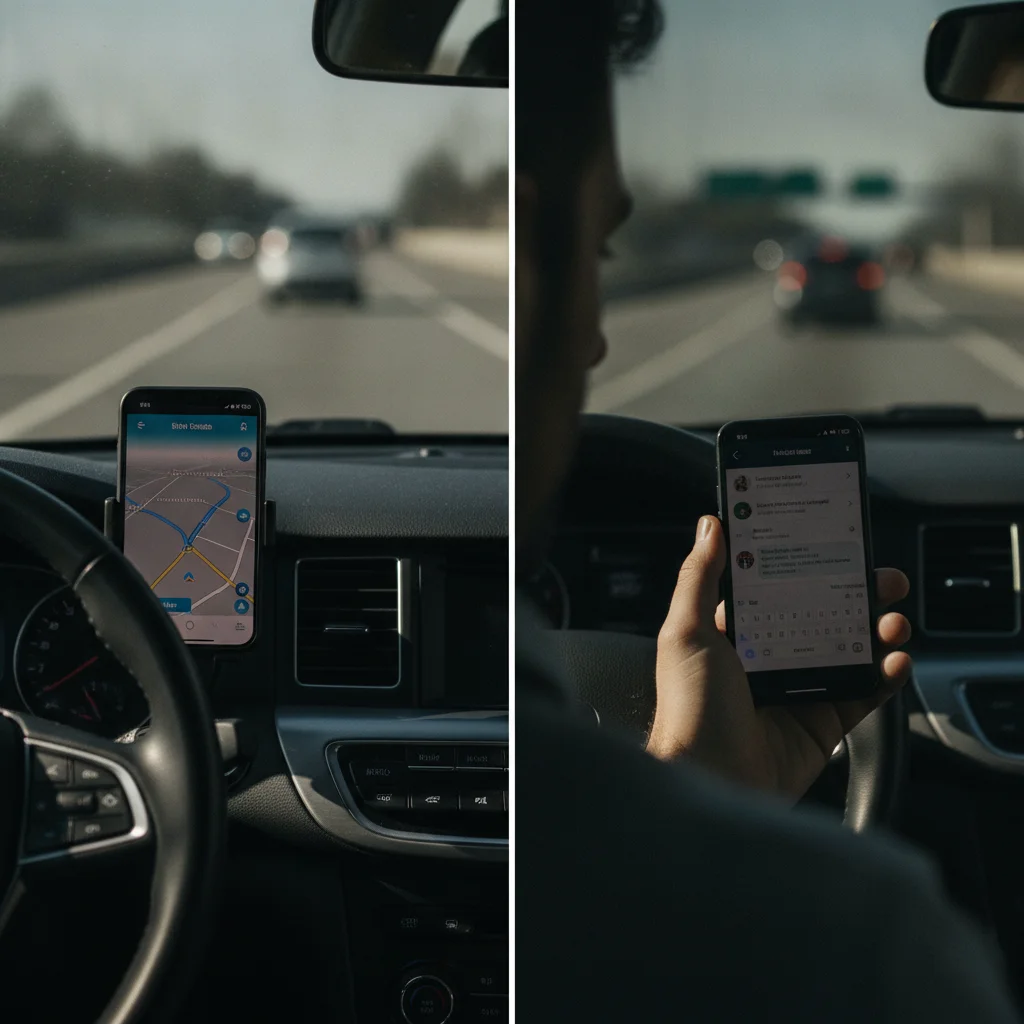
This is probably the area where out-of-state drivers get caught most off guard, because the rules range from completely permissive to outright bans on holding your phone for any reason while driving.
As of 2024, more than 20 states have enacted hands-free only laws — meaning you cannot hold your phone even to glance at a map or skip a song. States including California, New York, Washington, Georgia, and Oregon are in this group. In these states, a single officer observation of you holding your phone is sufficient for a stop and citation.
Other states prohibit texting while driving but still permit handheld calls — a meaningful distinction if you're used to one rule and driving through a state with another.
A handful of states still have no statewide handheld ban at all, though local ordinances in specific cities may apply.
[in_content_images:1]Fines range from around $50 for a first offense in some states to over $300 in others, and several states now treat repeat phone violations as points-eligible offenses. For the full state-by-state breakdown, our dedicated guide on hands-free and handheld phone laws by state covers every variation in detail.
[note_callout]In over 20 states, holding your phone for any reason while driving — even at a red light — is illegal.
Right Turn on Red: It's Not Universal
Most U.S. drivers treat right-on-red as a universal rule. It isn't. There are important exceptions that can result in tickets — or worse, accidents — when drivers don't know them.
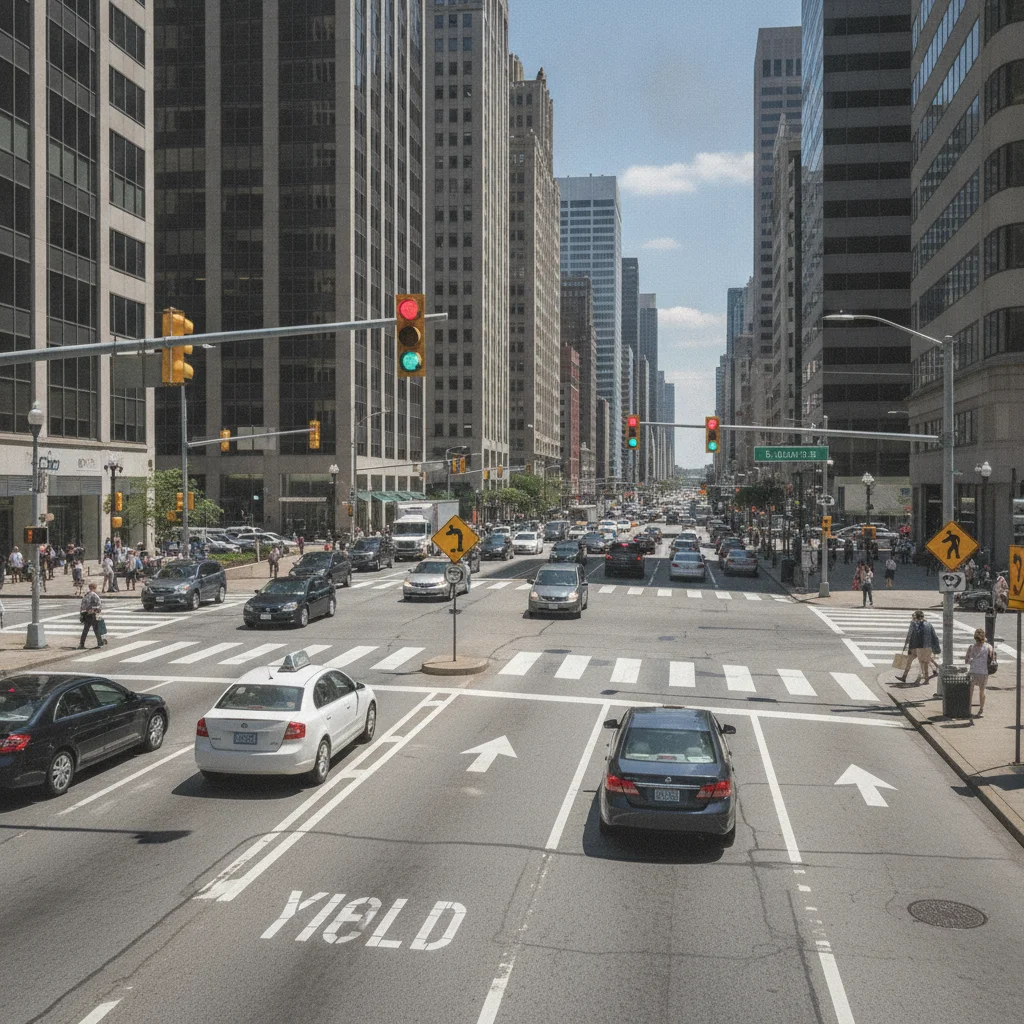
New York City prohibits right turns on red at most intersections unless a specific sign permits it. Many drivers unfamiliar with the city assume the statewide rule (which allows it) applies everywhere within it. It doesn't. The city has posted explicit "No Turn on Red" signs at thousands of intersections, but locals know them intuitively in ways visitors don't.
Beyond city-level rules, some states allow local jurisdictions to post "No Turn on Red" at specific intersections for safety or traffic management reasons, and those signs are legally binding. If you're in an unfamiliar area and you don't see a sign specifically permitting it, the safe move is to wait for the green.
Some states also restrict right-on-red for certain driver categories — learner's permit holders in several states are prohibited from making the turn even where it's otherwise legal.
New York City bans right turns on red at most intersections — a rule that catches countless out-of-state drivers.
Move Over Laws: Required Everywhere, But Not Identical
Every single state has a Move Over law. If you don't know the one in your home state, that's already a problem. But these laws also differ in meaningful ways across state lines.
The core requirement is consistent: when an emergency vehicle (police, fire, ambulance) is stopped on the shoulder with lights activated, you must either move to an adjacent lane or, if that's not safely possible, slow down significantly below the posted limit.
Where states diverge:
- Who's covered: Many states have expanded their Move Over laws to include tow trucks, utility vehicles, and highway maintenance crews — not just police and emergency responders. States like Tennessee, Ohio, and Florida explicitly include tow trucks. Others don't.
- Required speed reduction: Some states mandate slowing to a specific speed (e.g., 20 mph below the limit in certain states). Others simply require a "reasonable" reduction.
- Penalty tier: Violations range from minor infractions to misdemeanor charges, especially if the violation results in an injury to a worker.
For a full breakdown of what triggers Move Over requirements and what happens when drivers ignore them, see Move Over laws and what they actually cover.
Many states now require moving over for tow trucks and utility vehicles, not just emergency responders.
Lane Usage and Left-Lane Laws: The 'Slow Traffic Keep Right' Variations
Most drivers have a vague sense that the left lane is for passing and slower vehicles should stay right. Many states have codified this into enforceable law — and the specifics vary.
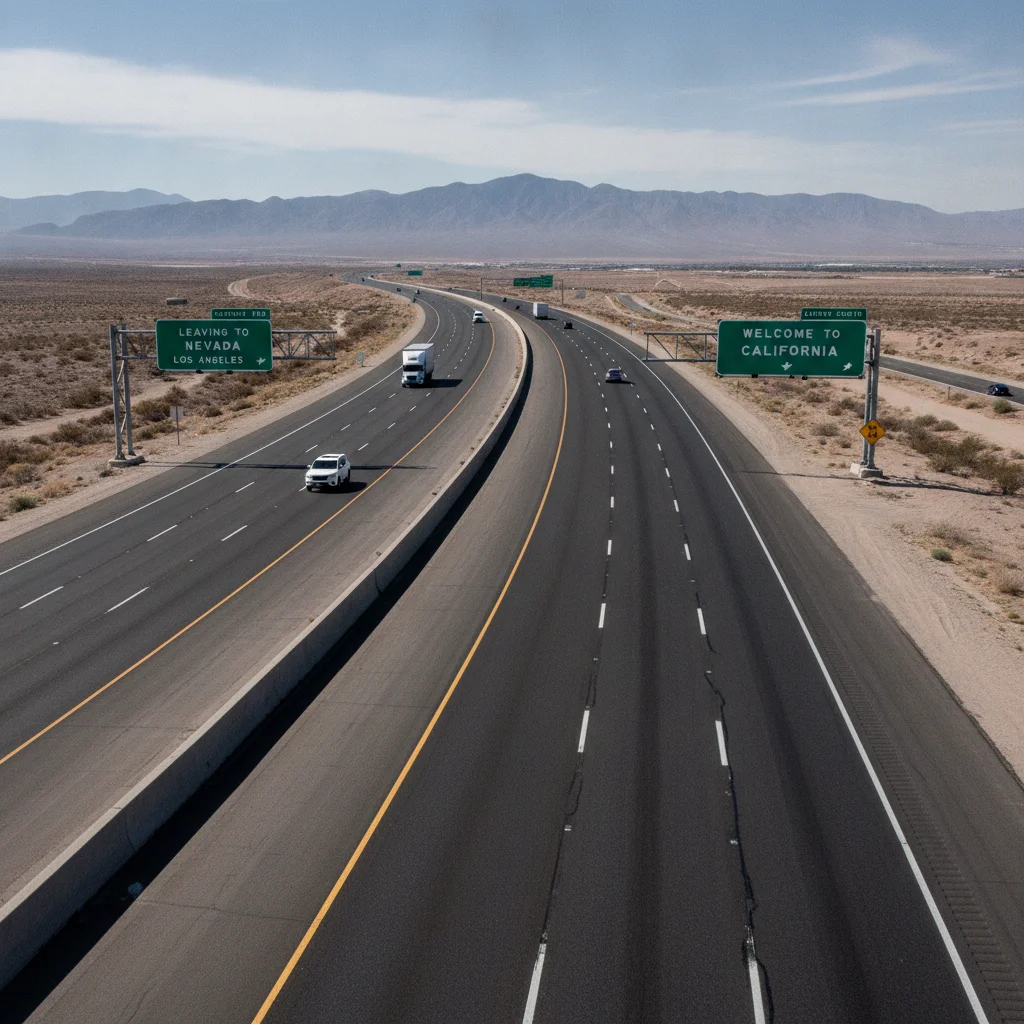
Some states treat left-lane camping as a minor infraction. Others take it seriously. In states like Georgia, Indiana, and New Jersey, driving in the left lane without actively passing is explicitly prohibited on multi-lane roads and can result in a fine. Georgia famously had a high-profile enforcement campaign around this. New Jersey's law applies to roads with speed limits of 65 mph or higher.
Other states word their laws more loosely — requiring drivers to keep right when not passing but not actively enforcing it with the same frequency.
The broader question of passing legality also varies. Passing on the right is permitted in certain lane configurations in most states, but the conditions differ. Passing on the right: what state laws actually say walks through the permitted and prohibited scenarios state by state.
[in_content_images:2]For highway driving more broadly — including ramp etiquette and lane discipline — highway driving safety from entry ramp to exit is worth a read before a long interstate trip.
In Georgia, Indiana, and New Jersey, driving in the left lane without passing is a ticketable offense.
Radar Detector Legality: Two States Outright Ban Them
Radar detectors are legal in passenger vehicles in 48 states. The two exceptions are Virginia and Washington D.C. — and both take the ban seriously.
In Virginia, possession of a radar detector in a vehicle — even unplugged — was historically a violation. Virginia repealed its radar detector ban for passenger vehicles in 2021, but D.C. still prohibits them. If you're driving through the D.C. area and forget to remove a detector, you're exposed.
For commercial vehicles (vehicles over 10,000 lbs), federal law prohibits radar detectors nationwide, regardless of state.
Radar jammers — devices that actively interfere with police radar or laser — are illegal in all 50 states and are a federal offense. This is a separate and more serious category than passive detectors.
[tip_callout]Washington D.C. still bans radar detectors — and commercial vehicles face a federal prohibition in all 50 states.
Tinted Windows: Variance That Can Get Your Vehicle Failed at Inspection
Window tint laws vary significantly by state and are one of those rules that feel minor until an officer pulls you over or your car fails a safety inspection after you've moved.
States regulate tint by VLT (Visible Light Transmission) percentage — the higher the percentage, the more light passes through (lighter tint). A tint that's legal in Florida (where 15% VLT on rear side windows is permitted for sedans) might get you cited in New York (which requires 70% VLT on front side windows).
Key distinctions across states:
- Front vs. rear windows: Most states allow darker tint on rear windows than front side windows and windshields.
- Medical exemptions: Several states grant exemptions for drivers with certain medical conditions, but the exemption is state-specific — it doesn't travel with you.
- Reflectivity rules: Some states also restrict how reflective (metallic) a tint can be, separately from the darkness measurement.
If you bought a vehicle in a state with permissive tint laws and then moved or drove to a state with stricter rules, you can face citations even though your tint was legal when applied. This is a particularly common issue for people relocating from the South or Southwest to Northeast states.
A tint that's legal in Florida can get you cited in New York — state VLT limits vary by more than 50 percentage points.
Aggressive Driving and Road Rage: Where Criminal Charges Begin
Every state has laws against reckless or aggressive driving, but the threshold for what constitutes a criminal offense versus a traffic infraction varies meaningfully — and several states have created specific road rage statutes with significant penalties.
Most states define aggressive driving as a combination of violations occurring together: speeding plus tailgating, or running red lights plus unsafe lane changes. The pattern of behavior, not just a single act, triggers the charge. Florida, Arizona, and Virginia have explicit aggressive driving statutes along these lines.
Road rage — when aggressive driving escalates to intentional intimidation or assault — crosses into criminal territory in virtually every jurisdiction. Using a vehicle as a weapon, brake-checking intentionally, or threatening another driver can result in misdemeanor or felony charges depending on the state and the specific conduct.
For out-of-state drivers, the practical implication is that behavior which might earn a reckless driving ticket in your home state could be charged as a misdemeanor criminal offense in another. How states legally separate aggressive driving from road rage covers the distinction in detail.
And if you're unsure about how serious various traffic violations can become, the tiers of traffic violation severity — from infraction to felony is a useful reference.
Behavior that earns a reckless driving ticket in one state may be charged as a criminal misdemeanor in another.
Teen and Graduated License Restrictions: They Travel With the License
If you're a teen driver — or you're a parent supervising one — graduated driver licensing (GDL) restrictions follow the license holder, not the state they're driving through. This is a point that genuinely surprises many families.
If a 17-year-old has a restricted license in their home state that prohibits driving past 11 p.m. or requires an adult supervisor for highway driving, those restrictions apply wherever they drive — even if the state they're visiting has no such curfew in its own GDL law.
Beyond the home-state restrictions, some states add their own enforcement layer for out-of-state teen drivers. A few states require that any driver under 18 comply with that state's GDL rules if they're stricter than the driver's home state rules, though this is less common and harder to enforce consistently.
The practical upshot: if you're planning a road trip with a teen driver who holds a restricted license, know what their license explicitly permits and prohibits. Passenger limits (many states restrict the number of teen passengers a new driver can carry), nighttime driving curfews, and prohibition on phone use are the most commonly variable restrictions across state programs.
[note_callout]A teen's restricted license restrictions from their home state apply wherever they drive across the country.
Helmet Laws for Motorcycles and Bicycles: A Patchwork You Need to Map Out
If you're planning a motorcycle road trip — or transporting bikes — helmet laws are among the most commonly misunderstood cross-state differences, and violations are treated seriously.
Motorcycle helmets: Nineteen states plus Washington D.C. require helmets for all riders. Twenty-eight states require helmets only for younger riders (commonly under 18 or 21). Three states — Illinois, Iowa, and New Hampshire — have no motorcycle helmet law at all.
This means a rider who is legally unhelmeted leaving Illinois can face a mandatory equipment violation the moment they cross into neighboring Wisconsin (which requires helmets for all riders under 18 but not adults) or Michigan (which requires helmets for all riders). Mapping the specific laws for every state on your route before a motorcycle road trip is non-negotiable.
Bicycle helmets: No state requires adult cyclists to wear helmets under state law, but dozens of municipalities have local ordinances requiring them for riders under a specified age (commonly under 16 or 18). If you're cycling in an unfamiliar city, check local rules — municipal fines for helmet violations are real and enforced.
Motorcycle helmet laws span three categories — universal, age-restricted, and no requirement — across 50 states.
Before You Cross That State Line
A road trip is supposed to be stress-free. Getting pulled over for something legal where you live — but illegal where you're driving — is entirely avoidable. A few minutes reviewing the rules for each state on your route is a reasonable trade for not handing over $200 at the side of a highway.

The most practical approach: look up the specific laws for your route's states using each state's DMV or Department of Transportation website. For phone and distracted driving rules specifically, our hands-free vs. handheld distracted driving law breakdown covers every state in detail. And if you want a solid foundation of federal and state traffic rules that every driver should know, U.S. traffic laws every driver should actually know is a good starting point.
Use State DOT Websites as Your Primary Source
The most reliable way to verify a state's current traffic laws is the state's own Department of Transportation or DMV website. Apps and third-party summaries can lag behind legislative changes. For phone laws specifically, also check recent local news — these rules have been changing rapidly and some states implemented updates mid-year.
Stow the Radar Detector Before Entering D.C.
If you routinely drive with a radar detector and your route passes through Washington D.C., remove it from the dashboard before you cross the district line. A visible detector is sufficient for a citation — it doesn't need to be active. Keep it in the trunk or glove box until you're clear of the district.
One final note: out-of-state violations don't just affect your driving record — they can quietly affect your insurance rate at renewal. If you pick up a ticket across state lines, notify your insurer proactively and understand how the conviction may transfer. Surprises at renewal time are worse than the ticket itself.

All claims are backed by peer-reviewed research. Sources on request.