Key Takeaways
Why Intersection Rules Produce So Many Crashes and Disputes
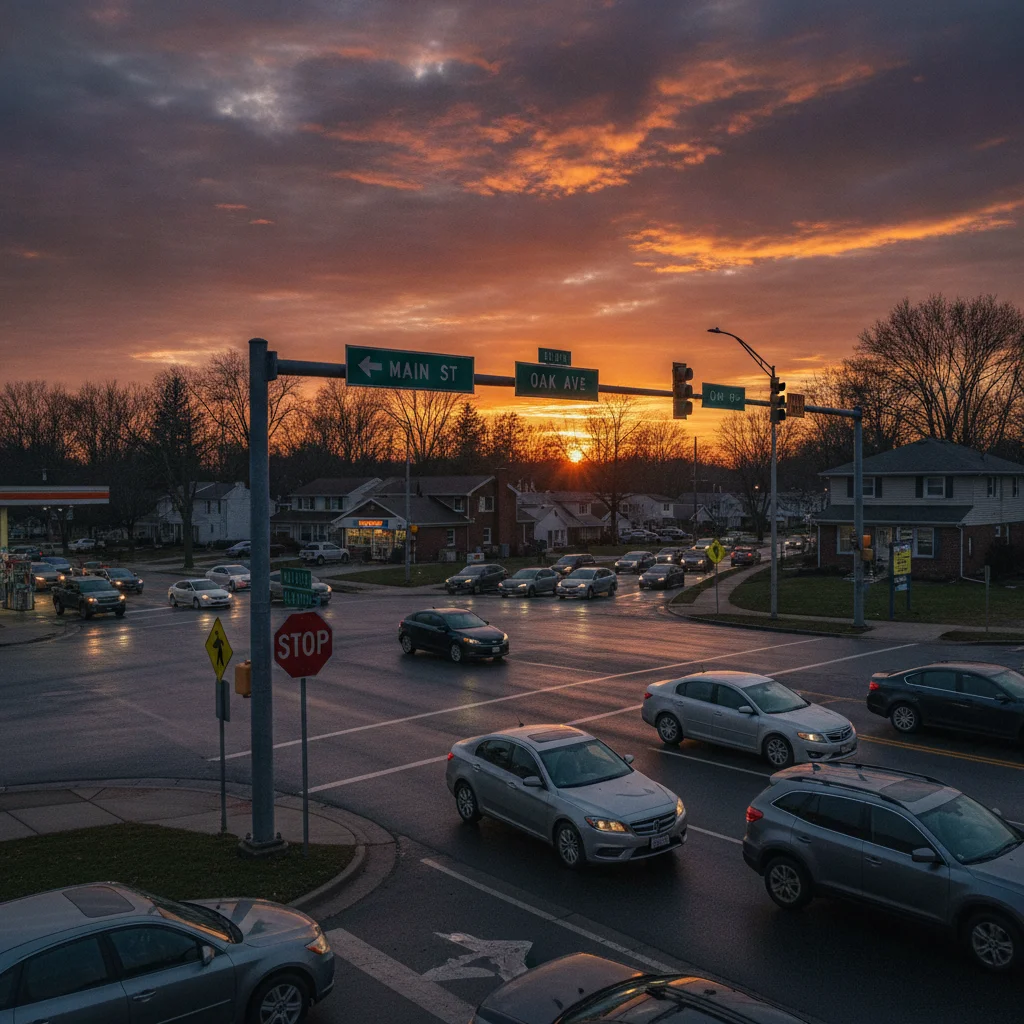
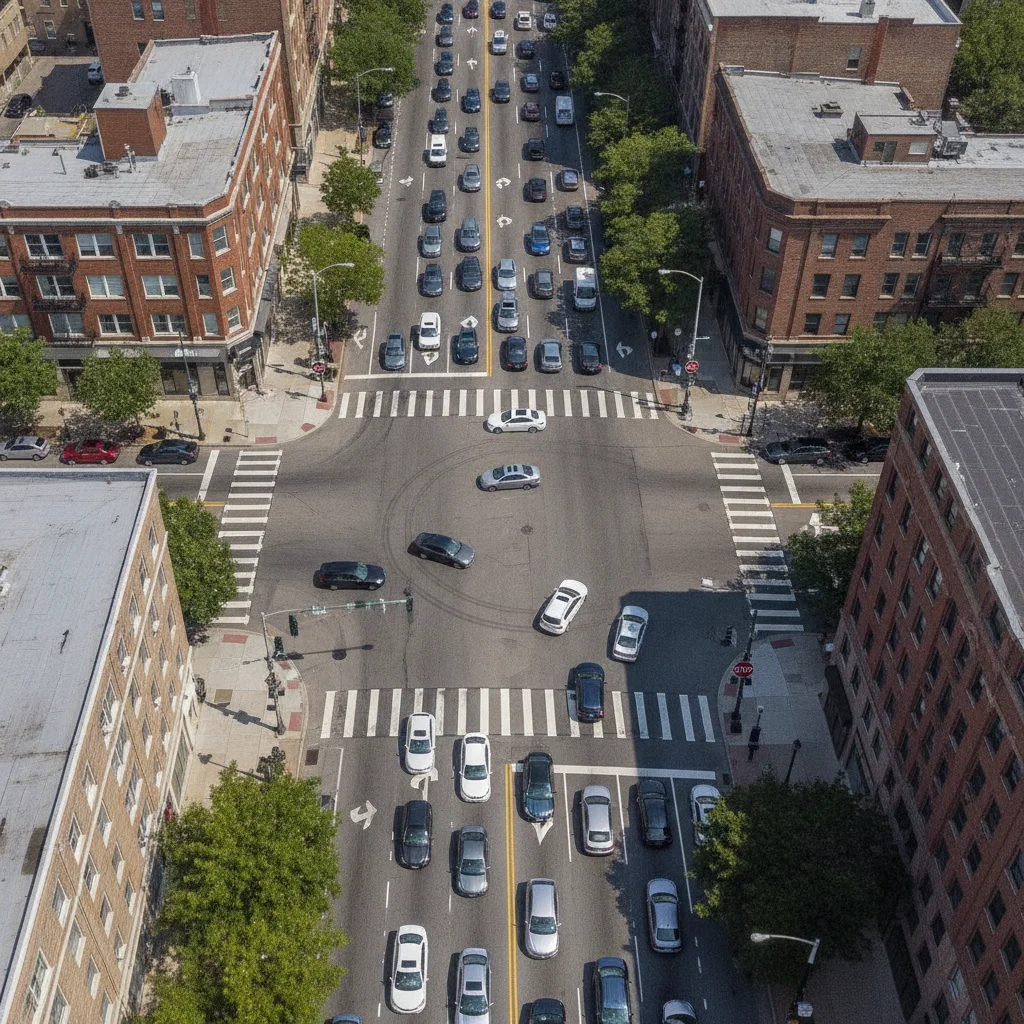
Intersections account for roughly 40% of all traffic crashes in the United States, according to Federal Highway Administration data. A significant chunk of those collisions happen not because someone was distracted or speeding, but because both drivers genuinely believed they had the right of way. That's not a coincidence — it's a symptom of widespread misunderstanding of traffic law.
Right-of-way rules aren't instinctive. They're a codified system of yielding obligations designed to prevent simultaneous movements that would result in a crash. The problem is that most drivers learned these rules once for their license exam, then quietly replaced them with whatever felt logical in the moment. Over time, habits harden into confident misinformation.
The consequences go beyond safety. When a crash happens at an intersection and both parties blame each other, insurers and traffic courts look directly at who had the legal right of way and who failed to yield. Getting this wrong doesn't just risk your life — it risks your claim, your premium, and your license. For a broader foundation on how yielding obligations work, see what right-of-way actually means.
Below, I'll walk through the most commonly misread intersection scenarios — what drivers believe, what the law actually says, and why the distinction matters.
The Myths Drivers Carry Into Every Intersection
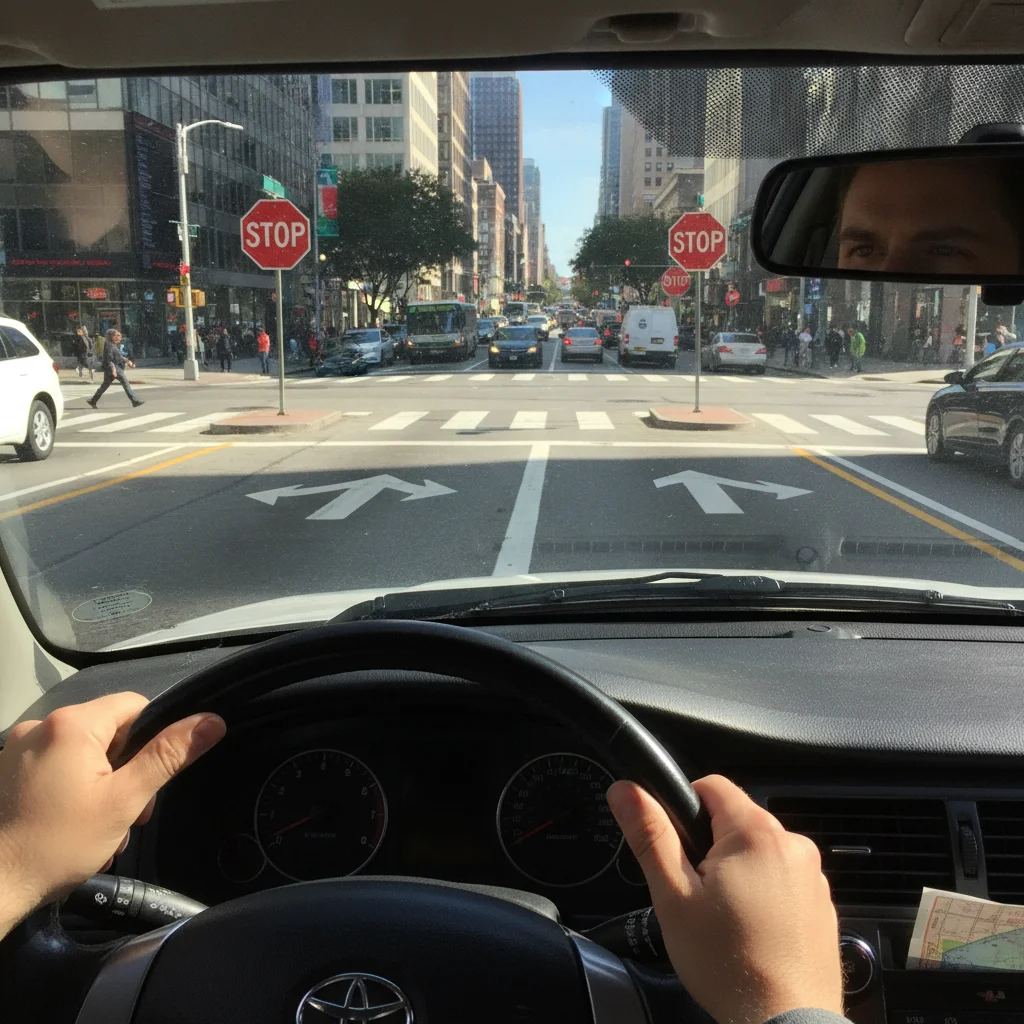
Most right-of-way myths aren't random — they're distortions of real rules. A driver who heard half the explanation during driver's ed, or who learned by watching other drivers, ends up with a plausible-sounding but legally incorrect mental model. These are the most consequential ones.
Myth
Whoever arrives at the intersection first always has the right of way, no matter what.
Fact
First arrival grants priority only when timing is clearly staggered. Simultaneous arrivals trigger the right-to-the-right rule, not first-come-first-served.
The first-arrival rule at four-way stops is real but limited. It governs situations where one vehicle clearly stopped before others. When two vehicles arrive at the same time — within about a second of each other — the driver on the left must yield to the driver on the right. Most drivers don't know this because it isn't reinforced in day-to-day driving the way it was on the written test.
The practical consequence: if you arrive simultaneously with a driver to your right and pull forward assuming you got there first, you've just violated their right of way. If a crash results, the fault analysis will likely land on you — regardless of your subjective sense of who arrived first.
Myth
If you're on the bigger, more traveled road, you have right of way at any intersection.
Fact
Road size and traffic volume do not determine right-of-way. Control devices — signs, signals — determine priority. Without them, position relative to other vehicles does.
This is one of the most deeply embedded myths, and it causes real crashes in residential and rural areas where uncontrolled intersections are common. The width or designation of a road has no bearing on right-of-way in the absence of signs or signals. A driver on a two-lane neighborhood street approaching an uncontrolled intersection has the exact same statutory rights as a driver on a four-lane arterial.
If both roads have no control device, the right-to-the-right rule applies. If one road has a stop or yield sign, that driver must yield — not because their road is smaller, but because the sign creates the legal obligation. The road hierarchy myth leads drivers on larger roads to blow through intersections assuming deference, which is both legally wrong and dangerous.
Myth
A yellow light means slow down — it doesn't affect who has the right of way.
Fact
A yellow signal indicates the light is about to turn red. Drivers in the intersection completing a move retain priority, but entering on yellow is legally scrutinized and state-specific.
Yellow light rules vary by state, but the common driver assumption — that yellow is simply a heads-up to slow down with no formal right-of-way implication — is incomplete. In most states, entering an intersection on yellow when you could have stopped safely is treated as a moving violation. More importantly, left-turning drivers who try to 'beat' an oncoming vehicle through a yellow phase don't gain right of way — the oncoming driver proceeding on yellow still has priority over the turning vehicle.
The intersection-entry rule matters here: once a vehicle is legally in an intersection (entered on green or yellow before red), it has the right to complete its movement. A driver who enters after the signal turns red does not. How yellow lights are legally interpreted explains the state-by-state nuance in detail.
Myth
The driver going straight always has priority over a turning vehicle at any intersection.
Fact
Through traffic has priority over turning traffic only at controlled intersections when the signal or sign grants them right of way. The rule doesn't apply universally at uncontrolled crossings.
This myth is a correct rule applied too broadly. At a controlled intersection where you have a green light, yes — you have priority over a vehicle making a left turn across your path. But at an uncontrolled intersection, the direction of your travel is not what determines right of way. Your position relative to the other vehicle — specifically, whether you're on their right or left — is what matters.
Straight-line travel gives you no automatic priority at an uncontrolled crossing. If a vehicle is approaching from your right, they have the right of way regardless of whether you're going straight and they're turning. Many drivers learn this the hard way when a crash is ruled their fault despite the fact that they weren't turning.
Myth
Having the right of way means you can proceed without checking for other vehicles.
Fact
Right-of-way defines who must yield — it does not eliminate your duty to drive defensively or avoid a crash if one is preventable.
This is perhaps the most legally consequential myth on this list. Right-of-way is a yielding obligation assigned to one party — but it is not an exemption from responsibility for the party who holds it. In most states, the legal standard is that every driver must exercise reasonable care to avoid a collision, even when they have the right of way.
Courts and insurers use contributory or comparative negligence frameworks. If you had the right of way but saw the other driver not stopping and accelerated anyway, you may share fault. Entering an intersection without scanning cross-traffic — even when you have a green light — is not legally defensible if you could have prevented the crash. Right of way is a legal priority, not a protective shield. See what right-of-way actually means in practice for the full legal framing.
Myth
A yield sign means you must stop before entering the intersection.
Fact
A yield sign requires you to give way to conflicting traffic — a full stop is only necessary if traffic actually requires it. The obligation is to yield, not to stop unconditionally.
Confusing yield signs with stop signs is a surprisingly common error, and it cuts in both directions. Drivers who stop at every yield sign regardless of traffic conditions create unnecessary congestion and can cause rear-end collisions from following drivers who weren't expecting a stop. Drivers who roll through yield signs at full speed are violating their yielding obligation entirely.
The correct behavior: reduce speed, assess whether any vehicle or pedestrian has the right of way in the path you're entering, and yield to them. If the road is clear, you may enter without a full stop. If traffic requires it, stop and wait for a safe gap. The sign is not about the stop — it's about the yield.
40%
U.S. crashes occurring at intersections
The Federal Highway Administration estimates intersections are the site of approximately 40% of all traffic crashes nationwide.
~96%
Left-turn crashes attributed to turning driver fault
NHTSA crash data consistently shows the left-turning driver bears fault in the vast majority of intersection turn collisions.
2x
Higher injury crash rate at uncontrolled vs. controlled intersections
Research from the Insurance Institute for Highway Safety shows uncontrolled intersections generate disproportionately high injury crash rates relative to traffic volume.
61%
Drivers who misidentify yield sign rules in surveys
Driver knowledge surveys conducted by AAA Foundation for Traffic Safety found a majority of licensed drivers could not correctly describe yield sign obligations.
Uncontrolled Intersections: The Situation With the Most Ambiguity
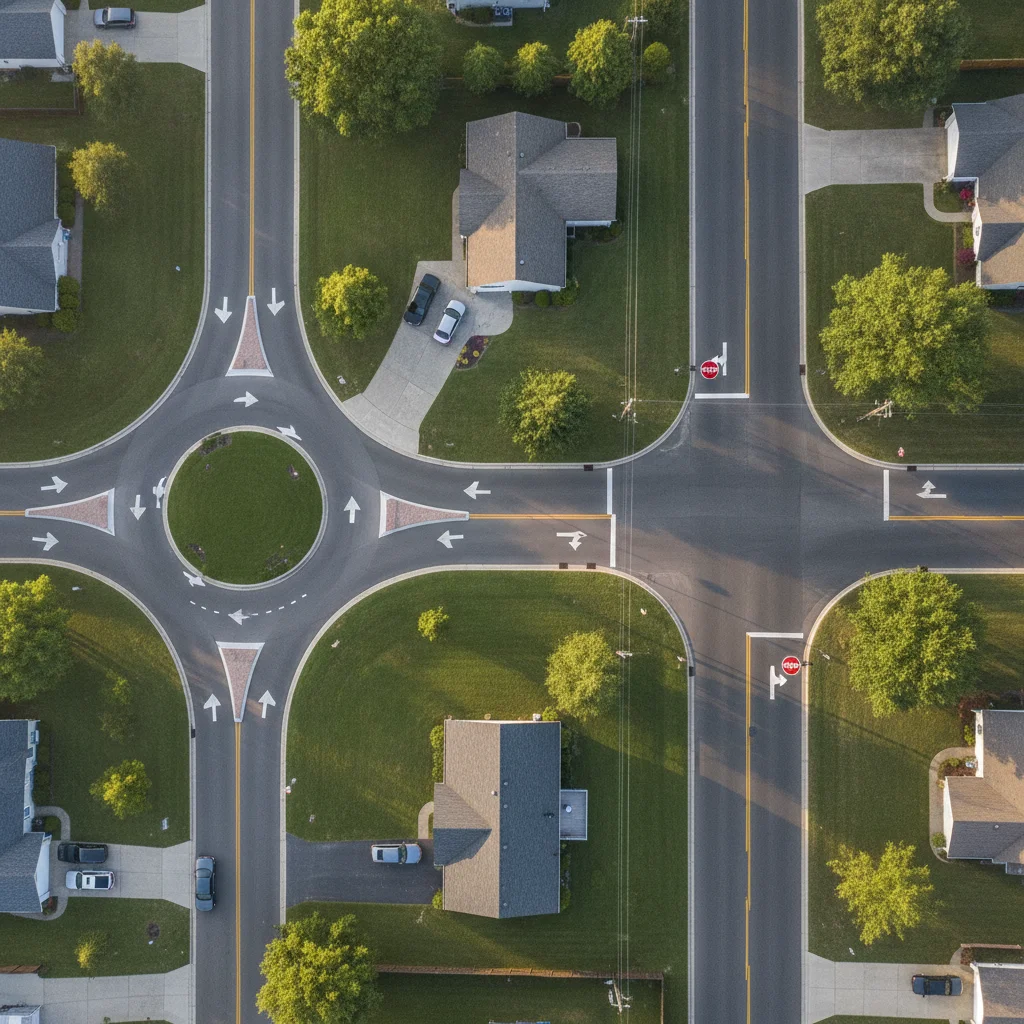
An uncontrolled intersection — no stop sign, no yield sign, no traffic light — is where right-of-way confusion causes the most damage. Many drivers don't even recognize them as formal intersections requiring any particular deference. In residential neighborhoods, rural roads, and older urban grids, these intersections are everywhere.
The governing rule in every U.S. state is the right-of-way-to-the-right principle: when two vehicles approach an uncontrolled intersection at roughly the same time, the driver on the left must yield to the driver on the right. This is not a suggestion — it's a statutory obligation codified in state vehicle codes.
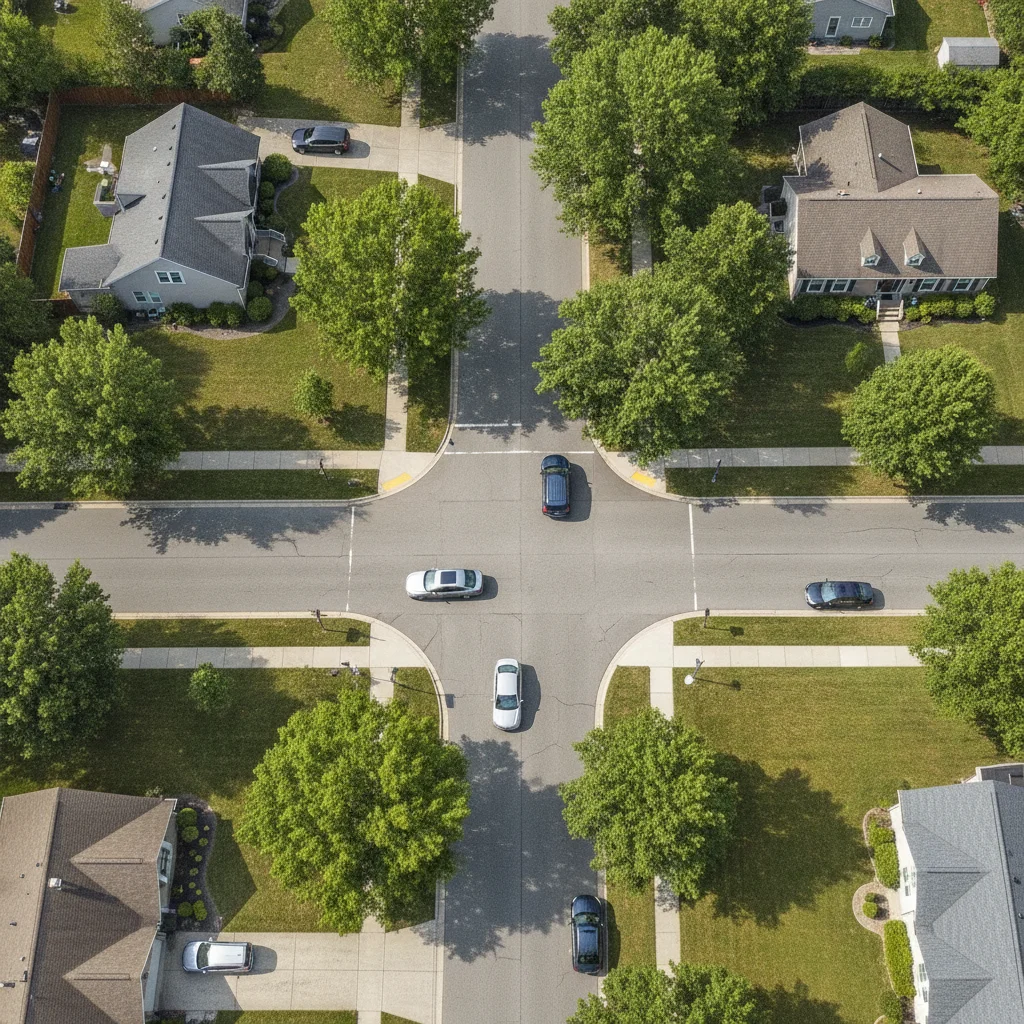
Where drivers go wrong is assuming that whoever is going faster, whoever got there first by a small margin, or whoever is on the wider road has priority. None of those factors override the rule. A driver on a two-lane side street has the same right of way as a driver on a three-lane arterial at an uncontrolled intersection, provided the legal approach conditions are met.
Don't Assume Road Width Grants Priority
At uncontrolled intersections, many drivers on wider or more-traveled roads assume they don't need to slow or check cross-traffic. This assumption is legally wrong and has caused fatal crashes. Always treat an uncontrolled intersection as a yielding situation until you've confirmed no vehicle is approaching from your right.
Simultaneous Arrival Is Easier to Misjudge Than You Think
Human perception of 'who got there first' is unreliable, especially at low speeds. If you're uncertain whether you or another driver arrived first at a four-way stop, apply the right-to-the-right rule rather than guessing. Hesitate, make eye contact, and proceed only when the path is unambiguously clear.
The through-traffic exception is also misapplied. Some drivers believe that if they're going straight, they automatically have priority over a turning vehicle. That's only true at controlled intersections where the signal or sign grants them the green. At an uncontrolled crossing, the direction of travel is irrelevant — the position relative to the other driver's right side is what determines who yields.
Four-Way Stops: Order of Arrival and the Tie-Breaking Rules
Four-way stops are where the myth of universal first-come-first-served breaks down most visibly. The rule that the first vehicle to stop goes first is correct — but only when the timing of arrivals is clearly staggered. When two or more vehicles arrive simultaneously, a second set of rules kicks in, and most drivers don't know them.
At a four-way stop, simultaneous arrival triggers the right-of-way-to-the-right rule again: the driver to the left yields to the driver on the right. If three vehicles arrive at once, each yields to the one on its right, which typically resolves in a predictable sequence. If all four arrive simultaneously — a comparatively rare scenario — convention and eye contact usually break the deadlock, but any movement requires caution because no one has a statutory priority claim in that exact scenario.
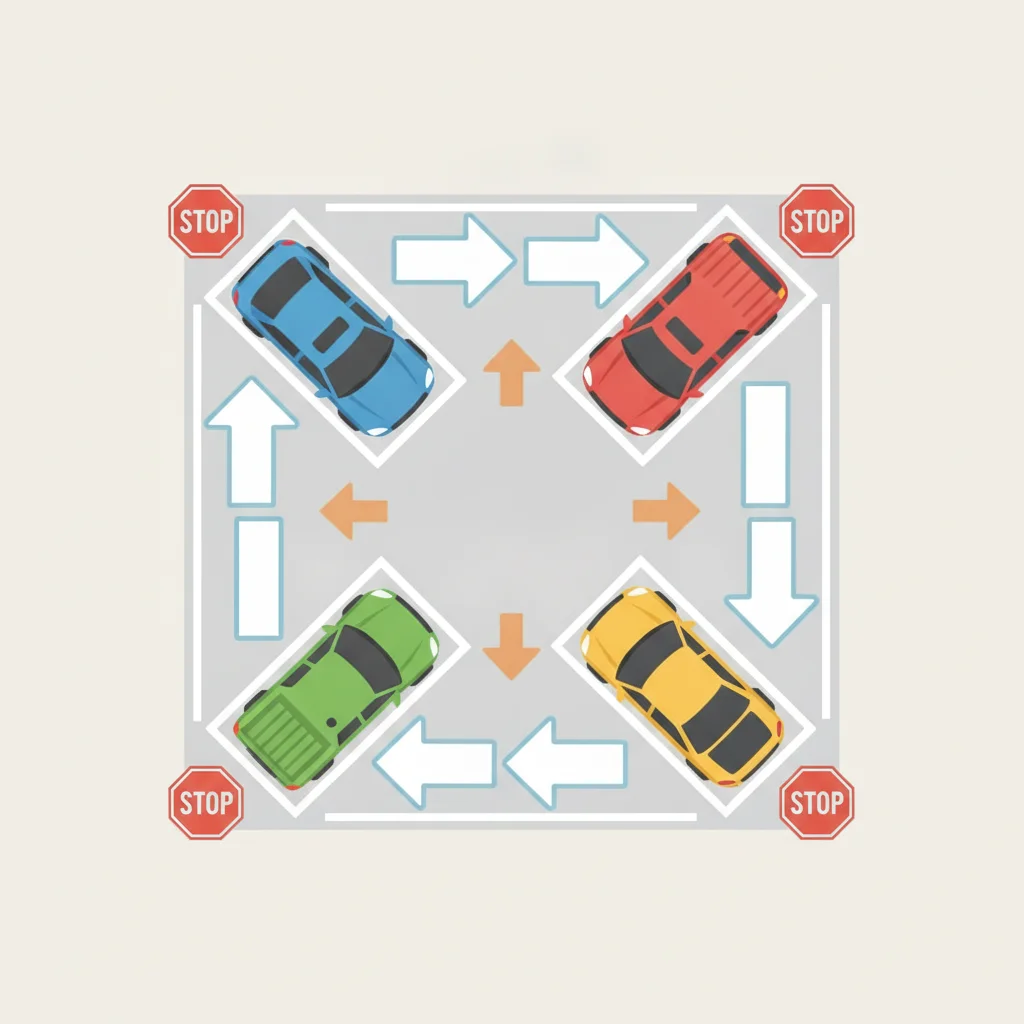
The other common confusion at four-way stops involves turning versus going straight. When two vehicles arrive simultaneously from opposite directions, the one going straight has priority over the one turning left. This applies regardless of which side of the intersection each driver is on — the turning driver must yield. This mirrors the general rule about left turns covered in the myth section below.
For a broader comparison of how intersection control systems differ in practice, roundabouts vs. four-way stops breaks down the safety data and navigation logic behind each.
Right of Way Doesn't Shield You From Fault
In a crash, holding the legal right of way does not automatically make the other driver 100% liable. If investigators or insurers determine you saw the conflict developing and failed to take evasive action, comparative negligence rules in most states can assign partial fault to you. Driving defensively is not optional — it's a legal standard that runs parallel to right-of-way rules.
Left Turns Are Presumed Faulty by Default
Insurance adjusters and traffic courts begin left-turn crash evaluations with a presumption that the turning driver violated the yielding obligation. Overturning that presumption requires concrete evidence — dashcam footage showing the oncoming driver ran a red light or was traveling at an unlawful speed. Without that evidence, the turning driver almost always bears fault. Know this before you enter the intersection, not after.
Yield Signs, Left Turns, and the Insurance Dimension
Yield signs are misread in two opposite directions. Some drivers treat them like stop signs — coming to a full stop even when the road is clear, disrupting traffic flow unnecessarily. Others treat them as suggestions, rolling through at speed and expecting gap-reading to substitute for proper yielding. Neither approach is correct.
A yield sign means: reduce your speed, evaluate whether traffic or pedestrians are present, and give way if they are. You're only required to stop if stopping is necessary to safely yield. If you can merge or enter without conflict at a reduced speed, a full stop isn't legally required. The obligation is to yield, not necessarily to stop.
Left turns at intersections with no dedicated signal are a perpetual source of confusion and crashes. The rule is unambiguous: a vehicle making a left turn must yield to all oncoming traffic proceeding straight or turning right. This applies even when you've been waiting in the intersection through an entire green cycle. If the light turns yellow and you still haven't cleared, your obligation to yield oncoming traffic doesn't disappear — you complete the turn only when it can be done safely.
This connects directly to the insurance dimension. When a crash occurs during a left turn, the turning driver is presumed at fault in the vast majority of cases, because the yielding obligation was theirs. Challenging that presumption requires evidence that the oncoming driver was speeding excessively or ran a red light — circumstances that are genuinely difficult to prove after the fact. Understanding these obligations before you're in the intersection is far more useful than arguing about them afterward.
For a closer look at how signal-phase rules interact with right-of-way at controlled intersections, what the law actually says about yellow lights is worth reading alongside this.
Pedestrians add another layer. At both marked and unmarked crosswalks, pedestrians typically have the right of way over turning vehicles. A driver completing a right turn on red or a left turn on green must yield to pedestrians crossing in the direction of travel — even when the signal technically allows the turn. For full detail on that obligation, see pedestrian and crosswalk laws.
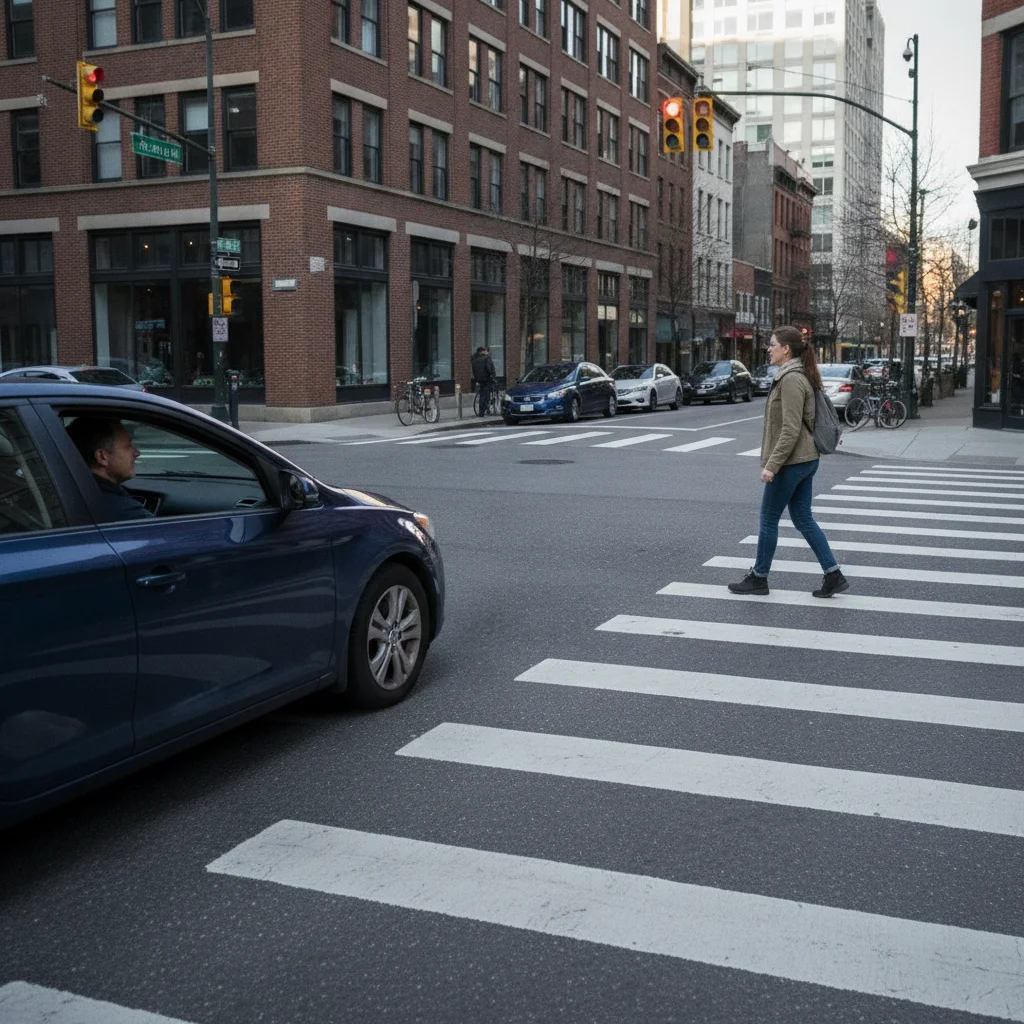
The practical takeaway: right-of-way rules aren't bureaucratic formalities. They're the framework that determines fault when something goes wrong. Getting them right keeps you safer — and keeps your insurance record clean. For a broader look at the traffic laws officers most consistently enforce, commonly misunderstood and enforced traffic laws covers the territory well beyond intersections.

All claims are backed by peer-reviewed research. Sources on request.