Key Takeaways
Summary
22 items · 20–45 minutes
Why Your Point Balance Matters More Than the Ticket Fine
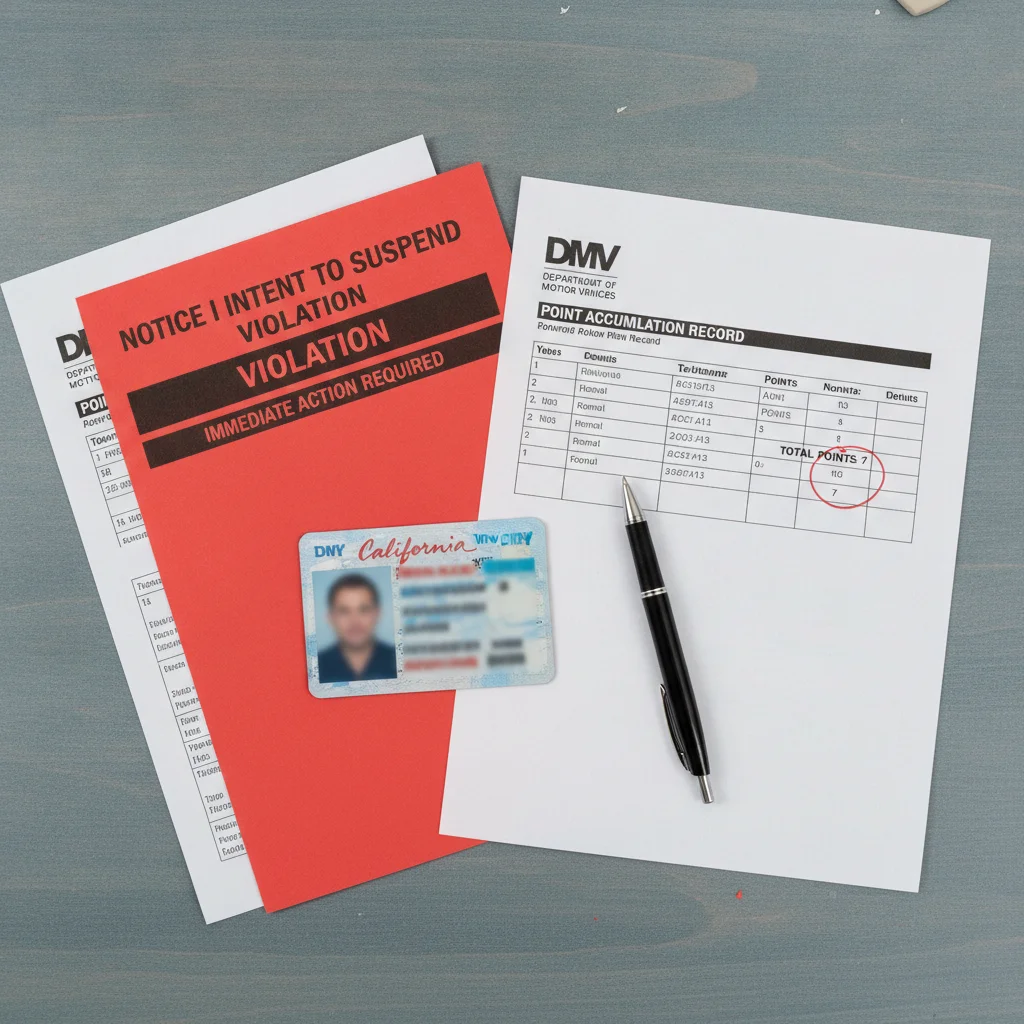
Most drivers pay a traffic fine and move on without a second thought. The fine is the visible cost. What's less visible — and far more consequential — is the point entry that quietly lands on your driving record and starts a countdown toward potential license suspension.
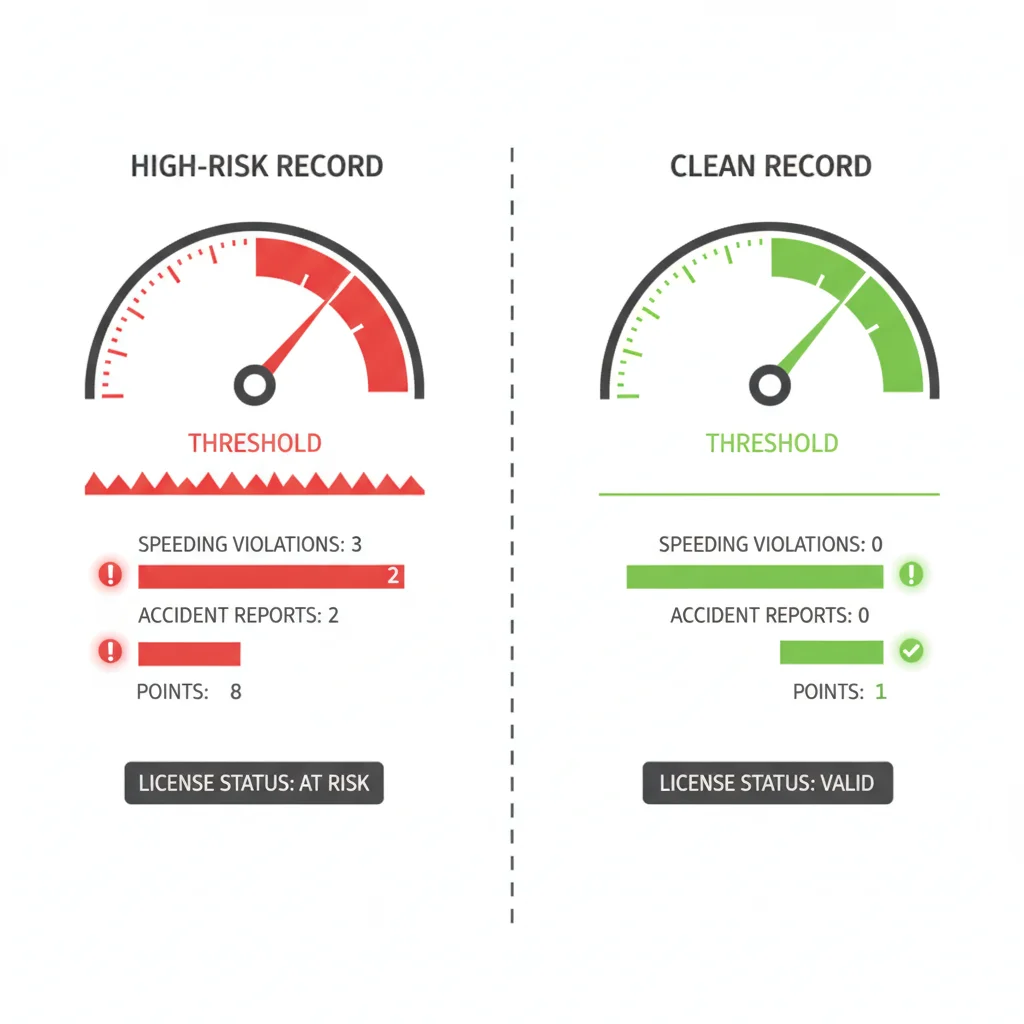
Understanding how the points system works is the foundation of this whole conversation. Nearly every U.S. state uses a point-based system to track driving behavior over time. Each moving violation carries a point value — minor infractions like rolling stops might add 1–2 points, while reckless driving or DUI offenses can add 6 or more in a single incident. Once your total crosses the state's suspension threshold, action is automatic. The DMV doesn't always send a warning letter first.
The problem is that most drivers have no clear picture of where their record stands. They remember the big stuff — a speeding ticket from last spring — but forget the lane-change violation from two winters ago or the failure-to-yield that appeared on their record after a minor collision. Those points add up, and they don't fall off immediately.
This checklist exists to change that. Work through it systematically and you'll know exactly where you stand, which violations are still active, and what your realistic options are before anything gets critical.
Tools You'll Need to Run This Audit
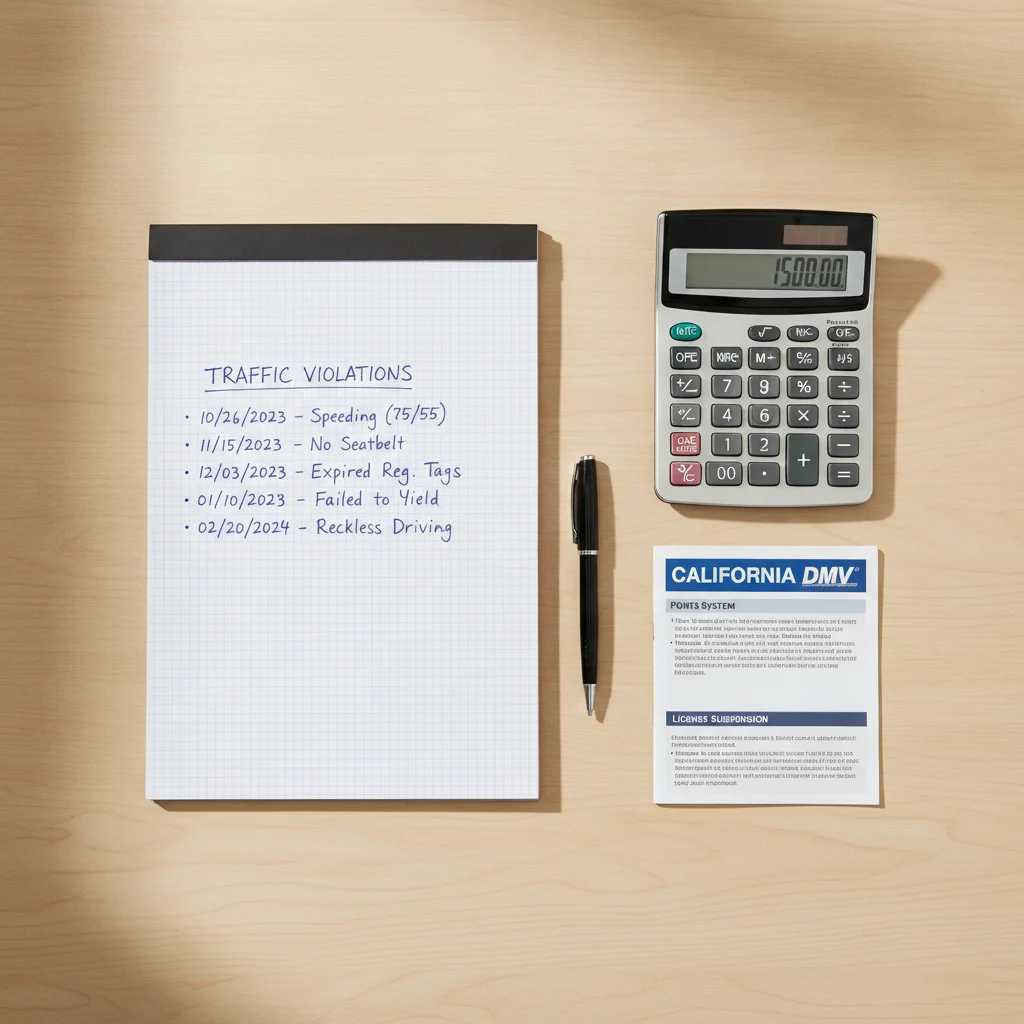
Before you start checking boxes, gather the resources below. This isn't a complicated process, but having the right access upfront means you won't stall halfway through.
State DMV Online Portal
The primary source for requesting your official Motor Vehicle Record — most states offer instant access for a small fee.
Driver License Compact Cross-Reference
Helps you identify which states share violation data with your home state and confirm out-of-state violations appear correctly.
State-Specific Point Schedule (DMV Website)
Lists the exact point value assigned to each violation code in your state — essential for calculating your active total accurately.
Court Disposition Records
Official documentation of ticket outcomes (dismissed, convicted, deferred) needed to verify or dispute what appears on your DMV record.
Insurer Driver Monitoring Portal
Provides a secondary view of violations your insurer is using to price your policy — useful for spotting discrepancies vs. the official MVR.
Traffic Attorney (Consultation)
Provides legal guidance on disputes, pending violations, or near-threshold situations where professional representation may reduce consequences.
Most states charge between $5 and $25 for an official driving record. If your insurer provides free record access through a driver monitoring portal, that's a useful secondary source — but always verify against the official DMV version, since insurer records can lag or contain interpretation differences.
The Points Audit Checklist
Work through these groups in order. The first two sections are about gathering facts; the latter sections shift to action. Don't skip ahead — decisions made without accurate data tend to create new problems.
Obtain Your Official Driving Record
Inventory Every Active Violation
Calculate Your Current Point Total
Check for Errors and Disputes
Evaluate Reduction Options
Set Up Ongoing Monitoring
Don't Rely Solely on Your Insurer's Record
Your insurance company's version of your driving record is derived from MVR pulls they conduct at specific intervals — often only at policy inception and renewal. It may be 6–12 months out of date and may interpret violation codes differently than the DMV. Always treat the official DMV record as the authoritative source for point calculations.
Course Eligibility Has Strict Timing Rules
In many states, you must complete a point-reduction course within a specific window after a conviction — sometimes as short as 60 days. And if you've used a course for reduction within the past 12–36 months, you may be ineligible to use it again. Check your state's rules before counting on this option as a safety valve.
Out-of-State Violations Aren't Invisible
The Driver License Compact means that violations issued in another state are reported to your home state and typically added to your record using your home state's point values — which may be higher than the issuing state's. Assuming an out-of-state ticket 'doesn't count' is a common and costly mistake.
Red Flags That Demand Immediate Action
Most of the checklist above is routine maintenance. But certain combinations of violations or record conditions signal that you're closer to the edge than you realize. These are the patterns that warrant immediate follow-up — not next month, this week.
Automatic Suspension Has No Grace Period
In most states, license suspension triggered by point thresholds is automatic — it doesn't require a hearing or advance notice. You may receive a letter after the suspension has already taken effect. Driving on a suspended license is a separate criminal offense that compounds your record problems significantly. If you're within 2–3 points of your state's suspension limit, treat that as a present emergency, not a future concern.
Dismissed Tickets Can Still Appear on Your Record
A ticket dismissed in court is not automatically removed from your DMV record. The court and the DMV are separate systems, and disposition updates can take weeks or never arrive if the court fails to transmit the data. Always verify that a dismissed charge shows the correct status on your official MVR — if it still shows as a conviction, file a dispute with your DMV backed by your court paperwork. This matters both for your point total and your insurance rate.
One scenario that surprises a lot of drivers: out-of-state violations. If you received a ticket in another state, that state reported it to your home state under the Driver License Compact (which covers 45 states plus D.C.). That violation almost certainly appears on your home record and carries points under your home state's system, not the issuing state's system. Many drivers assume out-of-state tickets are invisible. They aren't.
Another underappreciated red flag: violations from civil judgments or at-fault accidents that didn't involve a citation. In some states, insurers report at-fault accident information to the DMV, which can trigger a point assessment even without a police citation. Check your full record — not just court conviction history — for any DMV-assessed points.
A moving violation does more than generate a fine — it initiates a chain of record, point, and insurance consequences that can compound over time. The faster you identify active violations, the more options you have.
Your Options Once You Know Where You Stand
Once you've completed the audit, you'll fall into one of three situations. Here's how to think about each one.
Situation 1: You're well under the threshold with no recent major violations
Good position to be in. Your job now is preventive: set a reminder to pull your record annually, and pay attention to how older violations are aging off. Violations aging off your record work in your favor automatically — the three-year and five-year marks are typically when insurers and DMVs stop counting older tickets. Keep your nose clean through those milestones and your rates and record both benefit.
Situation 2: You're within 3–4 points of your state's suspension threshold
This is the zone where most drivers are caught off guard. You're not in crisis, but you have almost no margin for another violation. Priority actions: investigate whether a defensive driving course can reduce active points, check your record for any disputable errors, and drive with heightened awareness for the next 12–24 months while older violations work toward expiration.
Defensive driving courses can reduce points in most states, but eligibility depends on your violation history, how recently you completed a course, and whether your state allows the reduction for your specific violation types. Look into it before assuming it's available to you.
Situation 3: You've found record errors or dispute-worthy entries
This happens more than people expect. Clerical errors, mismatched license numbers, and out-of-state violations attributed to wrong drivers are real issues. If you identify something that looks incorrect, knowing how to dispute a rating factor on your policy starts with getting the underlying DMV record corrected first — your insurer works from that source. Document everything in writing and request confirmation of any corrections.
For all three situations, maintaining safe habits going forward is the most reliable long-term strategy. Visit evidence-based road safety habits for practical techniques that reduce both accident risk and the likelihood of citations.

How This Affects Your Insurance — and What to Do About It
Your driving record is one of the primary inputs insurers use when pricing your policy at renewal. High point totals don't just threaten your license — they directly raise what you pay for coverage. Insurers typically run your Motor Vehicle Report (MVR) at renewal, and a record that's gotten worse since your last policy period can trigger a significant rate increase, even if you haven't filed any claims.
The flip side is also true: as violations age off your record, your rate should respond accordingly. If it doesn't, that may indicate an insurer lag or an error worth investigating. Keep your own dated record of when each violation is scheduled to drop, and if renewal rates don't improve accordingly, ask your insurer directly why the rate hasn't changed — or get competitive quotes to see what your cleaned-up record is actually worth in the market.
The bottom line: treating your driving record as a living document — something you check, maintain, and actively manage — puts you in a fundamentally better position than most drivers, who only look at it when something has already gone wrong.

All claims are backed by peer-reviewed research. Sources on request.