
Key Takeaways
Why Rating Factors Matter More Than Most Drivers Realize
Auto insurance premiums are not guesswork. Every insurer uses a structured set of rating factors — variables that statistically predict risk — to arrive at your specific quote. These include your driving history, the vehicle's make and model, your ZIP code, your annual mileage, and in most states, your credit-based insurance score. To understand how these variables interact, see our guide to how insurers calculate your liability premium.
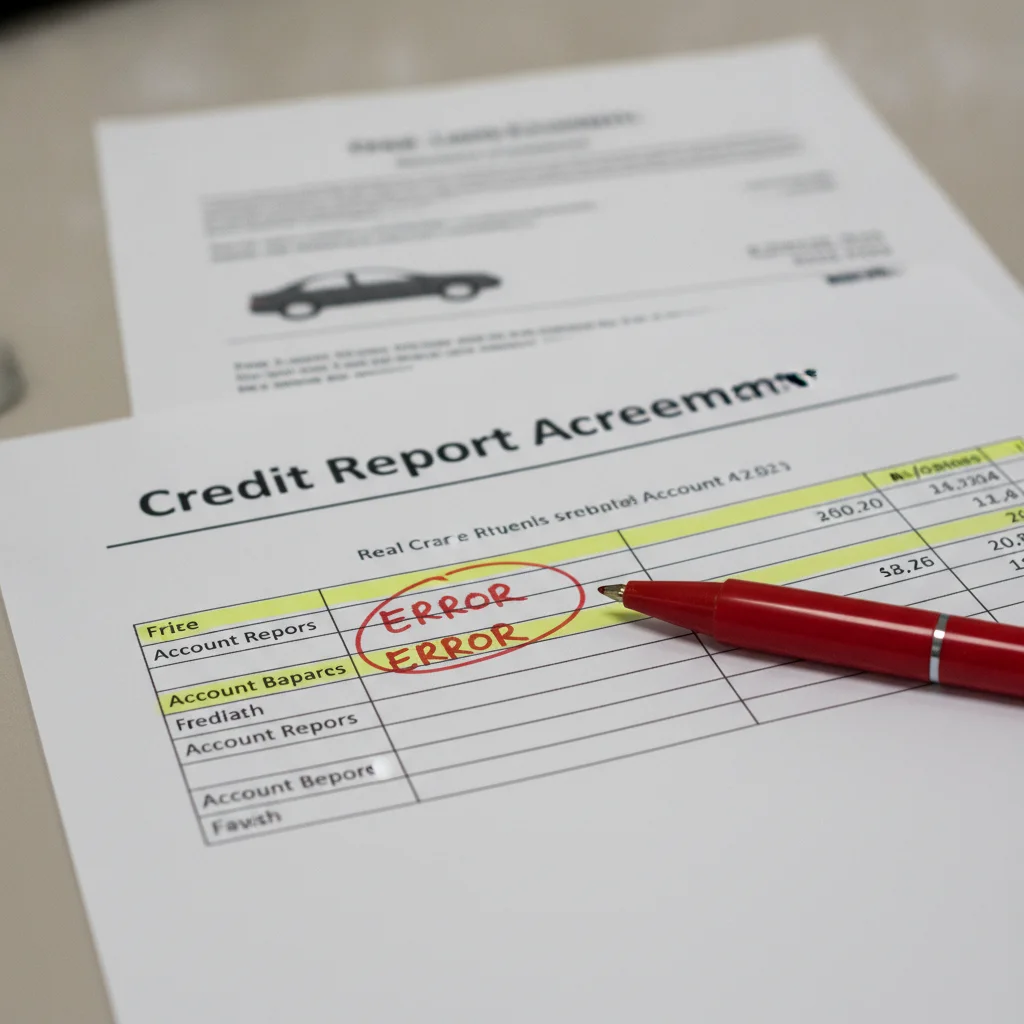
The problem is that the underlying data powering these calculations is imperfect. Motor vehicle records contain transcription errors. Vehicles get misclassified. Accidents show up on the wrong person's history. Credit bureau files contain stale or inaccurate information that feeds into your insurance score. According to the FTC, roughly one in five consumers has a material error on at least one of their three credit files — and similar data-quality issues affect driving records.
When those errors favor the insurer, you pay more than your actual risk profile warrants. Most drivers never notice because they don't know what data their insurer is looking at, let alone how to challenge it.
This guide walks you through the full process: identifying which factors are driving your rate, sourcing the underlying data, verifying its accuracy, and filing a formal dispute — with your insurer first, and with your state insurance department if necessary.
What You're Dealing With: Common Rating Factors and Where They Come From
Before you can dispute anything, you need to know which variables are in play and where each one originates. Insurers don't generate this data themselves — they pull it from third-party sources, and those sources are where errors tend to enter the picture.
Driving Record
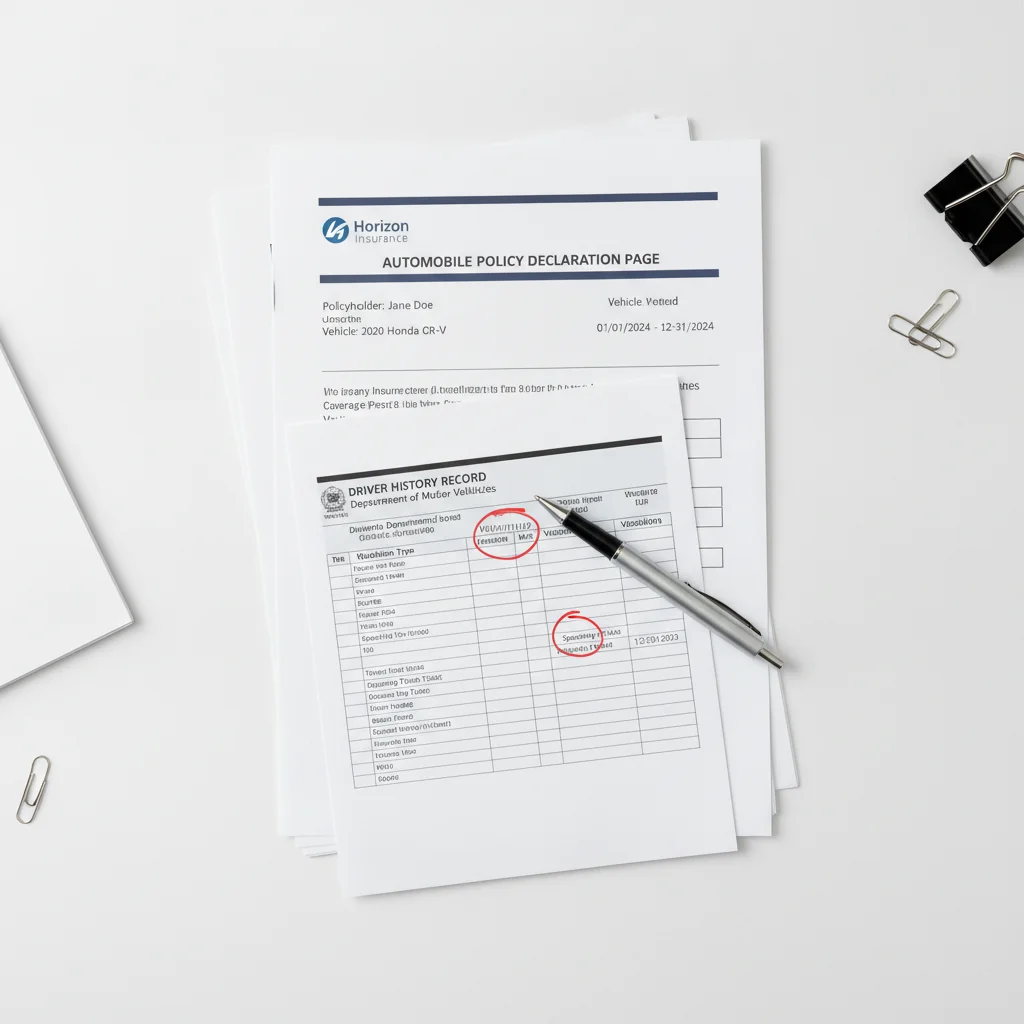
Your insurer orders a Motor Vehicle Report (MVR) from your state's DMV. This report lists violations, accidents, DUIs, and license suspensions on record. Errors are more common than many assume: violations can be attributed to the wrong driver (especially with similar names or shared addresses), expunged records can still appear, and disposition dates — which determine when a violation ages off — are sometimes entered incorrectly. See the points accumulation checklist for a breakdown of how violations stay active and when they should drop off your record.
Claims History
The CLUE report (Comprehensive Loss Underwriting Exchange), maintained by LexisNexis, records auto insurance claims for the past seven years. A claim filed by a previous owner of your vehicle, a claim that was opened in error and later withdrawn, or a loss that was misclassified by severity can all attach to your profile and raise your rate.
Vehicle Data
Insurers rate vehicles by their safety record, theft rates, repair costs, and performance characteristics. This data is typically sourced from industry databases like ISO (Insurance Services Office). If your vehicle is misclassified — wrong trim level, incorrect body style, or an erroneous safety rating — your base rate may be inflated before any personal factors are applied.
Credit-Based Insurance Score
Permitted in most states, this score is derived from your credit report (Equifax, Experian, or TransUnion) but is not identical to your FICO score. Errors on your credit report — outdated balances, incorrectly reported late payments, accounts that don't belong to you — feed directly into this score. The same discipline that applies to correcting credit errors before applying for a loan applies here. Our companion piece on how credit report errors inflate your auto loan rate covers the correction process in detail.
Garaging Address and Mileage
If your policy lists an incorrect primary garaging address — perhaps a previous residence was never updated — your ZIP-code rating tier may be wrong. Similarly, if estimated annual mileage was entered in error at application, you may be priced in a higher usage band than your actual driving pattern warrants.
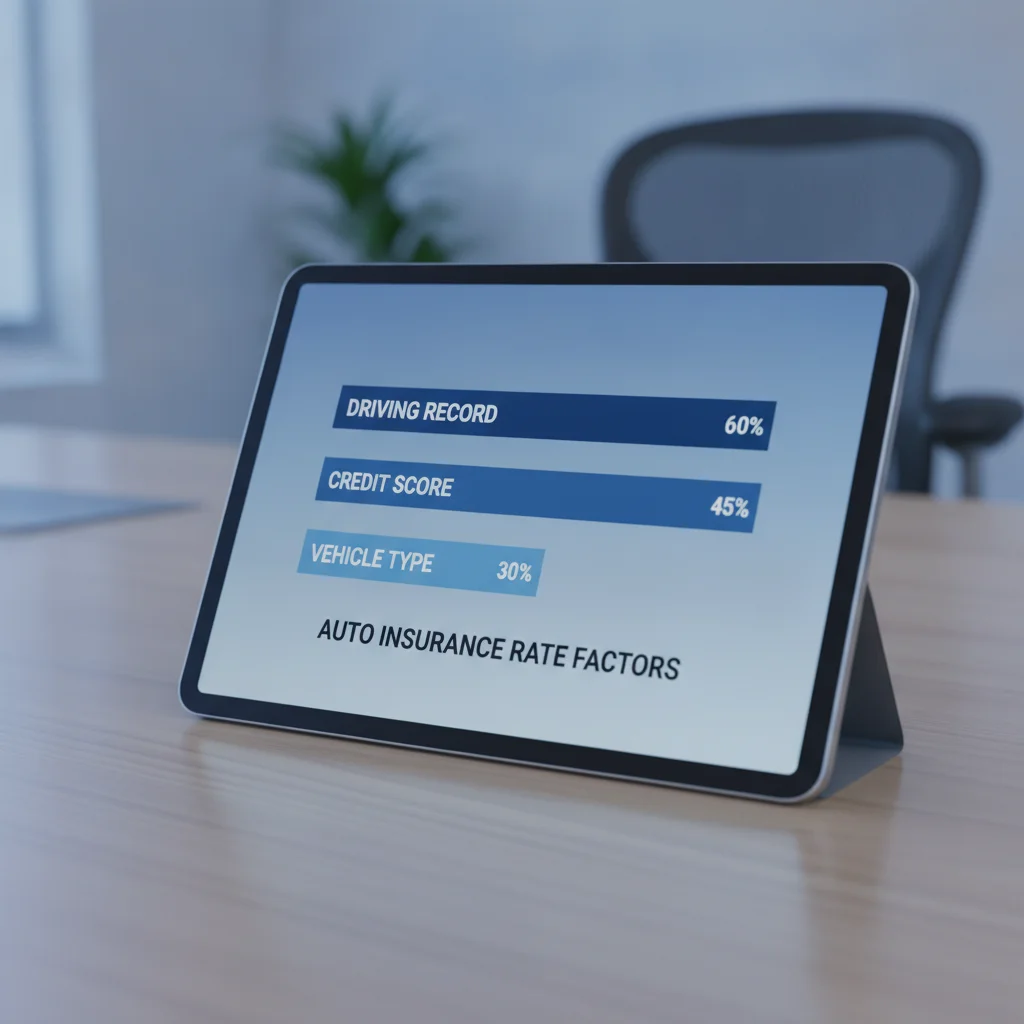
Understanding which factor is inflating your rate determines which source you need to correct. Targeting the wrong data source wastes time and doesn't move your premium.
What you will need
Motor Vehicle Report (MVR)
Official record from your state DMV showing all violations, accidents, and license actions used by your insurer to rate your driving history.
CLUE Report from LexisNexis
Lists auto insurance claims associated with you and your vehicles for the past seven years — a key input to your insurer's risk assessment.
Credit Reports (Equifax, Experian, TransUnion)
Used to identify errors feeding into your credit-based insurance score, which affects premiums in most states.
Insurance Declarations Page
The summary page of your policy that lists all rating factors as applied — your reference document for identifying discrepancies.
State Insurance Department Complaint Portal
Online tool for filing a formal complaint if your insurer refuses to correct a verified error in your rating data.
Certified Mail or Email with Read Receipt
Creates a documented paper trail for all communications with your insurer and data sources during the dispute process.
Step-by-Step: How to Identify, Document, and Dispute a Rating Factor Error
The dispute process has a clear sequence. Skipping steps — particularly the documentation phase — is the most common reason disputes stall or fail. Follow this process in order.
Pull Your Declarations Page and Identify the Factor in Question
Start with your current declarations page — the summary document your insurer provides at the start of each policy term. This page shows your premium broken down by coverage type, your listed vehicle, your garaging address, the drivers on your policy, and in many cases a rating tier or surcharge notation.
Look specifically for any surcharges, elevated tier placements, or notes referencing accidents, violations, or claims. If your premium increased significantly at renewal, there will usually be an endorsement or renewal notice explaining what changed. Identify the specific factor you want to investigate before you pull any data — this keeps the process targeted.
Request the Underlying Data Your Insurer Used
Under the Fair Credit Reporting Act (FCRA), you have the right to know which consumer reporting agencies provided data used in an adverse pricing decision. If your premium increased or you were declined a discount, your insurer is required to provide an adverse action notice identifying the data source.
Even without an adverse action event, you can proactively request the specific reports your insurer ordered. Ask in writing for copies of your MVR, CLUE report, and any other third-party data used in your rating. Simultaneously, order your own copies directly from the source: your state DMV (MVR) and LexisNexis (CLUE) so you can compare them side by side.
Compare the Data Against Official Records
With your insurer's data and your independent copies in hand, compare them systematically:
- Driving record: Check every violation and accident listing for accuracy — date, violation code, and whether the disposition (conviction vs. dismissal) is recorded correctly. Dismissed charges should not appear as convictions.
- CLUE report: Verify that every claim listed is actually yours, that the incident dates are accurate, and that claims marked as open are not claims that were closed or withdrawn.
- Vehicle data: Confirm your VIN, trim level, body style, and model year are correctly listed. Even a one-digit VIN error can result in a different vehicle being rated.
- Credit-based score: Pull all three credit reports and look for inaccurate late payments, accounts you don't recognize, or balances that don't reflect current status.
- Garaging address and mileage: Confirm the ZIP code on your policy matches your actual primary parking location, and that the annual mileage estimate reflects your real usage.
Document every discrepancy you find with specific detail: what the insurer's data says, what the official record says, and what documentation proves the correct version.
Correct the Error at Its Source
For most errors, correcting the underlying data source is more effective — and more permanent — than asking your insurer to override it. If the error is on your MVR, file a correction request with your state DMV and obtain a court-certified copy of the correct disposition if a violation was dismissed or reduced. If the error is in your CLUE report, file a dispute directly with LexisNexis through their consumer dispute portal — they are required to investigate and respond within 30 days under the FCRA.
For credit report errors affecting your insurance score, file disputes with the relevant bureau (Equifax, Experian, or TransUnion) and request that corrected reports be sent to any parties that pulled your file in the past two years. This process is the same whether the downstream effect is a loan rate or an insurance premium — the same errors cause both problems.
Once the source record is corrected, obtain official written confirmation: a letter from the DMV, a corrected CLUE report, or a credit bureau's dispute resolution notice. This is your primary evidence for the next step.
Submit a Formal Written Dispute to Your Insurer
Send a written dispute to your insurer's underwriting or customer service department — not just to your agent. The letter should include:
- Your policy number and the specific rating factor you are disputing
- A clear description of the error as it appears in your insurer's data
- The correct information, supported by your documentation
- A request for a policy re-rating based on the corrected data and a revised declarations page
- Copies (not originals) of all supporting documents
Send via certified mail or email with read receipt so you have proof of delivery and the date the insurer received your dispute. Keep copies of everything. Request a written response and a specific timeline for resolution — most states require insurers to acknowledge disputes within 15 business days.
Follow Up and Request a Revised Premium
If the insurer acknowledges the error, request a flat endorsement or mid-term re-rating — a correction applied to your current policy term, not just your next renewal. Depending on the size of the error and how long it persisted, you may also be entitled to a premium refund for prior terms. Ask specifically about this possibility; insurers won't always volunteer it.
Get the revised declarations page in writing and verify that every corrected factor is accurately reflected. Compare your new premium to the original and confirm the adjustment is proportional to the factor that was corrected. If the correction was applied but the premium didn't change meaningfully, ask the underwriter to walk through the rating calculation with you.
Verbal Corrections Are Not Binding
If a customer service representative tells you verbally that an error will be corrected, that commitment is not enforceable unless it's confirmed in writing. Always follow up any phone conversation with a written summary sent to your insurer and request written confirmation of any correction before assuming your premium will change.
Don't Confuse Accurate Data with Unfair Ratings
If the data your insurer is using is factually correct — you did receive that ticket, that accident did occur — you cannot dispute it on accuracy grounds. You may be able to pursue other avenues such as completing a defensive driving course or shopping competing carriers, but a legitimate rating factor is not a billing error. Attempting to dispute accurate data in bad faith can complicate your relationship with your insurer.
Check Your MVR Before Every Renewal
Ordering your own Motor Vehicle Report annually — before your insurer does — gives you the opportunity to spot and correct errors before they affect your rate. Most states charge less than $15 for an official MVR copy, and some provide it free online. Think of it as a one-page audit of the data that has the single largest influence on your premium.
Small Errors Can Have Outsized Rate Impact
A single at-fault accident surcharge can increase your premium by 30–50% for three years. If that accident was recorded in error — attributed to the wrong driver, or marked at-fault when it was actually not-at-fault — the cumulative overpayment over three policy terms can exceed $1,000. The documentation effort to correct it is almost always worth it.
When Your Insurer Won't Budge: Escalation Options
If you've submitted your documentation and the insurer declines to correct the factor or adjust your premium, you have formal recourse available at the state level.
File a Complaint with Your State Insurance Department
Every state has an insurance regulatory agency — the Department of Insurance (or its equivalent) — that accepts consumer complaints. When you file, include your insurer's written denial, the corrected documentation you submitted, and a clear description of the discrepancy. Regulators take data accuracy complaints seriously because inaccurate rating violates state insurance rating laws in most jurisdictions.
Request an Actuarial Explanation
In some states, you have the right to request a written explanation of exactly how your premium was calculated — factor by factor. This can reveal which specific data point is driving the discrepancy and give you more precise grounds for a complaint.
Contact the Data Source Directly
If the error originated at LexisNexis (for your CLUE report) or your state DMV (for your MVR), file a dispute with that organization directly — not just with your insurer. Once the source record is corrected, send the updated report to your insurer and request a re-rating. This is often more effective than fighting the insurer over data they didn't create.
Consider Legitimate Controllable Factors
If a rating factor turns out to be accurate but you believe it's being weighted unfairly, pivot to factors you can actually influence. Completing a defensive driving course, increasing your deductible, or improving your credit-based insurance score are all levers within your control. Our guide on rate factors you can actually control breaks down what each adjustment realistically saves.

Disputing a Factor Does Not Cancel Your Policy
Many drivers hesitate to challenge their insurer for fear of losing coverage or triggering a rate increase. Initiating a data accuracy dispute is not an adverse action and cannot legally be used as grounds for non-renewal or cancellation in any state. Your coverage remains in force while the dispute is investigated. You are exercising a consumer right, not creating a confrontation.
Throughout this process, keep records of every communication: dates, names of representatives, confirmation numbers, and copies of everything submitted. This paper trail is your leverage if the dispute escalates.
After the Dispute: What to Expect and How to Protect Yourself Going Forward
If your dispute is successful, your insurer should issue a revised declarations page reflecting the corrected rating and adjust your premium accordingly. In many cases, if the error persisted through a recently completed policy term, you can also request a refund of the overpayment — though whether this is legally required varies by state.
A successful correction doesn't guarantee the error won't resurface at renewal. Some data sources are refreshed automatically each policy term, and a DMV or CLUE file that was corrected at the source level should push the accurate data through — but it's worth verifying. Pull your MVR and CLUE report again before your next renewal to confirm the correction held.
More broadly, build a habit of reviewing your declarations page at every renewal, not just the premium total. Check that your garaging address is current, your listed vehicle matches your actual vehicle, your annual mileage estimate is accurate, and any drivers on your policy reflect your household correctly. This annual review takes about 15 minutes and can prevent small data errors from compounding over multiple terms.
Finally, if your policy's physical damage coverage was set incorrectly as a result of a misclassified vehicle or inaccurate valuation, review that side of your coverage as well. Our article on common physical damage underinsurance mistakes outlines the specific gaps that leave drivers exposed after a claim.
Disputing a rating factor isn't adversarial by nature — it's a correction process that benefits both you and the insurer's data integrity. Most errors are resolved at the first-contact level when accompanied by clear, official documentation. Treat it like any other data accuracy task: methodical, documented, and persistent.

All claims are backed by peer-reviewed research. Sources on request.