Key Takeaways
Driver's Point System
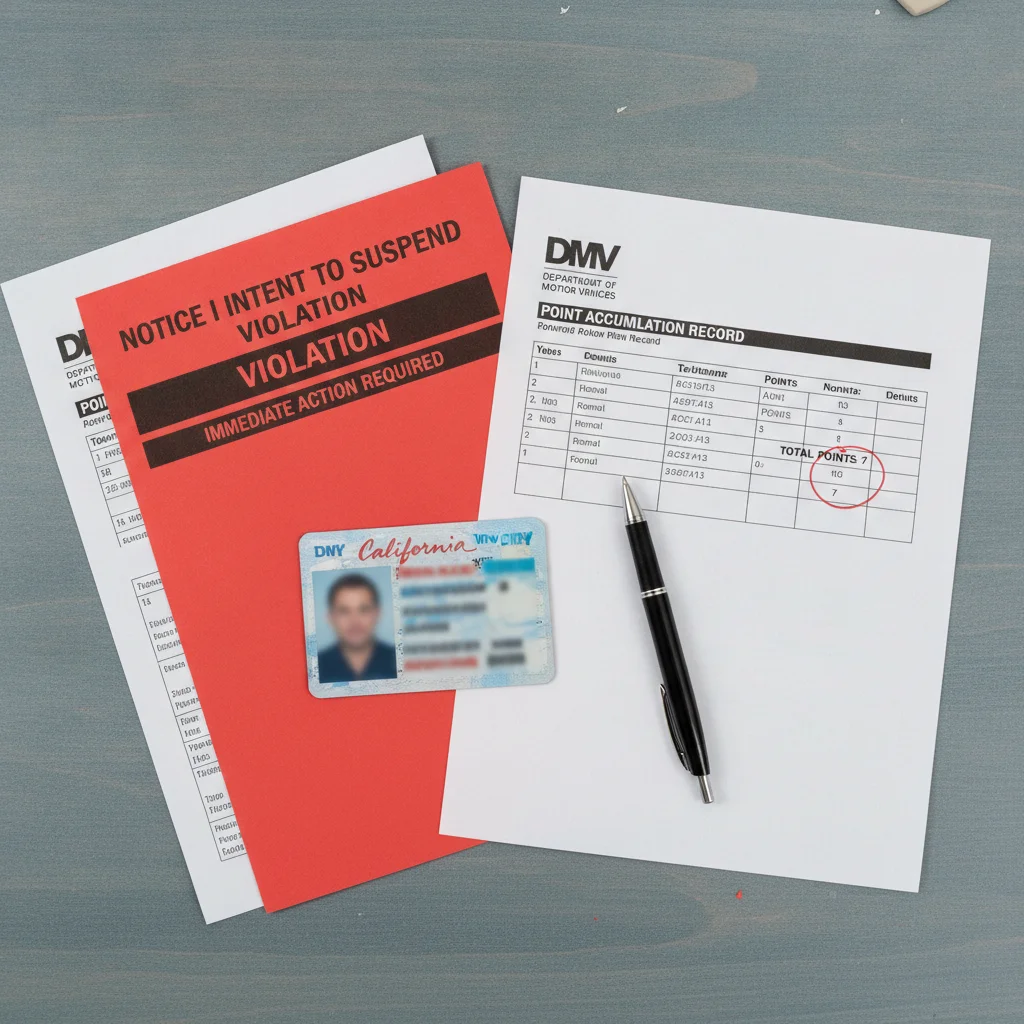
A driver's point system is a method used by most U.S. states to track and penalize traffic violations. Each time you commit a qualifying traffic offense, a set number of points is added to your driving record. The more serious the violation, the higher the point value. Accumulate too many points within a set time window, and your license can be suspended or revoked.
Point systems are administered at the state level, so thresholds, point values, and lookback periods vary significantly. The DMV (or its equivalent) maintains the official record, while insurers access these records independently to set premiums.
Why States Use a Point System
Before point systems existed, license suspensions were largely reactive — a judge or court had to intervene after serious violations. Points gave DMV agencies a standardized, automatic mechanism to identify habitual offenders without requiring case-by-case judicial review.
The logic is straightforward: a single speeding ticket is a mistake; five speeding tickets in two years is a pattern. Points quantify that pattern into a number the DMV can act on automatically. When you cross a threshold, suspension happens — no hearing required (though you typically have the right to appeal).
This system also creates a financial incentive for safe driving beyond just fines. Points on your record trigger insurance surcharges that can dwarf the original ticket cost. A $150 speeding fine might seem manageable; the $400–$800 in annual premium increases it causes over three years is a different story. See how traffic violations affect your car insurance rates for a full breakdown of those costs.
How Points Are Assigned: A State-by-State Reality
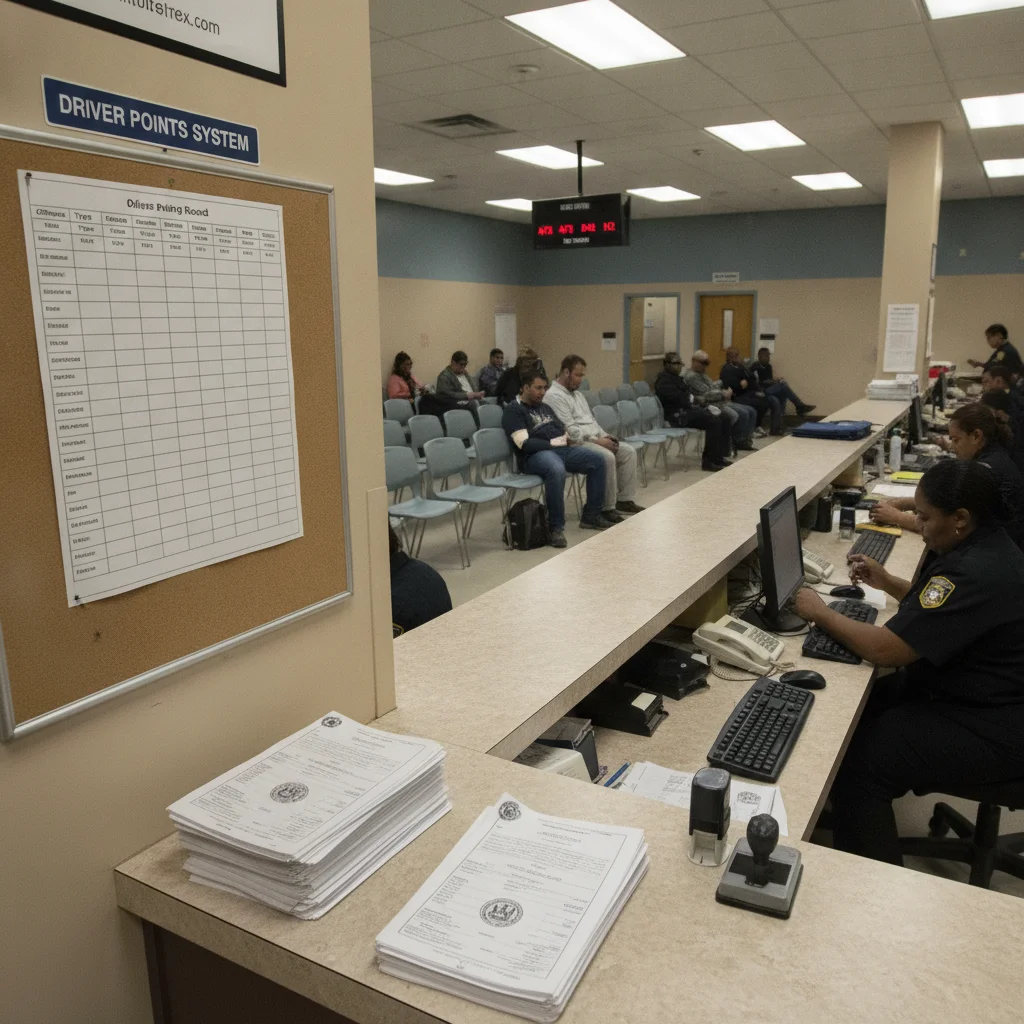
There is no federal standard for driver point systems. Every state designs its own — including which violations earn points, how many points each violation carries, and how long those points stay active. Here's what that looks like in practice across a few major states:
| State | Suspension Threshold | Point Window | DUI Points | Minor Speeding Points |
|---|---|---|---|---|
| California | 4 points | 12 months | 2 points | 1 point |
| New York | 11 points | 18 months | No points (separate process) | 3–11 points |
| Florida | 12 points (30-day susp.) | 12 months | No points (separate process) | 3 points |
| Texas | No formal suspension threshold | 36 months | Separate process | 2 points |
| Georgia | 15 points | 24 months | Separate process | 2–3 points |
A few things stand out in that table. First, California's threshold of 4 points in 12 months is extremely low compared to Georgia's 15-point threshold over 24 months. A California driver with two minor moving violations in one year is already facing suspension risk. Second, several states handle DUI through a completely separate revocation process — meaning DUI doesn't add traditional points but immediately triggers a separate administrative action.
Commercial Drivers Face Stricter Rules
If you hold a commercial driver's license (CDL), the federal Motor Carrier Safety Administration imposes separate and significantly stricter standards on top of your state's point system. Certain violations that are minor for regular license holders — like speeding 15 mph over the limit — can result in CDL disqualification. CDL holders should treat every moving violation as a high-stakes event.
Out-of-State Violations Still Count
Most states participate in the Driver License Compact (DLC) or Non-Resident Violator Compact, which means a traffic violation you receive in another state is typically reported back to your home state. Your home state then applies its own point value to that violation. Driving carefully out of state isn't just courteous — it protects your home record.
DMV Records and Insurance Records Aren't the Same
Your state DMV maintains an official driving record (the MVR) that tracks violations and point totals. Insurance companies access this record independently and apply their own internal rating criteria. Reducing your DMV points through a course doesn't automatically trigger a rate reduction — your insurer is looking at the underlying violations, not just your point balance.
Texas is a notable outlier: it uses a surcharge system rather than a suspension threshold. Texas drivers accumulate points that trigger automatic DMV surcharges ($100–$250 annually per violation), but there's no set point total that automatically revokes your license. However, failure to pay those surcharges can lead to suspension.
Which Violations Add Points — and How Many
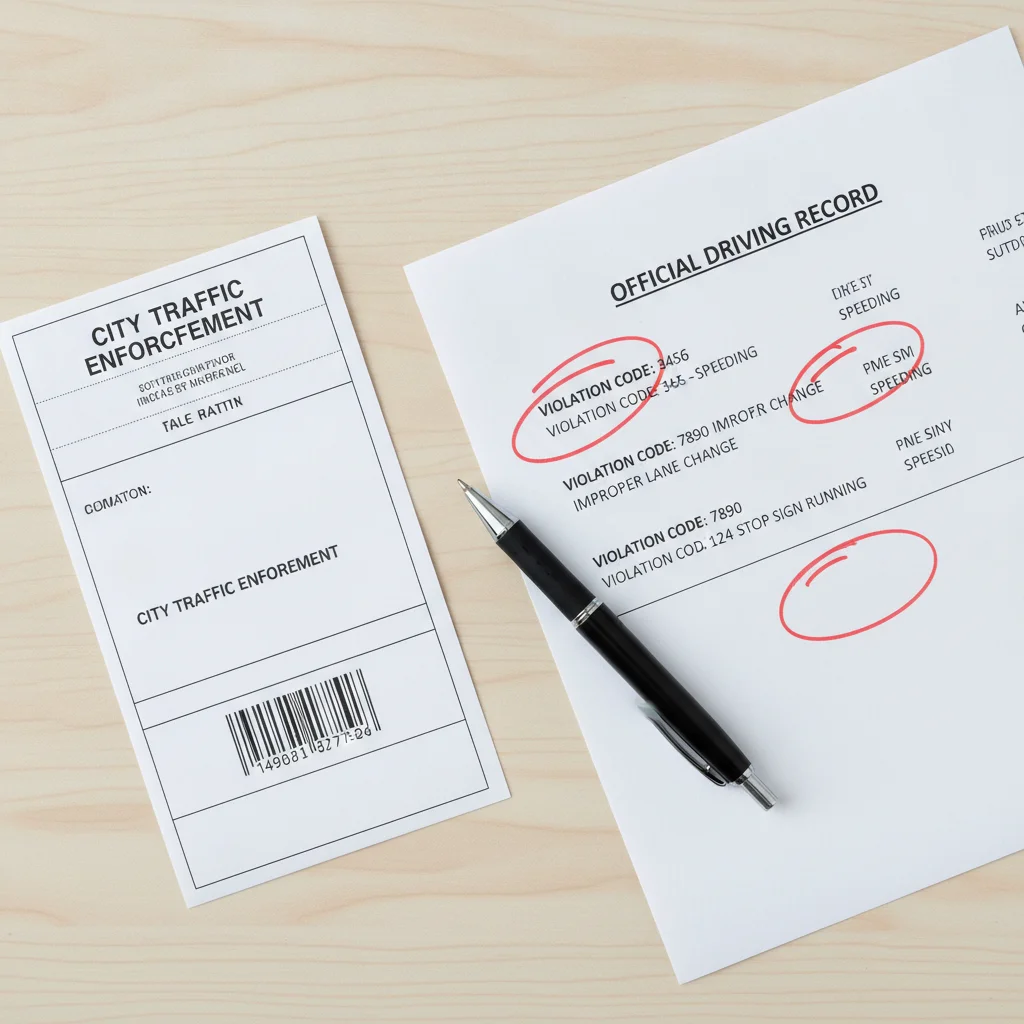
Not every ticket adds points to your record. The key distinction is between moving violations and non-moving violations. Moving violations occur while the vehicle is in motion and almost always carry point values. Non-moving violations — parking tickets, expired registration, broken equipment — typically do not.
Within moving violations, point values scale with severity. Here's a general framework that applies across most states, though exact values differ:
- Minor infractions (1–2 points): Failure to signal, improper lane change, rolling stop, minor speeding (1–10 mph over)
- Moderate violations (2–4 points): Speeding 11–25 mph over limit, failure to yield, running a red light, following too closely
- Serious violations (4–6+ points): Reckless driving, speeding 26+ mph over, aggressive driving, hit-and-run, street racing
- Major violations (separate process or maximum points): DUI/DWI, vehicular manslaughter, driving on a suspended license
Understanding what qualifies as a moving violation is essential. What a moving violation actually does to your driving record goes deeper on the downstream consequences — points, insurance, and long-term record impact — beyond the initial fine.
Contest Before You Pay
Paying a traffic ticket is an automatic admission of guilt in most states — and that means automatic points. If you have any grounds to contest the ticket (officer not present, unclear signage, equipment malfunction), it's worth appearing in court or hiring a traffic attorney. Even a reduced charge to a non-moving violation eliminates the point risk entirely.
Time Defensive Driving Strategically
Don't wait until you're near suspension to take a defensive driving course. Most states limit the point-reduction benefit to once every one to three years. Using that option early after your first violation gives you a clean slate and preserves the option for future use if needed.
How Long Points Stay Active
Points don't live on your record forever, but they stick around long enough to cause real damage. Most states use a lookback window — a period during which accumulated points count toward the suspension threshold. Once a violation ages out of that window, the points no longer contribute to your total.
Typical lookback windows by violation type:
- Minor moving violations
- 1–2 years in most states before points expire and no longer count toward suspension thresholds.
- Moderate violations
- 2–3 years. These often stay visible on your record for insurers even after the DMV stops counting them toward suspension.
- Serious violations (reckless driving, excessive speeding)
- 3–5 years in most states, sometimes longer.
- Major violations (DUI, hit-and-run)
- 5–10 years, and in some states these are permanent on your full record even if the points expire.
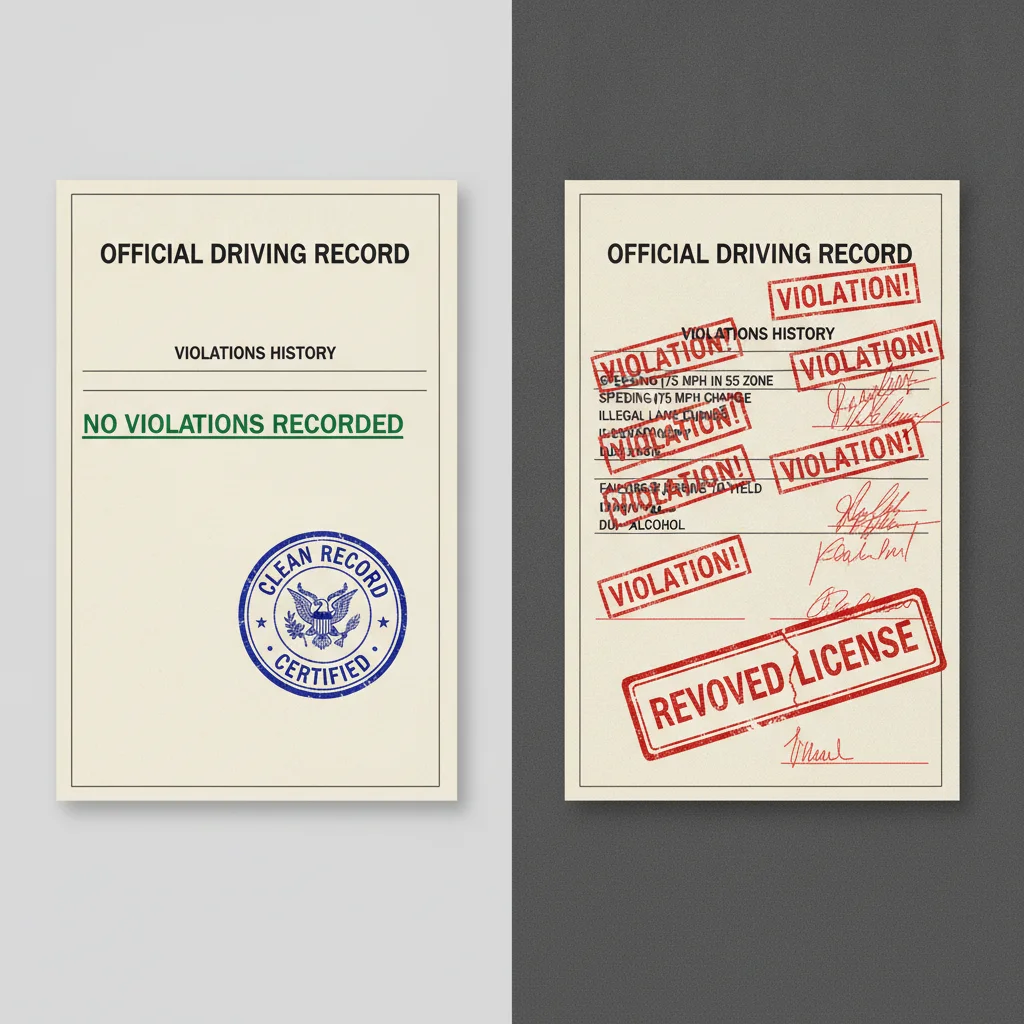
There's a critical distinction to understand here: points expiring is not the same as violations disappearing from your record. Your motor vehicle record (MVR) is a full history. Insurers access it and can see violations well beyond the active point window. How long a traffic violation stays on your record explains precisely how long different entries remain visible and when they stop affecting your rates.
“Points don't just reflect past behavior — they actively shape your future costs and freedoms behind the wheel. Drivers who understand the system are the ones who manage it rather than be managed by it.”
— Jenna Hartwell, Former state DMV hearing officer and traffic law consultant
What Happens When You Hit the Threshold
Crossing the suspension threshold doesn't necessarily mean your license disappears the same day. Most states build in a warning structure:
- Advisory notice: Many states send a written warning when you reach roughly half the suspension threshold. This is your formal heads-up.
- Probationary period: Some states impose a probationary license status before full suspension. Any additional violation during probation accelerates suspension.
- Suspension: Once the threshold is crossed, your license is suspended for a defined period — typically 30, 60, or 90 days for first-time threshold violations. You'll receive a notice with the suspension start date and length.
- Revocation (repeated offenders): If you accumulate points again after reinstatement, suspensions get longer and can progress to full revocation, which requires reapplying for a license from scratch.
Driving on a suspended license is itself a serious violation — and in most states, it adds points and resets or extends the suspension. That's a cycle that's very hard to break out of once you're in it.
43
U.S. states with active point systems
According to the American Association of Motor Vehicle Administrators (AAMVA), the majority of U.S. states use some form of driver point tracking system.
12–15
Typical suspension point threshold range
Most states trigger license suspension between 12 and 15 accumulated points, though California suspends at just 4 points within 12 months.
22%
Average insurance rate increase after first speeding ticket
According to a 2023 analysis by Insurance.com, a single speeding ticket raises average U.S. premiums by approximately 22% at renewal.
3 years
Typical insurer lookback period for minor violations
Most auto insurers review the past 3 years of your motor vehicle record when calculating premiums, though serious violations may be rated for up to 10 years.
1 in 6
U.S. drivers with at least one point on their record
DMV data and traffic safety research estimates that roughly one in six licensed drivers has at least one active point on their driving record at any given time.
Can You Remove Points Before They Expire?
In many states, yes — but with strict conditions. The most common mechanism is a state-approved defensive driving or traffic safety course. Completing one can reduce your point total by 1–4 points, depending on the state. The catches:
- Most states limit this option to once every 1–3 years
- You typically can't use it if you're already at or past the suspension threshold
- The underlying violation still appears on your record — only the point count is reduced
- Not all violations are eligible. A DUI conviction or excessive speeding charge usually doesn't qualify
Some states also allow point reduction for sustained periods of clean driving. New York, for example, automatically reduces your active point count by 4 points for every 18 consecutive violation-free months — up to a maximum reduction. Check your specific state's DMV website for what's available.
One thing to be clear about: point reduction does not erase the original ticket from your driving record. Insurers pulling your full MVR will still see the violation. Reading your driving record helps you understand exactly what insurers and courts see when they pull your history, including how violations are coded and what each entry signals.

Contest Before You Pay
Paying a traffic ticket is an automatic admission of guilt in most states — and that means automatic points. If you have any grounds to contest the ticket (officer not present, unclear signage, equipment malfunction), it's worth appearing in court or hiring a traffic attorney. Even a reduced charge to a non-moving violation eliminates the point risk entirely.
Time Defensive Driving Strategically
Don't wait until you're near suspension to take a defensive driving course. Most states limit the point-reduction benefit to once every one to three years. Using that option early after your first violation gives you a clean slate and preserves the option for future use if needed.
The Insurance Connection: DMV Points vs. Insurer Surcharges
Here's where a lot of drivers get confused: your DMV point total and your insurance premium are related but governed by separate systems. Your insurer doesn't plug your DMV points into a formula. They pull your full motor vehicle record, look at the actual violations, and apply their own internal rating tables.
This means two things can happen that seem contradictory:
- You can have zero DMV points (perhaps in a state that handles serious violations outside the point system) but still face a massive insurance surcharge after a DUI.
- You can take a traffic school course, reduce your DMV points, and still see no change in your insurance premium because the insurer sees the original violation on your MVR regardless.
Insurers typically look back 3–5 years on your MVR, and serious violations like DUI may be reviewed for up to 10 years. Minor violations often fall off insurer ratings after 3 years even if they remain visible on the full record. The rate impact and recovery timeline depend heavily on your carrier and your state's regulations. For the full picture, see how traffic violations affect your car insurance rates.
Commercial Drivers Face Stricter Rules
If you hold a commercial driver's license (CDL), the federal Motor Carrier Safety Administration imposes separate and significantly stricter standards on top of your state's point system. Certain violations that are minor for regular license holders — like speeding 15 mph over the limit — can result in CDL disqualification. CDL holders should treat every moving violation as a high-stakes event.
Out-of-State Violations Still Count
Most states participate in the Driver License Compact (DLC) or Non-Resident Violator Compact, which means a traffic violation you receive in another state is typically reported back to your home state. Your home state then applies its own point value to that violation. Driving carefully out of state isn't just courteous — it protects your home record.
DMV Records and Insurance Records Aren't the Same
Your state DMV maintains an official driving record (the MVR) that tracks violations and point totals. Insurance companies access this record independently and apply their own internal rating criteria. Reducing your DMV points through a course doesn't automatically trigger a rate reduction — your insurer is looking at the underlying violations, not just your point balance.
Practical Steps to Protect Your Driving Record
Knowing how the system works gives you real leverage. Here's what to do proactively:
- Pull your own driving record annually. You can request your MVR through your state DMV — often for free or a small fee. Check for errors: incorrect violation entries or someone else's violations tied to your license number do happen, and disputing them is far easier before they compound.
- Contest tickets when you have a legitimate case. A dismissed or reduced charge means fewer or no points. Even negotiating a moving violation down to a non-moving violation (like an equipment violation) eliminates the point risk entirely.
- Time your defensive driving course strategically. If you're approaching your state's warning threshold, completing an eligible course before you receive a formal notice gives you more flexibility and options.
- Understand your state's specific rules. Point thresholds, lookback windows, and reduction options vary significantly. A quick check of your state DMV's website — not a third-party summary — gives you the accurate current rules.
- Shop your insurance after your record clears. Once a violation ages off your insurer's lookback window (typically 3 years for minor infractions), you may be eligible for significantly lower rates. That's the time to get competitive quotes.
Commercial Drivers Face Stricter Rules
If you hold a commercial driver's license (CDL), the federal Motor Carrier Safety Administration imposes separate and significantly stricter standards on top of your state's point system. Certain violations that are minor for regular license holders — like speeding 15 mph over the limit — can result in CDL disqualification. CDL holders should treat every moving violation as a high-stakes event.
Out-of-State Violations Still Count
Most states participate in the Driver License Compact (DLC) or Non-Resident Violator Compact, which means a traffic violation you receive in another state is typically reported back to your home state. Your home state then applies its own point value to that violation. Driving carefully out of state isn't just courteous — it protects your home record.
DMV Records and Insurance Records Aren't the Same
Your state DMV maintains an official driving record (the MVR) that tracks violations and point totals. Insurance companies access this record independently and apply their own internal rating criteria. Reducing your DMV points through a course doesn't automatically trigger a rate reduction — your insurer is looking at the underlying violations, not just your point balance.

All claims are backed by peer-reviewed research. Sources on request.