Key Takeaways
Can fully dismiss eligible minor tickets
In many states, completing an approved course before a court deadline results in the ticket being withheld from your record entirely — no points, no insurer visibility, no surcharge.
Reduces points and lowers suspension risk
Point-reduction programs let drivers trim their running total, which can be the difference between keeping and losing a license when totals are approaching a threshold.
Can trigger an insurance premium discount
Most major insurers offer a 5–15% discount for completing an approved course voluntarily, independent of any pending violation — a benefit that lasts up to three years at many companies.
Low cost relative to the financial benefit
A course typically costs $25–$95. A single ticket conviction can raise annual premiums by $200–$500 or more over three years, making the math straightforward for eligible violations.
Widely accessible via online formats
Most states now accept online course completion, allowing drivers to complete the requirement on their own schedule without taking a full day off work.
Reinforces practical safety knowledge
Beyond the administrative benefit, content covering hazard perception, following distance, and right-of-way rules has documented value in reducing at-fault incidents over time.
Serious violations are always excluded
DUIs, reckless driving, hit-and-run, and CDL violations cannot be dismissed or reduced through any standard defensive driving course — these require separate legal remedies, if any exist.
Eligibility windows limit repeat use
Most states allow ticket dismissal only once every 12 to 36 months, and some states cap lifetime uses (Florida limits it to three times total). Frequent violators lose access quickly.
Point reduction ≠ record erasure for insurers
A reduced-point violation still appears on your motor vehicle report. Insurers may still surcharge your premium even if the DMV treats the violation more leniently.
No universal standard — state rules vary widely
A course approved in one state may not transfer credit in another. Drivers who receive out-of-state tickets or relocate frequently face significant eligibility complexity.
Discount requires proactive insurer notification
Completing a course doesn't automatically trigger a premium discount — you must submit your certificate and formally request it, a step many drivers skip and lose the benefit.
Course must be pre-authorized in many states
For ticket dismissal, courts often require authorization before you enroll. Completing a course on your own initiative without court approval may result in zero credit toward dismissal.
Our Verdict
Defensive driving courses are a legitimate tool for managing minor violations and keeping insurance costs in check — but they're not a universal eraser. Their value depends heavily on your state's rules, the type of violation, and how often you've used this option before. For most drivers dealing with a first or second minor infraction, a course is worth the time and modest cost. For serious offenses or repeat violations, the course won't save your record.
Drivers with a first or second minor moving violation who want to avoid points, dismiss a ticket, or qualify for an insurance discount in a state where approved courses are recognized.
How Defensive Driving Courses Work — and What They're Actually Designed For
Defensive driving courses were originally designed to teach collision-avoidance techniques, hazard recognition, and safer driving habits. States then adopted them as a structured remedy for minor traffic violations — a way to redirect drivers toward education rather than pure punishment. That dual purpose is what makes them useful, but also what creates confusion about their scope.
When a court or DMV approves your course completion, one of two things can happen: a ticket gets dismissed (meaning it never appears on your record) or points are reduced (the violation stays, but its impact on your license is softened). Which outcome applies depends entirely on how your state structures its program and what the judge or DMV officer authorizes.
Understanding the difference matters. A dismissed ticket won't be visible to insurers when they pull your motor vehicle report. A point reduction still leaves the underlying violation on record — which means an insurer can still see it and factor it into your rate, even if the DMV treats it more leniently for license purposes.
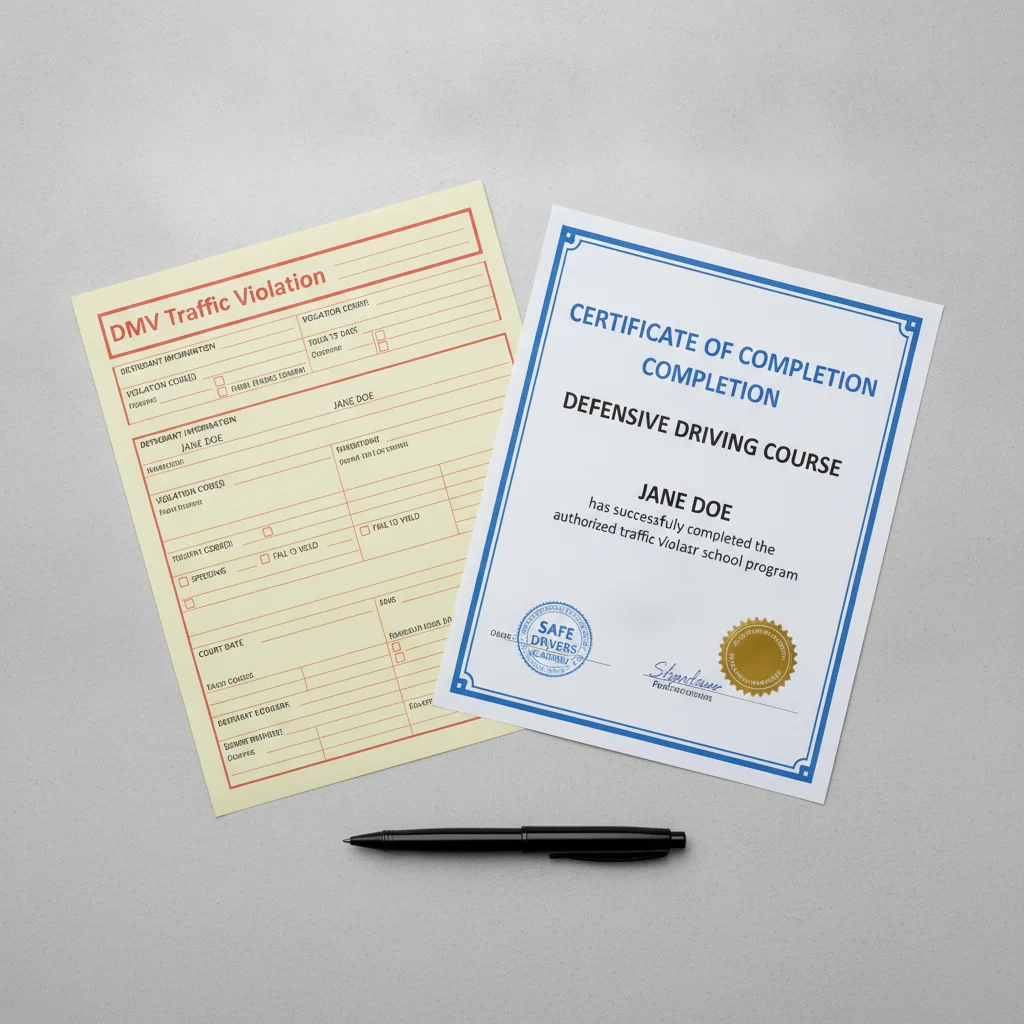
Before you enroll in any course expecting relief, you need to confirm two things: that the course is approved in your state, and that your specific violation is eligible. Neither is guaranteed. See what a moving violation actually does to your driving record to understand how violations accumulate and interact with your license status before deciding on a course.
What Defensive Driving Courses Can Actually Erase (or Reduce)
The realistic scope of course-based relief is narrower than most drivers assume. Here's what these programs typically cover:
Ticket Dismissal for Minor Moving Violations
In many states, a first-time speeding ticket — typically for speeds under 20 mph over the limit — can be dismissed if you complete an approved course within a court-set deadline. The violation is withheld from your record entirely, which is the best possible outcome. Eligibility usually requires that you haven't used this option within the past 12 to 36 months, depending on the state.
Point Reduction on Your Driving Record
Some states allow a set number of points — often two to four — to be subtracted from your total after completing an approved course, even without a pending ticket. This can keep you below a suspension threshold or reduce the severity of your record's appearance to an insurer. Points accumulation red flags to catch before your license is at risk is worth reviewing if you're not sure where your current total stands.
Insurance Premium Discounts
Separately from any legal benefit, many insurers offer a 5–15% discount to drivers who complete an approved course voluntarily. This discount is usually time-limited (often three years) and requires the insurer to recognize the specific program you completed. Note that this is an insurer-side benefit — it doesn't change your driving record at all.
Can fully dismiss eligible minor tickets
In many states, completing an approved course before a court deadline results in the ticket being withheld from your record entirely — no points, no insurer visibility, no surcharge.
Reduces points and lowers suspension risk
Point-reduction programs let drivers trim their running total, which can be the difference between keeping and losing a license when totals are approaching a threshold.
Can trigger an insurance premium discount
Most major insurers offer a 5–15% discount for completing an approved course voluntarily, independent of any pending violation — a benefit that lasts up to three years at many companies.
Low cost relative to the financial benefit
A course typically costs $25–$95. A single ticket conviction can raise annual premiums by $200–$500 or more over three years, making the math straightforward for eligible violations.
Widely accessible via online formats
Most states now accept online course completion, allowing drivers to complete the requirement on their own schedule without taking a full day off work.
Reinforces practical safety knowledge
Beyond the administrative benefit, content covering hazard perception, following distance, and right-of-way rules has documented value in reducing at-fault incidents over time.
What These Courses Cannot Erase — The Hard Limits
The limitations are where most drivers get burned. They complete a course expecting a clean slate, only to find the violation is still showing up — or that the course credit was denied. Here's where course-based relief does not apply:
DUI and DWI Convictions
No state allows a standard defensive driving course to expunge or reduce a DUI or DWI conviction. These are criminal offenses, not civil traffic infractions. Courts may require a separate alcohol education program as part of sentencing, but that is not the same as a voluntary defensive driving course, and it doesn't erase the conviction.
Reckless Driving and Street Racing
Reckless driving — legally defined as willful disregard for the safety of others — is treated as a serious offense in every state. A defensive driving course won't dismiss it, reduce its points to zero, or prevent it from affecting your insurance for the full statutory window (typically three to five years).
Hit-and-Run Incidents
Leaving the scene of an accident is a criminal charge in most jurisdictions. A traffic school completion has no bearing on how courts or the DMV handle it.
Commercial Driver Violations
If you hold a Commercial Driver's License (CDL), the rules are stricter. Federal regulations prohibit masking CDL violations through traffic school — what happens in a commercial vehicle stays on your commercial record, period.
Second or Third Violations Within the Eligibility Window
If you already used the course option in the past year or two and you received another ticket, most states won't allow a second dismissal until the waiting period resets. Taking the course again won't help you until you're outside that window.
Serious violations are always excluded
DUIs, reckless driving, hit-and-run, and CDL violations cannot be dismissed or reduced through any standard defensive driving course — these require separate legal remedies, if any exist.
Eligibility windows limit repeat use
Most states allow ticket dismissal only once every 12 to 36 months, and some states cap lifetime uses (Florida limits it to three times total). Frequent violators lose access quickly.
Point reduction ≠ record erasure for insurers
A reduced-point violation still appears on your motor vehicle report. Insurers may still surcharge your premium even if the DMV treats the violation more leniently.
No universal standard — state rules vary widely
A course approved in one state may not transfer credit in another. Drivers who receive out-of-state tickets or relocate frequently face significant eligibility complexity.
Discount requires proactive insurer notification
Completing a course doesn't automatically trigger a premium discount — you must submit your certificate and formally request it, a step many drivers skip and lose the benefit.
Course must be pre-authorized in many states
For ticket dismissal, courts often require authorization before you enroll. Completing a course on your own initiative without court approval may result in zero credit toward dismissal.
The bottom line: defensive driving courses handle the bottom tier of the violation spectrum. As violations increase in severity or frequency, the courses' legal utility drops to zero.
State-by-State Variation: Why There's No Single Answer
Traffic law is state law. What works in Texas may be meaningless in New York, and what's approved in California may not transfer to Arizona. The lack of federal standardization is the biggest source of confusion for drivers who move between states or received a ticket while traveling.
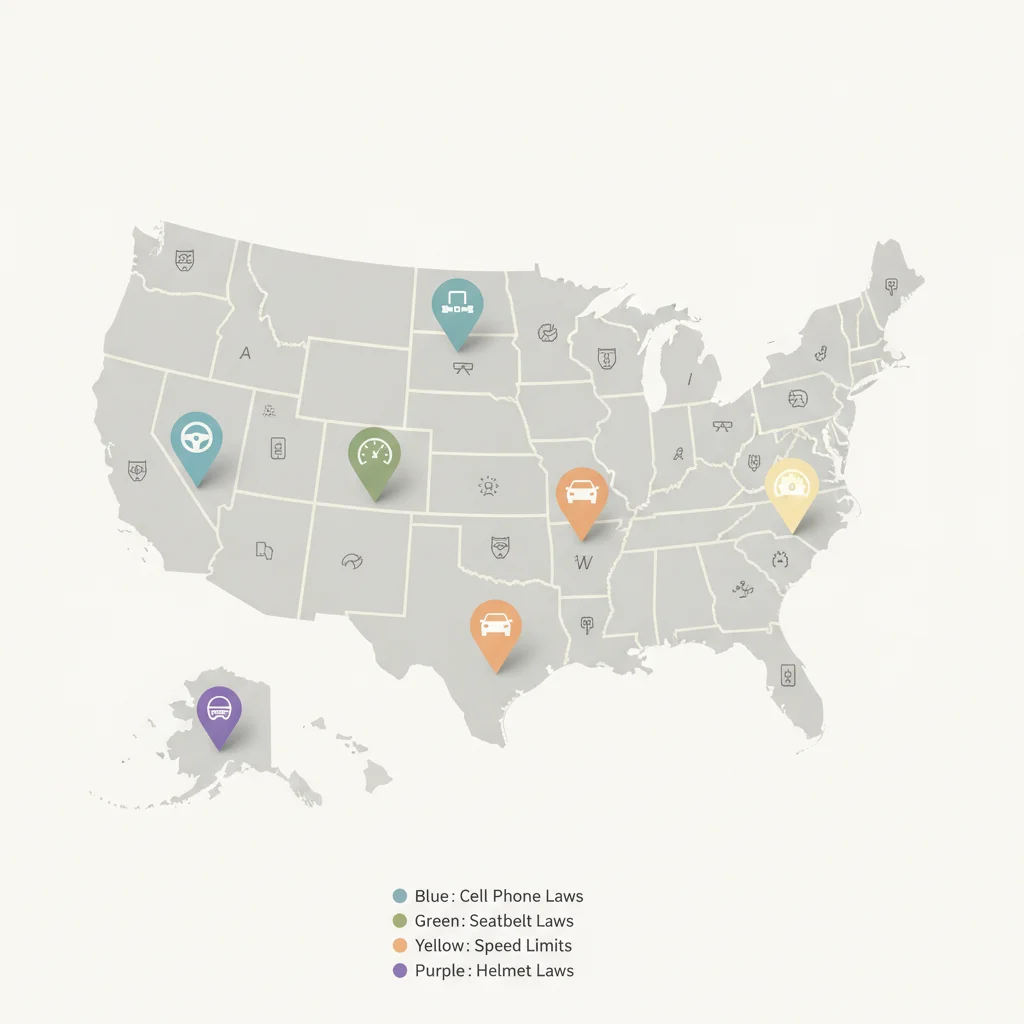
A few meaningful examples of how states differ:
- Texas: Allows ticket dismissal through defensive driving once every 12 months for eligible violations. The course must be state-approved, and you typically must request dismissal before your court date.
- New York: Offers a Point and Insurance Reduction Program (PIRP) that removes up to four points and provides a 10% insurance premium reduction. But it doesn't dismiss tickets — the violation stays on record.
- California: Traffic school can mask a violation so it doesn't appear to insurers, but the DMV still sees it. You're eligible once every 18 months.
- Florida: Basic Driver Improvement (BDI) course can dismiss one ticket per 12-month period and three tickets in a lifetime. After three uses, you lose eligibility permanently.
Out-of-State Tickets and Interstate Compact Rules
Most U.S. states participate in the Driver License Compact (DLC) or the Nonresident Violator Compact (NRVC), which means a moving violation you receive in another state will typically be reported back to your home state DMV. If the issuing state dismisses your ticket via driving school, your home state may or may not honor that dismissal — it depends on whether your home state treats that violation as a reportable offense. Always check with your home state DMV before assuming a dismissal in another state protects your home-state record.
If you received a ticket in a state other than your home state, check both states' rules. Your home state DMV may still record the violation even if the issuing state dismisses it — interstate compacts share most moving violation data.
Always call your state's DMV or court clerk before enrolling in a course to confirm: (1) the course is on the approved list, (2) your violation is eligible, and (3) you're within the eligibility window. Don't assume — confirm in writing.
The Insurance Angle: Course Completion vs. Your Premium
Here's where drivers often conflate two separate systems. The DMV and your insurance company run on different information timelines and different rulebooks.
5–15%
Typical insurer discount for approved course
Most major U.S. auto insurers offer this range of premium reduction for drivers who complete a state-approved defensive driving or driver improvement course.
38 states
States allowing ticket dismissal via driving course
According to the National Safety Council, the majority of U.S. states have formal programs allowing minor traffic violations to be dismissed upon course completion.
$200–$500
Estimated annual premium increase per conviction
A single minor moving violation conviction can raise a driver's annual auto insurance premium by this range over a three-year surcharge window, per industry rate analysis.
3 years
Typical insurer lookback period for violations
Most auto insurers review the past 36 months of your motor vehicle report when setting rates, meaning dismissed violations can provide three full years of premium protection.
Your insurer pulls your motor vehicle report (MVR) at renewal — sometimes annually, sometimes every three years depending on the company. If a violation was dismissed via defensive driving, it typically won't appear on the MVR and won't affect your rate. If it was reduced (points lowered but violation still recorded), the insurer may still see it and still surcharge your premium.
Separately, taking a voluntary defensive driving course — even if you have no pending violation — can earn you a discount if your insurer recognizes the program. This is an independent benefit that doesn't require a ticket to trigger. See defensive driving courses that actually reduce your premium for a breakdown of which programs most major insurers accept.
And for a broader look at how your overall driving history affects discount eligibility, good driver discounts explained covers exactly what insurers look for beyond just points — including years without a claim, accident-free periods, and telematics data.
One caution: don't complete a course and assume your insurer will automatically apply a discount. You typically need to submit the completion certificate directly and request the discount in writing. Not all agents will proactively apply it.
How to Enroll the Right Way and Avoid Wasted Effort
If you've confirmed eligibility, here's the straightforward process to make a course count:
- Get court or DMV authorization first. For ticket dismissal, you usually need a court order or DMV approval before completing the course. Completing it beforehand doesn't guarantee credit.
- Choose a state-approved provider. Each state DMV publishes a list of approved courses — online and in-person. Don't use a provider that isn't on that list, even if it's cheaper or more convenient.
- Note your deadline. Courts typically give 60 to 90 days to complete the course. Missing this window means the ticket proceeds to conviction.
- Keep your completion certificate. Submit a copy to the court (if required), the DMV, and your insurer. Keep a digital and physical copy for your records — you may need it at renewal time.
- Follow up with your insurer. Submit the certificate and formally request any applicable discount. Confirm in writing that it's been applied.
Online courses range from about $25 to $95 depending on the state and provider. In-person courses cost more and take a full day but may be required in some jurisdictions. Both formats are widely accepted where courses are approved — online is not a shortcut that disqualifies you from credit in most states.

All claims are backed by peer-reviewed research. Sources on request.