Key Takeaways
Moving Violation
A moving violation is any traffic law broken while a vehicle is in motion. This includes speeding, running red lights, illegal lane changes, and failure to yield. Unlike non-moving violations (such as parking tickets), moving violations go on your driving record and can trigger points, insurance rate increases, and license suspension.
Technically, the distinction between moving and non-moving violations is defined by state law, meaning some infractions — such as certain equipment violations — may be classified differently depending on jurisdiction.
Moving Violations vs. Non-Moving Violations: The Line That Matters
Drivers often treat all traffic citations the same way — pay the fine, move on. That approach gets expensive fast. The distinction between a moving violation and a non-moving violation is the most important line in traffic law, and it determines whether a ticket will follow you for years.
Non-moving violations — parking tickets, expired registration, broken taillights — are typically administrative. Pay the fine, fix the problem, and it ends there. They don't affect your driving record or your insurance premium in most states.
Moving violations are a different animal. The moment your car is in motion and you break a traffic law, you're in moving-violation territory. The citation goes on your Motor Vehicle Record (MVR), points may be added to your license, and your insurer can use that information at your next renewal to justify raising your rate.
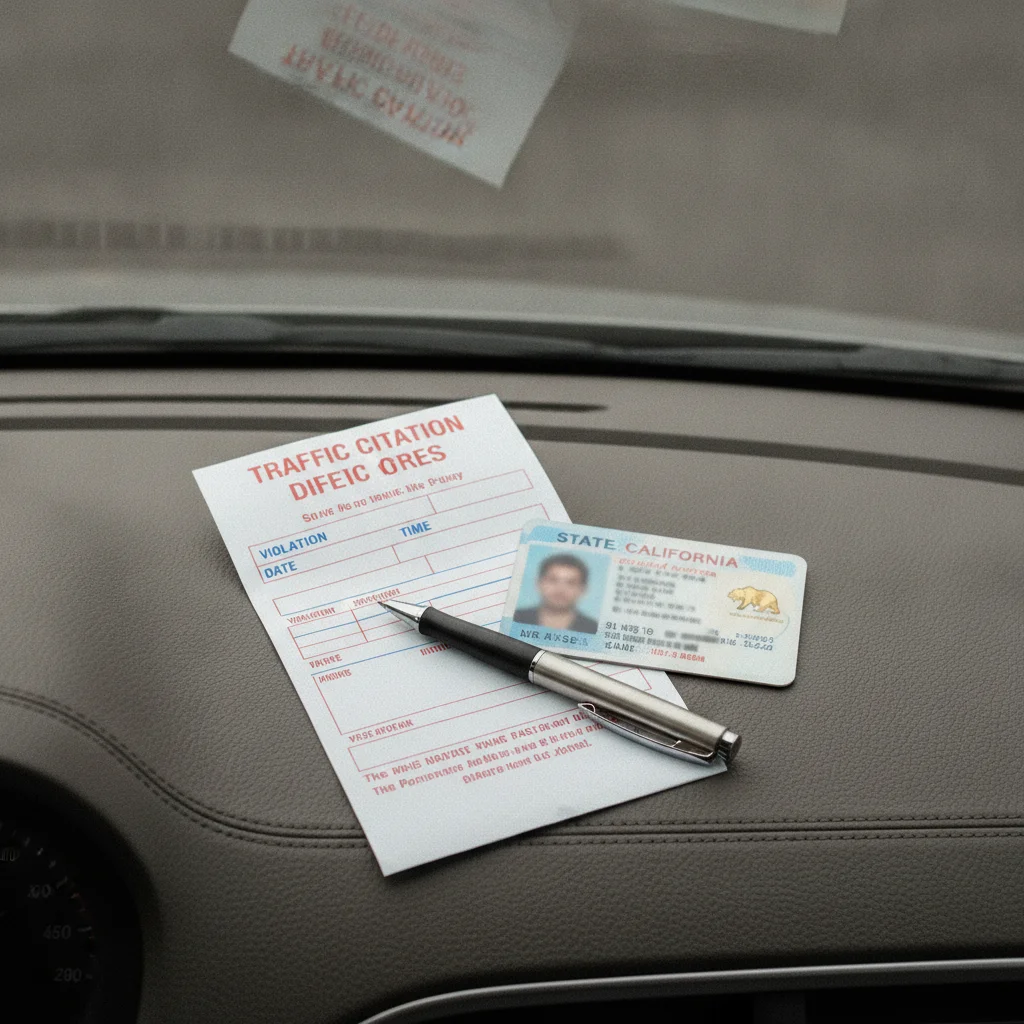
Common examples of moving violations include:
- Speeding (any amount over the posted limit)
- Running a red light or stop sign
- Illegal lane changes or unsafe passing
- Failure to yield the right of way
- Distracted driving (texting while driving)
- Reckless driving
- DUI/DWI
- Following too closely (tailgating)
Some violations — like certain equipment infractions — exist in a gray zone and are classified differently depending on the state. But if you got ticketed while your vehicle was moving, assume it's going on your record until you confirm otherwise.
State Variation Is Significant
Traffic law — including how violations are classified, how many points they carry, and how long they stay on your record — is entirely state-governed. A violation that adds 2 points in one state might add 4 in another, or might not add any points at all if the state doesn't use a point system. Always verify the rules with your state's DMV or a local traffic attorney before deciding how to respond to a citation.
Check Your Own Driving Record Proactively
You don't have to wait for your insurer to find a violation. You can request your own MVR directly from your state's DMV, often for a small fee or free online. Reviewing your record once a year lets you catch errors — violations incorrectly attributed to your license — and address them before they affect your next renewal quote.
How Points Get Added to Your License
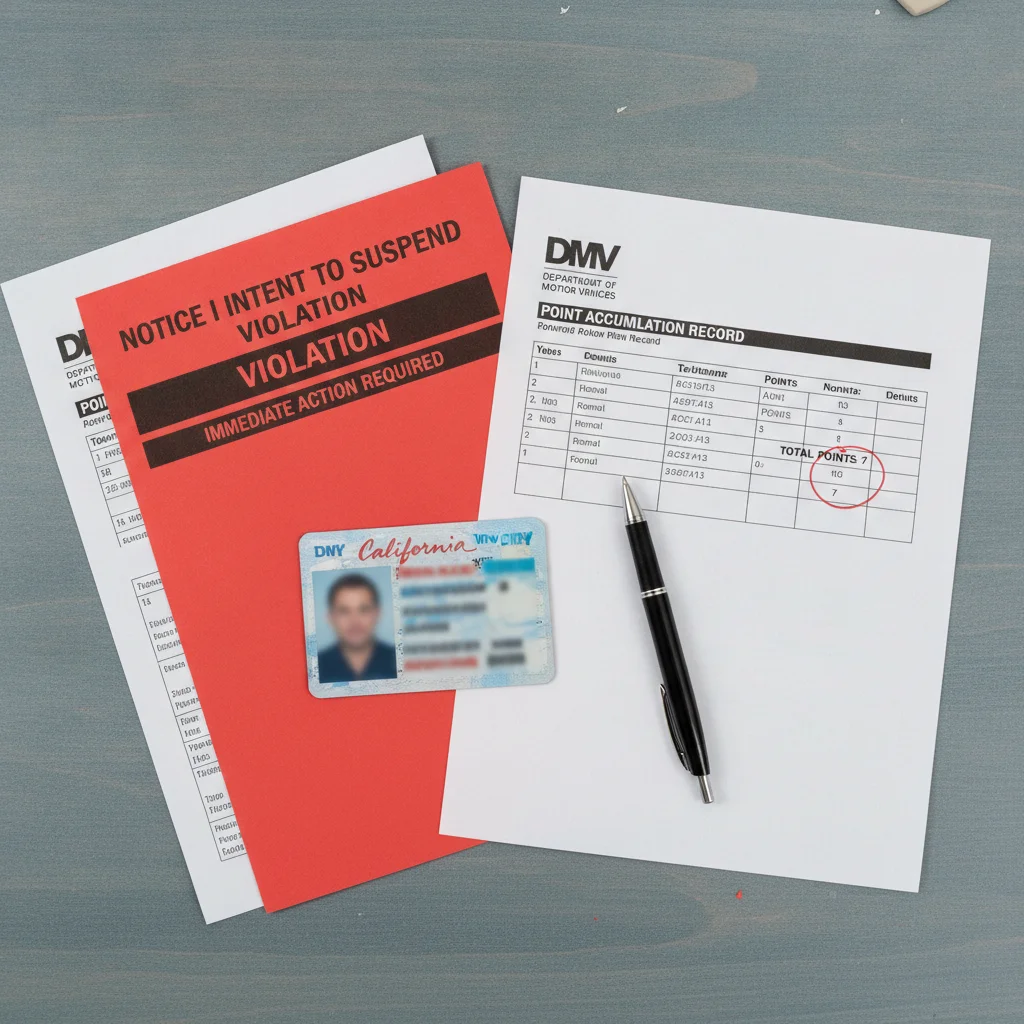
Most states use a demerit point system to track moving violations. Each violation carries a point value based on its severity. Minor infractions like going 10 mph over the speed limit might add 1–2 points. Serious violations like reckless driving or a DUI can add 6 or more points in a single incident.
For a full breakdown of how individual states structure this, the points system explained covers accumulation thresholds, look-back periods, and what triggers suspension in each jurisdiction.
20–30%
Average premium increase after a single speeding ticket
According to Insurance.com's rate analysis, a single speeding conviction raises average annual premiums by 20–30% at policy renewal.
6+ points
Points added for a DUI in most states
Major violations like DUI typically carry the maximum point value in state demerit systems, often triggering immediate suspension review.
3–5 years
Typical MVR visibility window for minor violations
Most state DMVs retain minor moving violations on your Motor Vehicle Record for 3 to 5 years, the window during which insurers actively use the data.
41 million
Speeding tickets issued annually in the U.S.
The National Highway Traffic Safety Administration estimates roughly 41 million speeding citations are issued each year across the United States.
80–200%+
Insurance premium increase after a DUI conviction
DUI convictions are treated as high-risk indicators by insurers, with some carriers increasing premiums by 200% or more — or canceling coverage entirely.
Points accumulate on a rolling basis — usually tracked over a 12- or 24-month window, though some serious violations have look-back periods of 5 to 10 years. When your point total crosses a state-set threshold, the DMV begins escalating consequences:
- Warning letter — a notice that you're approaching a dangerous threshold
- Mandatory hearing — some states require you to appear before a DMV hearing officer
- Probationary license — restricted driving privileges
- Suspension — your license is pulled for a set period
- Revocation — your license is canceled entirely, requiring you to re-apply from scratch
A few states — including Hawaii, Kansas, Louisiana, Minnesota, Oregon, Rhode Island, and Wyoming — don't use a traditional point system. That doesn't mean violations are consequence-free there; those states track violations directly and still suspend licenses for accumulations of serious offenses. Points accumulation red flags can help you assess where you stand before it becomes a crisis.

What Happens to Your Insurance After a Moving Violation
Your insurance company isn't notified the moment you get a ticket. But at your policy renewal — typically every 6 or 12 months — your insurer pulls your MVR. If a moving violation shows up, you can expect your rate to increase. How much depends on three things: the violation type, your prior record, and your insurer's own risk model.
“Drivers routinely underestimate how long a single moving violation affects their wallet. The fine is a one-time cost; the insurance surcharge is a recurring tax on that decision, often for three to five years.”
— James Lynch, Chief Actuary, Insurance Information Institute
Here's a rough breakdown of how different violations tend to affect premiums:
| Violation Type | Typical Premium Increase |
|---|---|
| Minor speeding (1–10 mph over) | 10–20% |
| Moderate speeding (11–25 mph over) | 20–35% |
| Reckless driving | 70–100%+ |
| DUI/DWI | 80–200%+ |
| At-fault accident with violation | 30–60%+ |
These aren't one-time hits. A single violation can affect your rate for 3 to 5 years — the entire time it remains on your active record. If you get a second violation during that window, insurers treat it as a pattern, and the compounding effect on your premium is significant.
How speeding tickets affect insurance rates breaks this down further by speed tier and insurer category, which is useful if you're shopping for coverage after a recent ticket.
Shop Your Insurance After a Ticket
Insurers don't all price violations the same way. After a moving violation, it's worth getting quotes from competing carriers before your current policy renews. Some insurers apply smaller surcharges for first-time minor violations or offer accident forgiveness programs that limit the impact. Shopping takes about 20 minutes and can save several hundred dollars annually.
Set a Calendar Reminder for When Violations Expire
Know exactly when each violation on your record crosses out of your insurer's look-back window. The month a violation expires is the right time to re-shop your policy — your record looks cleaner, and you can negotiate from a stronger position with new or existing carriers.
Severity Tiers: Not All Moving Violations Are Created Equal
The single biggest mistake drivers make is treating all moving violations as equivalent. A rolling stop through a rural stop sign and a DUI are both moving violations — but they land in completely different consequence tiers.
Most states categorize violations into at least two or three tiers:
- Minor (Infractions)
- Low point values (1–2 points), small fines, minimal insurance impact. Examples: going 5–10 mph over the limit, improper lane change, failure to signal.
- Moderate (Misdemeanor-level)
- Higher points (2–4), meaningful fines, moderate insurance impact. Examples: excessive speeding (15–25 mph over), running a red light, following too closely.
- Serious (Major violations)
- Maximum points (6+), large fines, possible criminal charges, severe insurance impact. Examples: DUI/DWI, reckless driving, hit and run, street racing, driving with a suspended license.
Serious violations can trigger immediate consequences — including license suspension at the time of citation — rather than waiting for point accumulation. A DUI in most states involves mandatory suspension periods, mandatory SR-22 filing (a certificate of financial responsibility), and often ignition interlock device requirements.
Knowing your tier matters because it shapes your legal strategy. A minor infraction might be worth simply paying and moving on. A moderate or serious violation is usually worth contesting in court or negotiating for a reduced charge — the difference in long-term insurance costs alone often justifies hiring a traffic attorney.

How Long a Moving Violation Affects You
Violations don't disappear on their own schedule — they follow the rules set by each state. Most minor moving violations become inactive (no longer counted toward point thresholds) within 12 to 24 months. But they typically remain visible on your MVR for 3 to 5 years, which means insurers can still see them even after they stop adding points.
Serious violations like DUI or reckless driving often stay on your record for 7 to 10 years, and in some states, DUI convictions are permanent. How long traffic violations stay on your record explains the state-by-state variation in detail.
A few important timelines to understand:
- Point expiration: When points stop counting toward your suspension threshold (often 12–24 months after violation date)
- MVR visibility: How long the violation appears when your insurer pulls your record (typically 3–5 years)
- Insurance impact window: How long insurers actually use the violation to set your rate (varies by insurer — often 3 years for minor, 5+ for serious)
These three windows are independent of each other. A violation can stop adding points long before it disappears from your MVR, and your insurer may continue pricing you based on the violation even after it technically expires in your state's point system.
Shop Your Insurance After a Ticket
Insurers don't all price violations the same way. After a moving violation, it's worth getting quotes from competing carriers before your current policy renews. Some insurers apply smaller surcharges for first-time minor violations or offer accident forgiveness programs that limit the impact. Shopping takes about 20 minutes and can save several hundred dollars annually.
Set a Calendar Reminder for When Violations Expire
Know exactly when each violation on your record crosses out of your insurer's look-back window. The month a violation expires is the right time to re-shop your policy — your record looks cleaner, and you can negotiate from a stronger position with new or existing carriers.
Your Options After Getting a Moving Violation
You have more options than most drivers realize. The default — pay the fine and accept the points — is often the worst choice from a long-term financial standpoint. Here's what to actually consider:
1. Contest the ticket in court
If the violation has factual errors, equipment issues (radar calibration, camera malfunctions), or procedural problems, contesting can result in dismissal. No conviction means no record entry. Even if you don't win outright, negotiating with a prosecutor for a reduced charge — from moving to non-moving — limits the damage significantly.
2. Traffic school or defensive driving course
Many states allow first-time or infrequent offenders to attend a DMV-approved course in exchange for point masking or reduction. The violation may still appear on your MVR, but insurers in some states are legally prohibited from using it in rate calculations if you completed the course. Eligibility typically has waiting periods — you usually can't use this option if you attended traffic school within the past 12 to 18 months.
3. Deferred adjudication
Some jurisdictions offer deferred adjudication programs where you agree to maintain a clean record for a set period (often 90 to 180 days). If you comply, the charge is dismissed. It functions like probation — but if you get another ticket in the window, both violations hit your record at once.
4. Pay and monitor
For truly minor infractions with minimal point value, the legal and court costs of fighting sometimes exceed the insurance impact. In those cases, paying and then shopping for a new insurer — before renewal, when you have more leverage — can be the most practical path.
State Variation Is Significant
Traffic law — including how violations are classified, how many points they carry, and how long they stay on your record — is entirely state-governed. A violation that adds 2 points in one state might add 4 in another, or might not add any points at all if the state doesn't use a point system. Always verify the rules with your state's DMV or a local traffic attorney before deciding how to respond to a citation.
Check Your Own Driving Record Proactively
You don't have to wait for your insurer to find a violation. You can request your own MVR directly from your state's DMV, often for a small fee or free online. Reviewing your record once a year lets you catch errors — violations incorrectly attributed to your license — and address them before they affect your next renewal quote.
Whatever route you take, act quickly. Most courts require you to respond within 30 to 90 days of the citation date. Missing that window typically results in an automatic guilty finding and potential additional penalties, including license suspension for failure to appear.

All claims are backed by peer-reviewed research. Sources on request.