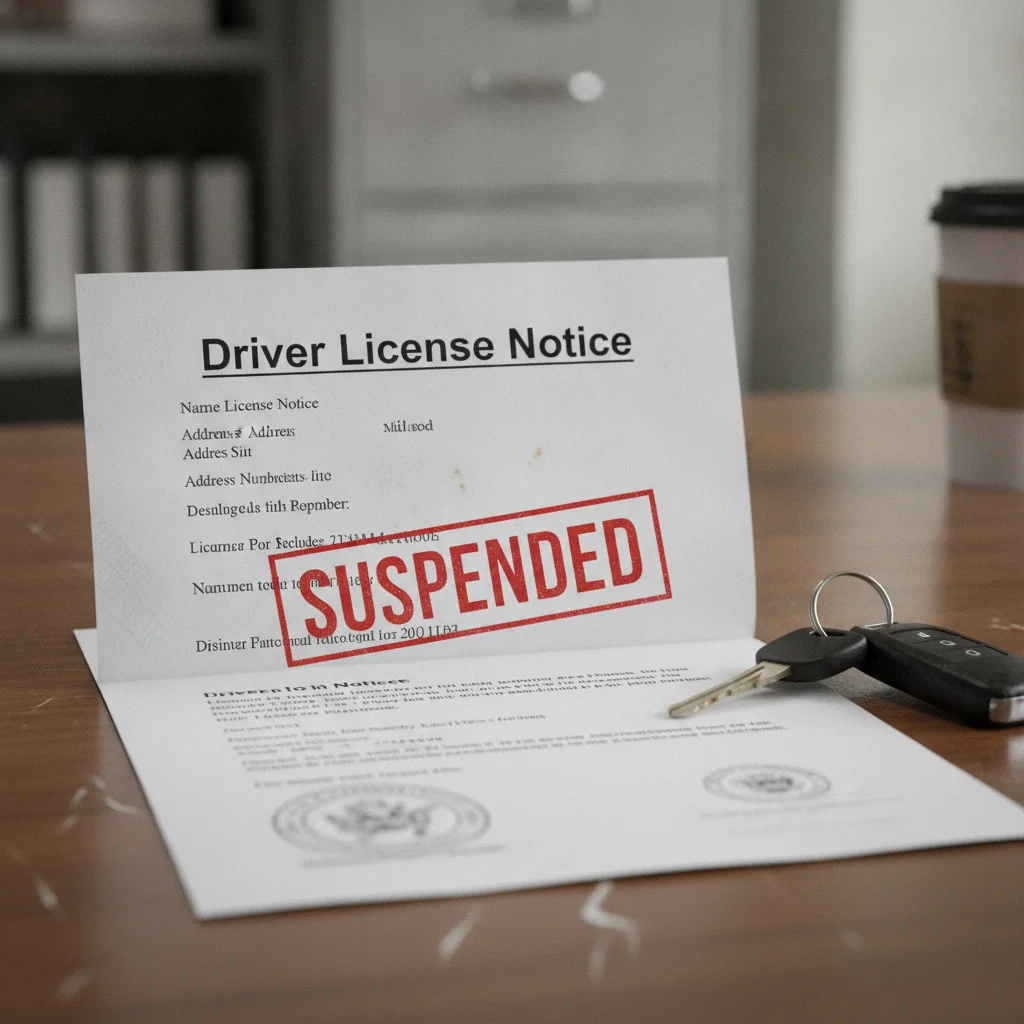
| Minor speeding ticket (DMV record) | 3–5 years (Varies by state DMV policy) |
| DUI retention on DMV record | 10 years to lifetime (California, Florida, Massachusetts retain DUIs indefinitely) |
| Standard insurance lookback window | 3 years (minor violations) (Most standard carrier underwriting guidelines) |
| DUI insurance surcharge window | 5–10 years (Varies by carrier and state regulation) |
| Reckless driving (DMV record) | 5–7 years (Typical across most U.S. states) |
| At-fault accident (insurance lookback) | 3 years (Standard carrier guideline; varies with severity) |
The Basics: Your Driving Record Isn't a Blank Slate
Most drivers assume paying a ticket closes the book on a violation. It doesn't. The fine settles your debt to the court, but the conviction — and its consequences — gets logged on your driving record and stays there for years. Two separate timelines matter here: how long the violation lives on your state DMV record, and how far back your insurance company looks when setting your rate. Those windows don't always match.
State DMV retention periods control whether the violation counts toward point totals, license suspension thresholds, and background checks. The insurance lookback window — typically called a surcharge period — controls how long a violation inflates your premium. Understanding both helps you anticipate real costs and plan around them strategically.
| Minor speeding ticket (DMV record) | 3–5 years (Varies by state DMV policy) |
| DUI retention on DMV record | 10 years to lifetime (California, Florida, Massachusetts retain DUIs indefinitely) |
| Standard insurance lookback window | 3 years (minor violations) (Most standard carrier underwriting guidelines) |
| DUI insurance surcharge window | 5–10 years (Varies by carrier and state regulation) |
| Reckless driving (DMV record) | 5–7 years (Typical across most U.S. states) |
| At-fault accident (insurance lookback) | 3 years (Standard carrier guideline; varies with severity) |
For a deeper look at the legal tiers of offenses — from minor infractions to felony traffic charges — see our guide to traffic violation severity. The severity of an offense is the single biggest factor determining how long it shadows your record.
How Long Violations Stay on Your DMV Record by Type
State laws vary significantly, but the following windows are typical across most U.S. jurisdictions. Always verify with your specific state DMV, since some states run considerably longer retention periods on serious offenses.

Minor Moving Violations (Speeding, Rolling Stop, Improper Lane Change)
These are the most common violations — and the most misunderstood in terms of longevity. A speeding ticket typically stays on your DMV record for 3 to 5 years from the conviction date, not the violation date. During that window, it counts toward your point total and is visible to insurers pulling your Motor Vehicle Report (MVR).
Serious Moving Violations (Reckless Driving, Street Racing, Excessive Speeding)
Reckless driving and similar serious moving violations generally remain on record for 5 to 7 years. In states like California, a reckless driving conviction stays visible for 7 years. These carry heavier point values too, meaning fewer convictions are needed before a license suspension threshold is triggered.
DUI / DWI Convictions
A DUI is in a category of its own. Most states retain DUI convictions for 10 years, and some — including California, Florida, and Massachusetts — maintain them on the DMV record for life, or at least long enough that a second offense within a decade triggers mandatory enhanced penalties. From an insurance standpoint, the impact is even more pronounced. See our article on why insurers treat a DUI as a long-term risk for the rate implications year by year.
At-Fault Accidents
Accidents aren't violations in the traditional sense, but they're recorded on your driving history and treated similarly. Most states retain at-fault accident notations for 3 to 5 years. Insurers typically surcharge for 3 years from the incident date, though the record itself may stay longer.
License Suspensions and Revocations
A suspension or revocation is flagged on your DMV record for 3 to 7 years depending on the cause. A suspension for unpaid tickets may clear faster than one tied to a DUI or habitual offender designation. If you've dealt with either, our breakdown of license suspension vs. revocation explains the reinstatement process and long-term record implications.
Conviction Date vs. Incident Date: Know the Difference
State DMVs count retention periods from the conviction date — the day the court found you guilty or you paid the fine. Insurance companies, however, often run their lookback window from the incident date. This gap matters: if you fought a ticket in court for several months, your DMV clock starts later than your insurance clock. Always ask your carrier which date they use when estimating when a surcharge will end.
Traffic School Doesn't Always Hide a Ticket From Insurers
Some states allow traffic school to mask a violation from your insurance MVR, but not all do. California's traffic school option, for example, hides the violation from your insurer but still records it internally at the DMV. Before enrolling in a course expecting an insurance benefit, confirm with your state DMV and your insurance carrier what the actual effect will be on your MVR. Assumptions here can be expensive.
Out-of-State Violations Still Count
If you receive a ticket in another state, your home state's DMV typically receives that conviction data through interstate compacts. Your home state may apply its own point values to the out-of-state offense — and your insurer will see it on your MVR regardless. Driving across state lines doesn't create a clean slate for your record.
State-by-State Variation: Why Your Zip Code Matters
No federal standard governs how long a state must retain violation records. This creates meaningful gaps. A speeding ticket in New York stays on your record for 18 months for point purposes — but remains visible on your MVR for 4 years. In Texas, a conviction typically stays for 3 years. In Virginia, it can be 5 to 11 years depending on severity. California tops many lists: most moving violations remain for 3 years, serious violations for 7, and DUIs for 10.
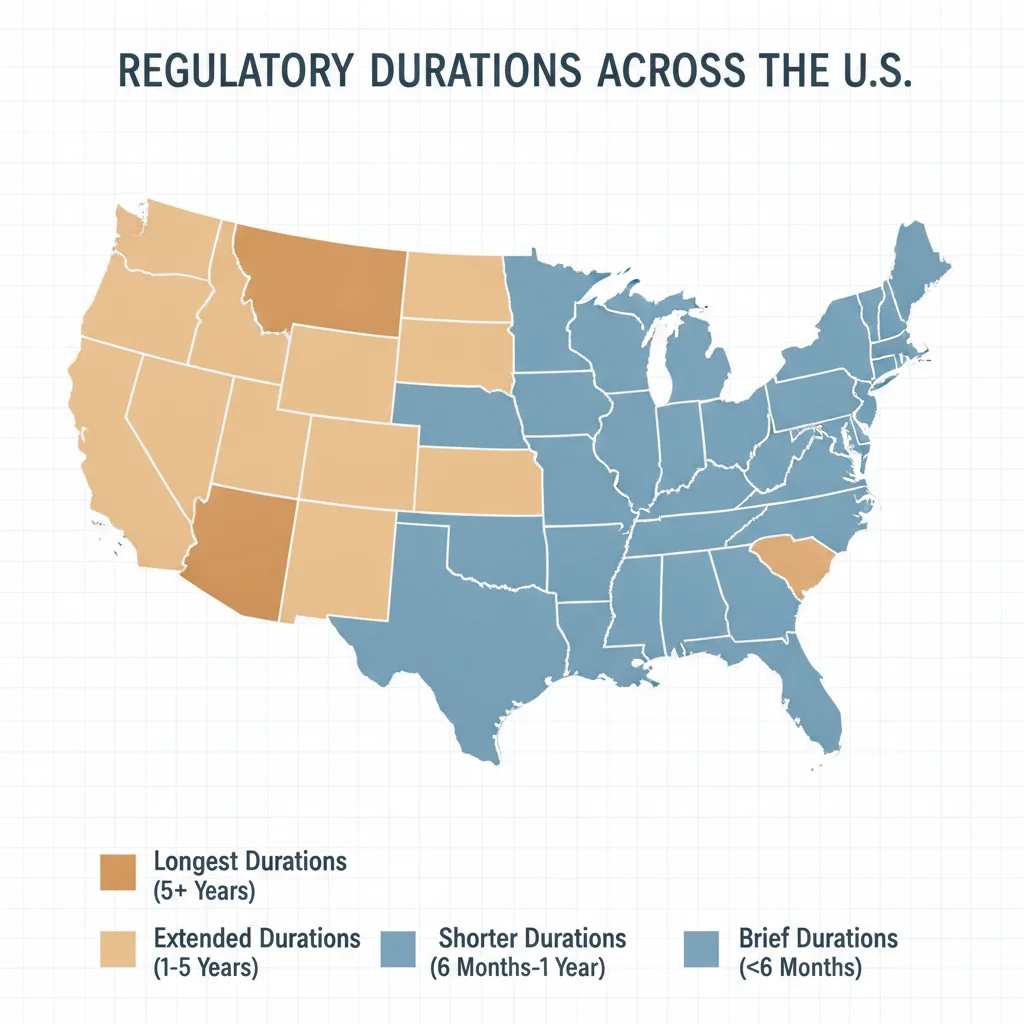
These differences matter most if you've moved between states after getting a violation. Your new state's DMV generally receives conviction data through the Driver License Compact (DLC) or the Non-Resident Violator Compact, and it may apply its own retention rules going forward. Your insurance company, however, will pull your full MVR history when you get a new policy — so violations from another state don't disappear just because you relocated.
38 states
Members of the Driver License Compact
The DLC allows states to share conviction data across state lines, meaning out-of-state violations follow most drivers home.
3–5 years
Typical DMV retention for a speeding ticket
This is the most common range across U.S. states for minor moving violations, though some states differ substantially.
Up to 47%
Average premium increase after a DUI
According to insurance industry analyses, a first-time DUI can raise annual premiums by nearly half compared to a clean record.
18 months
New York point retention window
New York's DMV point system only counts violations within the last 18 months, though the violation itself appears on the MVR longer.
To understand what moving violations actually do to your point total and license standing in your state, our companion piece on what a moving violation actually does to your driving record breaks it down clearly.
The Insurance Lookback Window: Separate From Your DMV Record
Your insurance company doesn't just accept whatever your state DMV shows. Insurers use their own lookback periods when rating a policy, and these can differ from state retention periods in both directions.
Most standard insurers apply a 3-year lookback for minor violations like speeding or a running a red light. During renewal cycles within that window, expect a surcharge — a premium increase tied specifically to that violation. Once the violation ages past 3 years, the surcharge typically drops off at your next renewal, sometimes meaningfully.
Serious violations — reckless driving, hit-and-run, excessive speeding — often extend the insurance lookback to 5 years. DUIs are treated with the longest view: many carriers apply a 5- to 10-year surcharge window, and some non-standard carriers will decline coverage entirely until the DUI is well past. Our article on how insurers price DUI risk details the premium trajectory year by year.
One important timing note: the insurance lookback period typically runs from the incident date, not the conviction date. If your violation occurred in March but you weren't convicted until October, most insurers count from March. Always confirm with your carrier which date they use — it affects when you can expect your rate to improve.
The good news is that violations aging off your record work automatically in your favor over time. Our piece on factors that improve your rate without you doing anything explains the full picture of passive rate improvement, including how older violations eventually stop counting.
Motor Vehicle Report (MVR)
An official record issued by a state DMV listing a driver's convictions, violations, license suspensions, and accidents. Insurance companies pull your MVR when you apply for or renew a policy to assess risk.
Surcharge period
The window of time during which an insurer adds a premium increase for a past violation or at-fault accident. Once the violation ages past this window at renewal, the surcharge typically drops off.
Point system
A state DMV mechanism that assigns numeric values to traffic violations. Accumulating too many points within a set period triggers license suspension or revocation.
Deferred adjudication
A court program that delays a final ruling on a violation. If the driver meets certain conditions during the deferral period, the case is dismissed and no conviction appears on the driving record.
Driver License Compact (DLC)
An interstate agreement enabling member states to share traffic conviction data. When you're convicted in a member state, that information is reported back to your home state's DMV.
Lookback period
The span of time an insurer reviews when evaluating your driving history for rating purposes. Minor violations typically fall within a 3-year lookback; serious violations may extend to 5–10 years.
Conviction date
The date on which a court formally finds you guilty of a traffic offense. Retention periods on DMV records typically run from the conviction date, while insurance lookbacks often run from the incident date.
What You Can Do to Reduce the Impact
You can't erase a valid conviction — any service claiming otherwise is misleading you. But there are legitimate actions that reduce how long or how severely a violation affects you.
Defensive Driving Courses
Many states allow you to complete a state-approved defensive driving or traffic school course in exchange for point reduction or, in some cases, masking a violation from your insurance MVR (though it still appears on the DMV record). This option is usually available once every 12 to 18 months and typically must be elected before or shortly after conviction. Ask the court at the time of your hearing — not months later.
Deferred Adjudication or Diversion Programs
Some jurisdictions offer deferred adjudication for first-time or minor violations. You pay a fee, meet certain conditions, and if you stay clean for the deferral period, the violation is dismissed and doesn't appear as a conviction. These programs are not universally available — eligibility varies by state, county, and violation type.
Expungement (Rare, Limited)
Expungement of traffic records is extremely limited in most states and typically reserved for cases where charges were dismissed or you were found not guilty. A paid conviction generally cannot be expunged. Don't pay anyone who promises otherwise.
Shopping for Insurance After the Lookback Clears
Once a violation ages past an insurer's lookback window, it no longer affects your rate with that carrier — but competing carriers may still see it on your MVR if it's within their own lookback window. Time your comparison shopping carefully: get quotes after the violation clears both the DMV record and the insurance window for maximum rate improvement. Our detailed breakdown of how traffic violations affect your car insurance rates walks through which specific violations cause the biggest premium jumps and for how long.

Conviction Date vs. Incident Date: Know the Difference
State DMVs count retention periods from the conviction date — the day the court found you guilty or you paid the fine. Insurance companies, however, often run their lookback window from the incident date. This gap matters: if you fought a ticket in court for several months, your DMV clock starts later than your insurance clock. Always ask your carrier which date they use when estimating when a surcharge will end.
Traffic School Doesn't Always Hide a Ticket From Insurers
Some states allow traffic school to mask a violation from your insurance MVR, but not all do. California's traffic school option, for example, hides the violation from your insurer but still records it internally at the DMV. Before enrolling in a course expecting an insurance benefit, confirm with your state DMV and your insurance carrier what the actual effect will be on your MVR. Assumptions here can be expensive.
Out-of-State Violations Still Count
If you receive a ticket in another state, your home state's DMV typically receives that conviction data through interstate compacts. Your home state may apply its own point values to the out-of-state offense — and your insurer will see it on your MVR regardless. Driving across state lines doesn't create a clean slate for your record.
Reference Summary: Typical Violation Retention Periods
Use this as a quick reference. Verify your specific state's rules via your DMV website, since these are representative ranges, not universal guarantees.
| Violation Type | DMV Record (Typical) | Insurance Lookback (Typical) |
|---|---|---|
| Minor speeding (1–15 mph over) | 3–5 years | 3 years |
| Running a red light | 3–5 years | 3 years |
| Improper lane change / failure to yield | 3–5 years | 3 years |
| Excessive speeding (25+ mph over) | 5–7 years | 3–5 years |
| Reckless driving | 5–7 years | 5 years |
| At-fault accident | 3–5 years | 3 years |
| Driving without insurance | 3–5 years | 3–5 years |
| DUI / DWI | 10 years to lifetime | 5–10 years |
| Hit-and-run | 7–10 years | 5–7 years |
| License suspension | 3–7 years | 3–5 years |
Sources: Individual state DMV policies and standard insurance underwriting guidelines. Ranges reflect variation across U.S. jurisdictions.
State DMV Driving Record Lookup
Most state DMV websites allow you to request your own official Motor Vehicle Report. Pulling your record before buying insurance or contesting a ticket gives you an accurate baseline of what insurers will see.
Traffic Violation Severity Guide
Our <a href="/maintenance-and-ownership/safety-legal/traffic-laws/traffic-violation-severity-infractions-misdemeanors-and-felonies-compared">guide to violation severity tiers</a> explains the difference between infractions, misdemeanors, and felonies so you understand exactly what category your offense falls into.
How Traffic Violations Affect Insurance Rates
A detailed breakdown of which violations cause the largest premium increases, how long surcharges last, and what you can realistically do to minimize the financial damage.
AAMVA Driver History Record Standards
The American Association of Motor Vehicle Administrators publishes guidelines on how states should retain and share driving history data — useful context for understanding interstate record sharing.
Defensive Driving Course Finder
State-approved defensive driving courses can reduce points or mask minor violations from insurers in eligible states. Use your state DMV's approved provider list to find a qualifying course.

All claims are backed by peer-reviewed research. Sources on request.