Key Takeaways
Why Hazard Perception Is the Core Skill Most Drivers Were Never Taught
Driving education in the United States focuses heavily on mechanical operation — how to use the gas, brake, and steering wheel — but largely skips the cognitive layer that separates safe drivers from dangerous ones. That layer is hazard perception: the ability to identify a potential threat in time to act on it smoothly, rather than reactively.
Research from the NHTSA consistently points to recognition failure as a leading precursor to crashes. The driver saw the hazard — but too late to respond without overcorrecting or colliding. According to the agency's analysis of pre-crash data, roughly 94% of serious crashes involve some element of driver error, and a significant share of those errors trace back to where and how the driver was looking in the seconds before impact.
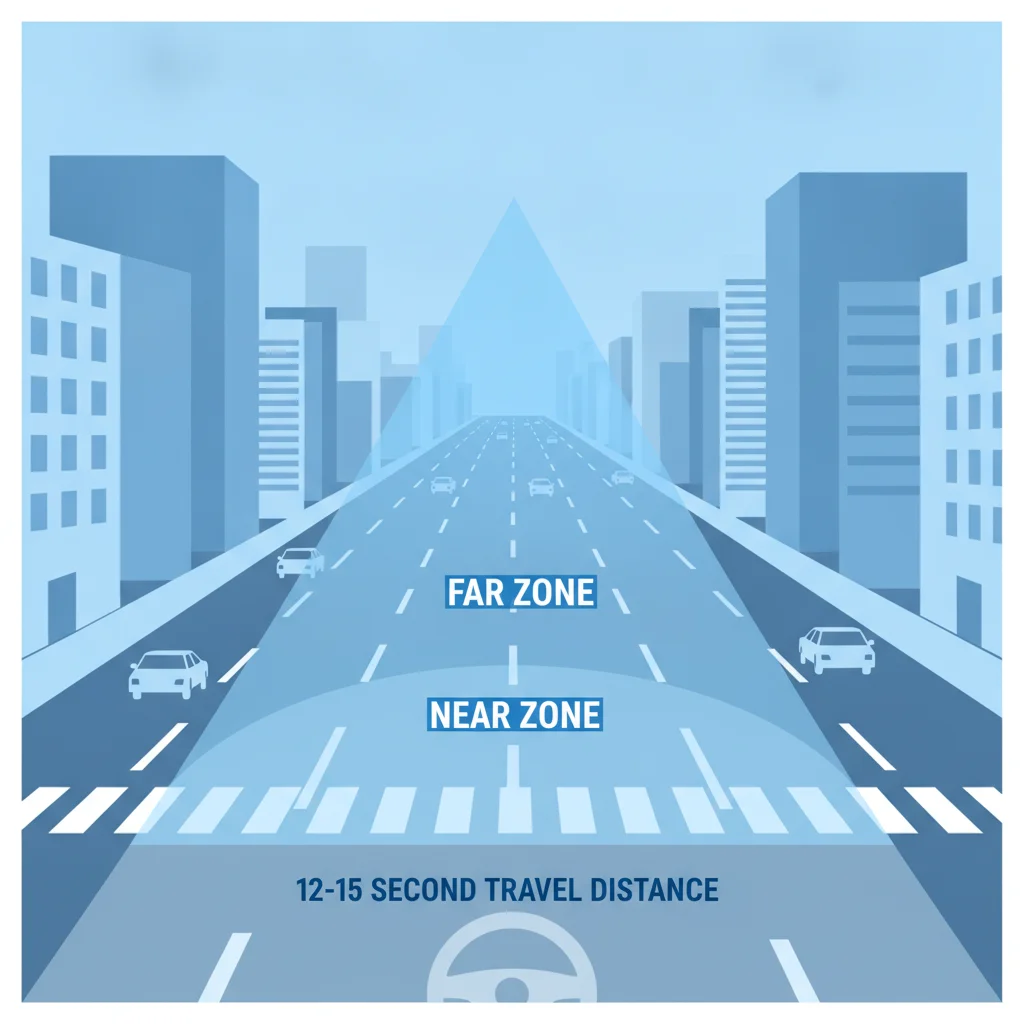
What separates a trained law enforcement officer, commercial truck driver, or racing instructor from the average commuter isn't necessarily faster reflexes — it's that they see threats earlier. They've developed a structured visual scan that pushes their effective horizon out to 12–15 seconds of travel time. At 60 mph, that's roughly a quarter mile. At city speeds, it's the full length of a typical block.
This guide translates that professional technique into something any driver can practice consciously. It's worth noting upfront: the habits described here complement, not replace, the kind of mechanical self-awareness covered in our guide to reading your car before it breaks down. A car that's mechanically sound and a driver who scans correctly are two halves of the same safety equation.
The Science Behind the 12–15 Second Rule
The 12–15 second scanning standard didn't originate in a defensive driving classroom — it emerged from research into how expert drivers actually process visual information. Studies comparing novice and expert drivers using eye-tracking technology found a consistent pattern: experts fixate on points farther ahead, shift their gaze more systematically, and spend less time staring at the space immediately in front of their hood.
The human brain needs roughly 1.5–2.5 seconds to perceive a hazard, decide on a response, and begin executing a physical reaction. Add the mechanical lag of a braking system, and a car traveling 60 mph needs approximately 300 feet to come to a full stop under ideal conditions. If you're only scanning 3–4 seconds ahead — the default behavior many drivers fall into — that margin evaporates on any road with complexity: merging traffic, pedestrians, debris, or a sudden signal change.
The 12–15 second rule: Always keep your primary visual focus on the road space your vehicle will reach in 12 to 15 seconds. At 30 mph, that's roughly one city block. At 65 mph, it approaches a quarter mile.
The technique is taught explicitly in the Smith System — a structured driving method widely used in commercial fleet training — and in the NSC's defensive driving curriculum. Both systems converge on the same principle: the further ahead you look, the more time you buy yourself to make calm, controlled decisions.
It's also worth understanding what this technique does not mean. Scanning far ahead doesn't mean ignoring what's close. The full technique requires a coordinated sweep that includes near-field awareness and mirror checks — all of which are covered in the steps below.
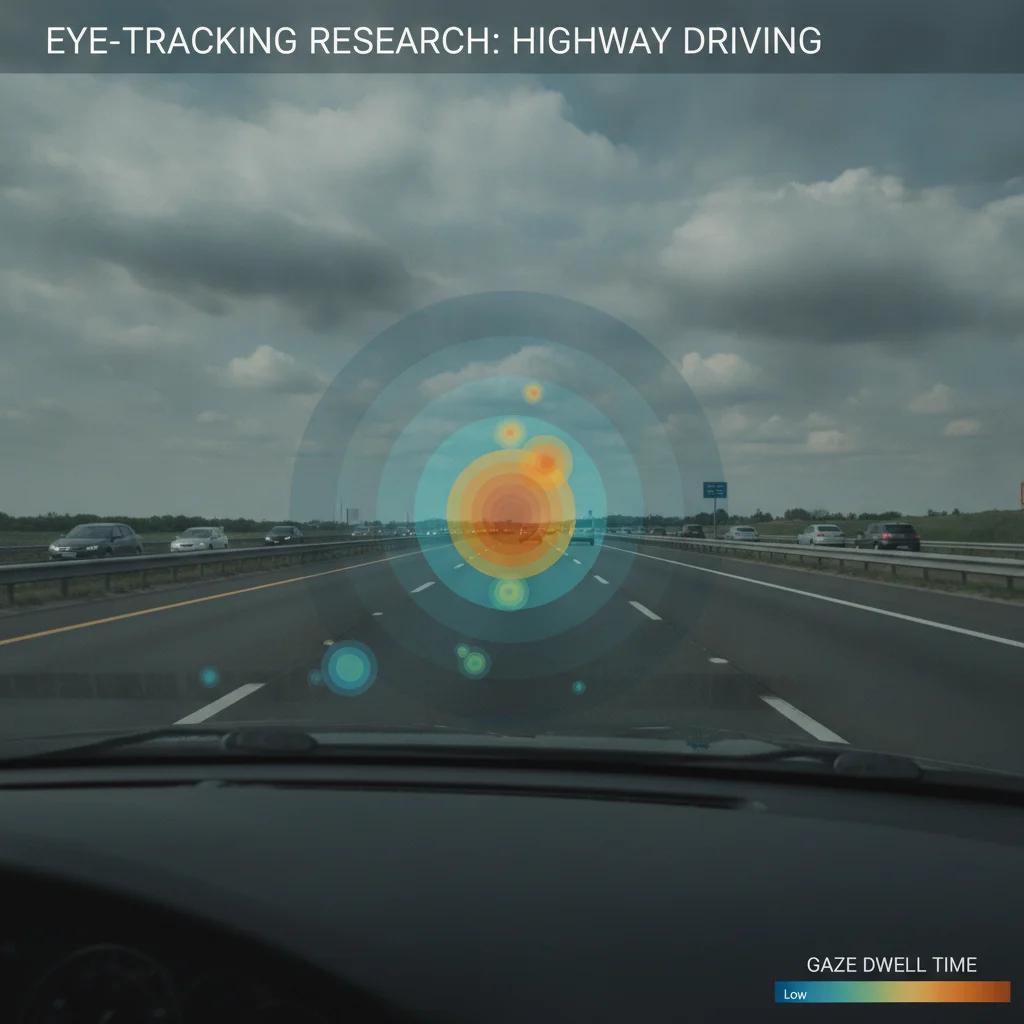
Drivers who rely purely on reactive instinct — responding to hazards only when they enter the near field — are operating with almost no buffer. That's the behavioral pattern linked most directly to the crash types documented in NHTSA's research, and it's addressed in detail in our companion piece on driving behaviors that cause crashes even when drivers think they're being safe.
What You'll Need Before You Start
This technique is practiced entirely in real driving conditions — no equipment required beyond your vehicle and a safe driving environment. That said, a few prerequisites will make the learning process more effective and safer.
What you will need
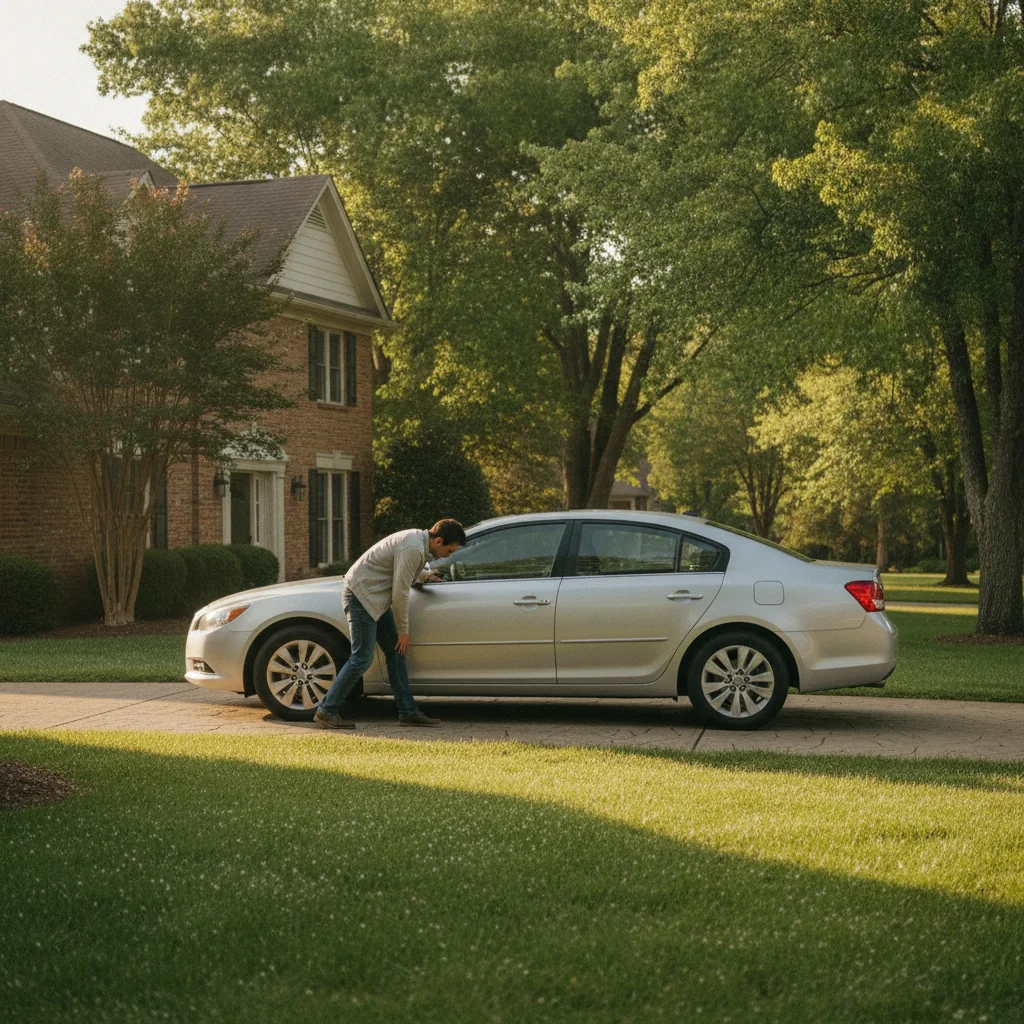
It also helps to start your practice with a quick check that your vehicle's mirrors are properly adjusted and your sight lines are clear. A two-minute walk-around before a practice session — checking tire condition, window cleanliness, and mirror placement — removes mechanical distractions. Our pre-drive walkthrough guide outlines exactly what to check in under two minutes.
Properly Adjusted Side and Rearview Mirrors
Forms the foundation of your 360-degree awareness system; blind spots result directly from mirrors set for the wrong driver position.
Clean Windshield and Windows
Haze, streaks, and grime dramatically reduce contrast and depth perception, especially in low-angle sunlight or at night.
Polarized Sunglasses
Reduces road glare and surface reflection, improving hazard visibility on bright days and wet roads.
Dashcam (optional, for review)
Allows you to review your drive footage afterward and identify moments where your scan may have missed an emerging hazard.
How to Scan the Road Ahead: Step-by-Step
The following technique is adapted from Smith System and NSC defensive driving frameworks. Practice each step individually before combining them into a unified scan. Most drivers notice a difference in situational awareness within the first two or three conscious practice sessions.
Establish Your 12–15 Second Visual Target
At the start of every drive, consciously pick a fixed reference point on the road that represents 12–15 seconds of travel at your current speed. At 30 mph, that's approximately one city block ahead. At 60 mph, it's roughly a quarter mile. Your eyes should default to resting on — and regularly returning to — this far-zone target.
Initially, this will feel unnatural. Most drivers habitually fixate 2–4 seconds ahead, just past the hood. Override that impulse and push your gaze forward. You're not staring blankly at the horizon; you're actively processing what's happening at that distance: vehicles slowing, lane changes developing, pedestrians stepping toward the curb, signal lights cycling.
Develop a Structured Mirror Sweep Cadence
Far-zone scanning is only half the picture. Threats often approach from behind and beside you, and those require regular mirror checks. Experienced drivers develop a cadence: every 5–8 seconds in normal traffic, sweep your rearview mirror, then each side mirror, then return your eyes forward to the far zone.
This doesn't mean taking your eyes off the road for extended periods — each mirror glance is roughly half a second. The goal is building a rhythm so that you always have a current mental model of what's happening around your vehicle, not just in front of it.
On highways with fast-moving traffic or in merging situations, tighten this cadence to every 3–5 seconds. In slow urban traffic, you can relax slightly, but never abandon it entirely — rear-end impacts at low speeds are among the most common collision types in city driving.
Add Near-Zone Awareness Without Fixating
The near zone — roughly the 2–4 second space directly in front of you — still requires attention, but it should function as a peripheral monitoring zone, not your primary focal point. Your eyes should dip briefly into the near zone to confirm lane position, check for sudden obstacles (a pothole, a stopped car, an animal), then return to the far zone.
The distinction matters because fixating in the near zone is how drivers get caught off-guard by hazards that developed while they were watching too close. Conversely, staring only at the far zone can cause you to miss a suddenly stopping vehicle directly ahead. The trained balance is far-zone primary, near-zone confirmatory.
Identify and Mentally Tag Potential Hazards Early
Scanning farther ahead only helps if you're processing what you see, not just looking at it passively. Train yourself to mentally tag objects and situations that carry elevated risk: a pedestrian near a crosswalk who hasn't looked up, a vehicle with its turn signal on in an adjacent lane, a ball rolling into the street, brake lights appearing two cars ahead.
The tagging habit creates what traffic researchers call a mental model of the roadway — a continuously updated picture of where risk is developing. When something changes in that model (the pedestrian steps off the curb, the ball is followed by a child), your brain is already partially prepared to respond.
Verbalize these tags during practice sessions. Saying out loud, "Pedestrian at the crosswalk ahead — possible crossing," forces conscious processing rather than passive observation.
Manage Your Following Distance to Match Your Scan
A scanning technique is only as effective as the space around your vehicle allows. If you're tailgating, even a perfect 15-second far-zone scan won't save you if the vehicle directly in front stops suddenly. Following distance and scanning horizon must be calibrated together.
The standard recommendation is a minimum three-second gap in ideal conditions, extending to four or five seconds in rain or heavy traffic. Measure it by picking a fixed road marker and counting the seconds between when the car ahead passes it and when you do. In practice, most drivers underestimate their following distance significantly.
Adequate following distance also gives you steering room — the ability to move around a stopped car rather than being forced to slam the brakes. This is the real value of space management: it expands your response options from one (braking) to several (brake, steer, or both).
Practice the Full Integrated Scan on a Familiar Route
Once you've practiced each element individually, combine them on a low-stress, familiar route. Choose a road you know well — a regular commute segment or a suburban loop — so route navigation doesn't compete for cognitive bandwidth. Your only job on this practice run is to execute the full scanning sequence: far-zone target, mirror sweep cadence, near-zone confirmatory glances, hazard tagging, and following distance monitoring.
After the drive, conduct a brief self-assessment: Did you maintain the far-zone habit consistently? Were there moments you reverted to near-field fixation? Did you check mirrors at regular intervals? Identifying your specific weak points allows you to focus subsequent practice sessions productively.
Progressive difficulty: once the technique feels natural on familiar roads, introduce it on unfamiliar routes, then on highways, then at night. Each new environment will reveal gaps in your automated behavior that conscious practice can correct.
Don't Practice This Technique While Distracted
Adding a new cognitive layer to your driving requires mental bandwidth. Avoid practicing the scanning technique while using hands-free phone calls, eating, or navigating an unfamiliar route without GPS. Each of those activities competes directly for the attention you need to deliberately retrain your visual habits. Eliminate distractions entirely during practice sessions.
Scanning Doesn't Substitute for Reduced Speed in Poor Conditions
In rain, fog, heavy snow, or nighttime conditions, your visual horizon shrinks regardless of scanning technique. A 15-second scan is meaningless if headlights or daylight only illuminate 2–3 seconds ahead. In these conditions, reduce speed until your stopping distance fits comfortably within your visible range — no technique compensates for a physics mismatch.
Adapting the Technique to Different Driving Environments
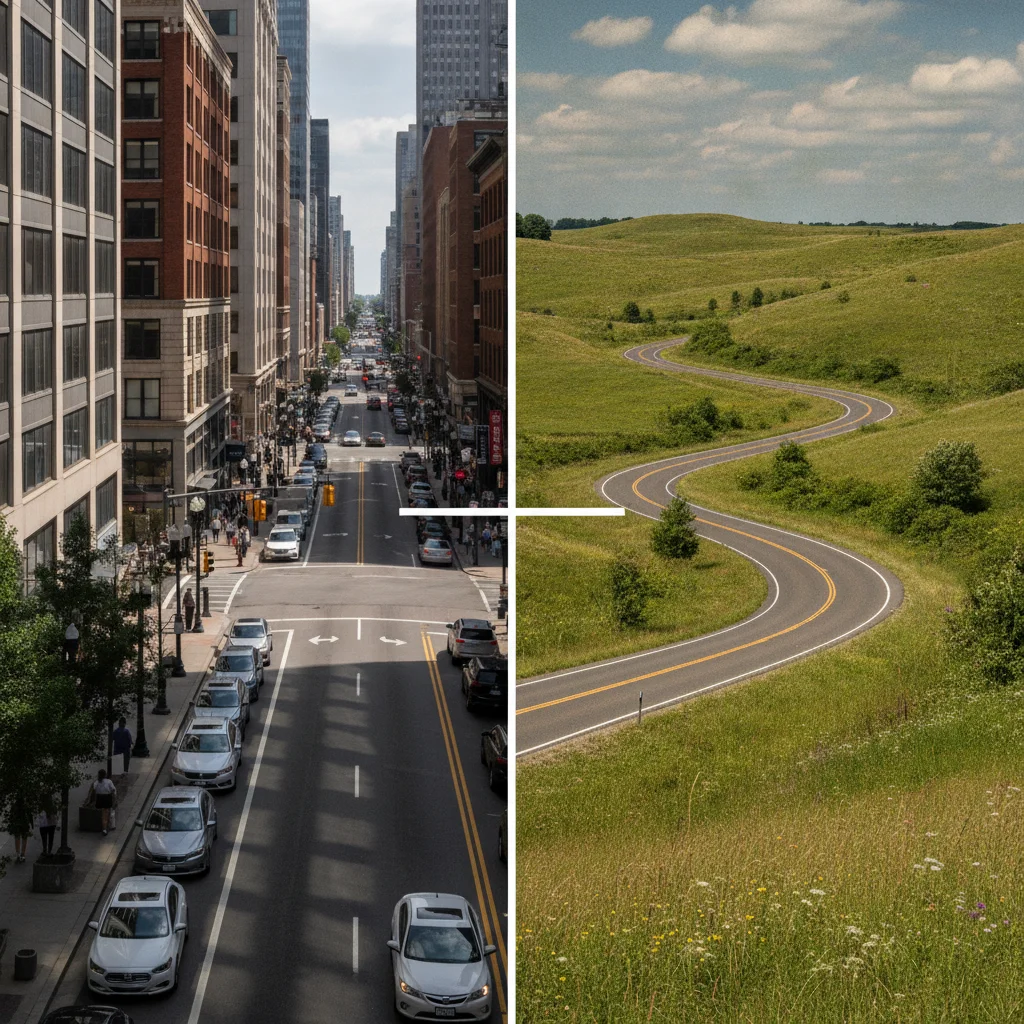
The core scanning habit doesn't change across environments, but your focal distance and scan frequency need to adjust based on context. Here's how to calibrate:
Urban and Suburban Streets
At city speeds (25–40 mph), 12–15 seconds ahead translates to roughly one to two blocks. The near-field becomes more critical here because pedestrians, cyclists, and cars pulling from side streets compress your reaction window significantly. Increase your left-right scan range and watch for escape routes — gaps in parallel traffic where you could steer if a hazard materializes directly ahead.
Highway and Interstate Driving
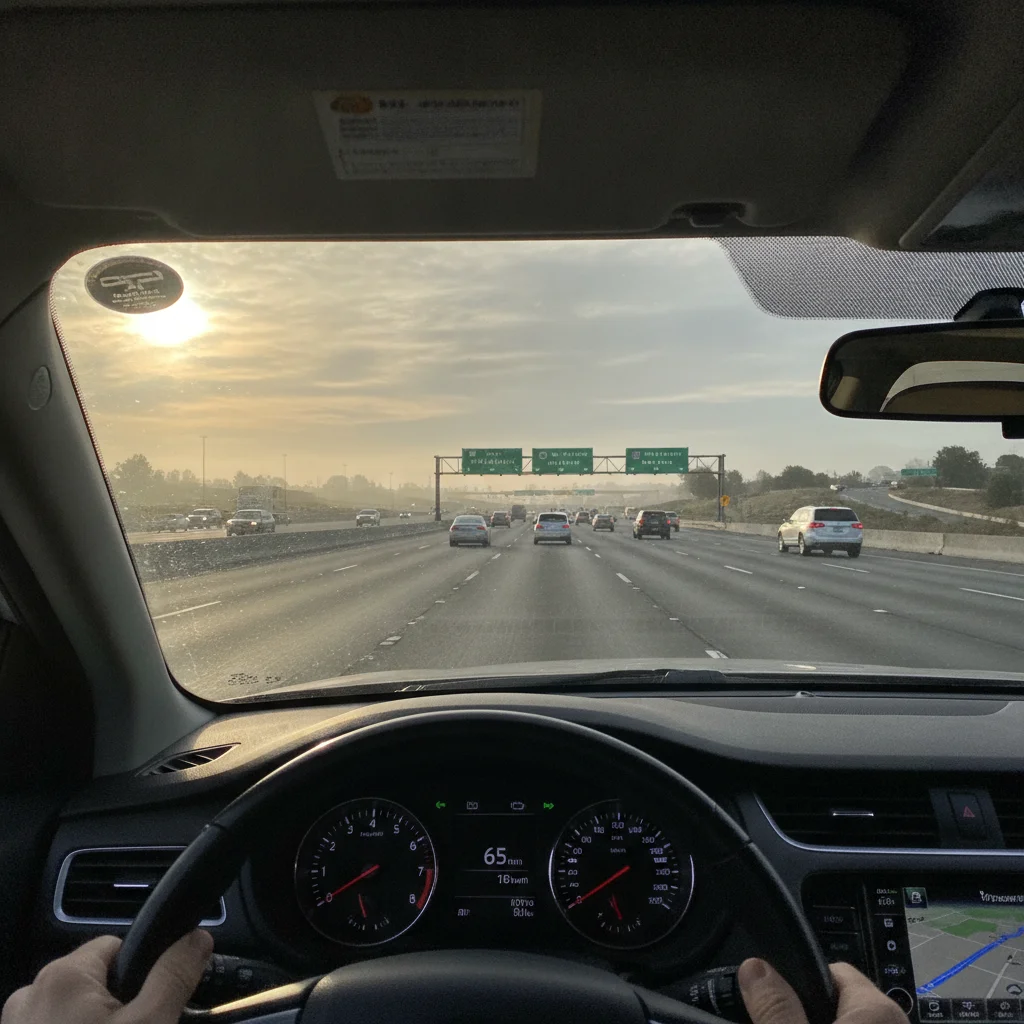
At 65–75 mph, 15 seconds ahead is approximately a quarter mile. Your far-zone scan should extend to the visible horizon, and you're primarily looking for lane changes, brake lights appearing in clusters (a sign of hidden congestion), and debris in your path. Mirror sweeps become more important here because merging threats come from the sides rather than head-on.
Rural Two-Lane Roads
These roads present unique hazards: limited sight distance around curves, animals crossing, slow farm equipment, and oncoming vehicles that may drift. Scan aggressively at curve exits — don't commit your lane position until you can see through the curve. Reduce speed before curves so your stopping distance fits within your visible range.
Night Driving and Low Visibility
Your visual horizon shrinks dramatically at night. Standard low-beam headlights illuminate roughly 160 feet — at 60 mph, that's under 2 seconds of stopping distance. This is the one scenario where slowing down is the only way to restore your scanning margin. High beams when appropriate and clean windshields are non-negotiable.
Parking lots and reverse maneuvers represent a separate challenge entirely. The scanning geometry reverses, and your mirrors become your primary far-zone tool. Our detailed guide on backing up safely covers the spatial awareness techniques specific to that environment.
Use Traffic Flow as a Scanning Aid
When driving on multi-lane roads, the behavior of traffic two or three cars ahead in adjacent lanes is often an early warning signal. If vehicles in those lanes are braking or moving laterally, something is developing ahead that you can't yet see directly. Train yourself to use surrounding traffic as an extended sensory system — it effectively multiplies your scanning range beyond your own sight lines.
Start Your Practice on Low-Traffic Roads
Attempting to build a new visual habit in dense traffic adds cognitive load at the worst possible time. Begin your practice on familiar, low-complexity roads — residential streets, light suburban routes — where the stakes of a momentary lapse in attention are lower. Once the habit feels more automated, graduate to busier environments.
Consistency Matters More Than Perfection
You won't maintain a perfect 12–15 second scan 100% of the time, and expecting to do so will discourage practice. The realistic goal is raising your average scanning horizon from 3–4 seconds to 10–12 seconds over several weeks. Even an incremental improvement in where your eyes rest delivers measurable reductions in reaction time.
Building the Habit: What the Research Says About Skill Retention
Reading about a scanning technique and internalizing it as an automatic behavior are two different cognitive achievements. Research in motor learning suggests that a new procedural habit requires deliberate practice with feedback over roughly 20–30 sessions before it begins to execute without conscious effort. For a daily commuter, that's three to four weeks of intentional focus.
The most effective practice structure is progressive. Introduce the far-zone scan first — it's the highest-leverage change. Spend a full week simply committing to looking 12–15 seconds ahead and narrating to yourself what you see there. In week two, add the structured mirror sweep cadence. By week three, integrate the near-zone awareness and commentary habit.
One training tool used in commercial fleet programs is the commentary drive: narrating aloud everything you observe while driving. It sounds unusual, but it forces the brain to process visual information consciously rather than passively. It's also a useful self-diagnostic — if you run out of things to narrate, your eyes aren't moving.
Finally, situational awareness doesn't start when you pull out of the driveway. It begins before you drive: knowing your route, understanding likely congestion points, and ensuring your vehicle is in condition to respond when you need it. Our guide to inspecting your car for early warning signs is a useful complement to what you're learning here — because a scanning technique is only as good as the vehicle executing it.
If, despite your best efforts, an incident does occur, knowing how to manage the scene safely matters enormously. Our article on accident scene safety covers the steps to protect yourself and others in the critical minutes before help arrives.
Recognition Failure Causes Most Serious Crashes
NHTSA data consistently shows that driver recognition failure — seeing a hazard too late to respond — is the dominant factor in serious crash causation. This isn't primarily a speed or recklessness problem; it's a perception timing problem. The scanning technique in this guide directly targets that failure mode. Practicing it is one of the highest-return safety investments a driver can make.
If a Crash Does Occur, Scene Safety Is Critical
Even well-trained drivers can be involved in accidents caused by others. If you're ever at an accident scene — as a participant or a witness — secondary crashes are a genuine and underappreciated danger. Review our article on <a href="/maintenance-and-ownership/safety-legal/accident-procedures/accident-scene-safety-protecting-yourself-and-others-before-help-arrives">accident scene safety procedures</a> to understand how to protect yourself and others in those first critical minutes.

All claims are backed by peer-reviewed research. Sources on request.