Key Takeaways
Why Parking Lots Produce So Many Crashes
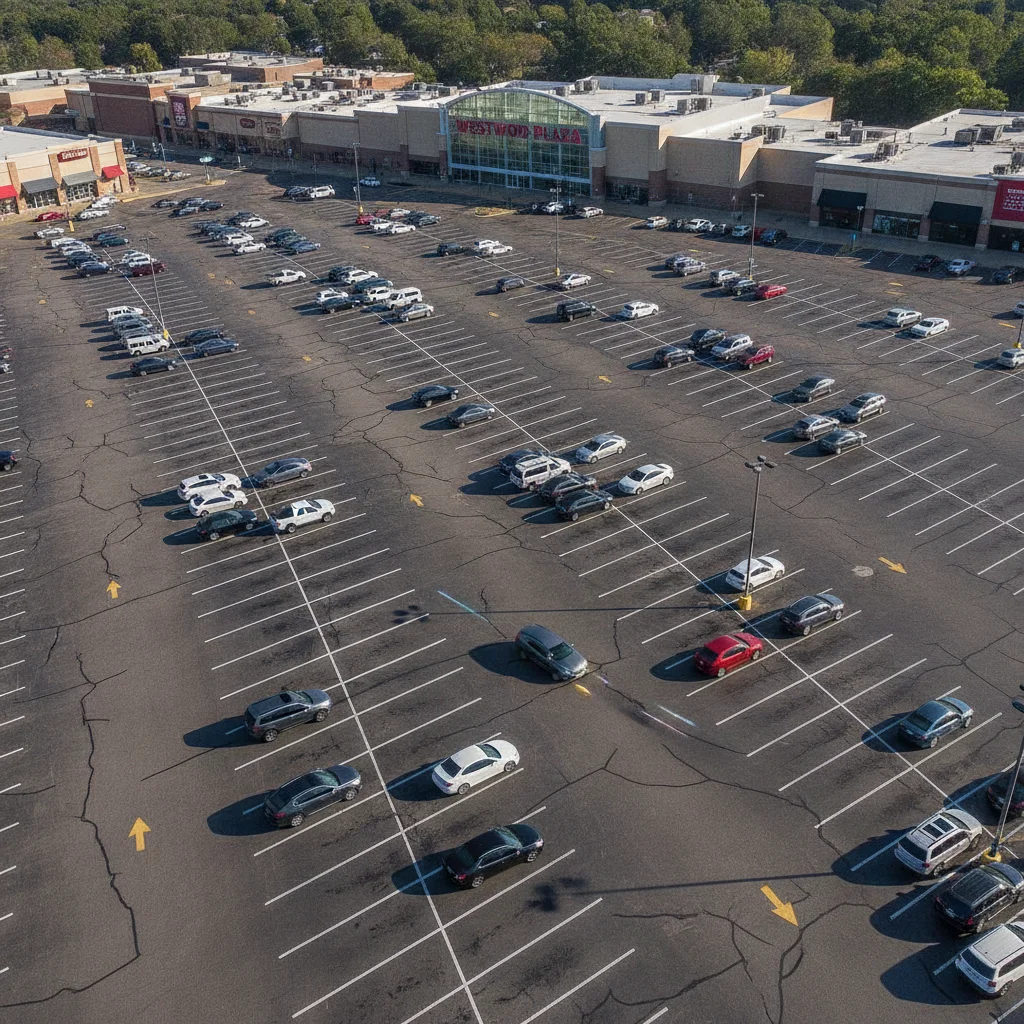
At first glance, parking lots seem like low-stakes driving environments. Speeds are low, distances are short, and there's no oncoming traffic in the traditional sense. Yet the National Safety Council estimates that roughly 20% of all vehicle accidents occur in parking lots and garages — resulting in approximately 60,000 injuries and 500 deaths each year. The disconnect between perceived risk and actual risk is what makes parking lots consistently dangerous.
The core problem is that parking lots concentrate multiple unpredictable hazards into a compressed space simultaneously: pedestrians moving in all directions, vehicles reversing from all angles, children running between parked cars, shopping carts drifting into lanes, and drivers distracted by the act of searching for a space. Unlike roadways, which have formalized right-of-way rules backed by signage and clear lane markings, most parking lots operate on informal conventions that drivers interpret differently.
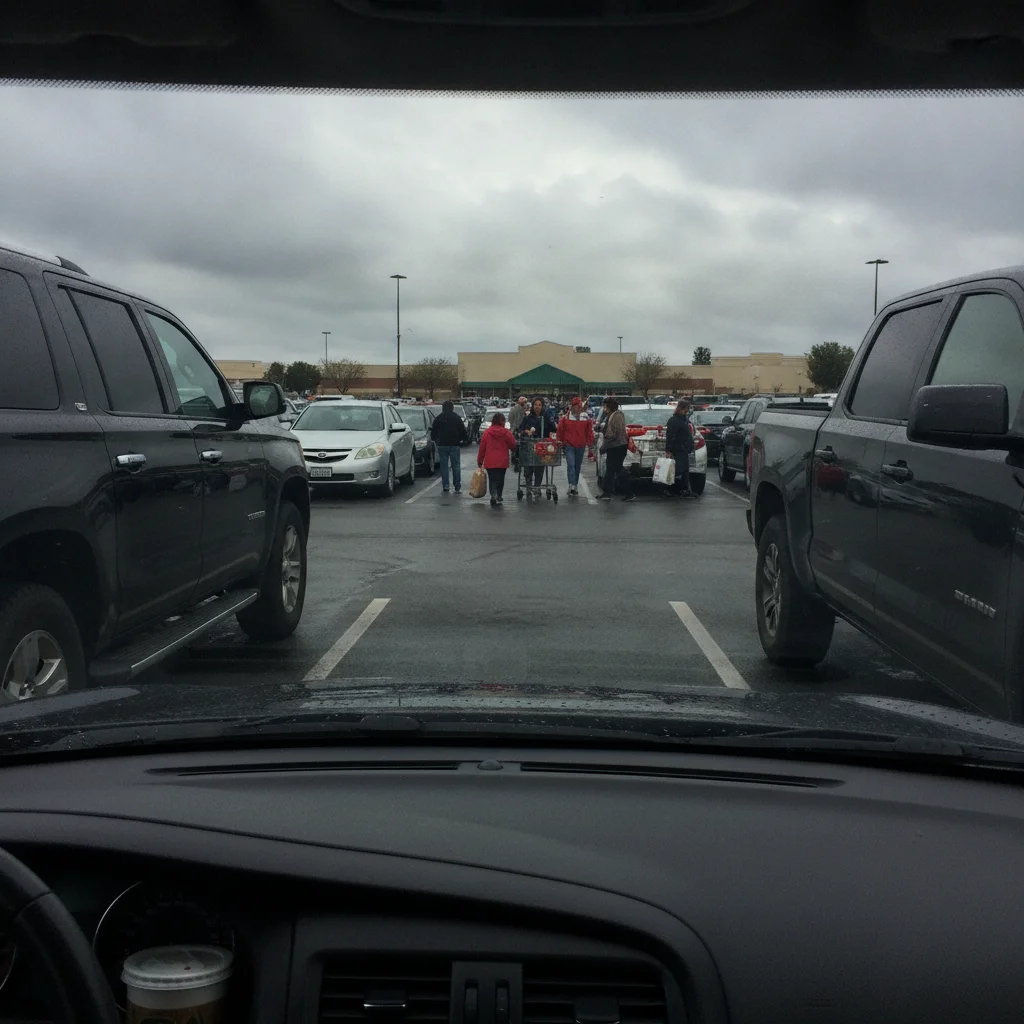
Reversing is the riskiest movement within that already-risky environment. When a vehicle moves backward, the driver's natural forward-facing orientation works against them. The rear of most passenger vehicles carries the largest blind zone of any directional view, and that zone expands dramatically in taller vehicles. A full-size pickup truck can have a rear blind zone extending more than 30 feet — longer than two average parking spaces placed end to end.
Compounding the geometry problem is a habits problem. Most American drivers received little or no formal instruction in reversing technique during driver's education. The dominant focus of driver training is forward-motion driving on roads. Reversing is typically treated as a minor skill demonstrated once for the parallel parking portion of the road test and rarely revisited. That instructional gap follows drivers for life.
Understanding the driving behaviors that cause crashes even when drivers feel safe helps explain why low-speed lot accidents are so common despite drivers feeling in control. Overconfidence in familiar environments — like a neighborhood grocery store lot — is one of the most reliable predictors of inattention.
What You Need Before You Start
Reversing safely doesn't require expensive equipment, but it does require that your existing equipment is functional and properly configured. Before working through the technique steps below, confirm the basics are in order.
What you will need
Rearview or Backup Camera
Provides a real-time video feed of the area directly behind the vehicle, reducing the rear blind zone.
Properly Adjusted Side Mirrors
Expands lateral visibility on both sides of the vehicle when reversing, covering areas the backup camera misses.
Rear Cross-Traffic Alert System
Uses radar sensors to warn drivers of vehicles approaching from the sides while backing out of a space.
360-Degree Surround-View Camera
Stitches together multiple camera feeds into a bird's-eye view of the vehicle's surroundings, useful in tight spaces.
If your vehicle predates the NHTSA's 2018 federal backup camera mandate and lacks a camera entirely, the technique adjustments are modest but worth noting: your reliance on mirror checks and physical head turns increases, and your backing speed should be even more conservative — closer to 2 to 3 mph rather than 5 mph.
The Step-by-Step Technique for Safe Reversing
The following steps reflect the reversing protocol taught in commercial driver training programs and endorsed by defensive driving curricula. Each step is designed to be discrete and repeatable — not a checklist you run through once but a sequence that becomes automatic with practice.
Choose your parking space with reversing in mind
Safe backing starts before you ever shift into Reverse. When entering a lot, scan for spaces that offer the cleanest exit path — ideally a pull-through space that lets you drive forward to leave. If a pull-through isn't available, favor end-of-row spots or those adjacent to cart corrals, pillars, or other fixed objects on only one side rather than both.
Consider the traffic flow in the lane you'll be backing into. Spaces that angle your vehicle toward an exit lane — rather than a high-pedestrian zone like a storefront entrance — give you a margin of recovery if something unexpected enters your path.
Adjust mirrors before you need them
Mirror adjustment should happen at the start of every drive, not in the moment before you reverse. Your side mirrors should be angled so you can just barely see the rear corner of your own vehicle — no more. A common mistake is angling mirrors inward, which creates overlap with what the rearview mirror already shows and leaves large blind zones on the flanks.
Specifically for reversing in parking lots, consider temporarily tilting your passenger-side mirror slightly downward. This gives you a ground-level view of the curb, a parked car's bumper, or a child at low height near your passenger rear quarter — an area your backup camera may not fully capture.
Perform a full pre-reverse walk-around or visual scan
Before shifting into Reverse, take five to ten seconds to conduct a 360-degree visual scan from inside the vehicle. Rotate your head and check all mirrors in sequence: driver-side mirror, rearview mirror, passenger-side mirror. Then physically turn your head and look out the rear window — do not skip this step even if you have a backup camera.
If you've been parked for more than a few minutes, especially in a busy lot, a short physical walk-around of the vehicle before getting in is even better. Pedestrians, shopping carts, and small children can move into the space behind your vehicle between when you last looked and when you begin moving.
[in_content_images:0]Signal your intent and alert surrounding drivers
Activate your reverse lights by shifting into Reverse before you begin moving. This is not just a legal requirement — it's a communication signal to pedestrians and other drivers that you are about to move rearward. Hold position with your foot on the brake for two to three seconds after shifting. This pause gives drivers and pedestrians already in motion a chance to see your reverse lights and react.
In lots where visibility is limited by large SUVs or trucks on either side of your space, a brief tap of the horn before moving backward is a widely accepted and effective warning signal — not rude, just safe.
Back out slowly with continuous mirror and head checks
Begin reversing at a speed no faster than a brisk walking pace — roughly 3 to 5 mph. At this speed, your foot should be hovering over or lightly resting on the brake, not the accelerator. Use feathered brake pressure to control speed rather than coasting and then braking sharply.
As you move, alternate your gaze in a consistent cycle: backup camera display → driver-side mirror → rear window (physical turn) → passenger-side mirror → back to camera. Repeating this cycle continuously — rather than staring at a single point — is what trained fleet and commercial drivers do to catch hazards from any direction.
Stop and reassess any time a new vehicle, pedestrian, or cart enters the lane behind you. The parking lot lane is shared right-of-way; assume other drivers may not stop for you.
Complete the maneuver and re-check before driving forward
Once fully backed into the traffic lane, come to a complete stop before shifting from Reverse to Drive. This momentary pause allows you to scan left and right down the lane, confirm no vehicle is approaching, and check whether any pedestrians have stepped into the lane from the sides during your maneuver.
Avoid the common habit of shifting on the roll — moving from Reverse to Drive while the vehicle is still in motion. Beyond the added wear on your transmission, it reduces the time you have to confirm the lane is clear before proceeding forward.
It's worth noting that these habits connect to broader scanning techniques that apply well beyond parking lots. The practice of scanning the environment the way experienced drivers do instinctively uses the same fundamental principle: continuous, rotating visual attention rather than fixed-point staring.
If Something Goes Wrong: What to Do After a Backing Incident
Even drivers who follow correct technique can experience backing incidents — a pedestrian who steps out from behind an obscured vehicle, a cart that rolls silently into a blind zone, or a driver who enters a lane without warning. The outcome of a parking lot crash depends significantly on how the next few minutes are handled.
First, stop the vehicle immediately when you feel or hear contact. Do not pull forward or continue reversing — movement can compound damage or injury. Shift to Park, activate your hazard lights, and exit the vehicle to assess the situation.
Children Are the Highest-Risk Pedestrians in Lots
The NHTSA estimates that backup incidents kill roughly 200 people annually in the U.S. and injure around 15,000 more. Children under five are disproportionately represented in fatalities because their height places them entirely within most vehicles' rear blind zones. Always conduct a physical check behind your vehicle before reversing if children are known to be present.
Large Vehicles Dramatically Expand Your Blind Zone
Trucks, SUVs, and vans have rear blind zones that can extend 20 to 50 feet behind the vehicle — longer than many parking spaces. If you've recently switched from a sedan to a larger vehicle, recalibrate your mental model of your vehicle's footprint before assuming your previous habits transfer.
If another vehicle is involved, exchange insurance and contact information regardless of fault. If there is property damage and no other party is present, leave a note with your name and contact information — leaving the scene of a property-damage accident without identifying yourself is a misdemeanor in most U.S. states.
Document everything: photograph the vehicles' positions, any visible damage, the surrounding lot, and any nearby camera systems that may have captured the incident. Our full guidance on accident scene safety and protecting yourself before help arrives covers what to do when the situation involves injury or secondary hazards.
For context on how fault is assigned in parking lot incidents — which follows a different logic than standard road accidents — see parking lot accident rules, fault, and claims. You may also find the broader accident procedures hub useful if this is your first time navigating a post-crash process.
Parking Lot Crashes Still Count as Accidents
A low-speed backing collision in a parking lot is a reportable accident — and it can affect your insurance rates just like a road collision. Fault in parking lot incidents follows specific rules that differ from standard road right-of-way. If you're involved in a backing crash, document the scene thoroughly and do not assume that private property status eliminates liability. See <a href="/maintenance-and-ownership/safety-legal/accident-procedures/accidents-in-parking-lots-rules-fault-and-claims-that-catch-drivers-off-guard">how parking lot fault and claims work</a> for guidance specific to these situations.
Building the Habit: How Long It Actually Takes
Behavioral research on driving habits suggests that new techniques require roughly 20 to 30 repetitions in realistic conditions before they become automatic. For reversing, that means intentionally applying the full sequence — space selection, mirror check, pre-reverse scan, signal pause, slow speed, cycling gaze pattern, and full stop before shifting to Drive — each time you back out of a space for the next several weeks.
The good news is that parking lot reversing happens frequently enough to accelerate that learning curve. If you park and unpark twice a day, you can accumulate 30 practice repetitions in two weeks. The technique doesn't require a special practice environment — every grocery run or errand is a training opportunity.
Pull-Through Parking Saves Time and Risk
When lot conditions allow, drive through one space to occupy the next, so your vehicle faces outward. You'll leave the space by driving forward — eliminating the reversal entirely. This technique is standard practice in defensive driving courses and takes no additional time when a pull-through space is available.
Back-In Parking Is Underrated
Reversing into a space when you arrive — rather than pulling in nose-first — may feel slower at first, but it dramatically improves your exit safety. When you leave, you drive forward with full forward visibility into the lane. Many corporate fleet programs mandate back-in parking for exactly this reason.
Use Technology as a Supplement, Not a Replacement
Rear cross-traffic alert systems, surround-view cameras, and parking sensors are valuable tools that reduce cognitive load. However, they are calibrated for specific vehicle speeds and have sensor gaps. Treat every alert as a cue to look — not as a substitute for looking.
Drivers who are new to larger vehicles — trucks, SUVs, or minivans after years in a sedan — should treat the transition as a full reset of their reversing habits, not an adaptation of existing ones. The blind zone differences are significant enough to warrant several deliberate parking lot practice sessions before relying on ingrained technique.
Safe backing is ultimately an extension of the same attentiveness that defines safe driving in all contexts. Drivers who understand how spatial awareness prevents highway merging crashes are applying the same cognitive skill — reading a dynamic environment and moving through it predictably. Parking lots just require that skill at close range and low speed, where complacency tends to take over.

All claims are backed by peer-reviewed research. Sources on request.
Related articles
Accidents in Parking Lots: Rules, Fault, and Claims That Catch Drivers Off Guard
Driving Behaviors That Cause Crashes—Even When Drivers Think They're Being Safe