Key Takeaways
Why Getting This Right Matters More Than You Think
Most American drivers believe they know exactly what to do when they hear a siren. Pull over, stop, wait. Simple. Yet the Federal Highway Administration and multiple state crash databases consistently show that improper responses to emergency vehicles — sudden braking, pulling left instead of right, freezing mid-intersection — contribute to dozens of preventable collisions every year, including fatalities involving the emergency workers themselves.
The issue isn't usually ignorance of the basic rule. It's the gap between knowing the rule and executing it correctly under pressure, in traffic, often with limited reaction time. A study published by the Journal of Safety Research found that drivers exposed to simulated emergency vehicle approaches made measurably worse decisions when distracted or in heavy traffic — both routine conditions on American roads.
This guide is designed to close that gap. It translates what the law requires — and what safety research endorses — into a concrete sequence of actions you can follow from the moment you first detect an emergency vehicle to the moment it passes and you safely re-enter the flow of traffic. For a deeper look at the legal framework that underpins these steps, see our piece on traffic laws surrounding emergency vehicles.
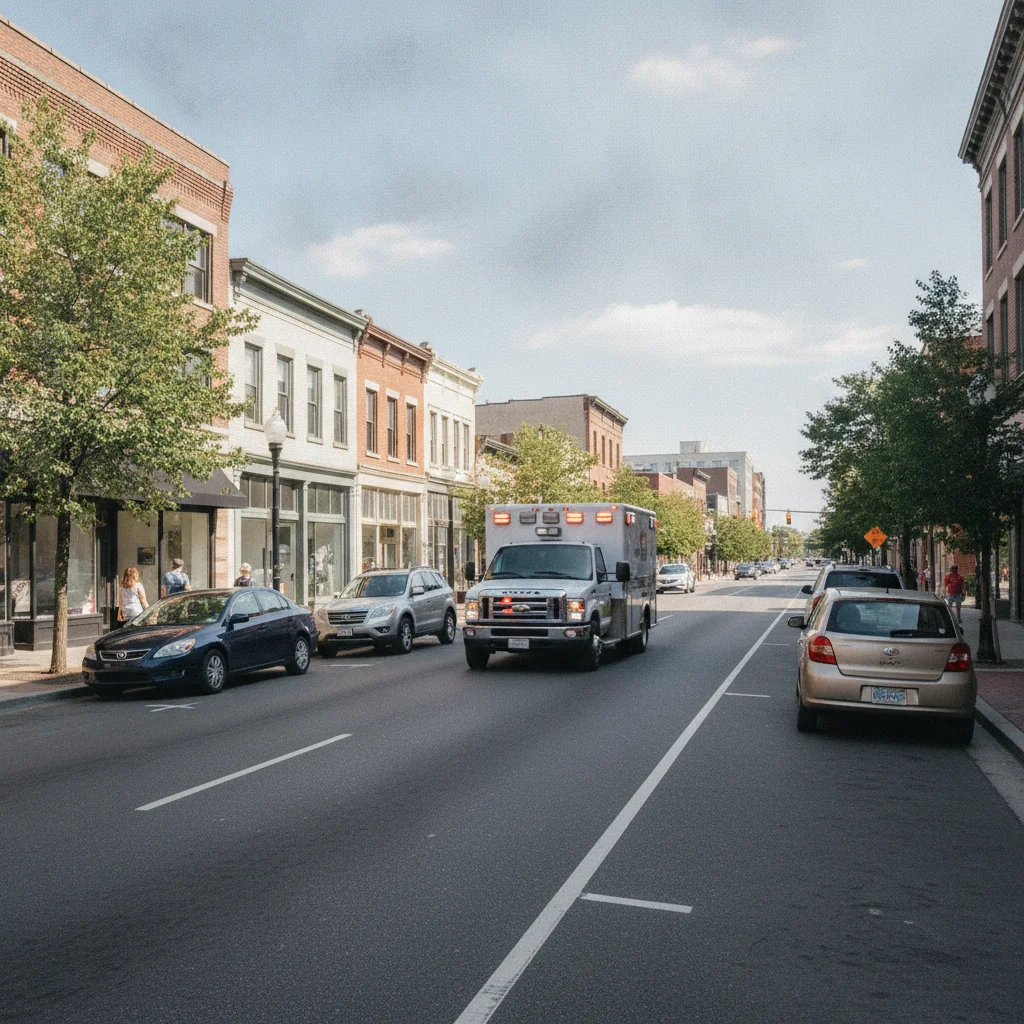
The stakes extend beyond the immediate safety moment. A mishandled response can result in a collision, a moving violation, or both — consequences that ripple into your insurance premiums and driving record. Treating this as a skill worth rehearsing, rather than a rule to vaguely recall, is the right frame of mind.
What the Law Actually Requires
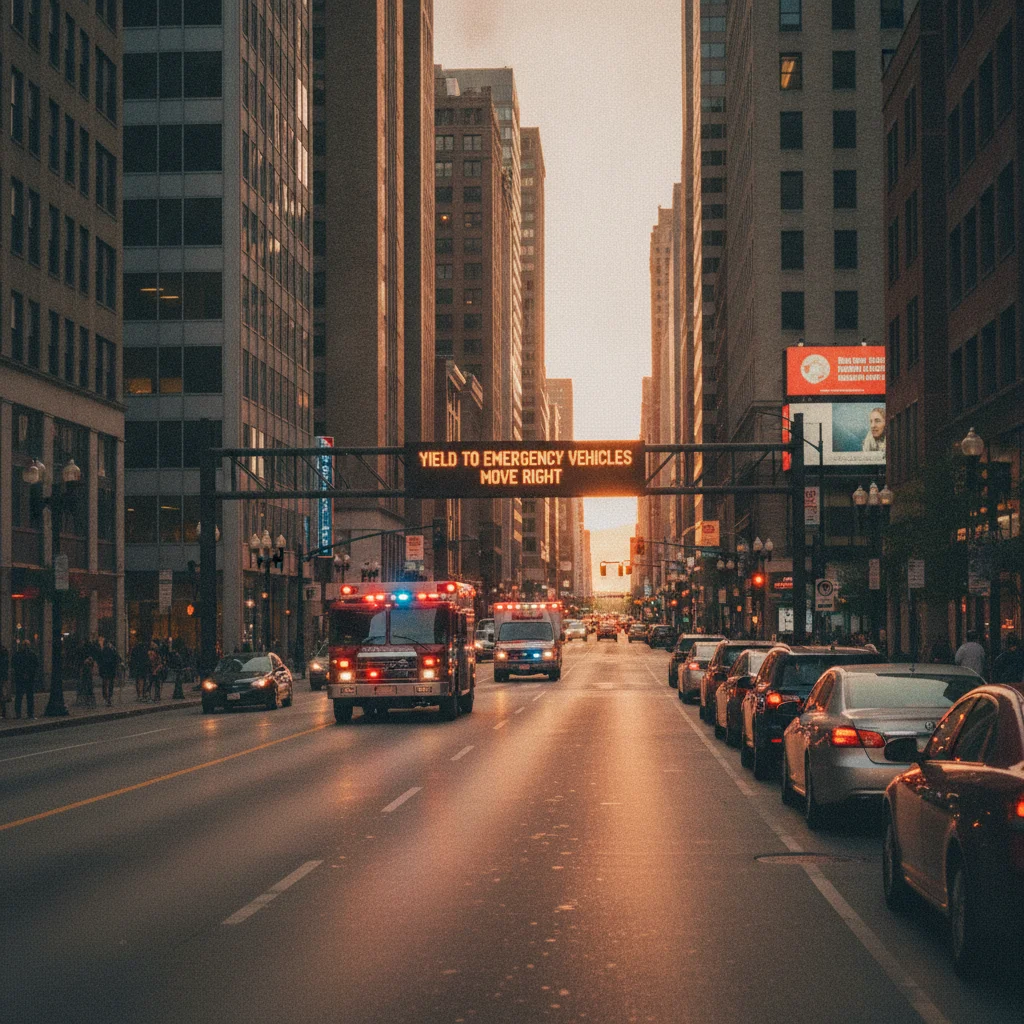
Every state in the U.S. has statutes requiring drivers to yield to emergency vehicles displaying active lights and/or sirens. The core obligation is consistent: pull to the right edge of the road and come to a complete stop, remaining there until the emergency vehicle has passed. The specific language varies by state, but the federal Uniform Vehicle Code serves as the template most state laws follow.
Beyond the basic yield rule, all 50 states have also enacted Move Over laws that expand driver obligations to stationary emergency vehicles — police cruisers, ambulances, fire trucks, and in many states, tow trucks — parked on the roadside with lights active. In those situations, drivers approaching from behind must either vacate the adjacent lane (if safe to do so) or significantly reduce speed below the posted limit. Our detailed breakdown of Move Over laws covers what each state specifically mandates and the penalties for non-compliance.
Distracted Driving Dramatically Slows Emergency Vehicle Detection
A driver looking at a phone, adjusting a GPS, or eating while driving loses between one and three seconds of reaction time compared to an attentive driver. In an emergency vehicle approach scenario where total available reaction time may be four to six seconds, that gap can mean the difference between a clean response and a violation — or a collision. Put devices away before you start moving.
Don't Assume 'Green Means Go' at Intersections
Emergency vehicles routinely run red lights and stop signs under emergency conditions. A green traffic signal does not legally or physically protect you from a conflict with an approaching emergency vehicle. Always scan the intersection before proceeding, even on green, particularly near hospitals, fire stations, and busy corridors where emergency traffic is common.
What the law does not require — and what drivers often do out of confusion — is yielding to emergency vehicles traveling in the opposite direction on a divided highway. On roads separated by a median or barrier, you generally do not need to stop for oncoming emergency traffic. On undivided roads, the obligation typically applies regardless of direction of travel, though you should verify your specific state's statute.
Penalties for non-compliance are real and escalating. Depending on the state and circumstances, failing to yield to an emergency vehicle can result in fines ranging from $150 to over $500, license points that affect your insurance rates, and in egregious cases — such as a collision resulting from failure to yield — misdemeanor charges. Some states have enacted enhanced penalties following high-profile firefighter fatalities.
Understanding the legal baseline matters, but it only gets you so far. The harder question is how to execute the response correctly when it counts.
What You Need Before You Can Execute Well
Responding correctly to an emergency vehicle isn't a matter of special equipment, but it does require a baseline of situational awareness and habits that many drivers let lapse. Before walking through the steps, confirm you have these fundamentals covered.
What you will need
Step-by-Step: How to Respond When an Emergency Vehicle Approaches
The following sequence applies to the most common scenario: an emergency vehicle approaching from behind or from ahead on an undivided road while you are in motion. Variations for intersections and stationary vehicles are addressed in the notes of each relevant step.
Detect the emergency vehicle as early as possible
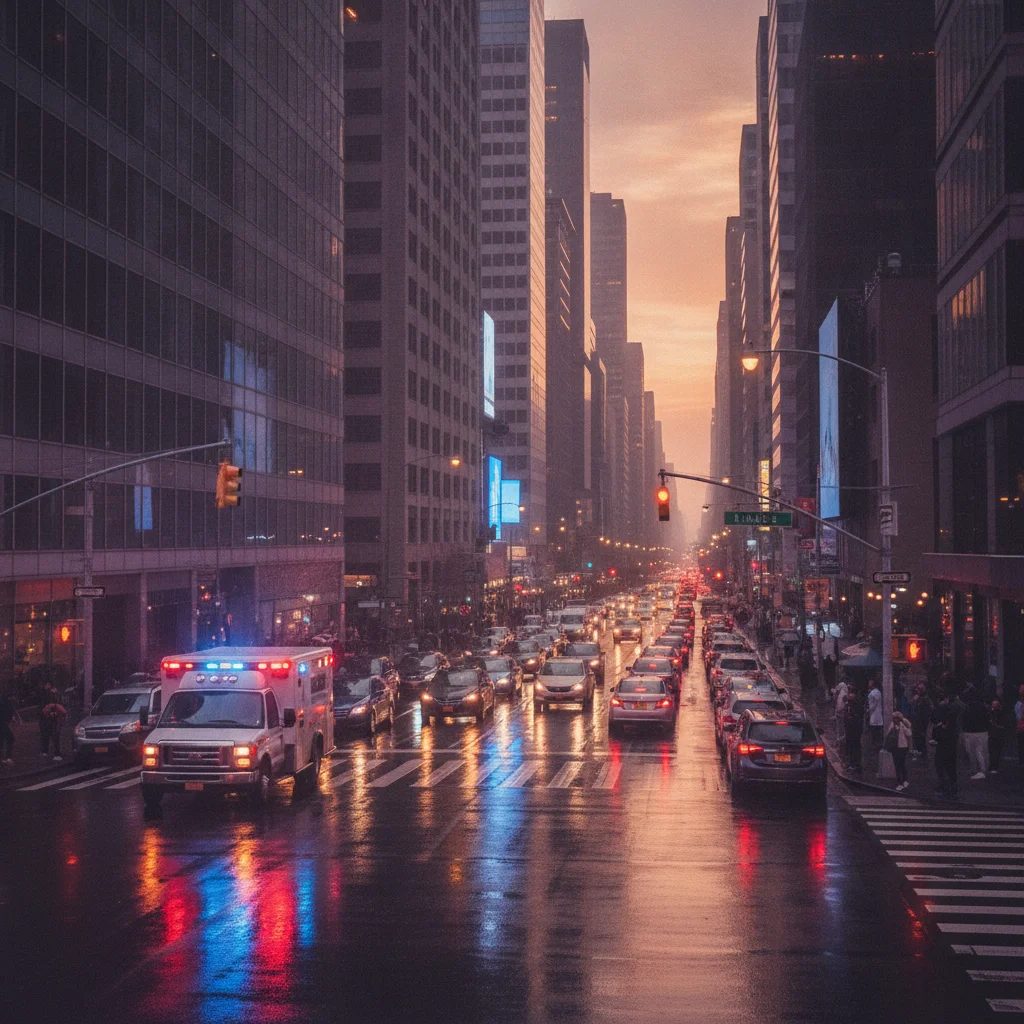
As soon as you register a siren or see flashing red, blue, or white emergency lights — whether in your mirrors, ahead of you, or from a side street — begin active scanning. Identify the vehicle's direction of travel, its approximate distance, and the number of lanes between you and the intended path of travel.
Early detection is the single biggest factor in how well the rest of the response goes. Drivers who detect an emergency vehicle late are far more likely to brake suddenly, change lanes without checking mirrors, or freeze in an intersection. Keeping audio volume manageable and scanning mirrors every five to eight seconds in normal driving are habits that directly support early detection.
Signal your intent to move right
Activate your right turn signal immediately. This communicates your intention to surrounding traffic before you begin moving, giving drivers behind and beside you time to react. In the compressed timeline of a real emergency vehicle encounter, a signal is often the only warning other drivers get.
Do not wait until you've already started moving to signal — the signal precedes the action, not accompanies it. This mirrors the technique you would use for any lane change on a busy road.
Check mirrors and blind spots before moving
Before steering right, check your rearview mirror, right side mirror, and glance over your right shoulder to confirm the lane is clear. Panic stops and immediate hard swerves without checking are a leading source of secondary collisions during emergency vehicle encounters — drivers hit each other, not the emergency vehicle.
If another vehicle is already in the right lane, slow and allow them space to move first, or hold your position until a gap opens. The goal is an orderly, coordinated response across all traffic, not a simultaneous scramble.
Reduce speed gradually and steer to the right curb or shoulder
Apply the brakes smoothly and progressively — not a hard stomp — while steering toward the right edge of the road. Aim to position your vehicle as far right as safely possible without mounting the curb or entering a bike lane if cyclists are present.
On surface streets, the goal is to stop with your right wheels near or at the curb. On a highway, pull fully onto the right shoulder so that your entire vehicle is clear of the travel lanes. Use your hazard lights once stopped to alert approaching traffic that you are stationary.
Come to a complete stop and hold position
Bring your vehicle to a full stop. Do not slow to a near-stop and creep forward. In most states, the statute requires a complete stop — not merely yielding the lane. Keep the vehicle in gear (or in Drive with foot on brake) and remain attentive. Do not use the parked time to check your phone, adjust your seat, or otherwise disengage from the driving environment.
Keep both hands on the wheel and your eyes scanning. You may need to react quickly if the stopped position itself creates a hazard — for example, if a second emergency vehicle is approaching from a different direction.
Wait, scan, and re-enter traffic when clear
After the emergency vehicle passes, wait three to five seconds and scan all directions before signaling your return to the travel lane. Confirm no additional emergency vehicles are following. Then signal, check mirrors and blind spots, and accelerate gradually back to traffic speed.
If you are re-entering from a stopped position on the shoulder of a higher-speed road, allow adequate distance before the next vehicle in the travel lane before merging — treat it as you would any on-ramp merge, not a simple lane change from a moving position.
Practice the Mental Script Before You Need It
Research on driver decision-making consistently shows that pre-planned responses outperform in-the-moment improvisation under stress. Consider mentally rehearsing the sequence — signal, check, slow, pull right, stop, wait — the same way pilots rehearse emergency checklists. You don't need a simulator; walking through it in your mind during a routine commute is enough to improve real-world execution.
Audio Volume Is a Safety Variable
Many near-miss incidents involve drivers who simply didn't hear the siren in time. Road noise, music, podcasts, and phone calls all erode your auditory detection window. Keeping audio at a level where you can still hear external sounds — even on the highway — is a simple habit that buys you valuable extra seconds of reaction time.
Communicate With Passengers
If you have passengers, a brief 'emergency vehicle — hold on' gives them time to brace and stops them from startling you mid-maneuver. Passenger surprise reactions — grabbing the wheel, sudden exclamations — have contributed to driver errors during emergency vehicle responses.
Special Situations: Intersections, Highways, and Divided Roads
The standard pull-right-and-stop sequence works well on surface streets, but several driving environments require adjusted thinking.
Intersections
An intersection is the single most dangerous place to encounter an emergency vehicle. The risk cuts in multiple directions: cross traffic may not see the approaching emergency vehicle; the emergency vehicle may be traveling faster than expected; and drivers in the intersection often freeze or make sudden moves that create secondary hazards.
The correct rule: never enter an intersection if an emergency vehicle is approaching from any direction. If you are already in the intersection when you detect the vehicle, clear it as quickly and safely as possible by proceeding forward — do not stop mid-intersection. Once clear, pull to the right and stop. If you have not yet entered, hold your position behind the stop line regardless of what the traffic signal shows. A green light does not grant right-of-way over an emergency vehicle with active signals.
Multi-Lane Highways and Freeways
On a multi-lane divided highway, pull to the right shoulder when safe to do so. Use your mirrors and signal before changing lanes — the same discipline you would apply in normal traffic. If the rightmost lane is blocked or merging to the shoulder is unsafe, reduce speed substantially and allow the emergency vehicle to pass. On freeways, coming to a complete stop on the travel lane itself creates serious rear-end risk; pulling fully onto the shoulder is strongly preferred.
Stationary Emergency Vehicles (Move Over Obligations)
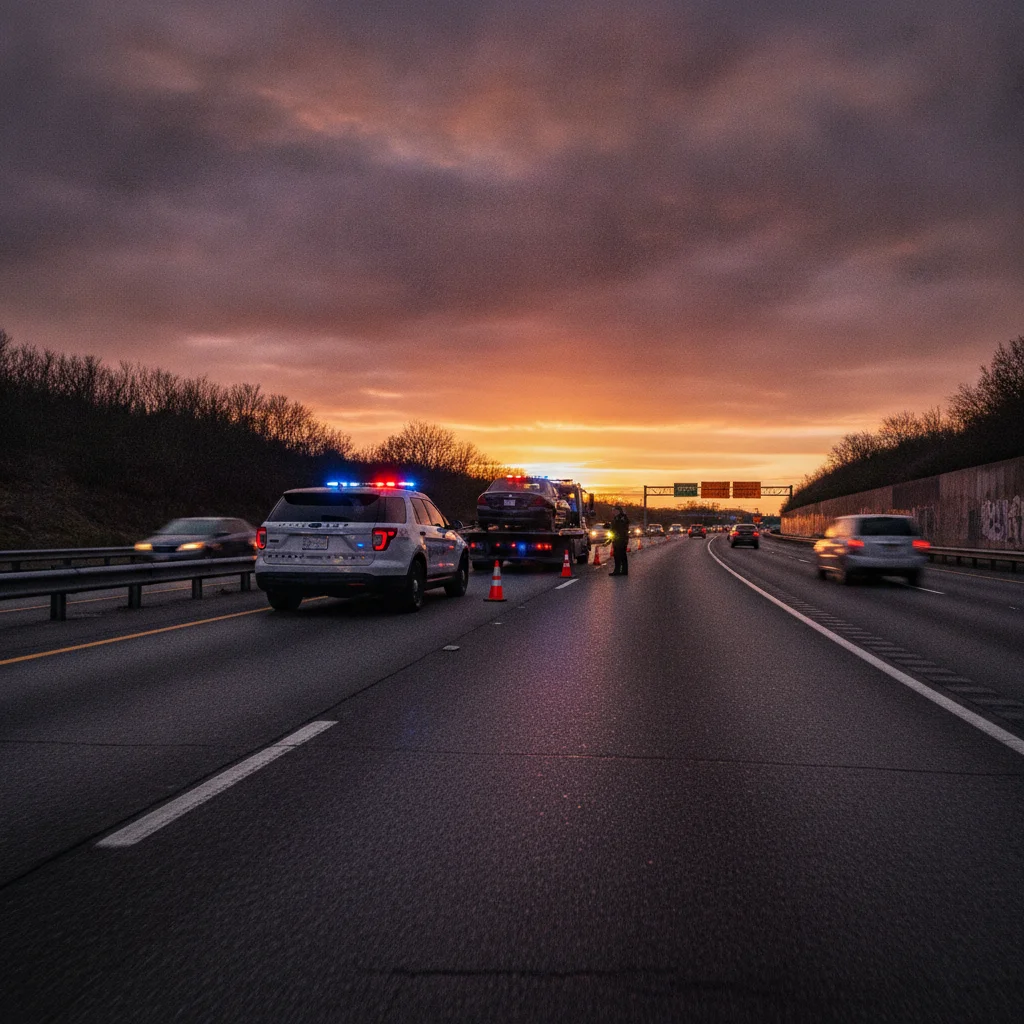
When you see emergency lights ahead on the side of the road — a police stop, an ambulance at a scene, a fire crew — you are typically required to move one lane away from the parked vehicle. If lane change is not safe, reduce speed to at least 20 mph below the posted speed limit, or to 5 mph if the limit is 20 mph or below. These specifics vary by state, but the principle is the same: create distance and slow down. Enforcement of Move Over laws has intensified across the country following years of roadside worker fatalities.
Failure to Yield Has Real Legal Consequences
In most states, failing to yield to an emergency vehicle is a moving violation that carries license points, fines of $150–$500 or more, and potential insurance surcharges. In cases where failure to yield contributes to a collision — including collisions with the emergency vehicle itself — charges can escalate to misdemeanor or felony level depending on the severity of the outcome. These are not warnings that are frequently waived.
Move Over Laws Apply Even When You're Moving
A common misconception is that Move Over laws only apply when you come to a stop beside an emergency vehicle. In fact, the obligation activates as soon as you approach a stationary emergency vehicle with active lights. If you cannot safely change lanes, you must reduce your speed substantially — in most states, at least 20 mph below the posted limit. Driving past at full speed in the adjacent lane is a violation regardless of whether you feel you were at a safe distance.
Tunnels and Bridges
If you are in a tunnel or on a bridge with no shoulder and an emergency vehicle is approaching, maintain your lane, slow down, and hug the right wall or guardrail as closely as safely possible. Come to a stop only if there is adequate space ahead and behind. Do not reverse.
After the Emergency Vehicle Passes: Re-entering Traffic Safely
The moment after an emergency vehicle clears is itself a risk window that drivers tend to underestimate. The temptation — especially if the vehicle is running late or simply impatient — is to immediately pull back into traffic the moment the siren fades. That impulse needs to be suppressed.
Emergency vehicles often travel in convoys. An ambulance may be followed closely by a fire truck or additional police units. Before re-entering, scan in all directions and wait a full three to five seconds after the last vehicle clears to confirm no additional emergency units are approaching.
When you do re-enter, signal, check your mirrors and blind spots, and accelerate gradually. Pulling back into highway-speed traffic from a stopped position on the shoulder requires a longer acceleration window than many drivers allow — especially if you stopped on a grade.
If your response to the emergency vehicle resulted in an abrupt lane change or stop, check around you for other drivers who may have reacted to your movement rather than the siren. Secondary collisions from chain reactions are more common than most people assume.
Finally, if during any of this you noticed a warning light activate — from the hard braking, a curb impact, or any other stress on your vehicle — take it seriously rather than dismissing it in the post-incident adrenaline window. Our guide to responding to dashboard alerts can help you triage what warrants immediate attention versus a scheduled shop visit. And for behaviors or symptoms that require pulling over regardless of circumstances, warning signs you should never ignore while driving is worth bookmarking.
Good responses to emergency vehicles are also worth thinking about in a broader legal context. Understanding your obligations to other vulnerable road users — including pedestrians at crosswalks — follows the same principle of knowing the rule well enough to execute it under pressure. See our overview of pedestrian and crosswalk laws for a comparable breakdown. And if the unexpected does happen and an incident occurs, our accident procedures hub walks through the immediate steps to take.

All claims are backed by peer-reviewed research. Sources on request.