Key Takeaways
Why Emergency Vehicle Laws Trip Up Even Careful Drivers
Ask most licensed drivers what to do when an ambulance comes up behind them and you'll hear some version of: "Pull over to the right." That's partially correct — but partial correctness is exactly where costly mistakes happen.
Emergency vehicle traffic laws in the U.S. are a patchwork of federal guidance, state statute, and local ordinance. The core duties — yield, pull over, stay clear — sound simple until you're on a two-lane road with a median, at a signalized intersection, or boxed in by highway traffic. At that point, most drivers improvise. Officers and courts don't grade improvisation charitably.
Fines for failing to yield to an emergency vehicle range from $150 to over $1,000 depending on state and whether an incident resulted. Move Over Law violations — for failing to change lanes or slow near stopped emergency vehicles — have escalated significantly in recent years, with some states treating repeat offenses as misdemeanors. And because these violations go on your driving record, they can trigger an insurance rate increase at your next renewal.
The traffic laws every driver should actually know cover broad right-of-way basics, but emergency vehicle rules deserve dedicated attention — because the stakes when you get them wrong are higher than most other moving violations.
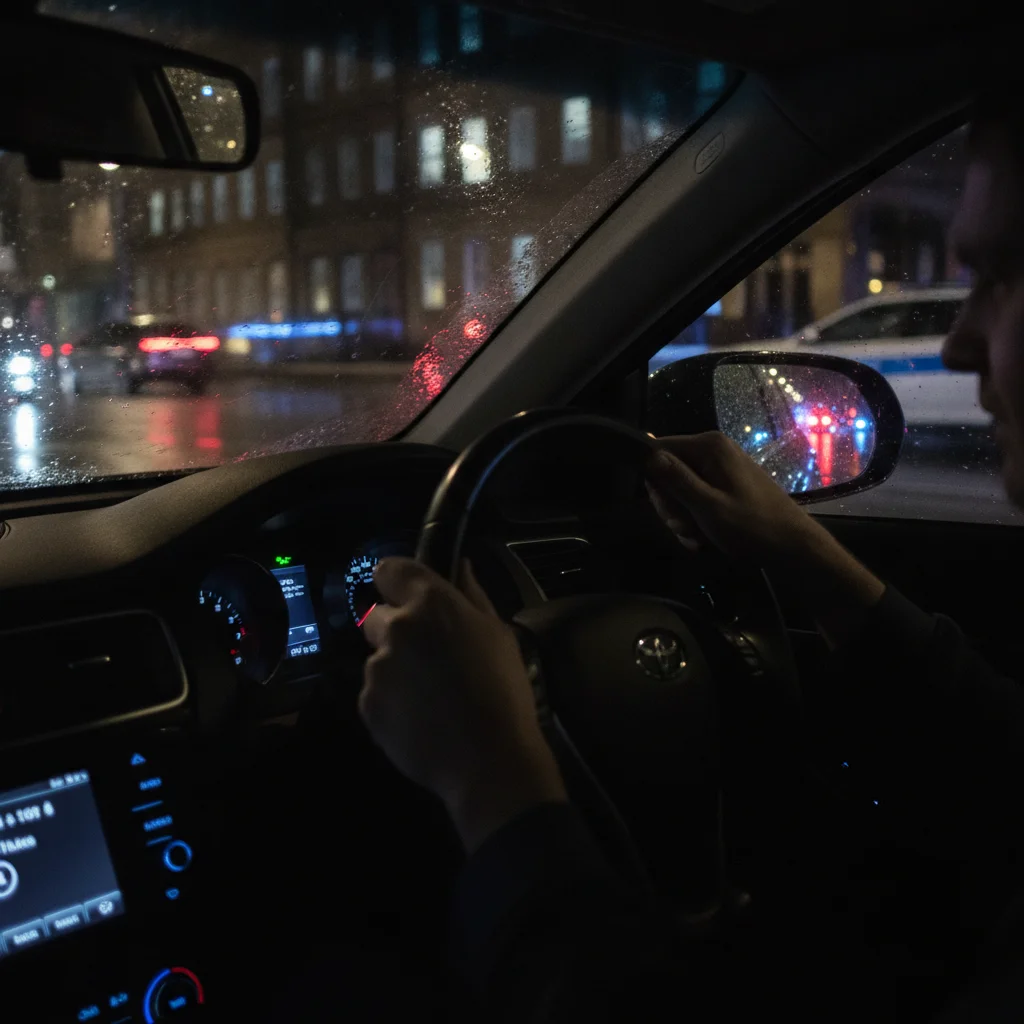
The Most Common Mistakes Drivers Make Around Emergency Vehicles
These aren't edge cases or trick scenarios. They're the situations emergency responders encounter on nearly every call — and the behaviors that generate the most citations, near-misses, and collision reports.
Pulling over to the right regardless of road configuration, including on one-way streets where the left curb may be the correct and legal option.
Why it happens: Drivers learn "pull right" as a reflex, but the rule is actually "pull to the nearest edge of the roadway" — which on a one-way street moving left to right may mean the left curb.
Stopping in the middle of an intersection when sirens are heard, rather than clearing it or holding position before entry.
Why it happens: The siren triggers an immediate stop reflex. Drivers freeze wherever they are, which often means stopping in the intersection itself — one of the most dangerous places to be stationary.
Treating the Move Over Law as a highway-only requirement and failing to change lanes or slow when passing stopped emergency vehicles on surface streets.
Why it happens: Move Over Laws were originally promoted in highway safety campaigns, so many drivers mentally classify them as freeway rules. All 50 states apply them to all roads.
Following closely behind an actively responding emergency vehicle to take advantage of the clear path it creates in traffic.
Why it happens: It's genuinely tempting and feels harmless — the emergency vehicle is clearing traffic, you're just following. But it's illegal, and the emergency scene at the end of that path is not prepared for civilian vehicles arriving immediately behind responders.
Resuming speed immediately once an emergency vehicle appears to slow, rather than waiting until it has fully passed and its lights are no longer active near you.
Why it happens: Drivers interpret any deceleration of the emergency vehicle as the end of their obligation. In reality, additional units may follow, and the legal obligation extends until you're no longer in proximity to the response.
Running a red light to get out of an emergency vehicle's path without verifying the intersection is clear of crossing traffic.
Why it happens: Drivers feel pressure to act fast and interpret yielding to an emergency vehicle as an override of all normal traffic rules. It isn't — it's an additional obligation layered onto existing traffic rules.
71%
Drivers unclear on Move Over Law specifics
A 2022 survey by the Emergency Responder Safety Institute found that 71% of drivers were unfamiliar with the specific requirements of their state's Move Over Law beyond a general "slow down" awareness.
$500–$1,000+
Typical Move Over Law fine range
Move Over violation fines have increased substantially in recent years; states including Florida, Texas, and Georgia now impose fines exceeding $1,000 for repeat or aggravated violations.
319
Emergency responders struck roadside in a single year
According to the National Highway Traffic Safety Administration, 319 emergency responders were struck by passing vehicles in a single recent year, underscoring why Move Over enforcement has intensified.
15–25%
Potential insurance rate increase after moving violation
Insurance industry data consistently shows that a single moving violation — including emergency vehicle citations — can raise a driver's premium by 15% to 25% at the next renewal period.
For a deeper look at how these scenarios connect to broader right-of-way obligations, see what right-of-way actually means in practice. Emergency vehicles hold the highest right-of-way priority on public roads — but that priority doesn't give drivers a pass for creating new hazards while yielding.
Don't Assume Sirens Mean You Have Free Rein
Yielding to an emergency vehicle does not suspend your other traffic obligations. You're still required to avoid blocking intersections, maintain safe gaps from other vehicles, and not endanger pedestrians while pulling over. Officers responding after an incident can and do cite drivers for violations committed in the act of yielding — particularly intersection blocking and unsafe lane changes.
Multiple Emergency Units Often Follow the First
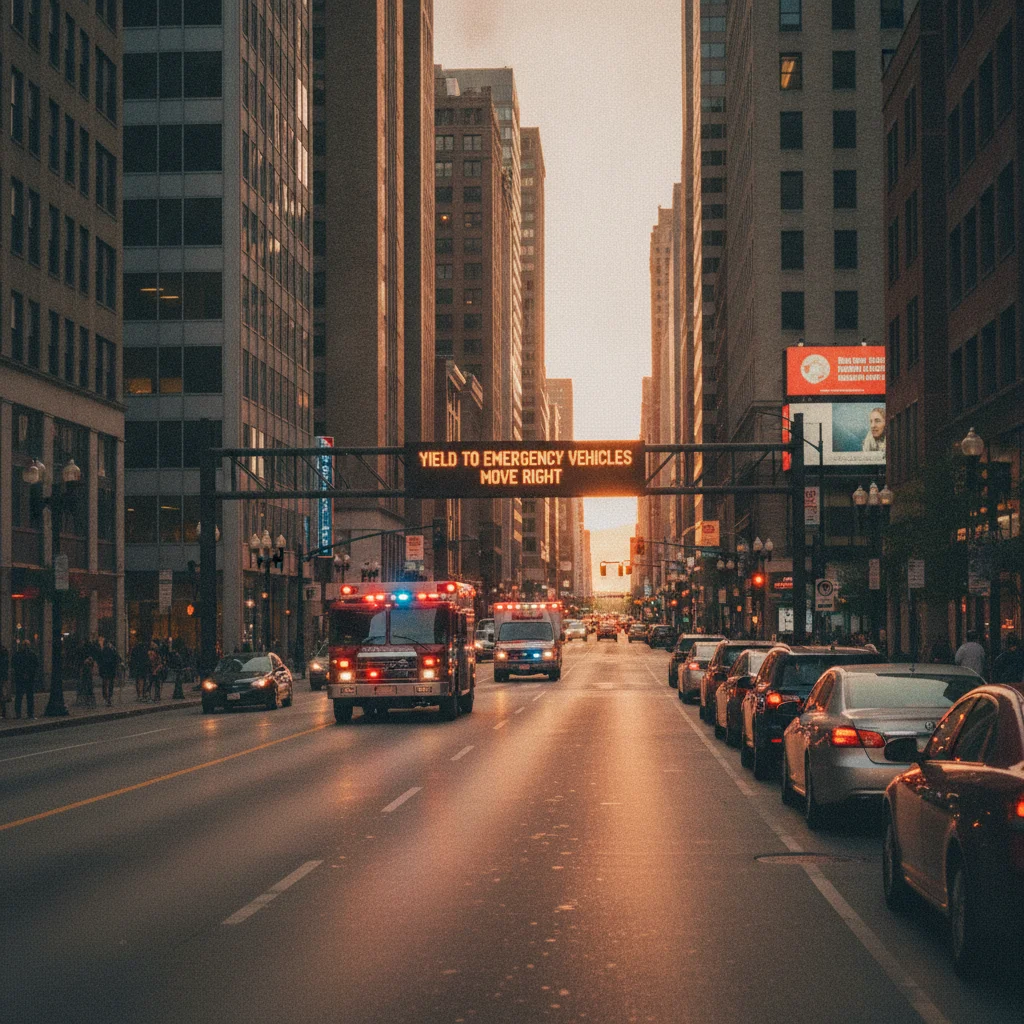
When a fire call or major accident response goes out, multiple units respond — often in sequence with 30 to 90 seconds between them. Don't re-enter the lane or resume normal speed after the first vehicle passes until you've confirmed no additional units are approaching with active lights and sirens. Returning to the travel lane too early puts you directly in the path of the next unit.
Move Over Laws: The Requirement Most Drivers Only Half-Know
All 50 states now have some version of a Move Over Law. The concept started with protecting stopped police vehicles on highway shoulders, but most state laws have since expanded to cover fire trucks, ambulances, tow trucks, road maintenance vehicles, and in some states, even construction workers on foot.
The core requirement: when an authorized emergency vehicle is stopped with lights activated on or near a roadway, you must either change lanes away from that vehicle or, if a lane change isn't possible, slow to a safe speed below the posted limit — typically at least 20 mph below, though this varies by state.
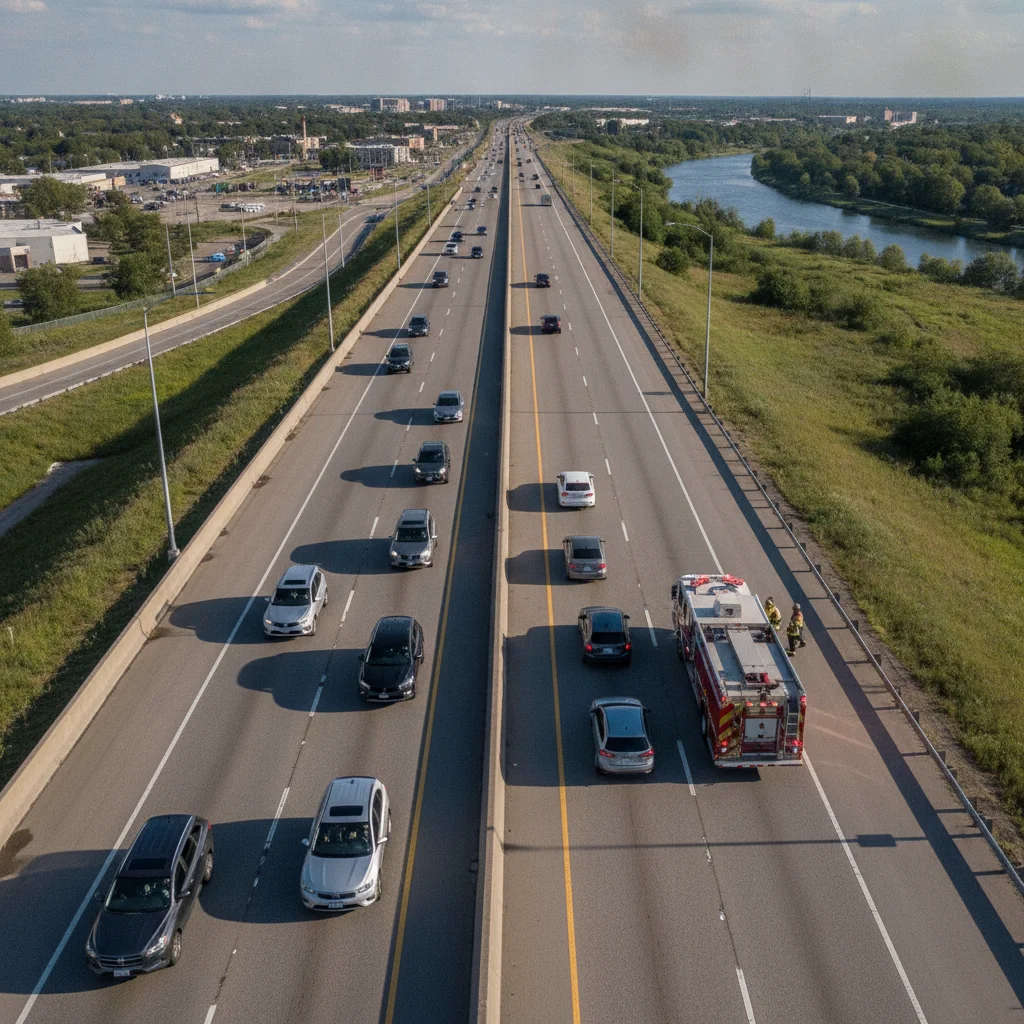
Where drivers consistently fall short:
- Treating it as a highway-only rule. Move Over Laws apply on surface streets too. If a fire truck is double-parked responding to a building fire, you're legally required to move over or slow significantly — even in an urban grid at 30 mph.
- Changing lanes but not slowing down. Moving over without reducing speed doesn't satisfy the law's intent, and in several states it's explicitly insufficient under the statute.
- Not knowing which vehicles qualify. In states like Florida and Texas, tow trucks and utility service vehicles are covered. Blowing past a tow truck operator on a shoulder isn't just dangerous — it's a violation.
Citations under Move Over Laws are now among the more aggressively enforced moving violations in many states, partly because officer fatalities from being struck by passing vehicles have driven advocacy for stricter enforcement. Don't treat this as a technicality — treat it as what it is: a law designed to prevent people from being killed.
Failure to Yield Is a Primary Offense in Every State
Officers do not need another reason to stop you for a failure-to-yield-to-emergency-vehicle violation. It is a primary enforcement offense, meaning a single observed failure — no pull-over, too-slow response, or lane re-entry while lights are still active — is sufficient grounds for a traffic stop and citation. Unlike some secondary offenses that require a concurrent primary violation to trigger a stop, emergency vehicle violations stand alone.
Citations Here Can Compound Quickly on Your Record
If you're cited for both a Move Over violation and following too closely in the same incident — which can happen when a driver drafts behind a responding unit that then stops — you're looking at two separate violations on your record from a single event. In states with point systems, this can push you into a higher insurance tier or trigger a license review. Treat each emergency vehicle obligation as a distinct legal requirement, not a single rule with one consequence.
Intersections, Red Lights, and the Freezing Problem
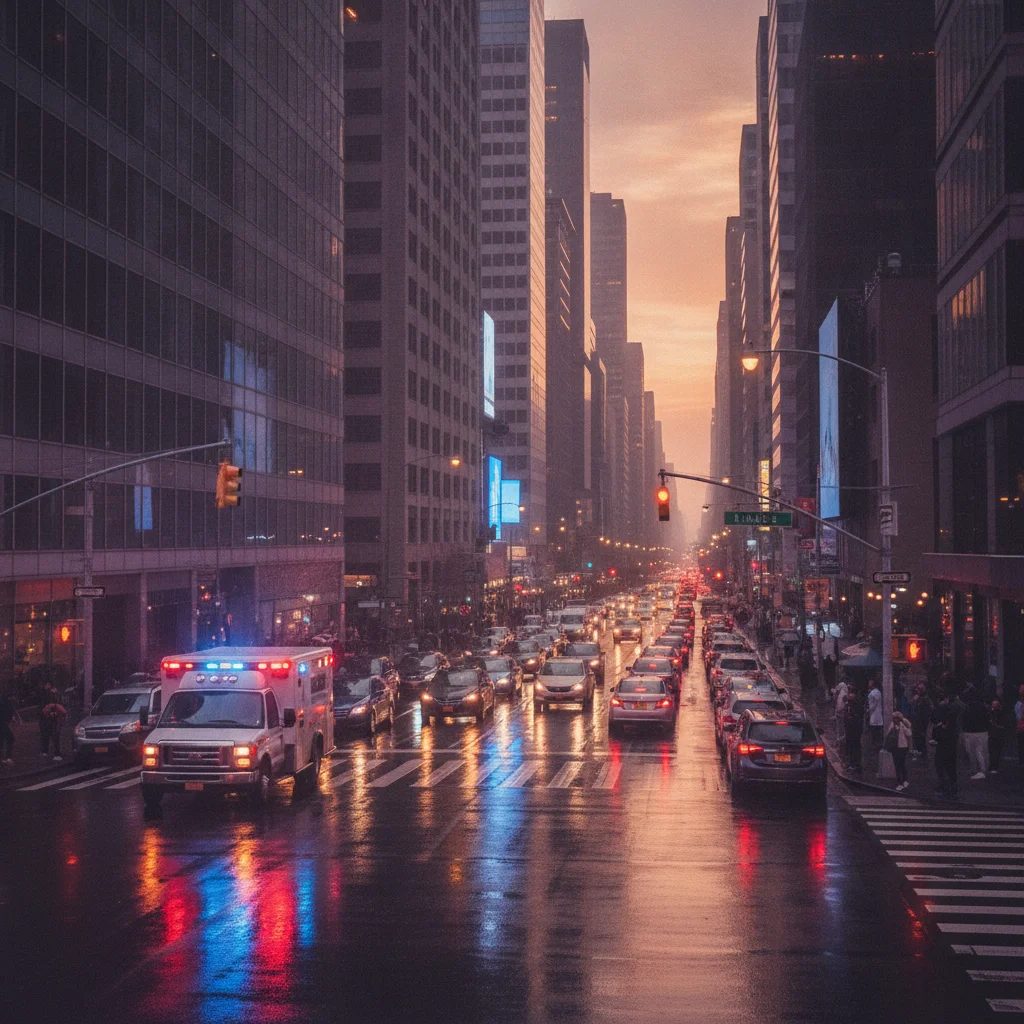
The intersection scenario generates the most confusion and the most dangerous improvisation. Here's the situation: you're at a red light, waiting to proceed, and an ambulance approaches from behind or to the side with lights and siren active. What do you do?
The legally correct answer is more nuanced than most drivers realize:
- Do not run the red light unless you can safely clear the intersection entirely without crossing the path of crossing traffic. Entering an intersection against a signal — even to yield to an emergency vehicle — exposes you to collision risk and a potential citation.
- If you're already in the intersection, clear it by proceeding to the nearest available position at the curb. Stopping in the middle of an intersection is dangerous and illegal in most jurisdictions.
- If you haven't entered the intersection, hold your position until it's genuinely clear to pull forward and out of the emergency vehicle's path — then do so.
The "freezing" problem — where drivers simply stop in place when they hear sirens — is one of the most commonly observed and most dangerous responses. A driver frozen at a green light in the travel lane is an obstacle. The emergency vehicle now has to navigate around stopped, unpredictable traffic, which slows response time and increases accident risk for everyone.
See how drivers should respond to emergency vehicles approaching for a step-by-step breakdown of proper execution in various road configurations.
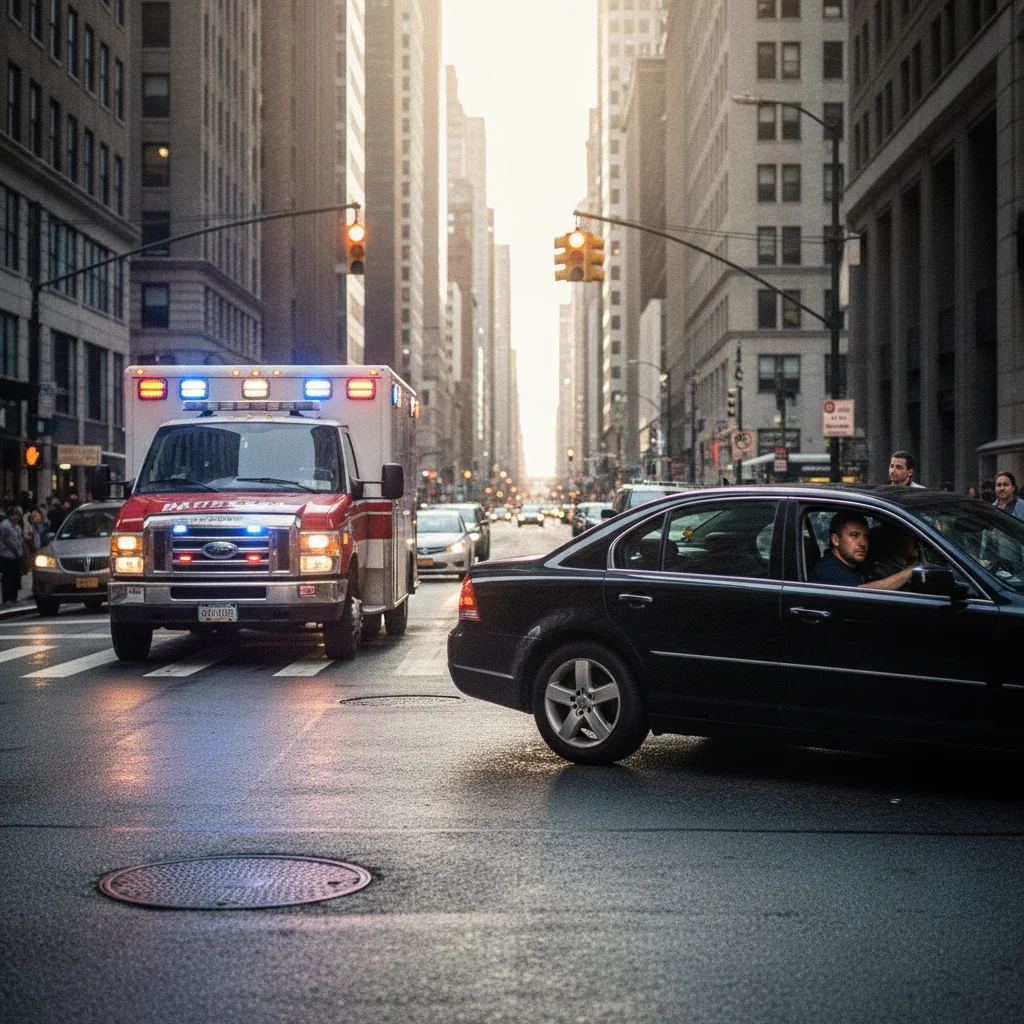
The broader principle: your job is to create a clear, predictable path for the emergency vehicle — not to simply stop moving. Those are very different objectives, and conflating them is what causes incidents.
After the Vehicle Passes: The Mistakes Aren't Over Yet
A lot of driver errors with emergency vehicles happen in the aftermath — once the adrenaline of the moment has passed and drivers assume their obligations are finished. They're not.
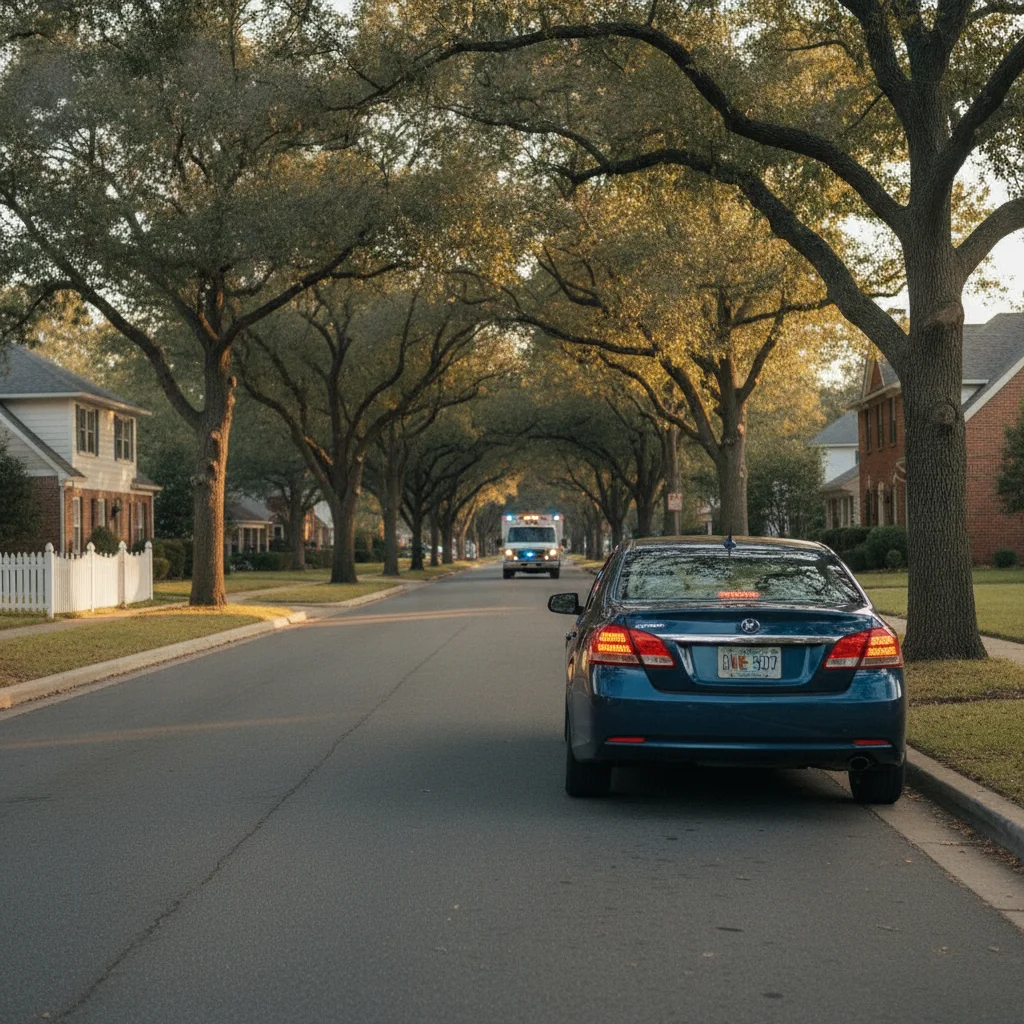
Following too closely behind an emergency vehicle is illegal in every state. Most statutes prohibit following within 300 to 500 feet of an actively responding emergency vehicle. This exists because other drivers and pedestrians at the emergency scene aren't expecting a civilian vehicle close behind the responders — and because emergency vehicles may stop abruptly. If you find yourself drafting behind an ambulance through traffic because it's clearing a path, you're violating the law regardless of how convenient it feels. For more on how following distance laws are enforced, see why tailgating is a bigger legal risk than most drivers realize.
Re-entering the lane too quickly is the other common post-pass error. Drivers who've pulled over to the right sometimes pull back into the travel lane while the emergency vehicle is still technically in range — before it has fully cleared the block, before its lights have deactivated, and sometimes before additional units behind it have passed. The safe and legal standard is to wait until the vehicle has passed and conditions are clearly safe to re-enter.
Intersection re-entry confusion also trips up drivers who froze or stopped mid-decision. Once the emergency vehicle passes and you need to resume normal travel, treat the intersection as you would on a fresh approach — check signals, check cross-traffic, proceed normally. Don't assume the intersection is "clear" just because a few seconds have passed.
For context on how these behaviors fit into the broader landscape of frequently enforced moving violations, traffic laws that are commonly misunderstood and frequently enforced is worth reviewing before your next renewal period.
How Violations Affect Your Record and Insurance
Emergency vehicle-related violations are moving violations in every state. That means they go on your driving record, accumulate points in point-based systems, and are visible to your insurer at renewal. Some specifics worth knowing:
| Violation Type | Typical Fine Range | Points (avg. state system) | Insurance Impact |
|---|---|---|---|
| Failure to yield to emergency vehicle | $150–$500 | 2–4 | Moderate increase at renewal |
| Move Over Law violation | $250–$1,000+ | 2–4 | Moderate to significant increase |
| Following within prohibited distance | $100–$300 | 1–3 | Minor to moderate increase |
| Blocking intersection while yielding | $75–$250 | 1–2 | Minor increase |
Insurance companies don't distinguish much between the context of a violation. A Move Over citation looks like a moving violation on your record, and underwriters treat it accordingly. If you accumulate multiple violations within a three-year window — which is common for drivers who've developed habitual patterns around emergency vehicle behavior — you could be reclassified as a higher-risk driver, which carries a meaningful rate increase at renewal.
The practical message: these aren't technicalities to dismiss. They're enforcement priorities, they're on your record, and they cost real money over time. Getting the behavior right consistently is cheaper than learning it through citations. Check right-of-way rules most drivers misread at intersections for the intersection-specific knowledge that complements what's covered here.
Failure to Yield Is a Primary Offense in Every State
Officers do not need another reason to stop you for a failure-to-yield-to-emergency-vehicle violation. It is a primary enforcement offense, meaning a single observed failure — no pull-over, too-slow response, or lane re-entry while lights are still active — is sufficient grounds for a traffic stop and citation. Unlike some secondary offenses that require a concurrent primary violation to trigger a stop, emergency vehicle violations stand alone.
Citations Here Can Compound Quickly on Your Record
If you're cited for both a Move Over violation and following too closely in the same incident — which can happen when a driver drafts behind a responding unit that then stops — you're looking at two separate violations on your record from a single event. In states with point systems, this can push you into a higher insurance tier or trigger a license review. Treat each emergency vehicle obligation as a distinct legal requirement, not a single rule with one consequence.

All claims are backed by peer-reviewed research. Sources on request.