Key Takeaways
Pedestrian Right-of-Way
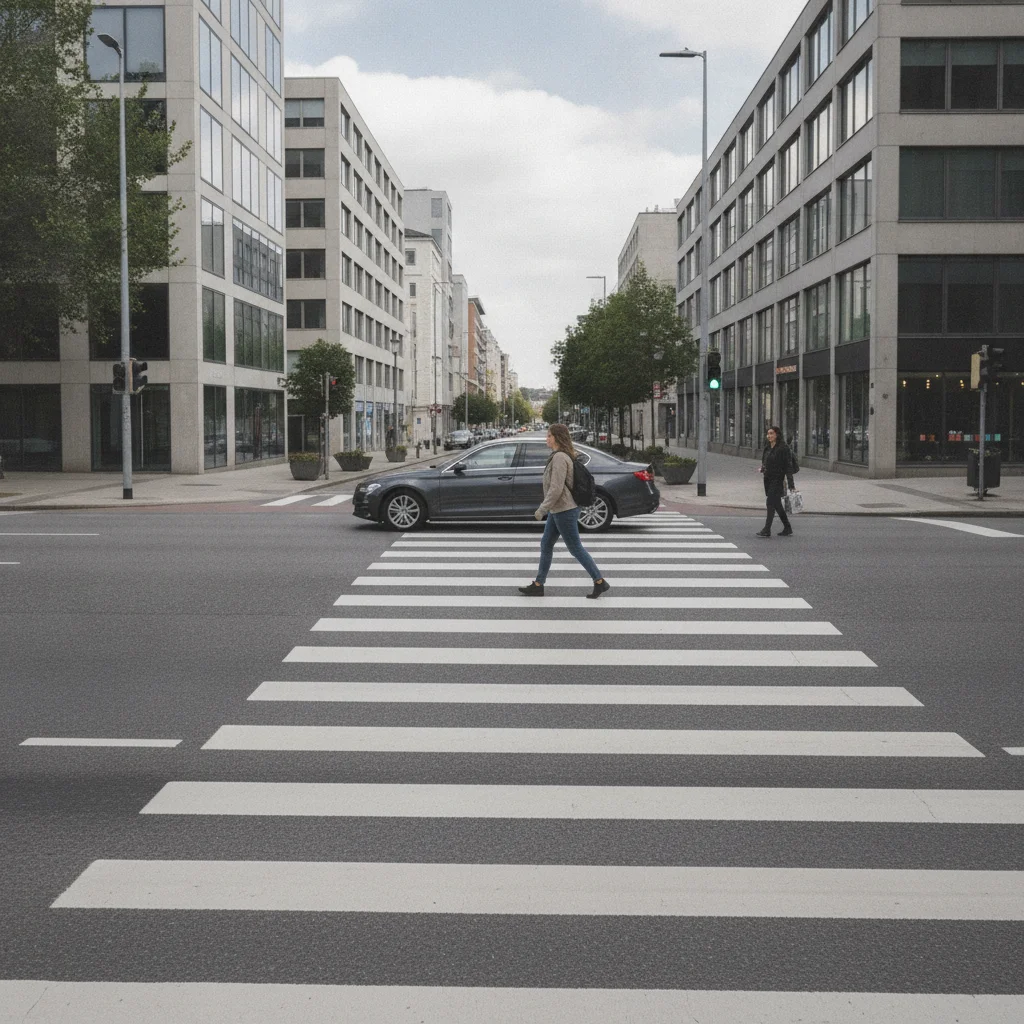
Pedestrian right-of-way is the legal obligation drivers have to yield to people on foot at crosswalks and other designated crossing points. It means a driver must stop and wait — not just slow down — until the pedestrian has safely cleared the lane of travel. This duty applies even when a crosswalk is unmarked, as long as it is at a legal intersection.
Under the Uniform Vehicle Code and most state statutes, a 'crosswalk' is legally defined to include unmarked extensions of sidewalk lines at intersections, not just painted stripes — a distinction that trips up many drivers in fault determinations.
The Crosswalk Confusion Most Drivers Don't Know They Have
Ask most drivers what a crosswalk is and they'll describe painted white stripes. That's accurate — but it's also dangerously incomplete. Under the legal definitions used in the vast majority of U.S. states, a crosswalk is any point where a sidewalk or walking path extends across a roadway at an intersection, whether or not any paint is present. That means the unstriped corner of a residential block carries the same legal obligations as a high-visibility downtown crossing.
This misunderstanding is one of the most common reasons drivers end up on the wrong side of both a traffic citation and a civil lawsuit. They genuinely believe the absence of painted lines means fewer obligations. It doesn't.
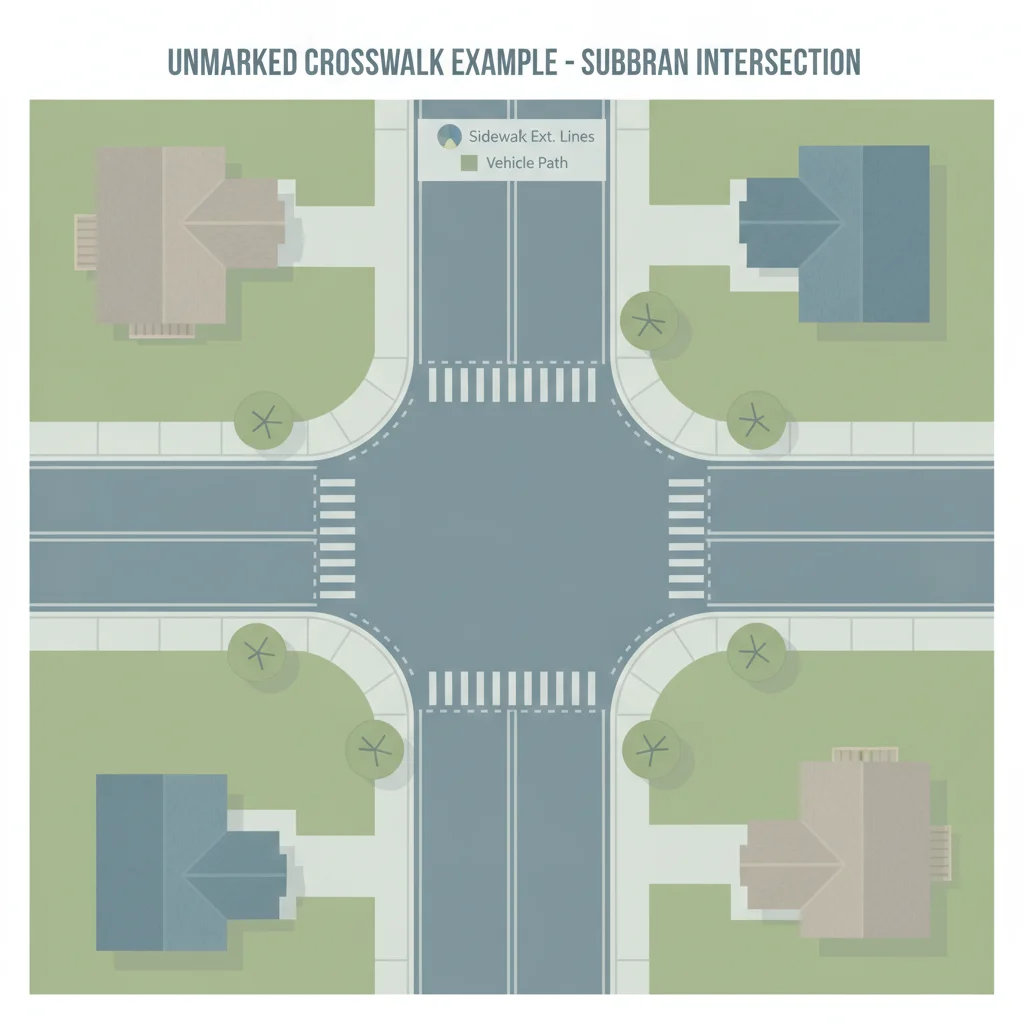
The core legal duty is straightforward: when a pedestrian is in a crosswalk — marked or unmarked — and is crossing in the same half of the road as your vehicle, or is close enough that continuing would endanger them, you must stop and yield. Not slow down. Not edge forward while they move. Stop and wait until they have fully cleared your path of travel.
For a broader look at the traffic rules drivers routinely misinterpret, see U.S. Traffic Laws Every Driver Should Actually Know — crosswalk rules are one of many areas where common assumptions diverge sharply from the actual statute.
Marked vs. Unmarked Crosswalks: Different Look, Same Legal Weight
The distinction between marked and unmarked crosswalks matters more in visibility than in legal obligation. Both types require you to yield; the difference is that marked crosswalks are designed to make the crossing obvious to drivers, while unmarked ones rely entirely on drivers understanding the law.
Marked Crosswalks
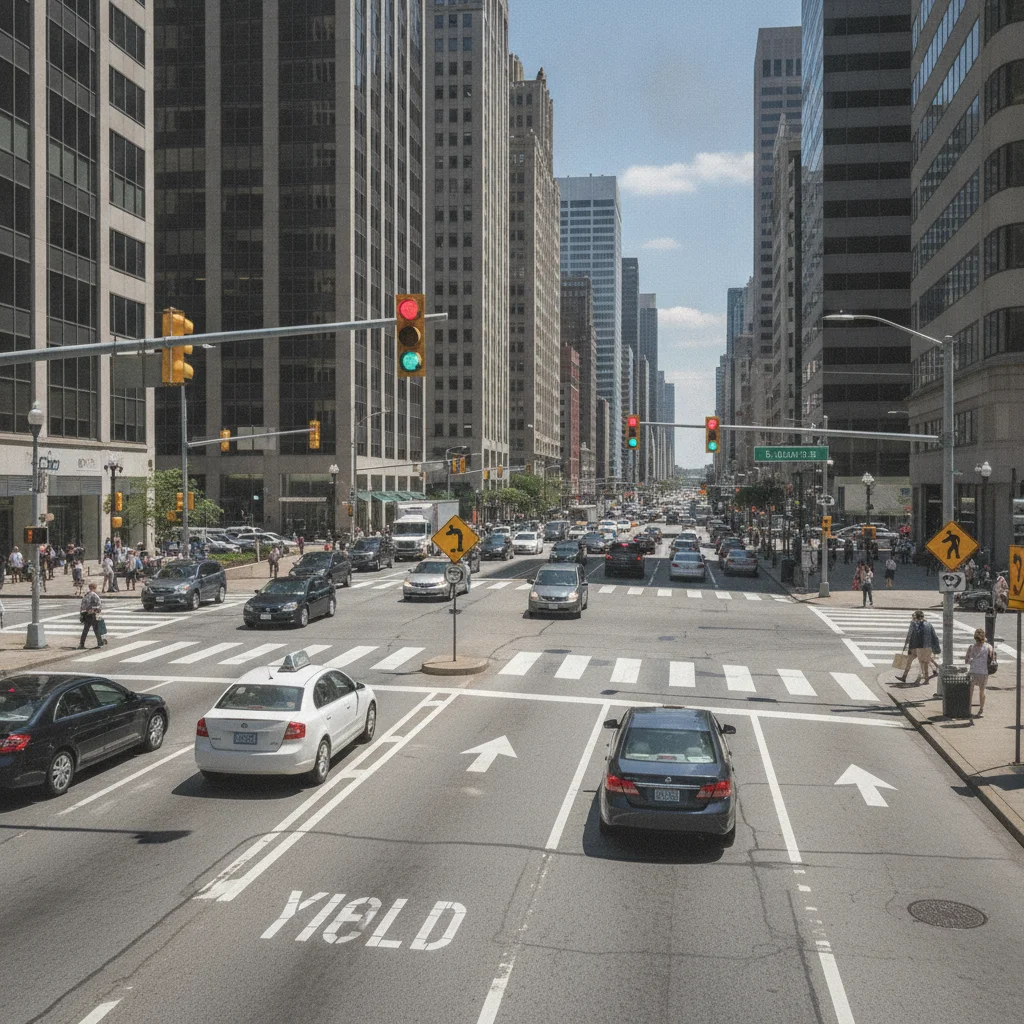
These are the white-striped or ladder-pattern markings you see at signalized intersections, mid-block pedestrian signals, and school zones. They're typically placed where pedestrian traffic is high or where sightlines are limited. Stopping before the stop bar — not in the crosswalk itself — is legally required when a signal is present.
Unmarked Crosswalks
These exist at every legal intersection where two public roads meet, even on quiet suburban streets. There's no paint, no signal, often no curb cut. Pedestrians have the right to cross there, and drivers are obligated to yield. This catches drivers off guard constantly, particularly when a pedestrian uses an unmarked corner crossing and the driver claims they didn't see a crosswalk.
State Laws Vary on Crosswalk Specifics
While the core duty to yield is universal, specific crosswalk rules differ by state. Some states require drivers to stop as soon as a pedestrian steps off the curb; others require a pedestrian to be in the driver's half of the roadway first. California, Oregon, and Washington have some of the strictest pedestrian yield statutes in the country. Always verify your specific state's Vehicle Code for exact language.
Mid-Block Crossings: Read Your State's Rule
A small number of states treat mid-block marked crosswalks differently from intersection crosswalks when it comes to pedestrian vs. driver obligation. In most states, drivers must still yield to any pedestrian in a mid-block marked crossing. Check your state DMV resources or driver's manual to confirm how mid-block crossings are legally categorized where you drive most.
Mid-Block Crossings
Marked crosswalks can also appear mid-block, away from intersections. These are treated differently in some states — in a small number of jurisdictions, pedestrians at mid-block crossings are required to yield to vehicles that cannot safely stop in time. Always check your state's specific statute, but when in doubt, stop for anyone stepping into a marked mid-block crossing.
76%
Pedestrian deaths occurring outside intersections
According to the NHTSA 2022 Traffic Safety Facts report, more than three-quarters of pedestrian fatalities occur away from intersections, highlighting the risk of mid-block and unmarked crossings.
7,388
Pedestrian traffic deaths in the U.S. in 2021
The NHTSA reported 7,388 pedestrian fatalities in 2021, the highest total in four decades and a 13% increase over 2020.
1 in 5
Traffic deaths involving pedestrians
The CDC estimates that pedestrians account for roughly one in five of all traffic-related deaths in the United States annually.
$500+
Maximum fine for failure to yield in some states
Several states including California, Hawaii, and Nevada have raised pedestrian yield violation fines, with some jurisdictions setting maximum fines above $500 for repeat offenders.
6x
Higher pedestrian risk at night vs. daytime
NHTSA data shows pedestrians are approximately six times more likely to be struck and killed in darkness than in full daylight conditions, underscoring the need for heightened driver caution after dark.
The practical takeaway: approach every intersection — signalized or not — with the assumption that a pedestrian may legally be present in the crosswalk. That mental habit prevents violations and, more importantly, prevents crashes.
What 'Yielding' Actually Requires You to Do
The word "yield" appears in pedestrian statutes across the country, but it's commonly misread as "slow down and be careful." That's not what it means legally.
Yielding to a pedestrian means:
- Coming to a complete stop before the crosswalk line or the edge of the crossing path
- Waiting until the pedestrian has cleared the lane you intend to travel through — not just started crossing
- Staying stopped even if other lanes of traffic are moving, until the pedestrian is safely beyond your vehicle's path
Where drivers go wrong most often is the "cleared the lane" requirement. If a pedestrian is crossing a four-lane road and has cleared lanes one and two but is still crossing lane three, drivers in lane three cannot proceed — even if the pedestrian hasn't reached their lane yet. Some states extend this further, requiring drivers to wait until the pedestrian has cleared the entire roadway.
Stop Before the Crosswalk, Not In It
Your stop line is the line before the crosswalk, not the far edge of it. Stopping inside the painted zone or beyond it puts your car in the pedestrian's legal path and is itself a violation in most jurisdictions. If you miss the stop bar, pedestrians can and should walk in front of your bumper — the law is on their side.
Review Your Liability Limits Before an Incident Happens
Pedestrian injury claims routinely exceed $100,000 when medical treatment, rehabilitation, and lost wages are totaled. If your bodily injury liability limit is at the state minimum — often $25,000 to $50,000 — you're personally exposed to the remainder. Review your policy limits with the pedestrian risk scenario explicitly in mind.
There's also a specific prohibition worth knowing: in most states, if a vehicle ahead of you has stopped at a crosswalk, you are legally barred from passing it. The stopped driver sees something you don't — likely a pedestrian obscured from your line of sight. Pulling around a stopped vehicle and striking a pedestrian is one of the clearest-cut cases of driver fault in traffic law.
This right-of-way logic connects closely to how right-of-way is assigned at intersections more broadly. Right-of-Way Rules Most Drivers Misread at Intersections breaks down other common scenarios where drivers incorrectly assume they have priority.
When Pedestrians Share the Fault — and When They Don't
Pedestrians are not exempt from traffic law. They're required to obey walk/don't walk signals, use marked crosswalks when one is available within a reasonable distance (typically 100–300 feet, depending on state), and not step into traffic when it's unsafe to do so. When they fail to do these things, they can bear comparative fault in a collision.
Here's how fault typically plays out in real scenarios:
| Scenario | Likely Fault Distribution |
|---|---|
| Driver fails to yield at marked crosswalk, pedestrian had signal | Driver: primary or sole fault |
| Pedestrian jaywalks between intersections, driver at normal speed | Shared fault; pedestrian may bear majority |
| Pedestrian crosses on don't-walk signal, driver running yellow light | Shared fault; both violated traffic law |
| Driver passes stopped car at crosswalk, strikes pedestrian | Driver: near-total fault |
| Pedestrian in dark clothing, no crosswalk, driver at legal speed | Shared fault; outcome depends on conditions and state |

The critical point: even when a pedestrian is at fault, drivers are rarely completely absolved. Courts apply a "duty of care" standard — drivers are expected to be watching for pedestrians and exercising reasonable caution. Distraction, speed, and failure to notice someone who was visible all work against a driver's defense.
In states with pure comparative fault rules, both parties can recover damages proportional to their fault. In modified comparative fault states, a pedestrian who is more than 50% at fault typically cannot recover from the driver. Understanding this matters for how insurance claims are negotiated after a collision.
“Pedestrian safety is fundamentally a driver behavior problem. The vast majority of pedestrian fatalities involve a failure of driver attention, speed management, or both — not unpredictable pedestrian conduct.”
— Leah Shahum, Founder and Director, Vision Zero Network
School Zones, Crosswalks, and Special Circumstances
Certain crosswalk environments carry enhanced legal duties and steeper penalties for violations:
School Zone Crosswalks
Speed limits drop significantly in school zones — typically 15–25 mph — during arrival and dismissal times. Many states require drivers to stop for school crossing guards regardless of signal phase. Fines for violations in school zones are often doubled or tripled compared to standard crosswalk violations, and some states attach mandatory license points.
Flashing Yellow Beacon Crosswalks (HAWK Signals)
High-intensity Activated crossWalK (HAWK) signals are mid-block pedestrian signals with a distinct light sequence: flashing yellow, solid yellow, then alternating flashing red. Many drivers don't know what these mean. At a flashing red phase, you must stop, then may proceed when the pedestrian has cleared the crossing — treating it like a stop sign. Proceeding on solid red is a violation identical to running a traditional red light.
Crosswalks Near Parked Vehicles and Blind Spots
High-risk crossings are those flanked by parked vehicles, delivery trucks, or other obstructions. A pedestrian can step out from between parked cars with very little warning. Courts and adjusters consistently expect drivers to reduce speed when visibility into a crosswalk is limited. Speed alone doesn't establish due care when a driver can't see the full crossing.
State Laws Vary on Crosswalk Specifics
While the core duty to yield is universal, specific crosswalk rules differ by state. Some states require drivers to stop as soon as a pedestrian steps off the curb; others require a pedestrian to be in the driver's half of the roadway first. California, Oregon, and Washington have some of the strictest pedestrian yield statutes in the country. Always verify your specific state's Vehicle Code for exact language.
Mid-Block Crossings: Read Your State's Rule
A small number of states treat mid-block marked crosswalks differently from intersection crosswalks when it comes to pedestrian vs. driver obligation. In most states, drivers must still yield to any pedestrian in a mid-block marked crossing. Check your state DMV resources or driver's manual to confirm how mid-block crossings are legally categorized where you drive most.
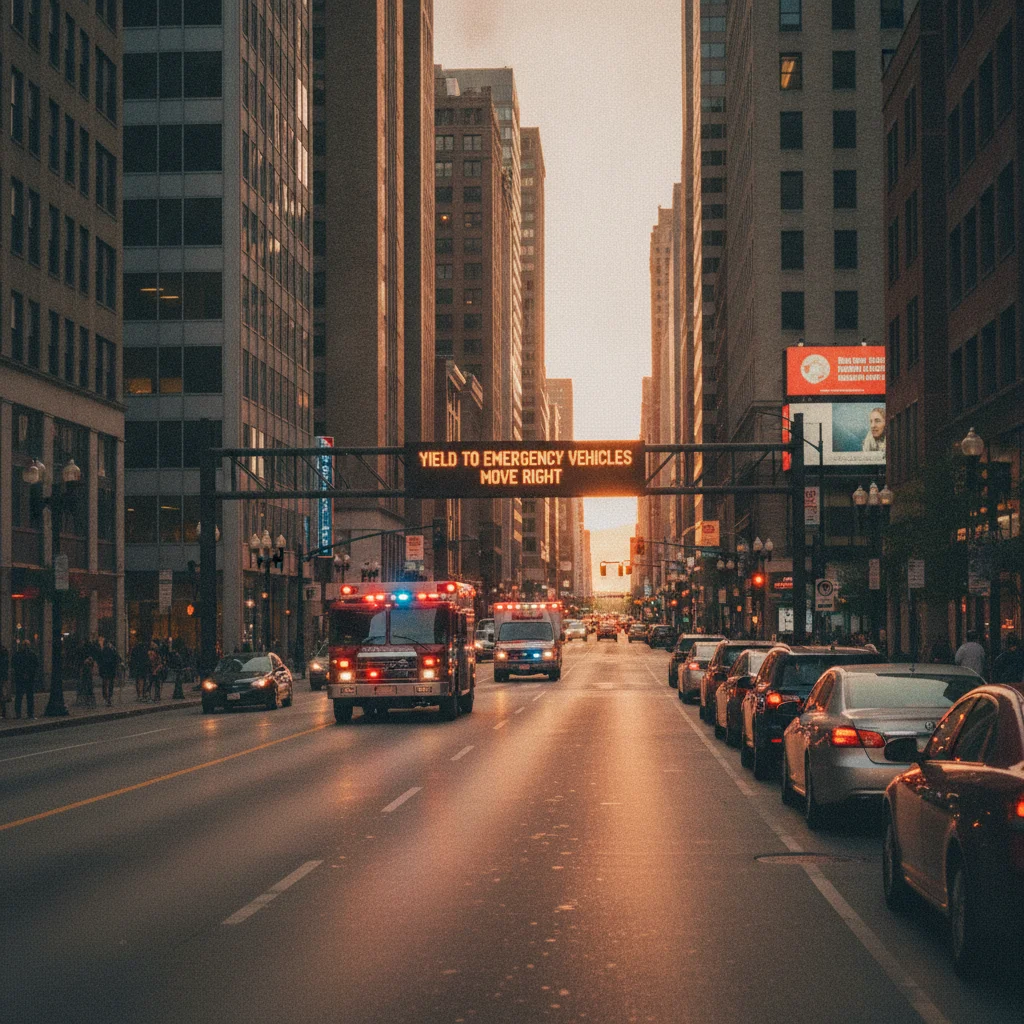
The same general principle of situational awareness applies in other right-of-way contexts. See how responding to emergency vehicles follows a similar logic — the law requires proactive adjustment, not just reaction.
Violations, Penalties, and What Ends Up on Your Record
Failure to yield to a pedestrian is a moving violation in every U.S. state. The consequences vary but are never trivial:
- Fines: Typically $100–$500 for a first offense; some states (California, Oregon, Hawaii) have recently increased base fines significantly as part of pedestrian safety initiatives
- License points: Most states assess 1–3 points for failure to yield; accumulating points raises insurance premiums and, at higher thresholds, triggers license suspension
- Enhanced penalties: Violations in school zones, construction zones, or near crosswalk signals often carry doubled fines or mandatory court appearances
- Criminal exposure: If a pedestrian is injured or killed, a driver who failed to yield may face reckless driving or vehicular assault charges, especially if speed or distraction is involved
Beyond the ticket itself, the insurance impact compounds over time. A moving violation typically raises your premium at the next renewal cycle. A violation that results in an injury claim can trigger a surcharge that persists for three to five years. When the victim is a pedestrian, claim severity is high — medical bills, lost wages, and pain and suffering settlements frequently reach into six figures.
Stop Before the Crosswalk, Not In It
Your stop line is the line before the crosswalk, not the far edge of it. Stopping inside the painted zone or beyond it puts your car in the pedestrian's legal path and is itself a violation in most jurisdictions. If you miss the stop bar, pedestrians can and should walk in front of your bumper — the law is on their side.
Review Your Liability Limits Before an Incident Happens
Pedestrian injury claims routinely exceed $100,000 when medical treatment, rehabilitation, and lost wages are totaled. If your bodily injury liability limit is at the state minimum — often $25,000 to $50,000 — you're personally exposed to the remainder. Review your policy limits with the pedestrian risk scenario explicitly in mind.
What Liability Insurance Pays When You Injure a Pedestrian or Cyclist walks through exactly how your policy responds in these scenarios and why your coverage limits matter far more than most drivers realize when pedestrians are involved.
Practical Habits That Keep You Legal and Safe
Knowing the law is the first step; building habits that reflect it is what prevents violations and crashes. These aren't defensive-driving clichés — they're specific behaviors tied directly to where pedestrian law violations occur most often:
- Treat every corner as a potential unmarked crosswalk. Before turning at any intersection, check for pedestrians stepping off the curb. They may have the right-of-way even without a signal or paint.
- Stop before the stop bar, not in the crosswalk. If you're stopping in the striped zone, you've already violated the law — and you're blocking a pedestrian path. Pull up and stop cleanly before the line.
- Don't track the pedestrian you saw — scan for the ones you haven't. A common crash pattern: driver watches one pedestrian clear the road, then proceeds, striking a second pedestrian they hadn't noticed. Look left and right before moving.
- Slow before turning, not during. Right-turn collisions with pedestrians almost always happen because the driver slowed while already in the turn, watching traffic rather than the crosswalk straight ahead. Reduce speed before initiating the turn.
- When you see a stopped car at a crosswalk, stop — don't pass. This single habit eliminates one of the most legally indefensible crash scenarios in traffic law.
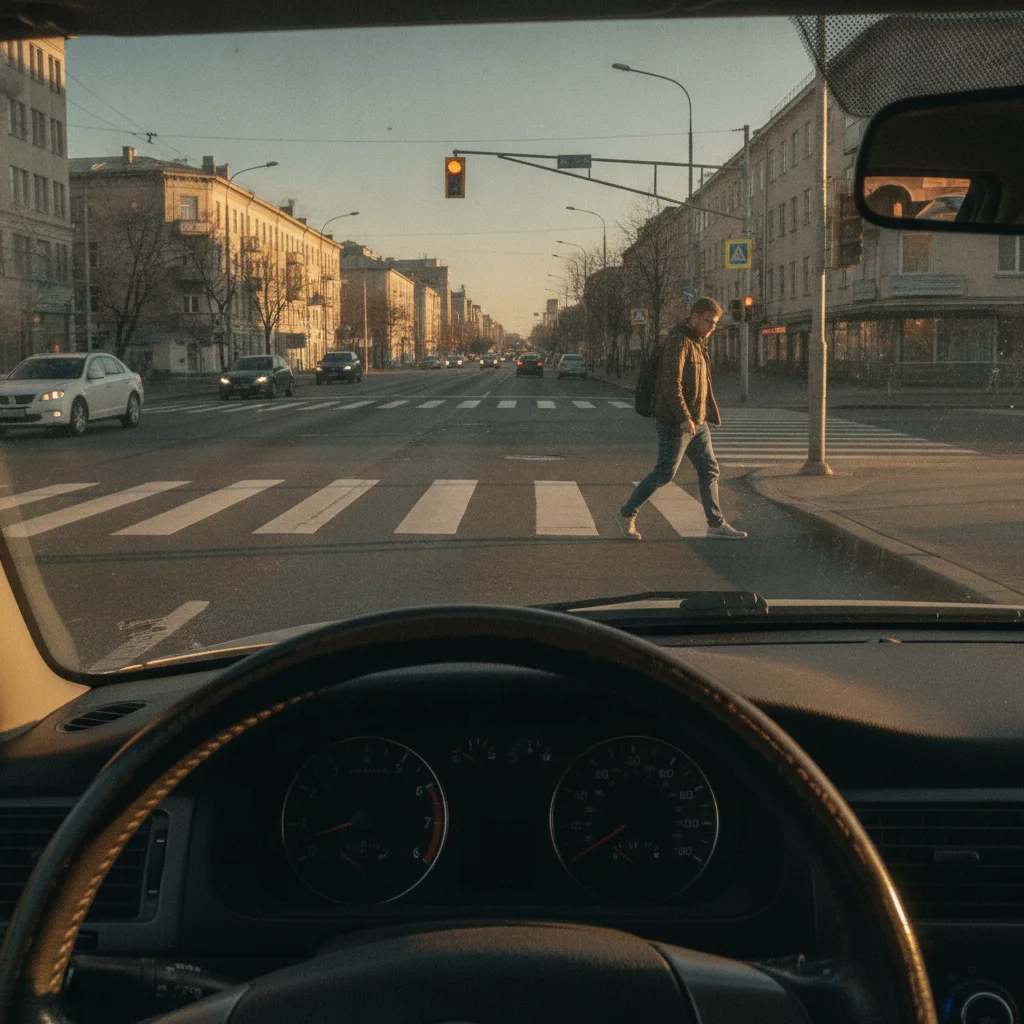
One last connection worth making: many of the same principles — anticipating hazards, understanding right-of-way, adjusting speed proactively — apply to how courts interpret yellow light decisions. The law consistently expects drivers to act on what they can reasonably see and anticipate, not just what is directly in front of them.

All claims are backed by peer-reviewed research. Sources on request.