Key Takeaways
Why Some Symptoms Can't Wait Until Tomorrow
Every car communicates. The question is whether you're listening closely enough to catch what it's saying before a minor issue becomes a major crisis. In my years working as a technician, the repair bills that genuinely blindsided people weren't the result of bad luck — they were the result of ignored signals that had been present for days, sometimes weeks, before something finally gave way.
The difference between a $300 fix and a $3,000 repair often comes down to how quickly a driver responds. A leaking brake caliper left alone becomes a failed brake system. An overheating engine driven for another ten miles becomes a warped head — or a cracked block. The car nearly always tells you what's wrong before it breaks completely. Learning to read those messages is one of the highest-value skills any driver can develop.
This article focuses specifically on the warning signs that carry the highest risk if ignored — symptoms that should trigger either an immediate pullover or a same-day trip to a qualified shop. For a broader look at the full spectrum of signals your car sends, see The Complete Guide to Vehicle Warning Signs.

Temperature Gauge Climbing Into the Red
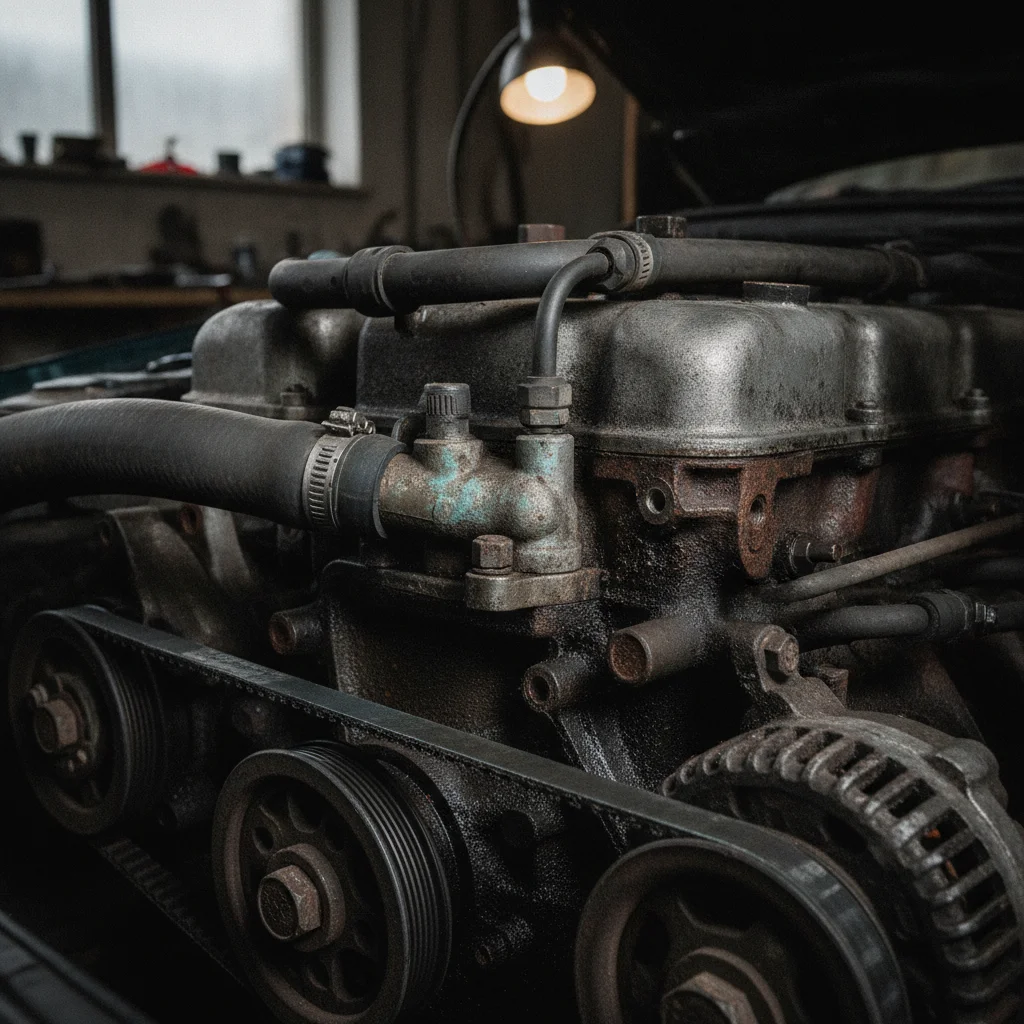
The engine temperature gauge is one of the most critical instruments on your dashboard, and one of the most underappreciated. When that needle starts climbing toward the red zone — or when a temperature warning light illuminates — you have a very short window to act before damage becomes severe.
An overheating engine causes metal components to expand beyond their design tolerances. Head gaskets fail. Cylinder heads warp. In extreme cases, the engine block itself cracks. These are multi-thousand-dollar repairs that can total an otherwise functional car. And all of it can unfold in less than 10 minutes of continued driving.
What to do immediately: Turn off the air conditioning (it loads the engine), turn the heat on full blast (it pulls heat away from the engine), and find a safe place to pull over and stop. Do not open the radiator cap while the engine is hot — the coolant is pressurized and will cause severe burns. Let the engine cool for at least 30 minutes before checking coolant levels or inspecting hoses.
Common causes include a failed thermostat, a leaking coolant hose, a blown head gasket, a malfunctioning cooling fan, or simply low coolant level. A thermostat replacement might cost $150–$250. Ignoring the overheating and blowing a head gasket could run $1,500–$3,000 or more depending on the vehicle.
An overheating engine can sustain catastrophic damage in less than ten minutes of continued driving.
Brake Pedal That Feels Soft, Spongy, or Sinking
Your brakes are your primary safety system. When the pedal feels soft — meaning it travels further than normal before resistance builds — or when it sinks slowly toward the floor under sustained pressure, something in the hydraulic system is compromised. This is a pull-over-now situation, not a drive-to-the-shop situation.
A spongy pedal usually means air has entered the brake lines, often as the result of a leak. A pedal that gradually sinks while you hold pressure at a stoplight typically points to a failing master cylinder — the hydraulic pump that generates braking force throughout the system. Either condition means your braking capacity is degraded, and it can degrade further or fail entirely without warning.
[in_content_images:1]What to look for: Puddles of clear or slightly yellowish fluid beneath the car near the wheels or under the hood near the firewall. Brake fluid has a slightly oily texture and a faintly sweet smell when fresh. If you see it pooling anywhere, don't drive the vehicle.
Brake repairs vary widely in cost. A simple brake fluid flush runs $80–$150. Replacing a master cylinder typically costs $300–$600. A caliper that has been leaking long enough to damage surrounding components — rotors, pads, even the wheel bearing — can push that total past $1,000 per corner. Early detection changes the math significantly. For a deeper look at how to triage brake and other dashboard warnings, see when to pull over vs. when to drive to a shop.
A brake pedal that sinks to the floor under pressure means your hydraulic system is failing — stop immediately.
Sudden Loss of Power Steering Assist
Modern vehicles use either hydraulic or electric power steering. When that system fails while you're driving, the steering wheel doesn't become impossible to turn — but it becomes dramatically heavier, requiring significantly more effort, especially at low speeds and during parking maneuvers. If you suddenly notice your steering feels like you're driving a much older, much heavier vehicle, something has gone wrong.
In hydraulic systems, sudden loss of assist usually points to a broken power steering belt, a failed pump, or a serious fluid leak. In electric systems, it's more likely an electronic failure or a blown fuse — sometimes a warning light accompanies it, sometimes it doesn't.
Why it matters: While you can technically steer a car without power assist, the increased effort required can catch drivers off guard in emergency situations — swerving to avoid an obstacle, for instance, or navigating a sharp curve at highway speed. The danger isn't that you lose steering entirely; it's that the sudden change in steering feel causes a control error at the worst possible moment.
Power steering pump replacement on hydraulic systems typically runs $300–$800. Electric power steering repairs vary widely, from a $50 fuse to a $1,500 module replacement. Either way, this is a same-day diagnosis situation, not something to defer until the weekend.
A sudden increase in steering effort can cause dangerous control errors precisely when you need quick reactions.
Burning Smell, Especially From Brakes or Under the Hood
Your nose is a remarkably effective diagnostic tool, and a burning smell while driving is one of the clearest signals that something is operating outside its design parameters. The tricky part is knowing which kind of burning smell you're dealing with, because they point to very different problems.
- Burning rubber near the wheels: Often a stuck brake caliper that isn't fully releasing, causing the pad to drag against the rotor constantly. You may also notice the affected wheel is much hotter than the others, or that the car pulls to one side during braking.
- Acrid, electrical burning smell: Could indicate a short circuit, an overheating motor (like a power window or blower motor running beyond capacity), or failing insulation on wiring. Electrical fires can develop quickly — take this seriously.
- Sweet, slightly syrupy smell: This is coolant burning off from a leak contacting a hot engine surface. A common early sign of a head gasket beginning to fail or a leaking coolant hose near exhaust components.
- Sharp, sulfurous smell (like rotten eggs): Often associated with a failing catalytic converter or a battery being overcharged. Neither is an immediate pull-over emergency in most cases, but both require prompt attention.
Don't try to tough out a burning smell by rolling down the windows and continuing your commute. Pull over safely, turn off the engine, and investigate before the source becomes visible as smoke — or flames.
Different burning smells point to different failing systems — your nose can diagnose a problem before your eyes can.
Vibration or Shaking You Haven't Felt Before
A new vibration — one that wasn't there last week and is there now — is the vehicle equivalent of a new symptom you'd report to a doctor. It has a cause, and that cause is almost never benign if the vibration is strong or getting worse.
The location and timing of the vibration are your best diagnostic clues:
- Vibration through the steering wheel at highway speed: Most commonly an out-of-balance tire or a bent wheel. Less commonly (and more urgently), a failing front wheel bearing or a worn tie rod end.
- Vibration through the seat or floor during acceleration: Often a failing CV axle or driveshaft — particularly if accompanied by a clicking sound when turning.
- Vibration during braking only: Warped brake rotors. The pads are contacting an uneven surface and pulsing back through the pedal and chassis. Rotors can often be resurfaced rather than replaced if caught early — typically $30–$50 per rotor versus $80–$150 to replace one.
- Vibration at idle, especially in the cabin: Can indicate a failing engine or transmission mount, or in older vehicles, a misfiring cylinder.
The financial risk with vibration is that many of its causes — wheel bearings, CV axles, suspension components — are load-bearing parts. Operating them when they're failing accelerates their deterioration and can cause damage to adjacent components. A $250 wheel bearing replacement ignored long enough can become a $600 repair when the hub and rotor are damaged too.
A vibration that's new and worsening is a mechanical distress signal — the location tells you where to look first.
Smoke From the Hood or Exhaust
Visible smoke is one of those warning signs most drivers appropriately treat as serious. But the color of the smoke carries important diagnostic information that can help you communicate accurately with a technician — and understand what you're dealing with.
- White smoke from the exhaust: On a cold morning, brief white vapor is normal condensation burning off. White smoke that continues after the engine warms up, especially with a sweet smell, indicates coolant burning inside the combustion chamber — a classic head gasket failure sign.
- Blue-gray smoke from the exhaust: Oil is burning along with fuel. This happens when piston rings or valve seals are worn enough to let oil into the combustion chamber. The engine is consuming oil, and if left unaddressed, it will consume more.
- Black smoke from the exhaust: The engine is running rich — burning too much fuel relative to air. This can indicate a faulty fuel injector, a clogged air filter, or a sensor problem. It's less immediately dangerous than white or blue smoke but still warrants prompt diagnosis.
- Any smoke from under the hood: Treat this as a potential fire risk. Pull over, turn off the engine, and stay away from the vehicle if the smoke is dark and growing. Call for roadside assistance rather than trying to investigate yourself.
See also reading the subtle signals that precede serious mechanical failures for how these visual cues connect to the bigger diagnostic picture.
The color of exhaust smoke is diagnostic data — white, blue, and black each point to a different failing system.
Grinding, Squealing, or Clunking From the Wheels
Sounds originating near the wheels deserve immediate attention, because the systems they typically represent — brakes, wheel bearings, and suspension — are all load-bearing and directly involved in vehicle control.
High-pitched squealing when braking: This is usually the brake pad wear indicator, a small metal tab designed specifically to contact the rotor when pads are nearly worn through. It's not an emergency yet, but it means you have days to a couple of weeks before pads are gone entirely. Act within the week.
Metal-on-metal grinding when braking: The pad material is fully worn. You are now stopping with bare metal pressing against the rotor. This damages rotors rapidly — what would have been a $200 pad replacement becomes a $400–$600 pad-and-rotor job. In extreme cases, a caliper bracket can be scored as well. Don't wait another day.
Rhythmic rumbling or growling that changes with speed: The classic sound of a failing wheel bearing. It often increases or decreases when you change lanes, because lateral load shifts from one bearing to another. A worn wheel bearing is not just a noise problem — it can seize, lock a wheel, or separate from the hub entirely at highway speed.
Clunking over bumps, especially from one corner: Worn ball joints, tie rod ends, sway bar links, or strut mounts. These components maintain wheel alignment and handle inputs during cornering and braking. Worn ones affect handling predictability — often at the exact moment you need the car to respond accurately.
For more on what unusual sounds from the drivetrain specifically can indicate, the transmission warning signs guide covers gear-related noises in detail.
Grinding during braking means pad material is gone — every mile now destroys your rotors and accelerates costs.
Steering That Pulls, Wanders, or Feels Disconnected
A well-aligned car tracks straight with minimal hands-on-wheel correction. When a vehicle starts to drift consistently to one side, or when the steering feels vague — as if there's slack between your inputs and the wheels' response — a mechanical problem is almost certainly behind it.
Pulling to one side: The most common cause is uneven tire pressure, which is easy to check and correct yourself. If tire pressure is correct, the next suspects are an alignment problem (often caused by hitting a pothole or curb), a stuck brake caliper dragging on one side, or uneven tire wear. Consistent pulling that started after a road impact should prompt a same-day alignment check — driving on a significantly misaligned vehicle accelerates tire wear rapidly.
Steering that feels loose or has play in the center: If the wheel moves slightly before the car responds, wear in the steering rack, tie rods, or steering column is the likely cause. This is an acute safety concern because the vehicle's response to your steering inputs is delayed — in an emergency avoidance maneuver, that lag matters.
Vehicle that wanders at highway speed: Often a combination of worn tie rod ends and alignment drift. It forces constant small corrections from the driver, which is fatiguing on long drives and creates unpredictability in crosswinds or when road surface changes.
Alignment services typically run $75–$150. Tie rod end replacement adds $150–$400 depending on vehicle and shop. Neither is expensive relative to the tire wear costs you'll accumulate driving on a misaligned axle, or the accident risk of compromised steering. See our guide on warning signs beyond dashboard lights for more symptoms that show up through feel rather than instruments.
Steering that pulls, wanders, or has play is a safety liability — and it's quietly destroying your tires every mile.
Warning Lights That Stay On After Startup
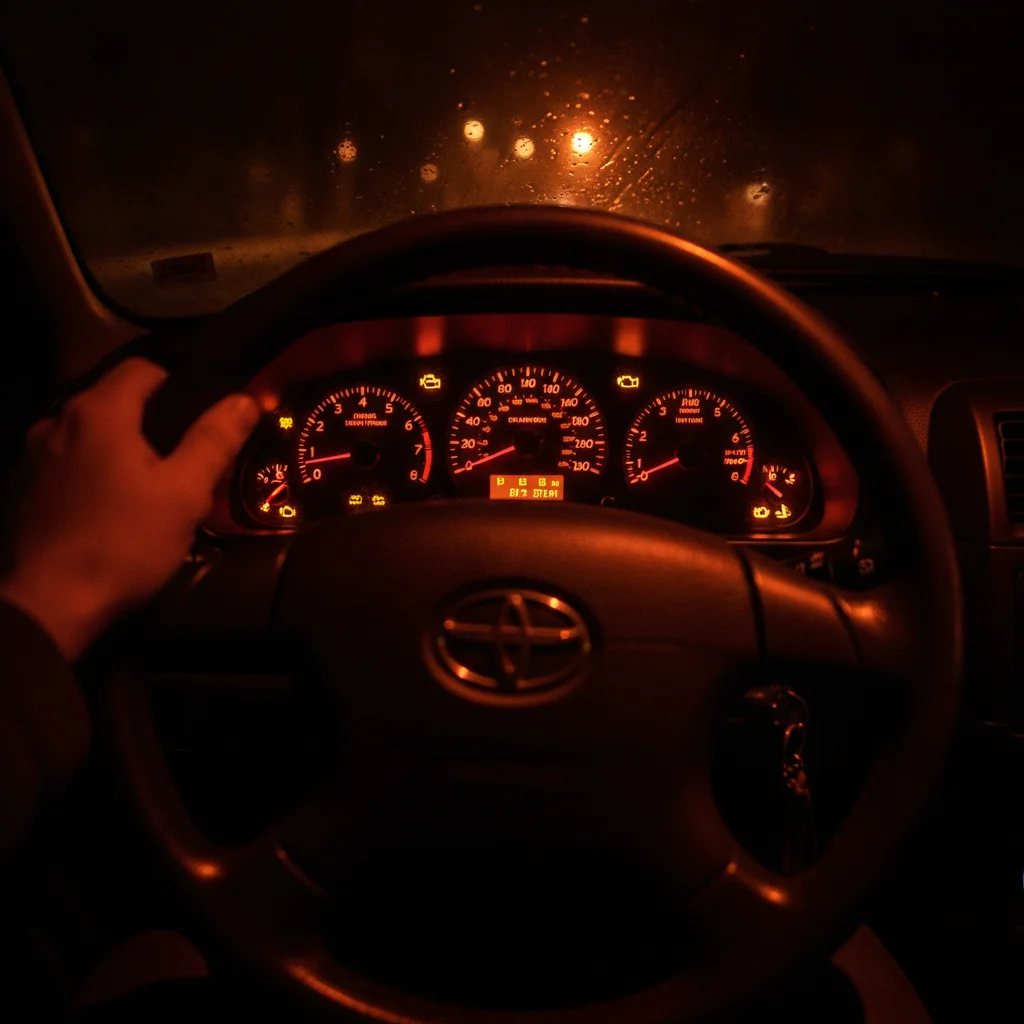
Every warning light on your dashboard illuminates briefly during startup as the vehicle's self-diagnostic system runs a check. Lights that stay on, or appear while you're driving, are the car telling you something specific has been flagged in its monitoring systems.
Not all warning lights are created equal. Understanding which ones demand immediate action versus which allow a drive to the shop is an important skill. Here's a quick priority framework:
- Red warning lights: Almost always indicate an active, potentially dangerous condition — low oil pressure, overheating, brake system failure, battery charging failure. Treat red as stop-now, investigate before proceeding.
- Amber or yellow warning lights: Typically indicate a system that is degraded but not immediately failed — check engine, traction control, tire pressure, ABS. These are drive-to-shop-today situations, not park-it-now situations, in most cases.
- Green or blue indicator lights: Generally informational — high beams on, turn signal active, cruise control engaged. Not warnings.
The check engine light is frequently misunderstood. It's a catchall for dozens of possible fault codes, some trivial (a loose gas cap) and some serious (a misfiring cylinder that can destroy a catalytic converter if ignored). The only way to know which you're dealing with is to pull the fault code with a scan tool — many auto parts stores will do this for free. Don't assume a check engine light is nothing just because the car seems to be running fine. For a structured approach to dashboard alert triage, see when to pull over vs. when to drive to a shop.
Red warning lights almost always signal an active danger — treat them as stop-now instructions, not reminders.
Transmission Slipping, Hesitation, or Harsh Shifting
Transmission problems are some of the most expensive repairs a car owner can face — replacement or rebuild costs frequently run $2,500–$5,000 or more. Which makes early recognition of transmission warning signs one of the highest-ROI diagnostic skills you can develop as a driver.
Common symptoms that point to transmission trouble include:
- Engine revs rising without corresponding acceleration: Classic gear slip. The transmission is losing its hold on a gear ratio, and the engine is spinning faster than the drivetrain is responding. This is particularly noticeable in automatic transmissions during moderate acceleration.
- Hesitation or jerk when shifting gears: Either the transmission is taking longer than it should to engage a gear, or it's engaging harshly rather than smoothly. Both indicate internal wear or hydraulic pressure issues within the transmission.
- Whining, clunking, or humming from the drivetrain: Various transmission sounds can indicate low fluid, worn bearings inside the unit, or failing torque converter components.
- Burning smell from under the car: Overheated transmission fluid, often caused by low fluid level or a cooling system failure. Transmission fluid that has been allowed to overheat loses its viscosity and lubricating properties, dramatically accelerating internal wear.
The most important thing you can do if you suspect transmission trouble is check the fluid level and condition immediately. Fresh transmission fluid is red or pink and slightly sweet-smelling. Dark, brown, or blackened fluid with a burnt odor indicates a fluid that has broken down and is no longer protecting the transmission effectively. For a full breakdown of these symptoms, see transmission warning signs every driver should recognize.
[in_content_images:3]Catching transmission slip early can mean the difference between a fluid flush and a $4,000 rebuild.
Act on What You Notice — Before the Car Decides for You
Every symptom on this list has a financial dimension, not just a safety one. When your brake pedal goes soft, you're not just risking an accident — you're one bad stop away from replacing rotors, calipers, pads, and potentially brake lines all at once. When an engine overheats without intervention, a $150 thermostat job can become a $2,500 head gasket replacement overnight.
When a Symptom Disappears on Its Own
A warning sign that resolves by itself is not a repaired problem — it's an intermittent failure. Intermittent faults are often harder to diagnose because they can't be replicated on demand, but they are frequently a sign that a component is approaching the end of its service life. If a dashboard light appeared and then went off, or a sound was present yesterday but isn't today, still get it checked. Tell your technician exactly when it appeared, under what conditions, and how long it lasted.
Not Every Warning Light Means Stop Immediately
The urgency hierarchy of dashboard lights matters. A red oil pressure light at idle is a stop-the-engine-now situation. A yellow tire pressure light on the freeway is a pull over at your earliest convenience and check pressure situation. Understanding this triage framework prevents both complacency about serious alerts and unnecessary panic about informational ones. See <a href="/maintenance-and-ownership/vehicle-maintenance/warning-signs/responding-to-dashboard-alerts-when-to-pull-over-vs-when-to-drive-to-a-shop">our dashboard alert urgency guide</a> for detailed triage by light type.
The other thing worth understanding is that intermittent problems are not resolved problems. A shimmy that goes away after ten minutes, a warning light that turned off by itself, a burning smell that only happens occasionally — these aren't signs the issue fixed itself. They're signs the failure mode is inconsistent, which often means the underlying cause is worsening at a pace you can't see yet. Treat a symptom that disappears as seriously as one that stays constant.
If dashboard alerts are part of what you're seeing, learn how to triage warning lights by urgency so you know which ones demand roadside action versus a scheduled shop visit. And if your vehicle has crossed the 100,000-mile mark, some of these warning signs become statistically more likely — high-mileage cars have their own failure patterns worth knowing.
Keep a Simple Symptoms Log
When you notice something new — a sound, a smell, a handling change — write it down immediately with the conditions: speed, weather, what you were doing. Even a note in your phone works. When you bring the car in, this information helps a technician diagnose the problem far faster than a vague description of something that happened last week. Precision saves diagnostic time and shop labor costs.
Learn Your Normal Before Diagnosing Abnormal
The best way to catch warning signs early is to know what your specific car sounds, feels, and smells like when it's running perfectly. Pay attention during normal drives — note the idle sound, the steering feel at different speeds, the engine response under acceleration. Familiarity with your car's baseline is what makes an abnormal symptom immediately obvious rather than easy to rationalize away.
The goal of recognizing these warning signs isn't to make you anxious every time you hear a new noise. It's to give you the diagnostic vocabulary to distinguish between a sound that's harmless and a sound that's urgent — and to act accordingly. That knowledge, more than anything else, is what separates drivers who stay in control of their maintenance costs from those who end up surprised by them.

All claims are backed by peer-reviewed research. Sources on request.