Key Takeaways
Why Construction Zones Are More Dangerous Than Most Drivers Assume
Most drivers slow down briefly when they spot orange barrels, then return to their usual habits within a few hundred feet. That instinct — treat the work zone as a minor inconvenience rather than a genuine hazard environment — is part of what makes these stretches of road so consistently deadly.
According to the Federal Highway Administration (FHWA), work zone crashes kill more than 800 people annually in the United States and injure tens of thousands more. Counterintuitively, the majority of those fatalities are drivers and passengers, not construction workers. The risk isn't abstract — it's concentrated, predictable, and largely preventable with the right behavior.
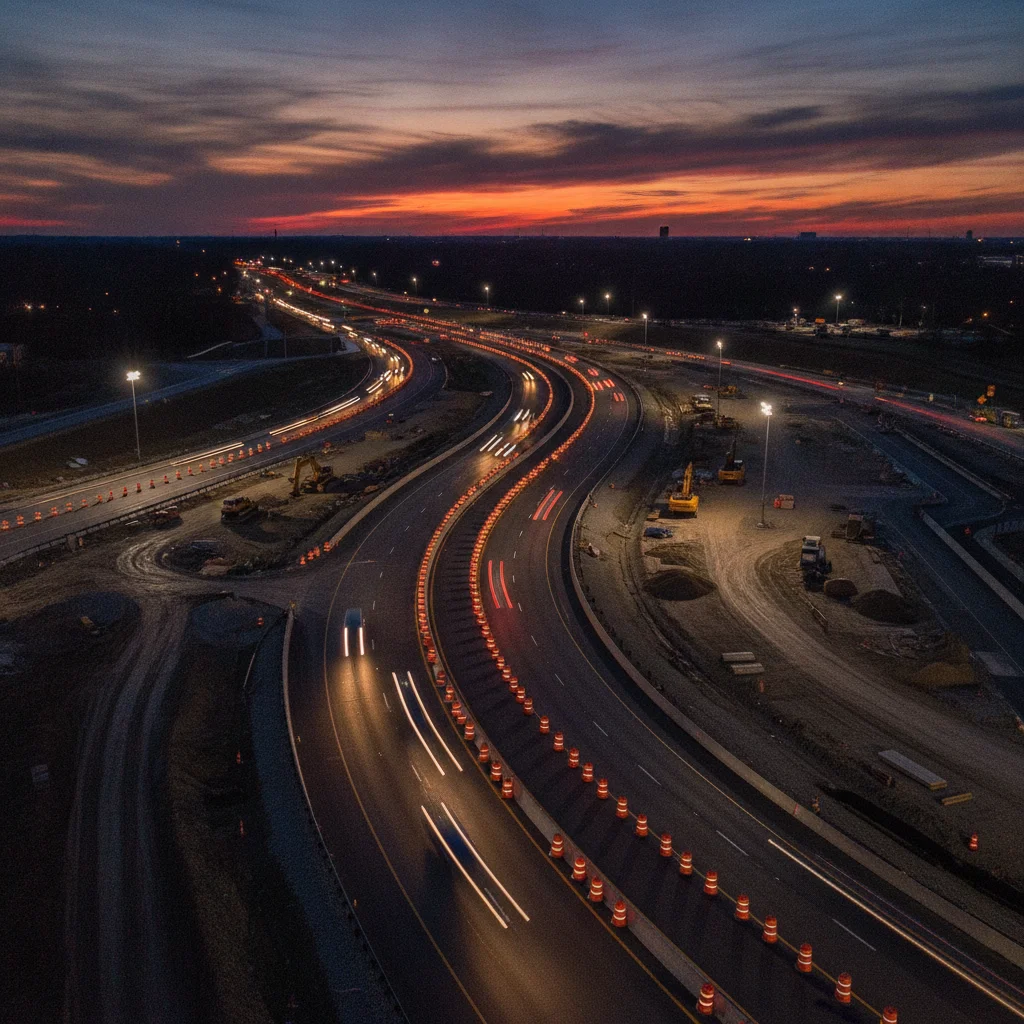
Construction zones are dangerous not because they're inherently mysterious, but because they compress multiple risk factors into a confined space: narrowed lanes, sudden speed reductions, unpredictable lane shifts, reduced sight lines, uneven pavement, and workers operating heavy equipment near live traffic. Add the typical driver's impatience and distraction, and you have a reliable recipe for high-speed rear-end collisions, side-swipe crashes, and secondary accidents.
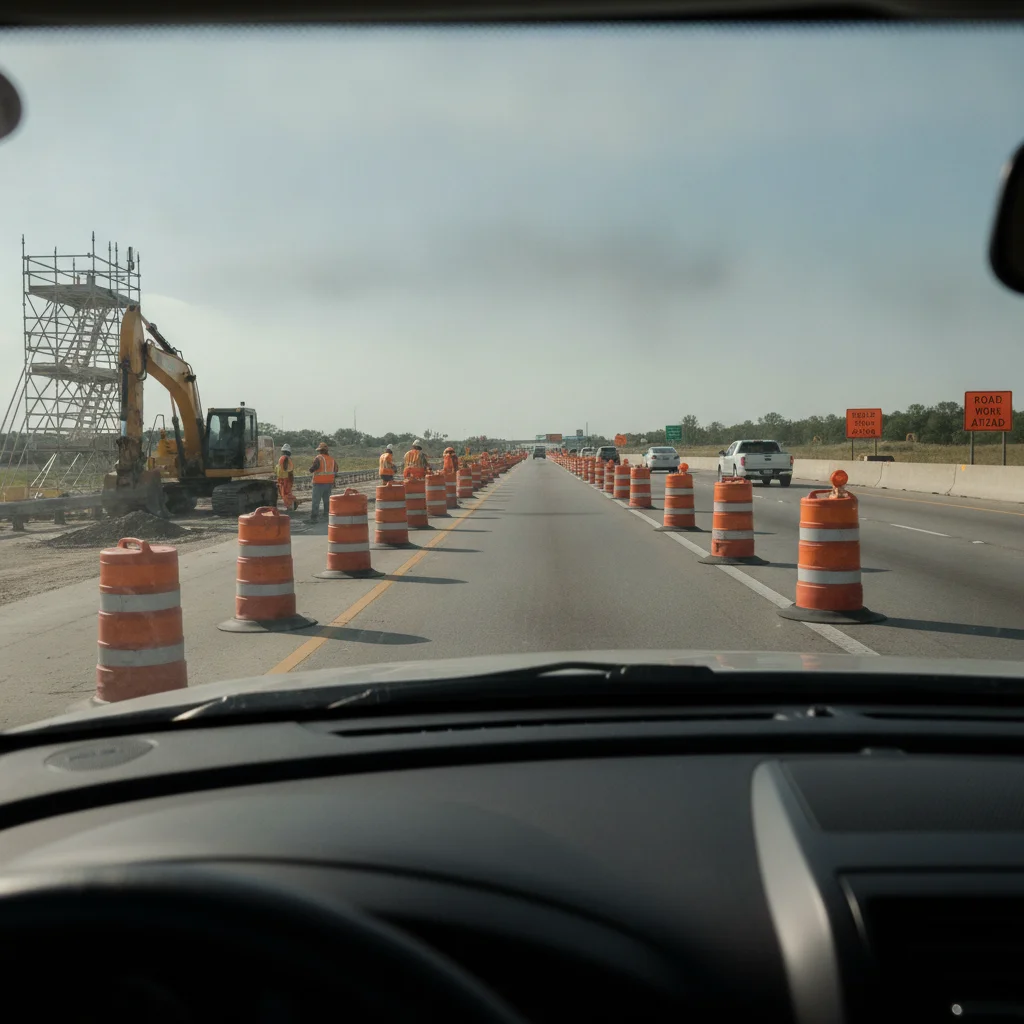
Understanding why these zones generate outsized crash rates is the starting point for driving through them more safely. The risk isn't random. It follows consistent patterns — and those patterns point directly to specific habits that make a measurable difference.
For a broader look at how road environments shape crash risk, see our comparison of urban and rural driving dangers.
The Crash Patterns That Define Work Zone Risk
Work zone crashes aren't random. FHWA and National Highway Traffic Safety Administration (NHTSA) data consistently identify a short list of crash types that account for the vast majority of work zone fatalities and serious injuries.
857
Work zone fatalities in the U.S. (2020)
According to the Federal Highway Administration, work zone deaths have remained above 800 annually for multiple consecutive years, with the figure rising in recent years.
85%
Work zone fatalities that are drivers or passengers
FHWA data consistently shows that motorists — not construction workers — account for the large majority of work zone crash fatalities.
Over 40,000
Work zone injuries per year in the U.S.
The National Safety Council estimates that work zones generate tens of thousands of serious injuries annually, many involving rear-end and lane-change collisions.
2x–3x
Fine multiplier for speeding in work zones
Most U.S. states double or triple standard speeding fines within posted work zones, with some states adding mandatory license points or suspension for repeat violations.
1 in 5
Work zone crashes involving distracted driving
NHTSA behavioral research attributes approximately 20% of work zone crashes to driver distraction, making it one of the most significant behavioral risk factors in these environments.
Rear-end crashes are the single most common work zone crash type. They occur when traffic slows suddenly — due to a merge, a stopped flagger, or a bottleneck at a lane closure — and a following driver fails to maintain enough distance to stop safely. At highway speeds, even a brief moment of inattention can translate into a closing speed of 40 or 50 mph before the driver reacts.
Lane-change and sideswipe crashes cluster near taper zones — the transition area where lanes merge from multiple to fewer. Drivers who wait until the last moment to merge, or who resist yielding to merging traffic, create high-risk lateral conflicts at speed.
Head-on crashes are less frequent but disproportionately fatal. They're most common on two-lane roads where construction shifts traffic into a single alternating-direction lane, and where drivers misjudge the space available or the direction of oncoming traffic.
Run-off-road crashes occur when pavement edges are uneven, lane markings are unclear, or drivers are distracted and drift beyond the narrowed travel lane.
These patterns matter because they're all behavior-responsive. Each crash type has a corresponding driver habit — following distance, merge timing, speed management, lane tracking — that directly reduces the probability of involvement. These aren't abstract safety tips; they're specific countermeasures to documented crash mechanisms. See how similar behavioral patterns play out in intersection crash research for context.
Best Practices for Driving Safely Through Construction Zones
The following practices are grounded in FHWA guidance, NHTSA crash data, and traffic engineering research. They address the specific crash mechanisms that make work zones dangerous — not general driving advice repackaged with orange cones in mind.
Begin slowing down as soon as you see the first advance warning sign, not when you see the cones.
Work zone speed reductions can catch drivers off guard, especially on high-speed highways. Advance warning signs — typically posted 1,500 feet or more before the zone — are designed to give drivers time to decelerate gradually. Ignoring them and braking late creates exactly the rear-end collision risk that defines work zone crashes.
Double your following distance inside work zones — at minimum four seconds from the vehicle ahead.
Narrowed lanes, uneven surfaces, and sudden stops from flaggers or equipment all require more stopping room than normal highway conditions. The standard two-second following distance leaves almost no reaction margin at highway speeds when conditions change unexpectedly. FHWA guidance consistently identifies tailgating as a primary contributing factor in rear-end work zone crashes.
Merge into the correct lane early, using the zipper merge method only when traffic is fully stopped or near-stopped.
Early merging reduces the speed differential between lanes at the taper point, which is where high-speed sideswipe and rear-end collisions cluster. The zipper merge — where drivers alternate from each lane at the merge point — is appropriate when traffic is moving very slowly and both lanes are in use to the taper. At highway speeds, late merging creates dangerous closing-speed conflicts.
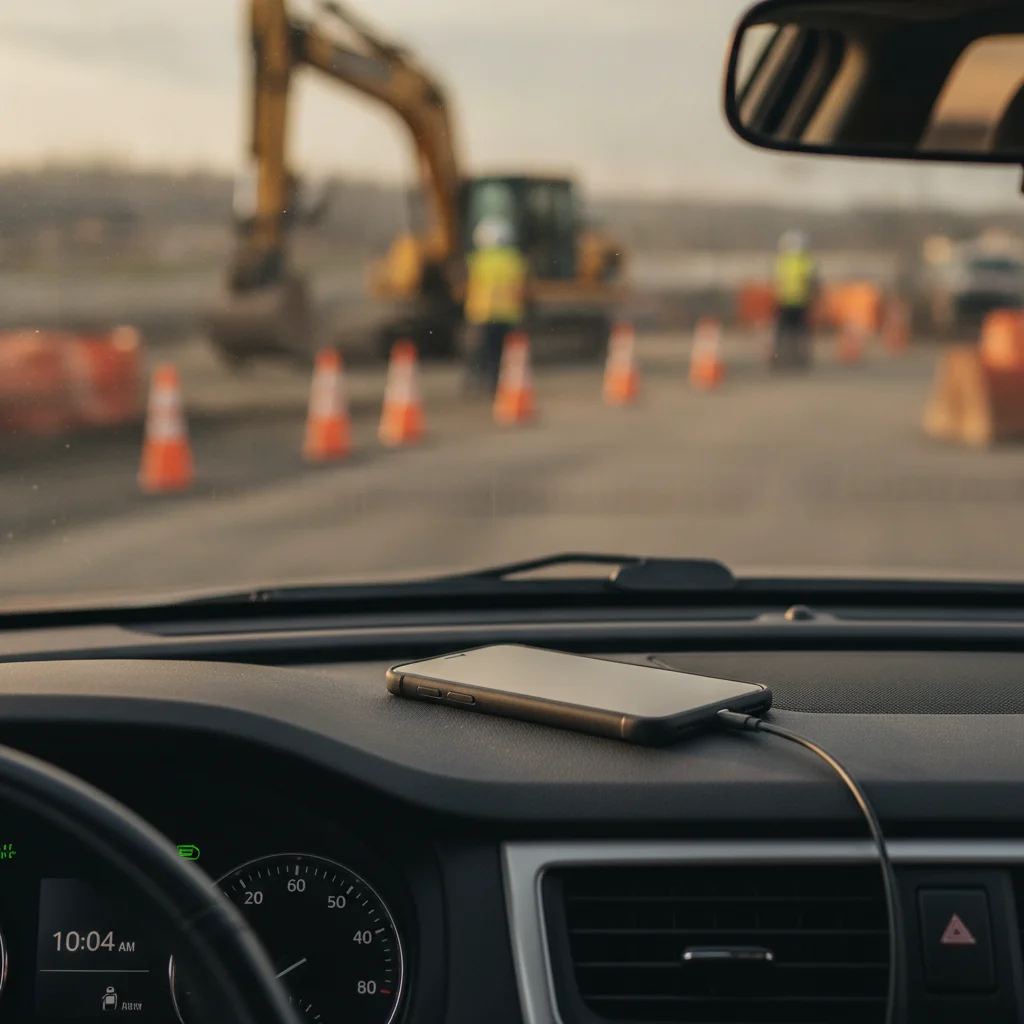
Put your phone completely away — face down, in a bag, or in a center console — before entering a work zone.
NHTSA data shows distraction is a leading behavioral contributor to work zone crashes. Even glancing at a notification for two seconds at 55 mph covers over 160 feet of roadway without visual attention — more than enough distance to close on a slowing vehicle or miss a flagger's signal. Passive availability of a phone (face up on the seat) has been shown to degrade driving performance even without active use.
Obey flaggers immediately and completely, treating their signals as you would a red light.
Flaggers control traffic in conditions that fixed signals can't manage — around equipment, through single-lane passages, and across areas where lane markings have been removed. Hesitation or partial compliance forces other drivers to react unpredictably and can put workers directly in the path of moving vehicles. Legally, flagger signals carry the same authority as traffic signals in all 50 states.
Stay in your lane and avoid unnecessary lane changes within the work zone.
Lane markings in construction zones are often temporary, reduced, or unclear. Lanes may be narrower than standard. Attempting lane changes in these conditions increases both lateral collision risk and the cognitive load on surrounding drivers who are already managing reduced visual cues. Unpredictable lane changes are a leading cause of sideswipe crashes in active zones.
Adjust your speed for actual conditions, not just the posted work zone limit.
Posted speed limits are maximums for ideal conditions. Rain, low visibility, uneven pavement, or heavy equipment encroaching on the travel lane may require speeds well below the posted limit to maintain safety margins. FHWA guidance explicitly notes that condition-appropriate speed — not posted-limit compliance — is the safety standard in active work zones.
Many of these habits overlap with the behavioral changes that cause crashes even when drivers believe they're being safe — overconfidence, under-scanning, and subtle aggression appear in work zone crashes just as they do elsewhere.
The Legal Dimension: What Work Zone Speed Laws Actually Require
Every U.S. state has enhanced work zone speed laws, and most come with automatic fine doubling — sometimes tripling — for violations within posted zones. In some states, a single speeding conviction in a work zone can result in license suspension. These aren't largely symbolic deterrents; enforcement has increased significantly as states have deployed automated speed cameras in active work zones.
Fines Are Elevated Even Without Workers Present
In most states, enhanced work zone fines apply whenever signage is posted — regardless of whether construction workers are actively on-site. Courts have consistently upheld citations issued in posted zones during off-hours or weekends. Don't assume reduced enforcement because the zone looks quiet.
The legal threshold for "active" work zone varies by state, but in most jurisdictions, reduced speed limits apply whether or not workers are visibly present, as long as signage is posted. Arguing that "no one was working" is not a recognized defense in most courts.
Beyond speeding, several other traffic law categories apply specifically to work zones. Using a handheld device is illegal in all active work zones in states that have baseline distracted driving laws — and a growing number of states have passed work-zone-specific cell phone bans with heightened penalties. Failing to yield to flaggers — who have the same legal authority as traffic control signals — is a moving violation in every state.
For a detailed breakdown of how work zone speed laws differ from standard highway limits and how violations affect your driving record, see our dedicated coverage of school zone and work zone speed laws. The broader legal framework for these rules falls under U.S. traffic laws.
Insurance Implications of Work Zone Violations
A speeding conviction in a work zone can trigger a rate increase on your auto insurance policy at renewal, since it is recorded as a moving violation on your driving record. In states where work zone violations carry mandatory points, the impact on your insurance premium may be more significant than a standard speeding ticket. Check your state DMV's point schedule to understand the full cost of a work zone citation.
Habituation Is a Documented Safety Risk
Traffic safety researchers have documented that drivers who pass the same construction zone repeatedly show measurably reduced compliance with posted speed limits and lane-change restrictions over time. This 'familiarity effect' has been observed in studies of long-term highway projects. Treating each pass through a familiar zone as if it were new is a deliberate counterhabituation strategy, not an overcaution.
Quick Wins: Changes You Can Make Before Your Next Drive
Structural behavior change takes time, but several adjustments are immediately actionable and produce measurable safety benefits. The practices below don't require new skills — they require awareness and intention.
If you're regularly driving segments with active construction — particularly on highways — it's also worth reviewing broader freeway safety habits. Our guide to highway driving safety from entry ramp to exit covers the lane management, merging, and speed discipline that applies directly to high-speed work zone navigation.
If Something Goes Wrong: Crashes and Near-Misses in Work Zones
Even careful drivers can become involved in work zone crashes — whether through their own error, another driver's mistake, or the compressed, unpredictable nature of the environment. Knowing what to do in the immediate aftermath is as important as preventing the incident in the first place.
“The greatest danger in a work zone isn't the equipment or the workers — it's the driver behind you who isn't paying attention. The best thing any driver can do is create as much stopping distance as possible and eliminate every distraction before they enter the zone.”
— Victor Mendez, Former Federal Highway Administrator, U.S. Department of Transportation
If your vehicle is drivable after a work zone crash, the priority is getting it out of the travel lane immediately. Active construction zones often have restricted shoulders, debris, and workers who may not see a stopped vehicle. Staying in a traffic lane — even briefly — dramatically increases the risk of a secondary collision, which can be more severe than the initial crash.
Once clear of active traffic, activate hazard lights, assess injuries, and call 911. Work zone crashes involving workers or heavy equipment typically require specialized emergency response, and construction crews are usually trained to assist in coordinating with emergency services. Do not attempt to move injured workers or operate construction equipment.
For a full protocol on managing the scene of any road crash safely — including how to signal oncoming traffic and triage injuries before help arrives — see our guide to accident scene safety.
From an insurance standpoint, work zone crashes are handled like any other collision claim — fault is determined by the standard negligence framework, and comparative fault rules apply in most states. If road conditions contributed to the crash (unmarked lane shifts, missing signage, uneven pavement without warning), documenting those conditions at the scene can be relevant to any subsequent claim or dispute.
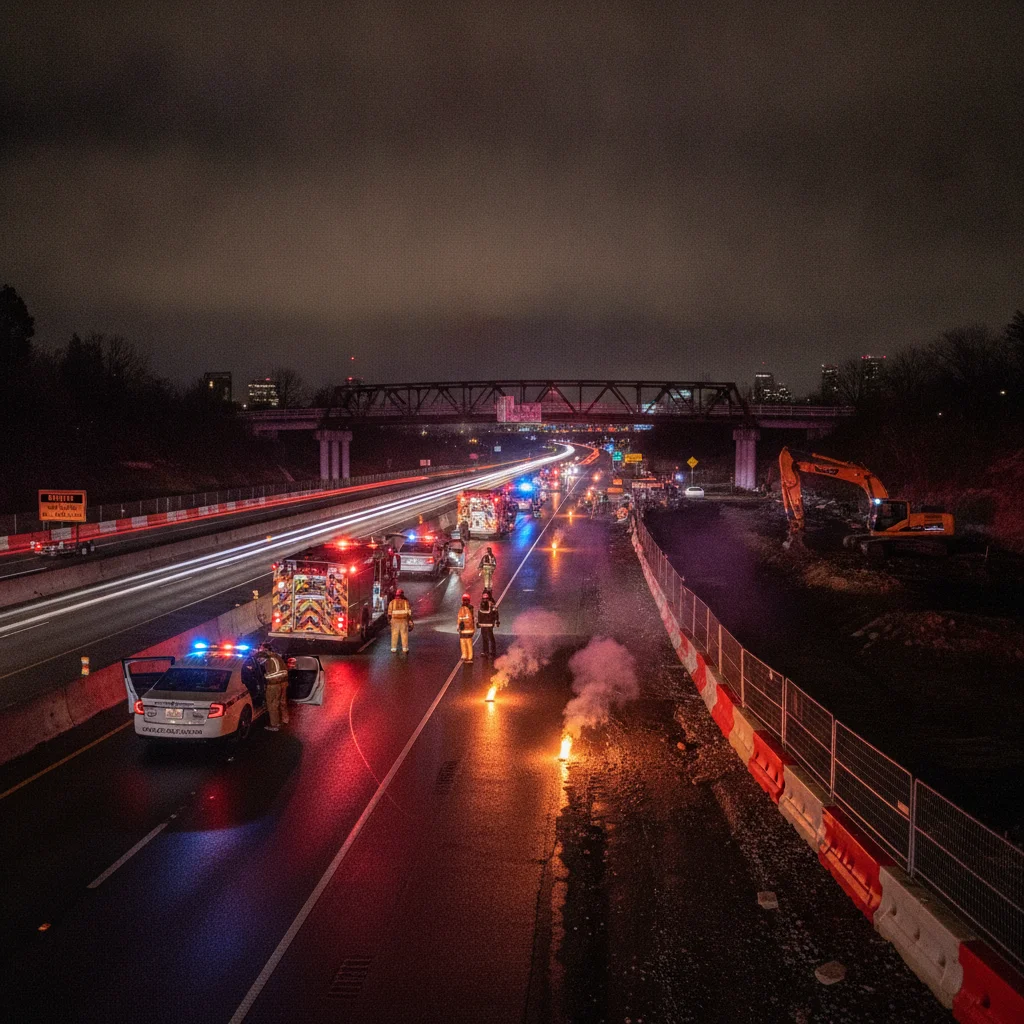
Shifting Your Mental Model: Work Zones as High-Risk Environments
The deeper behavioral problem with work zone safety isn't ignorance — most drivers know they should slow down. It's that construction zones don't feel as dangerous as they are, particularly on familiar routes where the same orange barrels have been sitting for weeks or months. Familiarity breeds inattention, and inattention is the proximate cause of most work zone crashes.
Traffic engineers and safety researchers describe this as "habituation" — the tendency of regular stimuli to lose their alerting effect over time. The orange barrels you've passed 40 times on your commute stop registering as a genuine hazard signal. Your brain processes them as background, not foreground.
Insurance Implications of Work Zone Violations
A speeding conviction in a work zone can trigger a rate increase on your auto insurance policy at renewal, since it is recorded as a moving violation on your driving record. In states where work zone violations carry mandatory points, the impact on your insurance premium may be more significant than a standard speeding ticket. Check your state DMV's point schedule to understand the full cost of a work zone citation.
Habituation Is a Documented Safety Risk
Traffic safety researchers have documented that drivers who pass the same construction zone repeatedly show measurably reduced compliance with posted speed limits and lane-change restrictions over time. This 'familiarity effect' has been observed in studies of long-term highway projects. Treating each pass through a familiar zone as if it were new is a deliberate counterhabituation strategy, not an overcaution.
Countering habituation requires deliberate mental reframing. Before entering a known work zone, treat it the same way you would an unfamiliar road condition: scan actively, reduce speed early, increase following distance, and put the phone down completely. These aren't different skills than what good driving already demands — they're the same skills applied with renewed intention.
The same principle applies to lane positioning. Research on the safest lane on a multi-lane highway shows that lane choice is rarely neutral — and in a work zone, where lane closures create predictable merge points, choosing your position well before the taper begins is a meaningful risk-reduction strategy, not a minor preference.
Work zones are temporary by definition. The roads will be smoother and safer on the other side. The habits that get you through them safely are the same ones that make every other mile you drive less risky, too.

All claims are backed by peer-reviewed research. Sources on request.