Key Takeaways
Enhanced Speed Zones
School zones and work zones are designated stretches of road where normal speed limits are temporarily reduced and penalties for violations are significantly increased. These zones exist because pedestrian vulnerability and worker exposure are dramatically higher than on a typical roadway. The rules in these areas are not suggestions — they're legally enforceable with elevated fines, added surcharges, and in some states, mandatory license points.
Enhanced zone laws are enacted at the state level, meaning exact speed thresholds, fine multipliers, and the hours during which reduced limits apply vary by jurisdiction. Some states use fixed-time schedules; others use flashing beacons or dynamic signage to activate zone rules.
Why These Zones Exist — and Why the Law Treats Them Differently
Speed limits on ordinary roads are calibrated around typical risk levels: road geometry, traffic volume, and the predictability of other drivers. School zones and work zones break from that profile entirely. Both introduce vulnerable people into or directly adjacent to moving traffic under conditions that standard roads are not designed to handle.
In a school zone, you're dealing with children who lack adult-level hazard perception. Studies consistently show children underestimate vehicle speed and overestimate their own visibility to drivers. In work zones, you're dealing with adults in high-visibility gear performing tasks that require them to focus away from traffic — sometimes inches from travel lanes moving at highway speed.
The legal response to that elevated risk isn't just a lower speed limit. It's a restructured penalty framework designed to force behavioral change through deterrence. A driver who might accept a $150 speeding ticket as a cost of running five minutes late is likely to recalculate when the same violation costs $400 and comes with license points.

Understanding what specifically changes in these zones — and why — is more useful than just knowing the rules exist. The details are where drivers most often get caught off guard.
School Zone Speed Laws: What the Rules Actually Say
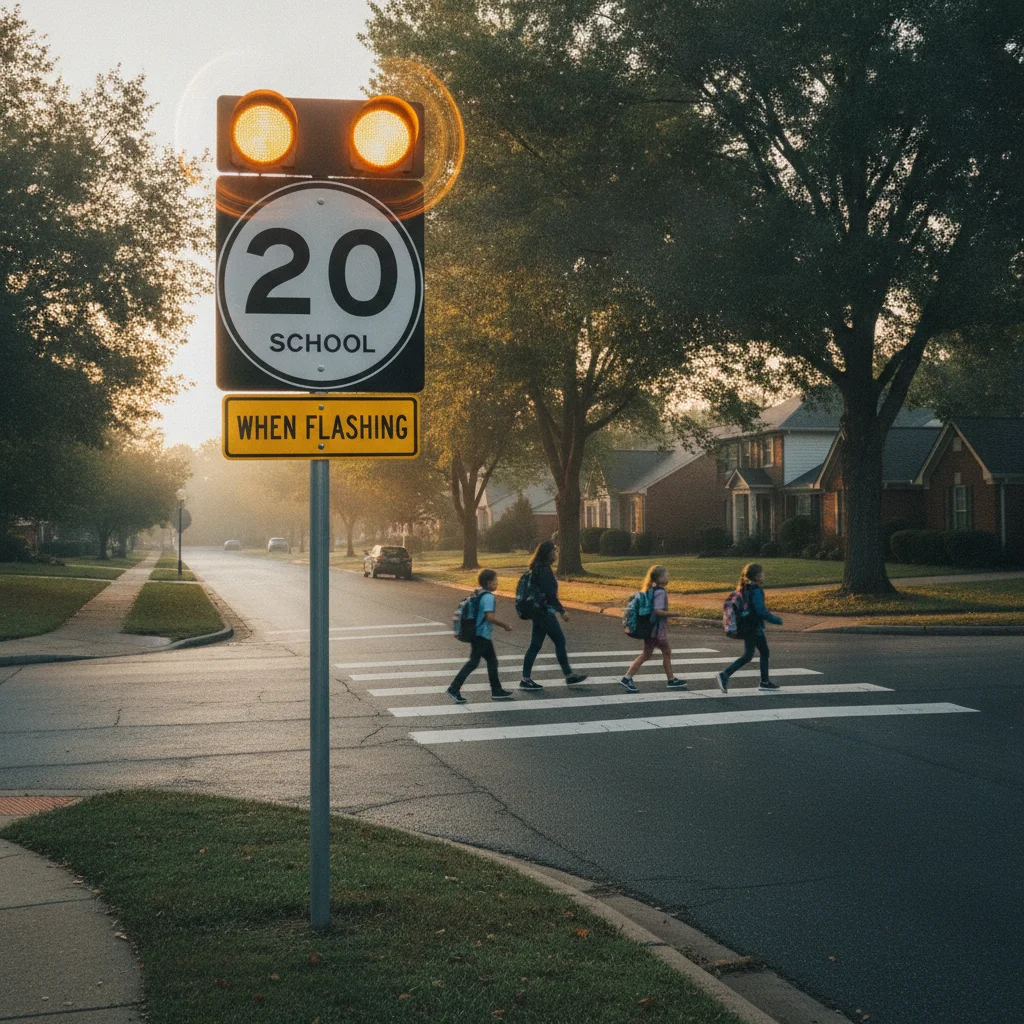
Most school zones reduce the posted speed limit to somewhere between 15 and 25 mph, with 20 mph being a common standard. But the speed number is only part of the picture. The more important question is when the reduced limit applies — and the answer varies significantly by state and even by individual district.
Time-Based vs. Beacon-Based Activation
Two primary systems govern when school zone speeds are in effect:
- Fixed-time signs: Posted time panels (e.g., "7:00 AM – 4:00 PM on school days") define when the reduced limit applies. If you're in the zone during those hours, the lower limit is active regardless of whether you see children.
- Flashing beacon systems: A yellow beacon activates the reduced speed limit during school arrival and dismissal windows. When the beacon is not flashing, the standard posted limit applies.
The distinction matters. A driver passing a school at 11 PM under a time-panel sign governing 7 AM–4 PM is fine. A driver passing the same school at 3 PM when the beacon is flashing is subject to the zone limit — and the enhanced fine if they exceed it.
"Children Present" Is More Than a Visual Check
Some states define "children present" broadly — including situations where children could reasonably be expected to be nearby even if none are immediately visible. Courts have upheld citations in these states when the driver claimed no children were visible at the time. If your state uses this standard, treat it as a time-based rule during school hours rather than a situational judgment call.
Temporary Zones Can Appear Without Warning
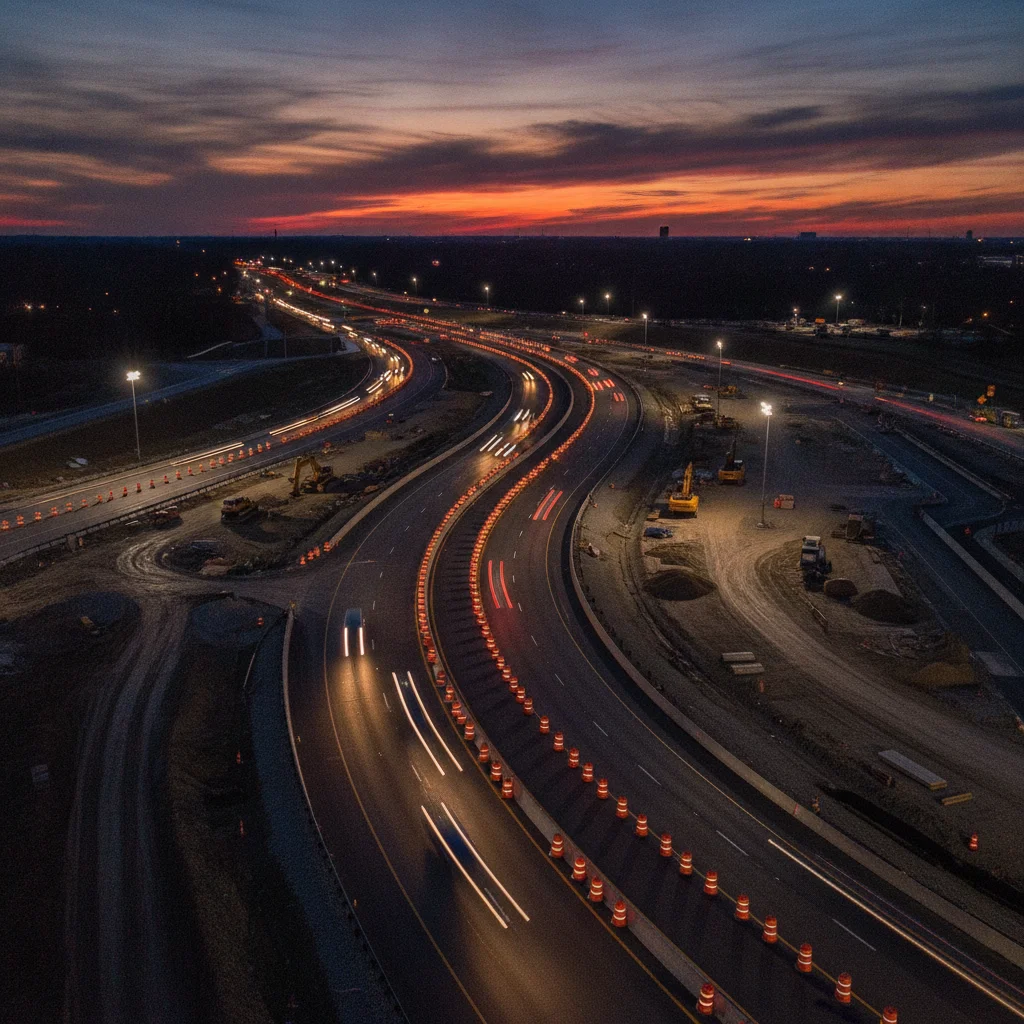
Emergency utility work, bridge repairs, and storm cleanup can establish work zones with very short notice. These temporary zones are legally enforceable the moment proper signage is in place — which can happen overnight or over a weekend. If you see orange signs and cones, treat the zone as fully active regardless of how recently it appeared.
When the "Children Present" Standard Applies
Some states use a "when children are present" standard instead of or in addition to fixed times. This is arguably the most misunderstood variant. Several courts have upheld violations even when a driver claimed no children were visible, reasoning that the presence of a school zone sign itself puts a reasonable driver on notice to proceed with caution and observe accordingly.
Penalties in School Zones
Most states double the base fine for speeding in a school zone. On top of that base penalty, many add a statutory surcharge — a flat additional fee that does not scale with the violation amount but is added regardless. In California, for example, a school zone speeding ticket can easily exceed $300–$500 once all fees are factored in. In Texas, fines can reach $200 or more, with local jurisdictions sometimes adding their own surcharges.
License points typically mirror the elevated fine structure. A violation that carries two points on an open road might carry three or four in a school zone. Points affect your driving record, which directly affects your insurance rates — often for three years or more.
Understanding how posted limits work is a prerequisite for understanding zone-based overrides — the sign in the zone supersedes whatever the standard road limit is, and that supersession is legally enforceable the moment you enter the marked boundary.
Work Zone Speed Laws: Elevated Risk, Elevated Fines
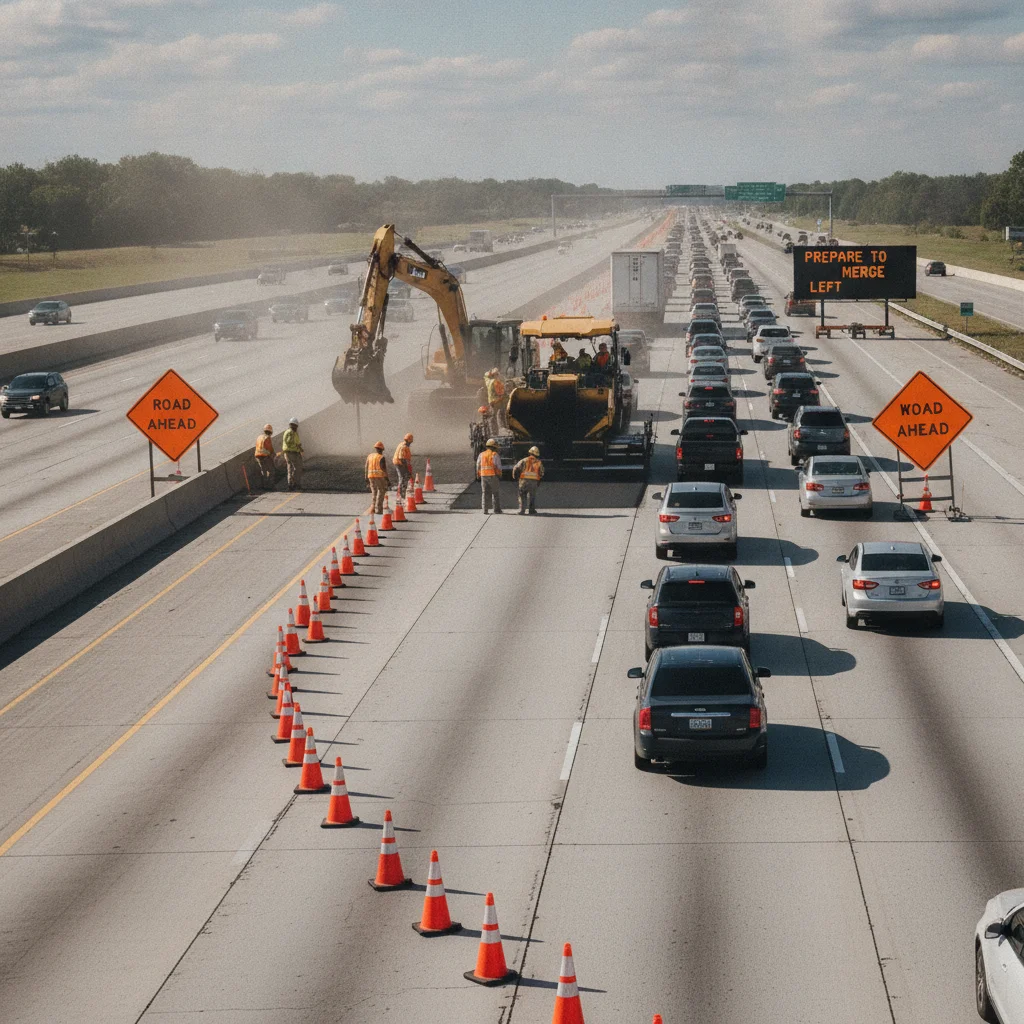
Work zones present a different legal structure than school zones, though the underlying goal is the same: create deterrence that matches the heightened danger. The crash statistics in work zones are stark — over 800 people die annually in U.S. work zone crashes, and a significant share of those fatalities are workers.
What Defines a Work Zone
A work zone begins at the first advance warning sign and ends at the last sign indicating normal conditions have resumed. Everything between those markers — including buffer zones before the actual work activity — falls under work zone regulations. This is important because drivers often don't realize the zone has started until they're already inside it and potentially already in violation.
The "Workers Present" Question
This is where many drivers are surprised. In most states, enhanced work zone penalties apply throughout the officially designated zone regardless of whether workers are actively on-site. If the signs are up and the zone is marked, the rules apply. Several states explicitly codify this — the Georgia statute, for example, specifies that enhanced fines apply in any active work zone "whether or not workers are present."
857
Work zone fatalities in the U.S. in 2020
According to the Federal Highway Administration (FHWA), work zone crashes killed 857 people in 2020, the highest count in over a decade.
2x–3x
Fine multiplier for work zone speeding
Most U.S. states double fines for speeding violations in work zones; several states triple fines for repeat offenders or serious violations.
$10,000
Maximum work zone fine in Illinois
Illinois law allows fines up to $10,000 for work zone speeding violations that result in injury to a road worker.
25 mph
Typical school zone speed limit
The most common reduced speed limit in U.S. school zones is 25 mph, though some zones drop to 15–20 mph depending on local conditions.
37%
Of work zone fatalities that are drivers or passengers
FHWA data show that the majority of work zone crash fatalities are vehicle occupants — not workers — underscoring the risk to all road users in these areas.
Fine Structures in Work Zones
Most states double fines for speeding in work zones. Several states — including Illinois, Virginia, and others — go further, with fines that triple for repeat offenders or for violations that exceed the posted limit by a significant margin. In some states, a second work zone speeding offense within a set period triggers mandatory license suspension, not just increased fines.
It's also worth noting that work zones frequently appear on highways where baseline speeds are already 55–70 mph and the zone drops them to 45–55 mph. The speed differential is smaller, but the enforcement tolerance is also smaller — a 10 mph overage in a highway work zone can carry a fine equivalent to a 30 mph overage elsewhere.
Disable Cruise Control Before Any Work Zone
This is a simple habit that prevents a surprisingly common violation. Cruise control will hold your current speed through a work zone unless you actively override it. Get in the habit of tapping the brake or canceling cruise control the moment you see the first orange advance warning sign — not when you reach the cones.
Check Your State's Exact School Zone Hours Before Your Commute
School zone active hours vary widely — some run from 7 AM to 5 PM, others are limited to 30-minute windows around bell times. Most state DMV websites publish the specific hour rules for school zones. If your daily route passes one, a five-minute lookup could save you several hundred dollars.
Automated Enforcement in Work Zones
Several states have authorized the use of speed cameras in work zones, removing human discretion from the equation. Maryland, Illinois, and Oregon are among those with established work zone camera programs. These cameras issue citations based solely on recorded speed — no officer needs to be present, no margin for warning, and the violation is tied to the vehicle registration regardless of who was driving at the time (though ownership transfer rules vary).
How States Differ — and Why That Matters When You Travel
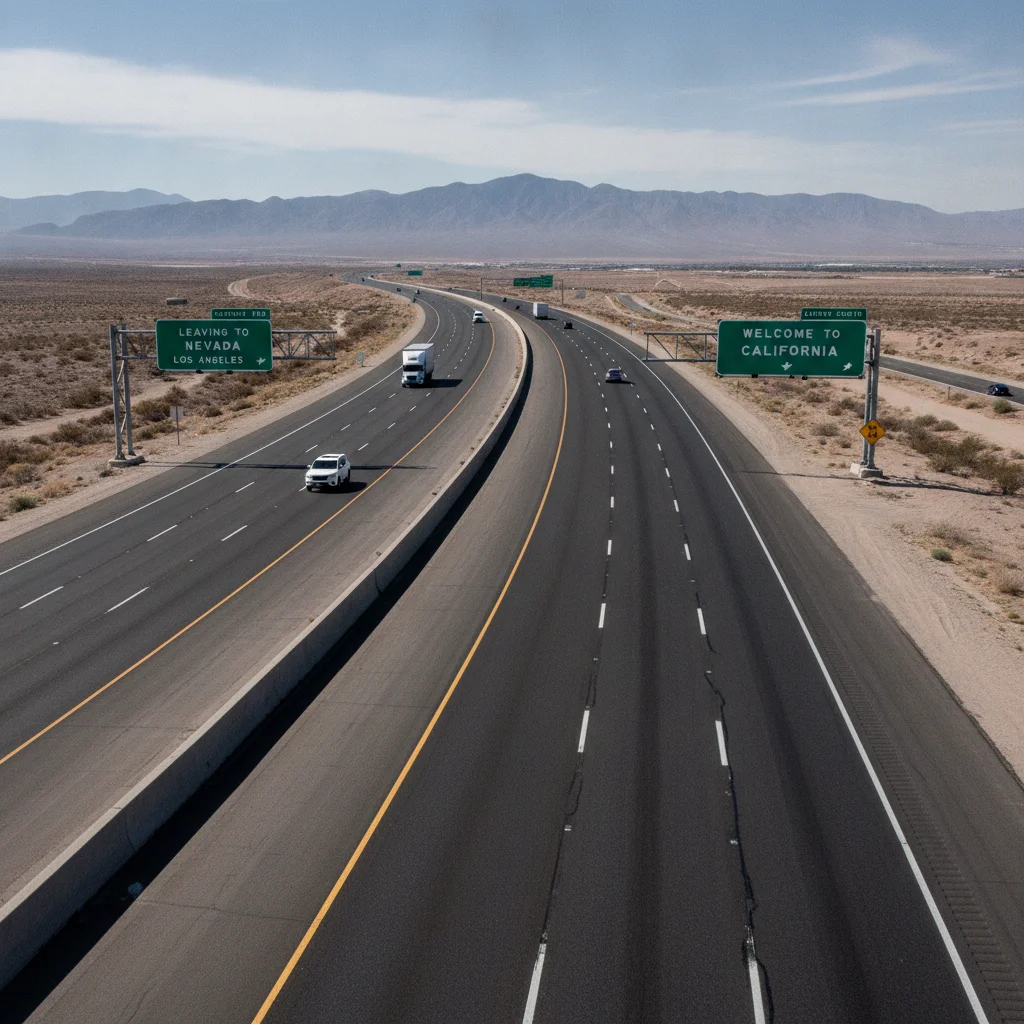
Because traffic law is primarily a state function, the specifics of school and work zone enforcement vary considerably. A driver who knows the rules in their home state may be caught off guard crossing a state line. State-by-state legal differences cover more than just speed limits — zone rules, penalty structures, and enforcement mechanisms all vary.
A few examples of the variation:
- California: School zone speed is 25 mph unless a lower limit is posted. Fines with mandatory state and county surcharges often reach $300–$500 for a first offense. Work zone fines are doubled.
- Texas: School zone violations can carry fines up to $200 plus local surcharges. Work zone violations are doubled, and if a worker is injured, a separate criminal charge can apply.
- Virginia: School zone and work zone violations are doubled; reckless driving charges (a criminal offense in Virginia) can apply to severe speeding in work zones.
- New York: Automated school zone speed cameras are active in New York City. Violations are $50 for first offense, $100 for second — lower than many states, but issued automatically with no ability to contest based on officer discretion.
- Illinois: Work zone fines can reach $10,000 for speed violations that result in injury to a worker. The standard fine is double; the enhanced injury-related penalty is among the highest in the country.
The pattern holds across states: the legal framework treats these zones as categorically different from standard road conditions, and the penalties reflect that. Assuming your home-state knowledge transfers perfectly to another jurisdiction is a common — and costly — mistake.
The Insurance Angle: How Zone Violations Follow You Home
Traffic violations don't stay on the road. They travel to your insurance file and affect what you pay — sometimes for years. School zone and work zone speeding tickets are generally treated more seriously by insurers than equivalent speeding on an ordinary road, for two reasons.
First, the violation itself signals higher-risk behavior. Speeding where vulnerable people are present — children, road workers — is a stronger negative indicator than speeding on an empty highway. Insurers who weight violations by context will apply a larger surcharge for a school zone ticket than for a comparable ticket elsewhere.
Second, the formal penalty structure often results in more demerit points being added to your driving record. Points — not just the underlying violation — directly trigger rate recalculations with many carriers. More points means a steeper surcharge at renewal.
“A school zone speeding ticket is not treated the same as speeding on a highway by underwriters. It signals a lapse in attention in a context where the potential severity of harm is highest — and that's exactly what actuarial models are designed to penalize.”
— Karl Brauer, Automotive analyst and industry commentator with expertise in vehicle and insurance market trends
The practical implication: if you receive a school or work zone citation, it may be worth consulting a traffic attorney before simply paying the fine. Paying the fine is an admission of the violation. In some states, completing a defensive driving course or negotiating a reduced charge to a non-moving violation can preserve your record and limit the insurance impact. That calculation is worth doing, especially if the original fine is already elevated.
Move Over laws operate under a similar deterrence philosophy — protect vulnerable people near traffic by imposing escalating penalties on drivers who fail to adjust. Understanding the pattern of how traffic law treats elevated-risk situations helps you anticipate enforcement, not just react to it.
Disable Cruise Control Before Any Work Zone
This is a simple habit that prevents a surprisingly common violation. Cruise control will hold your current speed through a work zone unless you actively override it. Get in the habit of tapping the brake or canceling cruise control the moment you see the first orange advance warning sign — not when you reach the cones.
Check Your State's Exact School Zone Hours Before Your Commute
School zone active hours vary widely — some run from 7 AM to 5 PM, others are limited to 30-minute windows around bell times. Most state DMV websites publish the specific hour rules for school zones. If your daily route passes one, a five-minute lookup could save you several hundred dollars.
Practical Habits That Keep You Clear of Zone Violations
Knowing the rules is step one. Building driving habits that keep you compliant without having to actively manage it is step two. A few practices that matter:
Treat Zone Signs as Immediate, Not Eventual
The reduced speed limit begins at the first sign — not at the point where the cones start or where you see workers. Many citations are issued right at zone entry, where drivers are still slowing down to reach the posted limit. Reduce speed before you reach the sign, not after.
Do Not Rely on Cruise Control in Zones
Cruise control set at 60 mph will maintain 60 mph through a 45 mph work zone unless you manually override it. This is a straightforward violation that many drivers commit inadvertently. Disable cruise before entering marked zones.
Watch for Temporary Sign Changes
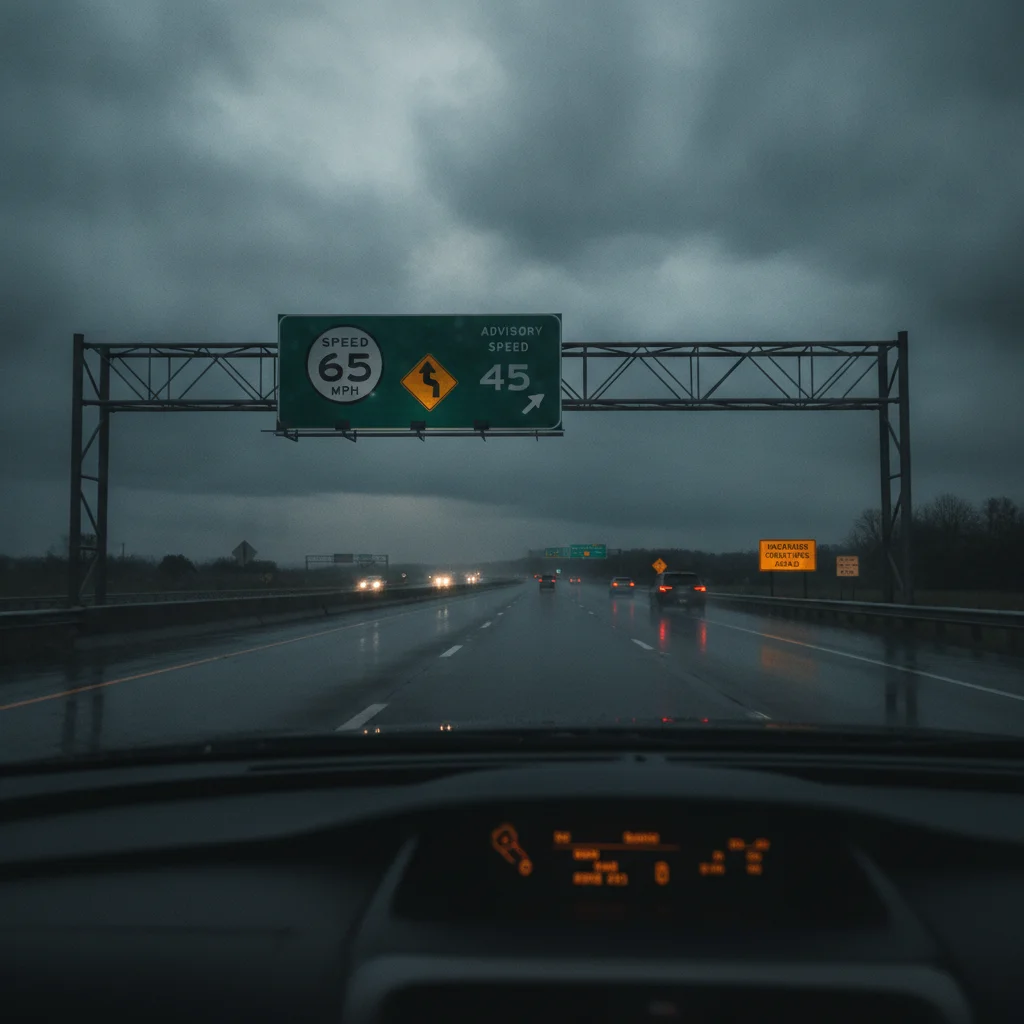
Work zones in particular feature temporary speed limit signs that may differ from permanent signs in the area. A road marked 55 mph under normal conditions may have 45 mph temporary signs posted inside an active zone. The temporary sign governs. Understanding how multiple speed limit signs interact helps you prioritize the right one in these situations.
Account for Time-of-Day Variation
School zones have defined active periods. If your commute takes you through a school zone, know whether the outbound run (say, 7:30 AM) falls within active hours and whether the return run (say, 5:30 PM) does as well. The enforcement window often extends past morning drop-off — afternoon dismissal can push active hours to 4:00 PM or later in many districts.
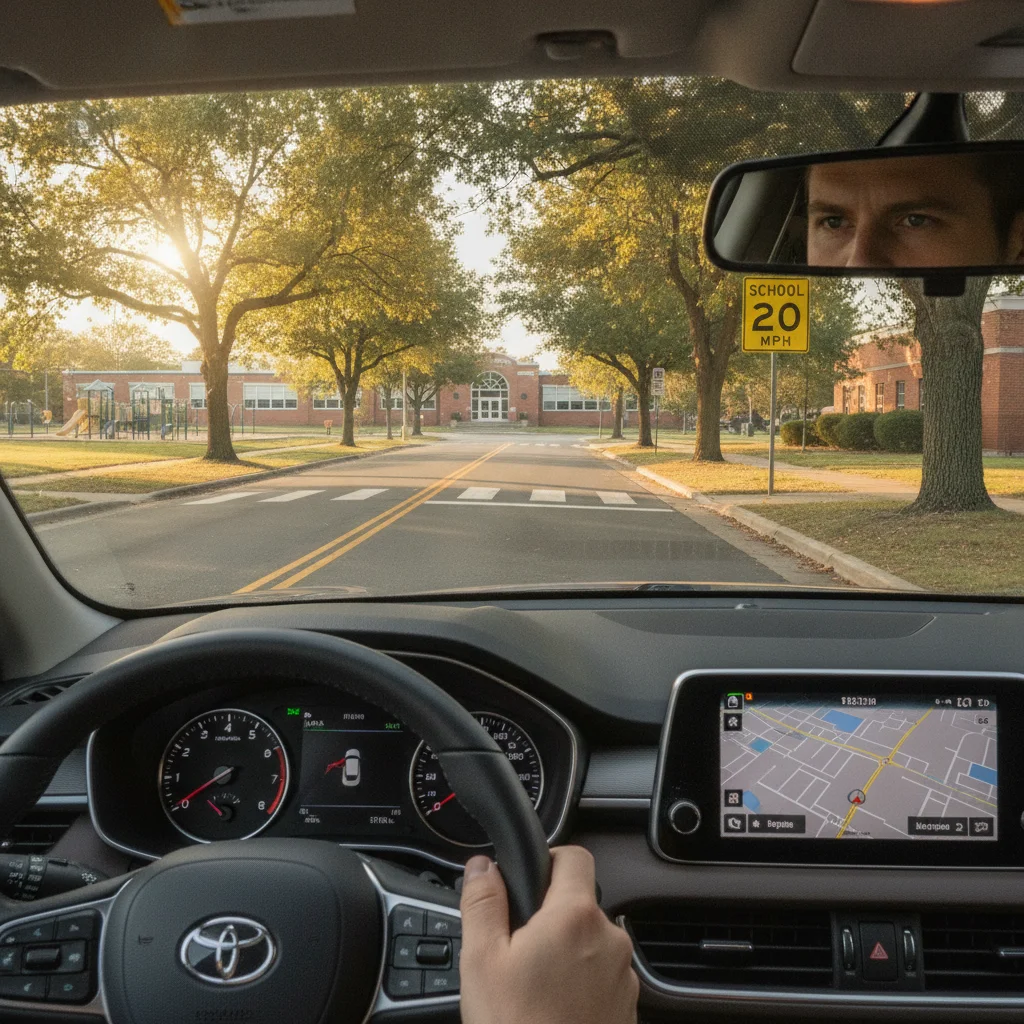
Finally, if you're driving in an unfamiliar area — whether on a road trip or in a new city — slow down when you see school or construction signage even before you can read the specific limit. The habit of pre-emptive reduction is cheaper than any fine, and it keeps you compliant across state lines where rules you don't know may already be in effect.

All claims are backed by peer-reviewed research. Sources on request.