Key Takeaways
Option A
Distracted Driving
The modern epidemic hiding in plain sight.
Best for: Understanding crash risk for everyday drivers who use phones, navigation, or in-car infotainment while behind the wheel.
Option B
Impaired Driving
The longer-recognized, heavily legislated traffic killer.
Best for: Understanding the legal, physiological, and crash-risk consequences of driving under the influence of alcohol or drugs.
If you want to understand which behavior poses greater personal crash risk daily
Distracted Driving
Most American drivers engage in some form of distraction far more frequently than impaired driving, making it a higher-probability daily hazard for the average commuter.
If you're weighing the severity of legal and financial consequences
Impaired Driving
DUI and DWI convictions carry criminal penalties, license suspension, and insurance surcharges that typically dwarf those associated with distracted driving citations.
If you're a parent or driving instructor teaching new drivers
Distracted Driving
Teen drivers are disproportionately involved in distraction-related crashes, making it the more urgent behavioral lesson for new license holders.
If you're an insurer or employer managing fleet risk
Distracted Driving
Distraction occurs throughout all hours of the day and is harder to detect pre-incident, making it a broader and more persistent liability exposure than impaired driving.
If you're advocating for policy or traffic law reform
Impaired Driving
Decades of legislative precedent on BAC limits, sobriety checkpoints, and ignition interlock devices provide a proven policy roadmap that distracted driving laws are still trying to match.
The Numbers Behind Two Lethal Habits
When the National Highway Traffic Safety Administration (NHTSA) releases its annual traffic fatality data, two behavioral categories consistently dominate the discussion: distracted driving and impaired driving. Both are preventable. Both are widespread. And both have become deeply embedded in American driving culture in ways that make them genuinely difficult to eradicate.
In 2022, NHTSA reported that alcohol-impaired driving fatalities reached 13,524 — roughly 32% of all traffic deaths. Distracted driving, by official count, killed 3,308 people that same year. On the surface, that gap looks enormous. But researchers and safety advocates argue the comparison is misleading, because distraction is chronically undercounted in police crash reports. Unlike alcohol, which can be measured with a breathalyzer, distraction often requires witnesses, phone records subpoenaed after the fact, or driver self-reporting — none of which are reliable in the immediate aftermath of a crash.
13,524
Alcohol-impaired driving deaths in 2022
According to NHTSA's 2022 traffic fatality data, this represents approximately 32% of all U.S. traffic fatalities that year.
~26%
Crashes estimated to involve cell phone use
The National Safety Council estimated that roughly one in four crashes involves cell phone distraction, far exceeding official NHTSA counts.
1.7x
Increased crash risk at 0.08% BAC
NHTSA data shows drivers at the legal limit are 1.7 times more likely to be in a crash; at 0.15% BAC, that figure rises to 12 times.
5 seconds
Average eyes-off-road time while texting
NHTSA research shows that at 55 mph, a 5-second text interaction covers the equivalent length of a football field completely unobserved.
48%
Decline in drunk driving deaths since 1982
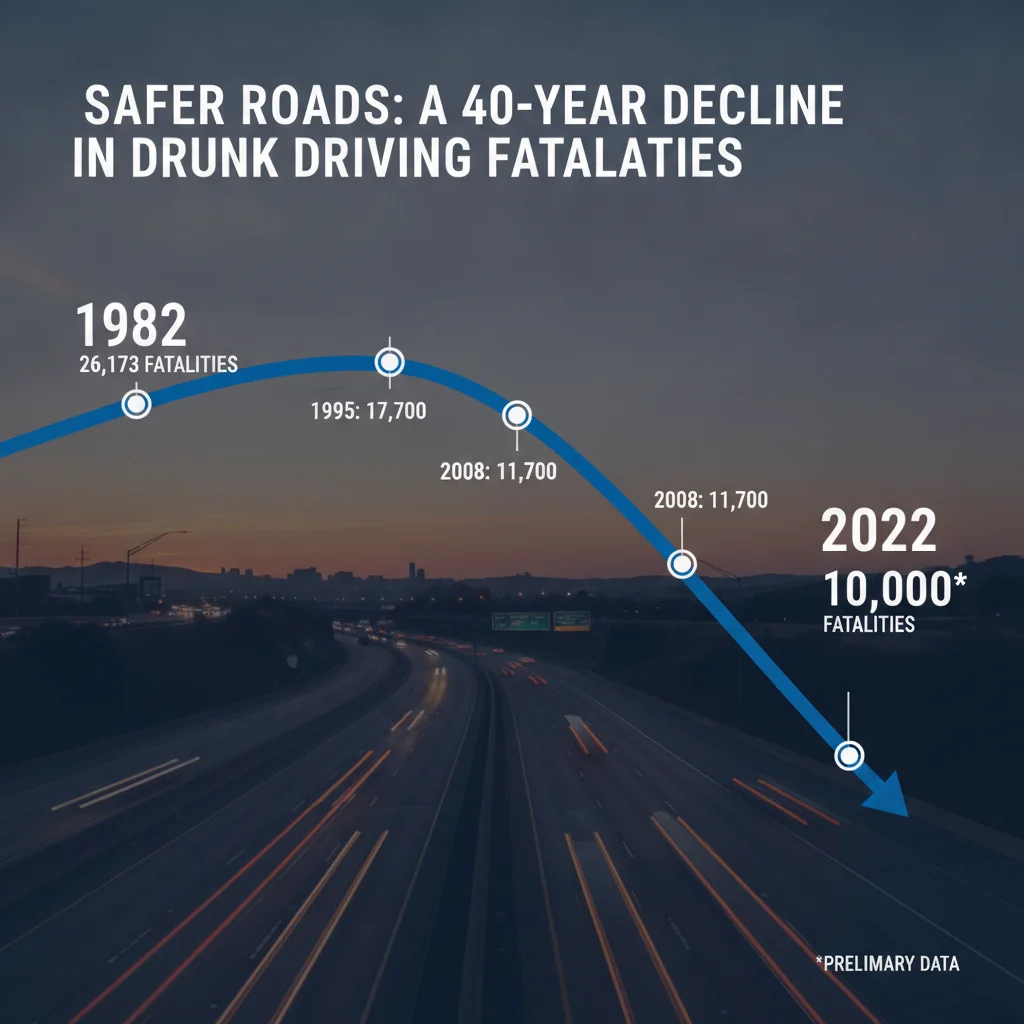
Alcohol-impaired driving fatalities fell from over 26,000 in 1982 to 13,524 in 2022, a result of legislation, enforcement, and cultural change.
A 2013 study from the National Safety Council estimated that as many as 26% of all crashes involve cell phone use alone, a figure that would put distraction-related fatalities far above what official reports capture. This data gap is itself a policy problem: if we can't accurately count distraction deaths, we can't fully respond to them.
Still, both behaviors warrant serious attention from drivers, insurers, and lawmakers. The question isn't which one "wins" in a mortality contest — it's understanding how each one impairs driving, what the crash data actually shows, and what that means for everyday decisions behind the wheel. See how common driving behaviors cause crashes even when drivers feel confident they're being safe.
How Each Behavior Impairs the Driver
Distracted driving and impaired driving both degrade the core cognitive and physical functions required for safe vehicle operation — but they do so through entirely different mechanisms, and understanding those differences matters for prevention.
Distracted Driving: The Attention Drain
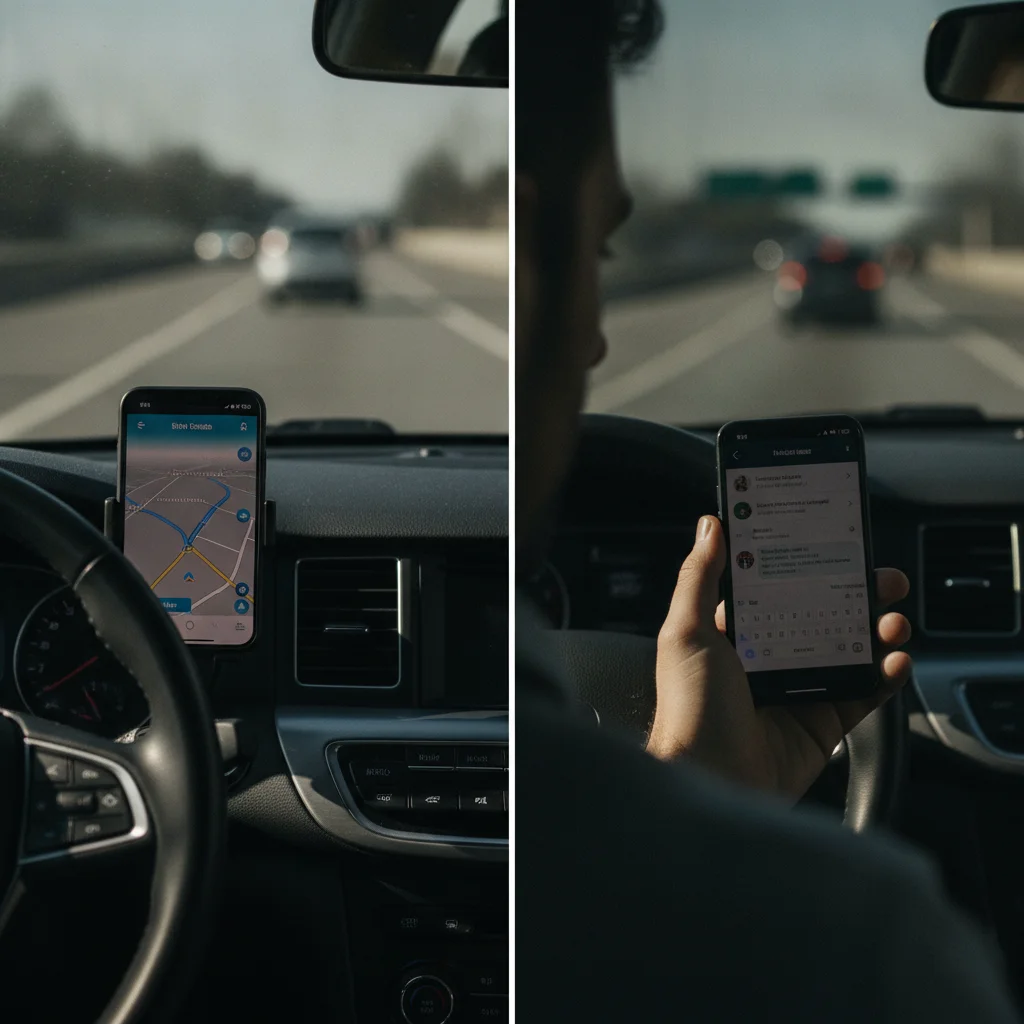
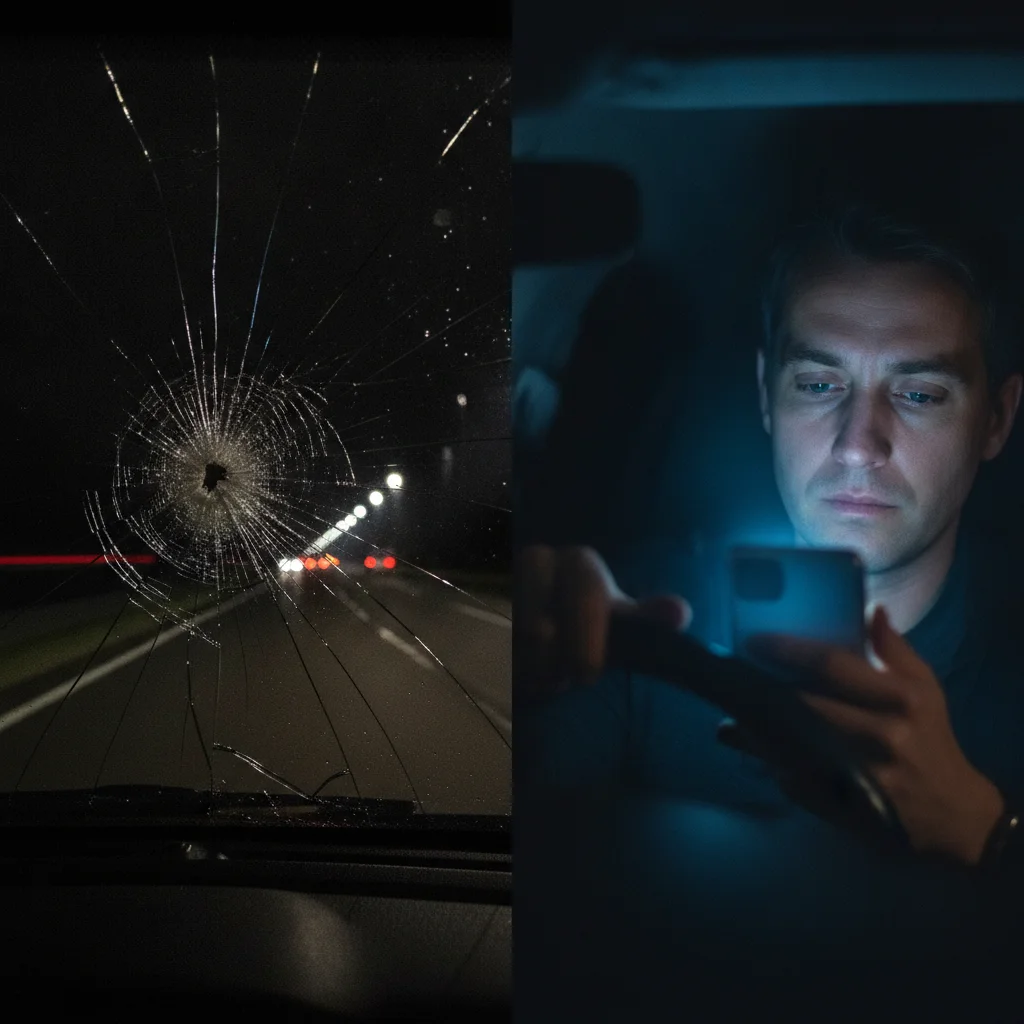
NHTSA defines distracted driving across three categories: visual (eyes off the road), manual (hands off the wheel), and cognitive (mind off the task). Texting is the most dangerous common distraction because it hits all three simultaneously. At 55 mph, reading or sending a text takes an average of five seconds — enough time to travel the length of a football field without looking at the road.
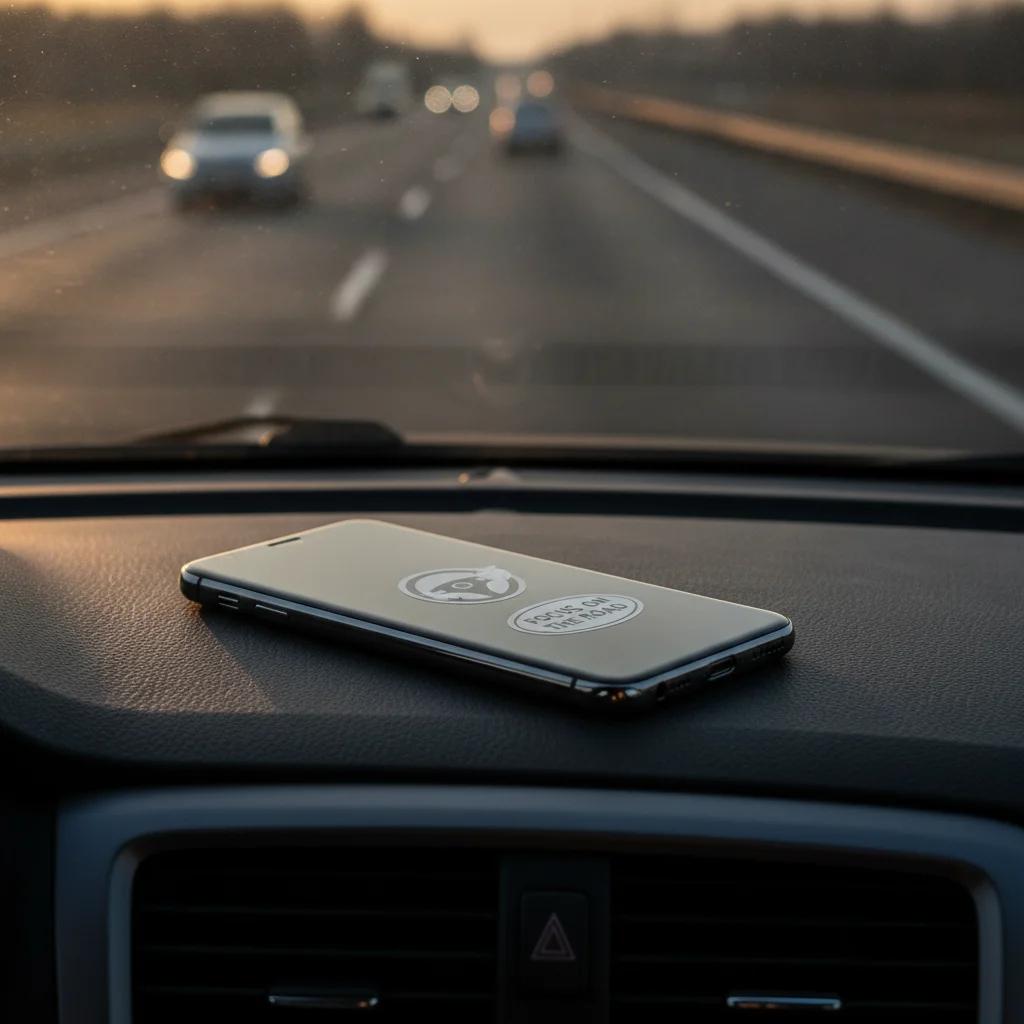
Cognitive distraction is the most underappreciated dimension. Research from the AAA Foundation for Traffic Safety found that voice-to-text features and hands-free calling still impose significant cognitive load on drivers, with reaction times lagging and visual scanning narrowing even when hands remain on the wheel. The research on cell phone use while driving consistently shows that hands-free is not risk-free.
Impaired Driving: The Chemical Override
Alcohol and drugs impair driving through pharmacological action on the central nervous system. Alcohol slows processing speed, reduces inhibition, degrades depth perception, and impairs divided attention — the ability to monitor multiple inputs at once. At a 0.08% blood alcohol concentration (the legal limit in all 50 states), a driver is 1.7 times more likely to be involved in a crash than a sober driver, according to NHTSA data. At 0.15% BAC, that risk multiplies to 12 times.
Drug-impaired driving introduces additional complexity. Cannabis, opioids, stimulants, and prescription sedatives each impair driving differently, and there is no universally accepted field sobriety equivalent to the breathalyzer for drug detection. This regulatory gap has become more pressing as cannabis legalization has expanded across states.
Why Crash Data Undercounts Distraction
Police crash reports rely on information available at the scene: witness statements, physical evidence, and driver admissions. Distraction — particularly phone use — often leaves no visible trace and is rarely self-reported. Studies using naturalistic driving data (in-vehicle cameras and sensors) routinely find distraction rates two to five times higher than official statistics suggest. This means the true death toll from distracted driving is likely substantially larger than official NHTSA figures indicate.
Cannabis Impairment: A Growing Data Gap
As recreational cannabis legalization has expanded to over 24 states, drug-impaired driving has become an increasingly complex enforcement challenge. Unlike alcohol, THC does not correlate linearly with impairment — blood THC levels can remain elevated hours after intoxication has worn off, and tolerance varies widely by user. Most states currently rely on Drug Recognition Expert (DRE) officers for field evaluation, a process that is slower and less standardized than BAC testing. Researchers and policymakers are actively working to develop reliable roadside drug detection technology, but none has yet achieved the legal and scientific consensus that breathalyzers carry.
Usage-Based Insurance and Driving Behavior
Major insurers including Progressive (Snapshot), Allstate (Drivewise), and State Farm (Drive Safe & Save) now offer telematics programs that monitor driving behavior in real time. These programs can detect hard braking, rapid acceleration, nighttime driving, and in many cases phone handling while moving. Drivers who participate and demonstrate safe behavior can earn discounts of 10–30%; those who don't may see surcharges applied. For high-risk behaviors like frequent phone use or late-night driving, opting into a telematics program without changing behavior can actually increase your premium.
The physiological overlap between the two behaviors is meaningful. A landmark study published in the journal Human Factors found that drivers using a hand-held cell phone had reaction times as impaired as drivers at a 0.08% BAC. That equivalence has become a touchstone in safety research — not to minimize drunk driving, but to elevate the perceived seriousness of phone use while driving.
Side-by-Side: Crash Data, Enforcement, and Legal Stakes
Comparing distracted and impaired driving across a consistent set of dimensions reveals where each behavior is more or less understood, controlled, and penalized by the current system.
| Criterion | Distracted Driving | Impaired Driving |
|---|---|---|
| Annual U.S. fatalities (2022) | ~3,308 (official; likely undercounted) | 13,524 (alcohol-impaired) |
| Primary impairing mechanism | Attention and visual diversion | CNS depression; slowed processing |
| Detectable at scene | Rarely; requires records or witnesses | Yes; breathalyzer or field sobriety test |
| Trend since 2010 | Flat to rising | Declining slowly |
| Typical legal penalty | Civil infraction; $25–$500 fine | Criminal charge; fines, jail, license loss |
| Insurance premium impact | Moderate; up to ~20–30% increase | Severe; 80–200% increase or non-renewal |
| Most at-risk age group | 16–29 (teen and young adult drivers) | 21–34 (young adult drivers) |
| Enforcement technology | No standardized roadside tool | Breathalyzer, blood test (court-admissible) |
| Federal legislation | State-by-state; no federal ban | Federal 0.08% BAC standard (all 50 states) |
One area where the gap is especially stark is enforcement technology. Law enforcement has had reliable, court-admissible breath-test technology for impaired driving since the 1950s. No equivalent exists for distraction. Some states allow officers to check phone logs at the scene under reasonable suspicion, but cell phone forensics typically require warrants and take days or weeks to obtain — long after crash reports are filed. This enforcement asymmetry is one reason hands-free vs. handheld laws vary so widely by state and why penalties remain relatively modest in much of the country.
On the legal side, a DUI or DWI conviction is a criminal matter in most states, carrying penalties that can include jail time, license revocation, mandatory ignition interlock devices, and thousands of dollars in fines and legal fees. Distracted driving citations, by contrast, are typically civil infractions with fines ranging from $25 to $500 in most states. To understand how impaired driving charges break down legally, the distinction between DUI vs. DWI carries significant implications depending on the state.
Trends Over Time: One Is Getting Worse
Perhaps the most consequential difference between the two behaviors is their respective trajectories. Impaired driving deaths have fallen dramatically over the past four decades. In 1982, alcohol-impaired driving fatalities exceeded 26,000 per year. By 2022 that number had dropped to 13,524 — a decline of roughly 48% — driven by a combination of stricter BAC laws, sobriety checkpoints, public awareness campaigns like Mothers Against Drunk Driving (MADD), and cultural attitude shifts around designated driving.
Distracted driving tells a different and more troubling story. NHTSA did not begin separately categorizing distracted driving fatalities until 2005. Since then, the numbers have been volatile but broadly resistant to decline, and many researchers believe the true figure has actually grown as smartphone penetration has increased. The percentage of Americans who own smartphones rose from roughly 35% in 2011 to over 85% today, and those devices have become more attention-demanding — not less — with notifications, streaming, and navigation apps competing for driver attention in real time.
Teen drivers illustrate the divergence most sharply. According to the CDC, motor vehicle crashes are the second-leading cause of death for teenagers in the U.S. Among that group, distraction is the dominant behavioral risk factor. Young drivers are not proportionally overrepresented in alcohol-impaired crash data to the same degree, partly because the legal drinking age creates a partial deterrent. No equivalent age-based restriction governs phone use.
Environmental context shapes both risks differently, too. Urban vs. rural driving environments change the calculus for both behaviors — rural roads see a disproportionate share of impaired driving fatalities due to longer distances between enforcement checkpoints and a higher incidence of late-night driving without alternatives.
Insurance Consequences: Where Your Premium Pays the Price
For most drivers, the most immediate personal financial consequence of either behavior isn't a fine or a lawsuit — it's what happens to their car insurance premium.
A DUI conviction is among the most severe underwriting events in personal auto insurance. Rate increases of 80% to 200% are common following a first offense, and many standard carriers will non-renew the policy entirely, forcing the driver into the high-risk (non-standard) insurance market. An SR-22 filing requirement — a certificate of financial responsibility that signals high-risk status to the state — often accompanies a DUI and must be maintained for three to five years, keeping premiums elevated long after the initial offense.
Distracted driving convictions, while less financially severe, are increasingly being weighted more heavily by insurers as telematics programs and usage-based insurance (UBI) policies become more common. Programs that monitor hard braking, phone use while moving, and reaction patterns are now offered by most major carriers. A driver who opts into a UBI program and is detected frequently using a phone while driving may see surcharges applied at renewal — even without a citation.
The broader point is that both behaviors create long-term financial exposure that extends well beyond any single incident. A serious at-fault crash involving either factor can trigger rate increases that persist for five to seven years, and in cases involving injury or death, potential civil liability that goes beyond insurance coverage limits.
Why Crash Data Undercounts Distraction
Police crash reports rely on information available at the scene: witness statements, physical evidence, and driver admissions. Distraction — particularly phone use — often leaves no visible trace and is rarely self-reported. Studies using naturalistic driving data (in-vehicle cameras and sensors) routinely find distraction rates two to five times higher than official statistics suggest. This means the true death toll from distracted driving is likely substantially larger than official NHTSA figures indicate.
Cannabis Impairment: A Growing Data Gap
As recreational cannabis legalization has expanded to over 24 states, drug-impaired driving has become an increasingly complex enforcement challenge. Unlike alcohol, THC does not correlate linearly with impairment — blood THC levels can remain elevated hours after intoxication has worn off, and tolerance varies widely by user. Most states currently rely on Drug Recognition Expert (DRE) officers for field evaluation, a process that is slower and less standardized than BAC testing. Researchers and policymakers are actively working to develop reliable roadside drug detection technology, but none has yet achieved the legal and scientific consensus that breathalyzers carry.
Usage-Based Insurance and Driving Behavior
Major insurers including Progressive (Snapshot), Allstate (Drivewise), and State Farm (Drive Safe & Save) now offer telematics programs that monitor driving behavior in real time. These programs can detect hard braking, rapid acceleration, nighttime driving, and in many cases phone handling while moving. Drivers who participate and demonstrate safe behavior can earn discounts of 10–30%; those who don't may see surcharges applied. For high-risk behaviors like frequent phone use or late-night driving, opting into a telematics program without changing behavior can actually increase your premium.
What Drivers Can Actually Do About Both
The research on behavior change in driving safety is humbling: awareness alone rarely changes behavior. Drivers who know texting is dangerous still text. Drivers who know their BAC is above the limit still drive. Both behaviors involve a moment of decision — usually a small, low-stakes-seeming one — that compounds into catastrophic outcomes at statistical scale.
That said, there are evidence-based interventions that work at the individual level.
For Distraction
- Enable Do Not Disturb While Driving on your iPhone (iOS Settings > Focus > Driving) or Android (Digital Wellbeing > Driving). Both platforms can automatically suppress notifications when motion is detected.
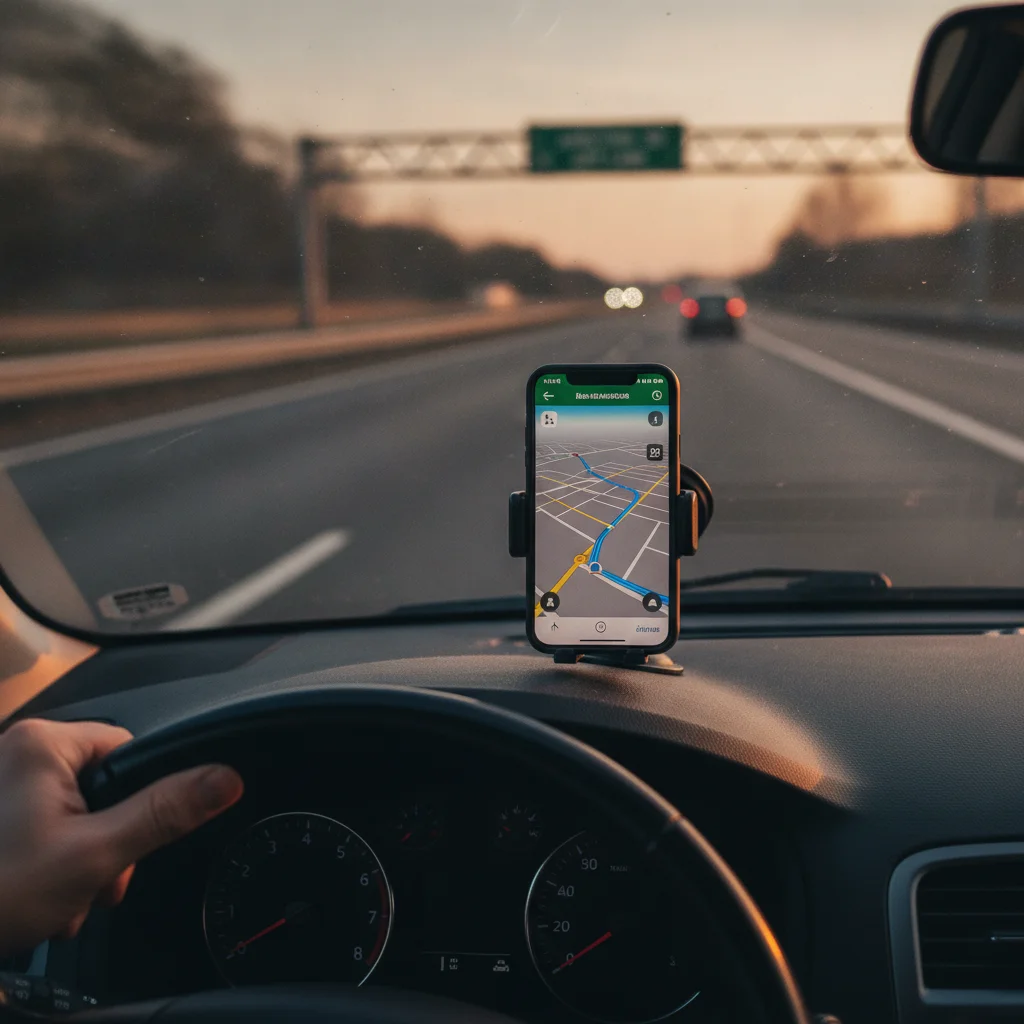
- Mount your phone before you start driving and set navigation before you put the car in gear. Mid-trip adjustments are when most distraction incidents occur.
- Understand that hands-free isn't fully safe. Voice commands and Bluetooth calls still impose cognitive load. For high-traffic or high-speed situations, the safest option is to wait.
For Impairment
- Plan transportation before drinking, not after. Cognitive impairment begins below the legal limit, which means the decision to drive or not should be made before alcohol is consumed.
- Use rideshare or a designated driver as a default rule, not a fallback. The availability of Uber and Lyft has reduced DUI incidents in cities where surge pricing and availability are predictable.
- Know your state's laws on cannabis impairment. Unlike alcohol, there is no per se legal limit for cannabis in most states — but drug-impaired driving is still a criminal offense everywhere.
Both habits also respond to social norming. Passengers who speak up when a driver reaches for a phone, or who insist on calling a rideshare after a night out, have measurable impact on outcomes. Safety is a collective behavior, not just an individual one.
Why Crash Data Undercounts Distraction
Police crash reports rely on information available at the scene: witness statements, physical evidence, and driver admissions. Distraction — particularly phone use — often leaves no visible trace and is rarely self-reported. Studies using naturalistic driving data (in-vehicle cameras and sensors) routinely find distraction rates two to five times higher than official statistics suggest. This means the true death toll from distracted driving is likely substantially larger than official NHTSA figures indicate.
Cannabis Impairment: A Growing Data Gap
As recreational cannabis legalization has expanded to over 24 states, drug-impaired driving has become an increasingly complex enforcement challenge. Unlike alcohol, THC does not correlate linearly with impairment — blood THC levels can remain elevated hours after intoxication has worn off, and tolerance varies widely by user. Most states currently rely on Drug Recognition Expert (DRE) officers for field evaluation, a process that is slower and less standardized than BAC testing. Researchers and policymakers are actively working to develop reliable roadside drug detection technology, but none has yet achieved the legal and scientific consensus that breathalyzers carry.
Usage-Based Insurance and Driving Behavior
Major insurers including Progressive (Snapshot), Allstate (Drivewise), and State Farm (Drive Safe & Save) now offer telematics programs that monitor driving behavior in real time. These programs can detect hard braking, rapid acceleration, nighttime driving, and in many cases phone handling while moving. Drivers who participate and demonstrate safe behavior can earn discounts of 10–30%; those who don't may see surcharges applied. For high-risk behaviors like frequent phone use or late-night driving, opting into a telematics program without changing behavior can actually increase your premium.
Ultimately, the comparison between distracted and impaired driving isn't a competition — it's a reminder that the road tolerates neither. The crash data is clear: both behaviors kill people who didn't have to die, and both are preventable with decisions that cost very little except attention and habit change.

All claims are backed by peer-reviewed research. Sources on request.