Key Takeaways
Option A
Hands-Free Laws
The stricter, increasingly standard approach to phone use while driving.
Best for: Drivers who want to make calls legally in virtually any U.S. state without risking a ticket or points on their license.
Option B
Handheld Bans
Targeted restrictions on holding a device — with varying scope by state.
Best for: Understanding the minimum legal baseline in states that still allow limited handheld use under certain conditions.
If you drive across multiple states regularly
Hands-Free Laws
Defaulting to full hands-free use ensures you're compliant everywhere, regardless of each state's specific handheld rules. It's the only truly portable compliance strategy.
If you're trying to understand your exact legal minimum in a permissive state
Handheld Bans
In states without a full hands-free mandate, knowing exactly what handheld behavior is prohibited helps you stay legal without changing your habits unnecessarily.
If you're a new driver or hold a learner's permit
Hands-Free Laws
Nearly every state applies stricter phone restrictions to novice and teen drivers, including states that allow adults to hold phones. Hands-free is the only safe default.
If you're concerned about insurance rate impact after a ticket
Hands-Free Laws
Violations in states with primary handheld bans are more likely to appear as moving violations on your record, which insurers use to raise premiums at renewal.
If you drive commercially or operate a work vehicle
Hands-Free Laws
Federal FMCSA rules prohibit handheld phone use for commercial drivers nationwide. No state exemption overrides this federal standard.
The Legal Landscape: How State Laws Actually Differ
Most drivers assume that as long as they're not texting, they're in the clear. That's a costly misconception. The reality is that U.S. distracted driving law exists on a spectrum — and your legal exposure depends entirely on which side of a state line you're on.
At the strictest end, states like California, New York, Washington, and Oregon require all drivers to use hands-free technology for any phone interaction while the vehicle is in motion. Holding a phone — even to glance at a map or decline a call — is a primary offense, meaning an officer can pull you over solely for that behavior.
At the more permissive end, some states still only ban texting while allowing handheld calls. As of 2024, roughly a dozen states have no statewide all-driver handheld ban, though almost all have texting bans in place.
| Criterion | Hands-Free Laws | Handheld Bans (Only) |
|---|---|---|
| Scope of restriction | All phone use must be voice/hands-free | Texting banned; handheld calls often still legal |
| States with this standard | 24 states + D.C. (as of 2024) | Approx. 12 states retain handheld-call permission |
| Primary offense? | Yes — can be pulled over solely for this | Varies; some are secondary-only offenses |
| Typical first-offense fine | $100–$500+ | $25–$200 (varies widely) |
| License points assessed | Yes, in many states (e.g., 5 pts in NY) | Fewer states assign points for texting-only bans |
| Applies at red lights? | Yes, in most hands-free states | Yes for texting bans; varies by state |
| Applies to teen/novice drivers | Yes, strictly enforced | Usually stricter rules apply regardless |
| Commercial driver coverage | Federal FMCSA rules enforce hands-free nationwide | Federal rules override any state permissiveness |
| Insurance rate risk | High — typically a moving violation | Moderate — depends on state classification |
| Legislative trend | Expanding rapidly across remaining states | Shrinking as more states upgrade to full ban |
This patchwork creates real traps for drivers. If you commute between New Jersey and Pennsylvania, for example, you're crossing from a hands-free-required state into one where adult handheld calls are still technically permitted — though Pennsylvania has active legislative pressure to change that. Getting comfortable with the permissive state's rules and then driving through the stricter one is how drivers rack up unexpected fines.
For a broader look at how geography shapes your rights and obligations behind the wheel, see U.S. Traffic Laws Every Driver Should Actually Know.
Hands-Free Requirements: What the Law Actually Mandates
"Hands-free" sounds straightforward, but the legal definition has important nuances that trip up even careful drivers.
What Qualifies as Hands-Free
In states with all-driver hands-free mandates, compliant behavior typically includes:
- Using a Bluetooth earpiece or speaker system built into the vehicle
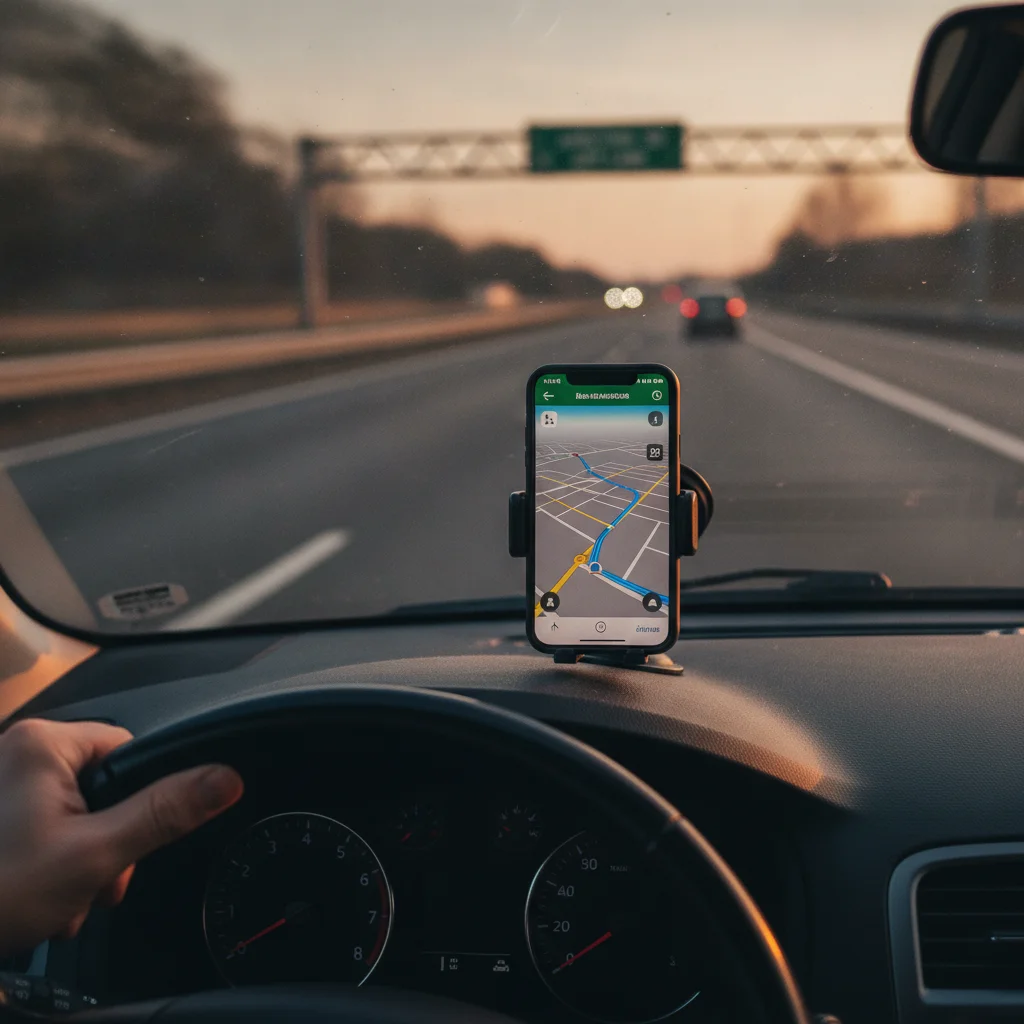
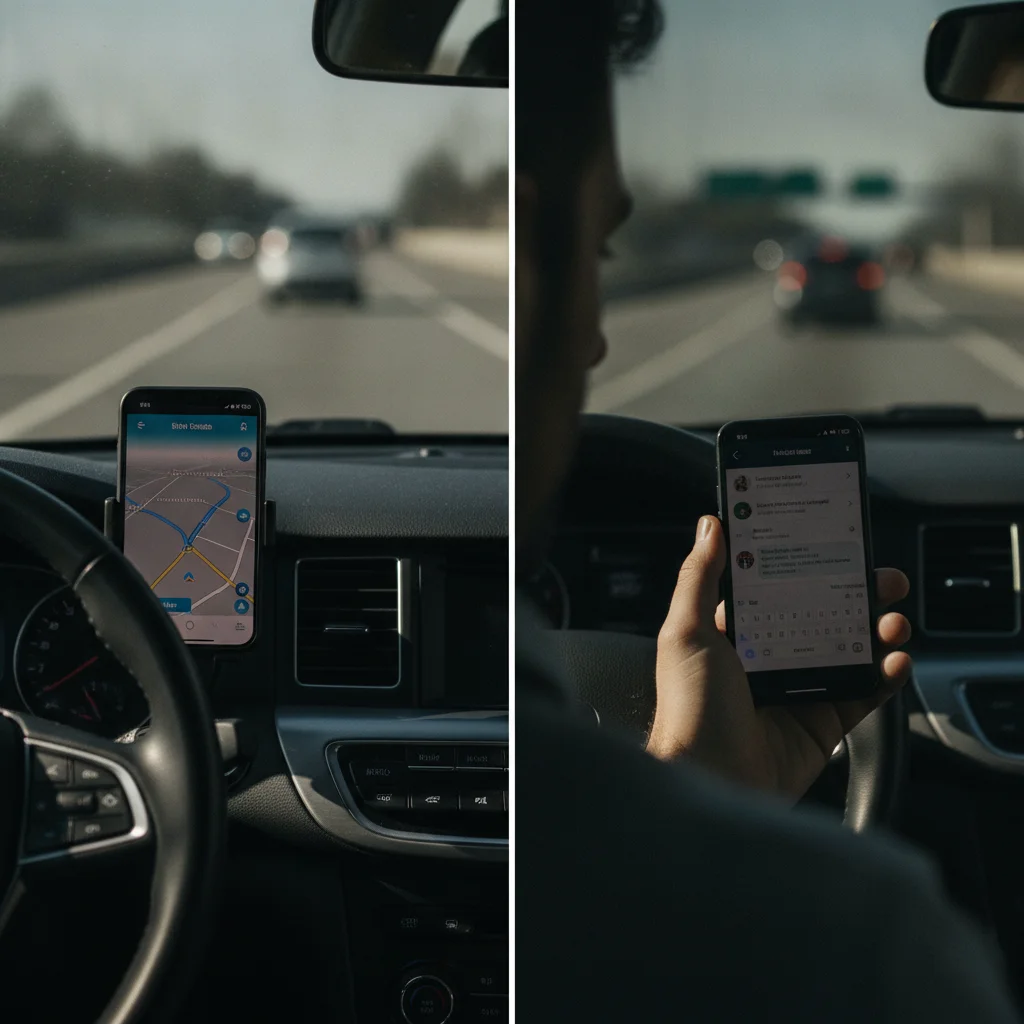
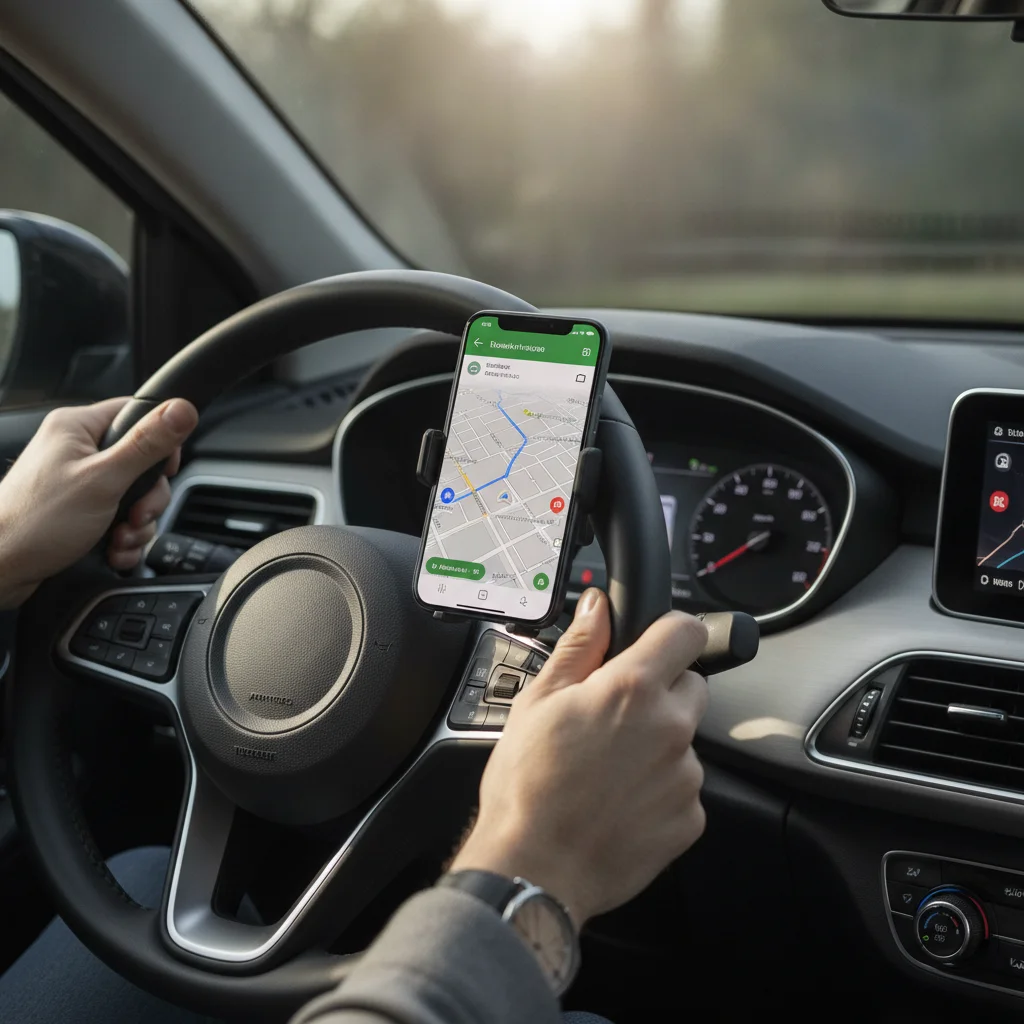
- Using a phone mounted on the dashboard or windshield with voice-activated commands
- Using speakerphone with the phone resting in a mount — not held in your hand
- Using wireless earbuds (legal in most, but not all, hands-free states)
What Still Counts as a Violation
Here's where drivers get caught. Even in hands-free states, the following are commonly ticketed:
- Holding the phone to your ear, even briefly
- Holding the phone in your lap and using speakerphone
- Typing a destination into GPS while moving
- Scrolling a music app, even at a red light in some states
That last point matters: several states — including Oregon and Washington — define "driving" broadly enough to include being stopped at a red light. If the engine is running and you're in a traffic lane, you can be cited for holding your phone even at a complete stop.
Washington state, for instance, imposes an "Driving While Distracted" secondary violation for behaviors like eating, grooming, or interacting with a pet — stacking on top of a phone violation. New York treats each offense as a moving violation carrying 5 points against your license, with 11 points triggering a suspension. The stakes go well beyond a minor fine.
Hands-Free Is Not the Same as Risk-Free
Multiple peer-reviewed studies — including research from the University of Utah and the AAA Foundation for Traffic Safety — show that cognitive distraction from a phone conversation persists even when both hands are on the wheel. Reaction times remain impaired for up to 27 seconds after ending a voice call. Compliance with a hands-free law is a legal necessity, not a safety guarantee. Keep calls short and pull over if a conversation requires sustained attention.
How Enforcement Varies by State
Even in states with strong hands-free mandates, enforcement intensity varies widely. Urban areas and highway corridors tend to see more active phone-law enforcement than rural routes. Some states fund dedicated distracted driving patrols during awareness campaigns — typically in April (National Distracted Driving Awareness Month). Regardless of enforcement likelihood, violations go on your record if cited, and insurers don't differentiate between heavily and lightly enforced jurisdictions.
Rideshare Drivers Face Dual Obligations
If you drive for Uber, Lyft, or another rideshare platform while the app is active, you may be subject to stricter rules than the average motorist in your state. Many platforms require hands-free use in their driver agreements, independent of state law. A phone-related accident while on a trip can expose you to platform deactivation on top of any traffic or legal consequences — and your personal auto policy likely won't cover a commercial use incident.
Handheld Bans: The Minimum Standard and Its Limits
States with only a handheld ban — rather than a full hands-free mandate — prohibit texting and manual data entry while driving but typically still allow voice calls made while holding the phone. This is the older regulatory model, and it's increasingly viewed as insufficient.
Why Handheld Bans Alone Fall Short
The logic behind texting bans was that visual and manual distraction (eyes off road, hands off wheel) was the primary danger. But research has since demonstrated that cognitive distraction — the mental load of a phone conversation — impairs driving performance even when both hands are on the wheel. Cell Phone Use Behind the Wheel: What the Research Actually Proves walks through exactly what that cognitive load data shows about reaction times and crash risk.
States that haven't moved beyond a texting ban leave drivers with a false sense of security. You can legally hold your phone to your ear in those states, but you're not meaningfully safer than someone scrolling — and some crash data suggests conversational distraction is actually harder to self-monitor than visual distraction.
24+
States with all-driver hands-free mandates
As of 2024, more than 24 states and D.C. have enacted full hands-free driving laws covering all adult drivers.
20–30%
Typical insurance premium increase after phone citation
Industry analysis from The Zebra and ValuePenguin indicates drivers cited for phone violations see average premium increases of 20–30% at renewal.
4x
Crash risk increase from handheld phone use
The National Safety Council estimates handheld phone use while driving increases crash risk approximately four times compared to undistracted driving.
$500+
Maximum first-offense fine in strictest states
Alaska, Oregon, and several other states impose fines exceeding $500 for a first handheld phone violation, making it one of the costliest minor traffic infractions.
3,308
Distraction-related traffic deaths in 2022
According to NHTSA data, 3,308 people were killed in distraction-affected crashes in the United States in 2022 alone.
Common Misconceptions in Handheld-Only States
- "I can text at a red light." Most texting bans apply any time the vehicle is on a public road — stopped or moving.
- "Reading a text is different from sending one." Most statutes cover both composition and reading of electronic messages.
- "Hands-free calls are totally safe." Legally permitted doesn't mean risk-free. The research doesn't support that conclusion.
- "My state's ban is a secondary offense, so I won't get pulled over." Even secondary-only bans can result in a citation if you're stopped for another reason — and that citation still hits your insurance record.
Fines, Points, and Insurance: The Real Cost of a Phone Ticket
Traffic fines for phone violations vary enormously — from $25 for a first offense in some states to $500 or more in states like Alaska and Oregon. But the fine itself is rarely the most expensive part of the equation.
License Points
States including New York, New Jersey, and Alaska assign points to phone violations. In New York, a handheld phone violation carries 5 points. Accumulate 11 within 18 months and your license is suspended. In New Jersey, a third offense carries a 90-day suspension plus a surcharge. Points don't reset instantly — they stay on your record for years and influence how insurers calculate your risk profile.
Insurance Rate Impact
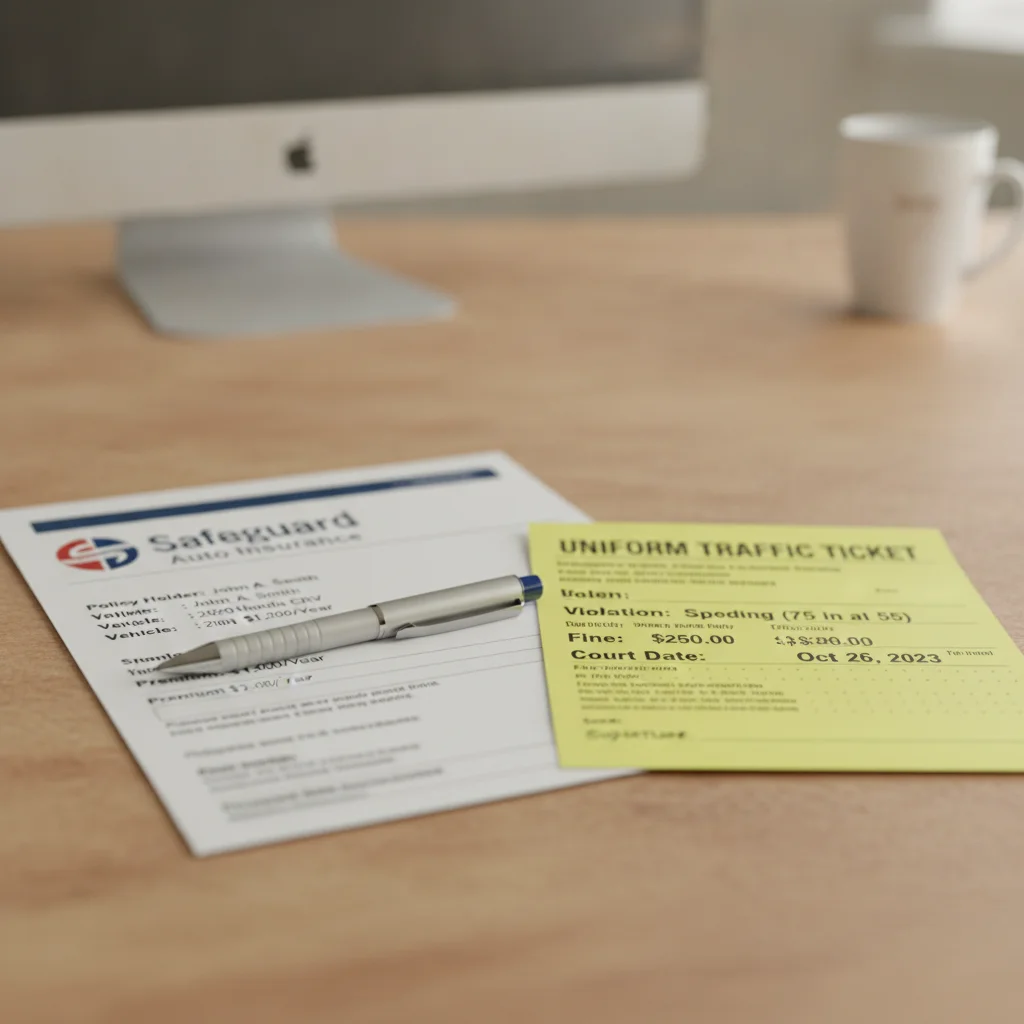
This is the sleeper cost most drivers don't factor in. A distracted driving conviction — even a first offense — can raise your auto insurance premium by 20% to 30% depending on your insurer and state. Some carriers treat it as a minor moving violation; others categorize it alongside reckless driving. Either way, a $100 fine can translate into hundreds of dollars in additional premium over the next three years.
If you're shopping for coverage after a citation or want to understand how insurers weigh moving violations, Distracted Driving vs. Impaired Driving: How Crash Data Compares the Two provides important context on how seriously the industry and courts treat distracted driving incidents.
Special Categories: Teens and Commercial Drivers
Graduated license holders and drivers under 18 face phone bans even in states where adult handheld use is permitted. And if you drive commercially — CDL holders, rideshare drivers while on the app, or any driver operating a vehicle over 10,001 lbs — federal rules prohibit any handheld phone use nationwide. No state law exemption applies.
Practical Steps to Stay Compliant in Any State
The cleanest approach is to operate as if you're always in a hands-free state. Here's how to set that up without friction:
- Mount your phone. A windshield or vent mount keeps your device visible and hands-free. Most states allow mounted phones for navigation as long as you're not manually interacting with them while moving.
- Enable Do Not Disturb While Driving. Both iOS and Android have native modes that silence notifications and auto-reply to messages when the phone detects movement. Set it and forget it.
- Use your car's built-in system. Apple CarPlay and Android Auto integrate navigation, calls, and music through your head unit — reducing the temptation to touch the phone directly.
- Learn your specific state's rules before a road trip. If you're crossing into a new state, a quick search for " hands-free driving law" takes two minutes and can save you a $300 fine.
- Know your insurance policy's terms. Some insurers offer usage-based programs that monitor driving behavior. A phone violation — even if not caught by police — can affect your score and discount eligibility.
Understanding how local rules affect you doesn't stop at traffic laws. If you're buying a car across state lines, State-Specific Rules That Affect Online Car Purchases covers how state regulations shape the purchase process itself — from taxes to title transfers.
The bottom line: hands-free compliance is no longer just a good habit in progressive states — it's quickly becoming the national standard. Treating it as your baseline now saves you money, points, and the cognitive friction of tracking which state allows what.

All claims are backed by peer-reviewed research. Sources on request.