Key Takeaways
The Research Gap Between What Drivers Believe and What Data Shows
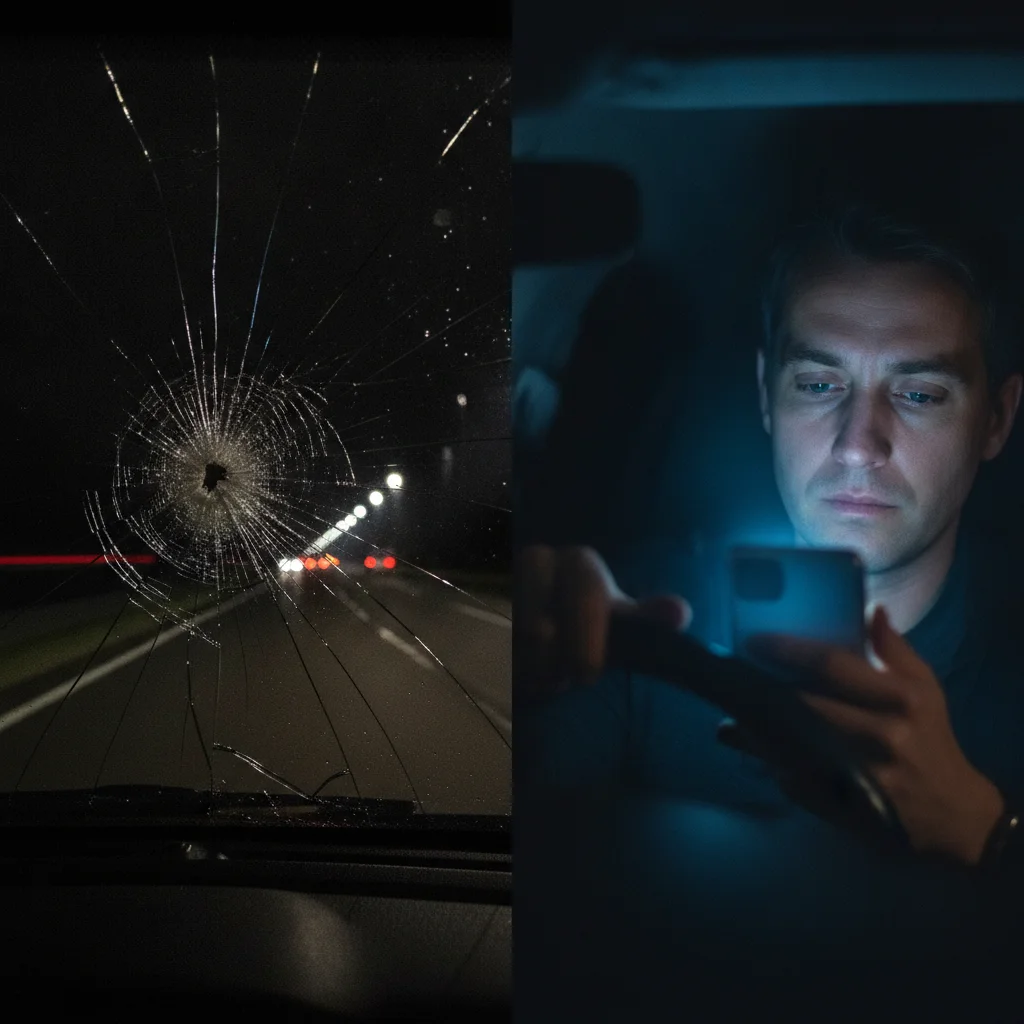
Ask most American drivers whether they use their phones safely behind the wheel, and the majority will say yes. They'll point to their car's Bluetooth system, their phone's voice assistant, or the fact that they only glance at the screen "for a second." The confidence is widespread — and, according to a substantial body of peer-reviewed research, largely misplaced.
The National Highway Traffic Safety Administration (NHTSA) estimates that distracted driving claimed 3,308 lives in 2022 alone. But that figure almost certainly undercounts the real toll, because phone use at the time of a crash is notoriously difficult to establish through police reports. Researchers at the MIT AgeLab and the AAA Foundation for Traffic Safety have spent years building a more complete picture, and what they've found consistently contradicts the mental model most drivers carry.
This article works through the most common misconceptions about phone use while driving — not to lecture, but to translate what the science actually says into something practically useful. Because the gap between perceived safety and measured risk is large enough to matter.
Understanding the research also carries real financial implications. Distracted driving citations can raise auto insurance premiums significantly, and at-fault crashes linked to phone use can follow a driving record for years. See how distracted driving compares to impaired driving in crash data for a fuller picture of how these risks stack up.
Myth
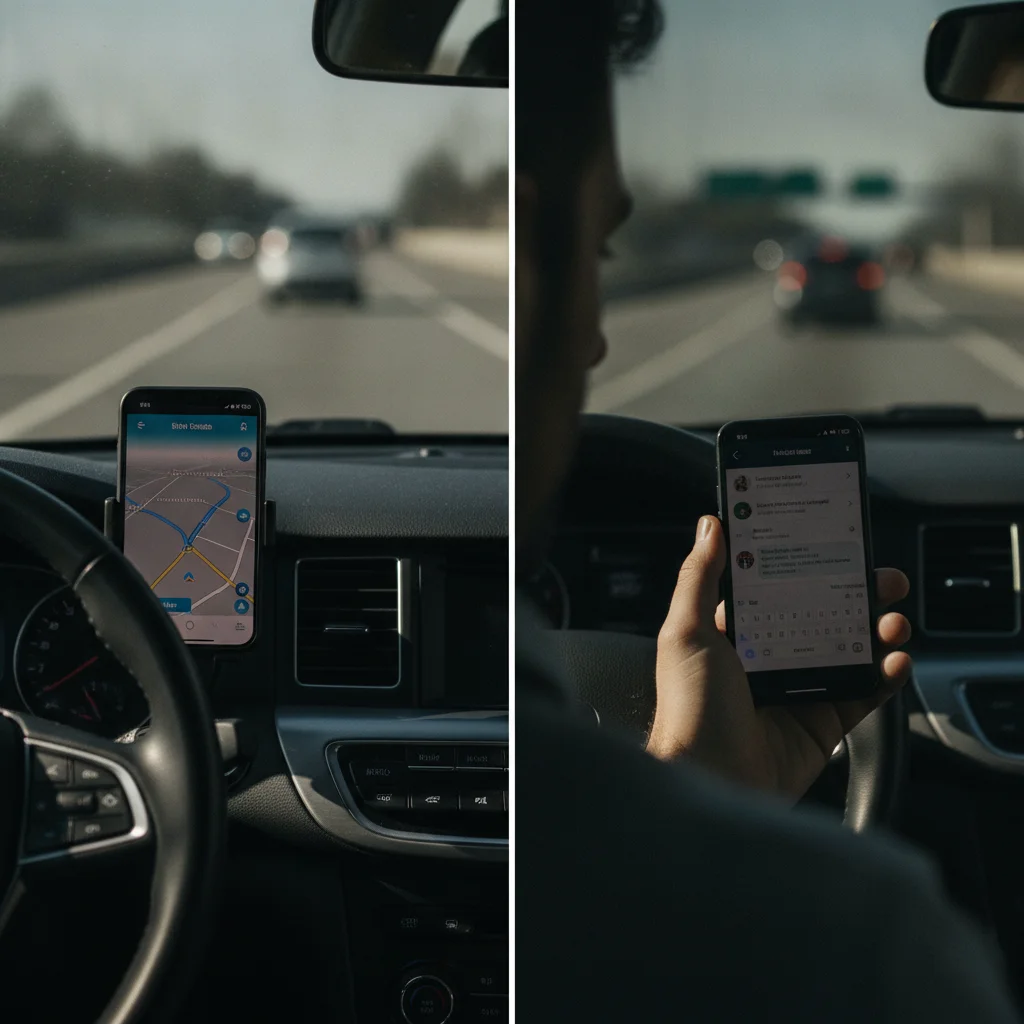
Hands-free calling is safe because my hands stay on the wheel and my eyes stay on the road.
Fact
Hands-free calls produce the same level of cognitive distraction as handheld calls and measurably impair driving performance in controlled studies.
This is the most pervasive — and most dangerous — misconception in distracted driving research. The "hands-free equals safe" belief is so widespread that it has shaped legislation in dozens of states, yet it contradicts more than two decades of experimental evidence.
The issue is not where your hands are. It's what your brain is doing. University of Utah researchers, in a series of studies conducted with driving simulators and instrumented vehicles, found that drivers talking on hands-free phones had reaction times, lane-keeping performance, and hazard detection rates statistically indistinguishable from drivers on handheld phones. Both groups performed significantly worse than drivers not on any phone call.
The cognitive load of sustaining a phone conversation — tracking the topic, formulating responses, managing social cues — draws from the same attentional budget that driving requires. The brain doesn't have separate pools for "phone attention" and "driving attention." They compete for the same resource, and driving loses.
Myth
A quick glance at my phone takes less than a second, so it can't be that dangerous.
Fact
The average text interaction takes the eyes off the road for 4.6 seconds — enough time to travel the length of a football field at highway speed.
NHTSA has tracked this statistic across multiple naturalistic driving studies, most prominently in partnership with Virginia Tech Transportation Institute. The 4.6-second average isn't just for reading a long message; it accounts for the full interaction cycle, including picking up the phone, reading or typing, and setting it back down.
At 55 mph, a vehicle travels approximately 80 feet per second. A 4.6-second glance covers roughly 368 feet — just over the length of a standard American football field — during which the driver has essentially no visual input from the road. Unlike a glance at a mirror or instrument cluster, which takes under a second and involves no manual manipulation, phone interactions chain together multiple visual and motor actions.
The risk isn't just about the time off the road. It's also about timing. Crash risk doesn't distribute evenly across a trip; it spikes in the seconds before a hazard emerges. A driver who happens to be looking at a phone in the two seconds before a child steps into the road faces a fundamentally different outcome than a driver who's fully engaged — regardless of how many "safe" glances preceded that moment.
Myth
Voice-to-text is essentially hands-free and therefore doesn't distract from driving.
Fact
Voice-to-text messaging is one of the most cognitively demanding phone tasks measured in distracted driving research — more impairing than a phone conversation.
This finding surprises many drivers, who assume that because voice-to-text involves no manual interaction, it must be nearly distraction-free. AAA Foundation for Traffic Safety researchers tested this assumption directly, rating the cognitive demand of various in-vehicle tasks on a 1-to-5 scale, with 1 representing minimal distraction and 5 representing maximum.
Voice-to-text messaging scored 3.06 on that scale — higher than handheld phone calling (2.45) and hands-free phone calling (2.27). The reason is the error-correction loop: drivers dictate, hear the result, notice errors, correct them, re-dictate, and confirm. This is a multi-step cognitive process that requires sustained attention and working memory — exactly the resources that safe driving demands.
The finding has important implications for how drivers think about "smart" phone features. Siri, Google Assistant, and similar tools can be useful for truly passive tasks like playing music or getting directions when a destination is spoken once and confirmed. But composing messages, even by voice, while navigating traffic is a high-demand task that research consistently associates with degraded driving performance.
Myth
I can tell when I'm distracted and will pull over or stop if it gets too risky.
Fact
Distracted drivers are poor judges of their own impairment — the same cognitive load that causes distraction also degrades the metacognitive awareness needed to detect it.
This is a version of a broader phenomenon in cognitive psychology: people are often least aware of their own impairment precisely when they are most impaired. The same attentional resources needed to monitor driving quality are occupied by the distraction itself.
In simulator studies, drivers who reported feeling "fine" while on phone calls simultaneously showed measurably degraded lane-keeping, longer reaction times, and reduced hazard detection. Self-reported confidence did not predict actual performance. This mirrors findings from alcohol research, where moderate intoxication produces overconfidence as a direct neurological effect — not a personality flaw.
The practical consequence is that the inner voice saying "I've got this" is unreliable when driving while distracted. This is one reason behavioral interventions that rely on in-the-moment self-assessment — essentially, trusting yourself to recognize when it's getting too risky — tend to underperform compared to structural solutions like automatic Do Not Disturb modes that remove the choice entirely.
Myth
Distraction only matters at highway speeds — city driving is slow enough that phone use is manageable.
Fact
Urban and suburban driving environments are often more cognitively demanding than highways, making distraction more dangerous, not less.
Highway driving at a consistent speed on a familiar road does reduce some demands — lane changes are less frequent, intersections are eliminated, and traffic generally moves in one direction. But the uniformity of highway driving also increases the risk of attentional tunneling, where a distracted driver fails to notice slower traffic ahead or a merging vehicle.
City and suburban driving involves a far denser set of decisions per mile: pedestrians, cyclists, cross-traffic, traffic signals, school zones, delivery vehicles, and unpredictable parking maneuvers. Each of these demands rapid visual scanning and anticipatory response. A driver who is cognitively occupied with a phone conversation processes fewer of these inputs and responds more slowly to the ones they do notice.
NHTSA crash data consistently shows that a substantial proportion of distracted driving crashes occur at lower speeds in urban environments — not because lower-speed crashes are more common per se, but because the volume and density of interactions in those environments creates more opportunities for distraction to produce a collision. Speed reduces time to react; complexity increases the number of things that require reaction. Phone distraction degrades both.
Myth
Distracted driving laws only apply when I'm actually moving — stopped at a red light, using my phone is fine.
Fact
Many state laws apply to phone use while stopped in traffic or at signals, and the cognitive re-engagement delay after phone use extends the distraction into resumed driving.
The legal picture varies by state, but numerous jurisdictions explicitly cover phone use while stopped at signals or in traffic — not just while the vehicle is in motion. Drivers who believe a red light creates a legal and safety pause for phone use may be wrong on both counts.
From a safety standpoint, the problem is the re-engagement delay. AAA Foundation research found that after completing a cognitively demanding task — including voice-to-text messaging — drivers experienced an elevated distraction period lasting up to 27 seconds after the task ended. During this window, brain activity associated with road-relevant processing had not fully returned to baseline, even though drivers felt they were back to normal.
A driver who sends a message while stopped, then proceeds through the intersection when the light turns green, may be doing so during the tail end of a measurable cognitive impairment window. At 25 mph in an urban environment, 27 seconds of residual distraction covers substantial ground — and that's the ground where pedestrians and cyclists are most likely to be present. Check your state's specific rules to understand whether stopped-vehicle use carries legal risk where you drive.
Why the Brain Struggles — Even When Your Hands Are Free
The central problem with phone use while driving isn't mechanical — it's cognitive. The human brain doesn't actually multitask; it switches rapidly between tasks, and each switch carries a cost in attention, reaction time, and situational awareness. Driving, even on a familiar road in light traffic, is a high-demand cognitive task that relies on a continuous loop of visual scanning, anticipation, and motor response.
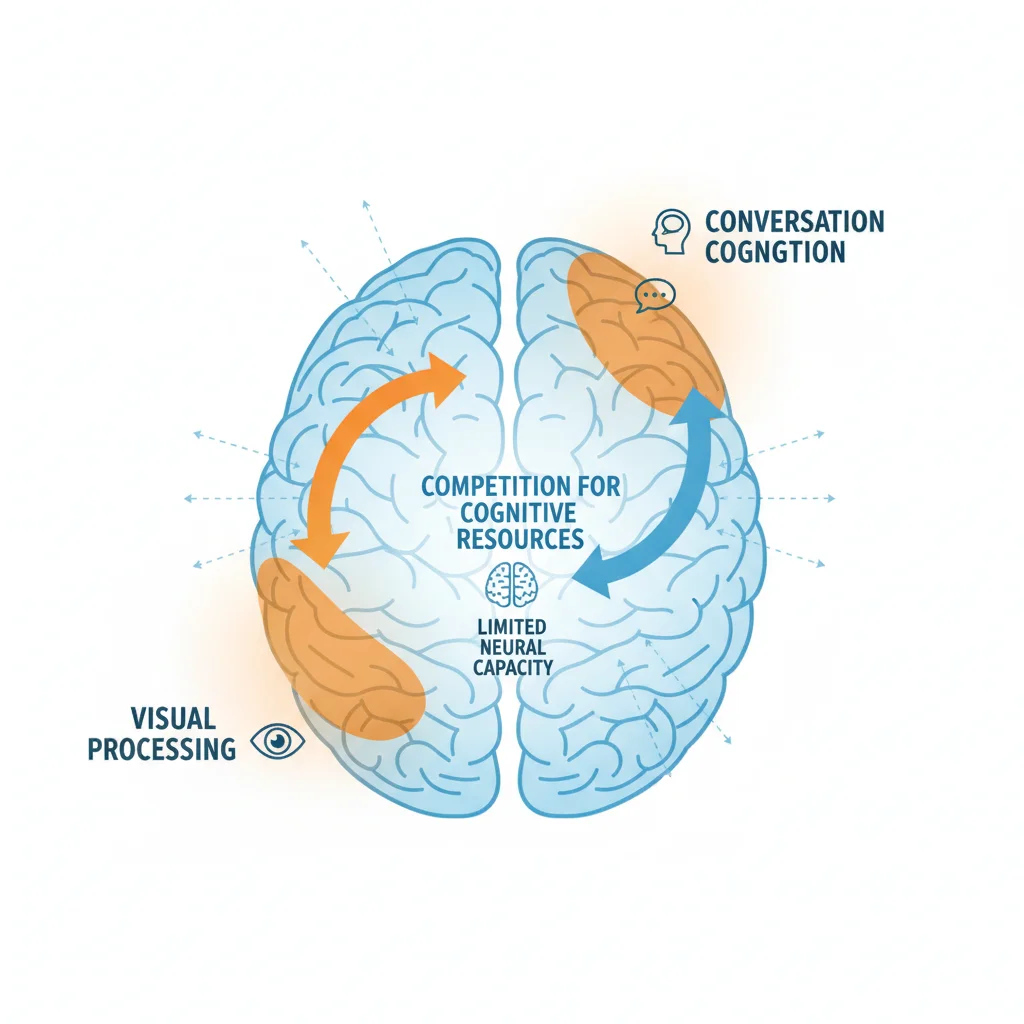
A 2018 study published in the Journal of Experimental Psychology found that simply hearing your phone ring — without answering it — was enough to impair driving performance in a simulator. The researchers described this as "attentional capture": the brain begins to process the social context of who might be calling and why, diverting resources away from the road even before any interaction begins.
This is the mechanism that makes even voice-activated, mounted, hands-free systems more distracting than intuition suggests. When a driver is talking to another person — even through a speaker — their visual attention narrows. They scan fewer areas of the road, detect fewer peripheral hazards, and take longer to respond to unexpected events. Researchers call this "inattentional blindness," and laboratory studies have shown that drivers in phone conversations can fail to process up to 50% of the visual information in their field of view.
3,308
Distracted driving fatalities in 2022
According to NHTSA's 2022 traffic safety data, distracted driving was reported as a factor in 3,308 traffic deaths — a figure researchers consider an undercount due to crash reporting limitations.
27 seconds
Post-task cognitive distraction window
AAA Foundation for Traffic Safety research found that cognitive distraction from phone use persists for up to 27 seconds after the task ends, even when drivers believe they are fully re-engaged.
50%
Visual information missed during phone calls
Laboratory research cited by the National Safety Council found that drivers engaged in phone conversations can fail to process up to 50% of the visual information in their field of view.
4.6 seconds
Average eyes-off-road time per text interaction
Virginia Tech Transportation Institute naturalistic driving studies, cited by NHTSA, measured the average full text interaction at 4.6 seconds — enough to travel over 360 feet at highway speed.
40–50%
Potential insurance premium increase after at-fault crash
Industry rate analysis from multiple insurance comparison platforms shows at-fault crashes can raise annual premiums by 40–50%, with the impact lasting three to five years on a driving record.
The implications extend beyond individual calls. The AAA Foundation's research on post-task distraction found that cognitive load from a phone conversation doesn't vanish the moment the call ends. Brain activity associated with road-relevant processing takes measurable time to return to baseline — time during which drivers may feel fully re-engaged while their performance data tells a different story.
This also intersects with high-risk driving environments. Construction zones — where lane widths narrow, workers are present, and traffic patterns shift unexpectedly — demand exactly the kind of broad visual scanning that phone conversations suppress. The combination of cognitive distraction and a high-demand environment is where crash data shows the sharpest spikes in risk.
The 27-Second Window Is Real — and Hidden
One of the most underappreciated findings in distracted driving research is that impairment doesn't end when the phone goes down. AAA Foundation data shows cognitive processing of road-relevant information remains suppressed for up to 27 seconds after completing a voice-activated task. Drivers should wait several seconds after ending any phone interaction before making high-stakes maneuvers like merging, turning, or passing.
High-Risk Environments Amplify Phone Distraction
The dangers of phone distraction multiply in already-demanding environments: construction zones, school zones, dense urban intersections, and highway merge areas. These are precisely the places where broad visual scanning is most critical — and most suppressed by cognitive distraction from phone use. If you must take an urgent call, pull over safely rather than attempting to manage it in a high-demand driving environment.
What the Law Does — and Doesn't — Cover
Most states have passed some form of distracted driving legislation, but the patchwork of laws leaves significant gaps. As of 2024, 48 states plus D.C. ban texting while driving, but only 24 states plus D.C. ban all handheld phone use. A much smaller number restrict hands-free use in any meaningful way — and almost none prohibit phone-related cognitive distraction as such, because it's nearly impossible to enforce.
The legal landscape matters for two reasons. First, drivers in states with partial bans may interpret the law as a safety certification — if hands-free is legal, the implicit message is that it's safe. The research does not support that conclusion. Second, insurance implications follow the legal framework: a hands-free violation in a state that bans it will appear on a driving record and affect premiums, but a cognitively distracted driver in a permissive state has no equivalent deterrent until a crash occurs.
For a state-by-state breakdown of what's actually prohibited where you live, see how hands-free and handheld phone laws differ across all 50 states. Understanding your state's specific rules is the starting point — but it shouldn't be mistaken for a complete safety guide.
Legal Doesn't Mean Safe
In many U.S. states, hands-free phone use while driving is entirely legal. That legal permissibility has no relationship to the cognitive distraction research, which consistently shows hands-free calls impair driving performance at levels similar to handheld calls. Compliance with distracted driving laws is a floor, not a ceiling. Drivers relying on legal status as a proxy for safety are operating on a false assumption that the research does not support.
Building Habits That Actually Reduce Risk
The research on distracted driving isn't purely cautionary — it also points toward interventions that work. The most effective strategies share a common trait: they remove the decision point entirely, rather than relying on in-the-moment self-regulation.
Behavioral research consistently shows that willpower-based approaches fail under load. When driving is demanding — heavy traffic, bad weather, unfamiliar roads — cognitive resources available for resisting phone urges are precisely the resources needed for safe driving. This is why "just don't look at it" advice underperforms as a strategy.
- Enable Do Not Disturb While Driving: Both iOS and Android offer native modes that suppress notifications and auto-reply to messages while the vehicle is moving. Setting this to activate automatically removes the temptation trigger entirely.
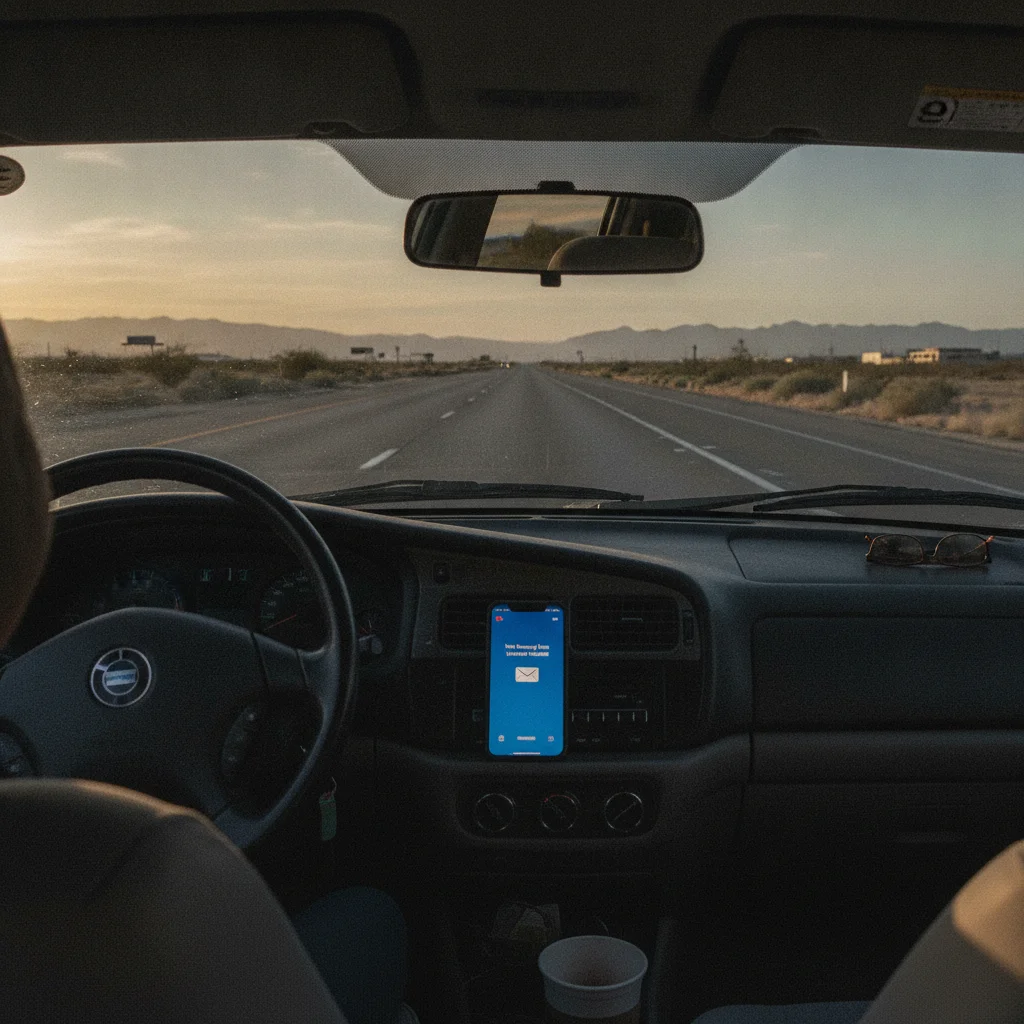
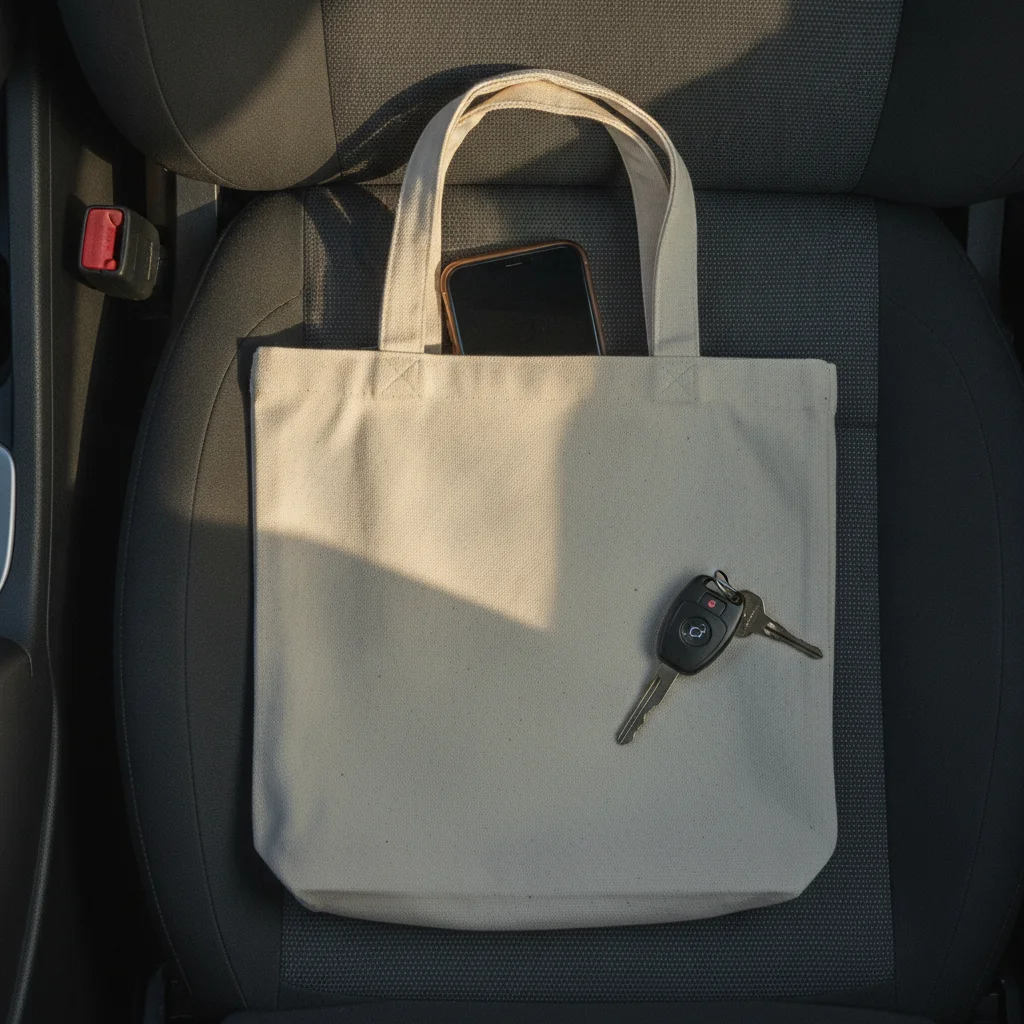
- Put the phone out of reach before starting the car: The AAA Foundation found that placing the phone in a bag, glovebox, or back seat — rather than a cupholder or mount — significantly reduces the likelihood of handling it while driving.
- Schedule calls before or after trips: For regular commuters, clustering calls into pre-drive or post-arrival windows reframes the phone as a destination activity rather than a transit one.
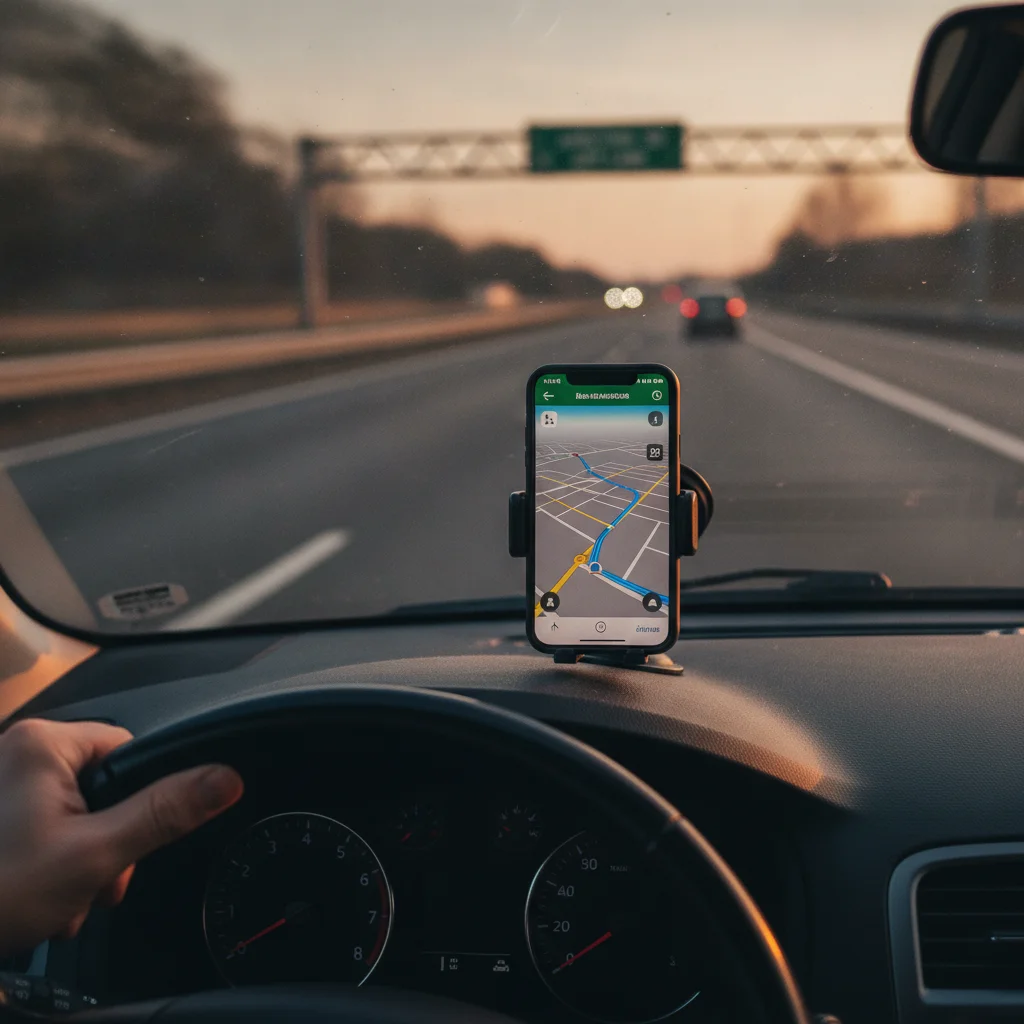
- Use voice assistants only for truly hands-free tasks: Setting a navigation destination or changing music while moving still pulls cognitive resources. Do these tasks before departure.
Overconfidence is itself a risk factor. Research compiled in NHTSA's behavioral safety reports consistently finds that drivers who rate themselves as above-average multitaskers perform no better — and sometimes worse — than those who acknowledge their limitations. Awareness of personal vulnerability is, counterintuitively, a protective factor. For more on how self-assessed safe behaviors can still cause crashes, see driving behaviors that cause crashes even when drivers think they're being safe.
There's also a social dimension worth acknowledging. Research from Virginia Tech Transportation Institute found that passengers adjust their conversation naturally when a driver encounters a difficult situation — pausing mid-sentence when traffic thickens, for example. Phone callers, lacking any visual information about driving conditions, do not. They continue at the same pace and social pressure, and drivers feel obligated to respond. It's a subtle but documented difference that partly explains why phone conversations are more impairing than in-car conversations even when both are "hands-free."
The Insurance and Financial Reality of Distracted Driving
Beyond crash risk, phone use while driving carries a financial tail. In states where handheld phone use is banned, a first-offense citation can result in fines ranging from $50 to $500 depending on the state, with higher penalties for repeat offenses. More consequentially, traffic violations for distracted driving can trigger insurance premium increases that persist for three to five years on a driving record.
At-fault crashes attributed to distracted driving — even where precise cause is difficult to prove — are treated by insurers as evidence of elevated risk. A single at-fault accident can increase annual premiums by 40 to 50 percent, compounding over years. Drivers who are already in higher-risk categories due to age, driving history, or vehicle type feel these increases most acutely.

There is also emerging telematics risk. An increasing number of auto insurers now offer usage-based insurance programs that monitor driving behavior through smartphone apps or onboard devices. These programs detect hard braking, rapid acceleration, and — in some implementations — phone handling while driving. Drivers enrolled in such programs who use their phones may see immediate score penalties that translate directly into premium adjustments at renewal.
The behavioral case for putting the phone away isn't purely ethical or safety-minded: it's economic. The expected cost of a distracted-driving ticket, the insurance impact of an at-fault crash, and the years of elevated premiums that follow represent a financial exposure that dwarfs the convenience of any individual call or glance. Aggressive and distracted driving frequently co-occur in crash scenarios — for context on the broader behavioral risk environment, road rage research offers a parallel look at how driver behavior escalates risk.

All claims are backed by peer-reviewed research. Sources on request.