Key Takeaways
Summary
28 items · 15–45 minutes at the scene
Why You Need This Before You Need It
Accidents happen in seconds. The chaos that follows — adrenaline, pain, confusion, other drivers, oncoming traffic — is exactly the wrong environment for trying to remember what you're supposed to do next. Research consistently shows that people under acute stress make poor decisions, skip critical steps, and later regret things they said at the scene.
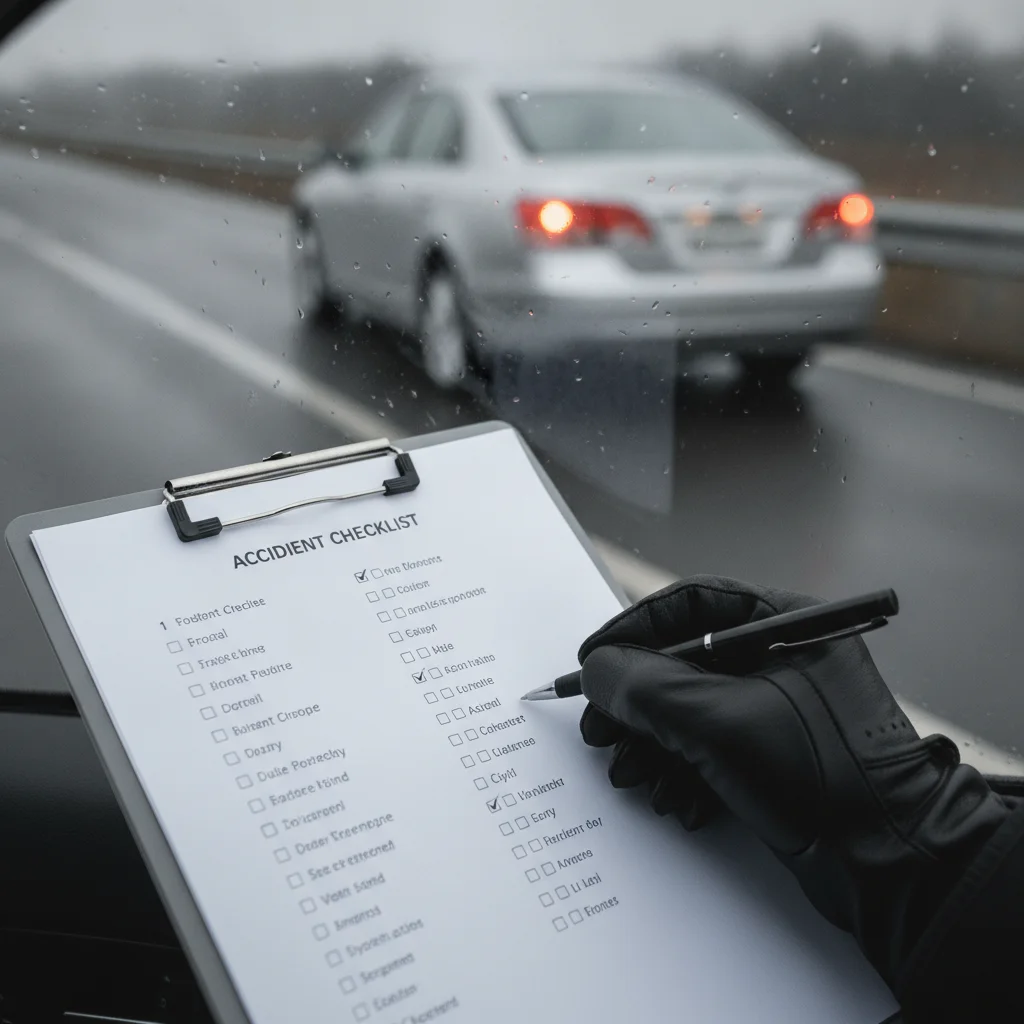
This checklist exists to remove the cognitive load from that moment. Print it, fold it, and put it in your glove box next to your insurance card and registration. If you never need it, great. If you do, it will protect you legally and financially in ways that improvising never will.
The steps below are sequenced deliberately. Safety before documentation, documentation before communication, communication before anything else. Deviation from that order — however tempting — can cost you in ways that aren't immediately obvious.
If you have younger or less experienced drivers in your household, walk them through what to expect after a crash before it happens. And if you want to understand the legal weight behind these steps, know your legal duties at the scene — some of them are criminal obligations, not just good practice.
Tools and Documents to Have Ready
The items below should already be in your vehicle. If any are missing, handle that today — not after an accident.
Printed accident checklist (this one)
Provides a step-by-step reference you can follow without relying on memory or a working phone.
Insurance card
Required to provide your policy number and insurer contact information to the other party and police.
Vehicle registration
Required by law to present to police and often requested by the other driver.
Smartphone with charged battery
Used to photograph the scene, record voice memos, and call 911 or your insurer.
Pen and small notepad
Low-tech backup for collecting the other driver's information when your phone is damaged or out of battery.
Road flares or reflective triangles
Warn oncoming drivers of the accident scene to prevent secondary collisions.
Basic first aid kit
Allows you to provide basic care to injured parties while waiting for emergency services.
Portable phone charger (power bank)
Ensures your phone remains operational for photography and calls throughout the scene process.
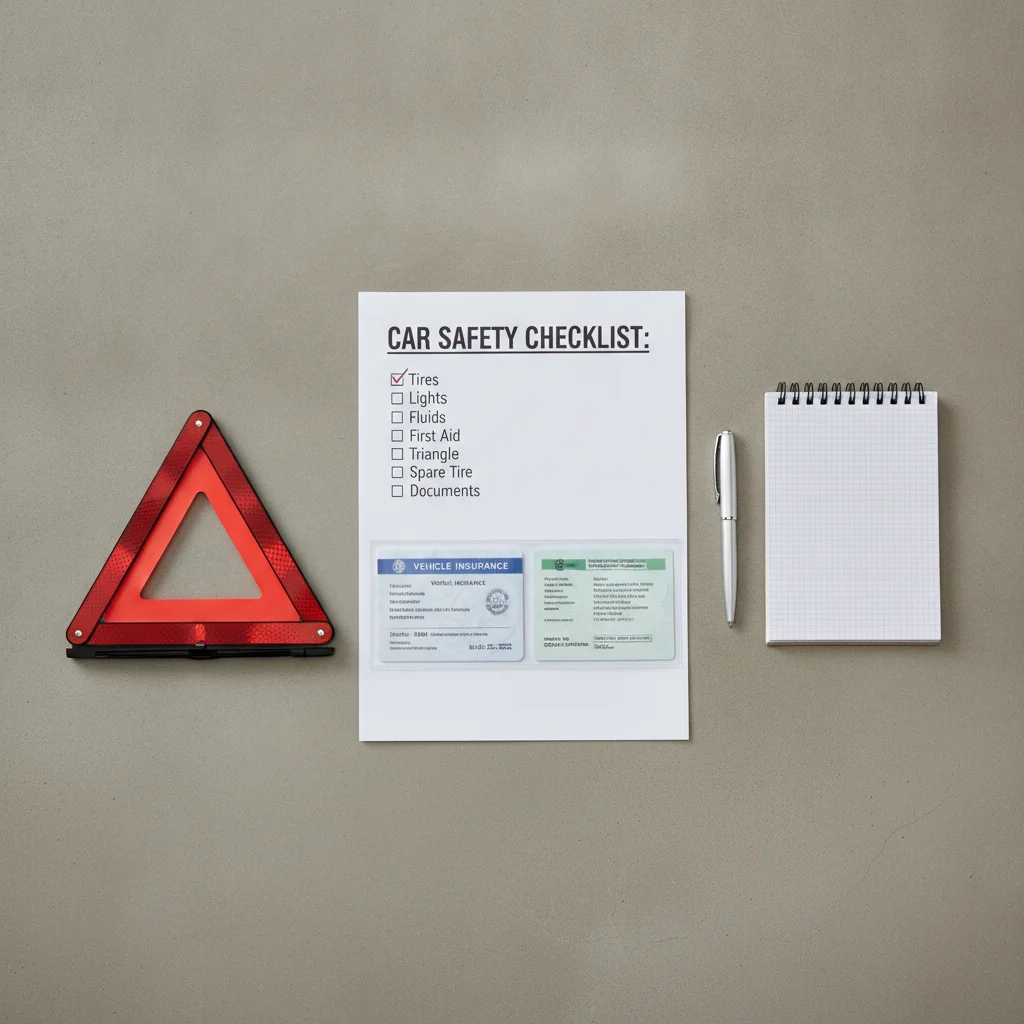
A few of these — particularly the pen and notepad — seem trivial until you're standing on a shoulder trying to type a 17-digit VIN into a phone with shaking hands. Low-tech backups matter.
The Complete Post-Accident Scene Checklist
Work through these groups in order. Each group depends on the previous one being reasonably complete. Don't skip ahead to exchanging information while there's still an uncontrolled safety hazard.
Immediate Safety
Scene Documentation
Information Exchange
Communication and Conduct
Never Admit Fault at the Scene
Even a casual "I'm sorry" can be interpreted as an admission of liability in insurance negotiations and court proceedings. You often don't have enough information at the scene to accurately assess fault — road conditions, vehicle defects, or the other driver's actions may not be immediately apparent. Stick to factual statements only: confirm that you're okay, provide required information, and let the investigation determine responsibility.
Leaving the Scene Is a Crime
In every U.S. state, leaving the scene of an accident without rendering aid and exchanging information is a criminal offense — not just a traffic violation. If the accident involves injury or death, hit-and-run penalties include felony charges, license revocation, and imprisonment. Even minor property-damage accidents carry legal reporting obligations in most states. Stay at the scene until police release you or, if no police respond, until you've completed all required information exchanges.
For a deeper breakdown of the documentation phase specifically — what photos to take, in what order, and why courts and adjusters weight them differently — see our full guide to documenting an accident scene. The sequence matters more than most drivers realize.
What to Document and How to Do It Right
Documentation is where most drivers underperform, not because they're careless but because they don't know what actually matters to an insurance adjuster or a jury. Here's what to prioritize:
Photographs
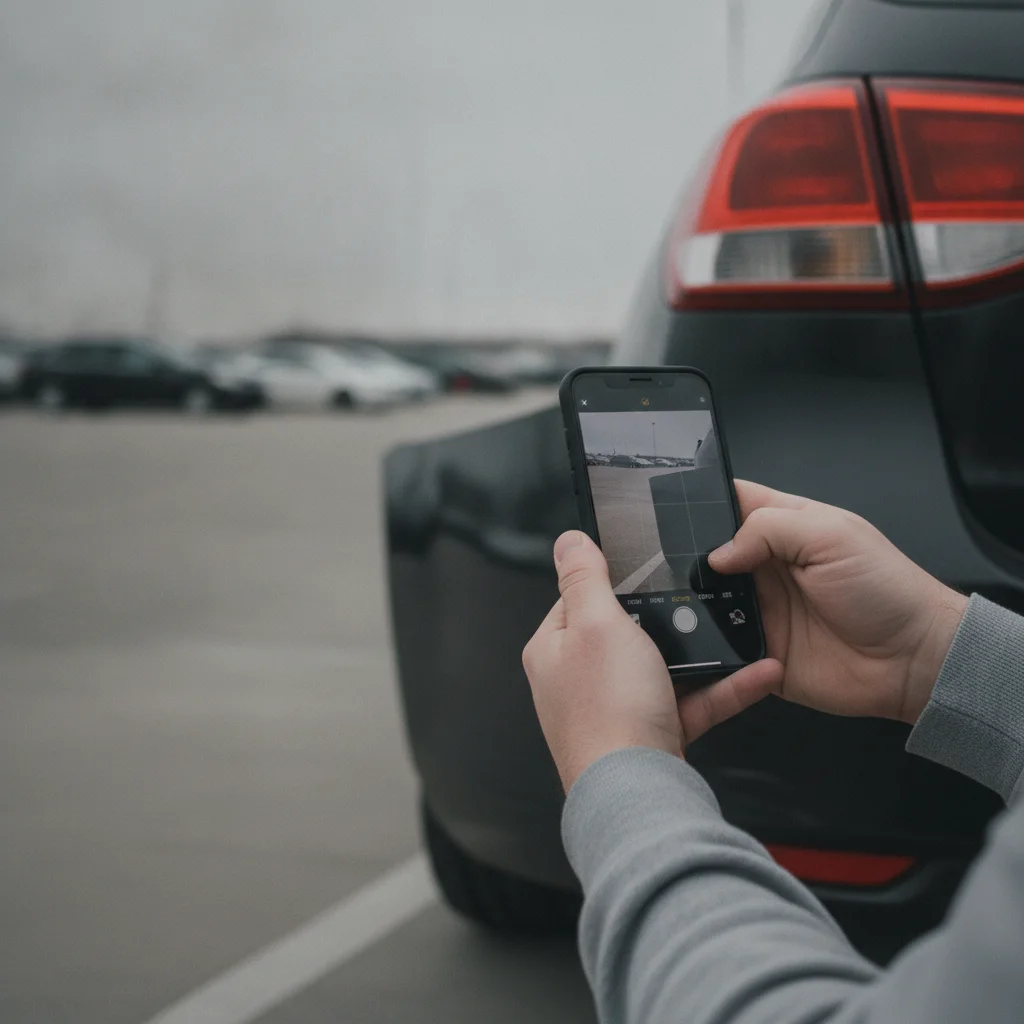
Start wide — capture the full scene, including both vehicles in frame and their positions relative to lane markings, intersections, or traffic signals. Then move closer: damage on each vehicle, license plates, skid marks, debris fields, road conditions, weather, and any relevant signage. What you photograph in the first few minutes can make or break your claim — so shoot more than you think you need.
Written Notes
Write down the time, exact location (cross streets, mile markers, highway exits), direction each vehicle was traveling, speed estimates if you have them, and a plain-language description of how the collision occurred from your perspective. Do this before speaking to the other driver at length — your uninfluenced account is valuable.
Information Exchange
Every piece of information you need to collect at the scene falls into three buckets: the other driver's personal and insurance details, witness contact information, and the responding officer's name and report number. Don't leave the scene without all three.
Don't Move Vehicles Prematurely
While it's generally correct to move drivable vehicles out of active traffic lanes, moving them before photographing their positions eliminates critical evidence about how the collision occurred. Take your wide-angle scene photos first, then move vehicles if safety requires it. In some jurisdictions, police also prefer to see vehicle positions before they're altered.
Watch for Secondary Crash Risks
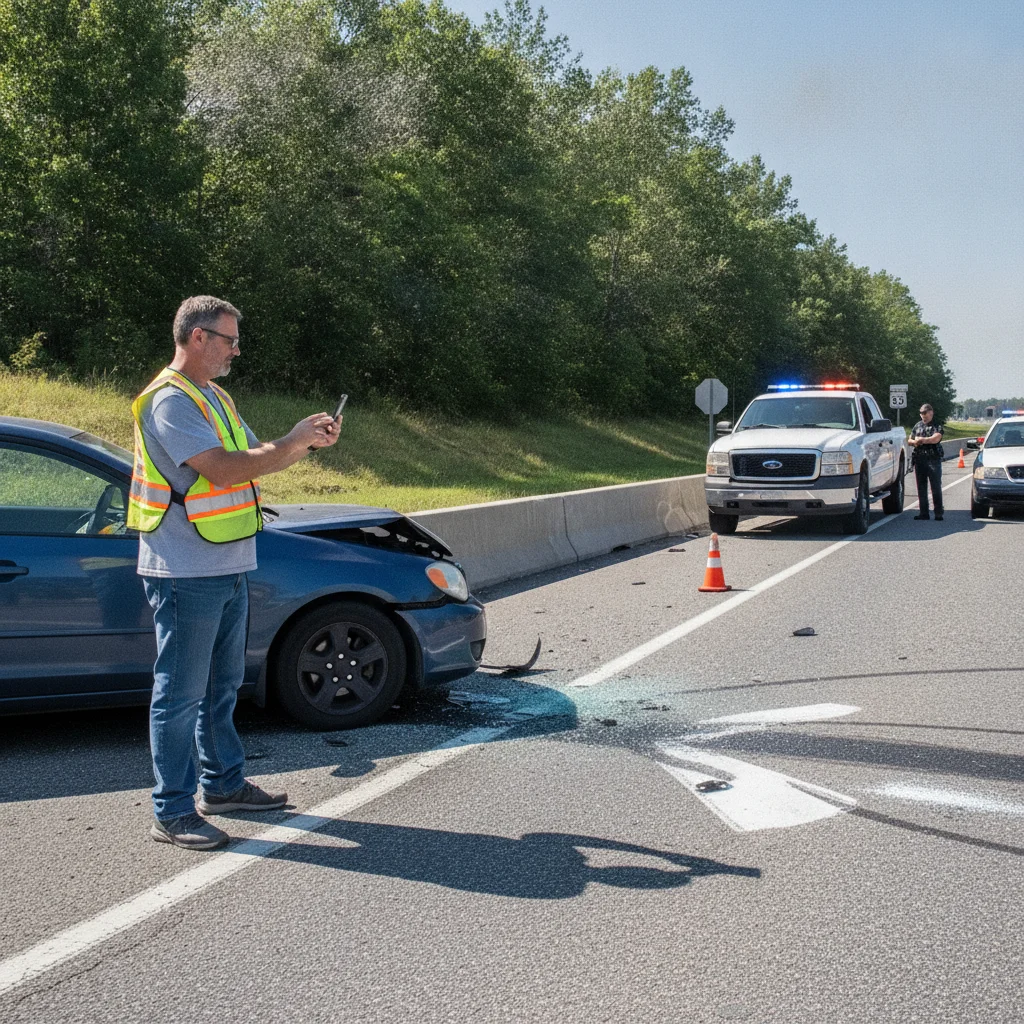
Standing between or behind vehicles on an active roadway is one of the most dangerous things you can do after a crash. Move to the shoulder or barrier side, away from traffic, as quickly as possible. <a href="/maintenance-and-ownership/safety-legal/accident-procedures/accident-scene-safety-protecting-yourself-and-others-before-help-arrives">Secondary crashes and fire risks are real dangers</a> that claim lives every year — take them seriously.
Recorded Statements Can Hurt You
If the other driver's insurance company calls and asks for a recorded statement before you've spoken with your own insurer or an attorney, you are not legally obligated to comply immediately. Politely decline until you're prepared — anything you say on record can be used to minimize your claim payout. Always contact your own insurer first.
After the Scene: Your Next 24 Hours
The checklist doesn't end when you drive away. What you do in the hours after the accident directly affects your claim outcome.
Call Your Insurer the Same Day
Most policies require prompt notification of an accident. Even if you weren't at fault and don't plan to file a claim under your own policy, report the incident. Failing to do so can complicate things significantly if the other party files against you later. Use a dedicated claim checklist to make sure you have everything ready when you make that call.
Preserve Your Evidence
Back up photos to cloud storage immediately. Don't repair your vehicle until an adjuster has inspected the damage — premature repairs can void your ability to document losses. Keep all medical receipts, rental car receipts, and any communication with the other party in a single folder.
Don't Discuss Fault on Social Media
This should go without saying, but it doesn't. Any post describing the accident — even a vague one — can be surfaced in litigation. Keep it off your accounts entirely until the claim is fully resolved.
For broader context on staying safe on the road, the road safety tips hub covers evidence-based habits that reduce your accident risk in the first place.

All claims are backed by peer-reviewed research. Sources on request.