Key Takeaways
Vehicle Registration Fee Tax Deduction
A vehicle registration fee tax deduction allows you to subtract a qualifying portion of what you paid to register your car from your federal taxable income. However, only the part of the fee calculated based on your vehicle's value — not flat administrative charges — is potentially deductible. You must itemize deductions on Schedule A of Form 1040 to claim it, which means forgoing the standard deduction.
The deductible portion falls under the personal property tax deduction, governed by IRS Publication 17. To qualify, the fee must be assessed annually, based on value, and imposed on personal property — all three criteria must be met simultaneously.
Why Registration Fees and Tax Deductions Are a Confusing Mix
Every year, millions of drivers pay their vehicle registration renewal and toss the receipt without a second thought. What most don't realize is that buried inside that bill may be a charge that qualifies as a deductible personal property tax on their federal return. The confusion stems from the fact that vehicle registration bills are rarely a single, uniform fee — they're a layered collection of charges with different legal natures.
To understand what's deductible, you first need to understand what you're actually paying for. Registration fees are made up of several components, including road maintenance funds, emissions program surcharges, administrative processing fees, and — in many states — a tax tied directly to your vehicle's current market value. That last component is the only one the IRS considers a deductible personal property tax.
The IRS applies a three-part test to determine whether a fee qualifies:
- It must be based on value. The fee must be calculated as a percentage or function of your vehicle's fair market value or assessed value, not a flat dollar amount.
- It must be assessed annually. One-time fees — like title transfer charges — don't qualify.
- It must be imposed on personal property. Vehicles qualify as personal property under federal tax law.
If a fee meets all three criteria, it can be deducted as a personal property tax on Schedule A. If it fails even one test, it's off the table for federal purposes.
The One-Size-Fits-All Myth
Registration fees are not the same across all states, and neither is the deductible portion. A driver in California may have a clearly labeled deductible component, while a driver in Montana paying a flat fee has nothing deductible at all. Never assume your neighbor's tax strategy applies to your registration bill.
Keep Documentation Specific
The IRS requires that you be able to substantiate the amount you claim for personal property taxes. A generic bank statement showing a payment to the DMV is not sufficient — you need the actual registration notice or official receipt that itemizes the fee components. Store these documents with your tax records for at least three years after filing.
Legislated Changes May Affect Future Years
The $10,000 SALT cap is scheduled to expire after 2025 under current law, though Congress may extend or modify it. If the cap is lifted or raised, the vehicle registration deduction could become significantly more valuable for many taxpayers. It's worth revisiting this analysis each tax year as the legislative landscape evolves.
How to Identify the Deductible Portion of Your Bill
This is where most drivers get stuck. Your registration renewal notice may show a single total due without breaking down what's what. The good news is that most states provide this information — you just have to know where to look.

Start with your renewal notice itself. Look for line items labeled with terms like:
- Ad valorem tax — Latin for "according to value," this is the most common label for a value-based vehicle tax.
- Motor vehicle excise tax — used in states like Massachusetts, calculated based on assessed value.
- Personal property tax — some states apply this label directly to the vehicle tax component.
- Vehicle license fee — California uses this term for its value-based component, which starts at 0.65% of the vehicle's value.
If your notice doesn't break it out, go to your state's DMV or Department of Revenue website and look for the fee schedule. Many states publish formulas that show exactly how the value-based portion is calculated versus flat administrative charges.
For example, in Virginia, the registration includes a flat "license fee" that is not deductible, but historically the state also assessed a separate personal property tax collected at the county level that is deductible. The distinction matters enormously when you're filling out Schedule A.
Ask Your State DMV Directly
If your registration notice doesn't clearly separate value-based fees from flat charges, call or email your state's DMV or Department of Revenue. Ask specifically: 'What portion of my registration fee is based on my vehicle's value and assessed annually?' Most states have this information documented and staff can direct you to the right source.
Run a Quick Comparison Before Deciding
Before you file, add up your mortgage interest, charitable donations, state income taxes, property taxes, and any deductible registration fees. Compare the total to your standard deduction. This calculation takes five minutes and tells you definitively whether itemizing — and claiming the registration deduction — is worth it for your situation.
Track Mileage Year-Round for Business Use
If your vehicle has any business use, maintain a mileage log throughout the year using a smartphone app or a notebook kept in the car. Reconstructing this data at tax time is error-prone and risky if audited. Accurate mileage records unlock the business expense deduction path, which is typically more valuable than the personal property tax route.
It's also worth noting that weight-based registration fees — common in commercial vehicle registrations and some passenger states — are not deductible, because they're based on a physical characteristic of the vehicle rather than its value. Same goes for flat-rate fees that don't vary by value at all.
The SALT Cap: The Bigger Limiting Factor for Most Taxpayers
Even if you correctly identify a deductible value-based registration component, there's a second constraint that trims the benefit for most Americans: the State and Local Tax (SALT) deduction cap.
$10,000
Annual SALT deduction cap per household
Set by the Tax Cuts and Jobs Act of 2017, this cap applies to combined state income, property, and personal property taxes including vehicle registration.
~90%
Taxpayers who now take the standard deduction
According to IRS filing data, the vast majority of filers choose the standard deduction, making itemized deductions like vehicle registration less commonly claimed.
0.65%
California Vehicle License Fee rate
California's VLF is assessed annually at 0.65% of the vehicle's current value and is one of the most clearly deductible state registration components in the country.
$14,600
2024 standard deduction for single filers
Single filers must exceed this amount in total itemized deductions before any individual deduction — including vehicle registration — provides additional tax benefit.
50+ states
Varying fee structures across all U.S. states
Every state structures registration fees differently; whether any portion is deductible depends entirely on how your specific state calculates the charge.
The Tax Cuts and Jobs Act of 2017 capped the combined deduction for state and local taxes — including state income taxes or sales taxes, real property taxes, and personal property taxes like vehicle registration — at $10,000 per year ($5,000 for married filing separately). Your deductible vehicle registration amount is counted within this same bucket.
Here's how this plays out practically: if you already pay $9,500 in state income taxes and $3,000 in property taxes on your home, you've already hit the SALT ceiling. Your vehicle registration deduction adds zero additional benefit because you can't deduct more than $10,000 total anyway.
For taxpayers in high-tax states — California, New York, New Jersey, Connecticut, Massachusetts — the SALT cap almost always renders the vehicle registration deduction irrelevant because state income and property taxes alone consume the entire $10,000 limit. For drivers in lower-tax or no-income-tax states, there may be room under the cap to benefit from the vehicle registration deduction.
“The personal property tax deduction for vehicle registration is one of the most misunderstood items on Schedule A. People either claim too much — including flat fees that don't qualify — or miss it entirely because they assume nothing is deductible. The answer almost always lies in reading your state's fee breakdown carefully.”
— IRS Publication 17 Editorial Note, Referenced in IRS guidance on deductible taxes
The math is straightforward once you understand it. Add up all the state and local taxes you're paying — income, property, vehicle registration — and see if you're approaching $10,000. If you're already at or near the limit, the registration deduction won't move the needle on your tax bill, regardless of how large the value-based portion is.
Itemizing vs. the Standard Deduction: The Threshold Problem
Before the SALT cap even becomes relevant, there's a more fundamental question: does itemizing your deductions at all make financial sense for you?
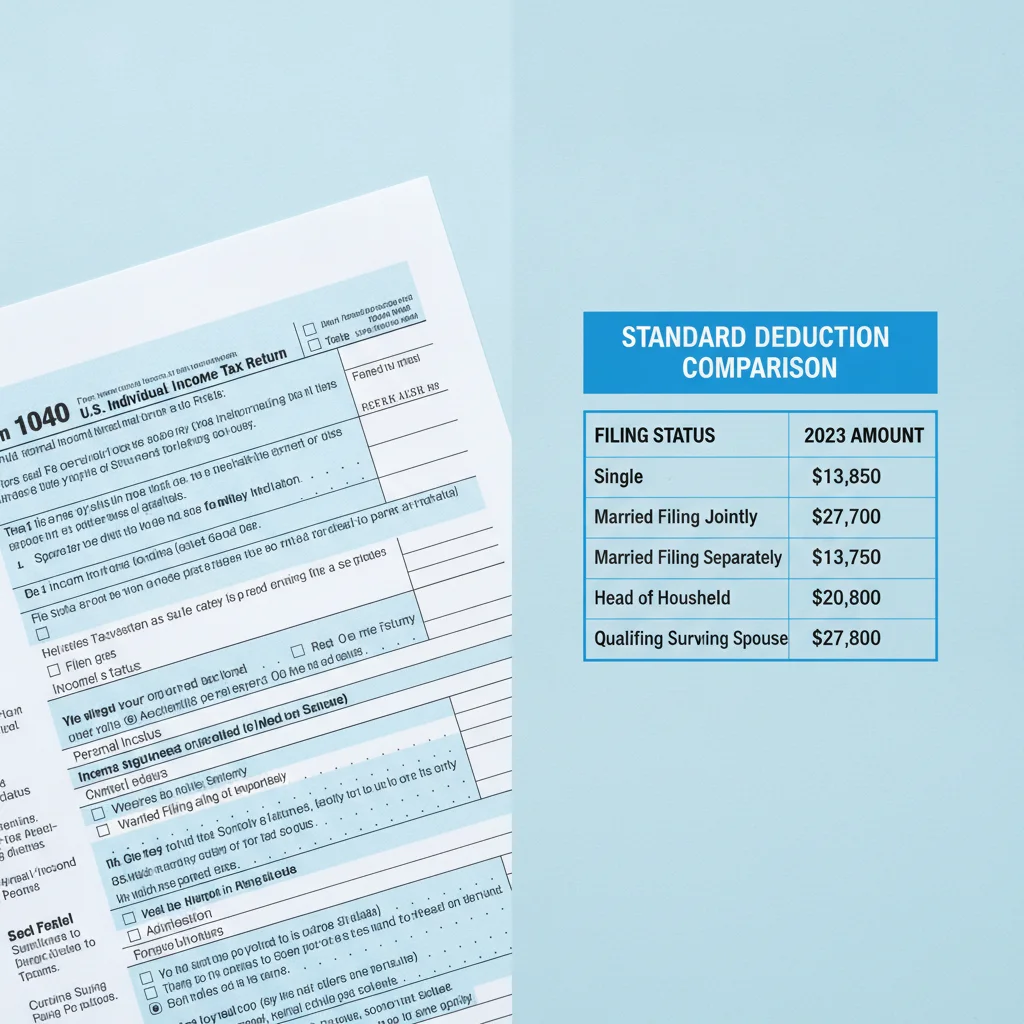
For the 2024 tax year, the standard deduction is $14,600 for single filers and $29,200 for married couples filing jointly. That's a high bar. According to IRS data, roughly 90% of taxpayers now take the standard deduction — up dramatically from the pre-2018 era — precisely because the Tax Cuts and Jobs Act made it less advantageous to itemize for most households.
Think of it this way: the vehicle registration deduction is only useful if it helps push your total itemized deductions — mortgage interest, charitable contributions, SALT, medical expenses — above the standard deduction threshold. For most taxpayers, even a $500 deductible registration component won't close that gap.
The drivers most likely to benefit are those who:
- Have a large mortgage with significant interest payments
- Make substantial charitable contributions
- Live in a state with moderate income taxes where SALT headroom still exists
- Own a high-value vehicle in a state with a meaningful ad valorem registration tax
If you're already itemizing for other reasons and you still have room under the SALT cap, the vehicle registration deduction is essentially a freebie — you're already doing the work; you just need to make sure you're including the right amount.
Ask Your State DMV Directly
If your registration notice doesn't clearly separate value-based fees from flat charges, call or email your state's DMV or Department of Revenue. Ask specifically: 'What portion of my registration fee is based on my vehicle's value and assessed annually?' Most states have this information documented and staff can direct you to the right source.
Run a Quick Comparison Before Deciding
Before you file, add up your mortgage interest, charitable donations, state income taxes, property taxes, and any deductible registration fees. Compare the total to your standard deduction. This calculation takes five minutes and tells you definitively whether itemizing — and claiming the registration deduction — is worth it for your situation.
Track Mileage Year-Round for Business Use
If your vehicle has any business use, maintain a mileage log throughout the year using a smartphone app or a notebook kept in the car. Reconstructing this data at tax time is error-prone and risky if audited. Accurate mileage records unlock the business expense deduction path, which is typically more valuable than the personal property tax route.
Business Vehicles: Different Rules, Bigger Deductions
If the vehicle is used for business, the tax treatment changes significantly — and often becomes far more favorable.
For self-employed individuals and business owners, vehicle registration fees paid for a business-use vehicle are generally deductible as an ordinary and necessary business expense under IRS Section 162, regardless of whether the fee is value-based or flat-rate. This deduction goes on Schedule C (for sole proprietors) or the appropriate business return, not Schedule A.
Importantly, this route isn't subject to the SALT cap. It's a business deduction, not a personal property tax deduction. If you use the actual expense method to deduct vehicle costs, you include registration fees in your total vehicle expenses and deduct the business-use percentage. If you use the standard mileage rate, registration fees are technically already factored into the IRS rate — you generally can't double-count them.
The critical nuance is the business-use percentage. If you use your car 60% for business and 40% personally, only 60% of the registration fee is deductible as a business expense. Mixed-use vehicles require careful record-keeping — a mileage log is the IRS-preferred method of substantiation.
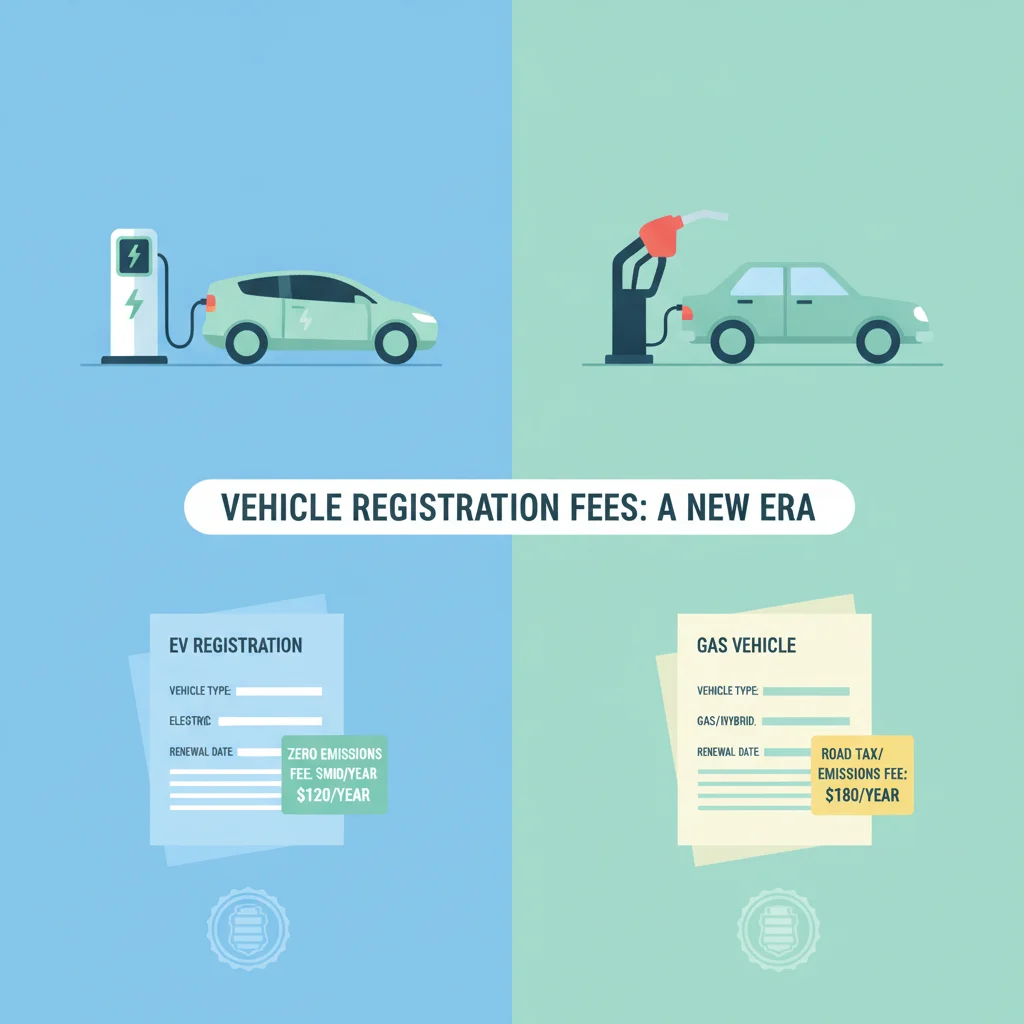
EV owners should also be aware that registration dynamics are shifting. Electric vehicles often carry higher flat registration fees in many states to compensate for lost gas tax revenue — and flat fees, as established, are not deductible as personal property taxes. Meanwhile, any available EV tax credits are a separate matter handled through a different part of the return entirely.
How to Claim the Deduction: Step-by-Step
If you've determined that you itemize, have room under the SALT cap, and have a value-based registration component to claim, here's exactly how to do it:
- Gather your documentation. Locate your registration renewal notice or payment receipt. Identify the specific dollar amount attributed to the value-based portion. Keep this document in your tax file.
- Verify the fee qualifies. Confirm with your state's DMV or revenue department that the line item is indeed based on your vehicle's value and assessed annually. If your state's website doesn't make this clear, a quick call to your state revenue department will.
- Complete Schedule A (Form 1040). Enter the deductible amount on Line 5c, "Personal property taxes." This line is specifically for things like vehicle registration taxes that meet the IRS three-part test.
- Apply the SALT cap. Total your entries on Lines 5a through 5c (state income or sales tax, real estate taxes, personal property taxes) and enter the combined amount, subject to the $10,000 cap, on Line 5d.
- Compare to the standard deduction. Add up your total Schedule A itemized deductions. If the total exceeds your standard deduction, itemizing is beneficial and you'll use that figure. If not, take the standard deduction and skip the vehicle registration line item entirely.
For owners who are unsure about registration fee exemptions and discounts they may already qualify for — which reduce the total fee before any tax consideration — it's worth reviewing those before calculating your deductible amount.
If you own multiple vehicles, you can claim the value-based registration fee for each one, subject to the same overall SALT cap. The cap is on total SALT, not per vehicle.
The One-Size-Fits-All Myth
Registration fees are not the same across all states, and neither is the deductible portion. A driver in California may have a clearly labeled deductible component, while a driver in Montana paying a flat fee has nothing deductible at all. Never assume your neighbor's tax strategy applies to your registration bill.
Keep Documentation Specific
The IRS requires that you be able to substantiate the amount you claim for personal property taxes. A generic bank statement showing a payment to the DMV is not sufficient — you need the actual registration notice or official receipt that itemizes the fee components. Store these documents with your tax records for at least three years after filing.
Legislated Changes May Affect Future Years
The $10,000 SALT cap is scheduled to expire after 2025 under current law, though Congress may extend or modify it. If the cap is lifted or raised, the vehicle registration deduction could become significantly more valuable for many taxpayers. It's worth revisiting this analysis each tax year as the legislative landscape evolves.
State-by-State Variation: Why Where You Live Matters
The deductibility question is ultimately shaped as much by your state as by federal law. States fall into a few broad categories when it comes to how they structure registration fees.
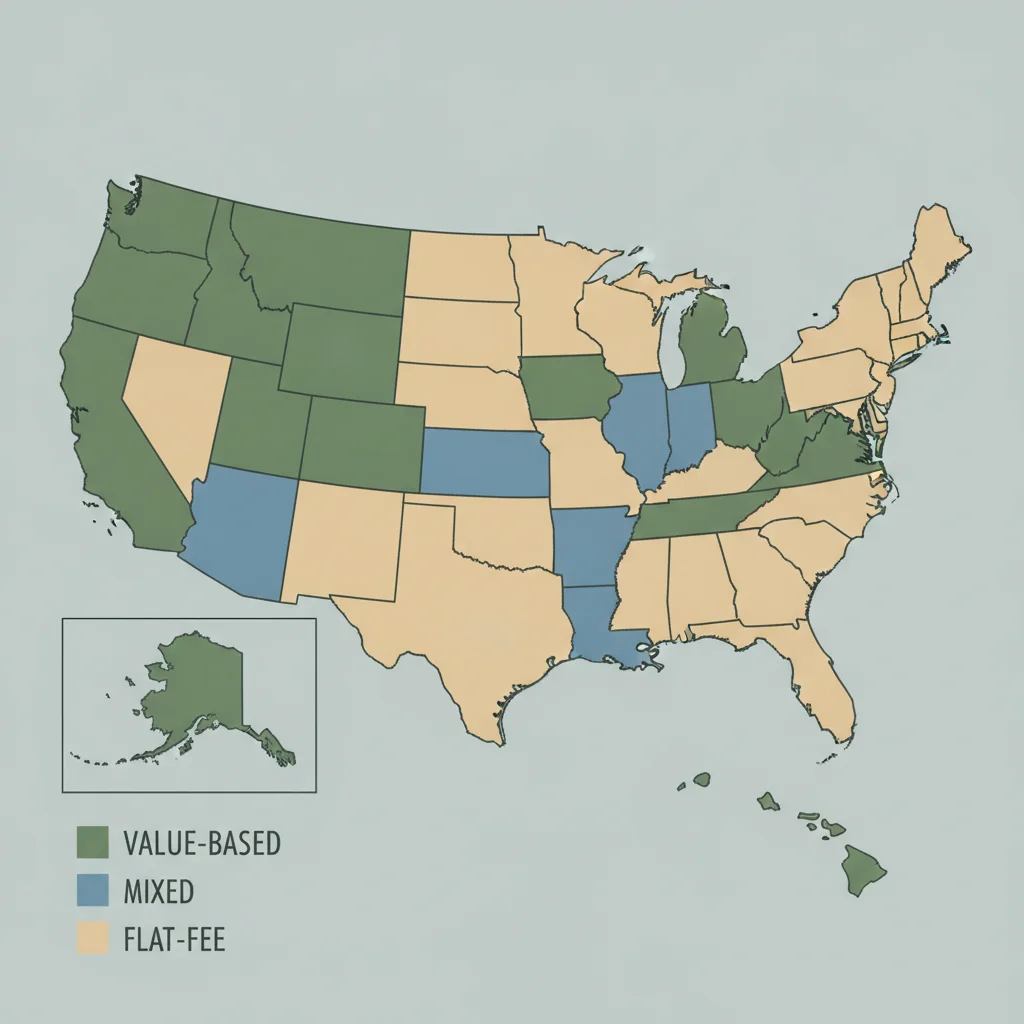
| State Category | Deductible Component? | Examples |
|---|---|---|
| Value-based (ad valorem) registration tax | Yes — this portion qualifies | California (VLF), Georgia, Alabama, Iowa |
| Mixed: value-based + flat fees | Partial — only the value-based portion qualifies | Virginia, Minnesota, South Carolina |
| Flat-fee only | No deductible component | Oregon, Montana, Kansas |
| Weight-based fees | No — weight is not value | Portions of WA, CO, and others |
California's Vehicle License Fee (VLF) is one of the most commonly deducted registration components in the country. It starts at 0.65% of the vehicle's purchase price and decreases each year as the vehicle depreciates. The annual registration notice explicitly calls this out as a separate line item, making identification straightforward.
In contrast, a driver in Oregon pays a flat $152 registration fee for a two-year period regardless of the car's value. No portion of that is deductible as a personal property tax.
The cumulative financial picture — including registration, depreciation, and taxes — varies substantially between states. Registration costs over a full ownership period can add up to thousands of dollars, making every available deduction worth understanding.
The One-Size-Fits-All Myth
Registration fees are not the same across all states, and neither is the deductible portion. A driver in California may have a clearly labeled deductible component, while a driver in Montana paying a flat fee has nothing deductible at all. Never assume your neighbor's tax strategy applies to your registration bill.
Keep Documentation Specific
The IRS requires that you be able to substantiate the amount you claim for personal property taxes. A generic bank statement showing a payment to the DMV is not sufficient — you need the actual registration notice or official receipt that itemizes the fee components. Store these documents with your tax records for at least three years after filing.
Legislated Changes May Affect Future Years
The $10,000 SALT cap is scheduled to expire after 2025 under current law, though Congress may extend or modify it. If the cap is lifted or raised, the vehicle registration deduction could become significantly more valuable for many taxpayers. It's worth revisiting this analysis each tax year as the legislative landscape evolves.
Making the Most of What's Available
The vehicle registration deduction isn't a tax windfall for most people — but for the right driver in the right state with the right tax situation, it's a legitimate, recurring deduction that compounds over years of ownership. A $400 deductible registration component claimed at a 22% marginal rate saves $88. Over ten years of ownership, that's $880 returned to your pocket.
The key habits that pay off:
- Save every registration notice. You need the actual document showing the value-based breakdown to substantiate the deduction if audited.
- Check annually. The deductible amount changes each year as your vehicle's assessed value declines. Don't assume last year's number applies.
- Run the math before filing. If you're close to the itemizing threshold, knowing your deductible registration amount could tip the scales.
- Separate business and personal clearly. If the vehicle has any business use, track it accurately — the business deduction path has no SALT cap constraint and is often more valuable.
Vehicle ownership costs have a way of accumulating quietly over time — registration, insurance, maintenance, loan interest. Understanding which of those costs interact with your tax return is part of owning a car intelligently. The registration deduction is a small but real example of where knowledge translates directly into money saved.
Ask Your State DMV Directly
If your registration notice doesn't clearly separate value-based fees from flat charges, call or email your state's DMV or Department of Revenue. Ask specifically: 'What portion of my registration fee is based on my vehicle's value and assessed annually?' Most states have this information documented and staff can direct you to the right source.
Run a Quick Comparison Before Deciding
Before you file, add up your mortgage interest, charitable donations, state income taxes, property taxes, and any deductible registration fees. Compare the total to your standard deduction. This calculation takes five minutes and tells you definitively whether itemizing — and claiming the registration deduction — is worth it for your situation.
Track Mileage Year-Round for Business Use
If your vehicle has any business use, maintain a mileage log throughout the year using a smartphone app or a notebook kept in the car. Reconstructing this data at tax time is error-prone and risky if audited. Accurate mileage records unlock the business expense deduction path, which is typically more valuable than the personal property tax route.

All claims are backed by peer-reviewed research. Sources on request.