
Key Takeaways
The Registration Fee Money Most Drivers Leave on the Table
Every year, millions of drivers write a check or submit an online payment for vehicle registration without once wondering whether they were legally entitled to pay less — or nothing at all. Registration fees are one of those recurring ownership costs that feel fixed and non-negotiable, like a utility bill. But unlike a utility bill, they come with an entire architecture of exemptions, waivers, and discounts that most people never discover.
To understand what you're actually paying for in the first place, see our breakdown of vehicle registration fees. The short version: registration charges fund road infrastructure, emissions programs, administrative costs, and in some states, local levies that vary by county. Because the fee structure is a patchwork of state and local rules, so too are the exemptions.
The categories that most consistently yield discounts or waivers include military service, disability status, senior age thresholds, income level, vehicle age, vehicle type, and usage patterns. Each of these has real dollar value — sometimes a few dollars, sometimes several hundred. What follows is a practical inventory of the most commonly available exemptions that qualified owners routinely miss.
Active-Duty Military and Deployed Service Members
Active-duty military members are among the most broadly protected class when it comes to registration fee relief, yet many service members — particularly those who are young, newly enlisted, or stationed far from home — don't know their benefits extend to their vehicles.
At the federal level, the Servicemembers Civil Relief Act (SCRA) limits the state in which a service member can be taxed for personal property, including vehicles. This means if you're stationed in a state different from your legal domicile, you generally only owe registration fees (and property tax on your vehicle, where applicable) to your home state — not the state where you're currently living.
Beyond federal protections, individual states layer on their own military discounts. California, Texas, and Virginia, among others, offer reduced or waived fees for active-duty personnel. Some states extend the benefit to Guard and Reserve members who have been mobilized. In many cases, a copy of your current orders is all the documentation you need.
If you're deployed overseas, several states allow you to defer registration renewal without penalty until you return — which matters because an expired registration can otherwise result in fines and insurance complications. Always check with your installation's legal assistance office or JAG unit if you're unsure what your home state offers.
The SCRA means you may only owe registration fees to your home state, not where you're stationed.
Veterans With Service-Connected Disabilities
This is arguably the most generous and widely available registration exemption category in the country — and one of the least claimed. A majority of U.S. states offer some form of free or reduced registration to veterans who have a service-connected disability rating from the Department of Veterans Affairs (VA).
[in_content_images:1]The threshold for eligibility varies. Some states require a 100% disability rating. Others set the bar at 50% or lower. A handful of states — including Florida, Illinois, and Maryland — waive registration fees entirely for qualifying veterans, regardless of vehicle value or weight class. Others cap the waiver at one vehicle per veteran.
Documentation typically required includes your VA disability rating letter and proof of state residency. Some states additionally ask for a copy of your DD-214 discharge papers. The application is usually a separate form submitted alongside your standard renewal — it does not replace it.
If you're a veteran who hasn't checked whether your disability rating qualifies you for registration relief, this is a ten-minute search with potentially hundreds of dollars in annual savings. The VA's benefits website and your state DMV are the two places to start.
Many states waive registration entirely for veterans with qualifying VA disability ratings — often unclaimed.
Drivers With Physical Disabilities or Mobility Impairments
Non-veteran drivers who have documented physical disabilities often qualify for reduced or waived registration fees as well, though the qualifying conditions and discount amounts differ widely from state to state.
Most states tie this exemption to the same eligibility criteria used for disabled parking placards and license plates — which typically require a physician's certification of a qualifying condition such as limited mobility, legal blindness, or a permanent impairment affecting ambulation. If you already hold a disabled placard or have a disabled license plate, you may automatically qualify for a registration fee reduction without having submitted a separate application.
In some states, the disabled registration plate itself comes with zero annual registration cost. In others, there's a reduced flat fee, or the exemption applies only to the ad valorem (value-based) portion of the fee rather than the entire bill. Either way, the savings are real and the application is usually straightforward.
Parents or guardians of individuals with disabilities who serve as primary vehicle operators for a disabled person may also qualify in certain states, though this is less common and more documentation-intensive. It's worth asking specifically, because DMV staff may not volunteer the information.
If you hold a disabled parking placard, you may already qualify for a registration fee reduction without knowing it.
Senior Citizens Above State-Set Age Thresholds
Senior discounts on vehicle registration don't get nearly the publicity that senior discounts on movie tickets or restaurant meals do, but they exist in a meaningful number of states and can add up to real savings over a retirement decade of car ownership.
Age thresholds vary considerably. Some states begin offering reductions at age 65; others set the threshold at 70 or even 75. The nature of the benefit varies too — some states offer a flat dollar reduction, others freeze the registration fee at the rate in effect when the owner hit the qualifying age, and a few offer full waivers for very low-income seniors.
In states like Arizona, senior discounts on vehicle license taxes (which are the ad valorem component of registration) are calculated automatically once you've declared your age — but only if you registered your vehicle in the state before a certain date, which creates a complex eligibility picture that many seniors never navigate correctly.
The best approach is to call your state DMV and ask directly whether any age-based registration reductions exist and what documentation is needed. Bring a birth certificate or driver's license to prove age. Some states process this adjustment at the DMV counter in a single visit.
Some states freeze registration fees at the rate in effect when a driver hits the qualifying senior age.
Low-Income Households and Means-Tested Fee Reductions
Several states have implemented means-tested registration programs that reduce fees for households below a certain income threshold. These programs are often newer, less publicized, and administratively separate from disability or veteran programs — which means they're among the most underutilized exemptions available.
California's Low-Income Vehicle Registration Assistance Program, for instance, has provided hundreds of millions of dollars in fee relief to qualifying households. Washington State has a similar program tied to participation in other public assistance programs like Medicaid or food benefits. In both cases, the application process runs through the DMV but requires income documentation or proof of enrollment in a qualifying assistance program.
The income thresholds used are typically based on a percentage of the federal poverty level — commonly 200% or below — though the specifics vary by state. Some programs are funded by the legislature annually and may have waiting lists or limited enrollment windows, so timing your application matters.
If you're already enrolled in any federal or state assistance program, it's worth checking whether that enrollment automatically qualifies you for a vehicle registration discount in your state. The crossover is more common than most people realize, and the agencies running those programs don't always communicate with each other proactively.
Enrollment in Medicaid or food assistance programs can automatically qualify some households for registration fee reductions.
Antique, Historic, and Classic Vehicle Registrations
Vehicles that reach a certain age — typically 25 years or older, though some states use 20 — often become eligible for specialty historic or antique registration status. This isn't just a vanity plate option; it frequently comes with dramatically lower annual registration costs compared to standard passenger vehicle registration.
The tradeoff is usage restrictions. Historic and antique plates are generally intended for vehicles used for shows, exhibitions, parades, and occasional pleasure driving — not daily commuting. States enforce these restrictions with varying degrees of rigor, but misuse can result in fines and loss of the specialty designation.
For collectors and enthusiasts who own multiple vehicles and use a classic car only on weekends or for special occasions, the economics are compelling. A vehicle that would otherwise carry a registration fee calculated on its appraised value (which for a restored classic can be substantial) may instead carry a flat historic plate fee of $20–$75 in many states — regardless of value.
Our detailed guide on classic and antique car registration rules walks through how eligibility, usage restrictions, and inspection requirements work across different states. It's essential reading before you switch a classic car's registration status.
A restored classic worth $40,000 may qualify for a $25 flat historic plate fee instead of value-based registration.
Electric Vehicle Incentive Programs and Fee Offsets
Electric vehicle registration is a complicated category. On one hand, many states have added supplemental EV registration fees — sometimes called road user charges — to offset the gas tax revenue that EV drivers don't contribute. These surcharges can add $50–$200 or more to annual registration costs. On the other hand, some of those same states offer parallel incentive programs that reduce or eliminate other fee components for EVs.
[in_content_images:2]Several states — including Colorado, Louisiana, and others — have at various times offered reduced registration fees for battery electric vehicles as part of broader clean energy incentive packages. These programs change frequently as state legislatures balance EV promotion against road funding concerns, so current eligibility requires checking your state's DMV directly rather than relying on information that may be a year or two old.
HOV lane access stickers, which some states issue through the DMV registration process, also carry fee implications. In California, for example, the Clean Air Vehicle decal program has historically involved a separate application and fee, but qualified vehicles sometimes receive offsets elsewhere in the registration process.
For a thorough comparison of how EV registration fees stack up against conventional vehicle fees by state, see our analysis of EV registration fees vs. gas car registration fees. The gap between states is striking and worth understanding before you buy.
Some states add EV surcharges while simultaneously offering incentive offsets — the net cost depends heavily on where you live.
Non-Operational or Planned Non-Operation Status
If a vehicle is not being driven on public roads — stored in a garage, undergoing restoration, or simply parked for an extended period — many states allow owners to declare it non-operational, which suspends the standard registration requirement and associated fees for the duration of the declared period.
California's Planned Non-Operation (PNO) filing is one of the most well-known versions of this mechanism. For a small flat fee (historically around $20), you can put a vehicle on non-op status and avoid paying full registration for up to a year. The vehicle cannot be driven on public roads during that period, and you'll need to re-register it before driving it again — but for seasonal vehicles, project cars, or anything sitting in storage, the savings over time are meaningful.
Other states have similar provisions under different names. Oregon, Nevada, and Arizona each have some version of a registration suspension or non-operation status. The key requirement across all of them is that the vehicle genuinely not be operated on public roads — driving a non-op vehicle is a registration violation that can carry fines and insurance complications.
This option is particularly relevant for owners who have multiple vehicles and rotate use seasonally. There's no reason to pay full registration on a convertible that spends six months of the year in a garage. Check your state's DMV for the specific filing process — it's usually a simple one-page form or online declaration.
Declaring a stored or seasonal vehicle non-operational can legally suspend registration fees for under $20 in many states.
Government, Nonprofit, and Tribal Exemptions
Vehicles owned by federal, state, or local government entities are generally exempt from registration fees — which is expected. Less widely known is that vehicles owned by qualifying nonprofit organizations and federally recognized tribal nations also carry exemption eligibility in many states.
For nonprofits, the exemption typically applies when the vehicle is used primarily for the organization's tax-exempt purpose, not personal use by employees. The IRS 501(c)(3) determination letter is usually the foundational document, but states may require additional proof that the vehicle is used in furtherance of the nonprofit mission. Organizations like food banks, religious institutions, and community service nonprofits that operate delivery vans or transport vehicles are the most common beneficiaries.
Tribal exemptions are governed by a combination of federal law and state-tribal compacts, and they vary significantly by state and by tribe. Members of federally recognized tribes who live on tribal land and register vehicles through a tribal government rather than the state DMV may pay no state registration fees at all. The administration of these programs runs through tribal motor vehicle offices rather than state agencies.
If your organization or household has any connection to these categories and you've been paying standard registration fees, it's worth a direct conversation with your state DMV or tribal government to determine what exemptions apply and what documentation is needed to claim them.
Qualifying nonprofits using vehicles for their exempt mission often pay zero registration fees — most never apply.
How to Claim What You're Owed
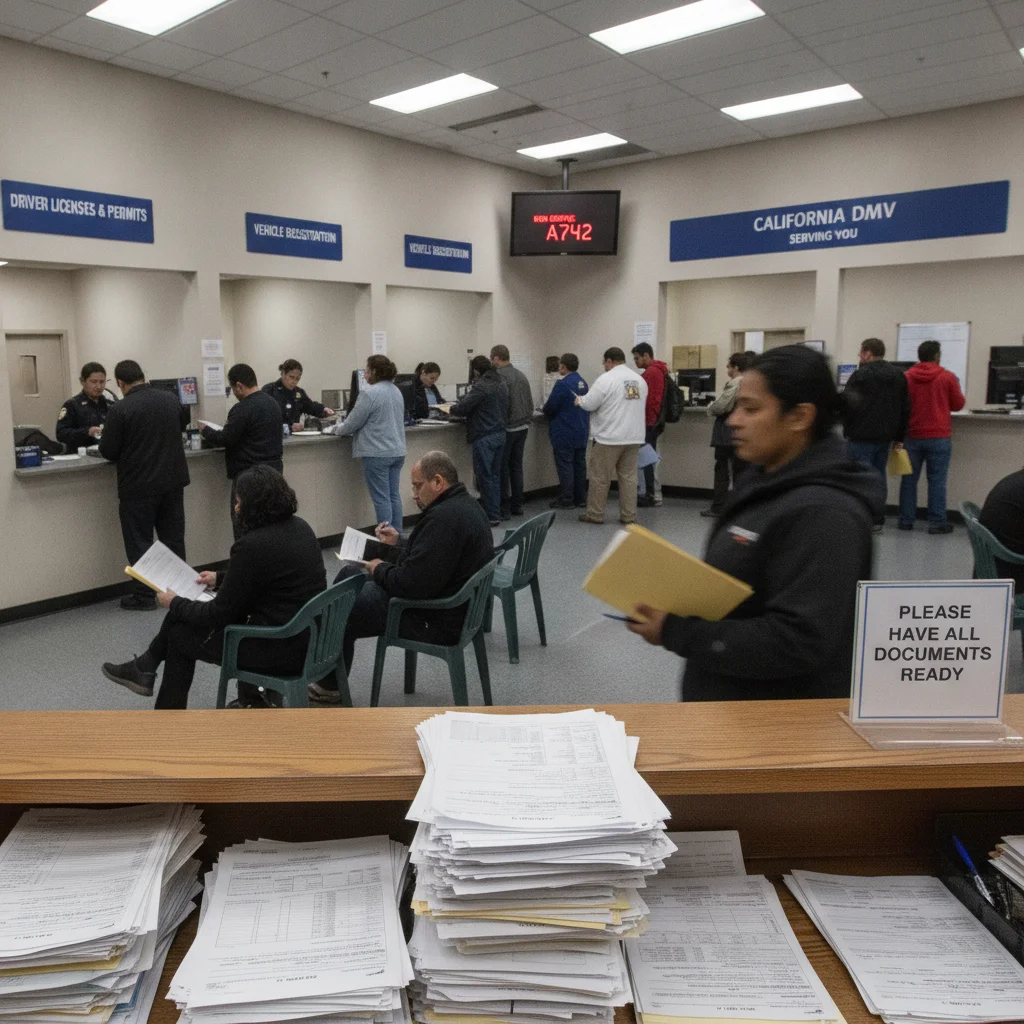
The single most important thing to understand about registration exemptions is that they are almost never automatic. Your state's DMV computer does not flag your file when you turn 65 or receive a disability rating. The burden is entirely on you to identify your eligibility, gather documentation, and submit the correct paperwork — usually at your next renewal cycle.
Check Before Every Renewal, Not Just Once
Exemption programs are added, modified, and sometimes funded on an annual legislative cycle — a discount that didn't exist last year may be available this year. Set a reminder to check your state DMV's exemption page at least 30 days before your registration renewal date. That window gives you enough time to gather documentation and submit any required forms before your current registration expires.
Ask Specifically — Don't Rely on Volunteers
DMV staff are trained to process what you request, not to audit your eligibility for every available program. When renewing in person or by phone, explicitly ask: 'Are there any exemptions or discounts I might qualify for based on military service, disability, age, or income?' That direct question consistently surfaces programs that would otherwise go unmentioned. The same logic applies when you're helping an elderly parent or veteran family member renew their registration.
Start by visiting your state's official DMV or motor vehicle services website and searching for the terms "registration exemption," "fee waiver," or "reduced registration." Many states bury these programs in secondary pages rather than the main renewal portal. If the website is unclear, a phone call or in-person visit to a local DMV office can uncover programs that aren't well publicized online.
Keep in mind that registration costs can vary significantly by state — and so can the available exemptions. Our guide on states with the lowest and highest registration costs gives useful context for benchmarking what your state charges before you start looking for reductions. And if you're wondering whether any portion of those fees can reduce your tax bill, check out whether vehicle registration fees are deductible — some components qualify, some don't.
Exemptions Vary Dramatically by State
There is no federal standard for vehicle registration exemptions — every state sets its own eligibility rules, dollar amounts, and administrative processes. A program that provides a full waiver in one state may not exist at all in a neighboring state. Always verify current requirements directly with your state's official motor vehicle agency, as program details change more frequently than most DMV websites are updated. Our overview of <a href="/maintenance-and-ownership/ownership-costs/registration-taxes/annual-registration-renewal-what-changes-each-year-and-what-doesnt">what changes at renewal each year</a> also helps clarify how fees shift over a vehicle's life.
Documentation Requirements Can Be Strict
Most exemption programs require original or certified documentation — photocopies, screenshots, or verbal confirmations are frequently rejected. Before visiting a DMV office to apply for an exemption, call ahead or check the program's requirements page to get a complete document checklist. Common requirements include VA rating letters, physician certifications, military orders, proof of income, or IRS determination letters for nonprofits. Having everything organized in advance avoids a wasted trip.
One final word: don't let an exemption lapse just because you claimed it once. Some programs require annual re-certification. Others are automatically renewed once you're on file. Verify the renewal process for any exemption you receive so you don't accidentally pay full price in a future year because paperwork expired quietly in a government database.
Also remember that an expired registration — even for someone with a valid exemption — carries real consequences. See what happens when registration lapses and why it matters before assuming a delay in renewal is harmless.


All claims are backed by peer-reviewed research. Sources on request.