
Key Takeaways
Weight-Based Registration Fee
A weight-based registration fee is a government charge calculated using a vehicle's mass rather than a flat rate. States that use this system charge heavier vehicles more because they cause proportionally greater wear on public roads and infrastructure. The fee is typically assessed once per year at registration or renewal and varies by vehicle class.
States may use either curb weight (the vehicle's mass with standard equipment but no passengers or cargo) or Gross Vehicle Weight Rating (GVWR), which is the maximum loaded weight the manufacturer certifies the vehicle to carry. GVWR-based schedules tend to penalize trucks and SUVs more heavily.
Why Governments Care How Much Your Car Weighs
Every time a vehicle rolls down a public road, it imposes a cost on that road. Pavement fatigue, bridge stress, and pothole formation all correlate directly with vehicle mass. Engineers have understood this relationship for decades — road damage doesn't scale linearly with weight; it scales roughly with the fourth power of axle load. A vehicle that's twice as heavy causes roughly sixteen times as much pavement damage per pass.
That engineering reality is the foundation of weight-based registration fees. State legislatures use vehicle weight as a proxy for infrastructure impact, then charge heavier vehicles a larger share of the road maintenance bill. It's the same logic behind commercial truck weight-distance taxes and highway weigh stations — just applied at the consumer level through the annual registration system.
For most car owners, this fee shows up as a line item on their renewal notice labeled something like weight fee, tonnage fee, or commercial weight class. It can look like a minor bureaucratic detail, but over a vehicle's lifetime it adds up to a meaningful ownership cost — one that many buyers never factor in when comparing models.
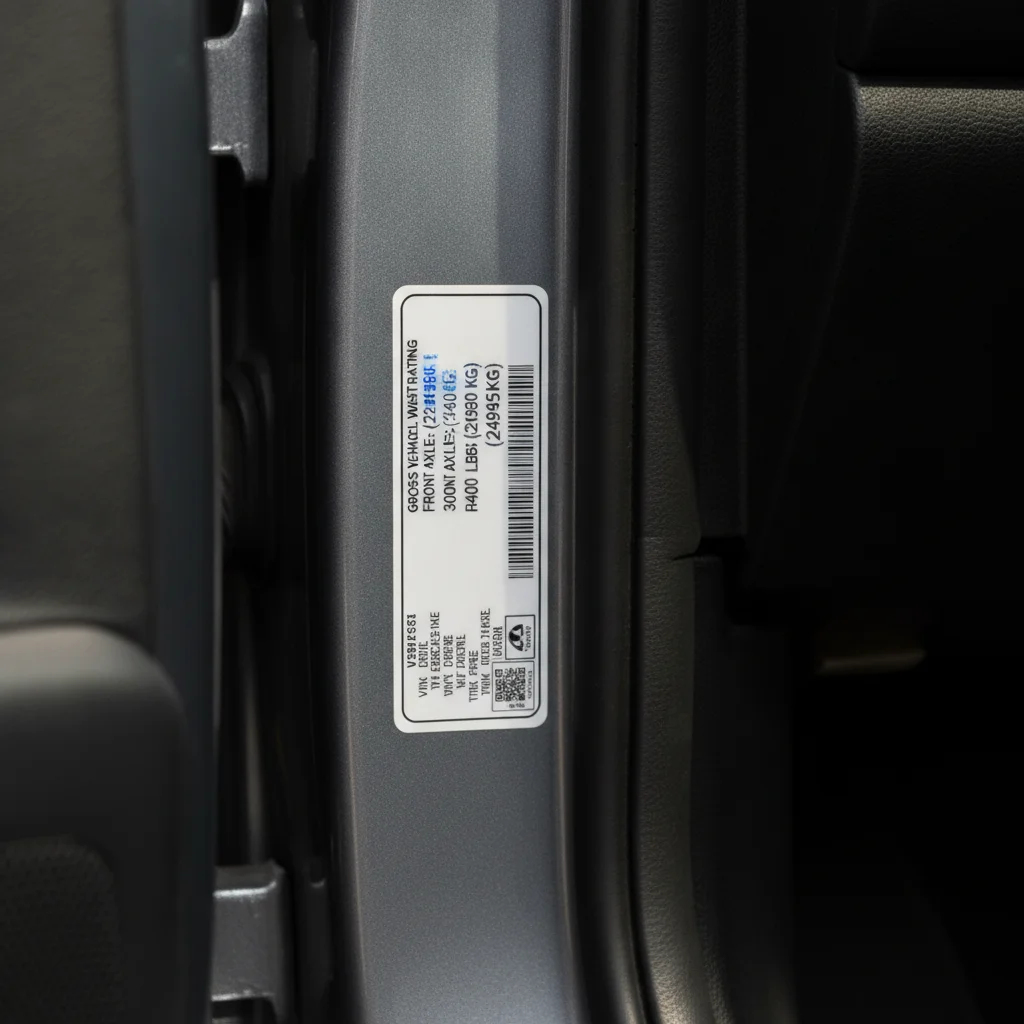
Understanding where this fee comes from helps you make smarter decisions when you're choosing between a three-row SUV and a minivan, or between a half-ton pickup and a midsize truck. The weight on the window sticker isn't just an engineering spec — it's also a billing input for your state's DMV.
Curb Weight vs. GVWR: Which Number Actually Gets Used?
The most important variable in a weight-based fee system is which weight figure the state actually uses. There are two primary candidates, and the choice between them can shift your annual fee by hundreds of dollars on a large vehicle.
Curb Weight
Curb weight is the mass of the vehicle as it rolls off the assembly line — full fluids, standard equipment, but no passengers or cargo. This figure appears on the vehicle's title in many states and is the number most consumers intuitively associate with "how heavy is my car." A full-size pickup truck might show a curb weight around 4,500–5,500 lbs depending on cab and bed configuration.
Gross Vehicle Weight Rating (GVWR)
GVWR is the manufacturer's certified maximum — the total weight of the vehicle plus everything you could possibly put in it: passengers, cargo, tongue weight from a trailer if applicable. A half-ton truck with a 5,000 lb curb weight might carry a GVWR of 7,000–8,000 lbs. Some states use GVWR because it better reflects the vehicle's potential road impact at maximum use.
GVWR Can Surprise Light-Truck Buyers
A vehicle marketed as a 'half-ton' truck is a payload rating descriptor from the mid-20th century — it no longer reflects actual payload limits, and it certainly doesn't predict where the truck lands in a GVWR-based fee schedule. Modern half-ton trucks regularly carry GVWRs of 6,800–8,000 lbs, placing them in weight tiers far above their size category might suggest. Always check the door placard, not the marketing class.
State Fee Schedules Change — Verify Directly
Registration fee schedules are set by state legislatures and can change with each budget cycle. The figures in this article reflect publicly available schedules as reference examples, not guaranteed current rates. Before making a purchase decision, pull the current fee schedule directly from your state's official DMV website or call the DMV to confirm the numbers.
Weight Fees Are Just One Layer
In most states, the weight fee is one component among several — base registration fees, value-based taxes, county or city add-ons, and specialty plate surcharges all stack on top. A vehicle that saves you $60/year in weight fees might cost more overall if it carries a higher value-based tax. Always calculate the total registration cost, not just the weight component in isolation.
When a state uses GVWR, light-duty trucks and larger SUVs often jump into a significantly higher fee bracket than their actual curb weight would suggest. A buyer trading a midsize sedan for a "light" truck may be surprised to find the truck's GVWR puts it in the same fee category as a commercial delivery van.
Why It Matters Practically
Before purchasing a vehicle, look up your state's fee schedule and confirm which weight figure it uses. Both numbers appear on the vehicle: curb weight is often on the title or spec sheet, while GVWR appears on the yellow sticker inside the driver's door jamb. If your state uses GVWR, that door sticker is the number that determines your annual fee — not the spec sheet curb weight you saw in the brochure.
How Weight Fee Schedules Actually Work
States that use weight-based fees don't charge a simple per-pound rate. Instead, they divide vehicles into weight brackets and assign a flat fee to each bracket. This tiered structure means the fee jumps at specific thresholds rather than increasing smoothly with every additional pound.
4x
Road damage increase per doubling of axle weight
Engineering studies on pavement fatigue show road damage scales approximately with the fourth power of axle load, the foundational rationale for weight-based fees.
~$1,080
Extra registration cost over 10 years (heavy vs. light vehicle)
Based on a $108 annual fee gap between a compact sedan and a full-size truck in a representative weight-tiered state like Oregon.
1,000+ lbs
Average weight premium of EV trucks over gas equivalents
Battery packs in electric trucks like the F-150 Lightning add roughly 1,000–1,500 lbs versus the gas version, often pushing them into a higher weight fee bracket.
~35
U.S. states using weight as a fee factor
Approximately 35 states incorporate vehicle weight — either curb weight or GVWR — as a primary or secondary component of their annual registration fee calculation.
$300
Cost over 10 years of crossing a weight bracket threshold
In Oregon's tiered schedule, a vehicle 1 lb over a 4,000 lb cutoff pays $30/year more — amounting to $300 over a decade of ownership.
Oregon provides one of the clearest examples of a tiered weight fee schedule for passenger vehicles:
| Weight Class | Annual Weight Fee (approx.) |
|---|---|
| 0–4,000 lbs | $86 |
| 4,001–6,000 lbs | $116 |
| 6,001–8,000 lbs | $152 |
| 8,001–10,000 lbs | $194 |
| 10,001–12,000 lbs | $236 |
Notice what happens at threshold boundaries. A vehicle that weighs 4,001 lbs — just one pound over the first cutoff — pays $30 more per year than a vehicle at 4,000 lbs. Over ten years of ownership, that single-pound difference costs $300. This is the real-world consequence of bracket-based pricing: a small difference in vehicle spec can land you in a meaningfully different fee tier.
California uses a similar tiered weight fee for commercial vehicles and applies a separate unladen weight fee formula for passenger vehicles. Georgia charges a flat title ad valorem tax based partly on value, but adds a weight-based element for trucks. The details differ by state, but the structural pattern — weight thresholds with step-up fees — is consistent.
Check the Door Placard Before You Buy
Before finalizing any vehicle purchase in a weight-based state, open the driver's door and read the GVWR off the door jamb sticker. Then look up your state's fee schedule and find the bracket that number falls into. This ten-minute check can reveal a fee difference that persists for every year you own the vehicle.
Use Trim Level Selection Strategically
Within the same model, a base 2WD trim can weigh 300–500 lbs less than a fully loaded 4WD version. In states with weight thresholds, that difference might keep the base trim in a lower fee bracket. If 4WD isn't essential for your use case, running the numbers on the weight-fee impact gives you one more concrete reason to evaluate whether you need it.
For the full picture of how weight fees compound alongside other registration charges over time, see the full lifetime cost of registering a car.
Which Vehicle Types Are Most Affected
Not all vehicle categories are equal in weight-based fee systems. Here's how the major segments typically stack up:
Compact and Midsize Cars
Most compact sedans and hatchbacks fall in the 2,800–3,500 lb curb weight range, landing them in the lowest fee bracket in virtually every state's schedule. These buyers rarely feel the weight fee as a meaningful cost — it's often $50–$100 per year and stays there for the life of the vehicle.
Crossovers and Midsize SUVs
The weight range for this segment is broad — roughly 3,200–4,800 lbs — meaning some crossovers stay in the lowest bracket while larger ones push into the second tier. A three-row crossover like a Kia Telluride or Hyundai Palisade can exceed 4,500 lbs, nudging it into a higher fee tier in states with a 4,000 lb threshold.
Full-Size SUVs and Body-on-Frame Trucks
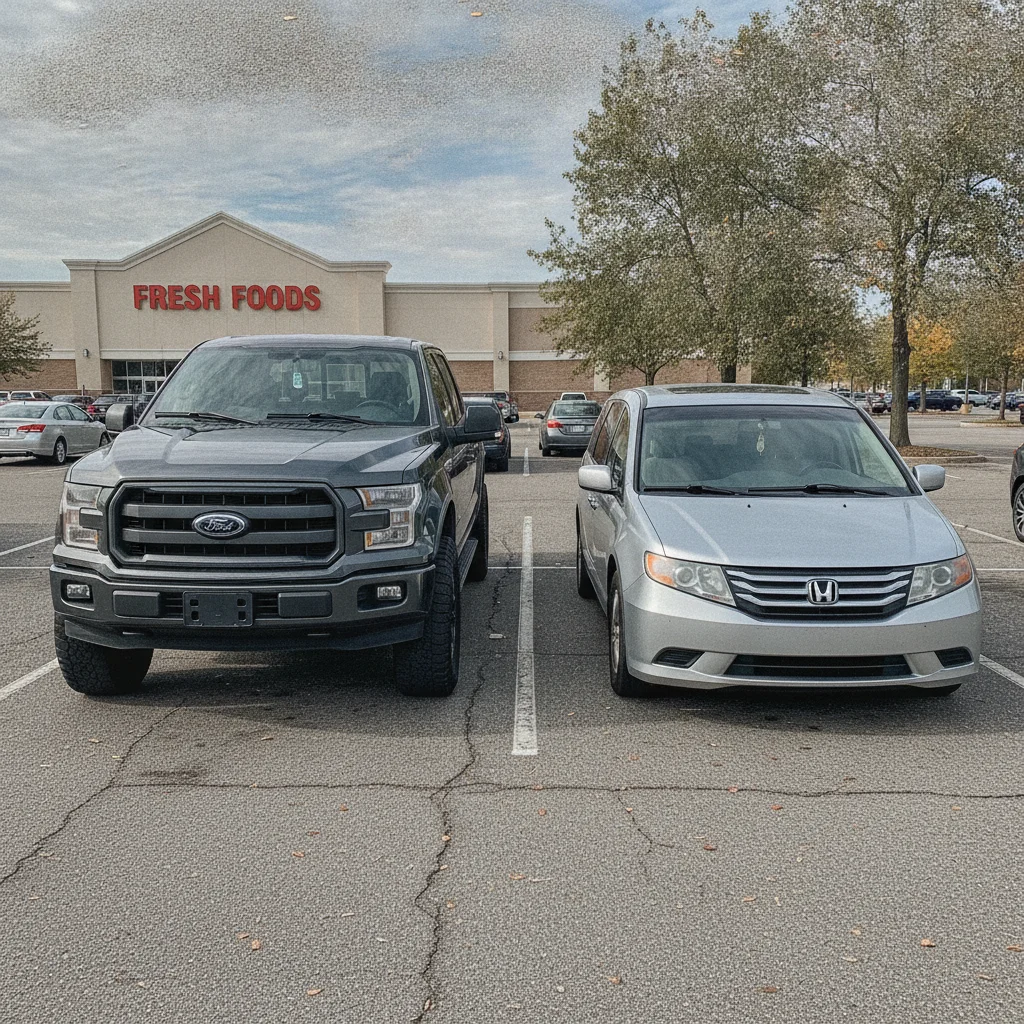
This is where weight fees bite hardest. A Ford F-150 with a SuperCrew cab and 4WD can have a curb weight of 5,100–5,500 lbs. Its GVWR may reach 7,050 lbs. A Chevy Suburban or Ford Expedition can weigh 5,600–6,000 lbs at curb. In states using GVWR, these vehicles can land in weight classes that doubles or triples the fee compared to a compact car.
Electric Vehicles
Battery packs are heavy. A Ford F-150 Lightning weighs roughly 6,000–6,500 lbs at curb — nearly 1,000 lbs more than its gas equivalent. A Rivian R1T is similarly heavy. In weight-based states, EV trucks aren't just paying a flat EV surcharge; they're also landing in higher weight brackets than their gas counterparts. EV registration fees vs. gas car fees covers this comparison in detail.
Minivans
Often overlooked, minivans are lighter than their three-row SUV competitors. A Toyota Sienna or Chrysler Pacifica typically weighs 4,500–4,800 lbs — meaningfully less than a Suburban or Expedition offering comparable passenger capacity. In a weight-based fee state, a minivan buyer may pay $40–$80 less per year than a full-size SUV buyer, which over ten years of ownership adds up to $400–$800 in registration savings alone.
States That Use Weight and How Their Formulas Differ
No two states handle weight-based registration identically, and many states use weight as just one component of a more complex formula. Here's a practical overview of how several major states approach the calculation:
Oregon
Oregon uses a straightforward weight-class fee for passenger vehicles, assessed at registration and renewal. The fee is based on the vehicle's actual weight (curb weight). Oregon also has a separate privilege tax based on vehicle value for newer cars, meaning buyers of new, heavy vehicles pay on both dimensions simultaneously.
California
California charges a "weight fee" for commercial vehicles based on declared gross vehicle weight. For passenger vehicles, the primary registration fee is a flat base rate, but larger trucks and SUVs registered for commercial use face explicit GVWR-based schedules. The Vehicle License Fee (VLF) — California's value-based component — is separate and declines with depreciation.
Idaho
Idaho uses a graduated registration fee based on vehicle weight for all non-commercial vehicles. The schedule spans from under 8,000 lbs to over 26,000 lbs, with fees rising sharply in each bracket. A passenger vehicle under 8,000 lbs pays a set rate; anything heavier moves into commercial class territory with significantly higher fees.
Georgia
Georgia replaced its old title ad valorem tax with a system that blends vehicle value and weight for trucks. Pickup trucks are assessed differently than passenger cars, partly on the basis of their rated payload capacity — a proxy for weight class.
Montana
Montana's registration fee schedule uses age and weight together. Newer, heavier vehicles pay more on both axes; as the vehicle ages, the fee decreases on a sliding scale. This creates a situation where buying a brand-new heavy truck in Montana results in peak registration costs in year one, declining each year thereafter.
GVWR Can Surprise Light-Truck Buyers
A vehicle marketed as a 'half-ton' truck is a payload rating descriptor from the mid-20th century — it no longer reflects actual payload limits, and it certainly doesn't predict where the truck lands in a GVWR-based fee schedule. Modern half-ton trucks regularly carry GVWRs of 6,800–8,000 lbs, placing them in weight tiers far above their size category might suggest. Always check the door placard, not the marketing class.
State Fee Schedules Change — Verify Directly
Registration fee schedules are set by state legislatures and can change with each budget cycle. The figures in this article reflect publicly available schedules as reference examples, not guaranteed current rates. Before making a purchase decision, pull the current fee schedule directly from your state's official DMV website or call the DMV to confirm the numbers.
Weight Fees Are Just One Layer
In most states, the weight fee is one component among several — base registration fees, value-based taxes, county or city add-ons, and specialty plate surcharges all stack on top. A vehicle that saves you $60/year in weight fees might cost more overall if it carries a higher value-based tax. Always calculate the total registration cost, not just the weight component in isolation.
Always verify the current fee schedule directly with your state's DMV website before making a purchase decision. Fee schedules can change with each legislative session, and the figures published on third-party sites are sometimes outdated.
To understand how weight fees interact with other annual changes at renewal time, see what changes — and what doesn't — at annual renewal.
The Long-Term Financial Impact on Ownership Costs
Weight-based fees don't feel like a major expense in any single year. A $100 difference in annual registration between a compact car and a large truck is easy to dismiss. But vehicle ownership is measured in years, not months, and registration fees are paid every single year you own the car.
“The sticker price is what gets people excited. The cost of ownership is what gets people surprised. Registration fees tied to weight are one of the most predictable costs in the vehicle lifecycle — and one of the least discussed at the point of sale.”
— Derek Tolliver, Auto repair and ownership cost specialist
Consider a buyer in a weight-based fee state choosing between two vehicles:
- Vehicle A: A midsize sedan with a curb weight of 3,400 lbs, landing in the lowest weight bracket — annual fee: $86.
- Vehicle B: A full-size pickup truck with a GVWR of 7,200 lbs, landing in the third weight tier — annual fee: $194.
The annual gap is $108. Over a seven-year ownership period, that's $756 in additional registration costs attributable solely to weight. Over ten years, it's $1,080. That's before accounting for higher insurance premiums, lower fuel economy, and higher tire costs that also come with heavier vehicles.
Now compare buying a new heavy vehicle versus a used one. A used truck may already be several years into its depreciation curve, which helps in value-based fee states. But in a pure weight-based fee state, the year-one fee is identical for a new truck and a five-year-old truck of the same weight — because the vehicle's mass hasn't changed. See how registration fees compare over a full ownership period for new vs. used vehicles to understand where the real savings opportunities are.
Check the Door Placard Before You Buy
Before finalizing any vehicle purchase in a weight-based state, open the driver's door and read the GVWR off the door jamb sticker. Then look up your state's fee schedule and find the bracket that number falls into. This ten-minute check can reveal a fee difference that persists for every year you own the vehicle.
Use Trim Level Selection Strategically
Within the same model, a base 2WD trim can weigh 300–500 lbs less than a fully loaded 4WD version. In states with weight thresholds, that difference might keep the base trim in a lower fee bracket. If 4WD isn't essential for your use case, running the numbers on the weight-fee impact gives you one more concrete reason to evaluate whether you need it.
When cross-shopping vehicles that straddle a weight threshold, ask the dealer for the exact curb weight and GVWR figures, then run both numbers against your state's fee schedule. A trim level or 4WD option can add 200–400 lbs and push a vehicle into the next fee bracket — and those extra pounds cost you money every year you own the car, not just at purchase.
Practical Steps for Buyers in Weight-Based States
If you live in a state that uses weight in its fee formula, here's a concrete process for factoring this into your purchase decision:
- Identify your state's weight input. Find out whether your state uses curb weight or GVWR. This information is usually in the fee schedule section of your state DMV's website.
- Pull the actual numbers for each vehicle you're considering. Curb weight appears on the window sticker and in the owner's manual. GVWR is on the door jamb placard. Don't rely on rounded marketing figures — get the exact spec for the specific trim and drivetrain configuration you're considering.
- Look up the fee bracket for each vehicle. Plug both curb weight and GVWR (as applicable) into your state's weight schedule. Note which bracket each vehicle falls into.
- Multiply by your expected ownership period. If you plan to keep the vehicle seven years, multiply the annual weight fee by seven. Do this for each vehicle you're comparing and add it to your total cost of ownership calculation.
- Check for threshold proximity. If a vehicle's weight is within 300–400 lbs of a bracket cutoff, check whether a lower trim level, 2WD instead of 4WD, or a shorter wheelbase option keeps it in the cheaper bracket.
- Consider the full registration picture. Weight is often one of several fee components. Value-based fees, county add-ons, and specialty plate charges all stack on top. A complete picture of your expected registration cost — not just the weight component — should inform your decision.

The goal isn't to avoid buying a vehicle you genuinely need. If you haul trailers or need a three-ton tow rating, a full-size truck is probably the right tool. But understanding the weight-based fee structure means you're making that choice with open eyes — not discovering a $150/year surprise at your first registration renewal.
GVWR Can Surprise Light-Truck Buyers
A vehicle marketed as a 'half-ton' truck is a payload rating descriptor from the mid-20th century — it no longer reflects actual payload limits, and it certainly doesn't predict where the truck lands in a GVWR-based fee schedule. Modern half-ton trucks regularly carry GVWRs of 6,800–8,000 lbs, placing them in weight tiers far above their size category might suggest. Always check the door placard, not the marketing class.
State Fee Schedules Change — Verify Directly
Registration fee schedules are set by state legislatures and can change with each budget cycle. The figures in this article reflect publicly available schedules as reference examples, not guaranteed current rates. Before making a purchase decision, pull the current fee schedule directly from your state's official DMV website or call the DMV to confirm the numbers.
Weight Fees Are Just One Layer
In most states, the weight fee is one component among several — base registration fees, value-based taxes, county or city add-ons, and specialty plate surcharges all stack on top. A vehicle that saves you $60/year in weight fees might cost more overall if it carries a higher value-based tax. Always calculate the total registration cost, not just the weight component in isolation.

All claims are backed by peer-reviewed research. Sources on request.