
Key Takeaways
Our Verdict
Buying used wins on cumulative registration costs in nearly every scenario, particularly in states that tie fees to vehicle value. The savings are front-loaded — you avoid the steepest depreciation-driven fee years — but they compound meaningfully over a full ownership period. That said, buyers in flat-fee states or those planning to own a new car for 10+ years see the gap narrow considerably.
| Best for | Recommended |
|---|---|
| Minimizing total government fees over 5–7 years of ownership | Buying Used |
| Owners in flat-fee states where value doesn't drive registration costs | Buying New |
| Long-term owners keeping a car 10+ years past initial purchase | Buying New |
| Budget-conscious buyers factoring every ownership cost into their decision | Buying Used |
Why Registration Fees Are a Comparison Worth Making
Most car buyers spend hours comparing purchase prices, financing rates, and insurance quotes. Registration fees? They tend to get a passing glance — if that. But when you add up what you'll pay to keep a car legally on the road across every year you own it, the number is rarely trivial. And the gap between registering a brand-new car versus a used one can be surprisingly large.
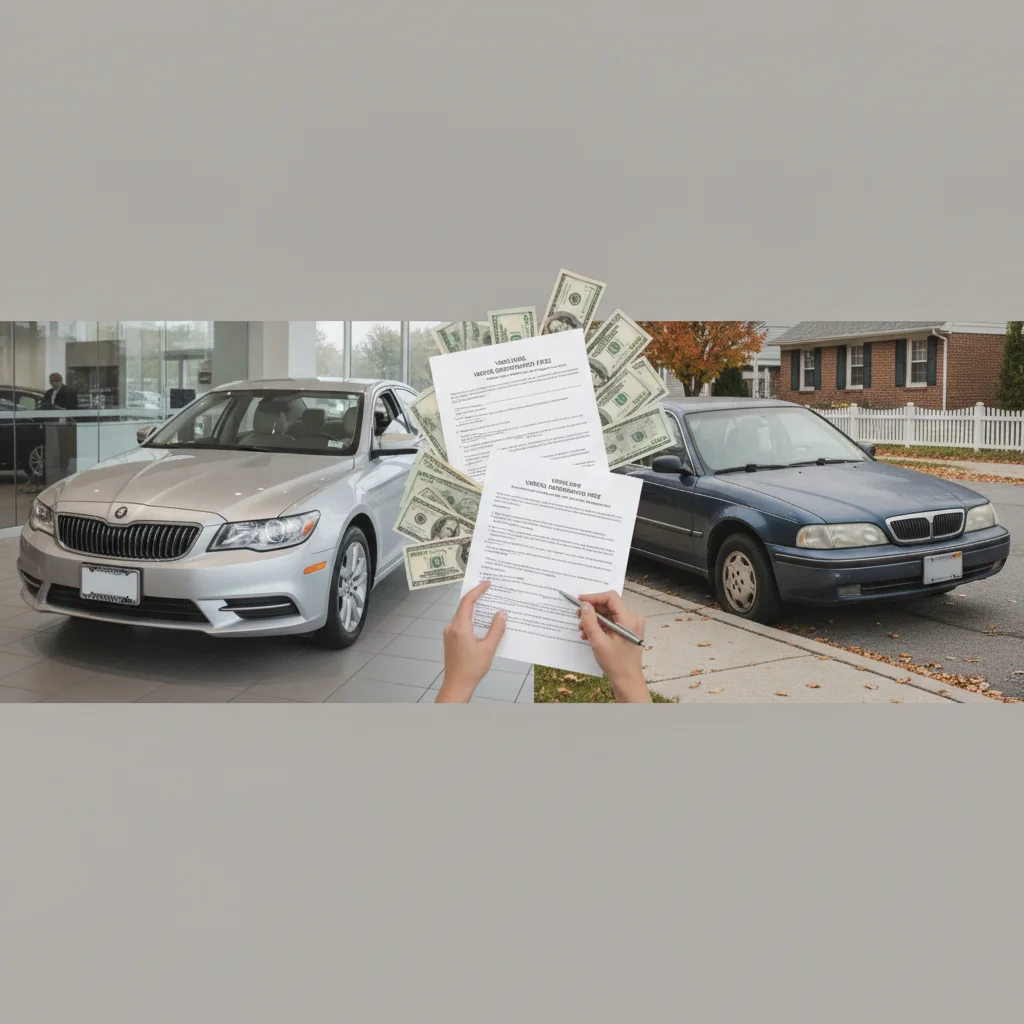
The reason comes down to how most states calculate what you owe. In many states, the annual registration fee is tied directly to the assessed value of your vehicle. A new $42,000 SUV carries a much higher government-assessed value than a four-year-old version of the same model, so the fee is correspondingly higher — often by hundreds of dollars per year in the early years of ownership.
Think of it like a sliding scale that resets every year. The new-car buyer starts at the top of that scale. The used-car buyer steps onto it somewhere in the middle. Over a full ownership period — say seven years — the new-car buyer pays for those steep early years while the used-car buyer skips them entirely.
For a deeper look at how these costs accumulate from the moment you drive off the lot, see the full lifetime cost of registering a car. This article focuses specifically on how the two purchasing paths diverge and what that means for your wallet over time.

How States Calculate Registration Fees: The Foundation of the Comparison
Before you can compare new versus used registration costs, you need to understand that states use fundamentally different formulas. There are four broad categories:
Ad Valorem (Value-Based) States
States like California, Virginia, Georgia, and Arizona calculate a significant portion of your registration fee as a percentage of your car's current market value or a state-assigned depreciated value. In these states, a new car's higher value translates directly into a higher annual fee — and that fee drops year after year as the vehicle depreciates.
California's Vehicle License Fee (VLF), for example, starts at 0.65% of the vehicle's purchase price in year one and follows a defined depreciation schedule through year 11 and beyond. On a $40,000 vehicle, that's $260 in year one just for the VLF component — before you add base registration fees, county fees, and other surcharges.
Weight-Based States
States like Montana and Idaho anchor fees primarily to the vehicle's weight or Gross Vehicle Weight Rating (GVWR). Because a new and used version of the same model weigh the same, the new-vs-used fee gap is much smaller in these states. How vehicle weight affects your registration fee explains this formula in detail.
Flat-Fee States
A handful of states — including Arizona for certain fee components and parts of the Midwest — charge fixed annual amounts regardless of value or weight. Here, a new Cadillac Escalade might cost the same to register as a ten-year-old Honda Civic. The new-vs-used registration gap effectively disappears.
Age-Based States
Some states use the vehicle's model year as the primary driver. Newer cars pay more; older cars pay less. This creates a sliding scale similar to value-based systems but tied to calendar age rather than market value. As annual registration renewal changes explains, the interplay between age, value, and local levies varies significantly by jurisdiction.
0.65%
California VLF rate in year one
California's Vehicle License Fee starts at 0.65% of purchase price in year one, dropping on a defined schedule — meaning a $40,000 car costs $260 in VLF alone before other fees.
$1,500–$1,800
Avg. 7-year registration gap, new vs. used
In a mid-Atlantic ad valorem state on a $35,000 midsize sedan, the cumulative registration and property fee difference between buying new vs. 3-year-old used is estimated at $1,500–$1,800.
$200+
Annual EV registration surcharge (some states)
Several states now levy flat annual EV surcharges exceeding $200 to compensate for lost gas tax revenue, applying equally to new and used electric vehicle owners.
4%
Virginia personal property tax rate on vehicles
Virginia localities typically assess personal property tax at around 4% of NADA clean loan value annually, making it one of the most value-sensitive registration environments in the country.
~$30–$500+
Annual registration fee range across U.S. states
Base annual registration fees (excluding property taxes and local levies) vary enormously by state, from under $30 in some states to well over $500 in states with value or weight add-ons.
Running the Numbers: A Side-by-Side Ownership Scenario
Let's ground this in a concrete example. Assume two buyers in a value-based state — we'll use a model similar to Virginia's structure — each planning to own a midsize sedan for seven years. Buyer A purchases a new $35,000 sedan in 2024. Buyer B purchases a three-year-old version of the same car for $22,000 in 2024.
Virginia charges a personal property tax on vehicles annually based on assessed value, typically around 4% of NADA clean loan value. Registration fees themselves run roughly $40–$50 per year as a base. The real cost driver is that personal property tax, which follows the depreciation schedule of the vehicle.
- Year 1 (new car owner): Assessed at $35,000 → ~$1,400 in property tax + ~$45 base registration = ~$1,445
- Year 1 (used car owner, buying a 3-year-old vehicle assessed at ~$22,000): ~$880 + $45 = ~$925
- Seven-year cumulative difference: The new-car buyer pays those elevated early years; the used buyer enters at year four of the depreciation curve and exits at year ten, where fees are modest for both.
Running all seven years through a standard depreciation schedule, the new-car buyer would pay approximately $4,800–$5,400 in combined registration and property fees. The used-car buyer, entering mid-curve, pays approximately $3,200–$3,800 over the same seven calendar years. That's a gap of roughly $1,500 to $1,800 — a number most buyers never see coming.
| Criteria | Buying New | Buying Used (3–4 Years Old) | |
|---|---|---|---|
| Year-1 registration cost (value-based state) | Highest — based on full purchase price | Moderate — mid-depreciation curve | |
| Cumulative 7-year fees (ad valorem state) | $4,800–$5,400 (example range) | $3,200–$3,800 (example range) | |
| Flat-fee state impact | Same as used — value doesn't matter | Same as new — no advantage | |
| Fee trajectory over ownership | Starts high, declines steeply | Starts moderate, declines slowly | |
| Federal tax deductibility (value portion) | Higher deductible amount early on | Lower deductible amount throughout | |
| Title/transfer fee at purchase | Standard new-car title fee | Transfer fee applies; varies by state | |
| EV surcharge exposure | Applies if buying new EV | Applies if buying used EV — same amount | |
| Best scenario for buyer | Flat-fee states; 10+ year ownership | Ad valorem states; 5–8 year ownership |
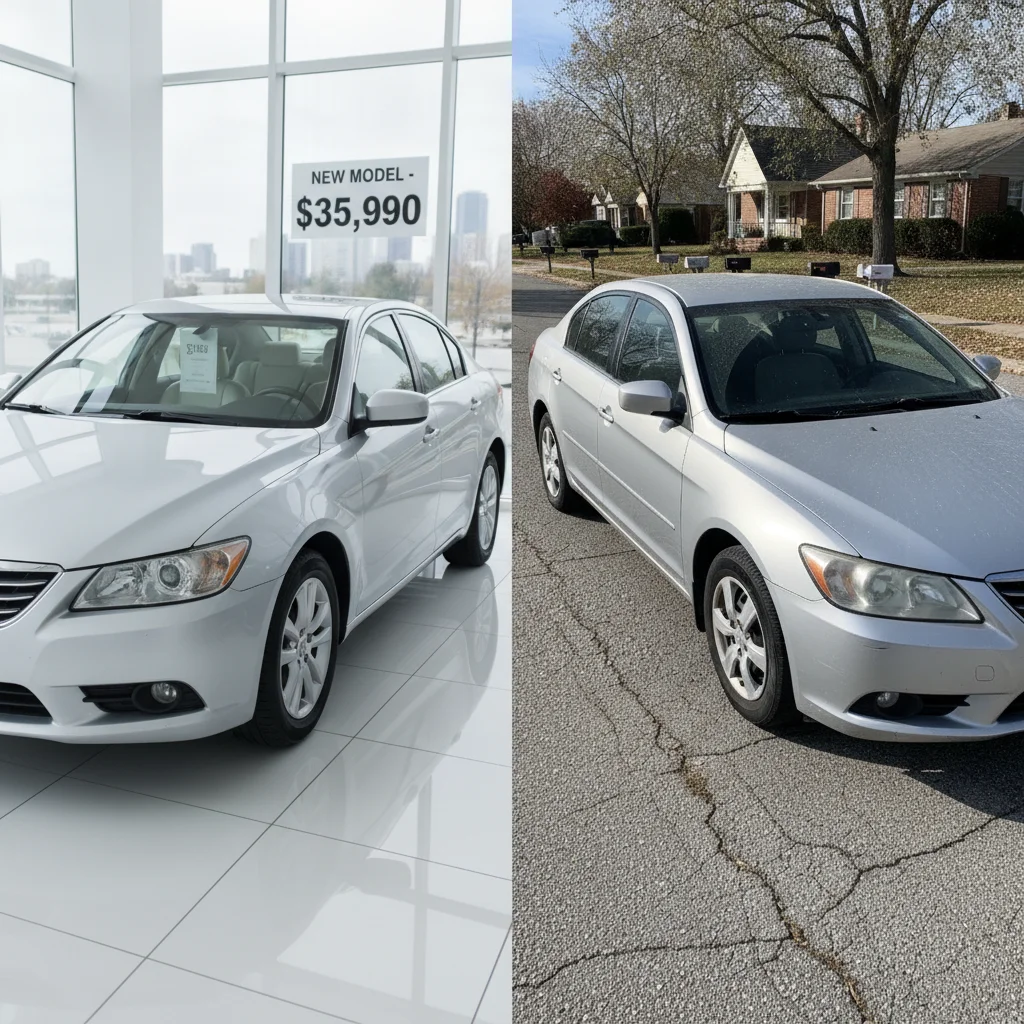
Keep in mind that these numbers vary significantly by state. States with the lowest and highest annual registration costs shows just how wide that range can be — from under $30 a year in some states to over $500 before property taxes are even considered.
Where the Used-Car Advantage Is Largest — and Where It Shrinks
The used-car registration advantage is not uniform. Several factors determine how much it matters in your specific situation.
State Fee Structure Is the Biggest Variable
In ad valorem states — particularly those with both a value-based registration component and a separate personal property or excise tax — the advantage of buying used can be dramatic. Virginia, Georgia, and Connecticut buyers see steep year-one and year-two fees that drop sharply over time. Skipping those years by buying used is a meaningful financial benefit.
In flat-fee states, the advantage narrows to near zero. If your state charges every car owner $75 per year regardless of value or age, buying new versus used makes no difference on the registration line of your budget.
Vehicle Type Matters
Luxury vehicles, trucks, and SUVs have higher starting values, so value-based states extract more from their owners in the early years. A new $70,000 pickup truck in a state that charges 1.5% of value annually produces a $1,050 first-year registration component alone. Buying that same truck three years used at $45,000 drops the same calculation to $675. On a volume truck like the F-150, that gap compounds meaningfully over seven years.
Electric vehicles add another wrinkle. Many states are imposing flat annual EV surcharges — ranging from $50 to over $200 — to compensate for lost gas tax revenue. These fees apply regardless of vehicle age or value, affecting new and used EV buyers similarly. See electric vehicle registration fees vs. gas car fees for a full breakdown by state.
How Long You Plan to Own
The new-car registration disadvantage is entirely front-loaded. In the first three to four years of ownership, fees are high and declining rapidly. By years seven through ten, a new car's fees have often converged with what a used buyer would have paid had they purchased the same vehicle at age three or four. Buyers who plan to keep a new car for 12 or 15 years may find the cumulative gap is much smaller than it appears when looking only at year one.
Check Your State's Depreciation Schedule Before You Buy
Most states that use value-based registration fees publish a depreciation schedule that shows exactly how the assessed value of a vehicle declines year by year. Your state DMV website often includes a fee estimator tool where you can enter a VIN or model year and get a projected annual fee. Running this calculation for both the new vehicle you're considering and a three-year-old equivalent takes less than ten minutes and can reveal a multi-year cost difference you'd otherwise never see until the bill arrives.
Track the Value-Based Portion for Tax Purposes
If you itemize deductions on your federal tax return, keep a copy of each year's registration notice and identify the portion explicitly tied to vehicle value. This is the only portion eligible for deduction as a personal property tax under IRS rules. Many state DMV renewal notices separate this out as a distinct line item — look for terms like 'vehicle license fee,' 'ad valorem tax,' or 'assessed value fee.' Do not attempt to deduct flat fees, weight-based charges, or administrative costs.
Hidden Layers That Affect Both New and Used Buyers
Registration fee comparisons become more complex once you factor in the additional charges that sit on top of the base and value-driven components.
Local and County Levies
Many states allow counties or municipalities to add their own fees on top of the state registration charge. In California, county fees can range from $1 to over $30 per year and are generally flat regardless of vehicle value. In some Colorado counties, an ownership tax adds a significant percentage of vehicle value annually. These local layers can tip the math in either direction depending on where you live.
Transfer and Title Fees at Purchase
Used-car buyers face a title transfer fee and sometimes a dealer documentation fee that new-car buyers also pay. These are one-time costs, but they belong in a complete comparison. Typical title transfer fees range from $15 in states like Arizona to over $100 in states like Wyoming. These don't change the year-over-year registration picture, but they do affect the total cost of ownership calculation. See car buying paperwork and contracts for a full picture of closing fees on a purchase.
Smog, Inspection, and Emissions Fees
Some states require annual or biennial smog checks or safety inspections, with associated fees. These are typically flat amounts — around $20 to $50 — but they apply to both new and used vehicles similarly after the first year or two.
Late Fees and Penalties
Missing a renewal deadline costs money regardless of whether you drive new or used. Penalties typically run 10–25% of the base fee and can snowball if you're driving on expired tags for more than a month. This isn't a new-vs-used issue per se, but it is part of the real-world cost picture that buyers should build into their mental model of ownership expenses.
Don't Underestimate Local Add-On Fees
Many buyers focus only on the state-level registration fee and forget that counties, cities, and regional transportation authorities can pile on additional charges. In some California counties, a combination of local fees, smog abatement charges, and county service fees can add $50 to $100 to the annual bill — flat amounts that don't appear in most online fee calculators. Always use your specific county's DMV fee estimator rather than a state-level average, especially in high-cost metropolitan areas.
Late Registration Penalties Apply to Both New and Used
Whether you're driving a new car still on dealer plates or a used car you just purchased, missing your registration renewal deadline triggers penalties that typically range from 10% to 25% of the base fee. In some states, driving on expired registration for more than 60 days can result in additional fines at the point of being pulled over. Set a calendar reminder at least 30 days before your renewal due date — the savings from avoiding one late penalty can cover multiple years of the new-vs-used registration difference.

Tax Deductibility: Does It Change the Comparison?
One factor that slightly tilts the math back toward new-car buyers in value-based states is federal tax deductibility. Under IRS rules, the portion of your annual registration fee that is based on the value of your vehicle — not flat fees or weight-based charges — may be deductible as a personal property tax if you itemize deductions on Schedule A.
Because new cars generate higher value-based fees, new-car owners in ad valorem states typically have a larger deductible amount in the early years. If you're in a 22% marginal tax bracket and paid $800 in deductible value-based registration fees, your after-tax cost drops by $176. That's not nothing — but it doesn't close the gap created by several thousand dollars of higher cumulative fees paid over three to four years.
The deduction is also only available to those who itemize, and the 2017 Tax Cuts and Jobs Act raised the standard deduction substantially, meaning fewer taxpayers itemize today than before. For most buyers, the deductibility advantage is theoretical rather than real. See whether you can deduct vehicle registration fees for the full rules and eligibility requirements.
For new-car buyers who do itemize, it's worth tracking the exact value-based component of each year's registration — your state DMV website or the renewal notice itself will often break this out as a separate line item.
Putting Registration Fees in Context With Total Ownership Costs
Registration fees are one chapter in a longer financial story. They rarely represent the largest ownership cost — that title usually goes to depreciation, financing charges, or insurance — but they are reliably recurring, government-mandated, and non-negotiable. Unlike maintenance costs, which you can sometimes defer, or insurance, which you can shop competitively, registration fees are what they are.
The smart move is to factor them into your total cost of ownership calculation before you commit to a vehicle. A buyer choosing between a $28,000 new compact and a $19,000 three-year-old version of the same car in a value-based state should add $1,200 to $1,800 to the new car's seven-year cost — not to the purchase price comparison, but to the running total of what ownership actually costs.
For the new car's first-year picture specifically, the true cost of owning a new car in year one is essential reading. And for the used side of the ledger, the real cost of owning a used car beyond the sticker price covers how registration, insurance, and maintenance interact across the full ownership window.
One edge case worth noting: if you're looking at a vehicle old enough to qualify for antique or classic car registration status — typically 25 years or older — the fee structure changes entirely. classic and antique car registration rules explains how specialty status can dramatically reduce ongoing registration costs, sometimes to nearly zero.

The bottom line: registration fees are a predictable, calculable cost. Unlike surprise repairs or rate hikes from your insurer, you can model them before you buy. Run the numbers for your state, your vehicle class, and your expected ownership period — and let that calculation inform your new-vs-used decision alongside everything else.

All claims are backed by peer-reviewed research. Sources on request.