Key Takeaways
Trip Chaining
Trip chaining means combining multiple errands or destinations into a single outing instead of making separate drives for each one. Rather than driving to the pharmacy, returning home, and then driving to the grocery store later, you handle both in one continuous trip. The result is fewer cold engine starts, less total distance driven, and noticeably less fuel consumed over a week.
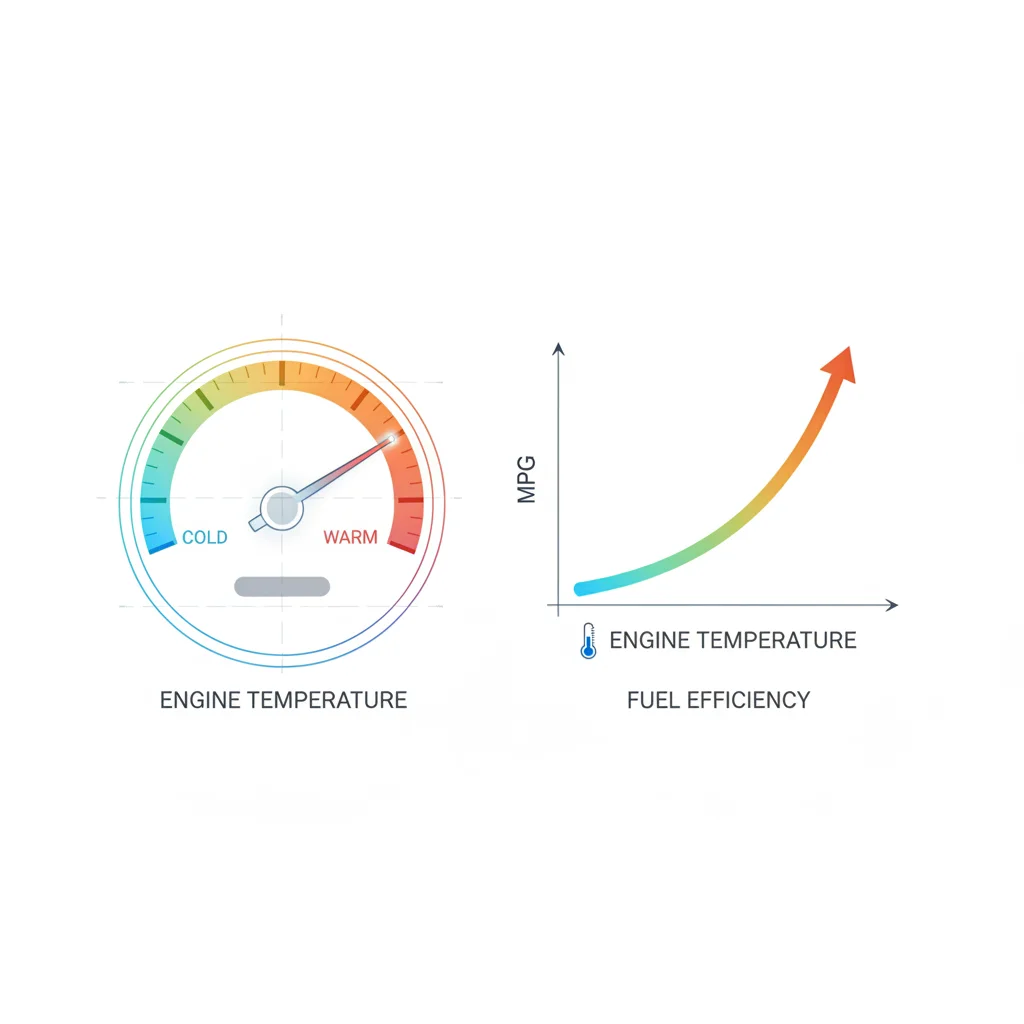
Each cold engine start forces the engine to operate in an open-loop fuel enrichment mode, during which the engine control unit (ECU) runs a richer air-fuel mixture until coolant temperature reaches roughly 160–200°F — a phase that can consume 20–40% more fuel per mile than a fully warmed engine.
Why Your Engine Hates Short, Separate Trips
Here's something most drivers don't think about: your car uses a disproportionate amount of fuel during the first two to four minutes of every drive. When you turn the key or press the start button from cold, the engine control unit triggers a fuel-rich warm-up cycle to protect engine components and allow for proper combustion before the catalytic converter reaches operating temperature.
During this warm-up window, your engine may be burning 20–40% more fuel per mile than it will once fully warm. If your errand only takes two miles each way, your engine might spend the entire trip in that inefficient warm-up state — and then you're doing it all over again an hour later when you head out for the next errand.
This is the core problem trip chaining solves. It's not about driving slower or accelerating more gently (though those habits help too — see our guide on driving habits that hurt fuel economy most for a full breakdown). Trip chaining is about reducing the number of times your engine has to start cold in the first place.
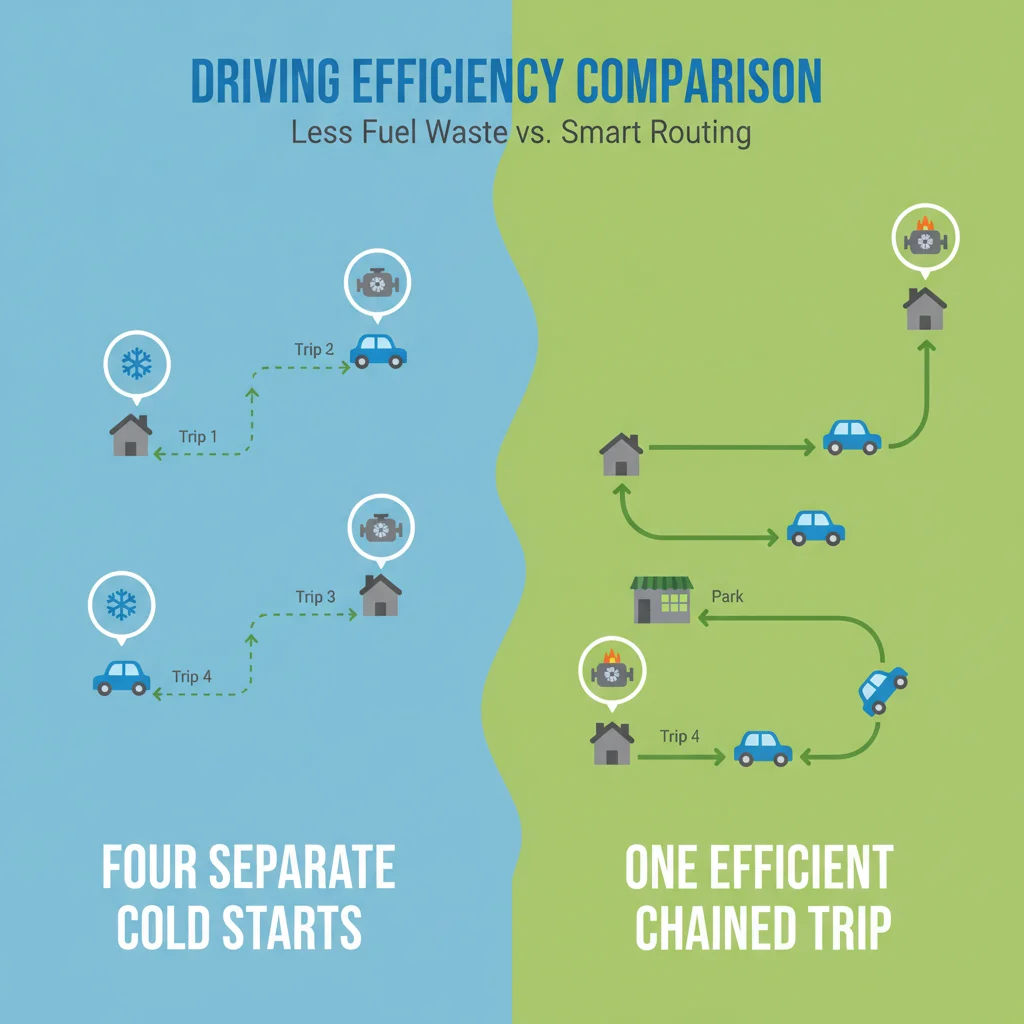
Think of it this way: an engine that starts once and stays warm for 45 minutes of errands is operating at full efficiency for the vast majority of that time. An engine that starts four times during those same 45 minutes — each time from cold — never really gets out of warm-up mode.
Cold Weather Makes This Even More Important
Engine warm-up time extends noticeably in cold temperatures. On a 20°F morning, it can take twice as long — and twice as many miles — for your engine to reach full operating temperature compared to a mild day. This means trip chaining delivers its largest fuel savings in fall and winter, exactly when gas budgets tend to tighten.
EVs Aren't Immune to Trip-Chaining Benefits
Fully electric vehicles don't have a traditional cold-start fuel penalty, but they do use energy to thermally condition the battery pack in cold weather. Multiple short trips in freezing temperatures each trigger this conditioning cycle. Chaining trips keeps the battery warm between stops, reducing the total energy spent on thermal management. It's a smaller effect than with gas engines, but still measurable.
The Math Behind Trip Chaining Savings
Let's put some real numbers on this. Say you drive a mid-size sedan that gets 28 MPG on a warm engine. During the cold-start warm-up phase, fuel economy might drop to around 18–20 MPG for the first mile or two. If you make four separate one-mile round trips throughout the day, every one of those trips runs almost entirely in the inefficient zone.
20–40%
Extra fuel burned during cold-engine warm-up
U.S. Department of Energy data indicates gasoline engines consume significantly more fuel per mile during the first few minutes of operation before reaching optimal temperature.
~2 miles
Distance before a typical engine fully warms up
For most 4-cylinder engines in moderate weather, the ECU exits open-loop fuel enrichment mode within the first one to two miles of driving.
1–3 gal
Estimated weekly fuel savings from trip chaining
Based on eliminating three to five unnecessary cold starts per week in a typical household with a mid-size gas-powered vehicle.
$170–$425
Potential annual fuel savings per vehicle
Calculated using average U.S. gas price of approximately $3.40/gallon and consistent weekly trip chaining that eliminates 50–125 cold starts per year.
10–15
Average weekly driving trips per U.S. household
Federal Highway Administration travel data shows most households make numerous short vehicle trips, many of which could be combined through deliberate trip chaining.
Compare that to a single chained trip that covers the same four stops in sequence. Your engine is cold for the first leg only. By the time you reach stop two, you're running at or near full operating temperature. Stops three and four cost you almost nothing in warm-up fuel.
Across a week, the average American household makes around 10 to 15 short driving trips. If five of those could be combined into two chained outings, you've potentially eliminated three to five cold starts. At a rough saving of 0.3 to 0.5 gallons per avoided cold start (for a typical 4-cylinder engine), that's 1 to 2.5 gallons saved per week without driving anywhere new.
At current average gas prices hovering around $3.40 per gallon, that works out to roughly $170 to $425 per year in fuel savings — just from rethinking when and how you leave the house.
“Short-trip driving is the most inefficient type of personal vehicle use. The warm-up phase imposes a fuel cost that's essentially fixed per trip — the only way to amortize it is to make fewer, longer trips.”
— John German, Senior Fellow, International Council on Clean Transportation
How to Plan an Efficient Trip Chain
Trip chaining doesn't require a spreadsheet or an app — just a few minutes of thinking before you pull out of the driveway. Here's what actually makes a difference:
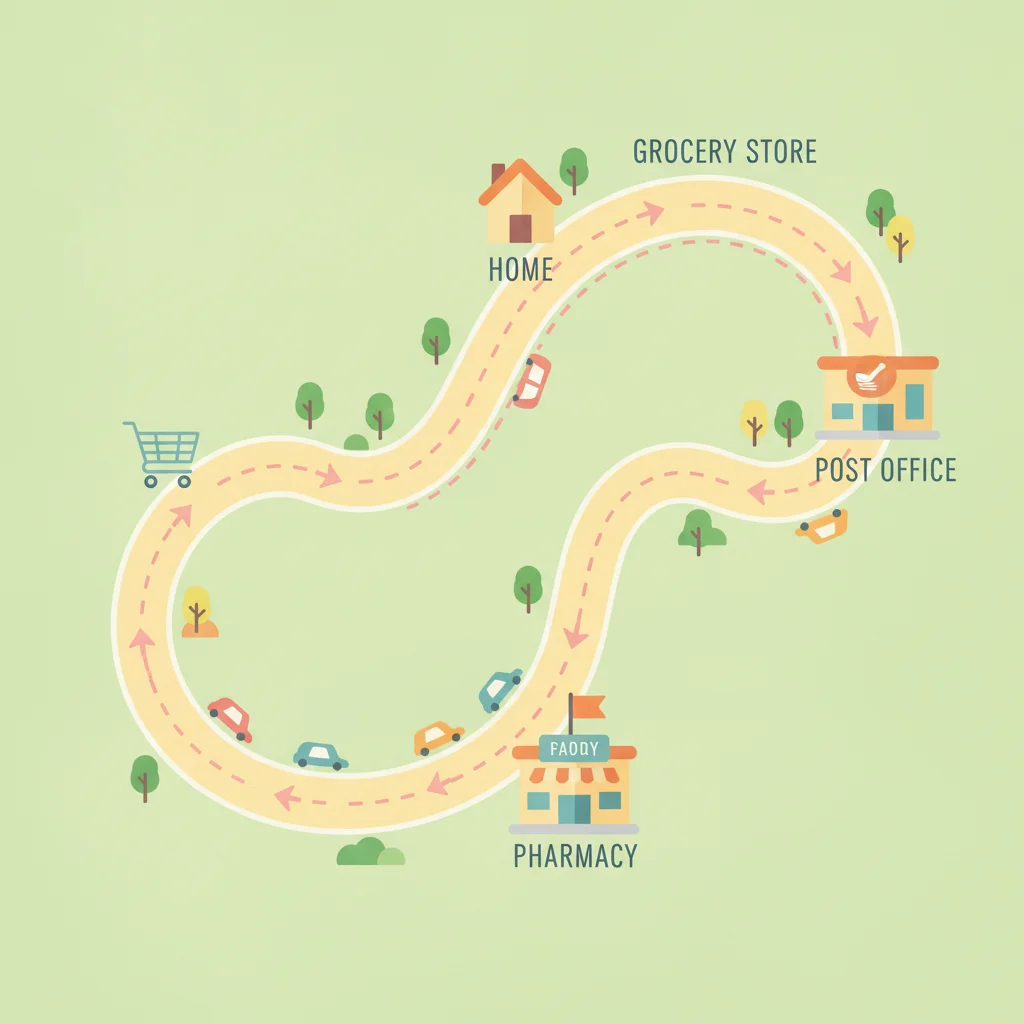
Map a loop, not an out-and-back
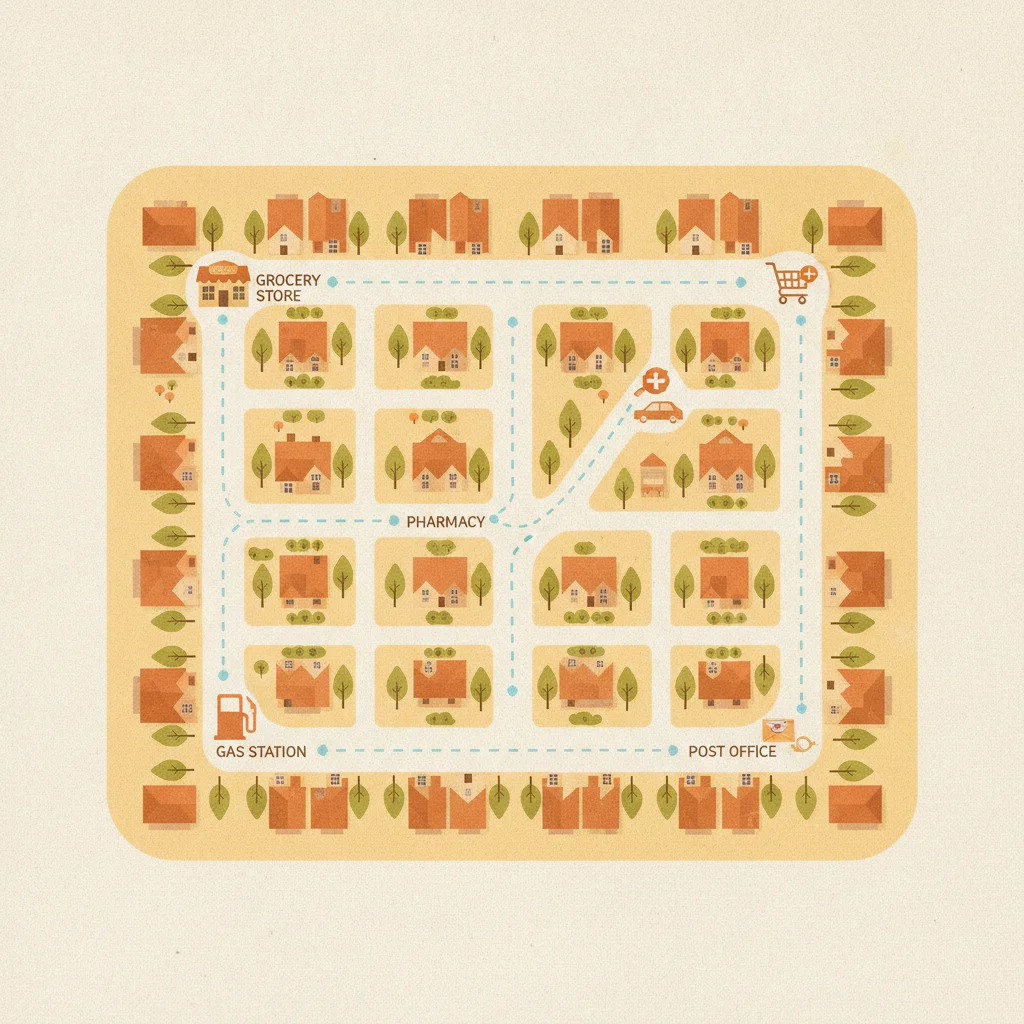
The least efficient route is one where you drive to a destination and retrace your path home before heading out again. The most efficient is a loop — starting from home, hitting stops in a rough circle, and returning home from the last stop. This minimizes total distance while keeping your engine warm the whole time.
Put the farthest stop first
Lead with your most distant destination. This accomplishes two things: it gets your engine fully warmed up on the longer first leg, and every subsequent shorter stop benefits from a fully warm engine. Reversing this order — starting with a nearby stop and ending far out — means your engine is cold for the first segment and you still face a long drive home at the end.
Group stops by proximity, not by priority
It's tempting to sequence errands by how urgently you need each item. Instead, group them by location. If the pharmacy and the dry cleaner are on the same block, handle them together even if the dry cleaner isn't urgent. You'll pass by anyway — there's no reason to make a separate trip later.
Time your outing strategically
If you're already driving somewhere — dropping kids at school, commuting to work — tack on an errand at the end of that trip rather than making a separate one later. Your engine is already warm, so you're paying no warm-up cost at all.
Attach Errands to Existing Hot-Engine Trips
The cheapest errand in fuel terms is one you run immediately after arriving somewhere — when your engine is still fully warm. A stop on the way home from work, or a quick detour after dropping someone off, carries almost no additional warm-up cost. Train yourself to scan your errand list every time you're already out driving.
Keep a Rolling Errand List Somewhere Visible
The biggest barrier to trip chaining isn't motivation — it's forgetting what you need until after you've already returned home. A simple list on your phone or a notepad on the fridge means you always know what can be batched next time you head out. Review it before every outing.
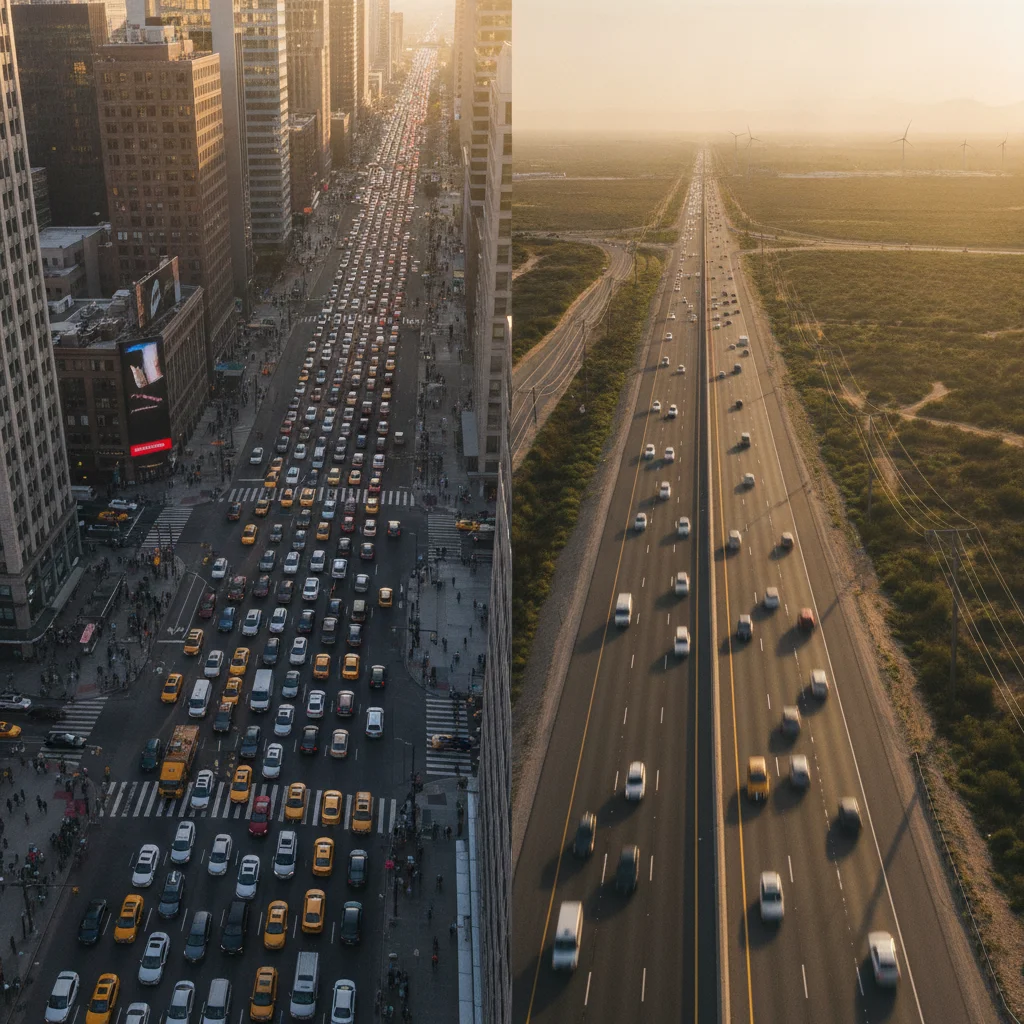
Understanding how your car handles city-style stop-and-go travel also matters here. Our article on city driving vs. highway driving fuel use explains why short urban trips burn fuel so differently from sustained highway speeds — context that helps you prioritize which errands to chain first.
Real-World Scenarios Where Trip Chaining Works Best
Trip chaining isn't a one-size-fits-all concept. It pays off most in specific situations — and recognizing them helps you capture savings that are easy to miss.
Notice that in each of these cases, the core move is the same: instead of reacting to each errand as it comes up and making individual trips, you batch them deliberately. The engine warms up once, does its work, and you're done.
What Trip Chaining Won't Fix (And What Else to Try)
Trip chaining is one of the most effective low-effort fuel-saving habits, but it works best as part of a broader approach to efficiency. There are a few things worth keeping in mind:
Maintenance matters alongside planning
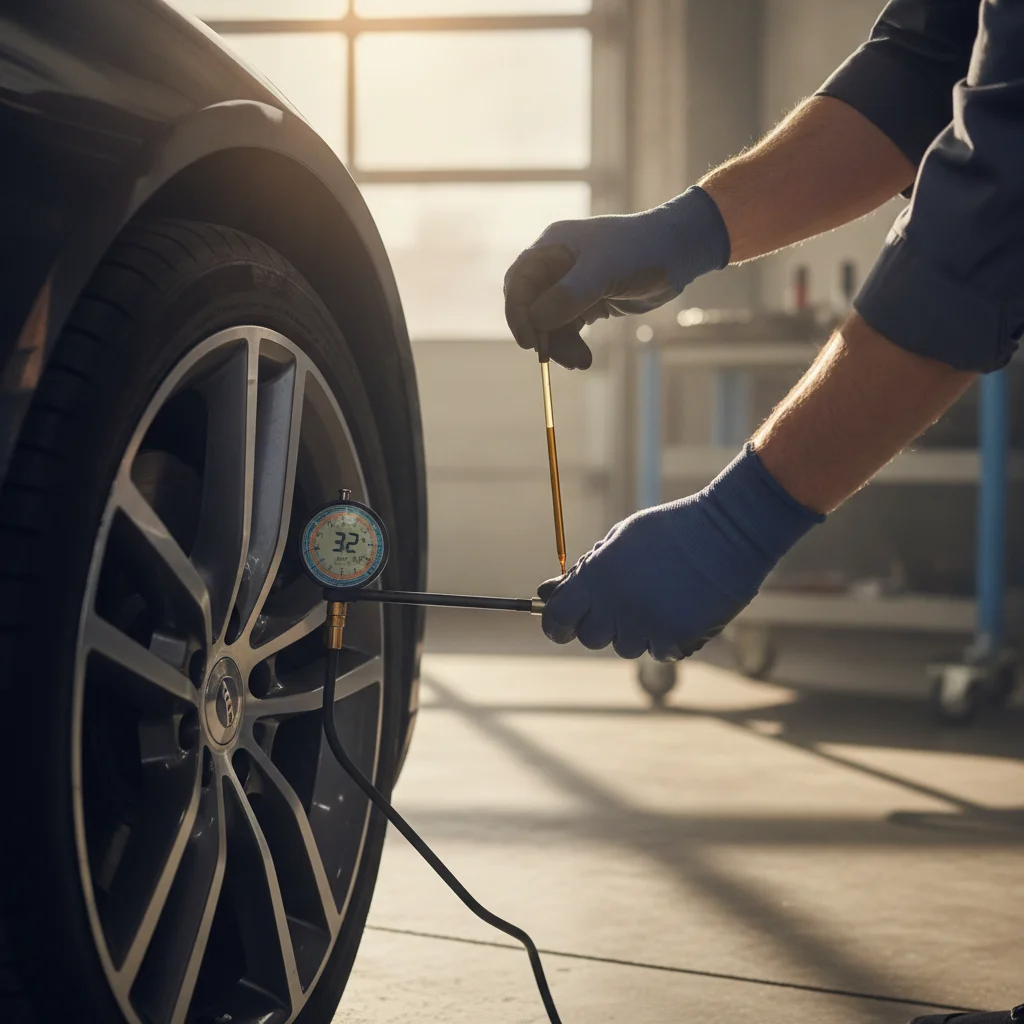
A well-chained trip still suffers if your tire pressure is low, your air filter is clogged, or your spark plugs are overdue. These mechanical factors can quietly drag down your real-world MPG by 5–15%. Our guide on maintenance tasks that impact fuel economy covers which service items make the biggest difference at the pump.
Driving style still matters inside the chain
Combining errands into one trip is smart, but if you're accelerating aggressively between stops and braking hard, you're giving back some of what trip chaining saved. Smooth inputs — gradual acceleration, coasting to stops — compound the benefit of a warm engine.
Highway trips follow different rules
Trip chaining delivers its biggest savings on short, urban-style trips where cold starts are frequent. On highway drives, your engine warms up quickly and sustains that warmth for miles — so the cold-start penalty is less pronounced. For highway efficiency, techniques like speed management and load reduction matter more. See our road trip fuel economy guide for the full picture.
Your car's own systems are working with you
Modern engines are designed with efficiency technologies — fuel injection mapping, variable valve timing, start-stop systems — that all function better when the engine is properly warmed. Trip chaining lets those systems do their job. If you want to understand exactly how these systems work and how to get the most from them, understanding your car's fuel systems is worth a read.
Cold Weather Makes This Even More Important
Engine warm-up time extends noticeably in cold temperatures. On a 20°F morning, it can take twice as long — and twice as many miles — for your engine to reach full operating temperature compared to a mild day. This means trip chaining delivers its largest fuel savings in fall and winter, exactly when gas budgets tend to tighten.
EVs Aren't Immune to Trip-Chaining Benefits
Fully electric vehicles don't have a traditional cold-start fuel penalty, but they do use energy to thermally condition the battery pack in cold weather. Multiple short trips in freezing temperatures each trigger this conditioning cycle. Chaining trips keeps the battery warm between stops, reducing the total energy spent on thermal management. It's a smaller effect than with gas engines, but still measurable.
Building Trip Chaining Into Your Weekly Routine
The easiest way to make trip chaining a habit is to give yourself one simple rule: never leave the house for a single errand if there's another one you could reasonably do on the same outing. That's it. No apps, no tracking, no complicated planning.
A few practical ways to make it stick:
- Keep a running errand list. A note on your phone or a sticky on the fridge captures tasks as they come up, so when you do head out, you already have a list ready to chain.
- Designate errand days. Rather than handling tasks as they come up throughout the week, consolidate most of your errands into one or two outings. This is trip chaining at the weekly planning level.
- Piggyback on existing commitments. Appointments, school pickup, gym visits — these are guaranteed warm-engine trips. Anything you can attach to them costs zero additional warm-up fuel.
- Think about return-trip stops. Gas station on the way home from work? Pharmacy two blocks off your usual commute route? These are essentially free stops in fuel terms.
Attach Errands to Existing Hot-Engine Trips
The cheapest errand in fuel terms is one you run immediately after arriving somewhere — when your engine is still fully warm. A stop on the way home from work, or a quick detour after dropping someone off, carries almost no additional warm-up cost. Train yourself to scan your errand list every time you're already out driving.
Keep a Rolling Errand List Somewhere Visible
The biggest barrier to trip chaining isn't motivation — it's forgetting what you need until after you've already returned home. A simple list on your phone or a notepad on the fridge means you always know what can be batched next time you head out. Review it before every outing.
The beauty of this habit is that it doesn't ask you to change how you drive or give up any convenience. You're going to all the same places — you're just going there smarter. Over weeks and months, the gallons and dollars add up in ways that feel almost effortless.
And if you want to push efficiency further, pairing trip chaining with smarter cruise control use on any highway segments of your chained trips closes the loop on nearly every major fuel-saving opportunity available to the average driver.

All claims are backed by peer-reviewed research. Sources on request.