Key Takeaways
Why Cruise Control and Fuel Economy Aren't the Same Thing
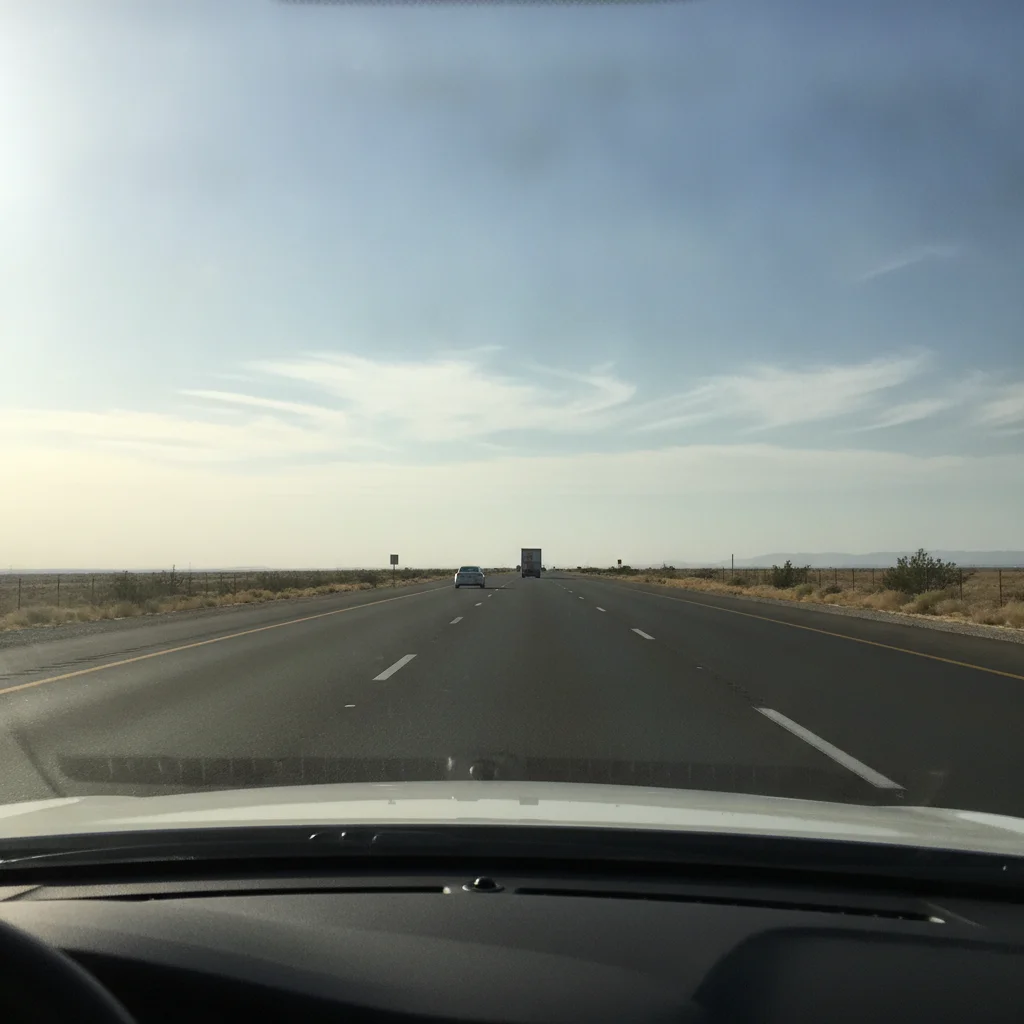
Most drivers assume cruise control is automatically good for gas mileage — and on a flat, uncongested highway, that's true. But it's a more nuanced tool than its reputation suggests, and using it without thinking about the terrain can quietly cost you money at the pump.
The core benefit of cruise control is consistency. When a person drives manually, throttle input tends to wander — speed drifts up and down by a few miles per hour without the driver even noticing. Each of those small accelerations burns extra fuel. Cruise control holds a steady speed and eliminates that drift, which is why it genuinely helps on long, flat stretches.
The catch is that cruise control is programmed to maintain a set speed no matter what. When a hill appears, the system floors the throttle to keep the number on the speedometer locked in. A human driver instinctively lets the car slow slightly going uphill and recover on the downside — cruise control doesn't do that unless you train it to. Understanding this distinction is the first step toward using the feature smarter.
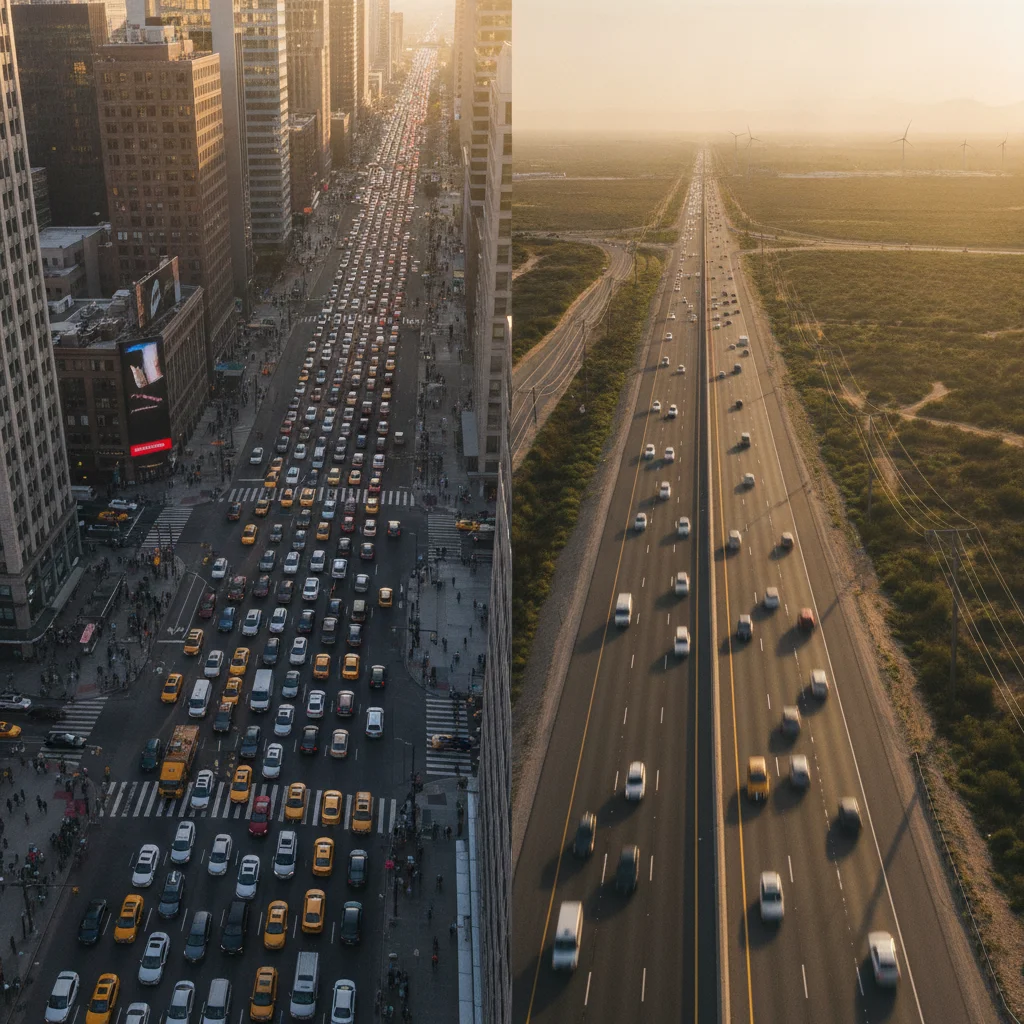
For a broader look at where fuel actually disappears on different road types, see City Driving vs. Highway Driving: Where Your Fuel Actually Goes.
The Best Conditions for Cruise Control
Knowing when to reach for that cruise control button is as important as knowing how to use it. The feature earns its efficiency reputation under specific conditions, and those conditions are worth committing to memory.
Engage cruise control only on flat or gently rolling terrain with predictable, light traffic.
Cruise control eliminates the small, unconscious speed variations that occur with manual driving — but only if the road conditions don't force it to compensate aggressively. Flat terrain lets it do its job smoothly without large throttle inputs.
Disengage cruise control when approaching any significant uphill grade.
Cruise control will demand full throttle to maintain speed on a climb — a much larger fuel penalty than a human driver who naturally allows 3–5 mph of speed loss on the ascent. Manual management of hills can noticeably reduce fuel consumption on terrain-heavy routes.
Set your cruise control target speed at 65 mph or below whenever safe and legal to do so.
Aerodynamic drag grows exponentially with speed. Driving at 75 mph versus 65 mph can increase fuel consumption by 25% or more depending on the vehicle. Choosing a lower cruise speed is one of the highest-impact decisions you can make for efficiency.
Use cruise control to resist the temptation to match surrounding traffic speed when it creeps above your target.
Highway driving psychology pushes drivers to unconsciously match the speed of surrounding vehicles, even when that speed is higher than intended. Cruise control acts as a commitment device, holding you to a fuel-efficient target regardless of what traffic is doing.
Re-engage cruise control after a slowdown only once you have returned to highway speed smoothly.
Activating cruise control while still accelerating back to speed causes the system to apply aggressive throttle to hit its target quickly. Reaching your desired speed manually first, then engaging, results in a smoother and more fuel-efficient transition.
Plan your cruise control engagement and disengagement points ahead of time using visible terrain cues.
Reacting to hills and curves as they arrive puts you behind the situation. Looking a half-mile ahead and deciding when to disengage allows you to coast into a deceleration rather than brake hard — and coast down the other side rather than accelerate back unnecessarily.
When conditions are right — flat road, light traffic, mild weather — cruise control can improve fuel economy by 7–14% compared to unassisted driving on the same route, according to estimates from the U.S. Department of Energy. That's a real difference over the course of a long trip.
7–14%
Fuel savings from cruise control on flat highways
Estimated by the U.S. Department of Energy for cruise-controlled driving versus unassisted manual driving on flat terrain.
25–30%
Extra fuel cost driving 75 vs. 65 mph
Aerodynamic drag increases with the square of velocity; the U.S. DOE estimates fuel economy drops roughly 7–14% for every 5 mph above 50 mph.
3–5 mph
Natural speed float to allow on hills
Fuel-efficiency experts recommend allowing this window of speed variation on grades rather than forcing the throttle to hold a fixed number.
When to Turn Cruise Control Off
This is the part most guides skip over, and it's where a lot of unnecessary fuel gets burned. Cruise control has clear limits, and respecting those limits is what separates a driver who's genuinely optimizing from one who's just set-it-and-forget-it.
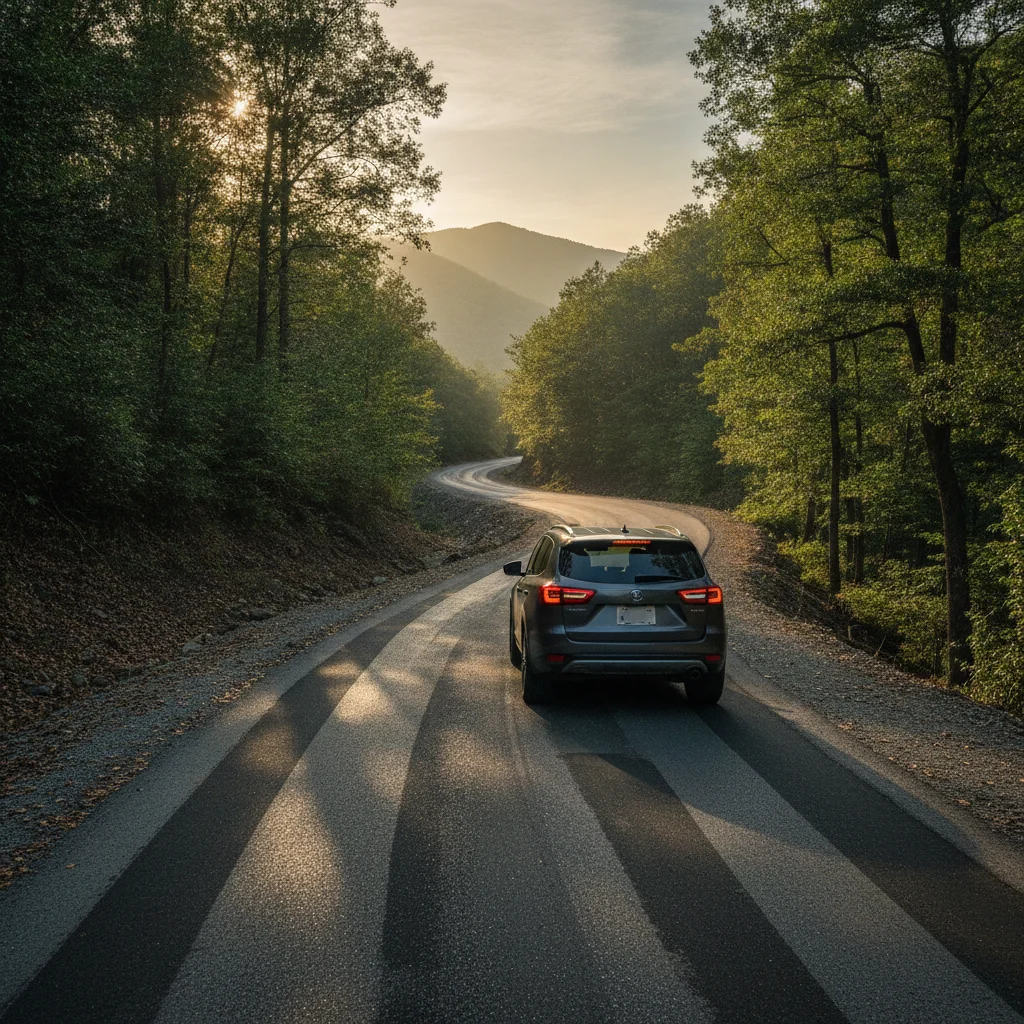
Rolling hills are the biggest culprit. A system trying to hold 65 mph on a 5% grade will open the throttle wide — sometimes downshifting in vehicles with automatic transmissions — to keep pace. The fuel penalty can be significant enough to negate all the gains from using cruise control in the first place. A better approach on hilly roads is to let your speed float naturally within a 5 mph window: allow the car to slow slightly climbing and recover momentum on the descent.
The 5 mph Float Rule for Hills
Many fuel-efficiency coaches recommend allowing your speed to drift up to 5 mph below your target on an ascent and recover naturally on the descent, rather than fighting to hold a fixed number. This technique — sometimes called 'pulse and glide lite' — works with your car's momentum rather than against it. It requires disengaging cruise and managing the throttle yourself, but the fuel savings on a hilly route can be significant.
Adaptive Cruise Control Varies Widely by Brand
Not all adaptive cruise control systems behave the same way. Some systems from Toyota, Honda, and certain European brands incorporate predictive coasting logic that uses GPS data to anticipate stops and reduce throttle early. Others simply react to what the radar sees in real time, resulting in more aggressive speed recovery after slowdowns. Checking your vehicle's documentation or a model-specific owner forum can tell you which type you have.
Heavy traffic is another situation where disengaging makes sense. Frequent speed changes triggered by surrounding vehicles mean cruise control is constantly hunting for its target speed — accelerating, backing off, accelerating again. Manual throttle control in traffic is almost always more efficient. For more on how hard braking compares with gentle coasting in fuel terms, see Coasting to a Stop vs. Hard Braking.
Adverse weather — rain, ice, snow — is a safety reason to disengage, not just an efficiency one. Cruise control can delay your reaction to a loss of traction.
Speed Selection: The Number That Matters Most
Even if you use cruise control perfectly — engaging it at the right time and on the right terrain — choosing the wrong target speed can wipe out much of the benefit. Aerodynamic drag increases with the square of velocity, which means driving at 75 mph doesn't just cost 15% more fuel than 65 mph; it can cost 25–30% more depending on the vehicle.
“The single easiest way to improve fuel economy on the highway is to slow down. The relationship between speed and drag is not linear — every mile per hour above 60 costs you more than the mile per hour before it.”
— David Greene, Senior Transportation Research Scientist, Oak Ridge National Laboratory
The sweet spot for most passenger vehicles sits between 55 and 65 mph. At those speeds, engine load, aerodynamic drag, and drivetrain efficiency tend to align well. Above 70 mph, the aerodynamic penalty accelerates sharply. Below 45 mph on a freeway, you're likely in a traffic pattern that makes cruise control counterproductive anyway.
Use Your Trip Computer as a Feedback Tool
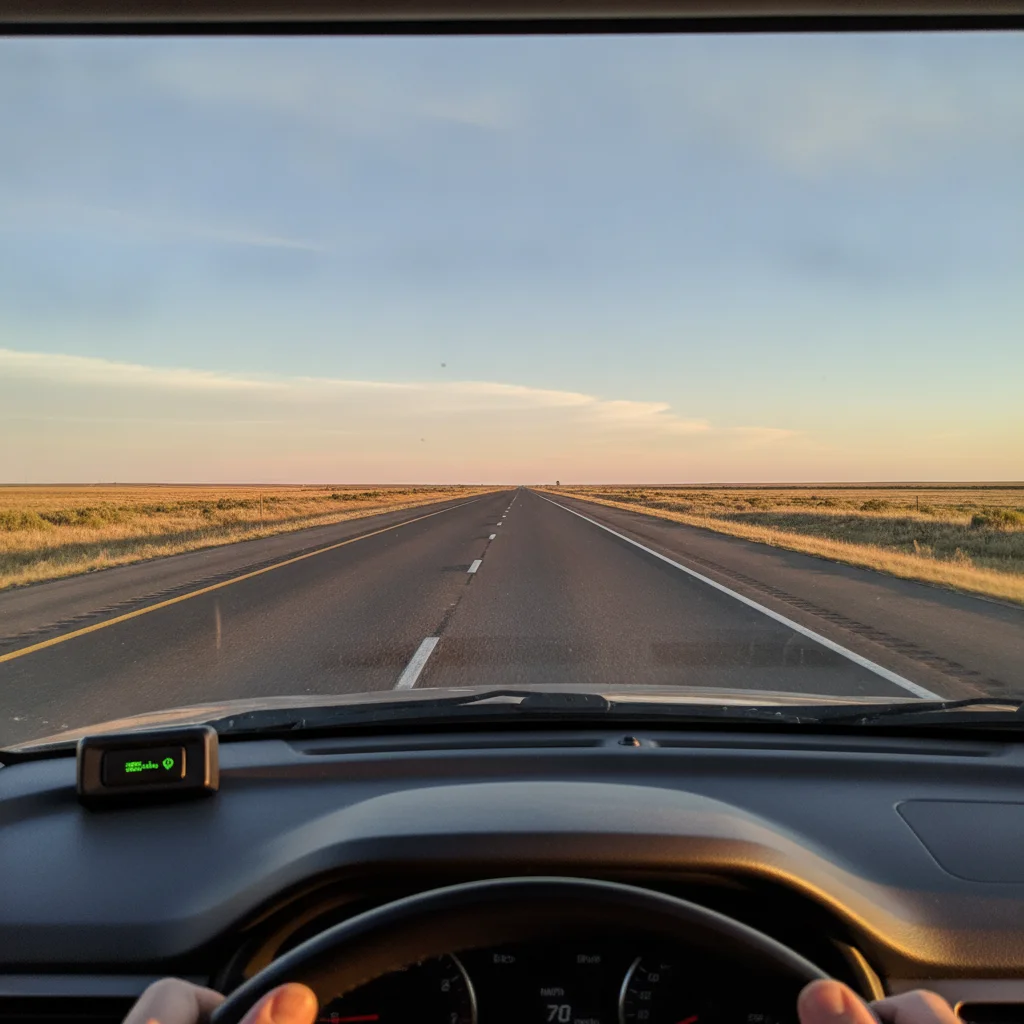
Most modern vehicles display real-time and average fuel economy on the instrument cluster. When experimenting with cruise control speed settings, use this readout to see immediate feedback. Try 65 mph for 20 miles, then 70 mph for 20 miles on a similar stretch, and compare the averages — the difference is often striking and convincing.
Setting cruise control at 62 mph instead of 72 on a 200-mile highway drive can translate to roughly 1.5 to 2 gallons of fuel saved — a meaningful difference if you're doing it consistently on every road trip. See Maximizing Fuel Economy on Long Road Trips for how speed, load, and route planning work together.
Adaptive Cruise Control: Smarter, But Not Always More Efficient
Adaptive cruise control (ACC) adds a radar or camera-based following system that automatically slows your car when traffic ahead slows and resumes speed when it clears. It's a genuine safety upgrade and a comfort feature on long trips — but it's worth understanding what it doesn't do for your fuel economy.
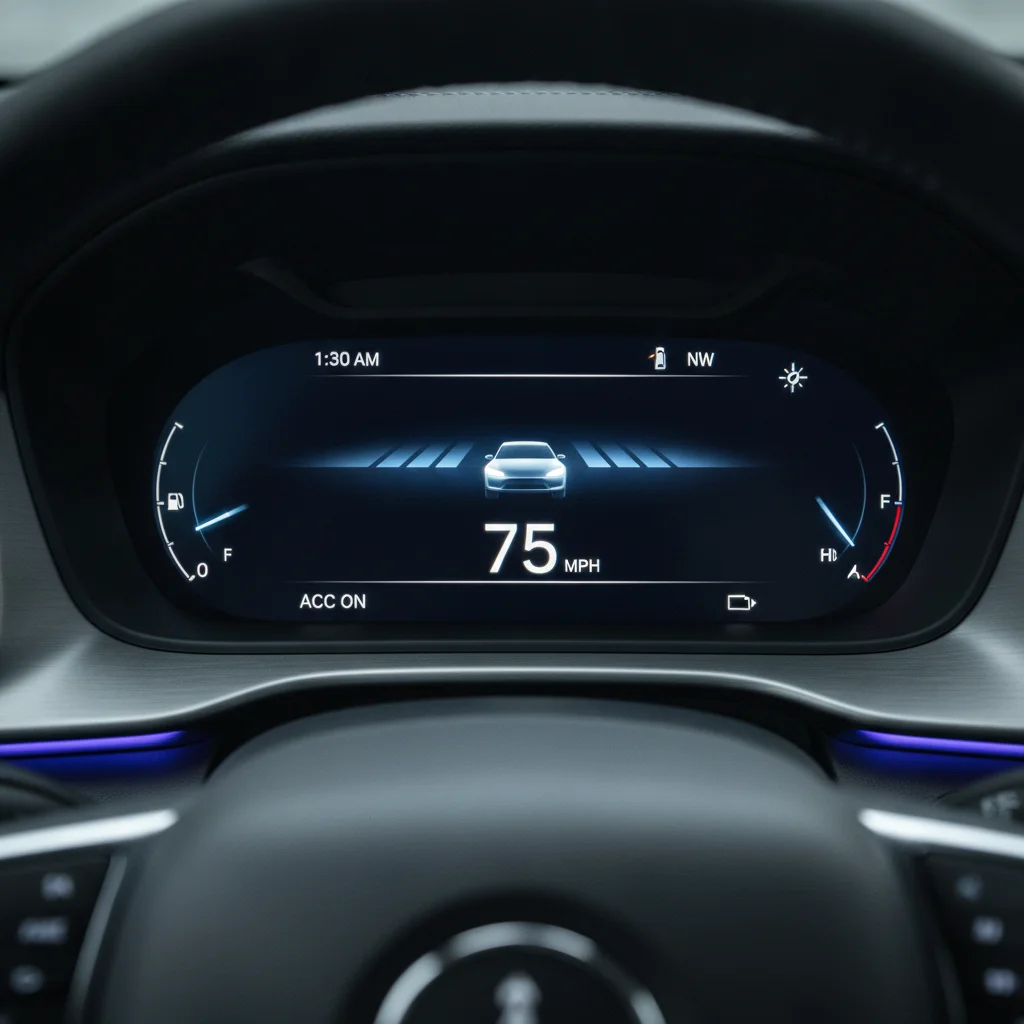
ACC systems are programmed to prioritize safe following distance and smooth traffic flow. They are not programmed to minimize throttle input. Depending on the system and brand, an ACC-equipped vehicle may accelerate back to its set speed more aggressively than a careful human driver would after a slowdown. That burst of acceleration costs fuel. Some newer systems — particularly in hybrid and electric vehicles — are beginning to incorporate predictive efficiency logic, but this varies widely by manufacturer and trim level.
The 5 mph Float Rule for Hills
Many fuel-efficiency coaches recommend allowing your speed to drift up to 5 mph below your target on an ascent and recover naturally on the descent, rather than fighting to hold a fixed number. This technique — sometimes called 'pulse and glide lite' — works with your car's momentum rather than against it. It requires disengaging cruise and managing the throttle yourself, but the fuel savings on a hilly route can be significant.
Adaptive Cruise Control Varies Widely by Brand
Not all adaptive cruise control systems behave the same way. Some systems from Toyota, Honda, and certain European brands incorporate predictive coasting logic that uses GPS data to anticipate stops and reduce throttle early. Others simply react to what the radar sees in real time, resulting in more aggressive speed recovery after slowdowns. Checking your vehicle's documentation or a model-specific owner forum can tell you which type you have.
If your vehicle has ACC, the most efficient approach is often to use it on open highways where its following logic rarely engages, while driving manually in moderate-traffic situations where you can coast and decelerate gradually rather than chase a speed target. Think of ACC as a fatigue-reduction tool first and a fuel-saving tool second.
Practical Habits That Amplify the Savings
Cruise control works best as part of a broader driving strategy, not as a standalone fix. A few complementary habits can meaningfully increase the fuel savings you get from using it correctly.
One habit worth building is anticipating your engagement and disengagement points before you get there. If you can see a significant hill a half-mile ahead, cancel cruise and manage the climb yourself. If you're approaching an interchange where traffic typically bunches, cancel early and coast rather than letting cruise hold speed until the last second.
These decisions, made consistently over a long trip, compound into real savings — and they make you a more engaged, safer driver in the process. For drivers who want to go further with efficiency, Hypermiling Techniques That Are Safe — and Some That Aren't covers a range of additional strategies, from sensible to ones you should probably skip.
Putting It Together: A Simple Decision Framework
You don't need to second-guess yourself at every mile marker. A simple mental framework covers the majority of situations you'll encounter on a highway drive.
- Flat, open road, light traffic: Engage cruise control. Set speed between 55–65 mph. Stay engaged.
- Rolling or significant hills: Disengage. Let speed float 3–5 mph naturally. Re-engage on the flat.
- Moderate to heavy traffic: Drive manually. Coast when you see slowdowns ahead. Avoid aggressive re-acceleration.
- Adverse weather: Disengage for safety. Smooth manual throttle input still helps economy, but safety comes first.
- Long descents: Disengage and let engine braking or light brake pressure manage speed. Don't let cruise accelerate to compensate for grade.
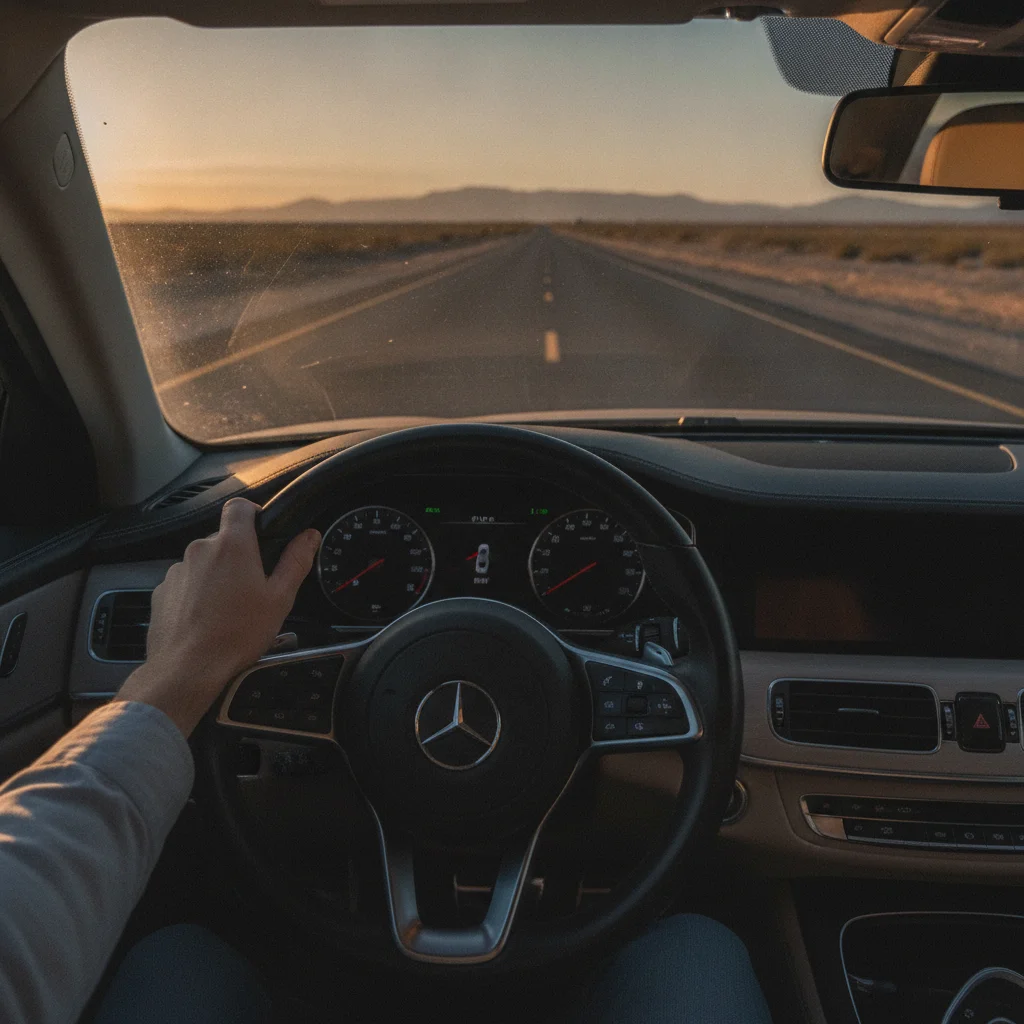
The goal isn't to have cruise control on as much as possible — it's to have it on when it's actually helping. Most experienced long-distance drivers develop a feel for this over time, toggling in and out based on what the road is doing ahead of them.
Pairing smarter cruise control use with other route-level efficiency habits — like trip chaining and consolidating errands — can produce cumulative savings well beyond what any single technique achieves alone. See Trip Chaining: The Driving Habit That Quietly Saves Gallons Per Week for a habit that works before you even get on the highway.

All claims are backed by peer-reviewed research. Sources on request.