Key Takeaways
Why Maintenance and Fuel Economy Are Inseparable
Most drivers think about fuel economy in terms of driving style — how hard they accelerate, how often they idle, how fast they cruise on the highway. Those habits matter, and you can explore them in detail in our guide to driving habits that hurt fuel economy most. But there's a quieter category of MPG loss that accumulates in the background, one service interval at a time: deferred or neglected maintenance.
Every component in your engine, drivetrain, and tire system is engineered to work within a specific range. When parts wear out, become contaminated, or fall outside spec, your engine burns more fuel to deliver the same result. The good news is that fixing most of these issues is straightforward, often inexpensive, and produces immediate, measurable gains at the pump.
The list below focuses on the maintenance tasks with the strongest, most documented impact on real-world fuel economy. These aren't marginal tweaks — they're the items worth prioritizing first, especially if your MPG has drifted noticeably lower than it used to be. If you're trying to understand exactly how much your efficiency has changed, pairing this guide with a solid fuel economy tracking method will help you see the results clearly.
The Top Maintenance Tasks for Better Fuel Economy
Correct Tire Pressure
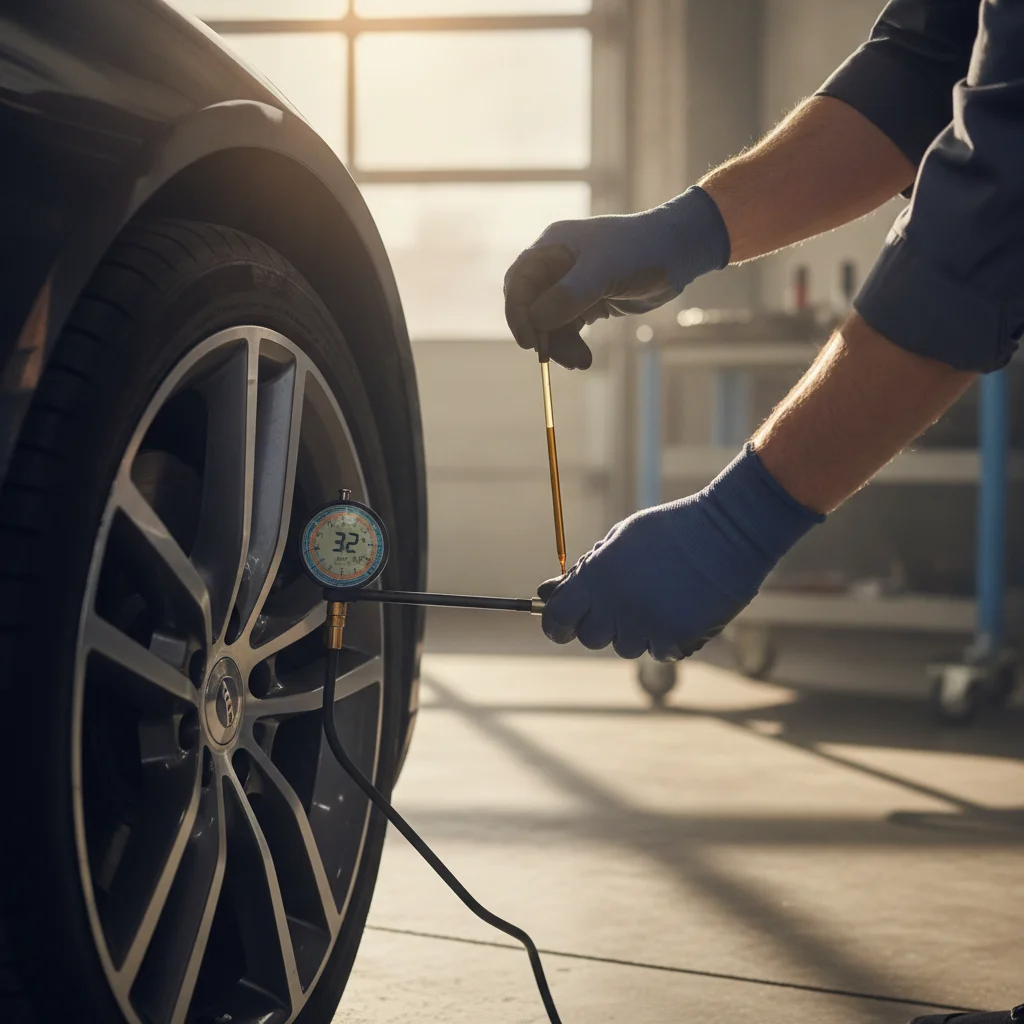
Tire pressure is the single most accessible MPG fix on this list, and it's one that a surprising number of drivers overlook. The U.S. Department of Energy estimates that keeping tires properly inflated can improve fuel economy by up to 3% per tire — and because tires lose pressure naturally over time (roughly 1 PSI per month in normal conditions, faster in cold weather), most cars on the road are running slightly underinflated at any given moment.
The mechanism is straightforward: underinflated tires have a larger, softer contact patch with the road. This increases rolling resistance — the force your engine must overcome just to keep the car moving. The engine compensates by burning more fuel. Overinflated tires, meanwhile, reduce grip and can cause uneven wear, so matching the manufacturer's specified pressure is the target, not simply inflating as high as possible.
Check the sticker inside your driver's door jamb for the correct PSI — not the number printed on the tire sidewall, which is the maximum, not the recommended pressure. Check cold, before you've driven more than a mile, for an accurate reading. For a more complete look at how pressure affects efficiency, see our dedicated guide on tire pressure and fuel economy.
Most cars on the road are slightly underinflated — a quick pressure check can recover up to 3% MPG per tire.
Replace a Dirty Engine Air Filter
Your engine needs a precise mixture of air and fuel to combust efficiently. The air filter keeps dirt, dust, and debris out of that intake stream. When the filter clogs, airflow is restricted, and the engine management system responds by adjusting the fuel mixture to compensate — typically in a way that burns more fuel to maintain power output.
On older vehicles with carbureted engines, a clogged air filter could reduce fuel economy by as much as 14%, according to Department of Energy data. Modern fuel-injected vehicles are better at compensating, so the direct MPG impact is smaller — typically 1–4% — but the engine still has to work harder, which adds stress over time and can contribute to other issues.
[in_content_images:1]Checking an air filter takes about two minutes and no tools in most vehicles. Pull it out and hold it up to light: if you can see light clearly through the filter media, it's still serviceable. If it's gray, clogged with debris, or visibly damaged, replace it. Most filters cost $15–$30 and can be swapped in under ten minutes at home — making this one of the best-value DIY maintenance tasks you can do. Most manufacturers recommend replacement every 15,000–30,000 miles, but driving in dusty conditions shortens that interval.
A clogged air filter restricts airflow to your engine, directly increasing fuel consumption with every mile you drive.
Replace Worn Spark Plugs
Spark plugs ignite the air-fuel mixture in your engine's combustion chambers. When a plug wears out, its electrode gap widens, the spark becomes weaker, and combustion becomes incomplete or inconsistent. The engine control unit tries to compensate, but the result is reduced power and lower fuel efficiency. According to the National Institute for Automotive Service Excellence, misfiring spark plugs can reduce fuel economy by as much as 30% in severe cases.
The practical impact for most drivers is subtler — you may notice slightly sluggish throttle response, occasional rough idle, or simply a slow drift downward in your average MPG. Because these symptoms develop gradually, it's easy to attribute them to driving conditions rather than a worn part. Replacing spark plugs at the interval specified in your owner's manual (typically 30,000 miles for copper plugs, 60,000–100,000 miles for iridium or platinum) is insurance against that quiet efficiency loss.
If your check engine light is on and you haven't diagnosed it yet, a P0300-series misfire code is worth investigating immediately — it frequently traces back to spark plugs and can have a disproportionate impact on both fuel economy and emissions.
Misfiring spark plugs can slash fuel economy by up to 30% — and you may not notice until your MPG is already well off target.
Use the Correct Engine Oil Viscosity
Engine oil lubricates every moving part inside your engine. When oil is the right viscosity for your engine and operating temperature, friction is minimized and the engine runs efficiently. When it's the wrong grade — either because someone used a thicker oil during the last oil change, or because the oil has degraded past its useful life — internal friction increases, and the engine burns more fuel to maintain the same output.
The EPA estimates that using the manufacturer-recommended motor oil can improve fuel economy by 1–2%. That may sound modest, but it's a free gain: you're paying for an oil change regardless. Simply making sure the shop uses the viscosity grade listed in your owner's manual (commonly 0W-20 or 5W-30 in modern vehicles) costs nothing extra and delivers measurable results.
Modern low-viscosity oils like 0W-20 were specifically developed to reduce friction and improve efficiency in today's tight-tolerance engines. Using a heavier oil than specified — a common mistake when someone assumes thicker means better protection — doesn't improve longevity and does reduce efficiency. Stick with the spec.
Using your manufacturer's specified oil viscosity is a zero-cost efficiency upgrade that most drivers never think to verify.
Inspect and Replace Oxygen Sensors
Oxygen sensors monitor the exhaust stream and report back to the engine control unit (ECU), which uses that data to maintain the correct air-fuel ratio. A healthy oxygen sensor helps your engine run lean and efficient. A failing sensor sends inaccurate readings, causing the ECU to enrich the fuel mixture unnecessarily — meaning more fuel is injected than the engine actually needs to combust cleanly.
The EPA has documented that a faulty oxygen sensor can reduce fuel economy by as much as 40%, making it one of the highest-impact single-component failures on this list. What makes oxygen sensor failure insidious is that the car often continues to run and drive normally — the degradation is internal and doesn't always produce obvious symptoms beyond a check engine light and a slow MPG decline.
[in_content_images:2]Most oxygen sensors last 60,000–90,000 miles on older vehicles. Wideband sensors on modern vehicles can last longer but should still be checked if you're experiencing unexplained fuel economy loss. If your OBD-II scanner shows a P0136 or similar oxygen sensor fault code, treat it as a priority repair, not something to defer. The fuel savings from a functional sensor can pay for the replacement part within a few months of normal driving.
A failing oxygen sensor can cause your ECU to inject far more fuel than needed — costing you up to 40% in lost efficiency.
Keep the Fuel System Clean
Over time, fuel injectors accumulate deposits from combustion byproducts and lower-quality fuel. Deposits disrupt the precise spray pattern that injectors are designed to produce, causing fuel to atomize poorly in the combustion chamber. Poorly atomized fuel burns less completely, reducing efficiency and increasing emissions.
The solution is two-pronged. First, choose fuel from stations that sell Top Tier certified gasoline — a standard that requires higher levels of detergent additives proven to keep injectors and intake valves cleaner over time. Our guide on gas station choices that affect fuel quality explains what that certification actually means and why it matters.
Second, if your vehicle has significant mileage and has been run predominantly on non-Top Tier fuel, a professional fuel injector cleaning service can restore spray pattern and improve combustion efficiency. For most drivers on Top Tier fuel, the injectors stay clean enough that this service is rarely needed before 100,000 miles. A fuel system cleaner additive is a more affordable intermediate step — but read the evidence carefully, as not all products deliver what they claim. See when fuel-saving accessories are worth it for a grounded assessment.
Dirty fuel injectors compromise the spray pattern that efficient combustion depends on — Top Tier fuel helps prevent buildup from the start.
Check Wheel Alignment and Bearing Condition
Alignment and wheel bearings don't appear on most fuel economy checklists, but they should. When wheels are out of alignment, they fight each other and the road rather than rolling cleanly in the same direction. The result is increased rolling resistance — the same efficiency enemy as underinflated tires, just operating from a different source. Severe misalignment can reduce fuel economy by 10% or more; even minor misalignment causes subtle, consistent drag.
Wheel bearing wear creates a similar problem. A failing bearing increases the rotational friction in a wheel hub, meaning the drivetrain expends more energy just keeping the wheel turning. You'll often hear a humming or growling noise from a worn bearing before you notice the fuel economy impact, which is a useful early warning to act on.
Alignment should be checked after any significant impact — a hard pothole hit, a curb strike, or an accident — and as part of routine service approximately once a year or every 12,000–15,000 miles. If your car pulls noticeably to one side or your steering wheel sits off-center at highway speed, alignment is worth checking before your next long trip. The service typically costs $75–$100 and can recover several percentage points of lost efficiency while also extending tire life.
Misaligned wheels create constant resistance against your drivetrain — an alignment check can recover efficiency while protecting your tires.
Service the Cooling System and Thermostat
Modern engines are designed to reach and maintain a specific operating temperature as quickly as possible. At that temperature, combustion is most efficient, oil viscosity is optimal, and internal friction is minimized. The thermostat is the valve that regulates this: it stays closed while the engine warms up (keeping coolant in the engine block), then opens to circulate coolant through the radiator once operating temperature is reached.
A thermostat that's stuck open — a common failure mode — prevents the engine from ever fully warming up. The engine runs perpetually cool, which means it runs in an enriched, less efficient fuel mode for longer than intended. The efficiency hit from a stuck-open thermostat is significant, particularly on short trips where the engine barely reaches operating temperature even under normal conditions.
Signs of a stuck-open thermostat include a temperature gauge that sits lower than usual, poor cabin heat output, and a noticeable drop in fuel economy over time. Thermostat replacement is inexpensive (typically $20–$50 for the part) and often straightforward enough to be a DIY repair on many vehicles. Cooling system flush intervals vary — check your owner's manual — but don't neglect them, as degraded coolant can lead to corrosion that accelerates thermostat and water pump failure.
A stuck-open thermostat keeps your engine running cold and inefficient — a cheap fix that pays back quickly in restored MPG.
MPG gains are cumulative, not isolated
Each item on this list may deliver only a 1–4% individual improvement. But if your car is suffering from three or four overlapping issues simultaneously — underinflated tires, a dirty air filter, worn spark plugs, and degraded oil — the combined drag on efficiency can be substantial. Addressing all of them at once often produces a noticeably larger improvement than the numbers for any single fix would suggest.
Driving habits compound maintenance effects
A well-maintained car still loses efficiency under poor driving habits. Hard acceleration, excessive idling, and erratic speed on the highway all consume fuel that no amount of maintenance can fully offset. For the best results, pair the service items above with smarter habits — see our overview of <a href="/maintenance-and-ownership/ownership-costs/fuel-efficiency/driving-habits-that-hurt-fuel-economy-most-ranked-by-impact">driving habits that drain the most fuel</a> for specifics.
Bundle maintenance checks on the same visit
When you bring your car in for an oil change, ask the shop to check tire pressure, inspect the air filter, and scan for fault codes at the same time. Most shops will do these checks at no extra charge. Catching multiple efficiency issues in a single visit saves you both time and multiple diagnostic fees.
Track your MPG before and after each fix
The clearest way to know whether a maintenance item actually helped is to measure your fuel economy before and after the repair. Use a simple tank-to-tank calculation or an OBD-II app to establish a baseline. Our guide to <a href="/maintenance-and-ownership/ownership-costs/fuel-efficiency/fuel-economy-tracking-tools-and-methods-that-give-you-real-insight">fuel economy tracking methods</a> explains how to do this accurately across different driving conditions.
Making the Most of Every Service Visit
You don't need to tackle all of these at once. The most effective approach is to start with the items that are cheapest to check and most likely to be out of spec — tire pressure and air filter top that list for most drivers. From there, work through the rest in order of your service schedule.
If you've noticed a sudden, unexplained drop in your fuel economy rather than a gradual slide, the issue may be more specific. Our fuel economy audit guide walks you through a systematic diagnostic process to isolate the cause. And if you're tempted to supplement maintenance with aftermarket efficiency products, it's worth reading when fuel-saving accessories are actually worth it before spending any money on them.
The bottom line: a well-maintained car doesn't just last longer and break down less often — it uses fuel more efficiently at every mile. That's money staying in your pocket instead of going into the tank.


All claims are backed by peer-reviewed research. Sources on request.