Key Takeaways
Regenerative Braking
Regenerative braking is a system used in hybrid and electric vehicles that captures the kinetic energy produced when you slow down, converts it into electricity, and stores it in the battery for later use. Instead of that energy disappearing as heat through friction pads, the car's electric motor runs in reverse to act as a generator. The result is a small but meaningful recharge every time you brake.
During regenerative braking, the electric motor switches into generator mode, producing back-EMF (electromotive force) that both slows the vehicle and produces an electrical current fed back into the high-voltage battery pack.
The Physics Behind the Fuel Savings
Every time a car slows down, energy has to go somewhere. In a conventional vehicle, that energy — built up during acceleration — is converted entirely into heat through friction at the brake pads and rotors. Once it's heat, it's gone. You burned fuel to get up to speed, and then you quite literally threw that energy away every time you touched the brakes.
Regenerative braking changes that equation. When a hybrid or electric vehicle decelerates, the electric motor connected to the drivetrain is put into reverse operation — it becomes a generator. The spinning wheels turn the motor, the motor produces electricity, and that electricity flows back into the battery. The vehicle slows down because it's now working against the electrical resistance, not against brake friction.
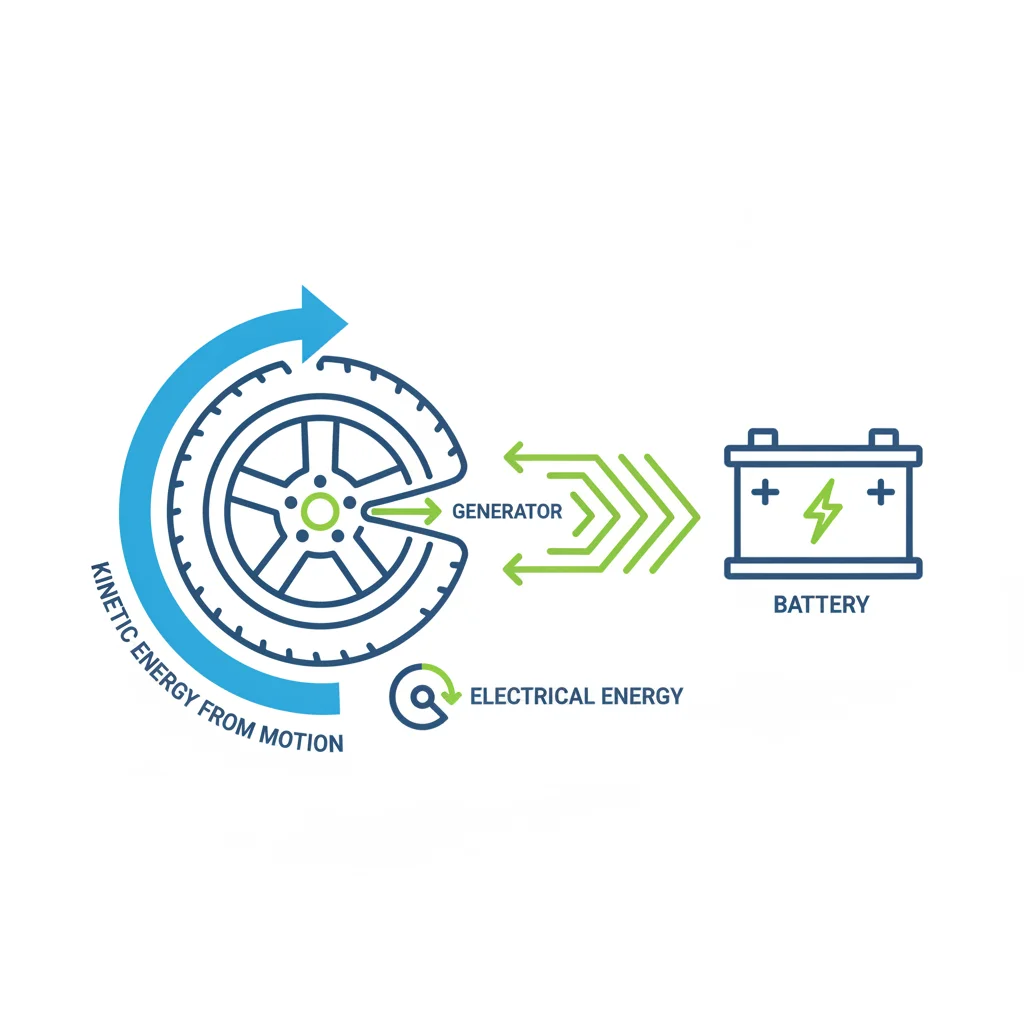
Think of it like a water wheel. Water flowing downhill turns the wheel and generates power. In this case, the car's momentum is the water, the electric motor is the wheel, and your battery is the reservoir being refilled. The difference compared to conventional braking is stark: instead of losing 100% of that kinetic energy as heat, a well-designed regenerative system can recover 60–70% of it as usable electricity.
That recovered electricity gets used to power accessories, assist acceleration on the next throttle input, or simply sit in the battery until the engine needs a break. None of it came from burning extra fuel — it was energy that would have been wasted.
Regenerative Braking Isn't Unique to Hybrids
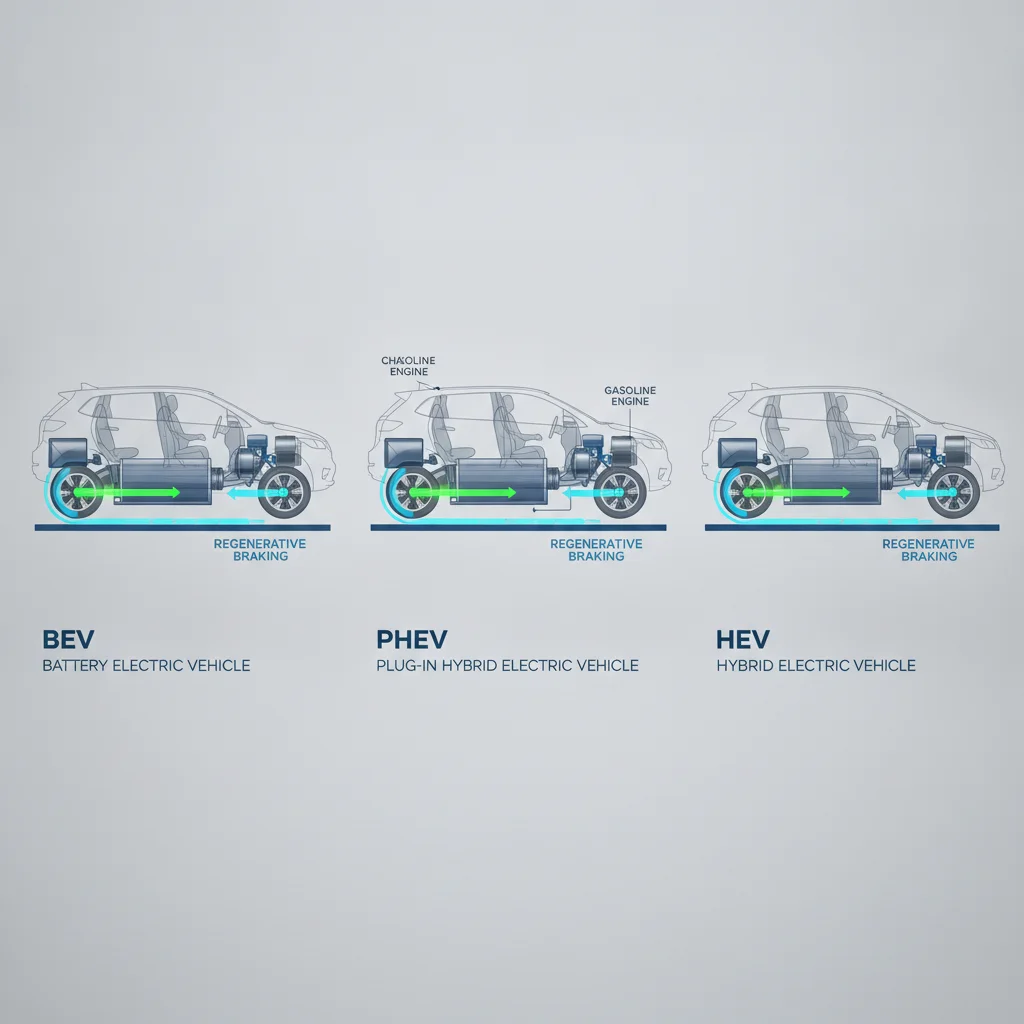
While this article focuses on hybrids, regenerative braking is also the primary deceleration mechanism in fully electric vehicles (BEVs) and plug-in hybrids (PHEVs). In a BEV, there is no gas engine at all, so the regenerative system carries even more of the efficiency load. The underlying physics are identical — only the proportion of total vehicle energy that passes through the system differs.
Cold Weather Reduces Regen Efficiency Temporarily
Battery chemistry slows down in cold temperatures, which can temporarily limit how quickly the battery accepts a regenerative charge. Some vehicles automatically reduce regen intensity when the battery is cold to prevent damage. This is normal system behavior — efficiency returns as the battery warms up, typically within the first several minutes of driving.
Hybrid vs. Full EV: The Regen Difference
In a hybrid, regenerative braking supplements a gas engine that still does most of the propulsion work. In a full EV, regenerative braking is integral to the entire energy equation — the battery is the only power source, so every watt recovered matters more. If you're considering the step from hybrid to full electric, understanding how regen works in each context helps set realistic range expectations.
Why City MPG Beats Highway in Hybrids
This is the part that surprises most people when they first look at a hybrid's window sticker. A Toyota Prius, for example, is rated higher in the city than on the highway — which is the opposite of how conventional cars work. For a gas-only vehicle, city driving is punishing because constant idling and stop-and-go traffic mean the engine is running inefficiently much of the time.
For a hybrid, city driving is actually ideal. Here's why:
- Frequent braking = frequent recovery. Every stop at a red light, every slow-down behind traffic, every exit ramp — all of these are energy recovery opportunities. A city commute might involve dozens of stops per mile in dense traffic.
- Low-speed electric operation. Most hybrids can run on electric power alone at low speeds, using zero gasoline while the battery handles the load. City speeds often fall into this range.
- Engine shutoff at stops. Hybrids automatically shut the gas engine off at full stops and restart it seamlessly. No idling fuel waste.
- Captured energy reduces engine load. The electricity recovered from braking means the engine doesn't have to work as hard during the next acceleration — the motor assists from the battery reserve.

On the highway, these advantages largely disappear. You're cruising at 65–75 mph with few opportunities to brake, so there's little to recover. The gas engine runs continuously to maintain speed, and the electric motor assists less frequently. The hybrid system is still more efficient than a conventional car on the highway, but the gap narrows considerably.
For a deeper look at how different electrified vehicles handle this energy recovery differently, see how BEVs, PHEVs, and HEVs each capture and use regenerative energy.
60–70%
Kinetic energy recovered during braking
Well-designed regenerative braking systems can recover 60–70% of the kinetic energy that would otherwise be lost as heat, according to the U.S. Department of Energy.
~25%
City fuel economy improvement in hybrids
The EPA estimates hybrids can improve fuel economy by roughly 20–35% in city conditions compared to comparable conventional vehicles, with regenerative braking a primary contributor.
2–3×
Longer brake pad life in hybrids vs. gas cars
Hybrid and EV owners routinely report brake pads lasting two to three times longer than on conventional vehicles, due to reduced reliance on friction braking.
53 MPG
Toyota Prius city fuel economy (2024 model)
The 2024 Toyota Prius achieves an EPA-rated 53 MPG in city driving — higher than its 52 MPG highway rating — a direct result of regenerative braking advantages in stop-and-go conditions.
7–10 mph
Speed threshold where friction brakes take over
Below approximately 7–10 mph, most hybrid systems transition fully to friction braking because the electric motor cannot generate meaningful resistance at very low wheel speeds.
How the System Actually Works While You Drive
The good news for drivers: you don't have to think about any of this while it's happening. Regenerative braking is entirely automatic in most hybrids. The vehicle's control system manages when to engage regeneration, how much braking force to apply electrically versus mechanically, and how to blend the two seamlessly so the pedal feels normal.
When you press the brake pedal in a hybrid, here's what happens behind the scenes:
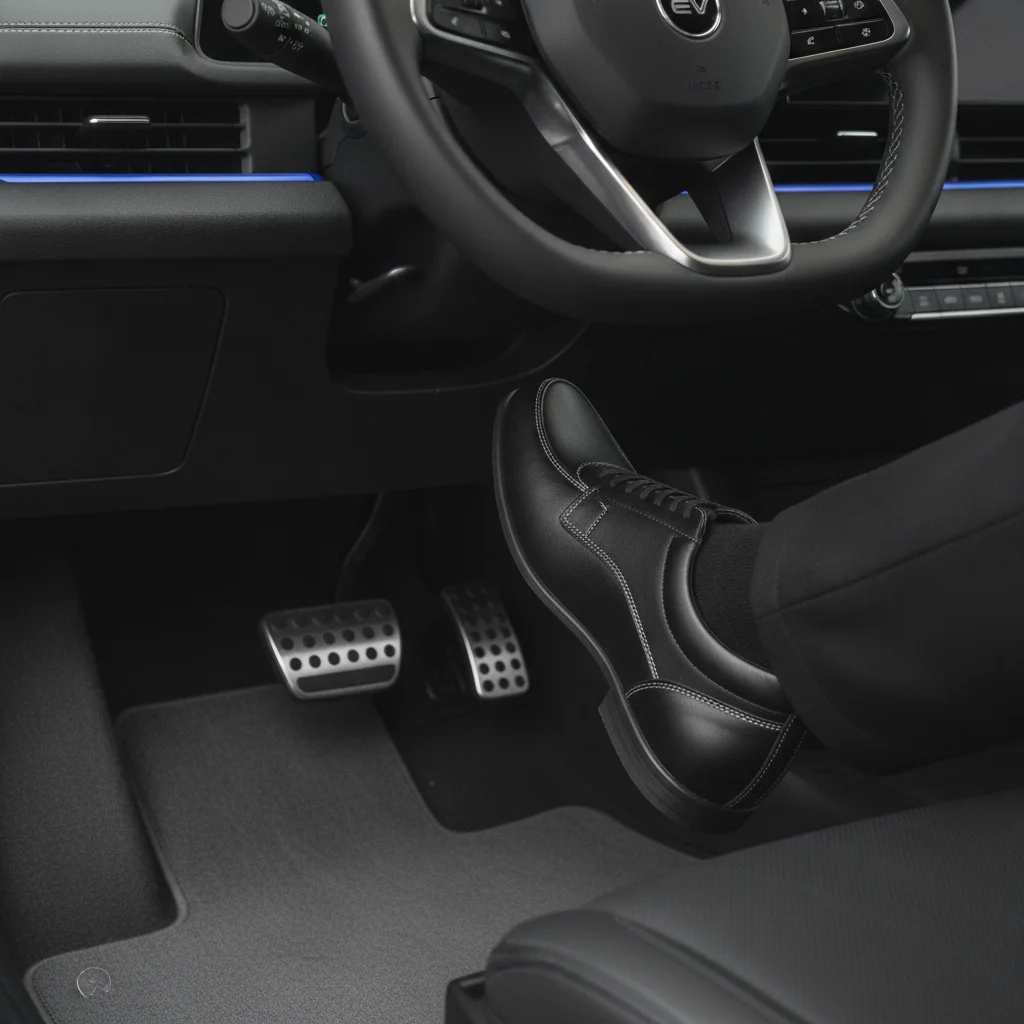
- The vehicle's brake-by-wire system reads how hard you're pressing.
- For light to moderate braking, the system directs the electric motor to generate resistance — this slows the car and charges the battery simultaneously.
- If you press harder — or need to stop quickly — friction brakes engage to supplement the regenerative system and provide the full stopping force needed.
- Below a certain low speed (typically around 7–10 mph), friction brakes take over entirely because the motor can't generate meaningful resistance at very slow speeds.
The handoff between regenerative and friction braking happens in milliseconds and is engineered to be imperceptible. In a well-tuned system, you can't feel where one ends and the other begins.
“The beauty of regenerative braking is that it turns the city driving environment — historically the worst-case scenario for fuel economy — into an asset. Every red light becomes a charging event.”
— John Voelcker, Automotive journalist and EV technology analyst
Some vehicles give you control over the intensity of regeneration. Many modern hybrids and plug-in hybrids offer selectable regeneration levels — often through paddle shifters or drive mode settings. Stronger regeneration means the car slows more aggressively when you lift off the throttle, recovering more energy per deceleration event. This concept is taken furthest with one-pedal driving, which you can explore in detail through our guide on one-pedal driving efficiency and trade-offs.
Anticipate Stops for Maximum Recovery
The single most effective habit you can build is early, gradual deceleration. When you see a red light or slow traffic ahead, lift off the accelerator well before you need to stop. This gives the regenerative system time to work at a steady rate — recovering more energy than a sudden hard brake that triggers friction pads. Think of it as "coasting with intent."
Check Your Car's Energy Display
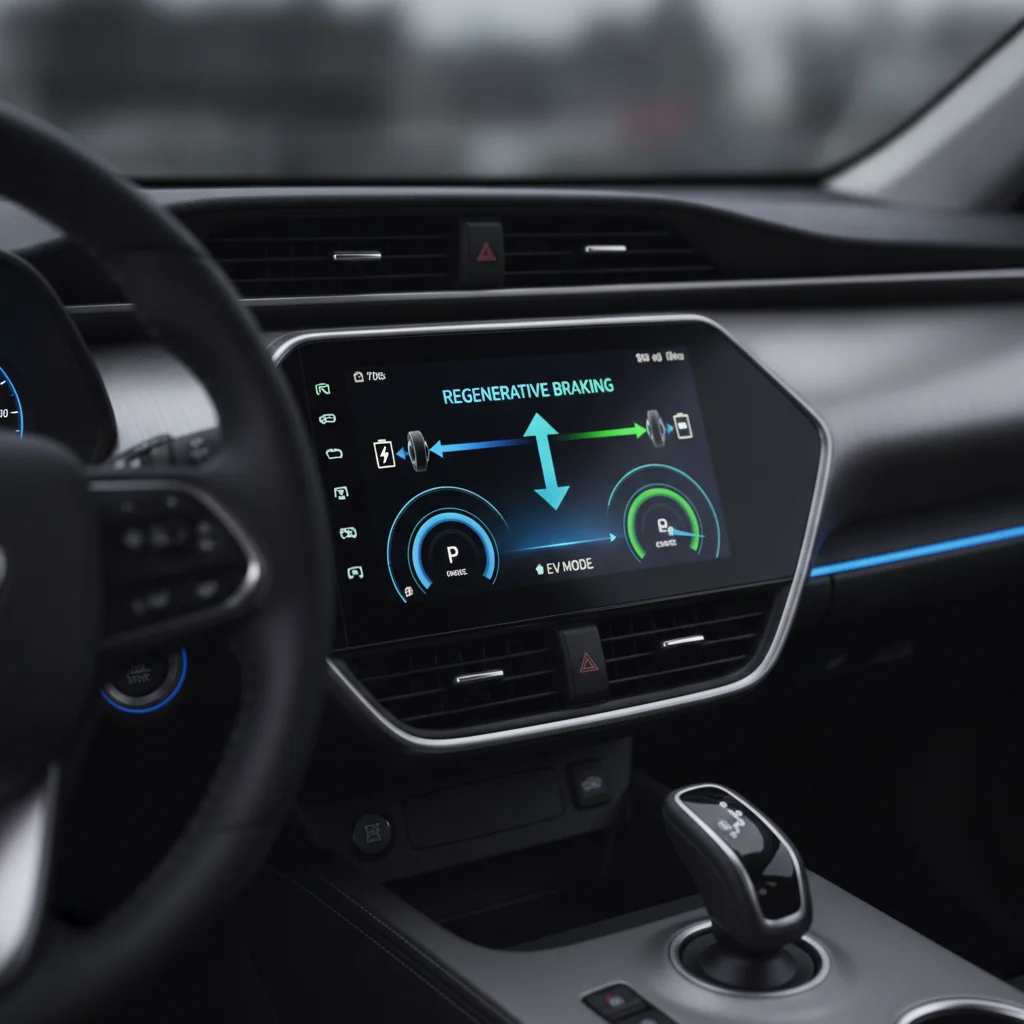
Most hybrids include a real-time energy flow display in the instrument cluster or infotainment screen. Watching this during city driving is a great way to see exactly when and how much energy is being recovered. It's also a practical feedback tool — you'll naturally start driving in ways that keep the regen indicator active longer.
The Maintenance Benefit You Might Not Expect
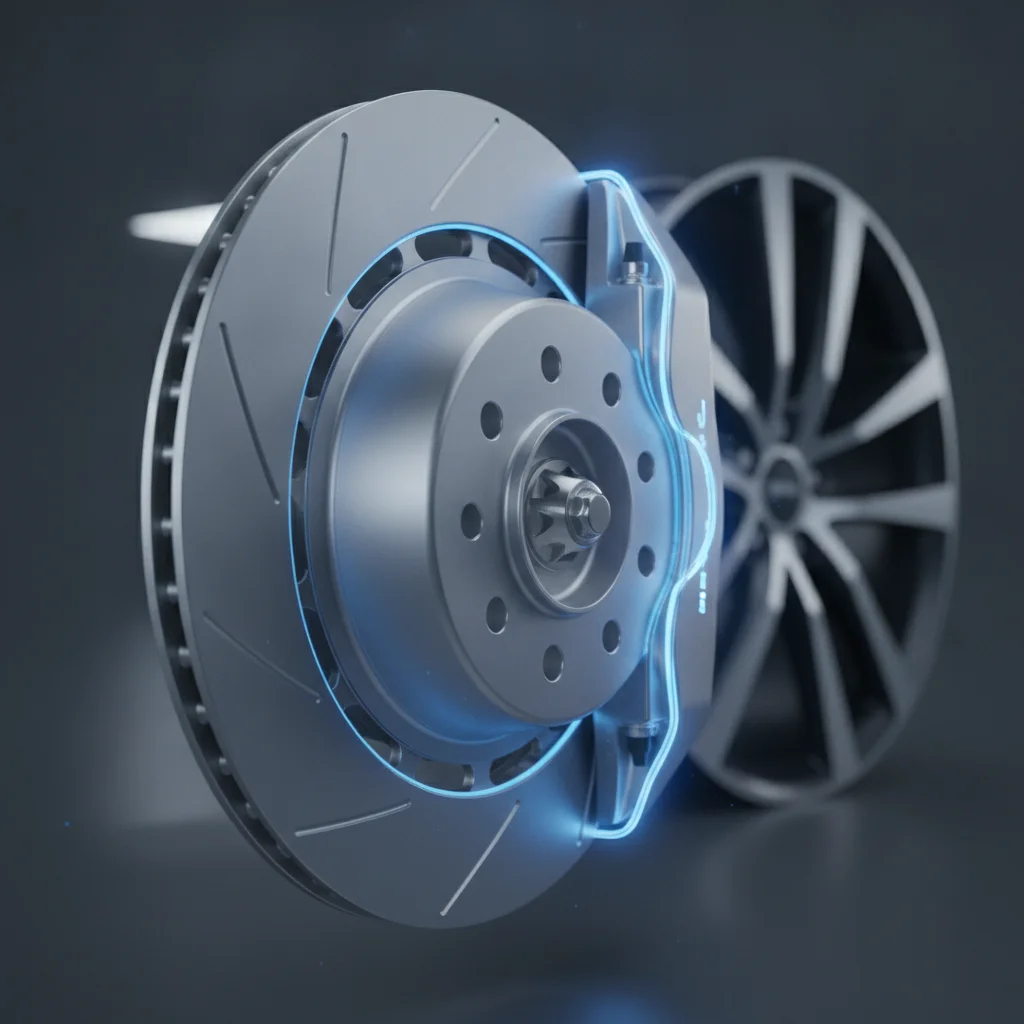
There's a practical side benefit to regenerative braking that goes beyond fuel economy: your brake pads last much longer. In a conventional car, every stop is a friction event — pads pressing against rotors, material wearing away. In a hybrid, the electric motor handles the majority of everyday deceleration, leaving the friction brakes mostly idle except for harder stops.
Hybrid owners routinely report brake pad life of 80,000 to 100,000 miles or more — sometimes double what they'd expect from a conventional vehicle. This isn't a minor convenience; over the life of the car, it represents real savings on service costs.
It's worth understanding that your brake rotors can actually suffer from a different problem: they may develop surface rust from underuse, particularly in wetter climates. Rotors need occasional heat and friction to stay clean, and if the friction brakes barely engage for months at a time, some light rust can form on the rotor surface. This is normal, usually clears itself after a handful of stops, and is rarely a serious issue — but it's a reminder that the friction brake system is still there and still needs periodic inspection.
For a full breakdown of how regenerative braking changes your maintenance picture, see what regenerative braking means for your brake pads and our companion piece on why EV brakes last so much longer.
How to Get the Most Out of Regenerative Braking
Because the system is automatic, most of what you do naturally in city driving already activates it. But there are a few habits that help you get more from it:
- Anticipate stops early. Lifting off the accelerator sooner — rather than coasting and then braking hard — gives the regenerative system more time to work at a gradual, efficient rate. Hard, sudden braking triggers more friction braking and recovers less energy.
- Use the strongest regeneration mode your car offers. If your hybrid has selectable regen levels, try the stronger settings during city driving. You'll decelerate more firmly when you lift off the pedal, but you'll recover more energy per mile.
- Avoid unnecessarily high speeds in the city. The faster you're going, the more energy you built up getting there — and the more that gets wasted even with regeneration. Keeping speeds steady and moderate maximizes what the system can do.
- Use EV mode when available. Plug-in hybrids with a charged battery can run entirely on electric power for short trips, keeping the gas engine off entirely and making maximum use of the battery that regen charging helped fill.
Anticipate Stops for Maximum Recovery
The single most effective habit you can build is early, gradual deceleration. When you see a red light or slow traffic ahead, lift off the accelerator well before you need to stop. This gives the regenerative system time to work at a steady rate — recovering more energy than a sudden hard brake that triggers friction pads. Think of it as "coasting with intent."
Check Your Car's Energy Display
Most hybrids include a real-time energy flow display in the instrument cluster or infotainment screen. Watching this during city driving is a great way to see exactly when and how much energy is being recovered. It's also a practical feedback tool — you'll naturally start driving in ways that keep the regen indicator active longer.
One thing to keep in mind: regenerative braking is not a magic multiplier. It can recover a meaningful portion of the energy spent on acceleration, but it cannot produce more energy than the vehicle used to get up to speed. Think of it as cutting waste, not creating fuel. The efficiency gains are real and significant, but they work within the laws of physics.
To understand exactly how much range these gains translate to in electric vehicles specifically, our article on how regenerative braking extends EV range walks through the numbers in detail.
Is a Hybrid Worth It for Your Commute?
If your daily driving involves a lot of stop-and-go traffic — urban commutes, suburban errands, school runs — a hybrid's regenerative braking system will work overtime in your favor. The city-over-highway MPG advantage is most pronounced in exactly these conditions, and the cumulative fuel savings over years of ownership can be substantial.
If you primarily drive long highway stretches, the hybrid premium is harder to justify purely on fuel economy grounds. You'll still see some benefit over a conventional car, but the gap narrows significantly without many braking events to generate recovery cycles.
The calculation also includes brake maintenance savings, which lean in the hybrid's favor regardless of driving pattern. Fewer pad replacements over the life of the vehicle is a meaningful, if easy-to-overlook, benefit.
Regenerative Braking Isn't Unique to Hybrids
While this article focuses on hybrids, regenerative braking is also the primary deceleration mechanism in fully electric vehicles (BEVs) and plug-in hybrids (PHEVs). In a BEV, there is no gas engine at all, so the regenerative system carries even more of the efficiency load. The underlying physics are identical — only the proportion of total vehicle energy that passes through the system differs.
Cold Weather Reduces Regen Efficiency Temporarily
Battery chemistry slows down in cold temperatures, which can temporarily limit how quickly the battery accepts a regenerative charge. Some vehicles automatically reduce regen intensity when the battery is cold to prevent damage. This is normal system behavior — efficiency returns as the battery warms up, typically within the first several minutes of driving.
Hybrid vs. Full EV: The Regen Difference
In a hybrid, regenerative braking supplements a gas engine that still does most of the propulsion work. In a full EV, regenerative braking is integral to the entire energy equation — the battery is the only power source, so every watt recovered matters more. If you're considering the step from hybrid to full electric, understanding how regen works in each context helps set realistic range expectations.
Ultimately, regenerative braking is one of those systems that does its best work quietly in the background. You press the brake, the car slows, and somewhere in the process electricity gets put back into the battery. The more often that happens — and city driving makes it happen constantly — the better your overall efficiency becomes. It's one of the clearest examples of a technology that rewards the conditions most drivers actually face every day.

All claims are backed by peer-reviewed research. Sources on request.