Key Takeaways
Meaningful fuel savings with no upfront cost
Techniques like smooth acceleration and anticipatory braking require no equipment purchase and can realistically improve real-world fuel economy by 10–20% for drivers who weren't previously applying them.
Reduces wear on brakes and drivetrain
Coasting to stops and avoiding aggressive acceleration reduce thermal stress on brake pads and rotors, and reduce drivetrain strain — both of which can lower long-term maintenance costs.
Supports safer, more attentive driving
Reading traffic further ahead and maintaining smooth speed naturally increases situational awareness, which reduces accident risk — a secondary benefit that your insurance premiums may eventually reflect.
Works in any fuel-powered or hybrid vehicle
Unlike efficiency upgrades that depend on specific vehicle features, driving technique improvements apply universally — regardless of whether you drive a 2005 sedan or a modern hybrid.
Compounds over time with consistent application
Drivers who adopt safe hypermiling habits report that they become second nature within a few weeks, meaning the savings accrue every month without ongoing conscious effort.
Dangerous techniques carry real injury risk
Drafting semi-trucks, engine-off coasting, and extreme tire overinflation can all reduce vehicle control at critical moments. The consequences of a loss of control at highway speeds can be fatal.
Some methods are illegal and ticketable
Driving significantly below the speed of traffic, tailgating commercial vehicles, or impeding traffic flow can result in citations in most U.S. states — negating any fuel savings and potentially raising insurance rates.
Extreme practices may void warranty coverage
Removing factory safety equipment or operating a vehicle in ways that cause mechanical damage — such as engine-off coasting that locks the steering column — can provide grounds for a manufacturer to deny a warranty claim.
Can create tension with other road users
Driving below posted speed limits or making unusually slow speed changes can frustrate other drivers and increase the likelihood of aggressive reactions or unsafe passing maneuvers from vehicles around you.
Risk of overcomplicating a simple goal
An over-focus on fuel economy metrics can become distracting in itself. Checking fuel economy displays too frequently while driving diverts attention from the road — a small but real safety concern.
Our Verdict
Hypermiling has a legitimate, practical side that any driver can benefit from — and a reckless side that isn't worth the risk. The safe techniques are genuinely effective, straightforward to adopt, and cost nothing extra. The dangerous ones, however, can create accidents, invalidate your insurance, or put other road users in harm's way. Stick to the fundamentals and you'll see real savings without compromising safety.
Best for cost-conscious commuters and road-trip drivers who want to stretch every tank further without modifying their driving style in ways that create risk.
What Is Hypermiling — and Why It Matters Now
Hypermiling is the practice of using deliberate driving techniques to maximize fuel economy beyond a vehicle's EPA-rated estimate. The term was coined in the early 2000s by Wayne Gerdes, who achieved extraordinary mileage figures through a combination of driving habits, vehicle preparation, and route planning. Since then, it has grown into a community of drivers committed to wringing every last mile from each gallon.
With gas prices remaining volatile and car ownership costs continuing to climb, the appeal is easy to understand. Even a 15% improvement in fuel economy translates to meaningful annual savings — and for high-mileage drivers, potentially hundreds of dollars per year. But the practice spans a wide spectrum. On one end, there are simple, evidence-backed habits that any driver can safely adopt today. On the other, there are extreme techniques that compromise vehicle control and endanger other road users.
This article walks through both sides of that spectrum, clearly. If you're interested in the broader picture of what wastes fuel in the first place, this breakdown of the driving habits that hurt fuel economy most puts the key offenders in rank order. Understanding what drains your tank is a good starting point before you work on improving it.

Safe Hypermiling Techniques Worth Adopting
The good news is that the most effective hypermiling techniques aren't exotic or complicated. They're rooted in physics and common sense, and most require only a shift in how you think about the road ahead.
1. Smooth, Gradual Acceleration
Hard acceleration is one of the biggest fuel economy killers. When you press the throttle aggressively, your engine demands a large fuel injection to generate rapid power. By accelerating gently and progressively, you keep fuel demand lower and allow your transmission to shift into higher, more efficient gears sooner. Think of it as "feathering" the pedal rather than pressing it.
2. Anticipatory Driving ("Reading the Road")
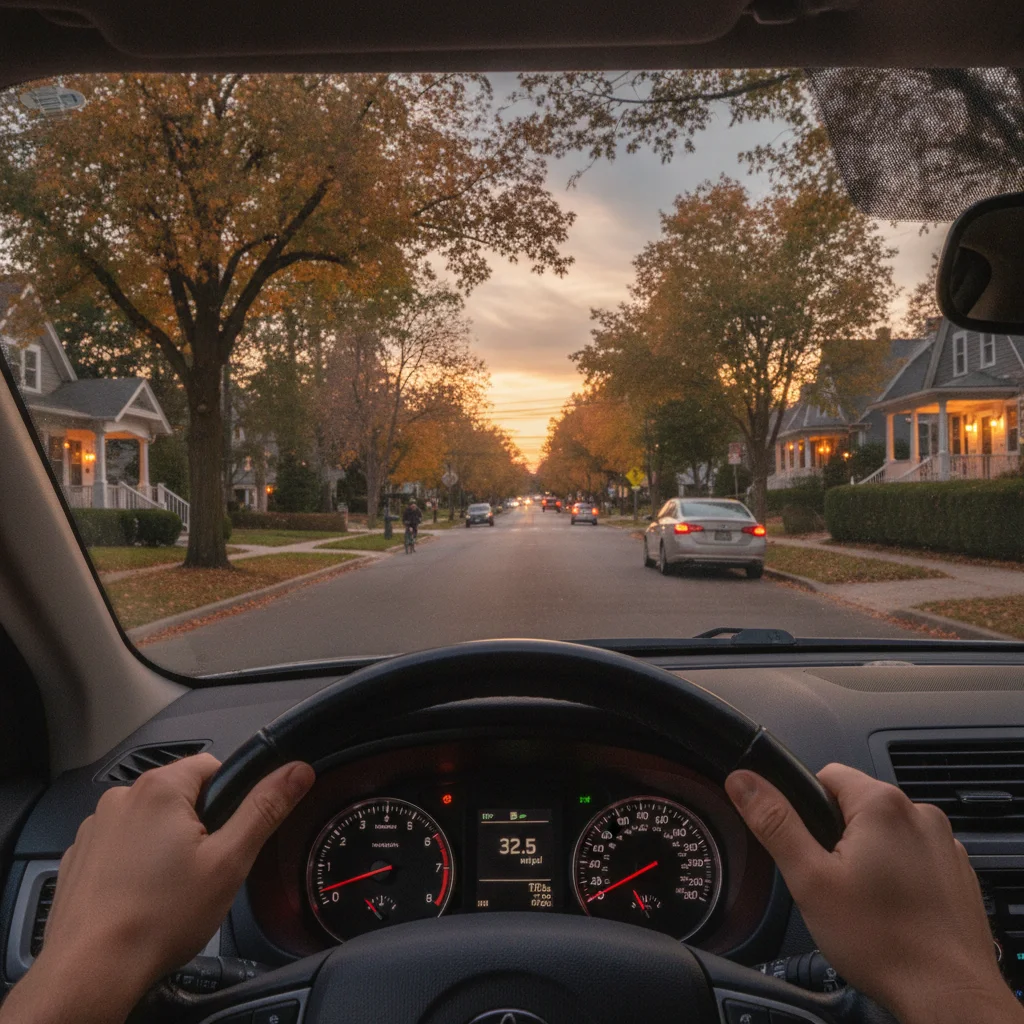
Experienced hypermilers scan traffic well ahead — typically 10 to 20 seconds of travel distance — to anticipate slowdowns before they happen. Coasting toward a red light rather than braking hard at it means your kinetic energy does the work of slowing you down, rather than your brakes converting it to wasted heat. This technique alone can meaningfully reduce fuel consumption in stop-and-go driving.
3. Maintaining Proper Tire Pressure
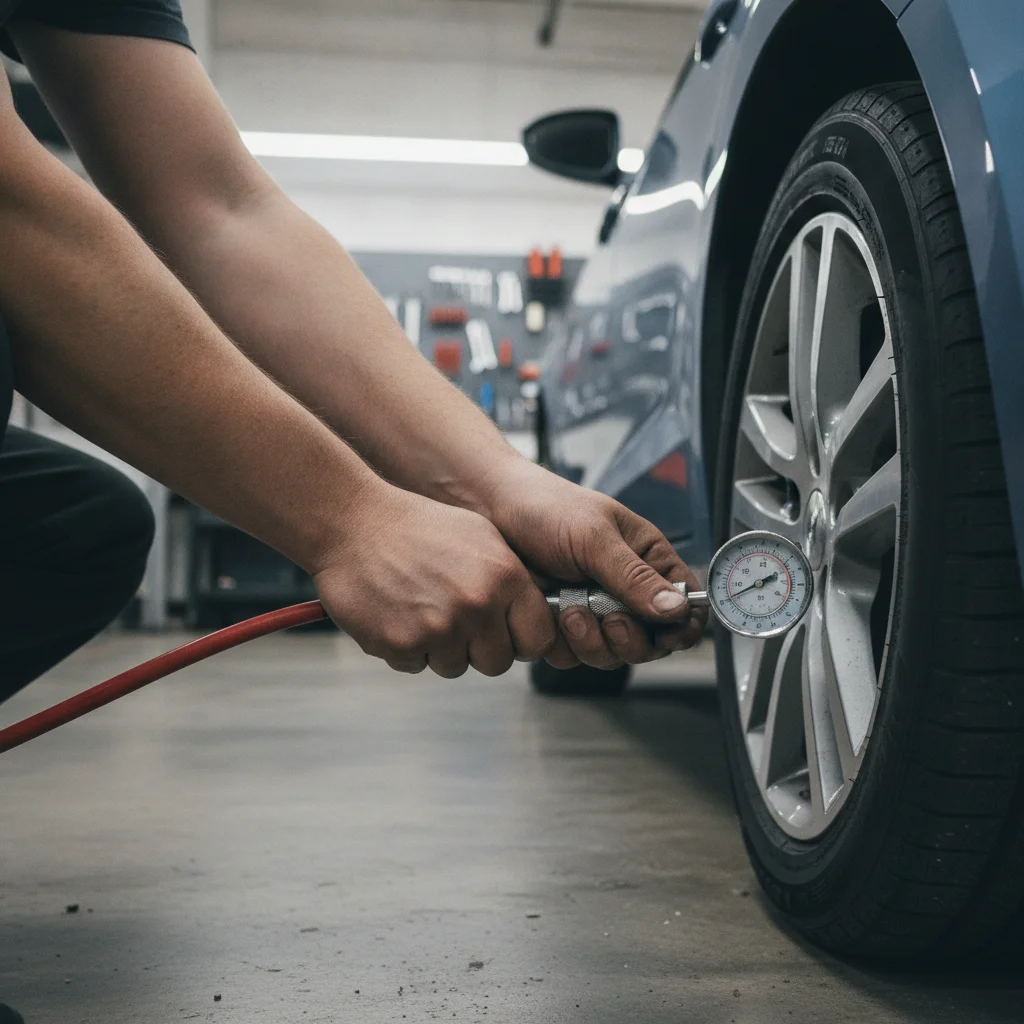
Under-inflated tires increase rolling resistance, which means your engine works harder for the same road speed. The U.S. Department of Energy estimates that tires inflated to the correct pressure can improve fuel economy by 0.5–3%. Check your tire pressure monthly and inflate to the figure on the door placard — not the maximum listed on the tire sidewall. That's a distinction worth remembering.
Speed and Fuel Economy: The Sweet Spot
Most modern vehicles reach peak fuel efficiency somewhere between 45 and 55 mph. Above this range, aerodynamic drag grows rapidly and fuel economy drops. Below it, internal friction and accessory loads become relatively more significant. The 55 mph sweet spot isn't just a rule of thumb — it's supported by real-world fuel consumption data across a wide range of vehicle types.
Engine-Off Coasting: A Special Warning
In many modern vehicles, turning the ignition to 'off' while moving will lock the steering column as an anti-theft measure. This is an immediate and severe safety hazard that leaves the driver unable to steer. Even in vehicles where the column doesn't lock, disabling the engine removes power brake assist within one or two pedal applications. This technique is not a gray area — it is genuinely dangerous and should never be attempted.
4. Reducing Highway Speed
Aerodynamic drag increases with the square of your speed. Driving at 65 mph instead of 75 mph can improve fuel economy by roughly 10–15% on the highway. This is one of the most impactful single changes a driver can make, and it requires no special skill — just patience. The time cost over a typical commute is often smaller than most drivers expect.
5. Using Engine Braking on Descents
On downhill grades, keeping the car in gear and lifting off the throttle lets the engine handle deceleration. In modern fuel-injected vehicles, this cuts off fuel delivery to the engine almost entirely during deceleration — a significant efficiency gain compared to coasting in neutral, which requires the engine to idle to stay running.
6. Minimizing Climate Control Load
Air conditioning can reduce fuel economy by up to 25% in city driving according to the U.S. Department of Energy. At lower speeds, rolling down windows is more efficient. On highways above roughly 45–50 mph, the drag from open windows can outweigh the AC penalty — so use your AC at highway speeds and open windows around town when temperatures allow.
Meaningful fuel savings with no upfront cost
Techniques like smooth acceleration and anticipatory braking require no equipment purchase and can realistically improve real-world fuel economy by 10–20% for drivers who weren't previously applying them.
Reduces wear on brakes and drivetrain
Coasting to stops and avoiding aggressive acceleration reduce thermal stress on brake pads and rotors, and reduce drivetrain strain — both of which can lower long-term maintenance costs.
Supports safer, more attentive driving
Reading traffic further ahead and maintaining smooth speed naturally increases situational awareness, which reduces accident risk — a secondary benefit that your insurance premiums may eventually reflect.
Works in any fuel-powered or hybrid vehicle
Unlike efficiency upgrades that depend on specific vehicle features, driving technique improvements apply universally — regardless of whether you drive a 2005 sedan or a modern hybrid.
Compounds over time with consistent application
Drivers who adopt safe hypermiling habits report that they become second nature within a few weeks, meaning the savings accrue every month without ongoing conscious effort.
Hypermiling Techniques You Should Avoid
Here's where hypermiling's reputation gets complicated. Some techniques that dedicated practitioners swear by are genuinely dangerous — to the driver, to passengers, and to other road users. Being honest about this distinction matters.
Drafting Behind Large Trucks
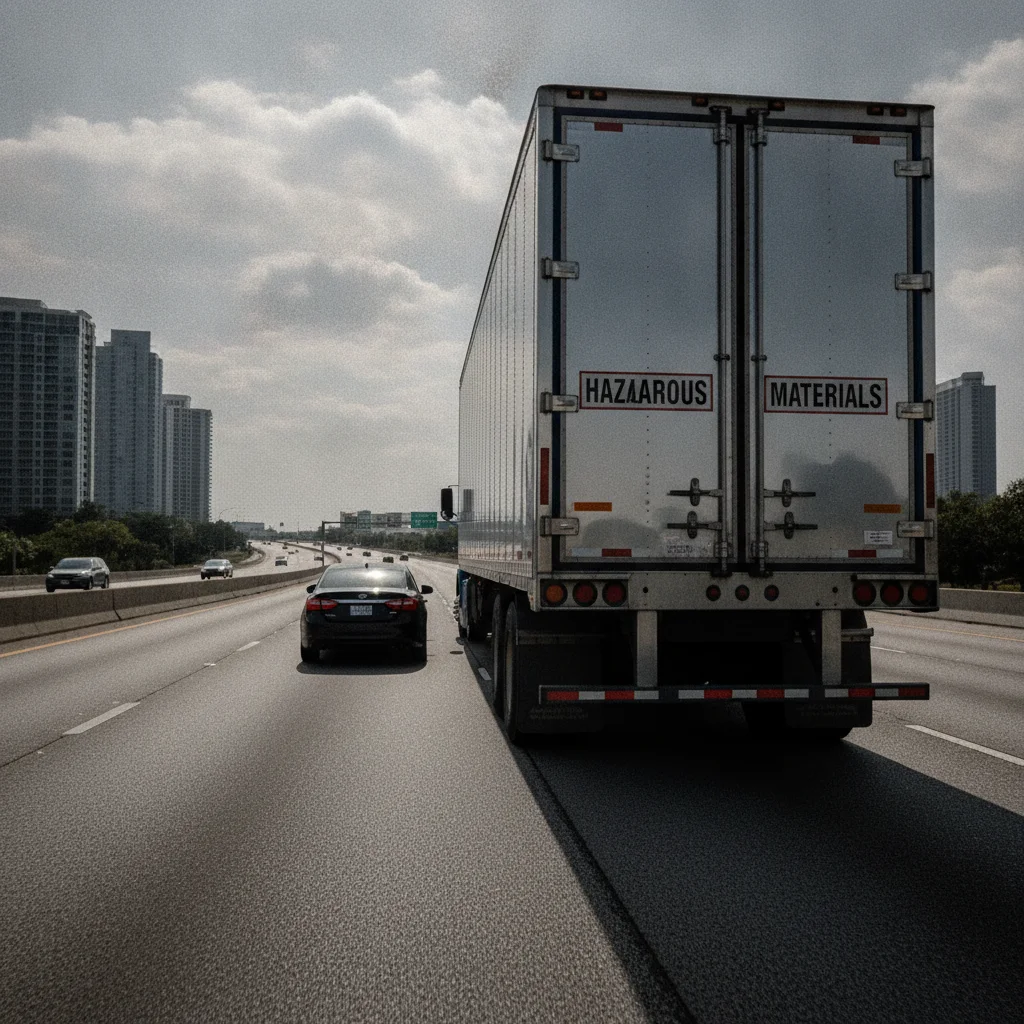
Tailgating an 18-wheeler to reduce aerodynamic drag is one of the most common extreme hypermiling tactics. While the physics works — reducing air resistance can cut fuel use — the execution requires following at distances of 10 feet or less at highway speeds. At that range, your stopping distance is essentially zero if the truck brakes suddenly. This is not a marginal risk. It is a serious one, and it is illegal in most states under tailgating laws.
Turning Off the Engine While Moving ("Neutral Coasting" or "Engine-Off Coasting")
Switching the ignition off while the vehicle is in motion disables power braking and, depending on the vehicle, power steering. In a modern car, turning the key off can also lock the steering column. This creates an immediate and severe control hazard. Even in vehicles where power assist remains briefly available after engine-off, the margin for error is dangerously thin. Never do this.
Overinflating Tires
Some hypermilers inflate tires well beyond the recommended pressure to further reduce rolling resistance. While this does reduce resistance, it also reduces the tire's contact patch with the road, compromising handling, braking distance, and tread wear. Overinflation can also increase the risk of a blowout. The small efficiency gain is not worth the reduced safety margin — particularly in wet or emergency braking situations.
Driving Unusually Slowly on High-Speed Roads
Driving at 45 mph on a 65 mph freeway to maximize fuel economy creates a significant speed differential with surrounding traffic. Studies consistently show that vehicles traveling significantly below the flow of traffic are a major accident risk factor. In many states, impeding traffic is a ticketable offense, and causing an accident in this manner can complicate your insurance claim significantly. Speed matching with the flow of traffic is the safer approach.
Removing Safety Equipment for Weight Reduction
Some extreme practitioners have removed spare tires, rear seats, or even airbag components to shed weight. Removing safety equipment in the name of fuel economy crosses a clear line — both legally and ethically. The weight savings are modest, and the consequences of an incident without that equipment can be catastrophic.
Dangerous techniques carry real injury risk
Drafting semi-trucks, engine-off coasting, and extreme tire overinflation can all reduce vehicle control at critical moments. The consequences of a loss of control at highway speeds can be fatal.
Some methods are illegal and ticketable
Driving significantly below the speed of traffic, tailgating commercial vehicles, or impeding traffic flow can result in citations in most U.S. states — negating any fuel savings and potentially raising insurance rates.
Extreme practices may void warranty coverage
Removing factory safety equipment or operating a vehicle in ways that cause mechanical damage — such as engine-off coasting that locks the steering column — can provide grounds for a manufacturer to deny a warranty claim.
Can create tension with other road users
Driving below posted speed limits or making unusually slow speed changes can frustrate other drivers and increase the likelihood of aggressive reactions or unsafe passing maneuvers from vehicles around you.
Risk of overcomplicating a simple goal
An over-focus on fuel economy metrics can become distracting in itself. Checking fuel economy displays too frequently while driving diverts attention from the road — a small but real safety concern.
How Hypermiling Interacts With Your Car Insurance
This is a part of the conversation that rarely gets addressed, and it's worth a moment of your attention. Most standard auto insurance policies contain language about vehicle operation in a "reasonable and prudent" manner. Certain extreme hypermiling behaviors — particularly drafting, engine-off coasting, or driving significantly below the speed of traffic — could be characterized by an insurer as reckless operation if they contribute to an accident.
In practice, this means your insurer could potentially challenge a claim if evidence showed that a dangerous hypermiling technique contributed to the collision. While this outcome isn't guaranteed, it's a real exposure. The safest driving behaviors are also, not coincidentally, the ones least likely to create complications at claim time.
If you're genuinely focused on the cost side of car ownership — which is a smart instinct — it's worth reviewing your road safety practices broadly. Accident-free driving is the single most reliable way to keep insurance premiums low over time, and safe hypermiling techniques support that goal directly.
10–40%
Potential fuel economy improvement from hypermiling
According to the U.S. Department of Energy, driving behavior accounts for up to 40% variation in fuel economy for the same vehicle.
25%
Fuel economy reduction from air conditioning use
The U.S. Department of Energy estimates A/C use can reduce fuel economy by up to 25% in city driving conditions.
10–15%
Highway MPG gain from reducing speed 65 vs. 75 mph
The EPA and DOE both note that fuel economy drops significantly above 50 mph due to aerodynamic drag increasing with the square of speed.
0.5–3%
MPG improvement from correct tire inflation
The U.S. Department of Energy states that keeping tires inflated to the recommended pressure can improve gas mileage by 0.5% to 3%.
Vehicle Preparation That Supports Fuel Efficiency
Beyond driving technique, a well-maintained vehicle delivers better fuel economy across the board. The relationship between maintenance and efficiency is direct and well-documented, and most of the relevant steps are inexpensive.
Air Filter Replacement
A clogged air filter restricts airflow to the engine, forcing it to work harder. Replacing a severely restricted air filter can improve acceleration and may modestly improve fuel economy in older vehicles with carbureted engines. In modern fuel-injected vehicles, the engine management system largely compensates — but keeping the filter clean is still good practice.
Spark Plug Condition
Worn spark plugs can cause misfires, which waste fuel and reduce power. Replacing spark plugs at the manufacturer's recommended interval — typically every 30,000–100,000 miles depending on plug type — keeps combustion efficient.
Motor Oil Grade
Using the manufacturer-recommended motor oil viscosity matters more than many drivers realize. Using a heavier oil than specified increases internal friction, which costs fuel. Switching to the specified grade — or a full synthetic within that grade — can yield a small but real improvement in fuel economy.
Wheel Alignment
Misaligned wheels cause tires to drag slightly rather than roll cleanly, increasing rolling resistance. If your vehicle pulls to one side or you notice uneven tire wear, an alignment check is worthwhile both for efficiency and for tire longevity.
To understand how your car's built-in fuel systems interact with these habits, this overview of your car's core efficiency technologies is a useful read. Features like variable valve timing and start-stop systems are designed to work in concert with smooth, steady driving inputs.
Common Hypermiling Myths Worth Dismissing
The hypermiling community, like many enthusiast spaces, has accumulated some advice that sounds logical but doesn't hold up. A few are worth addressing directly.
"Warming Up Your Engine Saves Fuel"
Extended idling to warm up a modern fuel-injected engine before driving is unnecessary and wasteful. Today's engines reach operating temperature faster under gentle load than they do sitting still. Idling for more than 30–60 seconds in cold weather does nothing beneficial for the engine and burns fuel for no return. This is one of several persistent myths covered in more detail in the article on fuel efficiency myths that cost drivers money.
"Fuel Additives Meaningfully Improve Economy"
The market is full of products that claim to boost fuel economy by 20%, 30%, or more. The evidence for most of these products is weak at best and fabricated at worst. The FTC has taken action against several such products over the years. If you're curious about the aftermarket efficiency category more broadly, this review of fuel-saving accessories provides a clear-eyed look at what the evidence actually supports.
"Neutral Coasting Is Always Efficient"
As mentioned earlier, coasting in neutral on descents requires the engine to idle, which burns fuel. In gear, modern fuel-injected engines cut fuel delivery during deceleration. Neutral coasting has a narrow legitimate use case on very gradual, long downhills where you'd otherwise need to apply throttle to maintain speed in gear — but it is not a universal efficiency gain.
Building a Sustainable Hypermiling Habit
The drivers who see lasting fuel economy improvements aren't the ones who experiment with extreme techniques for a week. They're the ones who build a small number of high-impact habits into their everyday driving — and maintain them consistently.
Start with three fundamentals: check your tire pressure monthly, accelerate smoothly, and look further ahead in traffic to coast more and brake less. Those three changes alone can realistically deliver a 10–20% improvement in real-world fuel economy for drivers who weren't previously paying attention to these behaviors.
If you drive an electric vehicle or are considering one, the same principles of anticipatory driving and energy management apply — just in a different form. Charging smarter is the EV equivalent of hypermiling, and many of the same disciplined habits translate directly.
The goal isn't to squeeze every last tenth of a mile per gallon out of your car through increasingly uncomfortable driving behaviors. The goal is to make better use of the fuel you're already buying — safely, sustainably, and without making your commute more stressful than it needs to be. That's a goal worth pursuing.

All claims are backed by peer-reviewed research. Sources on request.