Key Takeaways
Option A
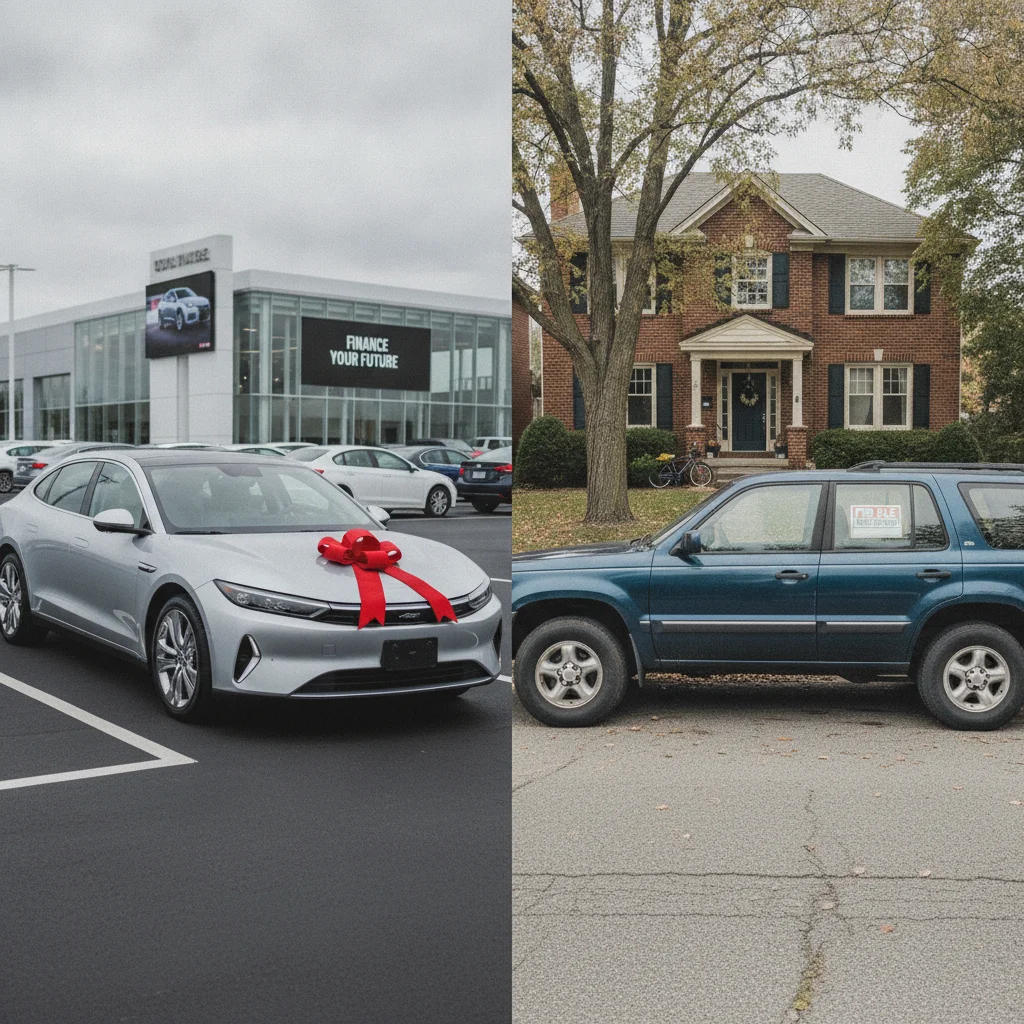
New Car
The full-warranty, full-price, maximum-depreciation choice.
Best for: Buyers who prioritize the latest tech, factory warranty coverage, and are prepared to hold the vehicle long enough to recoup steep early-year value loss.
Option B
Used Car
The depreciation-skipping, value-forward alternative.
Best for: Buyers who want someone else to absorb the steepest portion of the depreciation curve and are comfortable doing more pre-purchase due diligence.
If you plan to keep your vehicle for 8–10 years
New Car
The early depreciation hit hurts less when amortized over a decade. You also get full warranty coverage during the years when repairs would otherwise be most expensive.
If you want the best dollar-for-dollar value on day one
Used Car
A two-to-three-year-old vehicle has already shed 30–40% of its original value. You get a functional, often near-modern vehicle at a significantly reduced depreciation risk profile.
If you drive high annual mileage (15,000+ miles per year)
Used Car
High mileage accelerates depreciation on any vehicle, but the initial purchase discount on a used car gives you more cushion before you're underwater on value.
If you want the latest safety technology and connectivity features
New Car
Advanced driver-assist systems and over-the-air update capability are largely limited to newer model years; the feature gap between new and three-year-old vehicles can be significant.
If you're financing and want to avoid being upside-down on your loan
Used Car
A lower purchase price combined with a flatter depreciation curve makes it easier to stay ahead of the loan balance, reducing negative equity risk significantly.
Understanding the Depreciation Curve Before You Buy
Depreciation isn't a mystery — it's a predictable pattern, and the clearest thing it tells you is that the biggest losses happen earliest. When you drive a new car off the lot, you've already triggered a value drop that no amount of careful driving will prevent. That's not a dealership myth; it's how the market prices used vehicles relative to new ones.
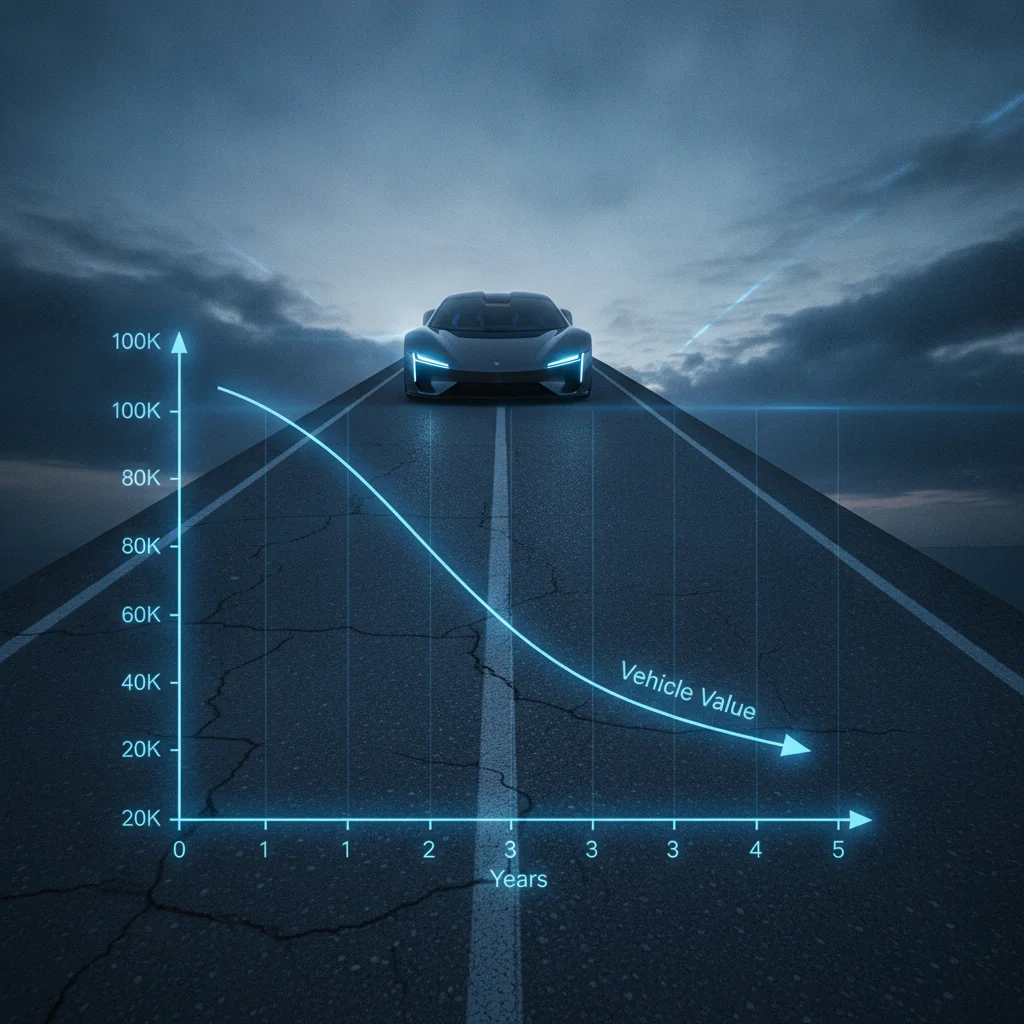
The depreciation curve for a typical new vehicle looks roughly like this: 15–25% gone in year one, another 10–15% in year two, then the rate of loss starts to flatten. By the time a vehicle hits the five-year mark, it has often shed 50–60% of its original MSRP. After that, the curve gets much gentler — though it never fully levels off.
What this means practically is that new and used buyers are entering at completely different points on that curve. A new car buyer absorbs the steepest drop. A used car buyer — especially one targeting a vehicle that's two to four years old — steps onto a much more gradual slope. The question isn't which vehicle is better; it's which depreciation risk profile you're prepared to take on.
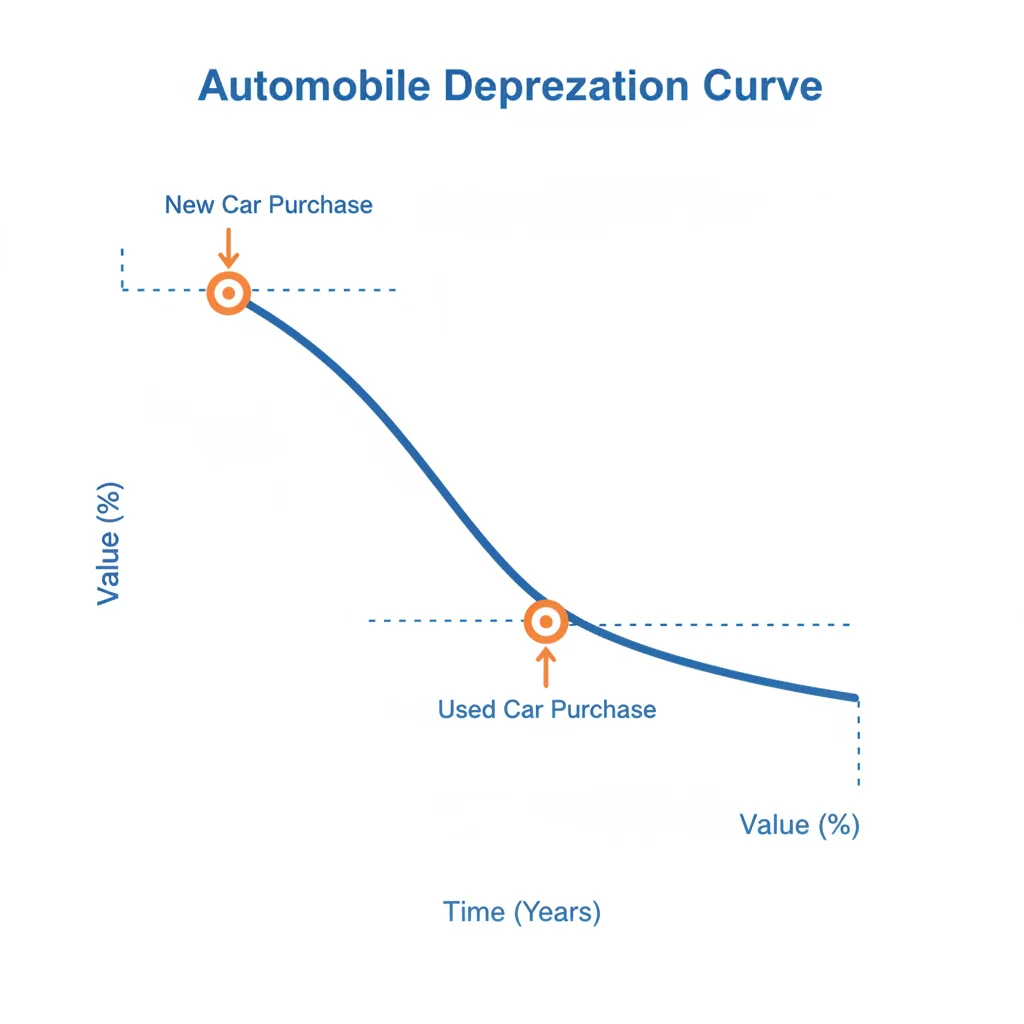
Knowing where you stand on that curve should shape not just what you buy but when you buy it and how long you plan to hold it. Those two decisions — timing and hold period — matter almost as much as the new-versus-used choice itself. See the Depreciation Basics hub for a deeper look at how age, mileage, and condition all factor into residual value.
New Car Depreciation: What You're Actually Paying For
When you buy new, you're paying for certainty — known history, full warranty, latest features — but you're also absorbing a premium that the market will immediately discount the moment the car changes hands. That first-year loss is sometimes called the "new car premium," and it's real money.
Consider a $42,000 vehicle that depreciates 20% in year one. That's $8,400 in value gone before the first oil change is due. If you financed that car with a modest down payment and a 60-month loan, there's a meaningful window in the early years where what you owe is more than the car is worth. That's negative equity, and it can turn a routine car sale or trade-in into a financial headache.
| Criterion | New Car | Used Car (2–4 years old) |
|---|---|---|
| Year-one depreciation | 15–25% of purchase price | 5–10% of purchase price |
| Negative equity risk | High in first 2–3 years | Low to moderate |
| Purchase price | Full MSRP (less incentives) | 35–45% below original MSRP |
| Warranty coverage | Full factory warranty | Limited or CPO extended warranty |
| Vehicle history risk | None | Moderate (requires due diligence) |
| Financing rate (APR) | Lower (manufacturer incentives common) | Higher on average |
| Best hold period | 7–10+ years | 4–7 years |
| Feature/tech currency | Latest available | 2–4 model years behind |
| Depreciation curve position | Entering at the cliff | Entering after the cliff |
Not all new vehicles depreciate at the same rate. Trucks and SUVs from domestic brands — particularly full-size pickups — have historically held value better than sedans and luxury vehicles. Brand reputation, market supply, fuel costs, and residual value forecasts from lenders all play into how steeply a specific model depreciates. If you're buying new, researching your specific model's historical depreciation rate isn't optional — it's one of the most important numbers you can pull before signing.
The other thing worth knowing: purchase timing matters even within the new car segment. Buying a current model year in late summer or fall — when dealers are clearing inventory to make room for the new model year — often gets you a better deal. But that same car will depreciate faster from a timing standpoint because the new model year is already on its way in. For more on how leasing and buying interact with depreciation risk differently, see Leasing vs. Buying: Which Strategy Wins When Depreciation Is in the Equation.
20%
Average new car value loss in year one
Industry data from iSeeCars and Edmunds consistently shows most new vehicles lose between 15–25% of their value within the first 12 months of ownership.
49%
Average value retained after five years
According to iSeeCars' 2023 depreciation study, the average vehicle retains approximately 49% of its original value at the five-year mark.
3 years
Optimal used car purchase age for value
A three-year-old vehicle typically offers the best balance of modern features, remaining reliability, and already-absorbed depreciation, according to Carfax buyer research.
37%
Average new car value loss over three years
Edmunds data shows the average new vehicle loses roughly one-third of its value by the end of year three, with luxury vehicles often depreciating faster.
$6,000+
Typical year-one dollar loss on a $35K vehicle
On a $35,000 vehicle depreciating at 18%, the first year represents over $6,000 in value loss — often exceeding the total annual loan interest paid.
Used Car Depreciation: Skipping the Cliff, Not the Slope
The standard pitch for buying used is that you let someone else take the first-year depreciation hit. That's accurate, but it's incomplete. You're not escaping depreciation entirely — you're entering a vehicle's depreciation life at a different point. The slope is gentler, but it still exists.
A three-year-old vehicle has typically already lost 35–45% of its original value. From that point forward, annual depreciation is usually in the 5–10% range rather than the 15–25% range of year one. That's a meaningfully different exposure, especially if you're financing. A lower starting price combined with a slower rate of decline gives you a much better chance of staying above water on the loan.
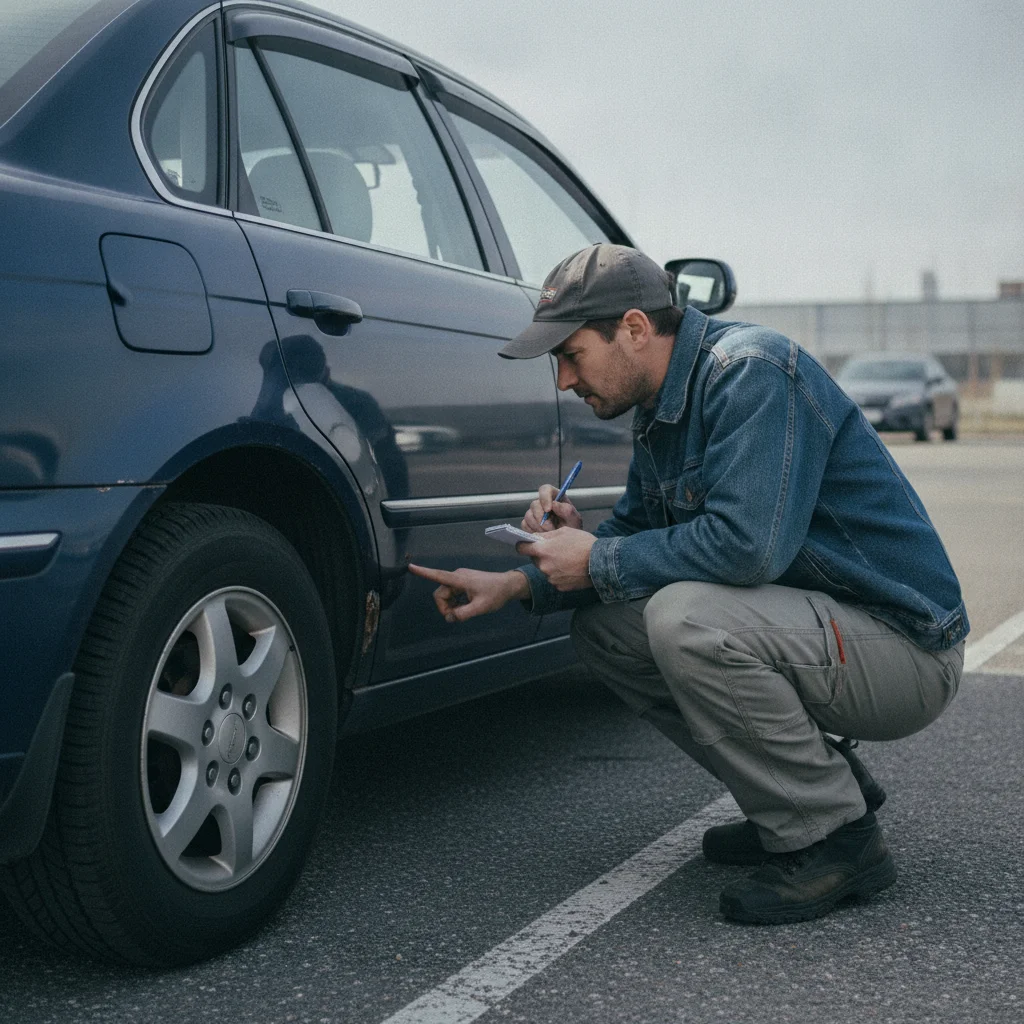
Buying a used car also introduces a risk that new car buyers don't face: unknown history. Mechanical wear, deferred maintenance, accident history — these are variables that can accelerate value loss beyond what the normal depreciation curve would predict. The pre-purchase checklist for gauging remaining depreciation risk is a practical tool here, not just a due-diligence nicety.
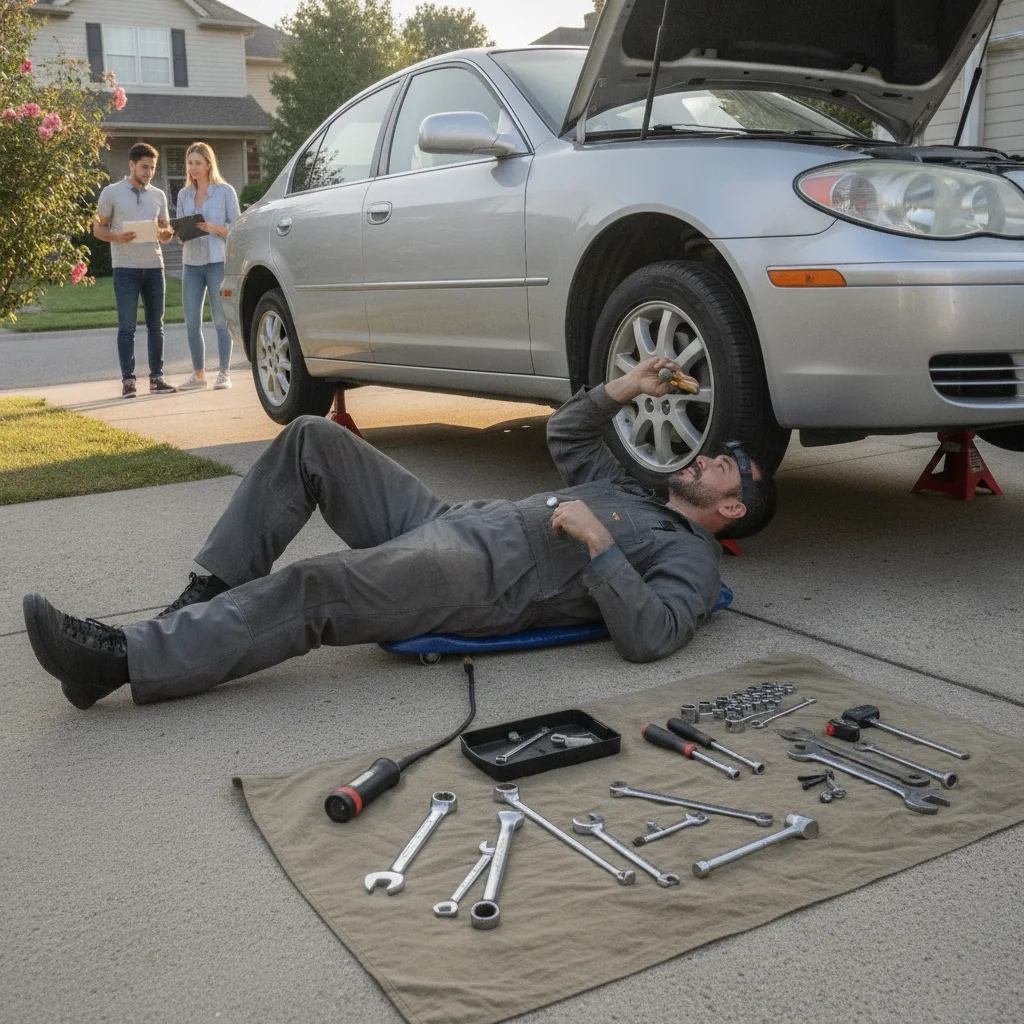
Certified pre-owned (CPO) programs offer a middle path — manufacturer-inspected used vehicles with extended warranty coverage. They typically cost more than standard used cars and carry higher interest rates than new car financing, but they reduce some of the mechanical unknowns. The depreciation advantage is real but smaller than buying a non-CPO used vehicle at a steeper discount. It's a tradeoff worth thinking through based on how risk-averse you are and how mechanically confident you feel about evaluating a standard used vehicle.
One more thing to understand: the used car market is not immune to economic swings. During the supply chain disruptions of 2021–2023, used car prices spiked to the point where some used vehicles sold for more than their new car equivalents. That's unusual, but it illustrates that used car depreciation curves don't happen in a vacuum — market conditions can compress or widen the gap between new and used pricing significantly.
How Hold Period Changes the Math Completely
Here's what most new-vs-used comparisons miss: depreciation is only a loss you fully realize when you sell. If you hold a vehicle long enough, the per-year cost of that initial depreciation shrinks to the point where it stops being the dominant financial factor.
Take a new car with $10,000 of depreciation in year one. If you sell after two years, you're absorbing roughly $5,000 per year in depreciation. Hold it for ten years and sell it, and that same $10,000 spread out is $1,000 per year — a very different number. Meanwhile, a used car bought at a discount might carry higher maintenance costs in later years, which can eat into the value advantage that made it attractive in the first place. The relationship between depreciation and mechanical wear is worth understanding before you assume a used car is always the cheaper long-term choice.
The Break-Even Point Varies by Model
The hold period at which buying new becomes financially competitive with buying used varies significantly by vehicle type. Trucks and SUVs that hold value well reach break-even faster than luxury sedans with steep depreciation curves. Before assuming a long hold justifies buying new, check the five-year residual value forecast for the specific model you're considering — not just the segment average. Resources like Edmunds True Cost to Own or iSeeCars depreciation reports give model-specific data that's far more useful than industry averages.
For buyers who know they'll want to trade in or sell within three years, a used car is almost always the financially smarter call — lower purchase price, less steep depreciation, less negative equity risk. For buyers who plan to own for eight or more years, the math on a new car gets more competitive because the initial depreciation hit gets amortized over a longer period while the vehicle is still covered under warranty for the highest-risk early years.
Down payment strategy also interacts with this. A larger down payment on a new car gets you past the negative equity zone faster, while a smaller one on a used car may actually be adequate because the loan balance is already lower. See Down Payments on New Cars vs. Used Cars for a side-by-side look at how lender expectations differ.
Timing the Market: When to Buy New, When to Buy Used
Beyond the structural new-vs-used question, the calendar matters. The best time to buy a new car is typically between August and October, when dealers are motivated to move current model year inventory. You'll often find manufacturer incentives, dealer discounts, and lower APR financing offers stacked together. The tradeoff: that new car is already somewhat dated by market perception, which can accelerate its depreciation slightly compared to buying a freshly released new model year.
Used car pricing follows its own seasonal rhythm. Prices typically dip in January and February when consumer demand softens. Tax refund season (March through May) tends to push used car prices up as buyers with cash enter the market. If you're flexible on timing, targeting a used car purchase in late winter gives you the best shot at below-average pricing.

Economic conditions add another layer. During periods of high new car inventory and low interest rates, the value proposition of buying new improves — dealer incentives narrow the price gap, and financing costs are lower. During supply crunches, the opposite happens: new car premiums spike, used car prices inflate, and the normal rules of thumb break down. Watching the market for three to six months before you're ready to buy will give you a real sense of where pricing sits relative to historical norms.
One timing consideration that's easy to overlook: the age of the model you're considering. A model in its last year before a generation refresh will depreciate faster than a freshly redesigned model, because buyers will soon prefer the updated version. This applies equally to used cars — if you're considering a three-year-old model and know the next generation just launched, expect that vehicle to depreciate faster than average going forward. Condition vs. Age is worth reading before you finalize any used car purchase decision.
Making the Right Call for Your Situation
There's no universal right answer in this comparison — there's the right answer for your hold period, your budget, your risk tolerance, and your mechanical comfort level. What I can tell you is that most buyers who regret their new car purchase do so because they underestimated how much they'd lose in years one and two, and most buyers who regret their used car purchase do so because they didn't dig far enough into the vehicle's history and remaining depreciation risk before buying.
The most financially predictable path is a two-to-four-year-old vehicle with documented maintenance history, modest mileage, and no accident damage — bought off-peak and held for at least five years after purchase. That positioning puts you on the gentlest part of the depreciation slope while limiting the mechanical unknowns that can turn a good deal into an expensive one.
Buying new makes sense when you plan a long hold, want full warranty coverage, or are buying a vehicle type — like a full-size truck or a hybrid with a strong residual forecast — that holds value better than average. If that's your situation, financing structure matters: a larger down payment or a shorter loan term keeps you out of negative equity territory faster. For a comparison of how the contracts themselves differ between new and used purchases, New Car vs. Used Car Purchase Contracts walks through the key differences in warranties, disclosures, and legal obligations.
Whatever you choose, go in knowing where you land on the depreciation curve. That single piece of awareness — knowing roughly how much value the vehicle will shed in the next one, three, and five years — is worth more than any negotiating tactic or dealer incentive comparison.

All claims are backed by peer-reviewed research. Sources on request.
Related articles
The Depreciation Curve: What the First Five Years of Ownership Really Cost You
Leasing vs. Buying: Which Strategy Wins When Depreciation Is in the Equation?