Key Takeaways
Our Verdict
Neither leasing nor buying is universally superior — the right answer depends almost entirely on how depreciation interacts with your specific vehicle choice, driving habits, and financial goals. Leasing wins when you want predictable costs, drive a high-depreciation vehicle short-term, and value flexibility. Buying wins when you drive high mileage, want to build equity, and plan to hold the vehicle long enough to ride out the steepest depreciation years.
| Best for | Recommended |
|---|---|
| Drivers who want predictable monthly costs and upgrade every 2–3 years | Leasing |
| High-mileage drivers or those who want to build equity over time | Buying |
| Anyone purchasing a vehicle with strong residual value and long-term reliability | Buying |
| Those driving brands with steep depreciation curves who only need the car 2–3 years | Leasing |
How Depreciation Actually Works — and Why It's the Core of This Decision
Before you can compare leasing and buying intelligently, you need a solid read on depreciation. If you're new to the concept, our complete owner's introduction to vehicle depreciation is the right starting point.
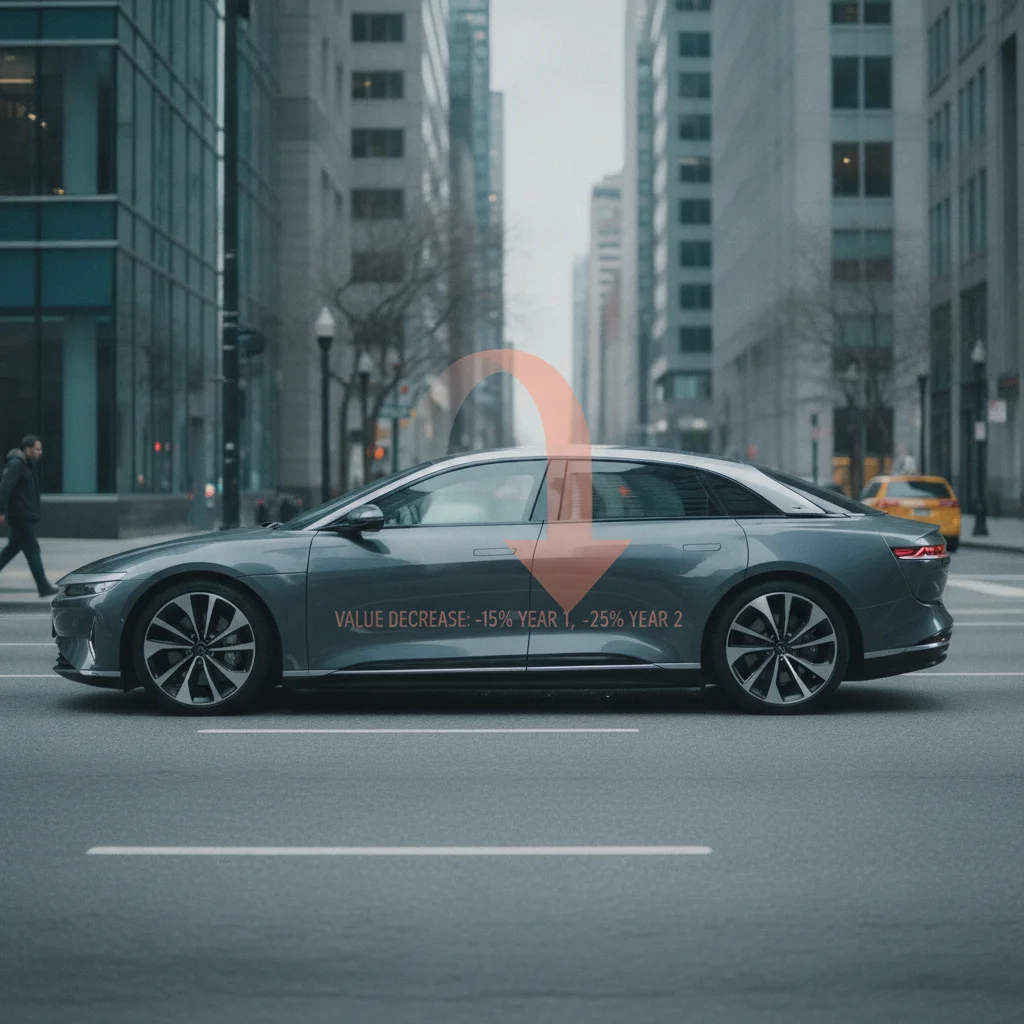
Here's the short version: a new vehicle typically loses 15–25% of its value the moment it leaves the lot, and another 10–15% per year for the first several years. By year three, many vehicles have shed 40–50% of their original MSRP. That's real money — often $10,000 to $20,000 on a mid-range vehicle — evaporating without a single repair bill.
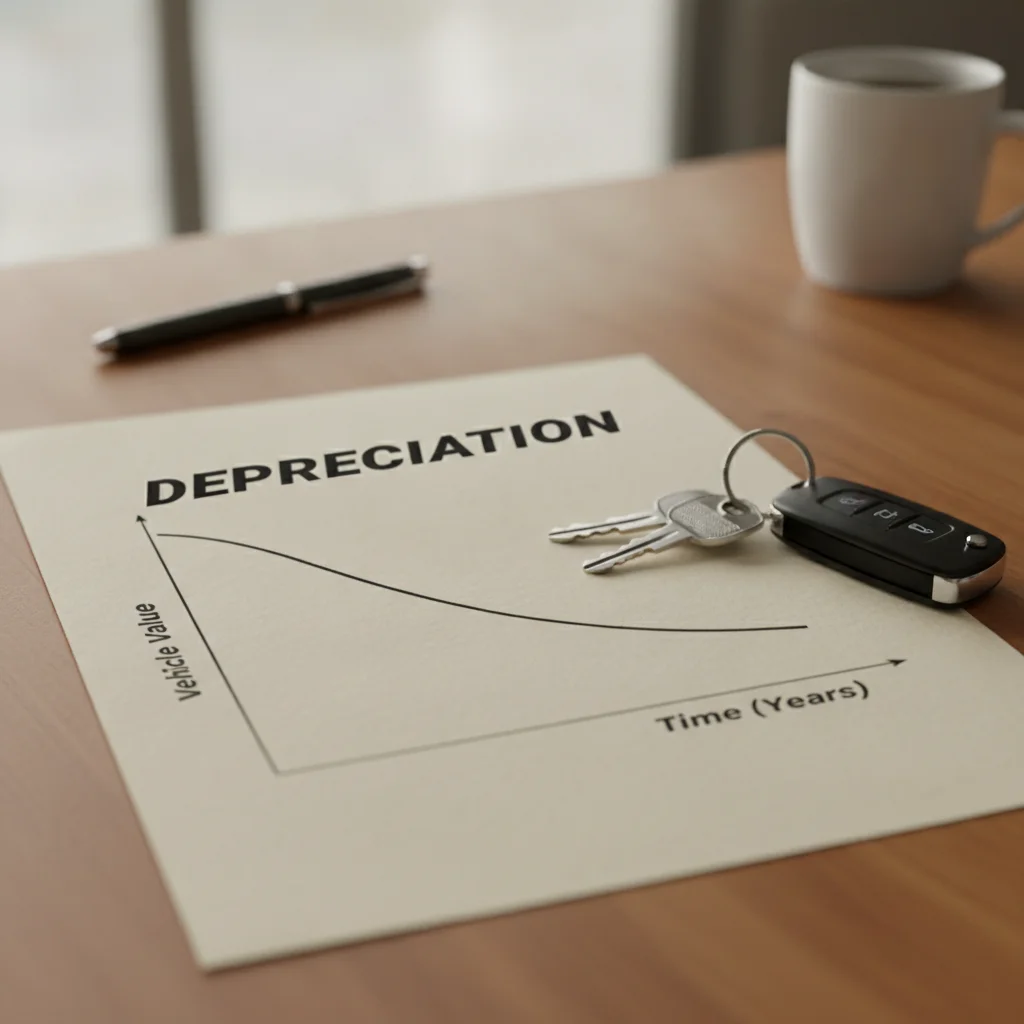
The steepness of that depreciation curve varies enormously by brand, segment, and model. A Toyota Tacoma or Honda CR-V loses value slowly. A Cadillac CT5 or Chrysler Pacifica loses value fast. That difference is the entire ballgame when you're choosing between leasing and buying.
Depreciation is often larger than fuel, insurance, and maintenance combined — it's just invisible because you don't write a check for it. Both leasing and buying expose you to this cost. They just structure that exposure differently.
49%
Average 3-year depreciation on new vehicles
According to iSeeCars data, the average new vehicle loses approximately 49% of its value within the first three years of ownership.
$0.20
Typical per-mile lease overage charge
Most lease agreements charge between $0.15 and $0.25 per mile over the contracted allowance, per Edmunds lease analysis.
$7,500
Federal EV lease tax credit potential
The Inflation Reduction Act allows leased EVs to qualify for up to $7,500 through the commercial clean vehicle credit, regardless of buyer income limits.
55–65%
Typical 3-year residual for strong-holding trucks
Vehicles like the Toyota Tacoma and Ford F-150 commonly retain 55–65% of MSRP after 36 months, per Kelley Blue Book residual tracking.
Leasing: You're Paying for Depreciation, Not the Car
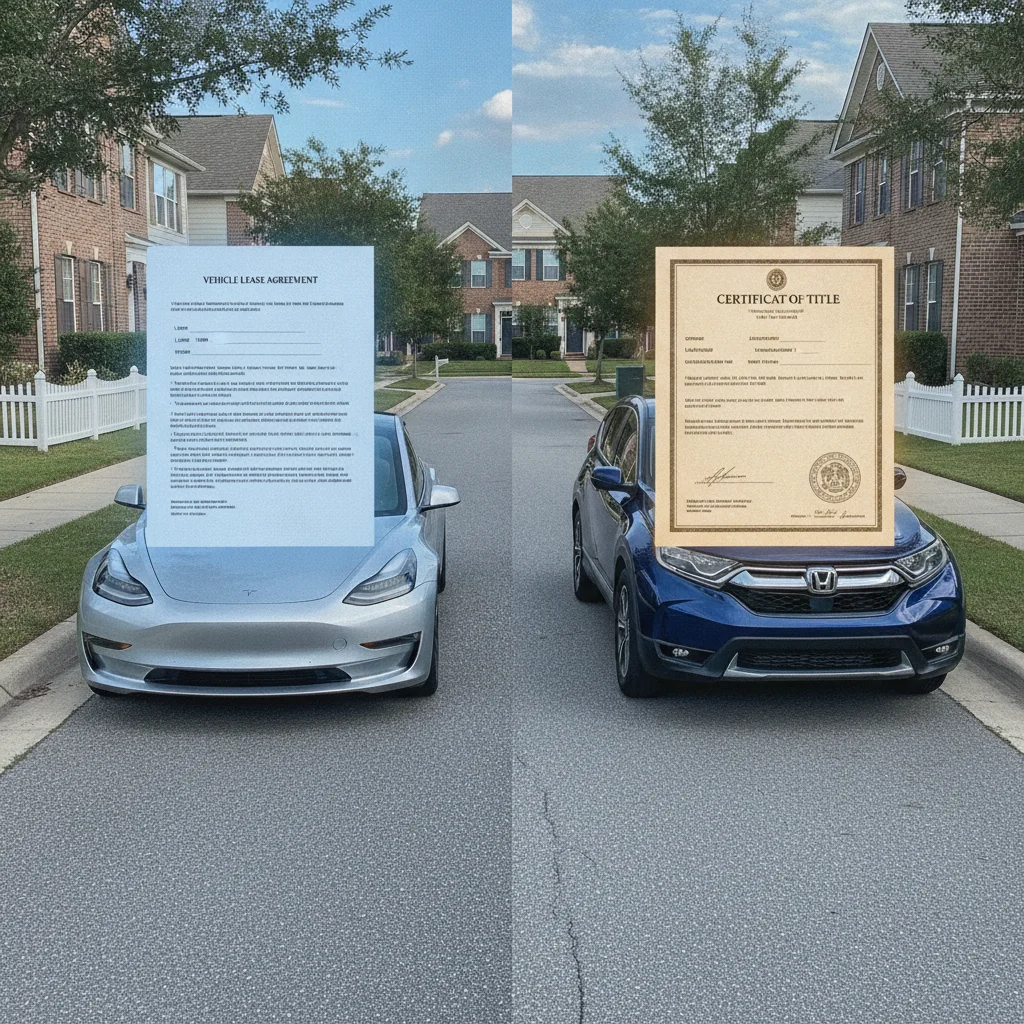
A lease payment isn't a payment toward ownership. It's a payment for the use of a vehicle during the period when it depreciates most aggressively. Here's how the math actually works:
- Capitalized cost: The negotiated selling price of the vehicle (yes, this is negotiable in a lease).
- Residual value: What the leasing company predicts the car will be worth at lease end. Expressed as a percentage of MSRP.
- Depreciation component: Cap cost minus residual value — this is the chunk you're financing with your lease payment.
- Money factor: The lease equivalent of an interest rate. Multiply by 2,400 to convert to an approximate APR.
If a $45,000 vehicle has a 55% residual over 36 months, the leasing company expects it to be worth $24,750 at return. Your payments finance that $20,250 gap — plus the money factor applied to both the cap cost and residual. You never pay for the remaining $24,750 of the car's value.
Always Negotiate the Cap Cost on a Lease
The capitalized cost in a lease is just the selling price of the vehicle — and it's negotiable, exactly like a purchase price. Many shoppers focus on the monthly payment and miss that a lower cap cost reduces every payment across the full lease term. Get the out-the-door price before you discuss lease structure, and use competing dealer quotes to drive it down.
Think Twice Before Putting Money Down on a Lease
A large cap cost reduction lowers your monthly payment but doesn't protect that money if the vehicle is totaled or stolen early in the lease. GAP coverage pays the difference between what you owe and the vehicle's value — it doesn't reimburse your upfront cash. Consider keeping that money liquid and accepting a slightly higher monthly payment instead.
Use the End-of-Lease Buyout as a Buying Opportunity
Check the current market value of your leased vehicle against the predetermined residual price before your lease ends. If the car is worth more than the residual — common during periods of strong used-car demand — you can buy it at the contracted price and immediately sell or trade it at a profit. This is one of the few built-in advantages that comes with leasing.
This structure makes leasing genuinely attractive when a vehicle depreciates fast. If that same $45,000 car has a 45% residual instead of 55%, your payments finance $25,250 of depreciation instead of $20,250 — a significant jump. The leasing company builds their expected depreciation right into your monthly payment. When a vehicle holds value poorly, leasing it is expensive because you're covering that steep drop in value.
On the other hand, vehicles with strong residuals — Toyota, Honda, Subaru, and many trucks — have naturally lower lease payments relative to their purchase price, because the leasing company expects to recover more value at the end of the term.
One thing many people miss: in a lease, you bear the depreciation cost but don't bear the risk of the car being worth less than expected at sale time. If market conditions tank residuals, that's the leasing company's problem, not yours — as long as you return the car in good condition and under mileage. That risk transfer has real value.
Buying: You Own the Depreciation — and the Equity
When you buy — whether cash or financed — you own every dollar of that depreciation curve. If a $45,000 truck is worth $28,000 in three years, you absorbed $17,000 in depreciation. Full stop. No leasing company to absorb the tail risk. No residual guarantee.
That sounds bad, but flip it around: you also own the $28,000 that remains. And if the truck holds value better than expected — say it's worth $32,000 instead — that extra $4,000 is yours. Buyers benefit when markets favor used vehicles. Lessees don't. During the 2021–2023 used car boom, many buyers found themselves holding vehicles worth more than they paid. Lessees returned those same vehicles to the dealer for the pre-agreed residual and walked away with nothing.
The other major ownership advantage: mileage. Most leases cap you at 10,000–15,000 miles per year. Overage fees typically run $0.15–$0.25 per mile. A driver putting 20,000 miles a year on a car with a 12,000-mile allowance will pay $1,200–$2,000 in overage fees per year on top of every other cost. Over a 36-month lease, that's $3,600–$6,000 in penalties — just for driving your car.
Buyers face no such penalty. They absorb additional depreciation from higher mileage, yes — but it's baked into the trade-in or resale price when they're ready to sell, not charged as a per-mile fee.
When you buy also matters as much as whether you buy — a used vehicle purchased in years two through four represents dramatically different depreciation exposure than buying new. Leasing almost always involves a new vehicle, putting you squarely at the top of the depreciation cliff.
Returning a Leased Car Early Is Expensive
Breaking a lease before the term ends typically means paying all remaining monthly payments, plus an early termination fee, plus any wear-and-tear or mileage charges. Unlike selling a car you own, there's rarely a clean or cheap way out of a lease mid-term. Before signing, make sure the lease term matches how long you actually plan to keep the vehicle.
High-Mileage Drivers: Leasing Is Usually the Wrong Choice
If you consistently drive 18,000–25,000 miles per year, the overage fees on a standard lease will significantly erode any payment savings. Some lessors offer high-mileage lease options, but the per-mile cost is built into the payment upfront and rarely works out cheaper than buying. Run the full math, not just the monthly payment comparison, before committing.
Side-by-Side: How Leasing and Buying Stack Up Across Key Factors
Let's get concrete. Here's how leasing and buying compare across the variables that matter most when depreciation is the lens you're using.
| Factor | Leasing | Buying | |
|---|---|---|---|
| Depreciation exposure | Pays for depreciation in payments; no residual risk | Absorbs full depreciation; owns remaining equity | |
| Monthly payment | Lower (financing only depreciation portion) | Higher (financing full vehicle value) | |
| Mileage flexibility | Capped; overage fees apply | Unlimited; higher mileage reduces resale value | |
| Equity building | None — no ownership stake | Yes — equity grows as loan pays down | |
| Market upside | Leasing company captures any value above residual | Owner captures full upside on resale | |
| Customization | Not permitted; must return stock | Full freedom to modify | |
| End-of-term options | Return, buy, or re-lease | Sell, trade in, or keep | |
| Best depreciation scenario | High-depreciation vehicles; short term use | Low-depreciation vehicles; long-term hold | |
| Total 9-year cost (typical) | Higher — perpetual payment cycle | Lower if vehicle is held past loan payoff | |
| Early exit cost | Expensive; early termination fees | Costly but more control over timing |
A few things worth expanding on from the table above:
- Total cost over 9 years: Studies consistently show that buying and holding a paid-off vehicle for 3+ years after the loan payoff period is the lowest total cost of ownership. The catch is that you need to be in a reliable vehicle, and you need to handle maintenance properly.
- Flexibility: Leases look flexible because you're only committing for 2–3 years. But breaking a lease early is expensive — often costing several remaining payments plus fees. Buying and selling, while also costly (transaction costs, depreciation), gives you more actual control over timing.
- Customization: Buyers can modify their vehicles however they like. Lessees return the car in stock condition or pay for restoration. If you plan to add aftermarket wheels, a tow hitch, or a lift kit, buying is the only path.
The Depreciation Math by Vehicle Type: Where Each Strategy Wins
The right leasing-vs-buying answer changes dramatically based on the vehicle you're looking at. Here's how to think through it by category:
Trucks and Body-on-Frame SUVs
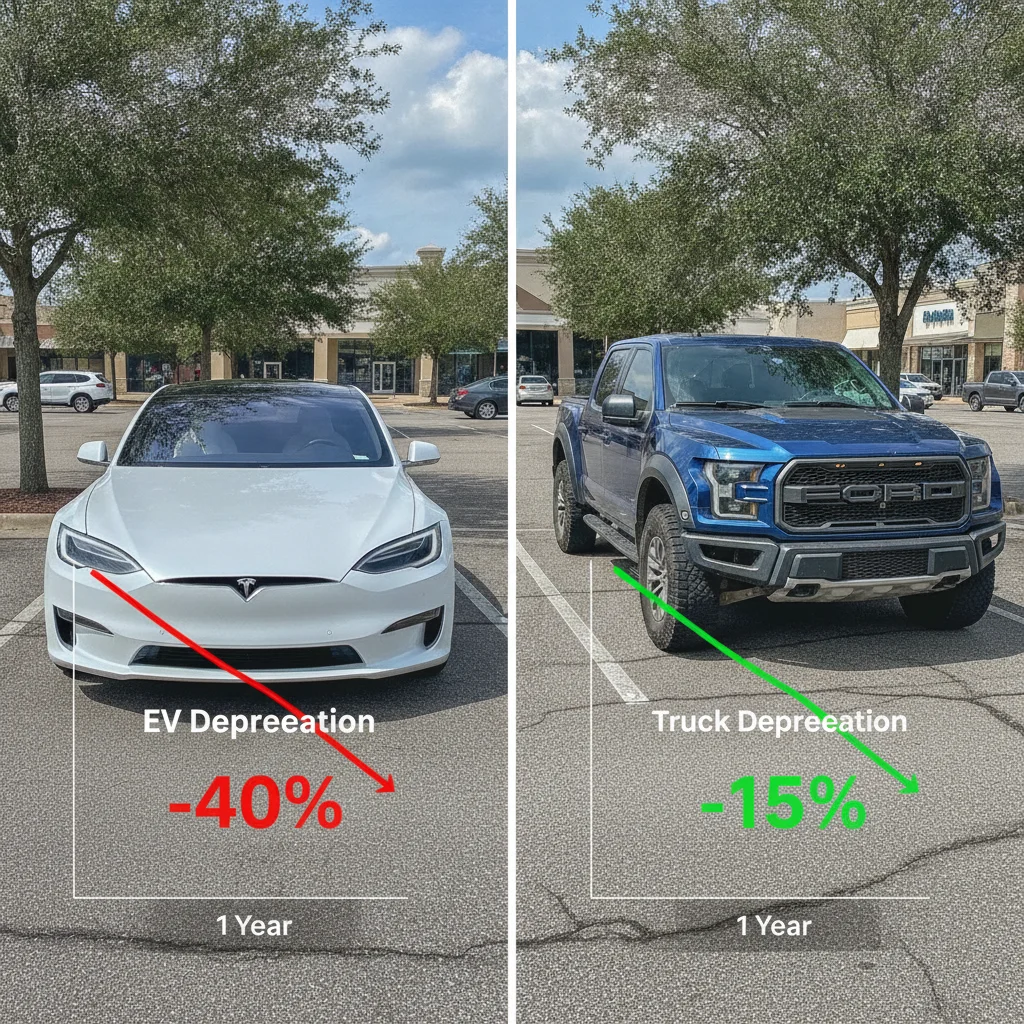
Vehicles like the Toyota Tacoma, Ford F-150, and Jeep Wrangler hold value exceptionally well. Buying these tends to pay off — residuals are high, meaning lease payments aren't dramatically lower than loan payments, and buyers capture significant equity over time. If you drive high miles or plan to keep the vehicle long-term, buying a truck is almost always the better play.
Luxury and German Vehicles
BMW, Audi, Mercedes, and similar brands depreciate aggressively — often 50–60% in the first three years. For these vehicles, the case for leasing strengthens considerably. You get the car during its most reliable, warrantied years, you transfer the residual risk to the manufacturer's captive finance arm, and you avoid taking the full depreciation hit when you sell. That said, luxury leases are often aggressively priced, so compare carefully.
Electric Vehicles
EVs present a unique case. Federal tax credits — up to $7,500 — apply to leased EVs through the commercial clean vehicle credit, even when buyers wouldn't otherwise qualify due to income or MSRP limits. That's a significant lease incentive built into the structure. EV residuals are also uncertain given rapid technology change, which is another argument for leasing: let the manufacturer carry that uncertainty.
Economy and Commuter Vehicles
A Honda Civic, Toyota Corolla, or Mazda3 depreciates modestly and tends to run for 150,000–200,000+ miles reliably. Buying and holding these vehicles long-term is one of the most cost-effective transportation strategies available. The math rarely favors leasing an economy car unless you have very specific circumstances.
For a deeper look at how timing your purchase affects your depreciation exposure based on vehicle type, see our guide on new vs. used car depreciation risk.
Upfront Money: Down Payments and Capitalized Cost Reduction
Whether you lease or buy, the money you put down at signing works very differently — and this is a place where people routinely make expensive mistakes.
In a purchase, a larger down payment reduces the loan balance, lowers monthly payments, reduces interest paid over time, and improves your equity position from day one. It's generally smart to put money down when buying.
In a lease, a down payment is called a capitalized cost reduction, and its logic is murkier. It reduces monthly payments — but if the vehicle is stolen or totaled early in the lease, you typically don't recover that upfront money. The payout from GAP insurance covers the gap between what you owe and the car's value, not the cap cost reduction you paid upfront.
Always Negotiate the Cap Cost on a Lease
The capitalized cost in a lease is just the selling price of the vehicle — and it's negotiable, exactly like a purchase price. Many shoppers focus on the monthly payment and miss that a lower cap cost reduces every payment across the full lease term. Get the out-the-door price before you discuss lease structure, and use competing dealer quotes to drive it down.
Think Twice Before Putting Money Down on a Lease
A large cap cost reduction lowers your monthly payment but doesn't protect that money if the vehicle is totaled or stolen early in the lease. GAP coverage pays the difference between what you owe and the vehicle's value — it doesn't reimburse your upfront cash. Consider keeping that money liquid and accepting a slightly higher monthly payment instead.
Use the End-of-Lease Buyout as a Buying Opportunity
Check the current market value of your leased vehicle against the predetermined residual price before your lease ends. If the car is worth more than the residual — common during periods of strong used-car demand — you can buy it at the contracted price and immediately sell or trade it at a profit. This is one of the few built-in advantages that comes with leasing.
The strategy behind upfront money differs significantly between leasing and financing — it's worth understanding that distinction before you sign anything. Many financial advisors recommend putting little to nothing down on a lease for this reason, and instead keeping that cash liquid.
In both cases, the negotiated price of the vehicle matters enormously. Buyers know to negotiate the purchase price. Lessees sometimes forget they can and should negotiate the capitalized cost — the lower you get it, the lower your monthly payments, regardless of what the MSRP says.
End-of-Term: Where the Real Decision Gets Made
Here's where leasing and buying diverge most sharply — and where a lot of people get caught off guard.
End of a Lease
You have three options at lease-end:
- Return the car. Walk away. This is the clean exit most people expect. You're on the hook for any excess mileage, wear-and-tear charges, and a disposition fee (typically $300–$500).
- Buy the car. Purchase at the predetermined residual price. This can be a smart move if the car's actual market value exceeds the residual — you're buying below market. It's a bad deal if the car is worth less than the residual.
- Lease again. Roll into a new lease, often with the same dealer. This perpetuates the cycle of never building equity but keeps you in a new vehicle.
End of a Loan
You own the car outright. No more payment. Every mile you drive past payoff is essentially free transportation (minus operating costs). If the vehicle is reliable — and you've maintained it properly — this is where buying pays off most aggressively. A paid-off Toyota or Honda with 100,000 miles and years of service left is one of the best financial assets a car owner can hold.
This is also where your maintenance habits show up in real dollar terms. A well-documented service history, clean interior, and good mechanicals translate directly into stronger resale or trade-in value. For guidance on what actually moves the needle at sale time, check out what detailing and repair steps deliver the best return.
For a broader comparison that weighs the full financial picture beyond just depreciation, our leasing vs. buying financial breakdown covers total cost of ownership from multiple angles.
Practical Framework: How to Choose Based on Your Situation
Here's a direct framework. Run through these questions before you commit to either path:
- How many miles do you drive per year?
- Under 12,000: leasing is viable. Over 15,000: buying almost always wins.
- How long do you plan to keep the vehicle?
- Under 3 years: leasing aligns well with the depreciation curve. Over 5 years: buying is almost always more cost-effective.
- What vehicle are you considering?
- Strong residuals (trucks, Toyotas, Hondas): buying advantage grows. Poor residuals (luxury brands, some domestic sedans): leasing becomes more competitive.
- Do you want to modify the vehicle?
- Yes: buy. No exceptions.
- Is the vehicle an EV with a federal tax credit?
- Check lease eligibility for the commercial clean vehicle credit — it can swing the math significantly.
- How important is payment predictability?
- Leasing offers very predictable costs for 2–3 years. Buying with a fixed-rate loan also offers predictability, but ownership costs (maintenance, repairs) increase over time.
Always Negotiate the Cap Cost on a Lease
The capitalized cost in a lease is just the selling price of the vehicle — and it's negotiable, exactly like a purchase price. Many shoppers focus on the monthly payment and miss that a lower cap cost reduces every payment across the full lease term. Get the out-the-door price before you discuss lease structure, and use competing dealer quotes to drive it down.
Think Twice Before Putting Money Down on a Lease
A large cap cost reduction lowers your monthly payment but doesn't protect that money if the vehicle is totaled or stolen early in the lease. GAP coverage pays the difference between what you owe and the vehicle's value — it doesn't reimburse your upfront cash. Consider keeping that money liquid and accepting a slightly higher monthly payment instead.
Use the End-of-Lease Buyout as a Buying Opportunity
Check the current market value of your leased vehicle against the predetermined residual price before your lease ends. If the car is worth more than the residual — common during periods of strong used-car demand — you can buy it at the contracted price and immediately sell or trade it at a profit. This is one of the few built-in advantages that comes with leasing.
Whatever path you take, understanding the depreciation profile of the specific vehicle you're considering is non-negotiable. The depreciation basics hub has tools and context to help you evaluate how age, mileage, and condition affect value for the vehicles on your shortlist.
The bottom line: depreciation doesn't care whether you lease or buy. It's happening either way. The question is who bears the risk, who captures the upside, and which structure fits how you actually use a vehicle. Get those three things right and you'll make the call that actually makes sense for you.

All claims are backed by peer-reviewed research. Sources on request.