Key Takeaways
Why Depreciation Timing Is a Money Decision, Not Just a Car Decision
Most people treat selling a car as a reactive event — the transmission starts slipping, the lease is up, or life changes and they just need something different. That's understandable, but it leaves serious money on the table. Depreciation doesn't move in a straight line. It accelerates at predictable points in a vehicle's life, and if you know where those cliffs are, you can get out before you fall off them.
The average new car loses roughly 20% of its value in the first year and close to 50% by year five. But that drop isn't smooth. There are windows — typically around the 2-to-3 year mark and again near 5 years — where the rate of loss actually slows. Those plateaus are your best selling opportunities, because buyers see a lower price than new but you haven't given up as much equity as you will if you hold on longer.
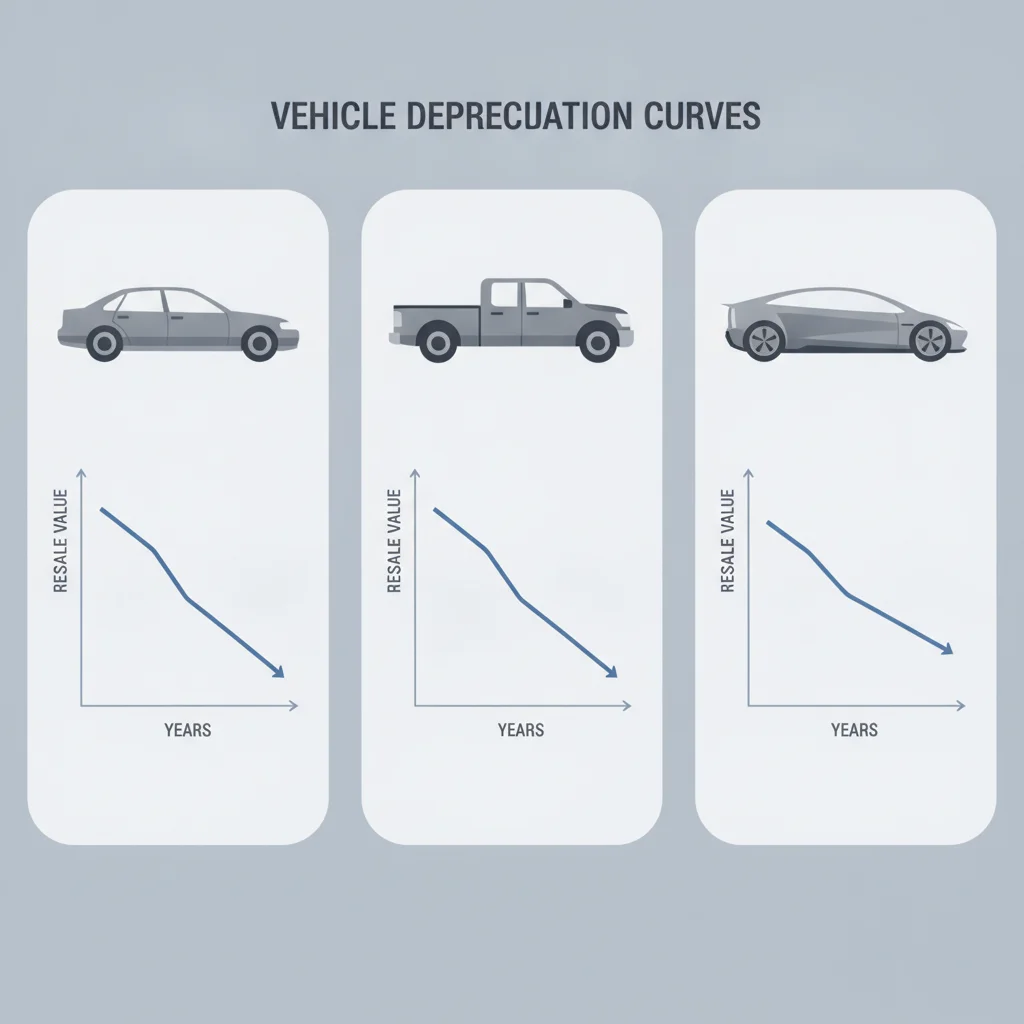
Understanding this isn't about being a savvy investor. It's about making a practical call on one of the most expensive assets most families own. Check out our breakdown of depreciation curves by vehicle type to see exactly how sedans, trucks, and EVs differ — because they do, significantly.
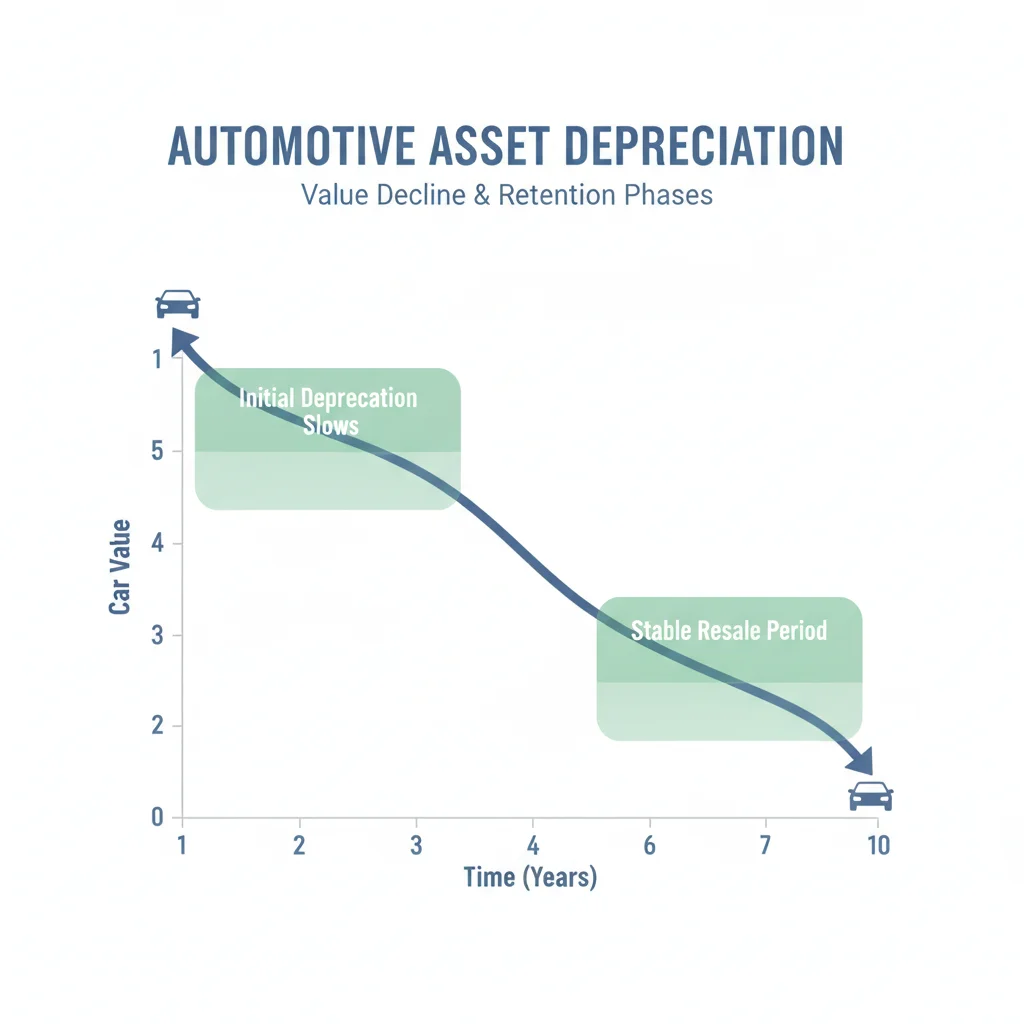
The goal of this guide is to walk you through a concrete process: pull your vehicle's current value, map it against known depreciation benchmarks, factor in mileage and condition, and land on a defensible sell window. You won't need a spreadsheet degree. You just need to be honest about where your car sits right now.
What You Need Before You Start
Before you can make a smart timing decision, you need a few pieces of information in hand. Don't skip this — guessing at your car's value or depreciation stage leads to either selling too early and missing equity, or holding too long and watching the value drop faster than you expected.
What you will need
Kelley Blue Book (KBB.com)
Generates a current private-party and trade-in value estimate based on your vehicle's year, make, model, mileage, and condition.
Edmunds True Market Value
Provides a cross-check valuation and shows what comparable vehicles are actually selling for in your local market.
Carmax or Carvana Instant Offer
Gives you a real cash floor offer within minutes — useful for establishing your minimum acceptable price before negotiating with private buyers.
Vehicle History Report (Carfax or AutoCheck)
Confirms your own records are clean and lets you proactively address any flags a buyer might find — accidents, title issues, odometer discrepancies.
Depreciation Calculator (e.g., iSeeCars or similar)
Maps out the projected value curve for your specific vehicle over the next 12–36 months so you can see what holding costs you.
The Key Depreciation Cliffs and Plateau Windows
Here's the honest lay of the land on how most vehicles depreciate, based on industry data and what I've seen firsthand working on and trading cars over the years.
| Ownership Stage | Typical Cumulative Value Loss | What's Happening |
|---|---|---|
| Year 1 | 15–25% | Drive-off-the-lot depreciation hits hard |
| Years 2–3 | 30–40% | Rate slows — first plateau window |
| Years 4–5 | 40–50% | Rate picks back up |
| Years 6–7 | 50–60% | Second plateau, but buyer pool narrows |
| Year 8+ | 60–70%+ | Value erodes faster; condition dominates |
The 2-to-3 year window is the sweet spot for maximum return per dollar of original purchase price. You've absorbed the steepest drop, but the next acceleration hasn't started yet. The 5-to-6 year window is a viable secondary exit, particularly for trucks and SUVs that hold value better than average.
Mileage compounds all of this. Crossing 60,000 miles triggers a psychological hesitation in many buyers — they assume more maintenance is coming. Crossing 100,000 miles triggers it even harder. If you can sell before either milestone, you'll face less buyer resistance and command a cleaner price. If you're already past them, it doesn't kill the sale, but you need to price accordingly and have documented maintenance records ready to show.
Vehicle type matters too. EVs depreciate faster than average right now due to rapid battery technology improvements — buyers worry about obsolescence. Trucks and body-on-frame SUVs hold value better than sedans and economy cars. If you're driving a midsize pickup and it's in good shape at year four, you may have more flexibility than someone in a four-year-old compact sedan. Our full vehicle-type depreciation guide covers this in more detail.
EVs Depreciate Faster Than Average Right Now
If you own an electric vehicle, the standard depreciation curves don't fully apply. Rapid advances in battery range and EV technology are causing older models to lose value faster than equivalent gas-powered vehicles. If you're holding an EV and considering selling, lean toward the earlier exit windows — the cost of waiting is higher for this vehicle type than most.
Don't Wait for the Perfect Moment
Trying to align every favorable factor — ideal depreciation stage, peak seasonal demand, hot used-car market — can lead to paralysis. A car sitting in your driveway while you wait for perfect conditions is still depreciating. A good enough window, acted on decisively, beats a perfect window you never take.
How to Time the Sale: Step-by-Step
Here's the process I walk through whenever I'm helping someone figure out whether now is the right time to sell or if they should wait. It takes maybe an hour the first time and considerably less after that. The steps build on each other, so don't skip ahead.
Pull Current Market Values From at Least Two Sources
Go to KBB and Edmunds and run your vehicle's private-party value. Use realistic condition ratings — most cars are in 'good' condition, not 'excellent.' If you've had any accidents, paint work, or known mechanical issues, drop down a tier. Also run an instant offer through Carmax or Carvana. You now have a realistic range: the instant-offer number is your floor, and the high-end private-party estimate is your ceiling assuming the car shows well and you market it properly.
Write down all three numbers. The spread between them is your negotiating buffer.
Calculate Where You Are on the Depreciation Curve
Take your original purchase price (or the MSRP if you bought used and don't have the original price). Divide your current market value by that number to get your retained value percentage. Then compare that percentage to the typical curve for your vehicle type.
Example: You paid $32,000 new. Current value is $19,500. That's about 61% retained — meaning you've lost 39%. For a 3-year-old vehicle, that's roughly on target for a mainstream sedan. Now ask: is the next 12 months likely to take you another 8–10% down, or will the rate slow?
If you're sitting on a plateau, you have flexibility. If you're about to cross a mileage milestone or a model-year refresh is coming, the next drop is imminent.
Check Your Mileage Against Key Buyer Hesitation Thresholds
Look at your current mileage and your typical annual mileage. Then calculate how many months it will take you to cross 60,000 miles or 100,000 miles — whichever comes first.
If you're at 54,000 miles and drive 15,000 miles per year, you'll hit 60,000 in under six months. That's a meaningful milestone to stay under if you can. If you're already at 63,000, the threshold is behind you — price accordingly and lead with your maintenance records.
Assess Deferred Maintenance and Condition Honestly
Walk around your vehicle and be brutally honest. Dings, scratches, worn tires, cracked windshield, check engine light, torn interior — these all reduce your asking price, and buyers will spot them during a test drive even if you don't mention them. List every known issue.
Now divide the list into two categories:
- Fix before selling — items that cost less to repair than the value they'll add back (e.g., a $150 detail that makes the car look $500 better, new wiper blades, a burned-out headlight)
- Price it in — items where the repair cost exceeds the value returned, or where the car is going to a buyer who prefers to handle it themselves (e.g., an aging transmission in a high-mileage vehicle)
Be careful about over-investing in repairs on a car you're about to sell. A fresh set of tires on a 4-year-old commuter sedan makes sense. Replacing a transfer case on a 7-year-old SUV before selling it usually doesn't pencil out.
Identify Your Target Sell Window and Set a Listing Date
With your valuation, depreciation stage, mileage trajectory, and condition assessment in hand, you can now make a concrete decision. You're looking for the intersection of:
- A depreciation plateau (not in active acceleration)
- Mileage below a major threshold, or recently past one where you can offset with maintenance records
- Favorable seasonal demand for your vehicle type
- No imminent model-year refresh that will depress perceived value
Set a specific listing date — not 'sometime this spring,' but an actual date on your calendar. Give yourself two to three weeks of preparation time before that date to handle any touch-ups, gather paperwork, and take listing photos.
If multiple factors align in the next 60–90 days, move. If you're more than six months out from a natural window, revisit the calculation quarterly rather than obsessing daily.
Choose Your Selling Channel and Prepare Documentation
Decide whether you're selling privately, using an instant-offer platform, or trading in. Based on your timing window and how much effort you're willing to put in:
- Private sale via Facebook Marketplace, AutoTrader, or Cars.com — highest proceeds, most work, 2–6 week timeline typical
- Instant offer (Carmax/Carvana) — fast close, fair but not top dollar, good if you need to move quickly
- Dealer trade-in — convenient, lowest return, useful if convenience or your next vehicle purchase outweighs maximizing sale price
Regardless of channel, gather your title (or payoff instructions from your lender), service records, both sets of keys, any owner's manuals or window stickers you still have, and a valid ID. Having everything organized signals to buyers that you're a careful owner — which supports your asking price.
Batch Your Research in One Sitting
Run all your valuations, depreciation calculations, and mileage projections in a single focused session rather than spreading them out over days. Having all the numbers in front of you at once makes the timing decision much clearer — and prevents you from unconsciously anchoring on whichever number you saw first.
Document Everything Before You List
Compile your maintenance records, recent receipts, and any warranty documentation into a folder before you take a single listing photo. Buyers who see organized records offer more and negotiate less aggressively. It's one of the highest-return preparation steps that most sellers skip entirely.
Market and Seasonal Factors That Can Move Your Window
Depreciation curves are only part of the picture. The actual price you get on a given Tuesday is also influenced by what the broader used-car market is doing and what season you're selling in.
Model-year changeovers are one of the sharpest external threats to your resale price. When a new model year hits dealerships — usually late summer through fall — the prior-year version immediately becomes less desirable in buyers' minds, even if nothing meaningful changed. If you're planning to sell, listing before that new model arrives at dealers can protect hundreds to thousands of dollars in perceived value. See our guide on listing before a new model year drop for a practical playbook on timing that window.
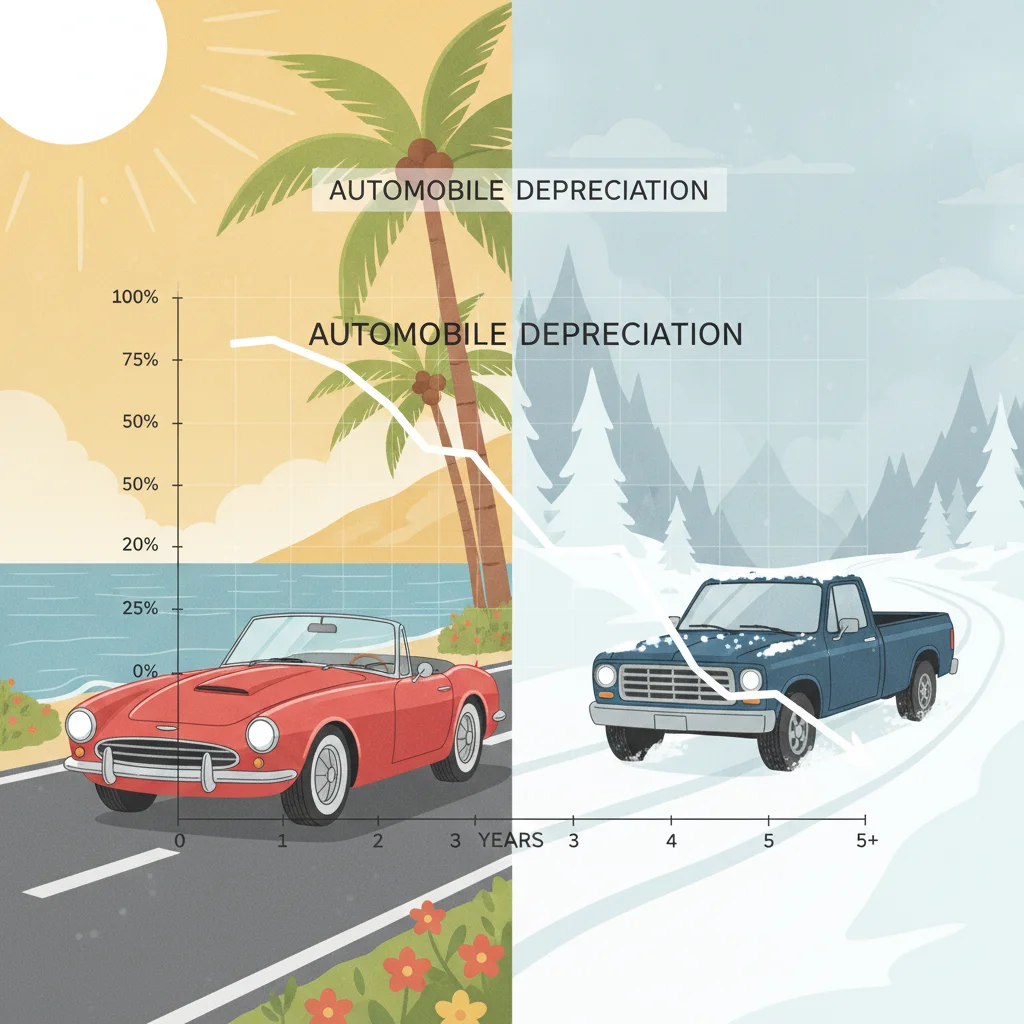
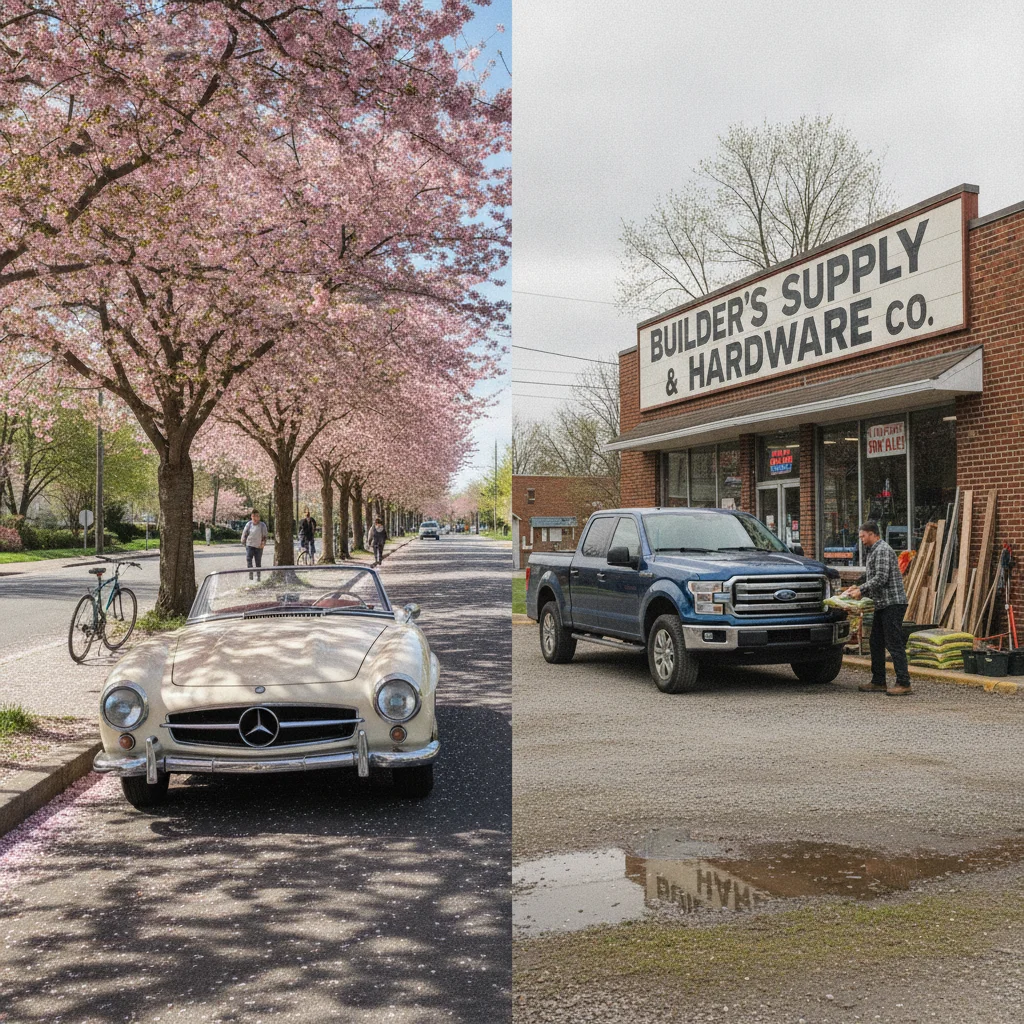
Seasonal demand shifts are real and predictable. Convertibles and sports cars peak in spring and early summer — buyers get excited, inventory feels scarce, and emotion drives prices up. Trucks and SUVs tend to get a bump in early spring when contractors and outdoor enthusiasts are gearing up. Sedans are relatively season-neutral. If your vehicle has a natural season, selling into that peak demand can add a meaningful premium. Our seasonal depreciation patterns article goes deep on this by vehicle type.
Broader economic conditions matter too. During periods of tight new-car inventory (like the supply chain disruptions of 2021–2023), used-car prices spike dramatically. During normal inventory conditions, they normalize. You can't perfectly predict macro events, but you can stay aware of whether the used-car market is hot or soft by checking tools like Manheim Market Report trends or just watching how quickly comparable listings are moving in your area.
The honest truth is that waiting for a perfect convergence of all favorable factors — right age, right season, right market — often leads to paralysis. If your car is at a solid exit window and the market is reasonably normal, that's good enough. Waiting too long has real costs that compound quietly. And if you're trying to decide between acting now or holding for a better window, our short-term vs. long-term timing strategies guide lays out a framework for making that call.
Negative Equity Changes Everything
If your vehicle's current market value is less than your loan payoff balance, you're upside-down on the car. Selling in this situation requires either bringing cash to the table at closing or rolling the negative equity into a new loan — which compounds your problem. Before you act on any timing window, verify your equity position with your lender. Selling at the 'right time' on paper can still be a financial loss if you're carrying significant negative equity.
A New Model Refresh Can Erase Months of Planning
Manufacturers occasionally announce mid-cycle refreshes or full redesigns with limited advance notice. When that news hits, comps for your model year can drop quickly as buyers hold out for the new version. Monitor manufacturer news and automotive press for your vehicle's model through sources like Car and Driver or Motor Trend, especially in the six months before you plan to list.
Private Sale vs. Trade-In: Which Fits Your Timing
Once you've identified your sell window, the next question is how you sell. The method affects both your net proceeds and how much runway you need to execute.
Private sale consistently nets more money — often 10–20% more than a dealer trade-in offer on the same vehicle. But it requires time, effort, and a buffer before you need cash in hand. You'll need to prepare the car, write a listing, handle inquiries, arrange test drives, and navigate paperwork. Plan for two to six weeks of active selling time in a normal market.
Dealer trade-in is faster and more convenient. You hand over the keys and walk out with a number applied to your next purchase. But dealers buy wholesale and sell retail — that gap is their profit margin, and it comes out of your pocket. If you're in a time crunch or the private-sale hassle genuinely isn't worth it to you, a trade-in is fine. Just know the tradeoff you're making.
Instant-offer platforms (Carmax, Carvana, Vroom, etc.) sit somewhere in between. They're faster than private sale, typically better than a traditional trade-in, and the offers are non-negotiable. They're a solid benchmark — even if you don't sell to them, getting an instant offer tells you your floor price before you negotiate with anyone else.
Whatever method you choose, timing your exit to a depreciation plateau still applies. A car at the right point in its depreciation curve will command a better price through any channel. The method just determines how much of that value you actually capture versus leave behind. For broader context on how market conditions affect your options, the market timing hub is worth browsing before you commit to a selling approach.

One last thing worth noting: if you're thinking about this from the buying side — trying to figure out when to get into a new vehicle to minimize your own depreciation exposure — the principles are mirror images of each other. The timing your purchase guide covers the buyer's angle on the same market dynamics.

All claims are backed by peer-reviewed research. Sources on request.