Key Takeaways
Insurer Financial Strength Rating
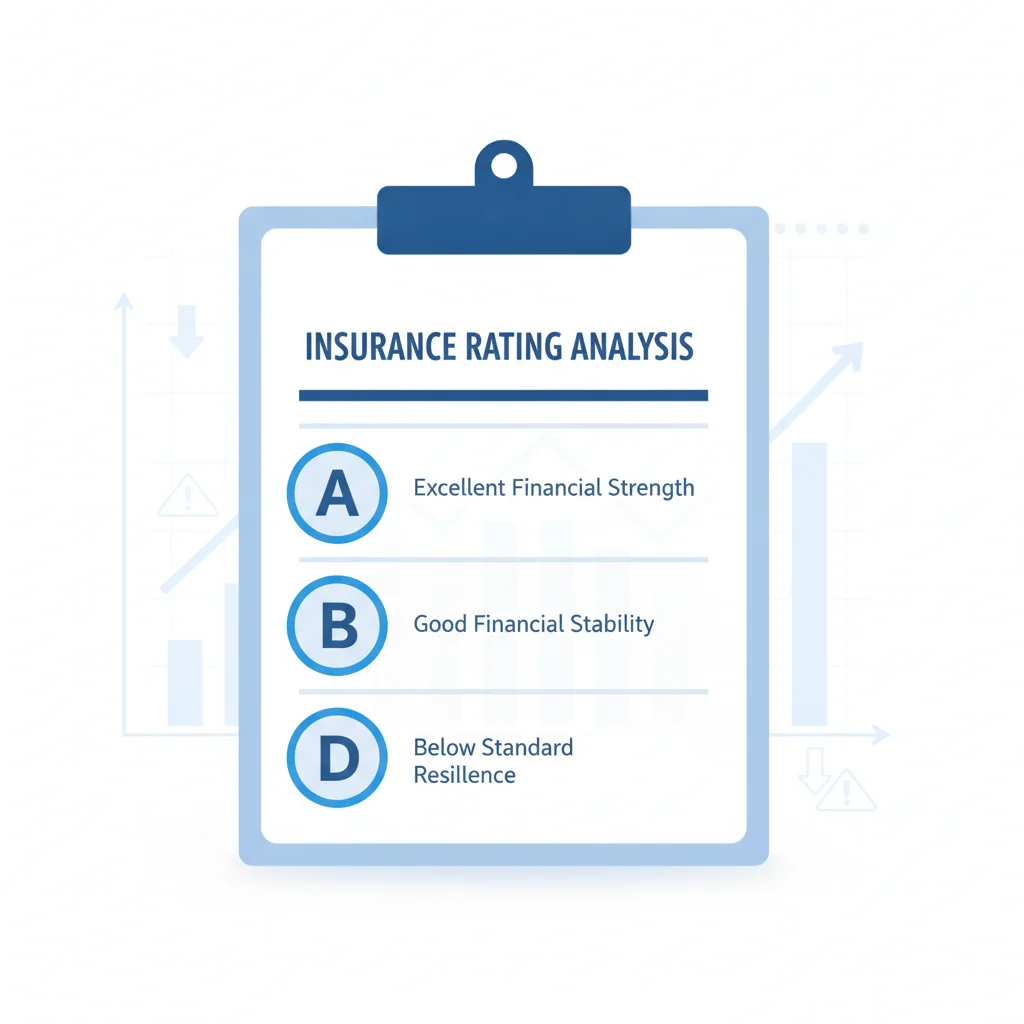
A financial strength rating (FSR) is an independent assessment of an insurance company's ability to pay out claims to policyholders. Ratings agencies like AM Best, Moody's, S&P, and Fitch evaluate an insurer's reserves, capital levels, underwriting performance, and business stability. The result is a letter grade — similar to a bond rating — that tells you how confident you can be that your insurer will actually be there when you need it.
AM Best's scale runs from A++ (Superior) down to D (In Liquidation); ratings of B+ or below are generally considered speculative for personal lines insurance. Ratings are reviewed periodically and can change based on catastrophe exposure, reinsurance arrangements, or shifts in investment portfolios.
Why Financial Strength Is a Coverage Quality Issue
When most drivers compare car insurance, they're looking at one number: the monthly premium. That's a reasonable starting point, but it ignores a question that only matters when something goes wrong — can this company actually pay what they owe me?
An insurance policy is a promise. You pay premiums now in exchange for a financial backstop later. The entire value of that contract depends on the other party being able to honor it. A carrier that quotes you $80/month but holds inadequate reserves to cover claims during a regional catastrophe isn't giving you a deal — they're giving you a promissory note from a borrower you haven't credit-checked.
This is especially relevant in auto insurance because claims can be large. A serious accident involving bodily injury, extensive vehicle damage, and legal liability can run into six figures. If your insurer's balance sheet is stretched, your payout becomes a negotiation, not a guarantee.
Financial strength ratings exist to solve this information problem. Independent agencies with access to insurer financial data do the analysis and publish a grade. Your job is simply to know how to read it and where to find it — which takes about five minutes once you understand the system.
It's also worth noting that financial strength is distinct from how well a company handles claims. For the latter, look at claims satisfaction data — our guide on comparing insurers on claims satisfaction covers where to find and interpret that data. Both dimensions matter; neither alone is sufficient.
The Four Major Ratings Agencies — and What They Actually Measure
Four agencies dominate insurance financial strength ratings. Each uses a slightly different scale and methodology, but all are evaluating the same core question: how likely is this insurer to meet its long-term financial obligations?
AM Best
AM Best is the gold standard for insurance-specific ratings. Unlike Moody's or S&P, whose primary focus is corporate debt, AM Best was built specifically to rate insurance companies. Their Financial Strength Rating (FSR) scale runs from A++ (Superior) at the top, through A+, A, A-, B++, B+, and down to D (In Liquidation).
For personal auto insurance, treat A- as the floor. Anything below B++ warrants serious caution. AM Best also issues a separate Long-Term Issuer Credit Rating (ICR), which evaluates the company's capacity to meet debt obligations — useful but secondary for policyholders.
Standard & Poor's (S&P)
S&P rates insurers using a familiar bond-style scale: AAA, AA+, AA, AA-, A+, A, A-, BBB, and so on. For personal lines, AA- or better represents very strong financial security; A- or better is generally acceptable. S&P ratings are more commonly used in the commercial insurance space but are valid for consumer comparison as well.
Moody's
Moody's uses Aaa, Aa1, Aa2, Aa3, A1, A2, A3, Baa, and so forth. The methodology emphasizes capital adequacy and stress-test scenarios. Moody's ratings are less frequently cited in personal auto contexts but are worth checking for large national carriers.
Fitch
Fitch's scale mirrors S&P's letter format. They're frequently used for life and health insurers but cover property and casualty carriers as well. For cross-referencing purposes, if a carrier holds A- or better across two or more agencies, that's a strong signal of stability.
~60%
U.S. auto insurance market held by A+ or better carriers
AM Best data consistently shows the majority of personal auto premium volume is concentrated in carriers rated A or above, reflecting policyholder preference for established, well-capitalized insurers.
$300K
Typical state guaranty fund per-claim cap
Most state guaranty associations cap auto insurance claim coverage at $300,000 or less — which may fall short of serious bodily injury claims under a failed insurer's policy.
B+ or below
AM Best rating considered speculative for personal lines
Industry underwriting guidelines and many financial advisors treat any AM Best rating below B++ as an elevated risk for personal auto policyholders.
4
Major agencies rating U.S. insurance carriers
AM Best, S&P, Moody's, and Fitch each publish financial strength ratings; AM Best is the most insurance-specific and most commonly referenced for personal auto comparison.
One practical note: not every insurer holds ratings from all four agencies. Many regional carriers are rated only by AM Best. If you can't find a rating at all, ask the insurer directly — a reputable company will be transparent about this.
How to Read the Ratings in Practice
The rating itself is just a starting point. Here's how to put it to work:
- Go to ambest.com and search the insurer by name. Basic FSR lookups are free. Note both the rating letter and the outlook (Stable, Positive, or Negative). A Negative outlook on an A- carrier is more concerning than a Stable outlook on the same grade.
- Check the rating date. Ratings are updated periodically but not continuously. A carrier that received an A in 2021 and hasn't been reviewed since may look different today, especially if they had large catastrophe losses.
- Look for the issuing entity, not just the brand name. Large insurance groups operate through subsidiaries. "Allstate" as a brand may encompass multiple underwriting entities with slightly different ratings. Make sure you're looking at the specific company that would issue your policy.
- Cross-reference with your state's Department of Insurance. Every state regulates licensed carriers and publishes data on complaints, financial condition, and any regulatory actions. This is free and often more current than third-party rating updates.
Check the Subsidiary, Not Just the Parent Brand
Large insurance groups like Berkshire Hathaway or Liberty Mutual operate multiple underwriting subsidiaries, each with its own rating. When you look up financial strength, search for the specific legal entity named on your declarations page — not just the parent company's brand name. The parent may be A+, but your actual policy issuer could be rated differently.
If you're comparing a well-known national carrier against a regional or online-only insurer with an unfamiliar name, the ratings check is especially important. Marketing spend and brand recognition don't indicate financial health — the balance sheet does.

One more thing: if a carrier is writing policies in your state but doesn't appear in AM Best's database at all, that itself is a yellow flag. It doesn't mean they're insolvent, but it means you're flying blind on one of the most important attributes of your insurance contract.
What Happens When an Insurer Fails — State Guaranty Funds Explained
No ratings system is perfect. Companies with A- ratings have become insolvent before. So what's the backstop if your insurer fails mid-policy?
Every state operates an insurance guaranty association — a fund funded by assessments on solvent insurers that steps in to cover claims when a licensed carrier goes under. For auto insurance, this means:
- Your existing claims will typically be processed, up to the state's per-claim cap
- Your policy may be transferred to another carrier or allowed to run to its expiration date
- New claims filed after insolvency are subject to caps that vary by state, often $300,000 or less for auto liability and property damage
State Guaranty Funds Are a Last Resort
Every state maintains a guaranty association that covers policyholders if a licensed insurer fails. For auto insurance, this typically means up to $300,000 per claim — but coverage caps, claim processing timelines, and eligible policy types vary by state. Do not treat the guaranty fund as an equivalent substitute for choosing a financially sound carrier in the first place.
Ratings Reflect Capacity to Pay, Not Willingness
A high financial strength rating tells you the insurer has the capital to pay claims. It doesn't guarantee they'll pay promptly, fairly, or without dispute. For that dimension, consult the NAIC complaint index and J.D. Power's annual claims satisfaction rankings alongside any financial strength data you gather.
Guaranty funds are a safety net, not a full replacement. If you're in a serious accident — one involving significant bodily injury or a total-loss vehicle — a $300,000 cap may not cover everything owed under your policy's original terms. You'll also face delays as the guaranty association processes the backlog from the failed insurer. The lesson: don't rely on guaranty funds as a substitute for choosing a financially sound carrier.
This risk is compounded in high-catastrophe years. An insurer with thin capital reserves that gets hit by a bad hurricane season, a wildfire cluster, or a hailstorm outbreak may face rapid downgrade or insolvency. Policyholders in affected states who chose the cheapest option sometimes find themselves in the guaranty fund queue right when they need their insurer most.
“A policy is only as good as the company behind it. Financial strength ratings are the closest thing consumers have to an independent audit of whether that promise is backed by real capital.”
— Robert Hartwig, Clinical Associate Professor of Finance and former president of the Insurance Information Institute
Ratings in Context: When Price, Coverage, and Stability All Have to Work Together
Financial strength ratings shouldn't replace price comparison — they should run alongside it. Here's a practical framework:
Step 1: Set a minimum ratings threshold
Before you compare quotes, decide you won't consider any carrier rated below A- by AM Best (or equivalent). This immediately narrows the field to financially stable options and removes the hidden risk of lower-rated carriers.
Step 2: Compare coverage terms, not just premiums
Among your A- or better carriers, dig into coverage details: deductibles, liability limits, exclusions, rental reimbursement terms, and roadside provisions. A policy that costs $20 more per month but carries a $500 lower deductible may be the better financial value. Your rate factors — your driving history, location, and vehicle — will affect the premiums each carrier offers you, sometimes dramatically.
Step 3: Layer in claims satisfaction data
A financially strong insurer that routinely underpays or delays claims is still a bad choice. Cross-reference your shortlist with J.D. Power's Claims Satisfaction Study and the NAIC's complaint ratio database. The best outcome is a carrier that scores well on both financial strength and claims handling.
Step 4: Consider your specific risk profile
If you drive an electric vehicle, for example, the carrier's experience with EV claims matters — repair network relationships, battery coverage language, and adjuster familiarity with EV-specific losses. See our EV insurance guide for how to evaluate carriers in that context, and our breakdown of specialty EV insurers vs. major carriers if you're weighing niche options.
The bottom line: ratings give you a floor. Above that floor, you compete on value — coverage quality, service reputation, and price. Dropping below the floor to save $15/month is a bet most drivers shouldn't take.
Common Misconceptions About Financial Strength Ratings
A few misunderstandings tend to trip people up when they first encounter this topic:
"Big brand = financially strong"
Brand recognition is a function of marketing budget, not solvency. There are well-advertised carriers that carry B+ ratings, and smaller regional insurers with A ratings. Always verify independently.
"My state insurance department already ensures they're safe"
State regulation requires carriers to meet minimum solvency standards to operate, but those minimums are relatively low. A carrier can be legally licensed in your state and still be financially fragile relative to a major catastrophe scenario. Regulatory oversight is necessary but not sufficient.
"Ratings never change"
They can and do change — sometimes quickly. A string of bad loss years, unexpected reinsurance costs, or a shift in investment strategy can trigger a downgrade. If you're renewing a multi-year policy or haven't checked in a year or two, it's worth a quick re-check at renewal time.
"If a rating agency missed a problem, ratings are useless"
No analytical tool is perfect. But ratings still provide signal. An insurer that's maintained an A rating for 20 consecutive years has demonstrated sustained financial discipline that a non-rated or lower-rated insurer hasn't. Imperfect information is still useful information.
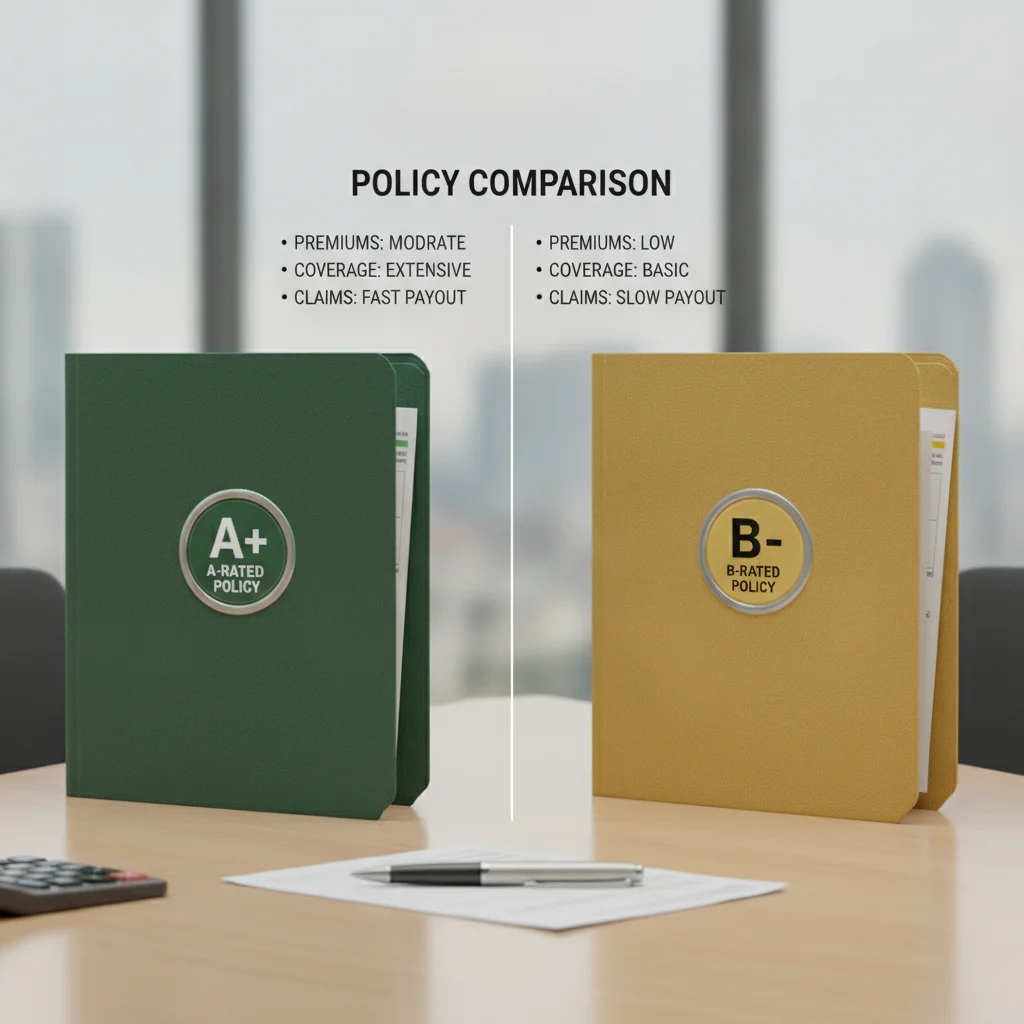
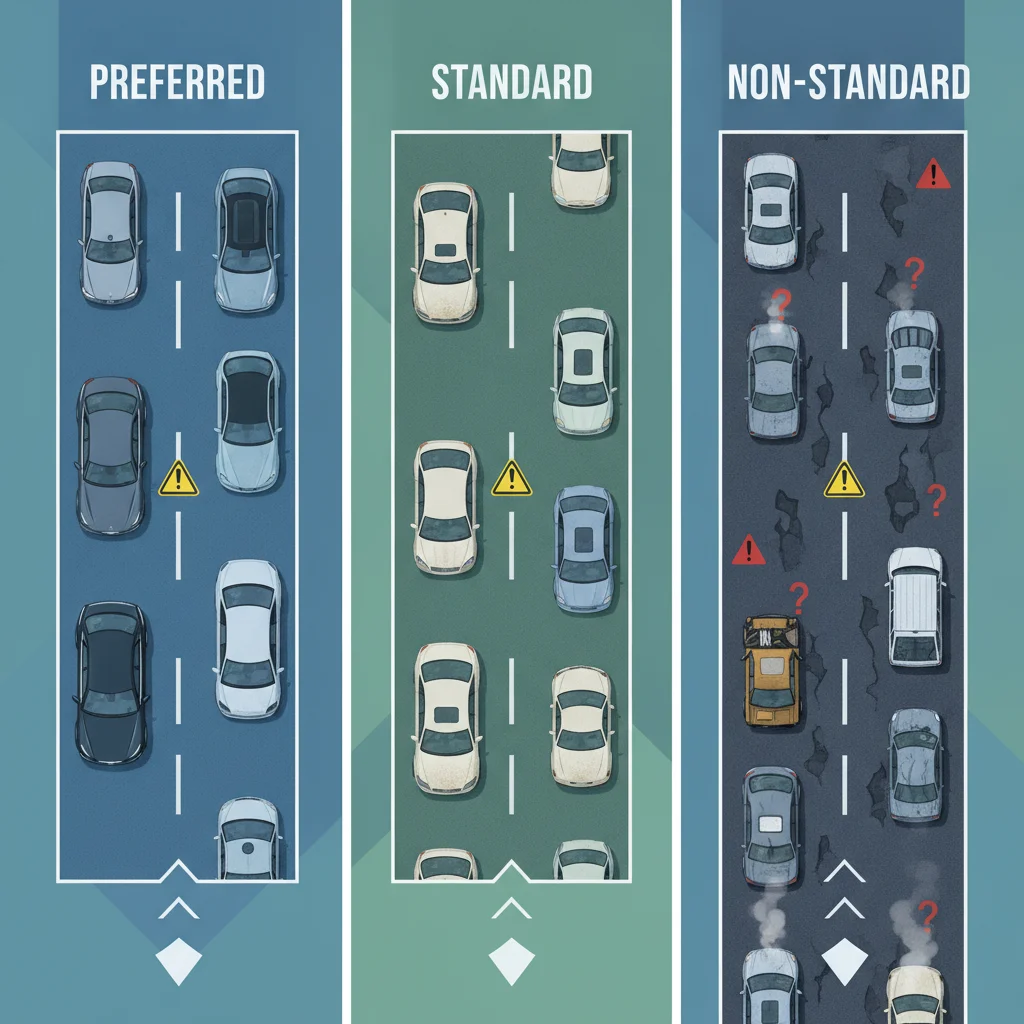
Understanding which risk tier you fall into is also relevant here: if you're a non-standard or high-risk driver, your insurer options may be limited, and some carriers in that market segment carry lower financial strength ratings. Knowing that tradeoff exists helps you make a more informed decision — and plan accordingly.

All claims are backed by peer-reviewed research. Sources on request.