Key Takeaways
Credit-Based Insurance Scoring
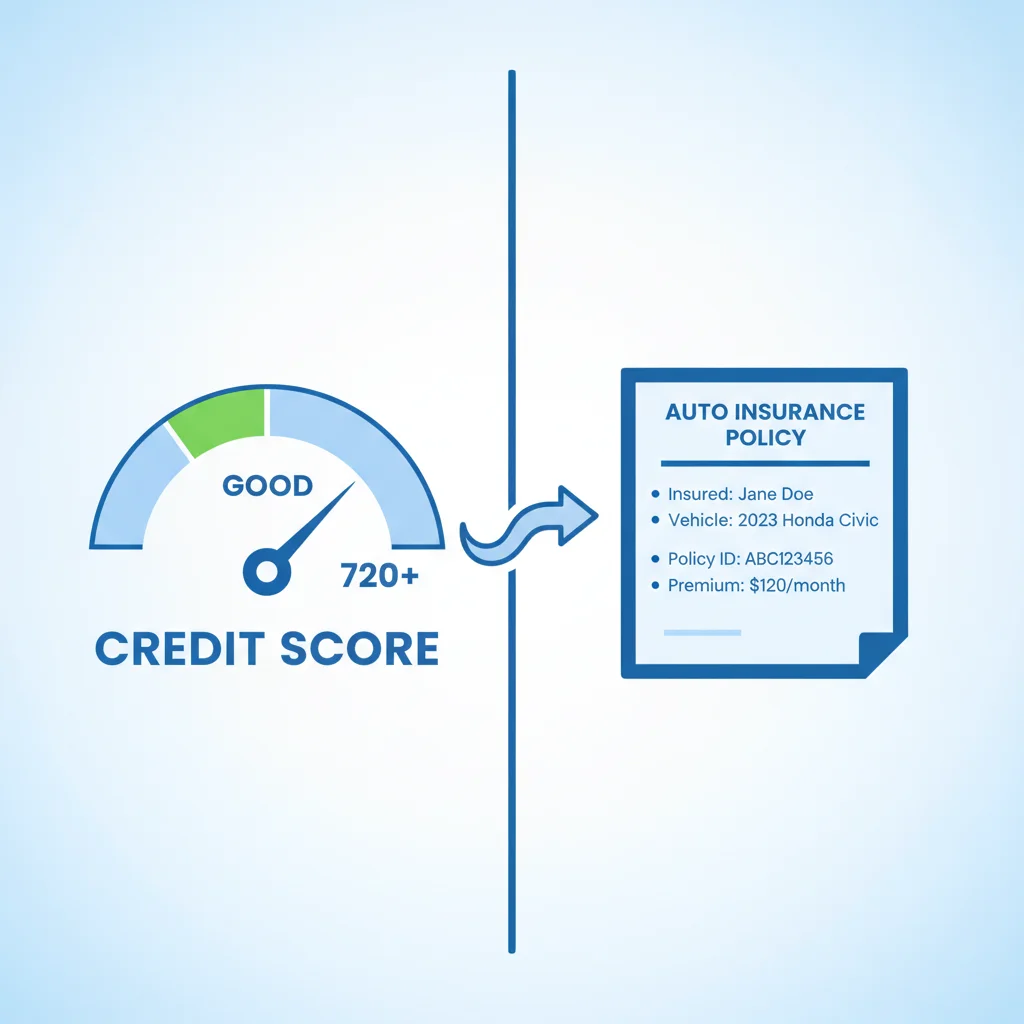
Credit-based insurance scoring is the practice of using information from your credit history — such as payment history, outstanding debt, and length of credit — to help calculate your auto insurance premium. Insurers don't use your exact FICO score; instead, they generate a separate insurance-specific score from the same underlying credit data. Statistically, drivers with lower credit-based insurance scores tend to file more claims, which is why insurers treat this metric as a predictor of risk.
The most widely used model is the LexisNexis Attract score, though FICO also produces an insurance score variant. These scores weight credit variables differently than lending scores, placing greater emphasis on payment consistency and account derogatory marks.
Why Insurers Care About Your Credit History
At first glance, the connection between your credit history and a car insurance premium seems tenuous. One involves how reliably you pay bills; the other prices the risk of an accident. Yet decades of actuarial data have convinced most state regulators — and the insurers they oversee — that the two are meaningfully linked.
The logic is rooted in risk correlation, not causation. Insurers are not claiming that missing a credit card payment makes you a worse driver. Rather, large-scale claims data consistently shows that policyholders with lower credit-based insurance scores file claims more frequently and at higher cost than those with stronger scores. The correlation is statistically robust enough that regulators in 46 states permit insurers to act on it.
This practice sits within a broader system of actuarial rating, in which insurers combine dozens of variables — from your driving record to your ZIP code — to arrive at a premium that reflects their estimated cost of covering you. A comprehensive look at every data point that shapes your quote illustrates just how many inputs feed into that calculation.
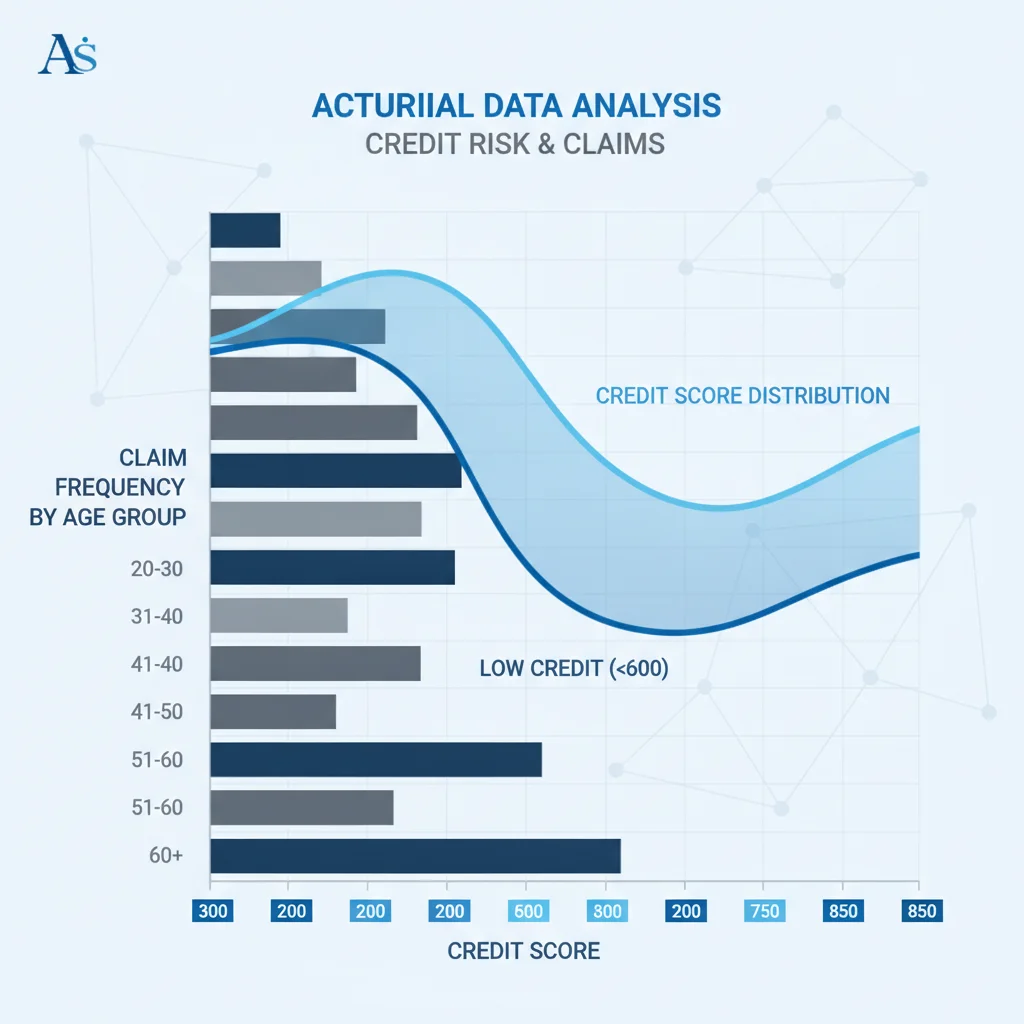
Credit is one of the more powerful variables in that mix, which is why understanding how it works gives you a meaningful advantage when shopping for coverage or planning a policy renewal.
How an Insurance Score Differs From Your FICO Score
Most drivers know they have a credit score; fewer realize they also have a separate credit-based insurance score. Both are derived from the same credit bureau data — typically Equifax, Experian, or TransUnion — but they're calculated using different formulas designed for different purposes.
A traditional FICO score is engineered to predict the probability of a borrower defaulting on a loan within 24 months. An insurance score is engineered to predict the probability of a policyholder filing a claim. Because the outcomes being predicted differ, the variables are weighted differently. Payment history and outstanding debt remain important in both models, but insurance scores tend to place greater emphasis on derogatory marks — collections, bankruptcies, and late payments — and less on the credit utilization ratio that lenders monitor closely.
“The correlation between credit characteristics and insurance losses is one of the most well-documented findings in personal lines actuarial science. It holds across geographies, vehicle types, and demographic segments in ways that few other rating variables do.”
— James Lynch, Chief Actuary, Insurance Information Institute
The industry's most widely deployed model is produced by LexisNexis under the name Attract. FICO also maintains an insurance score variant. Insurers license these models and may further adjust them through proprietary overlays, meaning two carriers can generate different insurance scores from the same credit file.
A detailed side-by-side comparison of insurance scores and lending scores walks through the specific variables and weights involved. For context on how lenders interpret the same underlying data for loan pricing, see what your credit score actually means to a car lender.
Your Insurance Score Is Not Your FICO Score
Many consumers assume insurers are looking at the same three-digit number lenders see. They're not. The insurance score is a separate calculation built from the same credit data but optimized to predict claims, not loan default. Your FICO score might be 720 while your insurance score places you in a mid-tier or even lower-tier bracket, depending on how the model weights your specific credit profile. If your insurer sends you an adverse action notice citing credit, you can request the specific factors — which often point to behaviors very different from what lenders focus on.
The Equity Debate Has Real Policy Consequences
Several states have introduced legislation to restrict or ban credit-based insurance scoring in recent years, citing concerns about disparate impact on lower-income and minority communities. Regulators in Colorado and Washington state have issued rules requiring insurers to prove that their credit scoring models do not produce racially biased outcomes. The debate is ongoing and the regulatory landscape may shift — it's worth checking your state insurance commissioner's website for the most current rules.
The Premium Impact: What the Numbers Show
The financial gap between a driver with excellent credit and one with poor credit is not marginal — in many states and with many carriers, it is dramatic.
76%
U.S. states that permit credit-based insurance scoring
As of 2024, 46 of 50 states and the District of Columbia allow insurers to use credit information in auto insurance rating; California, Hawaii, Massachusetts, and Michigan are the exceptions.
Up to 115%
Premium increase from excellent to poor credit
Analysis by the Consumer Federation of America found that moving from excellent to poor credit can more than double auto insurance premiums at some major carriers in permissive states.
3 in 4
Large auto insurers that use credit scoring
According to the National Association of Insurance Commissioners (NAIC), the vast majority of major personal auto insurers incorporate credit-based insurance scores into their rating models.
0 pts
Impact on credit score from insurer inquiry
Insurance score pulls are classified as soft inquiries under the Fair Credit Reporting Act and have no effect on the consumer's credit score.
4–6 mos.
Typical credit data lag at renewal
Most insurers re-pull credit at each renewal cycle, meaning credit improvements made today will generally be reflected in the next renewal premium, which arrives in four to six months for semi-annual policies.
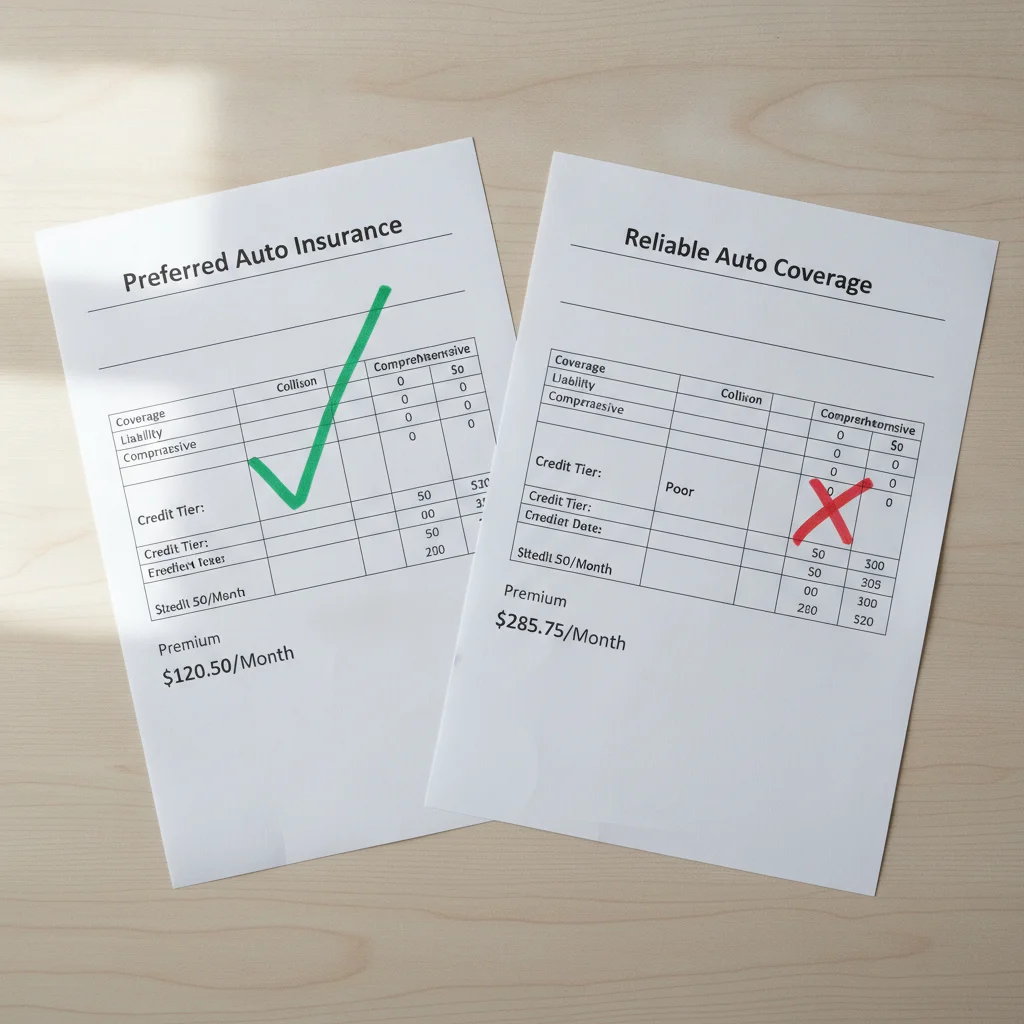
Research by the Consumer Federation of America and independent analyses by state insurance commissioners have consistently found premium differences of 50% to more than 100% between the best and worst credit tiers, even when every other rating variable — age, vehicle, driving record, coverage limits — is held constant. The exact disparity depends on three factors: the state (and its regulatory rules), the specific carrier's weighting of the insurance score within its overall rating algorithm, and the tier structure the carrier uses.
Some insurers treat credit as a binary clean/impaired distinction; others use eight or more tiers, creating a finer gradient of pricing. Either way, the relationship is almost always monotonic: as the credit score declines, the premium rises.
This dynamic also intersects with other rating factors. Homeownership status is another socioeconomic proxy that influences rates at many carriers, and the two variables can compound. Conversely, a spotless driving record may partially offset a weak credit tier, though it rarely eliminates the gap entirely.
The Regulatory Landscape: Where Credit Can and Cannot Be Used
Credit-based insurance scoring is legal in most of the country, but it is not universally permitted. Four states have enacted outright bans: California, Hawaii, Massachusetts, and Michigan. If you live in one of these states, your insurer cannot factor your credit history into your auto insurance premium at all.
Beyond those four, several states impose partial restrictions. Some require insurers to notify applicants and policyholders when credit adversely affects their rate — a disclosure requirement rooted in the federal Fair Credit Reporting Act (FCRA). Others mandate that insurers offer an alternative quote or reconsideration process for consumers whose credit was temporarily damaged by extraordinary circumstances such as job loss, serious illness, or a death in the family.
Check Your Credit Before Your Renewal Date
Most insurers pull your credit around the time your policy renews, not continuously throughout the year. If you're working on improving your credit, aim to have key changes — paid-down balances, resolved collections — reflected on your credit report at least 30 to 60 days before your renewal date. That timing gives the bureau data time to update before your insurer requests it.
Document Life Events That Damaged Your Credit
If a medical emergency, divorce, or job loss drove a credit downturn, keep the paperwork. Hospital bills, separation agreements, and termination letters serve as evidence if you request a reconsideration from your insurer or need to explain your credit file to a new carrier. In states with mandatory life-event review processes, this documentation is required to trigger the recalculation.
The regulatory framework also governs what insurers must do with that information. Under the FCRA, if an insurer takes an adverse action — charging a higher premium or declining to write a policy — based in part on credit information, it must send the consumer an adverse action notice identifying the credit reporting agency used and the principal factors that drove the decision.
For a state-by-state breakdown of which rating factors regulators restrict, see which states limit insurer use of rating factors. The regulatory picture for credit is part of a wider conversation about which variables are actuarially justified versus socially problematic — a debate that also encompasses gender as a rating factor and marital status.
The Consumer Equity Debate
Credit-based insurance scoring is one of the most contested practices in the auto insurance industry. Proponents — primarily insurers and actuarial organizations — argue that the statistical correlation with claims frequency is strong, verified across multiple independent studies, and that using it benefits low-risk consumers by keeping their premiums from subsidizing high-risk ones.
Critics, including consumer advocacy groups and some state legislators, raise two primary objections. First, they argue that credit scores are correlated with income, race, and neighborhood in ways that produce systematically higher premiums for communities that already face economic disadvantages — creating a disparate impact even without discriminatory intent. Second, they contend that the correlation, while real, does not give the insurer predictive information that is meaningfully different from what driving history already provides, making the additional rating factor redundant and inequitable.
The actuarial rebuttal is that credit adds predictive power beyond driving record alone — particularly for new policyholders with thin driving histories — and that insurers are pricing based on expected claims costs, not income. Several academic studies support both positions, depending on the dataset and methodology used, which is why the regulatory debate remains unsettled.
Your Insurance Score Is Not Your FICO Score
Many consumers assume insurers are looking at the same three-digit number lenders see. They're not. The insurance score is a separate calculation built from the same credit data but optimized to predict claims, not loan default. Your FICO score might be 720 while your insurance score places you in a mid-tier or even lower-tier bracket, depending on how the model weights your specific credit profile. If your insurer sends you an adverse action notice citing credit, you can request the specific factors — which often point to behaviors very different from what lenders focus on.
The Equity Debate Has Real Policy Consequences
Several states have introduced legislation to restrict or ban credit-based insurance scoring in recent years, citing concerns about disparate impact on lower-income and minority communities. Regulators in Colorado and Washington state have issued rules requiring insurers to prove that their credit scoring models do not produce racially biased outcomes. The debate is ongoing and the regulatory landscape may shift — it's worth checking your state insurance commissioner's website for the most current rules.
What is clear is that the practice's legality in most states means it remains a significant real-world variable for the majority of American drivers — one worth understanding regardless of where you stand on the policy debate.
How to Use This Knowledge to Your Advantage
Whether you view credit-based insurance scoring as fair or not, its existence creates actionable opportunities for most drivers.
Monitor and improve your credit profile
Because insurers typically re-pull credit at each policy renewal — usually every six or twelve months — meaningful credit improvement between renewals can translate into a lower tier and a reduced premium. The levers are the same ones that move any credit score: paying bills on time, reducing revolving balances, avoiding new hard inquiries near renewal dates, and correcting errors on your credit report. For context on how the same improvements affect your car loan rate, see why your credit score has such a large effect on your car loan APR.
Shop multiple carriers
Because each insurer weights the insurance score differently within its own algorithm, a driver with impaired credit may find dramatically different quotes across carriers. One company may penalize a specific credit profile heavily; another may weight driving record more aggressively and treat the same credit file more leniently. Shopping three to five carriers at renewal — not just your renewal notice — is especially valuable when your credit is in a transitional state.
Request a reconsideration if a life event damaged your credit
If your credit score dropped because of a divorce, layoff, medical bills, or a similar hardship, ask your insurer whether your state mandates a reconsideration process. Even where it's not required, some carriers will voluntarily re-rate a policy when presented with documented evidence of a temporary, event-driven credit disruption.
Check your adverse action notice
If credit hurt your rate, federal law entitles you to a notice that identifies the factors. Review those factors — they're a targeted road map to which specific credit behaviors are costing you the most on your premium.

Check Your Credit Before Your Renewal Date
Most insurers pull your credit around the time your policy renews, not continuously throughout the year. If you're working on improving your credit, aim to have key changes — paid-down balances, resolved collections — reflected on your credit report at least 30 to 60 days before your renewal date. That timing gives the bureau data time to update before your insurer requests it.
Document Life Events That Damaged Your Credit
If a medical emergency, divorce, or job loss drove a credit downturn, keep the paperwork. Hospital bills, separation agreements, and termination letters serve as evidence if you request a reconsideration from your insurer or need to explain your credit file to a new carrier. In states with mandatory life-event review processes, this documentation is required to trigger the recalculation.
Credit as One Factor Among Many
Credit-based insurance scoring is significant, but it operates within a larger system. Your driving record, the type of vehicle you insure, where you garage it, your annual mileage, and the coverage limits you select all contribute to your final premium. How the car you drive shapes the price you pay is another major variable that deserves similar scrutiny — and, like credit, it's one that thoughtful decisions can influence.
The interaction effects between these variables mean that a driver with excellent credit but a high-theft vehicle in a dense urban area may still face a substantial premium. Conversely, a driver with mediocre credit but a modest car, a clean record, and rural garaging may pay less than the national average. No single variable tells the whole story.
What credit-based insurance scoring does is give you an additional lever — one that, unlike your age or your driving record from five years ago, is responsive to choices you make today. Understanding that lever, how it's measured, and where it applies is the first step toward using it strategically.

All claims are backed by peer-reviewed research. Sources on request.